Showing posts with label coming-of-age-stories. Show all posts
Sunday, February 17, 2019
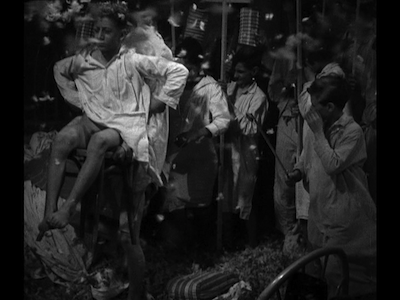
COLD WATER - #944
You do stupid things when you’re young. Destructive things.
When I was 12 or 13, a couple of friends and I used to go to the high-rise apartment building behind where we lived and race through their hallways, like a suburban remake of Band of Outsiders [review], replacing the marbled floors of the Louvre for gaudy 1980s carpeting. Not all three of us on the same hallway, though, but each on a different floor. We’d climb the outside staircase on one side of the building, and pop open the locked doors on the top floor and two below it, each competitor positioned on his respective floor. On GO!, we’d start running and race to the exit onto the stairway on the other side. With each successive race, run over a matter of weeks, we’d increase the level of nuisance. We’d yell and knock on doors, and once, my friend Jimmy grabbed an abandoned bottle full of oil and some other fluids out of a garage, pissed in it, and then trailed it behind him as he ran, leaving a long stain on the carpet. This was probably the beginning of what would get us noticed, leading to the last straw.
Another time we discovered the management had repainted all the guardrails on the staircase and carved things into the gooey, still-drying paint, mostly using our fingers. It was after that incident, after we’d caused some real damage, that they started keeping an eye out for us, and on a subsequent race, men were waiting for us out on the stairs at the finish line side.
We were taken to the management office and told to sit tight, the police were coming. Not being a real priority crime, we were going to have to wait a while. The couple that ran the building started talking to us, curious why we did it. We copped to the racing, but denied everything else. Worse, we started moralizing on our own. “Why would anyone do such a thing?” we pondered. “How terrible!” Meanwhile, we were biting off our nails to get rid of the paint that was still lodged beneath them. By the time Johnny Law finally did show up, we had convinced our victims that we were innocent. The cops scoffed, seeing right through our ruse (we’d even offered to help clean up, an obvious sign of guilt), but with no one to press charges, we were let go.
Why would anyone do such a thing? It was an honest question to ask ourselves, since we had no answer to offer, no motivation. We were just young and bored, we felt misunderstood, and we needed to lash out at something.
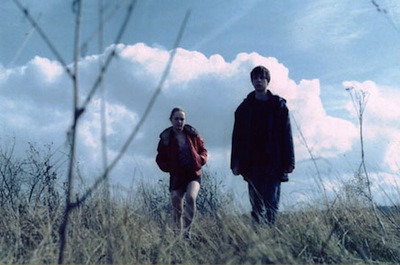
These same unknowable impulses drive the kids in Olivier Assayas’ 1994 semi-memoir Cold Water, a teen drama set in 1970s France. Very little understanding is sought, less offered. At one point, when confronted by his girlfriend’s angry mother (Dominique Faysse, Irma Vep), the Assayas stand-in, Gilles (Cyprien Fouquet, in his only film appearance), tells the worried parent that her daughter runs away because she does not pay attention to her. It’s as good an explanation as any, and probably partially true. Yet, it’s also too simple to fully communicate the miasma of hormones and emotion that make adolescence so trying.
The girl in question is Christine, and she’s played by Virginie Ledoyen (The Beach, 8 Women). Christine is caught in a custody dispute between her parents, and if you asked her, she’d prefer to be with neither. After she gets caught shoplifting some records with Gilles, her father decides to send her to a mental hospital. It’s not the first time he’s done it, either. Though Christine plays it cool, again offering no hint of her true feelings, if she ran across those same cops who interrogated my friends and I (they did check under what was left of our nails, by the way), they’d see through her as easily as they saw through us. Christine is a troubled girl; while the solution is too extreme, she probably does need some kind of help.
Meanwhile, Gilles does not appear to have much reason for his teenage ennui. Outside of maybe trying to impress Christine--who at the start of Cold Water is just his friend--not much seems to fuel his delinquency. His parents have split, as well, but his father (László Szabó, Le petit soldat [review]; The Confession) seems like an all right guy, one who has been willing to give his son enough rope. But then...we all know how that cliché finishes, and dear ol’ dad is seeing how some clichés still hold truth. Gilles doesn’t seem to care about anything, not even the girl he is supposed to love; when she is caught and he is not, he just keeps running and never looks back, leaving Christine holding the bag for his theft. In fact, so lacking in purpose is Gilles’ rebellion, we never get any explanation or payoff for one of his most distressing crimes: he buys half-a-dozen sticks of dynamite and leaves them with his younger brother, teaching him how to attach the detonator and fuse. It’s like that saw blade scene in Richard Linklater’s Boyhood [review] in terms of audience panic. And just like in Boyhood, the perceived danger never manifests.
Much of the above occupies the first third of Cold Water, with the rest of the film hinging on an extended party scene in an abandoned house. Fueled by hash and 1970s rock-and-roll, the kids cut loose, trashing the house, and starting a bonfire. To compare to another Richard Linklater film, it’s like the kegger in Dazed & Confused [review], only the nostalgia has been replaced by apocalyptic anxiety. Even the songs on the soundtrack are darker cuts from Roxy Music, Nico, Bob Dylan, and Creedence Clearwater Revival. Assayas finds the sinister drive of “Around the Bend” so effective, he re-starts the song midway through, letting that opening riff work its magic twice (and I say that as someone who loathes Creedence). Gilles and Christine are reunited and dance to Leonard Cohen’s “Avalanche,” which isn’t exactly romantic. Rather, it has a push-and-pull, the narrator rejecting that someone has helped him, and even implies hurt. “Well I stepped into an avalanche / It covered up my soul.”
If the kids really did want attention, Assayas gives them plenty. Cold Water was shot by Denis Lenoir, who also lensed Assayas’ Carlos [review] and the Julianne Moore drama Still Alice [review]. His camera is patient, letting the moments unfold rather than forcing them. This gives the teens time to thrash and flail, and to discover their own mistakes. It’s hard to tell if Gilles sees any of his own errors at the end, or if he’s gotten what he wants. He certainly has let the avalanche cover him, and one can argue that avalanche does him a mitzvah by rolling over him and leaving him behind--itself racing from one stairwell to the next, across the floor of the Louvre, on to whatever finish line its heading for.
Labels:
coming-of-age-stories,
linklater,
Olivier Assayas
Sunday, September 9, 2012
QUADROPHENIA (Blu-Ray) - #624
"Oh, yeah? What's normal then?"
My first Who concert was seeing the Quadrophenia revival in the mid-1990s. It was a pretty amazing experience. How often do you get to see one of your all-time favorite bands performing one of your favorite albums? The second time I saw them was sometime later, in the early 21st Century, not long after my novel with the Quadrophenia-title, Cut My Hair
, had come out. It was at the Gorge up in George, Washington, a massive open-air theatre with, as the name implies, a massive chasm behind it. Not unlike the cliffs of Brighton at the end of Franc Roddam's 1979 movie version of Quadrophenia.
At that point, many of the songs from the project were still in the Who's setlist, and when Pete Townshend was introducing "Drowned," he noted that, in his travels around the world, people always grabbed him to tell him how Tommy had changed their lives. Except in the Pacific Northwest. Then it was Quadrophenia, how much they understood and identified with Jimmy. It's not often I willingly count myself amongst the weirdoes of my region, but in this case, I was a joiner. Count me as part of that group.
I wrote a couple of years ago about my connection to the Quadrophenia album, part of a music related project on my Confessions of a Pop Fan blog [read it here]. I also wrote about the movie once before, reviewing a touring print for the Portland Mercury when Rhino released the movie on DVD in 2001. That review went something like this:
Hollywood always gets it wrong. For anyone who has gone to the cinema to see their favorite book brought to life on screen, anyone who has a passion that some studio exec decided he could exploit, this is not a hard theory to get behind. Hollywood takes what's good and fucks it up.
This makes Quadrophenia the rarest of beasts. Not only is it an adaptation of a rock opera by The Who, but it's a rock opera about a particularly exclusive subculture, the mods. Pill-poppers, clothes-shoppers, scooter-hoppers--the mods were a special breed of '60s wild child that eschewed the dirty rock aesthetic for a more fashionable, mannered look and the shuffle of American soul and R&B. Released in 1979, Quadrophenia coincided with a mod resurgence propelled by bands like The Jam, who emulated The Who and the original fast fashion of Carnaby Street.
The genesis of the story, though, came six years earlier in the form of Pete Townshend's double Who album. The title refers to the peculiar psychological malady of Jimmy; a character designed to represent the four diverse faces of the band. Quadrophenia was perhaps The Who's most textured album, full of grace and raw emotion, following Jimmy on his journey of self-discovery. When it came time to bring the opera to life, it required a more subtle touch than Ken Russell brought to Tommy.
The solution? Townshend and the filmmakers traded most of the music for the story. In scruffy Phil Daniels, they found their perfect Jimmy. Through female troubles, parental misguiding, brawls on Brighton beaches, and the destruction of an idol (AceFace, played by none other than Sting!), Jimmy ends up on the other side of himself, a new person.
Best of all, director Franc Roddam pulls no punches. Gone are the cartoony good kids of early rock 'n' roll films, replaced with the crazed reality of one of the most exciting times in modern history. The good folks at Rhino have restored Quadrophenia for release on DVD, and by way of promotion, Portland is getting a rare opportunity to see it on a real screen. If you pass it up, then you're out of your brain.
Funny enough, I didn't see the theatrical showing then, though I think I saw it on the big screen back in my college days, at a revival theatre in Westwood, CA, the same place I saw Raging Bull [review] for the first time. Before that, it was a worn-out VHS, copied from another VHS by putting two VCRs together. Ah, the good old days.
At most, I watched Quadrophenia once since I wrote the Mercury review, though it's possible to assume it has really been ten years since last I saw it. Watching it again on Blu-Ray was simultaneously familiar and comfortable and illuminating. I was struck by many things that never really occurred to me on prior viewings. For one, how Roddam takes his time with the story. He let's the aimlessness of youth dictate the pace, including digressions, distractions, and the uncomfortable waiting for something, anything, to happen. In league with this, I was taken with how sensitive a portrayal Phil Daniels pulls off. Jimmy is a troubled mess of emotion, and his ever-changing moods play out on his face. He's always going through something. Particularly watch the lonely moments, the solo rides on his scooter, the spacing out in his bedroom--Daniels makes sure that it never appears as if Jimmy's head is empty or his emotions ever settle. On the contrary, Jimmy knows no peace.
There is an itchiness to Quadrophenia that, even at 40, is all too recognizable (Michele Rosenthal notes something similar at Criterion Affection, too). 1960s mod culture, like most youth movements, was born out of disappointment with how life is turning out. When you grow up, you are either promised certain things that don't pan out or offered only unattractive opportunities. Jimmy is desperate to have a life, to have a connection, to have some purpose. This is what draws him to being a mod. Not only is it not boring and predictable like the rest of adult life, but it offers him a chance to belong and a clear ladder of success. Get the scooter, get the suit, get the girl; have the right records, learn the cool dance moves, be popular. It allows you to both define yourself as for something and against something, be it the rockers or the general conformity of a workday existence.
Of course, most subcultures have their own empty promises. The unintentional hypocrisy underscoring most of them, particularly the ones that espouse individualism, is that you are being a nonconformist by conforming to something else, regardless if it's something other than the norm. Mods have a uniform. You have to look and act a certain way. In my high school years, my peers and I wore black to "stand apart," and while the mass we were reacting against was larger than us, we were still a mass ourselves. I like Jimmy's dad unintentional parable about self-discovery. He tells his son about the boy's uncle, who was also confused like Jimmy, and never could follow through on anything, including suicide. He eventually fell down a well and drowned. It's bleak and ironic, and also a strange foreshadowing to where Jimmy was heading.
Jimmy's salvation is in his disillusionment. The more institutions that crumble for him, the more he is left with just himself. His friends aren't there when it counts, and romance died in a dirty back alley. The frustration and futility of seeing AceFace as not a rebel leader, but a lackey, is just the final straw. The existential outcry of "Me!" shouted from the cliffside and the destruction of the ultimate mod symbol, Ace's scooter, providing a kind of metaphorical suicide a la Camus, is the last separation Jimmy has to make. That Roddam lets the explosion dangle, lets the last image of Quadrophenia be Jimmy's transcendent action but without Jimmy himself, has a haunting brilliance. It's the only mystical moment in the movie. Jimmy has disappeared. (If only Jimmy could have known what we know about Sting, he'd never fall for his routine. It's amazing how Ace looks like a smug prat from the very first scene once you no longer believe that Sting, in any iteration, is remotely cool.)
It's really a testament to good coming-of-age stories that they don't stop being potent even as the audience gets older. It's because they are about identity and what it means to be a human more than they are about youth vs. adulthood. Quadrophenia is about the origin of oneself, about gathering all the disparate elements of who you are, the pieces being pulled in different directions, and consolidating them into a whole. It's a lesson well remembered at any age. What I think does come across now that I am older, though, is recognizing the full scope of Roddam's production. When you're younger, it all seems so inclusive, it's all about Jimmy, boxed in by the TV frame, and you forget to notice that this is actually being staged on a rather large canvas. Roddam wrangles an unwieldy cast in service to an unwieldy script, and the final scenes, shot with a sweeping vision by Brian Tufano, show us just how small Jimmy is in a great big world. It's the existential contradiction: recognizing the absurdity of our place in an indifferent, gigantic universe is the only way to get comfortable with being who we are within it.
Labels:
blu-ray,
coming-of-age-stories,
Franc Roddam,
music,
my writing,
The Who
Sunday, August 19, 2012
LA PROMESSE (Blu-Ray) - #620
Whenever self-important reviewers such as myself complain about the preponderance of blockbusters and their dominance over ticket sales at multiplexes, it's because there are films like La promesse that, with a tiny budget and a persistence of vision, communicate so much more that most massive special effects spectacles ever could. It's not really a proposition of either/or--I like both sides of this coin--but if I had to choose one or the other, I'd always call for “heads.” Simple tales of humanity are far more meaningful and far more deserving of our dollars and our praise.
La promesse is the 1996 effort of Belgian brothers Luc and Jean-Pierre Dardenne, and it's largely credited as the movie that brought these talented filmmakers to the attention of the rest of the world. La promesse stars a young Jérémie Renier, a Dardenne regular. Like Jean-Pierre Léaud in Francois Truffaut's films, Renier has literally grown up over the course of the Dardenne oeuvre. Here he plays Igor, a confident and cagey young crook who is, at least at the start of the picture, engaged in two apprenticeships. One is with the increasingly frustrated mechanic (Frédérique Bodson) who has given the kid a job, and the other is with the boy's father, Roger (Olivier Gourmet), a hustler who is making bank smuggling immigrants into Belgium and then putting them to work on his construction sites while simultaneously siphoning off their wages for outrageous rental fees and other necessary gray-market aid. Roger isn't a completely bad guy. He loves his son and is ostensibly doing all of this to buy a house where they can live, but he is blind to the toll his actions take. Not just on the immigrants, but on Igor, who is being robbed of a regular adolescence and also of better opportunities for his adult future by learning the family business at the expense of a legitimate education.
Igor's life starts to pivot with the arrival of Assita (Assita Ouédraogo) and her baby. She has come from Africa to join her husband and the child's father, Hamidou (Rasmane Ouédraogo), who has already been working for Roger for a little while and is in debt both to him and to the gangsters he gambles with. Igor gets along with Hamidou, and he takes a liking to Assita, who is headstrong and clings to the culture and religion she brought with her. When Hamidou is injured in a construction accident, he makes Igor promise to look after his family. The boy takes this debt seriously, though his father sees things differently. If anyone finds out Hamidou is dead, it will mean serious consequences for him and Igor both, and Assita is the only one likely to wonder where the man has gone.
It's from such a fragile construct that great things emerge. La promesse is not heavy on traditional plot. This isn't a potboiler or any other sort of predictable crime film, even if criminal behavior is at its narrative center. Rather, the positioning of these characters, who they are and what they do, provides the seeds for the greater story to grow. La promesse is a film about how people get along and how they react to unexpected circumstances. More importantly, it's a story about how one boy comes to recognize his own conscience and develop his own ethical code in the face of some heavy opposition.
Jérémie Renier was born to be in front of a movie camera. His presence on screen is unaffected and natural in the most convincing and compelling sense. His performance has none of the woodenness that sometimes emerges when Neorealist directors cast non-actors or indie filmmakers work with amateurish newcomers. There isn't a moment of La promesse that comes off as rehearsed or scripted; the Dardennes elicit a true illusion of spontaneity from all of their performers. Olivier Gourmet is particularly effective as the father. He seems to always be one step behind what is happening, caught up in his own efforts to be one step ahead. The climactic scene between Roger and Igor is heartbreaking, frustrating, and dangerous. Like the boy, we are almost sucked in by the man's defenses, even though our gut tells us he'll do whatever it takes to survive.
Much of the spontaneous feel of La promesse is down to how the movie is shot. The Dardenne Bros., alongside director of photography Alain Marcoen and camera operator Benoît Dervaux, favor a more stealthy aesthetic. They don't plan big, elaborate shots or frame any of their scenes in ways that call attention to the construction; rather, they prefer more intimate, fly-on-the-wall positioning. Following the characters, tracking their reactions, staying with their faces--this is the visual power of La promesse. There are no self-conscious handheld jitters, nothing here that would put La promesse in the faux documentary genre or that precedes the jiggling, probing zooms of mumblecore, and even so, it plays as a movie that was captured off-the-cuff, as things were happening, all the same.
The suspense of La promesse is not really in seeing how Assita and her baby get along, though as audience members we certainly become invested in their journey; rather, the pins and needles come from wondering how much of himself Igor will compromise. Will he or won't he go all the way and tell the full truth? The Dardennes are careful not to telegraph the conclusion, letting the throughline stretch all the way to the final scene. And then when it comes, they let the movie close on just the right note. The small action of the individual may have big meaning, but the ripples it causes may also be imperceptible. The fact is, life rarely stops, not even in the most tragic of times. Regardless of the moral justifications or the peace that may come from sharing difficult truths, the earth does not shatter, nor do the people exposing the lies or those receiving the knowledge. You take one breath, and then you take another, and so it goes.
For a complete rundown on the special features, read the full review at DVD Talk.
Sunday, July 29, 2012
THE 400 BLOWS (THE ADVENTURES OF ANTOINE DOINEL) - #5
I've been meaning to undertake this project for a while. It's to my great shame that I have, as of yet, not ventured beyond The 400 Blows in Francois Truffaut's decades-spanning Antoine Doinel series. Though a revered and influential staple of French cinema, since the release of Criterion's The Adventures of Antoine Doinel boxed set several years ago, the films have waited on my shelf, eternally marked as "for later."
The idea has always been to have an Antoine Doinel summer. This was inspired, fittingly enough, by real-life circumstance that involved both youth and romantic folly. For a couple of years in the mid-00s, I worked in a mom-and-pop video store that specialized in less-mainstream fare. We had a popular "directors wall" where films were organized based on who made them. Most of the famous directors had sections. Featured artists were chosen based on their body of work and reputation. Some filmmakers, like Tim Burton, would lose their space after too many turkeys. The old guard, like Truffaut, however, had a permanent rack.
One summer, a college-aged girl and her mother came in and rented The 400 Blows and stated their intent to watch the Doinel series front to back as a joint venture over the girl's seasonal break. The girl had been in before. She was studying film and was friendly to talk to. She was also very attractive. We didn't have cards at the store, customers were stored in our database and rented movies by giving their name. Accounts could also have nicknames, and we would give them to customers who we wanted to remember because we liked them or because they were jerks. After conversing with this girl about her summer viewing plans, I changed her nickname to Truffaut. All the guys working there knew about her. She was very crushable. We weren't skeevy about it (or I hope not) but one always looked forward to being able to say "Truffaut came in today..."
There's more to this particular story, but I'll save it. I am guessing it might fit one of the later films. Or it will be the ending to my personal survey of The Adventures of Antoine Doinel. It only really has one other facet, and it ends in the summer of 2007, when Michelangelo Antonioni died. (It wasn't his fault; it just seems significant that it was the exact same time.)
The 400 Blows is a film marking many firsts. It's the start of the series, but it's also Francois Truffaut's feature debut. Though the second picture for star Jean-Pierre Léaud--he was in an adventure movie directed by Georges Lampin--it was his first lead role. The young actor was 15 years old at the time, and The 400 Blows would set him off on a grand career--Léaud is still working, and recently had a memorable part in Le Havre [review]--but he will always be best known as Truffaut's double.
Antoine Doinel is a young boy growing up in Paris. He is an imaginative child with an active sense of humor and not much interest in his schoolwork. Antoine regularly gets in trouble with his teacher, whom he has nicknamed "Sourpuss," and his mother (Claire Maurier, Amelie) is at her wit's end with the kid. His father (Renoir-regular Albert Rémy) is a joker, too, and is for the time being more sympathetic to Antoine's growing pains. This balance will shift multiple times throughout The 400 Blows. The Doinels are not bad people, just inconsistent.
After several mishaps--including lying about his mother being dead to get out of being punished for ditching class--Antoine is suspended from school and, rather than go home and face parental wrath, he decides to run away and learn to make his way on his own. He hides out with his best friend René (Patrick Auffay), and they spend idle days scamming money and watching movies. Not a huge deal is made out of it, but mention is made that Antoine is obsessed with cinema. Random shots on the Paris streets regularly show him passing by movie theatres, and we catch brief glimpses of their marquees. The happiest time we see the whole family enjoy together as a unit is when they go out to see Jacques Rivette's Paris Belongs to Us. Mother, father, and son all debate its merits in the car on the way home--Dad says it wasn't funny, but Mom praises the film's depth--and Antoine is actively engaged.
It all goes wrong after that. Ironically, in trying to do well, Antoine blunders and that is when he is bounced from school. Eventually, he gets busted for returning a typewriter he stole--another ironic comeuppance--and he is sent away to reform school. Or, as they call it, "observation center." What will be observed is the boy's behavior, and it will be decided where he should go after that. One of the best scenes in The 400 Blows is a montage of Antoine's psychiatric evaluation. Henri Decaë's camera acts as the interrogator, staring across a table at the delinquent. Antoine opens up here. No equivocation, no storytelling. With no more reason to lie, he explains himself in reasonable terms. Jean-Pierre Léaud owns the scene. He is comfortable and natural, talking directly into the lens, living every memory as if it were real.
The success of The 400 Blows is really the success of Jean-Pierre Léaud. Truffaut and Marcel Moussy have written an excellent script, crafting a detailed coming-of-age narrative that is unique in its details and honest about the confusion of adolescence; yet, it's territory that is familiar and requires a true personality to sell it. Léaud commands the attention of the screen, but he never seems to be acting. His technique is transparent. He is up there just behaving. One can guess that Truffaut gave him a lot of free rein, and certain scenes suggest playful improvisation, as if the director had concocted scenarios that would encourage his young actor to be himself and roll with the moment. A sequence like the one where Antoine rides the spinning wheel can't be faked. That's really Jean-Pierre Léaud fooling around in there.
At this stage, Antoine has much in common with classic rebel figures. There is a rather obvious nod to James Dean, with Léaud more than once pulling his black turtleneck up over his mouth. Yet, unlike, say, a Holden Caulfield, Antoine still has a certain amount of innocence--he is scared to go to hookers; he is oblivious to the wrongness of plagiarism--and lacks a destructive nature. He never really resorts to violence or random vandalism; there doesn't seem to be a desire to obliterate the self. His problem is he's itching to do something, anything, and he's not sure what that would be. He is waiting for his "Eureka!" moment, the one he read about in Balzac (quoting Archimedes).
No discussion of Antoine's coming of age or of The 400 Blows is possible without talking about its ending--so cover your eyes if you haven't seen the film, here there be SPOILERS. The last shot of The 400 Blows is a famous one. After escaping from the reform school, Antoine keeps running until he reaches the sea. On the beach, he heads straight for the water. Is there freedom out there in the waves? Or could this be a suicidal impulse? Neither, probably. Léaud's face is almost blank. He is drawn by the metaphor of the open sea, but driven by impulse more than conscious design. Regardless, Antoine actually stops before going into the water. He stops and turns, almost as if called, and looks directly at the camera. Freeze frame.
We are left to ponder Antoine's expression. It's ambiguous. Some might argue it's hopeful, others might argue uncertainty, but for me, it suggests he has had some kind of "Eureka!" moment at last. He has reached the edge, and peered out into the openness and realized there is nothing beyond him, only what is behind him. He has his freedom, but it lacks definition. He might have undone the shackles, but now it's up to him to make something of himself. There is no one else who will do it for him. It's the same thing we see on the faces of the newlyweds at the end of The Graduate [review]: this is not what was promised.
Will he take those next steps into manhood? Will Antoine Doinel become an adult? Only time and the next movie in the series will tell...
Labels:
antoine doinel,
coming-of-age-stories,
truffaut
Wednesday, September 21, 2011
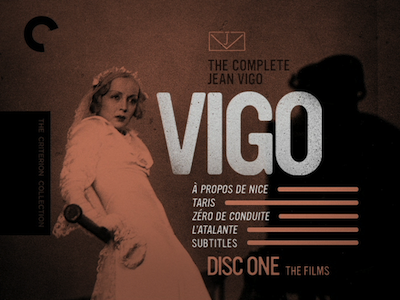
THE COMPLETE JEAN VIGO: A PROPOS DE NICE/TARIS/ZERO DE CONDUITE - #578

Jean Vigo is one of those interesting artistic figures whose reputation far exceeds his output. He's the kind of name that pops up on lists and scholarly surveys and inspires reactions of "What's the big deal?" He made only four films between 1929 and 1934, and two of them were under half an hour, another was less than an hour, and only his last, L'Atalante, reached what we would consider a more standard feature length. Again, that's barely anything compared to other equally revered filmmakers. So, what's the big deal?
This question is raised, and more than amply answered, in Criterion's The Complete Jean Vigo, a two-DVD set (or single Blu-Ray) collecting all of Vigo's efforts with a movie camera alongside some informative supplemental material. A big deal made of a small career that is a verrrrry big deal indeed.

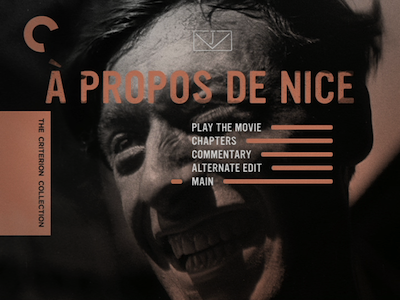
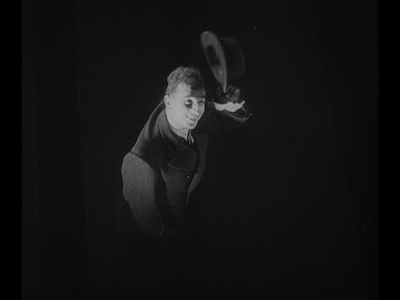
The lead films in the set are the two short subjects Vigo directed, the experimental and fun A propos de Nice (1930, 23 minutes, silent) and Taris (1931, 9 minutes, sound). Both appear to be frivolously produced, with A propos de Nice in particular coming off as a freshman artist being given a new tool and running wild with it. Vigo experiments with double exposure, fades, speed changes, and all manner of other tricks to explore the city of Nice. Most of the footage is shot on the street as documentary; it's in the editing and in some of the staged gags that Vigo draws out a kind of commentary, blending real-life footage with editorial invention. It can be quite funny, such as comparing some exaggerated citizens with similar looks found in nature, or exposing the lingering gaze of a man looking at a pretty girl by showing us what he really wants to see: her clothes disappearing and her silly undergarments exposed, and eventually her completely naked body. Stuffy art has the wind taken out of its sails by seeing a rain puddle gathered in the crotch of a lounging sculpted figure.
Yet, Vigo quickly upends these tricks and tricks his audience at the same time. How do we feel when that same playfulness gets serious and shows us the poor and the starving just around the corner from opulence and conspicuous consumption? It's fairly blunt in terms of social comment, but indicative of an emerging cinematic point of view. Few would take their debut effort into such territory. The effect of A propos de Nice is to equalize the common populace. They all share one city, they are of one people, and the one set being selfish and foolish is all the more so next to their neighbor's misery.

There is a similar equalizing in Taris, in which swimming champion Jean Taris gives a swimming lesson to the viewing audience. Again, Vigo uses experimental effects, including overlapping images, running the film in reverse, and some truly impressive underwater photography. If one wonders where Cocteau got some of his ideas for the many effects shots throughout the Orphic Trilogy, one need look no further. The playful camera work elevates what would otherwise be a standard promo piece for the swimmer, and the ending takes it one step further. Having completed his rather complicated lesson, Taris rises from the pool like some kind of divine being, has his clothes change before our eyes, and exits in a double-exposed shot where he appears to practically walk on water. The glint in his eye suggests, yes, anyone can swim this way, but not anyone can be Jean Taris. There is only one champ.


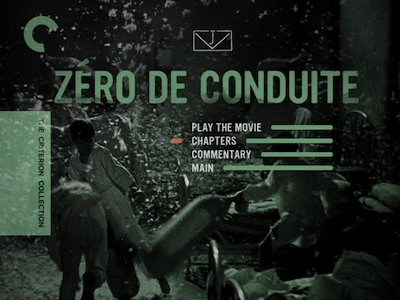
It was two years more before Vigo made the 44-minute film Zéro de conduite (Zero for Conduct) (1933), a whimsical, semi-autobiographical story of a rundown boarding school losing its tyrannical grip on its all-male student body. Returning from a break, the school has a new teacher--or as they call them, "monitors"-- the happy-go-lucky Huguet (Jean Dasté). He is a bit of a joker, and also a fairly competent physical comedian. Dasté glides through a playground scene, breaking into a scrum and grabbing the ball. He does a handstand on his desk to entertain his charges.
Huguet also turns a blind eye to the scheming of three of his students. Caussat, Colin, and Bruel are planning a special prank for the school's anniversary celebration. The girly Tabard (Gérard de Bédarieux) wants in on the act, but the other boys think he is a snitch. Only after Tabard stands up and curses after one of their teachers makes a dirty pass at him in class does he finally get accepted into the fold. The movie ends with their taking action, assaulting their headmasters from the rooftops in a scene that would later inspire Lindsay Anderson in crafting the ending of If.....

Vigo wrote the script for Zéro de conduite, as well as directing, and though there is a basic plot to the movie, it is structured episodically, like a series of Mack Sennett short subjects stitched together. The kids stage a succession of small rebellions on the way to their final operation. Vigo shoots them in such a way as to capture the magic of youth. An explosion of pillows creates a storm of feathers, and the boys ride through it in slow motion, buoyed by their own sense of immortality. The director also peppers Zéro de conduite with small touches of surrealism: the diminutive principal with the big beard (Delphin), for instance, whose reflection moves in the mirror independently. Or the boy performing a magic trick, where the ball disappearing is really just Vigo's manipulation behind the camera and in the editing room.
Zéro de conduite had trouble with the censors on its initial release due to its frankness regarding disciplinary issues and indiscretions in the school environment. That frankness is also why it still remains so vital after 80 years. It doesn't feel whitewashed, and the problems the boys go through remain relatable while their revenge still provides some wish fulfillment for all of us who ever were unhappy with the teachers and administrators at our school. I wrote a column a couple of months back tracing a link from Hal Ashby to Wes Anderson (and would have included Richard Ayoade's Submarine [review] if I could) and examining the coming-of-age subgenre where imaginative boys cope with the world by unleashing their vivid imaginations. Zéro de conduite has as much a place at the forefront of that tradition as it does with other boy's education movies like If...., The 400 Blows, and Young Törless. On their own, each of those is a pretty impressive legacy for one movie to provide a cornerstone to, but both of them...well, I did say Jean Vigo was a very big deal, didn't I?

L'Atalante has been reviewed separately. Read it here.
This disc was provided by the Criterion Collection for purposes of review.
Labels:
coming-of-age-stories,
jean vigo,
lindsay anderson
Monday, September 19, 2011
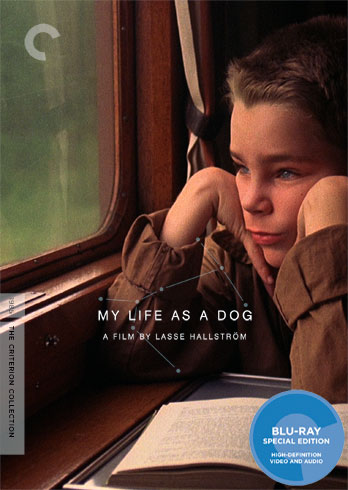
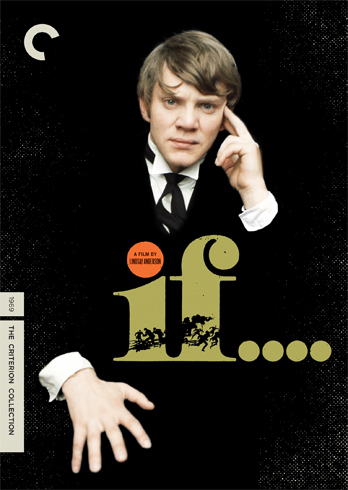
BLU-REDO: MY LIFE AS A DOG - #178/IF.... - #391
I was recently fortunate enough to review the Blu-Ray reissues of two older Criterion films, Lasse Hallström's My Life as a Dog and Lindsay Anderson's If.... While it was an absolute pleasure to revisit these two favorites, and the high-def presentations were suitably impressive, I was happy enough with my older essays on the movies to use them again. I did, however, update the technical specs, and if you would like to go over the full reviews, including my assessment of the audio/visual quality, click through on the covers to see my DVD Talk entries.
Original version
Original version
* *
Original version
Original version
* *
Labels:
blu-ray,
coming-of-age-stories,
hallström,
lindsay anderson
Thursday, June 16, 2011
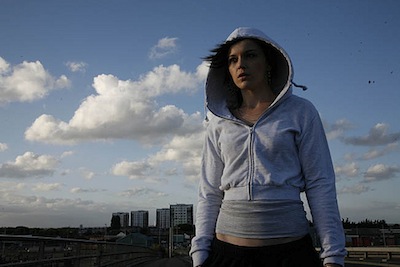
FISH TANK (Blu-Ray) - #553

It was only some time after I had finished watching Fish Tank that I started to realize that this movie is like a British version of Precious: Based on the Novel 'Push' by Sapphire [review]. It didn't occur to me during the screening because the two movies couldn't be more stylistically different, nor could they be farther apart in terms of artistic success. Both films are about young women living in poverty who dream about doing something flashy with their lives, but who must battle a lack of education, an uncaring mother, and the inappropriate advances of older men before they'll ever get a chance. Where Precious is manipulative and aesthetically cheap, however, Fish Tank is smart, emotionally honest, and technically restrained.
Fish Tank is the second film of writer/director Andrea Arnold, who previously made the stark crime drama Red Road [review]. For her sophomore outing, she employs a similar digital, Neorealist style. Shooting on location with no musical score, she follows her main character Mia, played by a wonderfully effective first-timer named Katie Jarvis, through her day-to-day routine in an Essex housing project. She gets in fights, practices her dance moves, and wanders aimless and alone through the streets. When her mother (Kierston Wareing) brings home a new boyfriend, Connor (Michael Fassbender), Mia is attracted to him sexually, but also touched by the kindness and interest he shows her. He'll encourage Mia to pursue dancing and to open up, but when he moves into the apartment, Mia's attraction reaches a boil.
The final portion of the film is devoted to how Mia deals with this new attention and the fallout it causes. It's a strange, volatile ride. Her immaturity becomes more apparent with each irrational decision. Consequences don't seem to enter into the girl's mind before she does anything. Katie Jarvis is utterly convincing as the sullen teen whose rage seethes just below the surface. Fassbender is also very good, charming the audience into hoping he's not too good to be true. I really, really wanted to like him. He's a little like Peter Sarsgaard's character in An Education [review], except he's not Peter Sarsgaard, so it's not a foregone conclusion that he's creepy.
Most of Fish Tank is appropriately underplayed. Andrea Arnold doesn't rely on her characters to explain what is going on, she is far too intent on showing us through actions and reaction. (Something Lee Daniels, the director of Precious, is by all evidence incapable of.) Her camera practically stalks Mia, often having to run to keep up with her. Fish Tank is essentially a point of view film, Katie Jarvis is in every scene. The only time Arnold strains for a shelf she can't quite reach is when she tries to inject literary and visual metaphors into the movie. There is a thread involving a horse that was obvious enough before Arnold decided to put a finger right on its nose at the end. The final shot of the film is also a bit too "high school poetry" for my tastes.
Still, that's maybe four scenes in a two-hour movie. Not a bad ratio when you consider how much so many other directors get wrong in half the time.

Criterion has chosen to enhance their gorgeous Blu-Ray of Fish Tank with the three short films Andrea Arnold made prior to Red Road, and these early effort are as worthy of exploration as the main feature.
Milk (1998) (10 minutes, 30 seconds): From the get-go, Arnold was fascinated by the careless, seemingly simple choices people make in their day-to-day lives that lead to unintended, complicated consequences. In Milk's second scene, a woman (Lynda Steadman) decides to let her partner (Stephen McGann) forego wearing a condom; cut to nine months later, and the baby is coming. The child doesn't survive a difficult birth, and the mother is thrown into grief. Rather than go to the infant's funeral, she randomly chooses a juvenile delinquent (Lee Oakes) out for a smoke and goes with him on a day trip in a stolen car.
There is a running thread throughout Arnold's work that sews people together who otherwise maybe are not right for one another. The grieving mother here is aching to relieve herself of her sorrow, and she wishes to feel something intense enough to overshadow the severity of her depression. Her hook-up is driven by her maternal instinct--the boy is wounded, he has a "Mom" tattoo--in much the same way Mia's misguided fixation on Connor is motivated by her need for a father figure in Fish Tank. The woman here needs a release, and though a sexual one will do, there are also more literal and physical releases required--we might miss the tears if fixating on the unexpected element of the short's final image. Arnold sees a fine line between the beautiful and the grotesque when it comes to the demands and functions of our bodies, though in the matter-of-fact way she presents it, it seems that line is only visible depending on one's perception of it.
In terms of style, there really isn't any distinctive evidence of Arnold's specific aesthetic in Milk. The telling of this tale has as realistic a grounding as her later films, but the presentation is far more conventional. Not in a bad sense, this is a young filmmaker feeling her way. Her intentions and passions are clear, this is her mastering the tools.

Dog (2001) (10:16): The second short subject not only introduces the looser camerawork approach into Arnold’s repertoire, allowing for a more intimate and less formal observation of real life, but it also appears to be the early groundwork for Fish Tank. From the opening scenes in an upper-floor apartment in the British projects and the film's heroine standing on the side of a highway shouting across traffic at a boyfriend, it's clear to see these are the first seeds of the full-length to come eight years later.
Joanne Hill plays the lead, a teenage girl out for a day with a sullen boy (Freddie Cunliffe). The pair score some drugs and then go to a vacant lot to smoke them. There the boy and girl engage in dispassionate sex. She wouldn't mind a little tenderness, but he won't even kiss her. A stray dog that the girl spotted earlier wanders onto the scene, eats the remaining hash, and promptly gets beaten by the boy. The violence erupts with all the fire and fury that the sex lacks, an adult irony that the girl desperate to grow up didn't account for. Pushing the boundaries of her age, sexualizing herself before she is mature enough to handle it, has put her in a position she is not ready to handle, but now that she has gone there, she can't go back.
Arnold's efforts to draw a connection between what happened to the dog and what is happening to the girl may be a little too direct--those bothered by the blatancy of the horse in Fish Tank won't like it much better when it's a canine-- but Hill is very good, and when the director moves in tight on her weeping, there is no overselling the potency of the underlying emotion.
Wasp (2003) (25:46): This Oscar-winning short was the first time that Andrea Arnold worked with cinematographer Robbie Ryan, who would shoot both Red Road and Fish Tank. You will notice an immediate and obvious difference. Though Wasp was filmed in the same poor backstreets as Dog, there is a crispness to the photography and a more vivid realization of the colors of real life, the garishness of how people dress vs. the drab reality of their surroundings.
Natalie Press plays Zoe, a single mother of four struggling to get by. Though our first image of her is as a fierce, albeit ineffectual, protector, Zoe's selfishness is quickly revealed when an old flame (Danny Dyer) reappears in her life. Rather than miss out on a chance at a date, she lies and pretends her kids belong to someone else, and when she goes to meet him at the pub, she leaves her offspring in the alley outside.
Arnold presents Zoe with a moral quandary--her own happiness can be achieved at the expense of her progeny--the terms of the dilemma are far more base, almost primitive. The question is not just one of abstract inner satisfaction, but one of basic physical compulsion. As in Milk, our bodies compel and demand. Here, sexual pleasure is directly weighed against hunger--opposing needs of fundamental human survival. Arnold pushes it further with the wasp that provides the narrative shift in the final act: if these deeply rooted urges are all that we allow to influence our decisions, then the threat of external forces, of nature itself, holds sway. If we surrender moral reasoning, we retreat to the animal kingdom.
It's easy to see how Arnold transitioned from Wasp to full features. It's her most accomplished work up until that point, and maybe the most fully realized of all her movies, long or short. Here she manoeuvres her actors and her mise en scene with a steady confidence, finding that balance between realism and fictional narrative that has since allowed her work to stand out, and that made Fish Tank such an incisive examination of the kind of emotional battlegrounds that know no age. In Arnold's work, the casualties are young and old, all are equal.

Labels:
Andrea Arnold,
blu-ray,
coming-of-age-stories,
short films
Saturday, May 8, 2010
WALKABOUT - #10

Nicolas Roeg's 1971 film Walkabout is a highly regarded required taste. A slab of surreal young adult fiction, it is the story of two cultures coming together under strange and extraordinary circumstances.
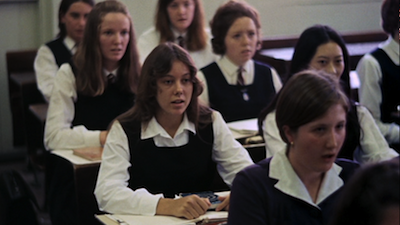
Roeg sets up his divide from the get-go. Set in Australia, the first scenes juxtapose the hustle and bustle of modern city life with the traditional native sounds of the country; namely, didgeridoo music plays over the top of scenes of traffic jams, marching soldiers, and schoolgirls engaging in vaguely erotic breathing exercises. We see our central characters within the montage. The girl (as she is called, and as played by Jenny Agutter) is amongst the girls getting voice lessons, and her little brother (Lucien John, a.k.a. Luc Roeg) is seen out in the streets, watching the parade. He walks through a park where the trees are as regimented and labeled as any other aspect of city living. Here, butcher shops sell kangaroo meat. Roeg is showing us how the more exotic aspects of the continent are being commodified.


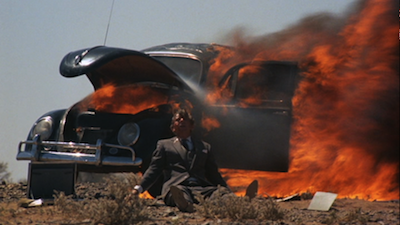
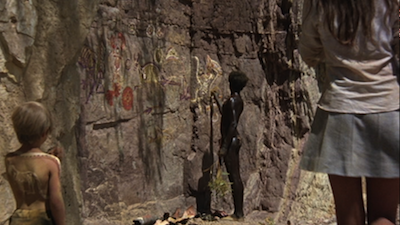
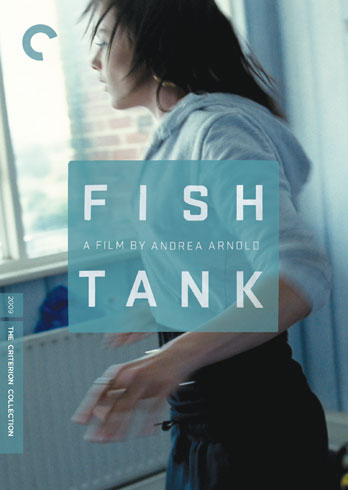
This, we can interpret, is the modern disease, and the end-stage of said disease is what is about to affect the brother and sister. Their father is a geologist of some kind, a man whose job is to dig into the earth and extract its guts. He drives his children out into the middle of the desert and then proceeds to set the car on fire and shoot himself in the head. Determined to keep her little brother from seeing this, the girl leads him away from the car and deep into the outback. They wander for a couple of days, barely surviving, before they meet an aboriginal boy (David Gulpilil). He is on "walkabout," a rite of passage where young men leave their tribes and survive on their skill and wits. He doesn't speak English, but certain fundamental rules of communication, when applied, hip him to the plight of these two strange children (both in their school uniforms). The boy knows where they need to go and how to stay alive getting there, and he begins to lead the white children back toward their version of civilization.

Walkabout is written by Edward Bond (one of the writers on Antonioni's Blow-Up
To me, these scenes are unwelcome interruptions, and their execution too bald to be effective. Roeg hammers all of his political messages pretty hard. There are, for instance, the shots of Gulpilil on the hunt cut together with a butcher slicing up slabs of meat, which are supposed to challenge our perceptions of hunting and cause us to think about where our food comes from. The boy kills to survive, it's no more brutal than what goes on every day in the city. Further on, we see him wrestle an animal with his bare hands, and it's almost playful. Moments later, white hunters come in and slaughter a herd with their rifles. They never even leave their jeep. Roeg, who acted as his own cinematographer, photographs the killing with the rawness of Vietnam news footage. On paper, it sounds good, but in practice, it seems all too easy. Perhaps it was effective and shocking forty years ago, but now it just comes off as clumsy.

Some of the heavy symbolism is forgivable, though, as it does seem like the core of Walkabout is aimed at a younger audience. Thus, seeing the young white boy playing at war games, shooting a pistol and mimicking the sounds of his miniature biplane, makes for an acceptable symbol of British aggression--especially as, at that same time, his sister is setting up a picnic and listening to an etiquette lesson. He is the more brutal aspects of colonialism, she is the imposition of "polite society." Later, when the siblings find a desert oasis, it transforms overnight into a forbidding dry patch full of snakes and insects. They are the chosen ones being cast from the Garden of Eden. (Perhaps the weirdest moment of the movie is when the little boy is seen in extreme close-up biting into a piece of fruit and declaring it tastes like meat.) It's not subtle, but it gets the point across without being insulting.


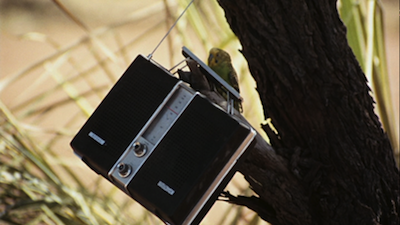
I think the main reason I object to the asides to the "adult world" so much is that the contained dreamscape of the three youths is so effective. Roeg and Bond construct their joint walkabout as a kind of magical journey. They aren't restrained by time. In one scene, they are dressed in normal clothes; in the next, they are stripped down and wearing detailed tribal make-up. These leaps add to the fantastical quality that blurs the edges of their reality. They find some common ground despite the barriers between them, and the visual language changes. Early on in the journey, the girl walks under a make-shift canopy, looking very much like a white tourist being led by her black servant. He is an "other" at that point, almost silly for not understanding their way of doing things; eventually, though, they begin to adopt his way of doing things. Admittedly, this could still be seen as cultural tourism, and I am not sure I am comfortable with Roeg visually contrasting Jenny Agutter swimming naked with images of nude aborigines beating on her father's burnt-out car. There are visual parallels here to scenes from other movies where less-evolved primates are freaked out by technology. This sequence even ends with the group leaving the car when the radio comes alive and scares them.
There is something exploitative about the way Roeg films Agutter. Even before we see her naked, she is shown in various states of undress and there are regular shots of her underwear, both on and off. She is presented in a sexualized manner throughout Walkabout, and though the actress was 18 or 19, the schoolgirl she plays is much younger. The story is intended to be an awakening for the girl, and one could interpret that there are unfortunate racial implications to the sexual aspects of it. It's as if Roeg keeps offering her up as forbidden fruit, the white woman serving as temptation for the black man. He doesn't really address the volatile politics connected to that, nor does the movie take any time with the cliché of its final scenes: that having experienced life with the black man, the white girl is now forever changed, forever dreaming of returning to the "wild."

I don't really think that Roeg is trying to play to those dangerous stereotypes so much as he is playing with them. Regardless, he must have been aware that they were there. Again, I would say he's dealing more with culture than race, and I certainly don't think he was being racist, he was instead using these things to challenge the status quo. Near the end of the journey, the trio find an abandoned home just on the edge of white civilization, and the girl starts to set up house. She is creating a domestic situation with her as the mother, the aborigine as the father, and her brother as the child. This, of course, isn't going to work. This is where the white hunters come in, and when Gulpilil returns to the house, outfitted in traditional tribal make-up and engaging in what I assume is a courtship dance, his reversion to his own cultural standards frightens the girl. She wanted him to move closer to her, effectively obliterating the middle ground, and as a result, forcing them both to retreat to what they are used to.
This is some pretty serious stuff, and that is why it's all the more frustrating that Walkabout has so much extraneous nonsense. The sidebars are all satirical jabs at white society, yet they take away from time that could be spent on the central relationships of the movie. Also, if you're going to isolate these characters and send them on a mythic journey, I just don't see the sense in breaking the spell. That should come at the end, when the kids get home, returning to bad manners and noisy congestion. The balloon would have only burst the once rather than slowly leaking throughout.

The new two-disc release of Walkabout is a much needed updating of one of the earliest Criterions. Now available as both a standard-definition release
The only extra feature on the original disc was an audio commentary with Roeg and Jenny Agutter, and that is also available on this set. The second disc now also contains interviews with Agutter and Luc Roeg, as well as a full-length documentary about David Gulpilil, an important figure in Australian cinema. His work as an authentic Aboriginal actor was as important politically as it was artistically. (Criterion fans may also remember him from Peter Weir's The Last Wave.) One change of note to long-term collectors: the essay by Roger Ebert from the 1998 disc has been replaced by a piece from author Paul Ryan.

Watch the theatrical trailer.
This disc was provided by the Criterion Collection for purposes of review.
Subscribe to:
Posts (Atom)