Showing posts with label lindsay anderson. Show all posts

Sunday, August 21, 2016

A TASTE OF HONEY - #829


I dreamt about you last night, and I fell out of bed twice....”

Morrissey or Shelagh Delaney?

As most fans of the Smiths know, it’s both. Though, those with a big nose who know, know that the lyricist ripped it from the playwright, just as Moz lifted much from Delaney’s texts and nodded to her often. The above lyric is from A Taste of Honey and was embedded in the early Smiths track “Reel Around the Fountain;”  another song from the same period, “This Night Has Opened My Eyes,” not only borrows more lines from Honey, but the plot as well. Morrissey makes no secret of this. On the contrary, his sampling from Delaney, as well as putting her picture on album and singles covers (Louder than Bombs and “Girlfriend in a Coma”) helped drive many a dark youngster to her work. I read the original A Taste of Honey stageplay in high school, and finally found the film version many years later. The vocabulary theft made me predisposed to be a fan.


Shelagh Delaney on "Girlfriend in a Coma"


Rita Tushingham on the Sandie Shaw/Smiths EP

The movie adaptation of A Taste of Honey was released in 1961. Directed by Tony Richardson, it is considered part of Britain’s “kitchen sink” movement, so named not because the filmmakers in that school threw “everything but...” into their cinema, but rather they showed us how folks lived, kitchen sinks and all. Examining the working class citizens as they struggled to get by and potentially change their lives, Criterion fans can see the storytelling style in films as different as This Sporting Life [review], Billy Liar [review], and Victim [review], or even later, we can see how it influenced Ken Loach (Kes [review]) and Mike Leigh.


One hallmark of the kitchen sink films was the appearance of the angry young man (Harris in This Sporting Life, McDowell in If.... [review]--both in films by Lindsay Anderson, whom Shelagh Delaney collaborated with on The White Bus [review]). This makes A Taste of Honey a bit of a stylistic revolutionary, as its protagonist is an angry young woman. Starring Rita Tushingham (Doctor Zhivago, Girl with Green Eyes), A Taste of Honey tells the story of Jo, a teenager frustrated with her life of squalor and limited prospects. Jo lives alone with her mother, Helen (Dora Bryan), a woman with many lovers but never two shillings to rub together. This means the pair moves a lot, running out on one landlord after another. They also squabble constantly, tearing one another down, breaking up and making up because, begrudgingly, they are all they’ve really got.

This changes when Helen meets Peter (Robert Stephens) and decides to remarry. Though Jo is reluctant to finally let go of the apron strings, Peter is a much younger man than his new bride and not interested in having a grown daughter. So, Jo moves out on her own, getting a job in a shoe shop and a new roommate of her own. Also, she’s gotten pregnant by a sailor who has since left to sail the seas.


An unmarried teenager having a child all by her lonesome would have been social scandal enough, but Delaney--who co-wrote the screenplay with Richardson--was a progressive writer whose vision took in all aspects of life in urban Manchester. Jo’s lover, Jimmy (Paul Danquah), is a black man, and her roommate, Geoffrey (Murray Melvin), is gay. These facts are both approached delicately. No one comments on Jimmy and Jo being together, but the color of his skin is a factor in Jo’s anxiety about the impending birth. For instance, should she even want to take Geoffrey up on his offer to marry, people will know he’s not the father when they see the child. That’s if the gossips and wags buy their relationship to begin with. Though no one but Jo ever confronts Geoffrey outright about his sexuality, everyone looks at him sideways. They all sense the truth.

Which is always fascinating to see in an older film, since anyone with parents and grandparents born in “the good old days” knows that some members of those generations often tend to pretend that gays and lesbians weren’t around until that demonic disco music magically spawned them. But that’s what art is for--and history books--to show us what many would rather we not see. There’s a reason A Taste of Honey opens with a censorship board certificate indicating it’s only suitable for viewers over the age of 16. Much of the dialogue is frank about things that just weren’t acceptable: sex out of wedlock, abortion, alcoholism. Yet, Delaney avoids pushing a message. She and Richardson just want to show life as they’ve witnessed it and let the audience empathize or reject on their own.


Though Tony Richardson’s generation of filmmakers is often referred to as the British New Wave, their early work has little of the experimentalism inherent in the movies of their French contemporaries laboring under the same name. Rather, the Brits had more in common with the Italians in that realism was more important than style. Hence the director and his cinematographer Walter Lassally (who went on to shoot many of James Ivory’s lesser pictures) filming in the streets of Manchester, inside real apartments, and walking the boardwalk by the seaside. This was an existence that could not be re-created in a studio without adding a touch of glitz, so better to go where it was actually happening. The excursions out into public have an air of documentary, including a trip to the country where the child-like Geoffrey and Jo frolic with elementary school-aged kids. The mountainside expanse emphasizes how small they really are in the grand scheme of the universe (“I’m not happy and I’m not sad”), and the company they keep exposes just how young they are, too. Neither is really in a place where they should be having kids of their own.


It’s a great sequence, actually, with Geoffrey trying to prove he can be the husband and father Jo needs by awkwardly kissing her. The “traditional” roles are reversed with these two. Geoffrey probably feels too much, while Jo doesn’t quite know how to access all that is going on in her head and her heart. Back at their flat, Geoffrey cooks and cleans, while Jo goes out and earns a wage. One assumes it will all go wrong for these two, that somehow tragedy awaits, but A Taste of Honey sidesteps our expectations. Sure, it ends on a down beat, and everything isn’t necessarily okay, but we do leave with the sense that it will be. Lessons are being learned, and these characters will all carry on and get along in some fashion. Some ties bind so tightly, they will never be broken.


Criterion’s new restoration is, I believe, the first time A Taste of Honey has been available on disc in the States. The image quality is remarkable: crisp and clear, with strong blacks and an excellent level of detail. Supplements include interviews old and new, including vintage clips with Richardson and Delaney, and new chats with Rita Tushingham and Murray Melvin.

We also get a 1956 short film collaboration between Richardson and Lassally, co-directed by Karel Reisz (The French Lieutenant’s Woman). Made as part of the Free Cinema Collective that Richardson and Reisz formed with Lindsay Anderson, Mama Don’t Allow is a 22-minute documentary that displays the realist roots that Richardson and Co. grew from. Set inside and outside a jazz bar, with cutaways to some of the attendees preparing for an evening on the town, it’s a simple portrait of a particular nightlife. With a live soundtrack by the Chris Barber Jazz Band, including Lonnie Donegan, a.k.a. the King of Skiffle, a successful British rock musician that influenced the Beatles, Mama Don’t Allow is a winning snapshot of a specific scene, giving us a look at music and youth culture before the advent of rock ’n’ roll.


The screengrabs here are from an earlier DVD given away free with the Sunday Telegraph fifteen years ago and not from the Criterion Blu-ray.

This disc provided by the Criterion Collection for purposes of review.


Thursday, December 1, 2011

SIDELINE: MORE REVIEWS FOR 10-11/11

Wow, I have been so out of it in November, I never even posted a list of movies I reviewed in October! My apologies for being drag-ass this past month, it's been a weird time. I am getting on track, though, and hope to catch up through December.

In the meantime, my non-Criterion movies...


IN THEATRES...

* The Big Year, it's called birding, not birdwatching, and it's awful either way. Wilson, Black, Martin--the new comedy nightmare team.

* The Black Power Mixtape 1967-1975, a documentary showing a certain portion of history through a different lens.

* The Descendants, George Clooney starring in a new film from Alexander Payne.

* The Ides of March, a political drama from he-that-can-do-no-wrong, George Clooney. Starring Ryan Gosling.

* Into the Abyss, Werner Herzog's documentary on the death penalty in Texas. Very human, very scary.

* J. Edgar, Clint Eastwood continues his trend of almost delivering in this biopic with Leonardo DiCaprio as the legendary lawman.

* Like Crazy, love a la modern cinema verite. Starring Anton Yelchin and Felicity Jones.

* Melancholia, Kirsten Dunst at the end of the world, courtesy of Lars von Trier.


* The Mill and the Cross, Rutger Hauer stars as Pieter Bruegel preparing his painting The Procession to Calvary in Lech Majewski's deconstruction of the masterpiece.

* Restless, Gus Van Sant's latest attempt to go back to high school. Insert words "emo" and "twee" now.

* The Rum Diary, Bruce Robinson returns to moviemaking for a somewhat disappointing Hunter S. Thompson movie with Johnny Depp.

* The Skin I Live In, the disturbing new horror drama from Pedro Almodovar.

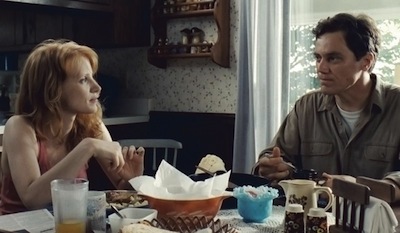
* Take Shelter, the movie where Michael Shannon goes crazy and the world seemingly follows his lead.


ON DVD/BD...

* Bad Teacher: Unrated Edition, a superb cast can't prevent this from being one of the least funny movies you'll see this (or any) year.

* Beats, Rhymes & Life: The Travels of a Tribe Called Quest, the story about the influential rap group is also the best music documentary in a long, long time.

* Bellflower, the cult indie strikes me as empty for all the wrong reasons.


* Bored to Death: The Complete Second Season, the continuing adventures of Jason Schwarztman as the pulpy, humorous avatar of author Jonathan Ames.

* Buster Keaton - Short Films Collection: 1920-1923, 19 comedy gems on three discs.

* Cape Fear, Scorsese's potent remake with Robert De Niro and Nick Nolte.

* Dumbo: The 70th Anniversary Edition, the stellar new upgrade for the little elephant that could.

* Great Italian Directors Collection, a boxed set of three films, including the first by Antonioni, a mid-60s Monicelli, and the anthology film Boccaccio '70.

* His Way, a breezy documentary about music promoter/movie producer Jerry Weintraub.


* I'm a Cyborg, But Thats OK, an inconsistent oddity from Park Chan-wook.

* Miss Nobody, an indie black comedy starring Leslie Bibb.

* My Fair Lady, another Audrey Hepburn movie comes to Blu-Ray. (What is that? Three now? Hurry up, Hollywood!)

* Rare Exports: A Christmas Tale, a black action comedy. The true Santa Claus returns!

* Rescue Me: The Sixth Season and the Last Season, the fire fighter bromance ends.

* Tomorrow is Forever, a post-war snooze with Orson Welles and Claudette Colbert doing their best to be mellow in all the drama.

* True Adolescents, a surprising indie comedy starring Mark Duplass as the cliche 30s rocker on his last legs.

* Water for Elephants, a film even a pachyderm would endeavor to forget.

* The White Bus, a short film written by the recently deceased Shelagh Delaney and directed by Lindsay Anderson.


Lindsay Anderson directing

Wednesday, September 21, 2011

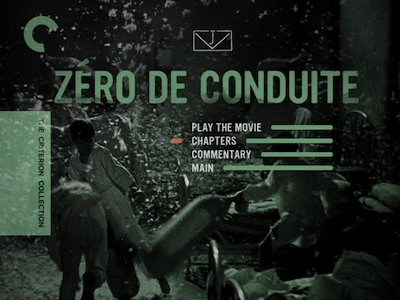
THE COMPLETE JEAN VIGO: A PROPOS DE NICE/TARIS/ZERO DE CONDUITE - #578


Jean Vigo is one of those interesting artistic figures whose reputation far exceeds his output. He's the kind of name that pops up on lists and scholarly surveys and inspires reactions of "What's the big deal?" He made only four films between 1929 and 1934, and two of them were under half an hour, another was less than an hour, and only his last, L'Atalante, reached what we would consider a more standard feature length. Again, that's barely anything compared to other equally revered filmmakers. So, what's the big deal?

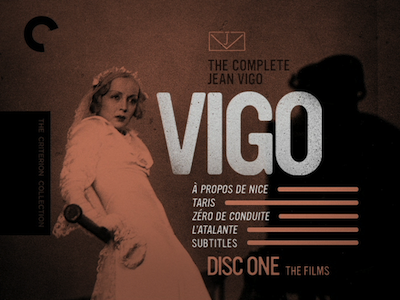
This question is raised, and more than amply answered, in Criterion's The Complete Jean Vigo, a two-DVD set (or single Blu-Ray) collecting all of Vigo's efforts with a movie camera alongside some informative supplemental material. A big deal made of a small career that is a verrrrry big deal indeed.


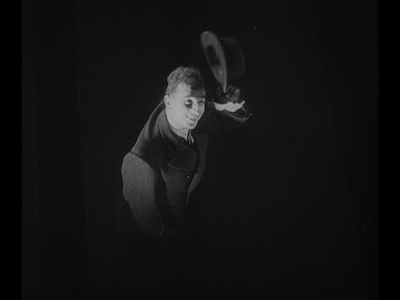
The lead films in the set are the two short subjects Vigo directed, the experimental and fun A propos de Nice (1930, 23 minutes, silent) and Taris (1931, 9 minutes, sound). Both appear to be frivolously produced, with A propos de Nice in particular coming off as a freshman artist being given a new tool and running wild with it. Vigo experiments with double exposure, fades, speed changes, and all manner of other tricks to explore the city of Nice. Most of the footage is shot on the street as documentary; it's in the editing and in some of the staged gags that Vigo draws out a kind of commentary, blending real-life footage with editorial invention. It can be quite funny, such as comparing some exaggerated citizens with similar looks found in nature, or exposing the lingering gaze of a man looking at a pretty girl by showing us what he really wants to see: her clothes disappearing and her silly undergarments exposed, and eventually her completely naked body. Stuffy art has the wind taken out of its sails by seeing a rain puddle gathered in the crotch of a lounging sculpted figure.

Yet, Vigo quickly upends these tricks and tricks his audience at the same time. How do we feel when that same playfulness gets serious and shows us the poor and the starving just around the corner from opulence and conspicuous consumption? It's fairly blunt in terms of social comment, but indicative of an emerging cinematic point of view. Few would take their debut effort into such territory. The effect of A propos de Nice is to equalize the common populace. They all share one city, they are of one people, and the one set being selfish and foolish is all the more so next to their neighbor's misery.


There is a similar equalizing in Taris, in which swimming champion Jean Taris gives a swimming lesson to the viewing audience. Again, Vigo uses experimental effects, including overlapping images, running the film in reverse, and some truly impressive underwater photography. If one wonders where Cocteau got some of his ideas for the many effects shots throughout the Orphic Trilogy, one need look no further. The playful camera work elevates what would otherwise be a standard promo piece for the swimmer, and the ending takes it one step further. Having completed his rather complicated lesson, Taris rises from the pool like some kind of divine being, has his clothes change before our eyes, and exits in a double-exposed shot where he appears to practically walk on water. The glint in his eye suggests, yes, anyone can swim this way, but not anyone can be Jean Taris. There is only one champ.


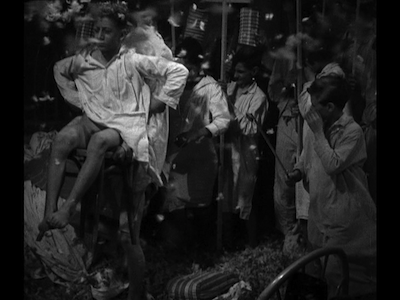
It was two years more before Vigo made the 44-minute film Zéro de conduite (Zero for Conduct) (1933), a whimsical, semi-autobiographical story of a rundown boarding school losing its tyrannical grip on its all-male student body. Returning from a break, the school has a new teacher--or as they call them, "monitors"-- the happy-go-lucky Huguet (Jean Dasté). He is a bit of a joker, and also a fairly competent physical comedian. Dasté glides through a playground scene, breaking into a scrum and grabbing the ball. He does a handstand on his desk to entertain his charges.

Huguet also turns a blind eye to the scheming of three of his students. Caussat, Colin, and Bruel are planning a special prank for the school's anniversary celebration. The girly Tabard (Gérard de Bédarieux) wants in on the act, but the other boys think he is a snitch. Only after Tabard stands up and curses after one of their teachers makes a dirty pass at him in class does he finally get accepted into the fold. The movie ends with their taking action, assaulting their headmasters from the rooftops in a scene that would later inspire Lindsay Anderson in crafting the ending of If.....


Vigo wrote the script for Zéro de conduite, as well as directing, and though there is a basic plot to the movie, it is structured episodically, like a series of Mack Sennett short subjects stitched together. The kids stage a succession of small rebellions on the way to their final operation. Vigo shoots them in such a way as to capture the magic of youth. An explosion of pillows creates a storm of feathers, and the boys ride through it in slow motion, buoyed by their own sense of immortality. The director also peppers Zéro de conduite with small touches of surrealism: the diminutive principal with the big beard (Delphin), for instance, whose reflection moves in the mirror independently. Or the boy performing a magic trick, where the ball disappearing is really just Vigo's manipulation behind the camera and in the editing room.

Zéro de conduite had trouble with the censors on its initial release due to its frankness regarding disciplinary issues and indiscretions in the school environment. That frankness is also why it still remains so vital after 80 years. It doesn't feel whitewashed, and the problems the boys go through remain relatable while their revenge still provides some wish fulfillment for all of us who ever were unhappy with the teachers and administrators at our school. I wrote a column a couple of months back tracing a link from Hal Ashby to Wes Anderson (and would have included Richard Ayoade's Submarine [review] if I could) and examining the coming-of-age subgenre where imaginative boys cope with the world by unleashing their vivid imaginations. Zéro de conduite has as much a place at the forefront of that tradition as it does with other boy's education movies like If...., The 400 Blows, and Young Törless. On their own, each of those is a pretty impressive legacy for one movie to provide a cornerstone to, but both of them...well, I did say Jean Vigo was a very big deal, didn't I?


L'Atalante has been reviewed separately. Read it here.

This disc was provided by the Criterion Collection for purposes of review.

Monday, September 19, 2011

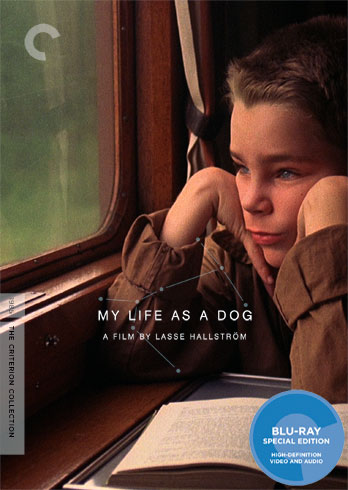
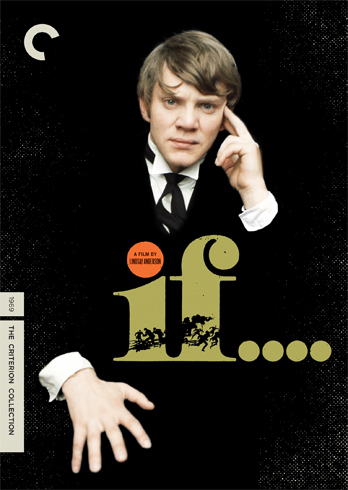
BLU-REDO: MY LIFE AS A DOG - #178/IF.... - #391

I was recently fortunate enough to review the Blu-Ray reissues of two older Criterion films, Lasse Hallström's My Life as a Dog and Lindsay Anderson's If.... While it was an absolute pleasure to revisit these two favorites, and the high-def presentations were suitably impressive, I was happy enough with my older essays on the movies to use them again. I did, however, update the technical specs, and if you would like to go over the full reviews, including my assessment of the audio/visual quality, click through on the covers to see my DVD Talk entries.


Original version


Original version

* *

Thursday, June 30, 2011

SIDELINE: MORE REVIEWS FOR 6/11

There was no post here on the blog last week, so I have fallen a bit behind again. As you'll see in the monthly round-up, it's not for lack of work; on the contrary, it's been too much work, I've been reviewing a lot. All I need to do is double up one week, though, and I'm back on track--and that should hopefully be easy, since I have four new releases (two Louis Malle, a Satyajit Ray, and the most recent Eclipse set) waiting to be watched. Comic Con is also coming, so you may see me scrambling yet again in not too long. Who all is going to the big show this year? Be sure to stop by Tr!ckster, there is much to be done and seen, including a Criterion sponsored event celebrating Kurosawa and raising money for relief in Japan. I'll also be part of Symposium 5, a ticketed event, so plan on going to that now!


IN THEATRES...

* 13 Assassins, samurai slaughter from Takashi Miike.

* Beginners, Mike Mills' exploration of mortality, love, and depression will catch you off guard. Naturally quirky and moving, it stars Ewan McGregor, Christopher Plummer, and Melanie Laurent.

* Green Lantern. You will believe that space can be realllllly boring. And Earth. And everything else.

* Larry Crowne. This weekend, you can watch cars transform into robots, or you can let Tom Hanks transform your cold, dead heart into something living again. Your call.

* Midnight in Paris, everything old is new again in Woody Allen's delightful return to form.

* Submarine, a quirky, heartfelt coming-of-age drama set in Wales.

* The Tree of Life, in which Terrence Malick wrestles with the universe, the All Father, and all fathers.

* The Trip, Steve Coogan on a very funny roadtrip with his pal Rob Brydon. Directed by Michael Winterbottom.

* X-Men: First Class: Hey, man, that's a groovy mutation, but the movie's kind of a piece of crap.


ON DVD/BD...

* BLAST!, a science documentary about sending a telescope up into the sky on a balloon to look at the stars.

* Carancho, an Argentinian twist on crime and romance, from the people who brought us Lion's Den.

* The Cocoanuts, yuck it up with Los Bros. Marx in their 1929 debut.

* Despair, a Vladimir Nabokov adaptation from writer Tom Stoppard and director Rainer Werner Fassbender, starring Dirk Bogarde. And it's as weird as that combination would suggest.

* Eight Iron Men, a WWII variation on the "chamber room drama" that never quite takes off. From Edward Dmytryk and Stanley Kramer.

* The Goddess, Paddy Chayefsky wrote this thinly veiled portrait of a Marilyn Monroe-type actress, played by Kim Stanley. Interesting, if not entirely successful.


* Laila, a silent Norwegian epic from 1929.

* Man from Del Rio, starring Antony Quinn as a Mexican sheriff in a racially progressive 1950s western.

* The Man in the Net, starring Alan Ladd, directed by Michael Curtiz. Read the review that one fan called "a classic example of...uninformed arrogance" and inspired him to suggest I "take up something else to while away your time or attend a junior college film class."

* Marriage Italian Style, a strangely dark, yet intriguing, romantic "comedy" from Vittorio De Sica, reteaming Sophia Loren and Marcello Mastroianni.

* Never Apologize, Malcolm McDowell's one-man show in remembrence of director Lindsay Anderson.

* New York, New York, Martin Scorsese's notorious 1977 musical mash-up of new and old styles, starring De Niro and Minnelli.

* Public Speaking, Martin Scorsese's documentary about author Fran Lebowitz. Engaging and funny.

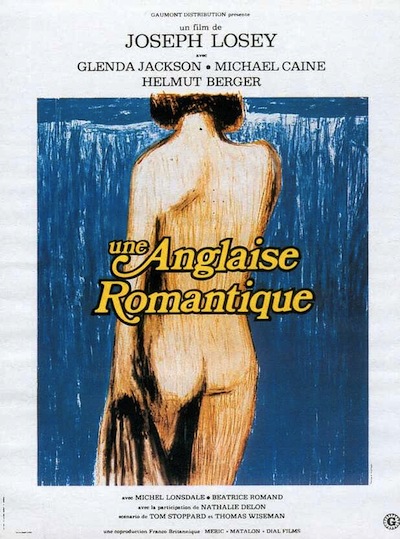
* The Romantic Englishwoman, Joseph Losey directing a Tom Stoppard script about Glenda Jackson's aching loins. And Michael Caine yells a lot.

* The Sacrifice, a beautifully remastered new edition of Andrei Tarkovsky's final film.

* Spectacle: Elvis Costello with...Season 2, a second go-around with the maestro.

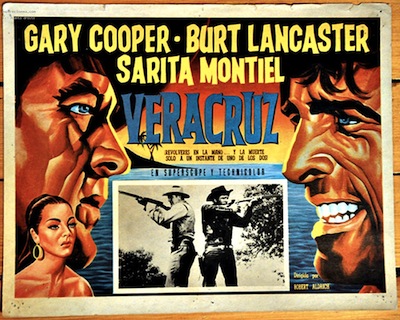
* Vera Cruz, Burt Lancaster and Gary Cooper shoot up Mexico in a film by Robert Aldrich.

* Who Took the Bomp? Le Tigre on Tour, a concert documentary about the influential feminist punk band. The DVD includes a ton of great bonus features.

* Yesterday, Today and Tomorrow, a trio of themed stories from director Vittorio De Sica and actors Marcello Mastroianni and Sophia Loren.

Thursday, December 9, 2010

AMERICA LOST & FOUND: THE BBS STORY (Blu-Ray) - #s 544-550

"The tragedy of your time, my young friends, is that you may get exactly what you want." - Factory Owner, Head
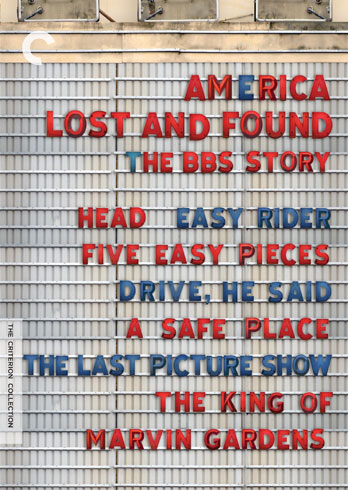


BBS was a short-lived, yet artistically progressive production company that had an integral role in one of the most adventurous periods of American moviemaking. Comprised of Bob Rafelson, Bert Schneider, and Steve Blauner, the company made seven movies in the late 1960s and early '70s, some of which went on to be iconic works, some of which are not as well known. Each were distinguished by the team's commitment to working with new talent to show contemporary America as they saw it, from the working class through to the counter-culture and on up to the moneyed folks. That is why the boxed set of these movies is called America Lost and Found. The BBS productions were chronicling a turning point in modern living, and their films were saying good-bye to an old, glossed-over Hollywood vision and hello to something more liberating.

In fact, you can see the struggle for the creative torch played out in the set's first and possibly most perplexing film, Head (1968). Directed by Bob Rafelson, and featuring scripting by none other than Jack Nicholson, Head is, of course, best known as the movie that featured the Monkees sending up their own image and addressing the critical misconceptions directly, but doing so in their inimitable madcap style.



I have always liked Head, though I have never been able to convince myself if it's actually good or not. It's entertaining and funny and full of great songs, but it's also maybe too long and too self-reflexive. At times, it feels like all involved are telling a joke only they are in on. Yet, the squeaky-clean television Beatles were breaking out of the box that broadcast their scripted adventures week after week. Head showed them doing things they couldn't do on TV, including Peter Tork hitting a woman and then wondering if that was something he could get away with. As he tells us, he is "always the dummy." Is he even allowed to search his soul to question the assigned morality?
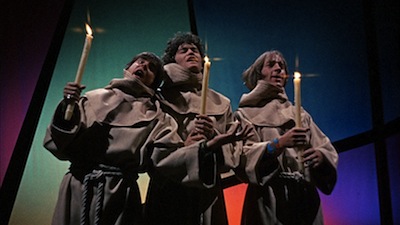


The freeform collection of skits runs through movie history, flaunting clichés while addressing political and artistic concerns, melding social issues with the Monkees' insistence that they were authentic while also exposing the artificiality of their cinematic construct. Of course the group's heartthrob Davy Jones would be paired with America's sweetheart Annette Funicello, but he'd reject her to sing Harry Nilsson. The more obvious metaphor of old Hollywood vs. new, however, is the giant Victor Mature that chases the Monkees through the whole movie. In one scene, they are the dandruff in his oily hair; in another, the overly tanned actor is bored by their antics; in the end, he is one of the elements that chases them to their death. The question is, did he know that the cultural shift Head represented would actually be the cause of his own demise? The days of the Hollywood star system than made Victor Mature a celebrity were over.
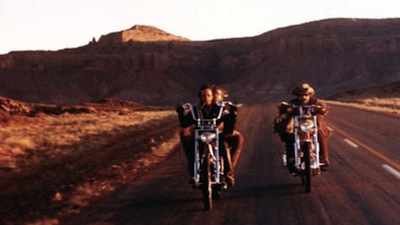


Possibly not, especially since Head was not a box office or critical success. I doubt, then, there was much hope for the next BBS picture a year later: Easy Rider (1969). Directed by Dennis Hopper, and co-written by Hopper, Peter Fonda, and satirist Terry Southern (The Loved One), it was a road picture, a collection of vignettes strung along a map, following two motorcycle hippies on their journey from a West Coast drug deal to Mardi Gras in New Orleans. Fonda plays Captain America, the flag-draped picture of laid-back cool, and Hopper is Billy, the spacey, long-haired cowboy that cruises alongside him. Wherever the pair go, they are met with resentment and distrust. It was the counter-culture directly meeting exactly what they were counter to, though in a lot of ways, they are far more sympathetic to the other side than Old America is to them.

Jack Nicholson appears in a memorable supporting role, playing an alcoholic lawyer the bikers meet in jail and take along with them on the rest of their trip. He lays it out for the Captain and Billy: they represent true freedom, and their rejection of the expected social paradigms exposes how the old democracy stifled individuality. Hopper and Fonda were taking the cheap B-movie, Hell's Angels-exploitation pictures they had been making for Roger Corman and, like the Monkees, flipping what was expected and injecting it with the unexpected. It's a pretty heavy-handed message, and it has a pretty heavy-handed outcome. And I hate to say it, despite the excellent performances, I actually find Easy Rider kind of boring. It's the sort of movie I can appreciate for its significance, but that maybe isn't as artistically potent now that some time has passed.
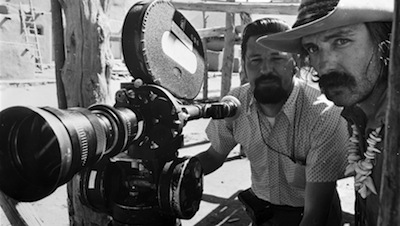


Excepting that, Hopper's directorial approach is impressively innovative. Legendary cinematographer Lázló Kovács shot the movie using a naturalistic lighting style, photographing the locations as they were; however, Hopper took this realistic-looking footage, and he and editor Donn Cambern cut it like a psychedelic movie. Transitions show flashes of things to come, like channel surfing into the future, be it the future that is just around the corner or further down. Hopper also uses contemporary music in a far more pronounced way than was common at the time. Whole songs match whole stretches of highway, with the two guys and their bikes rolling to the rhythm of Steppenwolf, the Band, the Byrds, and others. Granted, it's these extended "music video" sequences that can make Easy Rider drag, but you know, you can't win them all.
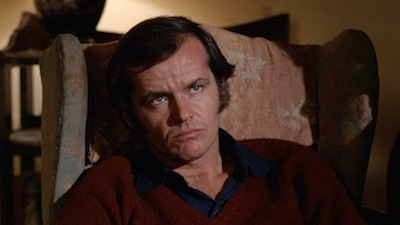


And let's face it: historically Easy Rider was a big hit, and it lead to BBS garnering more faith in their material from studios. This lead to a creative explosion, as the newly successful conglomerate set out to give fresh talent the avenue to realize their vision. First up, Rafelson and Nicholson (and Kovács) reteam for Five Easy Pieces (1970). Thankfully, third time is the charm, here is where they get it just right.

Five Easy Pieces was developed from various scripts by Rafelson, with the final product cobbled together by Carole Eastman (credited as Adrien Joyce). It's a movie that everyone thinks they know before they see it, based on one iconic scene--Jack Nicholson, diner, hold the chicken salad between your knees--but the complete film is really so much more. Yes, Jack plays Robert Eroica Dupea, the kind of motor-mouthed, half-cracked crazy that is his raison d'être, and in a way, it is the definitive revelation of so much Jack to come. Yet, as his pretentious name hints, there are layers to Robert. Though we meet him working as a roughneck in the oil fields of California, his return home to the Washington wilderness will be a journey of rediscovery and revelation. His middle name is for Beethoven's 3rd Symphony, and he is from a family of classic pianists. Bob himself can tickle the ivories, though he walked away from that and has been hiding out amongst the working class. He is only returning to his clan because his father may be dying.

What works so well in Five Easy Pieces is that odd pacing of real life that Easy Rider strove for and maybe didn't quite get. The way the story unfolds appears to be haphazard, as if there is no plan, it's only when you get to the movie's emotional climax that we realize that Rafelson and Eastman are building to something. The early part of the movie shows Robert's happenstance life, screwing around with his drinking buddy (Billy "Green" Bush) and screwing around on his girlfriend, Rayette (Karen Black, a BBS regular; she is also in Easy Rider). Ray goes with him on his drive North, and endures the pedantic hitchhikers they pick up (Helena Kallianiotes and Toni Basil), and eventually insinuates herself into the family situation. Robert is trying to keep his two lives separate, which is the worst symptom of his condition. He is a man trying to outrun his emotions, not just his pedigree, and Five Easy Pieces is when they catch up with him. The title is a little mysterious, but it has connections to how Robert squanders and cheats his true talents by playing the easiest music he knows.

Lázló Kovács' photography is once again the star here, and his underplayed style suits the dusty oil fields as much as it does the rain drenched Northwest forestry. His work here brings to mind the dirty photography of his pal Vilmos Zsigmond in Robert Altman's McCabe & Mrs. Miller, not just for its lack of a glamorous color palette, but also for how he manages to create an uneasy alliance between the environment and the people. It is a relationship both parasitic and symbiotic, the humans don't quite fit and yet they must to survive. This serves Rafelson's metaphor: Robert is playing at being something he is not, and in the final scenes, he strips down and unintentionally removes his protection from the cold. It's a move of surrender, but one that means he can get back in touch with what is true about who he is and where he belongs.

Jack Nicholson is riveting in the lead. He is starting to develop that Nicholson persona, but what will be the tricks of his trade are so dialed down here, they still have the spontaneity that some later performances maybe lack. In his most incisive performances, Nicholson plays the anti-hero whose bravado is really just an illusory suit of armor, and a good director works with him to get beyond it. Again, it's the metaphor I just mentioned, of getting past the clothes and getting to the man. The actor has an impressive monologue in the film's heartbreaking climax, and despite the attention of the diner scene, his farewell to his father is really Jack Nicholson at his best.
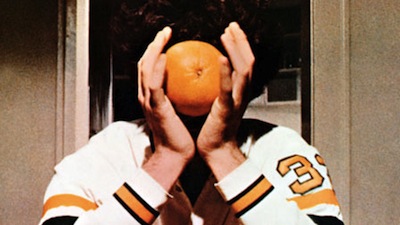


"You're pretty. And sad. And weird as hell." - Fred, A Safe Place

For as progressive and individual as all the films in America Lost and Found: The BBS Story can be, the true odd ducks emerge midway through the set, paired on one disc. Drive, He Said (1970) and A Safe Place (1971) are the two least-known movies here, largely because they haven't been on home video prior to this boxed set. It's not hard to see why, they aren't exactly commercial screamers. Still, they are fascinating curios, and they speak to the artistic freedom Schneider, Rafelson, and Blauner extended their talent.

Drive, He Said is Jack Nicholson's directorial debut. The actor doesn't appear in the movie, but he co-wrote the script with Jeremy Larner, adapting Larner's novel. (Some sources say that Chinatown-scribe Robert Towne, who appears in the film as Karen Black's husband, and none other than Terence Malick also contributed to the screenplay.) The story follows two college roommates, stoned-out basketball player Hector (William Teppert) and unhinged political activist Gabriel (Michael Margotta). Hector is likely to be drafted to the NBA, Gabriel is fighting being drafted into the army; the former is indecisive and unsure of his future, whereas the latter is ready to push the boundaries and break free. Unsurprisingly, only one of them ends up making any definitive moves.

In an interview on the disc, Nicholson says that making Drive, He Said taught him that to successfully adapt an impressionistic work of fiction, the key is to remove any interior monologue. If something only happens in a character's head, it has to go. That may be the way to do it, I don't know; I can't say that Drive, He Said is entirely successful. Some of it works really well--the May-December romance between Hector and a teacher's wife (Karen Black) rings true, and Bruce Dern runs away with the movie as Hector's coach--but other parts fall flat. Particularly, Gabriel's theatrical protests struck me as pretentious and not very believable. While Nicholson was trying to harness the energy of unrest on college campuses, what he puts on screen comes off as staged and false. Like If.... [review] with its fangs filed down. Luckily, the emotions of the individual characters still feel real, and the plot continues to be relevant. In particular, viewers today might find much to identify with in the boys' predicament: the choices young people being offered for their future don't hardly seem like choices at all.
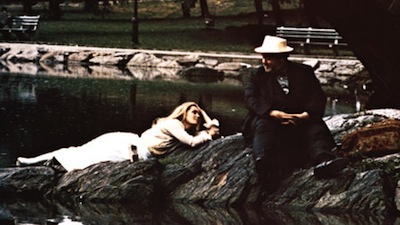


Henry Jaglom appears in Drive, He Said as the ringleader of Gabriel's political enclave, and Nicholson returns the favor by taking a supporting role in A Safe Place, Jaglom's debut feature as writer and director. The movie is an expansion of a stage play of Jaglom's, though the final product bears little resemblance to a theatrical production. A Safe Place definitely wears a cinematic wardrobe, though it's a little mixed up as to what articles of clothing go where. The shoes don't always match the shirts.

A Safe Place is essentially a romance, working the standard trope of a buttoned-up nerd (Phil Proctor) having a love affair with a flighty female (Tuesday Weld), and never quite figuring out if it is liberating or enraging. The story is told along several different timelines, and much of what we see might just be a fantasy of the girl, who is alternately known as Susan and Noah, depending on what part of the story she is in. Cut into her relationship with Fred are two other relationships: one with an old Magician (Orson Welles), who may be a stand-in for her father if not the real thing, and an ongoing affair with a rich, married man (Nicholson). The Magician seems to understand the girl that Noah used to be--and indeed, is the one who calls her Susan--and also to give value to her dreams. Noah remarks several times that, as a young girl, she could fly, and her main problem with being an adult is she can't remember how.

The true magic of A Safe Place is in the editing. Jaglom and Pieter Bergema create a kaleidoscopic mis-en-scene, moving back and forth between the various sequences, inserting moments of expressionistic commentary, and essentially pulling off a juggling act that is impressive even if the overall outcome is not. Part of me thinks maybe the script is weak, that some of the tropes are obvious and that the relationship elements and dialogue betray the shallowness of a neophyte writer. In a weird way, A Safe Place is a bizarre remix of Breakfast At Tiffany's, with the girl having multiple identities to cover her past and the poor schlub who meets Holly Golightly even being named Fred. That would make Orson Welles a stand-in for Buddy Ebsen in the Doc Golightly role, and Jack Nicholson as the various rich suitors who give Holly $50 for the powder room.

Regardless of some hinky dialogue, though, the story works, probably in large part because of the fact that it is so familiar. I think the problem ends up being in the acting. The main performers, Weld and Proctor, don't quite seem ready for prime time, with Proctor in particular coming off as if he were in summer stock rehearsals rather than on a real movie set. Weld lacks the charisma to make Noah alluring, she doesn't go deep enough to make us even halfway believe the girl's stories of magic boxes and flying. Both look all the more pale in comparison to their supporting cast. Nicholson is all charm here, working the role quietly, something altogether different than what is generally expected of him. And, oh, what a treat to see Welles at this age! Jaglom brilliantly lets Orson be Orson, magic tricks and all. He has several moments of speaking to the camera, addressing the audience/Noah directly, that show what an arresting presence he could be. It's one of his most comfortable screen performances, where the showiness rarely seems unnecessary or contrived, and instead is just a very real part of a gifted actor's personality.
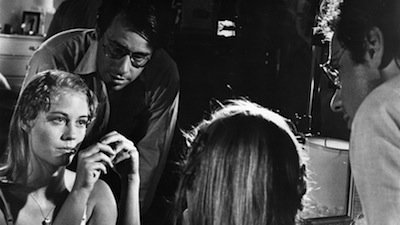


In one of the documentary features on America Lost and Found, Jaglom good naturedly points out that though A Safe Place and Peter Bogdanovich's The Last Picture Show (1971) were released at the same time, their box office couldn't have been more different. As he puts it, Picture Show would go on to be the most successful film of the year, while A Safe Place was the least successful. There is no malice or jealousy in his anecdote. He seems quite clear that Bogdanovich had achieved something special.

For his first major full-length movie, Bogdanovich teamed up with author Larry McMurtry (Lonesome Dove) to adapt McMurtry's frank, tersely written ode to small town life in 1950s Texas. Stylistically, Bogdanovich pays homage to the period, using the country music that would have been on the radio at the time as his score, and cinematographer Robert Surtees shot the film in black-and-white, creating instant nostalgia. Nothing else is old fashioned about The Last Picture Show, however, as it busts the conventional squeaky-clean representations usually associated with the '50s by portraying kids who drink and fool around, adultery, and the general small-mindedness that often came with isolated rural living.

The Last Picture Show is essentially a year in the life of a Texas town, beginning the morning after the last game of the high school football season (it didn't go well) and ending at the start of the next season. Though an ensemble piece, the lead is ostensibly taken by Sonny Crawford (Timothy Bottoms), a thoughtful boy who could be something better than what is expected of him if only he'd take the time to consider it. His best friend is Duane (a young Jeff Bridges), a tougher customer and more of a "free spirit." Duane dates Jacey Farrow (Cybill Shepherd), the prettiest girl in school. Sonny is dating an unpleasant girl at the start, but when they break up, he starts an affair with an older woman (Cloris Leachman), the wife of his basketball coach.
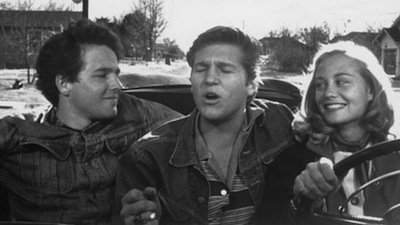


I first saw The Last Picture Show when I was 18 or 19, and at the time, I pretty much viewed it as a coming-of-age story and little more. Now that I am older, I can sympathize a little more with the older characters and appreciate the fact that Bogdanovich and McMurtry are showing all levels of town life--young, old, and in between. One of the themes of the movie, as with so many of the BBS productions, is the changing times, and unlike most of the other movies, The Last Picture Show really pays attention to how the turnover effects the previous generations and goes a long way to suggest that the older folks aren't so bad. They have their good apples and their bad apples like anyone else. The obvious focus character is the father figure, Sam the Lion (Ben Johnson), but there are also important lessons imparted by the middle-aged women, played with ferocity by Leachman, Ellen Burstyn, and Eileen Brennan. As good as the young cast here can be, they are schooled by the veterans, who more than own the screen.

Bogdanovich is paying tribute to cinema of days gone by at the same time as he says farewell to and demythologizes the supposedly more innocent past. As a scholar who learned everything he could about old Hollywood, while Bogdanovich took advantage of the looser standards of the 1970s, he still believed in traditional storytelling. The Last Picture Show adheres more closely to the old ways, employing more conventional techniques than the other BBS films. When he closes down the movie house at the end of the film, it's meant to be the final reel of a bygone era in American motion picture making.


The generational divide is nothing compared to the divide between brothers, if the final film in the set, The King of Marvin Gardens (1972), is anything to go by. Bob Rafelson returns behind the camera, working from a story he co-wrote with screenwriter Jacob Brackman. Jack Nicholson also teams with the director again, though this time in a role that apparently he almost didn't get. Rafelson didn't think it was showy enough for Jack's talents, while the actor smartly saw it was his chance to be different. Nicholson plays David Staebler, an introspective talk radio DJ sarcastically nicknamed "The Philosopher" by the brother he hasn't seen in two years. When that brother, Jason, calls out of the blue and demands David leave Philadelphia for Atlantic City, David goes, but he knows he's heading for trouble.

Jason is played by Bruce Dern, who at times seems to be channeling some of that trademark agitated energy Nicholson wasn't using this go-around. The pair make for believable brothers--different enough to be distinct, but alike enough that you can believe they came out of the same gene pool. When David gets off his train, Jason is nowhere to be seen. Instead, he is greeted by an aging beauty queen (Ellen Burstyn) and a tardy brass band. Jason, it turns out, is in jail for alleged auto theft. He sends David to get a local business man/mobster named Lewis to bail him out, which is just the beginning of the long con Jason is playing on his brother--though we are never quite sure, even to the end, how much is a con and how sincere Jason really is. If David is the thinker, Jason is the dreamer, and his latest scheme is a resort on a small, uncharted island in Hawaii. He wants his brother to go in with him, and enlists David in beating the bushes for backers, plying him with many promises, including a possible affair with the beauty queen's young stepdaughter, Jessica (Julia Anne Robinson).

It's amazing how easily David falls back into the routine with his brother. The pair of them pull a quick hustle at an auction house just because they can. We already know that David has the gift of gab and a tendency to exaggerate from the opening scene at his radio show, but this is something more. Rafelson is working one of the same irritated nerves that he was picking at in Five Easy Pieces: how family defines us, good and bad, and how hard it is to discard their influence. In much the same way Nicholson's more outlandish character in that movie gets sucked back into his family's erudite squabbles, so too does his polar opposite in Marvin Gardens drop right back into the shuck and jive. David and Jason are practically a classic comedy duo: one taller, the other shorter; one outgoing, the other the victim of his partner's over-sized schemes.

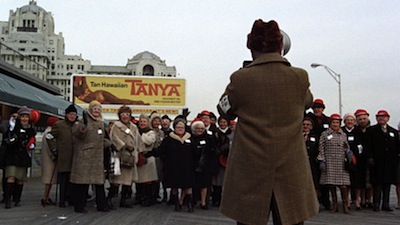
Visually, Rafelson and Kovács make use of the depressing aura around Atlantic City in the off-season. It's a gaudy setting, looking a little like the holiday resort version of Miss America without her make-up--an analogy that comes to mind since Atlantic City is where the Miss America pageant has traditionally been held, and in one of Marvin Gardens' most memorable scenes, the group rents out a hall to perform a mock version of the contest for Jessica. That sequence serves not only to show us the level of delusion that Jason and his ladies operate at, but it's also indicative of how Rafelson and Kovács use the landscape as juxtaposition. The size of the event center overwhelms these tiny people, and the fact that most of the accoutrements are taken down and packed into boxes just adds to how sad and misguided they are. Jason stands tall, but he's at the center of an empty arena.

The ending of The King of Marvin Gardens serves as a melancholy coda to America Lost and Found: The BBS Story. As with the movie theatre closing down in The Last Picture Show, or even Duane and Sonny saying good-bye, the split between the Staebler brothers is an unhappy one. It's necessary, but that doesn't mean they have to like it. They had fun together once. We see it in the final image, their grandfather's home movies of the two boys playing on the beach as children. It's the worst kind of emotional longing: that which can never be again, but that you'll still end up chasing no matter how hard you try to get away from it.


America Lost and Found: The BBS Story is an endlessly intriguing collection. Even if all the movies don't quite hit, they are all interesting, all informative in their way, encapsulating the changing landscape of American cinema and of the country itself. Taken as a whole, they form a kind of anthology, each movie informing the film that would follow, building a larger aesthetic narrative. Of the seven films, three of them--Easy Rider, Five Easy Pieces, and The Last Picture Show--are bonafide classics, and a fourth, The King of Marvin Gardens, is due to be reevaluated and classified as such. The other three round out the corners, provide the connections between their brethren, and are essential to getting the complete picture of this extraordinary collective. In any creative industry, artists would be lucky to find people to work with as supportive as Bob Rafelson, Bert Schneider, and Steve Blauner. The space they created for their people to work was unlike any other, and it's an experiment that can likely never be repeated--but, boy, wouldn't it be great if someone tried?
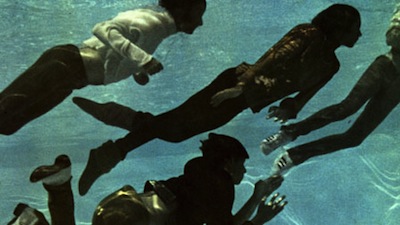


For a complete rundown on the special features, read the full review at DVDTalk.

Monday, January 21, 2008

IF.... - #391


Boarding schools have provided many a filmmaker with a ripe setting to create commentaries on the pitfalls of society. Having never been to one myself, they seem like strange and foreign environments to me. Self-encapsulated, estranged from the rest of the world, they are civilization in miniature. Writers and directors of all stripes step back into the hallowed halls of private and public academia to exorcise the demons of their youth (such as Volker Schlöndorff's Young Törless) and to comment on a system that emphasizes conformity over individuality (Keith Gordon's Chocolate War).

As a top example of the genre, I am surprised that Lindsay Anderson's tale of brutality at a British boarding school, If...., isn't more notorious than it is. Sure, I've seen it mentioned in books on cinema, and it's been one of those films that has been on quite a few lists over the years of movies that needed to be released on DVD, but it still seems to have mainly sailed under the radar since its Cannes-winning release (I mean, why didn't I hear about this flick back in high school?). Made in 1969, If.... is an acidic assault on the imbalance of power, one that likely felt potent at the end of the 1960s, as student revolt and protest started to drift from hopeful action to aimless flailing. It certainly strikes a powerful chord today, when its message and the methods by which its antiheroes get their vengeance seem eerily prophetic.

If.... was a young Malcolm McDowell's first movie. He plays Mick Travis, the head of a trio of boys that one headmaster dubs the "Hair Rebels." A title card in the film (the narrative is broken into distinct chapters) refers to them as "Crusaders." They certainly represent the downtrodden in this mini community. The boys at this school are endlessly splintered into groups. By house, by class, by room, they are forever compartmentalized. Four sadistic boys known as the Whips rule over College House, and they can easily bully the younger students into doing what they want, but Mick and his gang cause a bit more trouble. They're the boys with the bad attitudes who see through the façade of power and privilege.

The school in If.... is governed by a mysterious, archaic set of rules. Hair must be a certain length, freshman boys must know the names of everyone in the senior class, and specific materials are required in specific drawers in each student's desk. The Whips order the other kids around, making some boys act as their servants, meting out punishment for infractions real and imagined. These penalties can range from cold showers to humiliating whacks with sticks. In the recent documentary The Ghosts of Abu Ghraib, the filmmakers use footage from a famous academic study where it was shown that regular people would inflict cruelty on their fellow man if they believed a voice of authority was ordering them to; likewise in If...., the boys submit to their punishment with a quiet resignation. This is the way it is done, allegedly it's how it's always been done, just accept it.

Isolated as they are, the kids at this school are drawn toward every fruit the rules forbid. In their study room, Mick and the others tack up pictures of fighting men in threatening poses while hiding their skin mags out of sight. They drink and they smoke, and occasionally they sneak off the grounds to take their rebellion a little further. Of course, they aren't the only ones who partake. The ruling element does, as well, even going so far as to try to tempt Bobby (Rupert Webster), a boy who serves as their butler, into performing other services for them. How fitting that he would eventually gravitate to Mick's mate, Wallace (Richard Warwick), providing the film with both one of the few moments of tenderness (a brief scene of them asleep together) and one of the only acts of heroism (Wallace lets Bobby bolt while he alone takes the blame for being in a restricted area). The rest of If.... is devoid of any real human warmth. Mick accuses the head of the Whips, the smug Rowntree (Robert Swann), of being frigid, and it inspires Rowntree's most sadistic act of wrath--most likely because he's irked by the truth.

As these things go, there is only so much abuse the Crusaders are going to take before they've had enough. Ditching a rugby match (organized sports=institutionalized brutality) and taking a joyride on a stolen motorcycle, Mick and Johnny (David Wood) taste a freedom the school denies them. The scene leading up to the theft gives us the symbolism that will define their ultimate action in the movie. First they run through the streets handcuffed together, and then in a play of mock hostility, Mick knocks Johnny to the ground, securing their separation. Only violence will break them out.

Riding down a country highway, the boys stop at a roadside café, where they meet "The Girl" (Christine Noonan). When Mick tries to kiss her, acting with the same prim entitlement as the dark lords of his alma mater, Christine lashes out at him. She not only shows him he can stand up, but she also unleashes a more primal force within him, turning the tables by declaring she is a tiger and moving on him as such. He fights back in the same way, and it's almost as if from there he has reverted to his natural state, accepting that it's not man's place to take orders.


It's fitting that this is one of the many scenes in If.... that Lindsay Anderson decided to shoot in black-and-white. Though there are many non-artistic explanations for why some scenes aren't in color, what ends up on the screen transcends budgetary concerns and is artistic regardless of the viability of said concerns. Whenever the image shifts to black-and-white, the whole mood shifts with it. It's not that these sequences are that different from the rest of the film's action, but the absence of color lends them a surreal gravitas. They automatically come off as more serene than the anger-fueled color scenes. The black-and-white sequences also have a narrative importance. The switch signals that something crucial is going to happen--Bobby and Wallace notice each other, Mick meets the Girl, the boys find the tools for their vengeance.

The final chapter of If.... plays out on the day of one of the school's most pompous, self-aggrandizing ceremonies. Parents have gathered in the chapel with the teachers and students to hear the praises of the institution sung by an aging general who refuses to loosen his grip on tradition. Around him, the priests wear their most ostentatious costumes, and another member of the staff dresses in a full suit of armor. It's a ludicrous display, revealing these methods as outmoded even as their champions pat themselves on their backs for not giving in to progress. Blind to the dissent fomenting all around them, they run straight into an ambush.

The scenes of violence that follow aren't particularly gory or shocking, but they do serve to release the pressure that has been building throughout the movie. As viewers, we realize we've been holding our breath, automatically siding with the rebels (and thus, ironically, conforming to what the narrative demands) and finally exhaling when they return all the punishments on their tormentors. Rather than slide out with a tidy resolution, Lindsay Anderson stops the climax in mid-action, cutting to a black screen and the title printed in blood red letters. If.... The ellipsis is for the viewer to fill in. If what? If we don't check this kind of regimented oppression, an uprising is surely to happen? If a man is pushed often enough, he'll push back? Or is it to signal that this is just fantasy, merely allegory, and not to be taken as realism?

Either way, while the first three periods of the ellipsis indicate a trailing off, an omission that needs to be reinstated, the fourth period indicates finality. Though the thought trails off, it does end somewhere.

And where it ends will make all the difference.


Originally written June 19, 2007. For technical specs and special features, read the full article at DVD Talk.

Sunday, January 20, 2008

THIS SPORTING LIFE - #417


Frank Machin is a bruiser who works in a British factory. Desperate for a chance at a better life, he muscles his way into a tryout for the local rugby team, introducing himself by way of a punch to the jaw on one of their star players. His aggressiveness propels his meteoric rise through the club, garnering fans and respect, but also placing a few more chips on his shoulder than when he walked into the place. Directed by Lindsay Anderson (If...., O Lucky Man!) and adapted by David Storey from his own novel, This Sporting Life is a rough-hewn example of the British kitchen sink school. It exemplifies everything that made the movement so interesting. Set against a dreary black-and-white, working-class backdrop, it showcases the struggles of a young man with more emotion than he knows what to do with, trying to earn his way in a world that seemingly has no place for him.
As played by Richard Harris, Frank is a force of nature, a lumbering animal trying to live among humans. Late in the picture, he is referred to as "a great ape," something that he takes great offense to. This is in large part due to the fact that the insult comes from Margaret Hammond (Rachel Roberts), the sad widow whom Frank has been renting his room from. He has tried to make a family with her and her two children, and in his way, has shown her the more tender side of himself. Thus, it hurts all the more that she would lay him so low.

Not that he doesn't deserve it. Frank has seen their relationship as something he can charge through the way he does on the rugby field. The affair between himself and Mrs. Hammond is the heart of This Sporting Life, and it beats with brutal force. Frank wants to show that he can be a man, that he can provide for the family and be caring, but he's got no real capacity to express it. The best he knows how to do is preen and show off, ostentatious gestures of affection that don't really satisfy the soul. Deep down, what Frank wants is to be needed, and he thinks Mrs. Hammond could use someone like him in her life. Since her husband has died, she has been shut up in her house, denying herself any happiness. For as difficult a time as Frank has showing love, she doesn't go very far to let him. She even denies his advances for most of the picture, only finally letting him in when he's already gone off the rails. It's a match made in Hell.


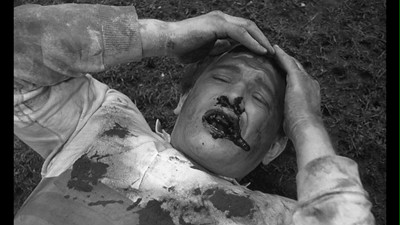
Most of the early movie is told as a fever dream Frank has after being heavily medicated on Christmas Eve. A brutal blow to the face on the rugby field has shattered his choppers, and he's had to have six of his front teeth removed. Carted to the dentist and then to a raging Christmas party, Frank comes in and out of consciousness, with each successive drift showing more of the story of how he came to join the team and how he's let it go to his head. He tosses cash around as an excuse to stretch his ever-expanding ego, buying the right to be more boastful and confrontational. To his credit, though, he stays true to Mrs. Hammond. Though she accuses him of stepping out with other girls, we don't really see it.

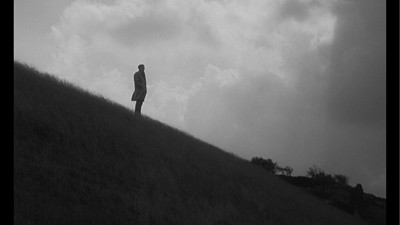
Those teeth getting knocked out act as a catalyst for toppling the delicate balance Frank has achieved. He seemingly throws all caution to the wind, and those who have tolerated him in the past cease to find his bullish manner charming. In its way, This Sporting Life is a cautionary tale to all the young athletes who these days get fame way too quickly, don't know how to deal with the sudden success, and end up getting into trouble. Frank has to lose everything to be reminded of why he was chasing the dream in the first place. Anderson and cinematographer Denys Coop create a lovely shot of the muscle man standing on a grassy hill looking down at the factory that claimed Mr. Hammond and could end up claiming him, too, if he's not careful. It's a bittersweet moment given the tragedy that follows.


The best kitchen sink dramas are unflinching in their depiction of the hopelessness that British youth suffered in the decades following World War II. Many felt that the past was being lorded over them, with the older generation refusing to let go of the wartime experience the way Mrs. Hammond in This Sporting Life can't let her husband truly be dead. She keeps his boots by the door, all polished and ready for him to wear, as if he is upstairs sleeping and just needs to come down and claim them. As long as they are there, she has no hope of moving forward, barred from her future by everything they represent. Yet, as Frank knows, the mythic figure they are meant to evoke is not as pristine as she'd make him out to be. The truth of his death is much darker than the legend of his life portrays it as.

There is no catharsis for Frank, no escape. Getting his head kicked in on a muddy playing field is no better life for a man than working a machine. (Machin? Is Frank little more than a machine himself?) It's all emptiness, only as good as the last scoring goal. Anderson and Coop shoot his pain in a stark neorealist manner, creating a kind of existential expressionism with the stone streets, dreary houses, and smoky skies of the factory town. No glamorous lighting, though maybe a well-placed shadow to emphasize the darkness. For This Sporting Life to work, we have to see that the town itself, the very place these people live, is as unforgiving and unpolished as their emotions, possibly even the cause of them. The rugby games also have to be as dirty and real. The camera gets down on the field with the players, catching every blow, all of the blood and mud. Lindsay Anderson makes it so you can see the bruises forming on the bodies and feel the crush of every powerhouse hit. Frank is locked in an eternal scrimmage, and there is no way out.

This makes the title This Sporting Life into the film's greatest irony. Though evoking a feeling of play, its true meaning is that all of existence is a game, one that is ongoing, and that seemingly can't be won. Frank often describes himself as feeling "champion," but that is only when he is out in front of the struggle. A man can keep fighting, but with no prize at the end, what for? You get knocked down, and then you get back up, until the day you decide to stay in the dirt. Judging by the closing shots, one does not imagine Frank Machin happy.


For technical specs and special features, read the full article at DVD Talk.

And, yes, I can give an existential reading to just about anything.