This review originally written for DVDTalk.com in 2011.
Leading British arthouse film director Andrea Arnold (Red Road [review], Fish Tank [review]) has taken one of literature's most famous romances and scrubbed it of its poetic declarations and gloomy portents, revealing a tattered, brutal tale of cruelty and the privilege of class that has been lurking underneath all the heavy breathing and emo expressionism.
Arnold's interpretation of Wuthering Heights maintains the 19th-century timeframe and Southern England locale of Emily Brontë's novel, but her presentation of the Earnshaw estate is neither fancy nor pretty. There are no white curtains come alive in the wind, no pleasantries or politeness. It's muddy and dark and bare. The story is basically split into two halves. In the first half, the head of the Earnshaw clan (Paul Hilton) brings home a young ruffian (Solomon Glave) he found in the streets. Thinking he will do the boy a favor by raising him as his own, he dubs the child Heathcliff and forcibly baptizes him into his family and religion. This breeds resentment with his eldest son, Hindley (Lee Shaw), and awakens something else entirely in his daughter Catherine (Shannon Beer). The relationship between the two adolescents is one of sexual discovery, even if they aren't immediately clear on exactly what they are discovering.
When Earnshaw dies, leaving Hindley in charge, things take a turn for the worse. Hindley becomes more openly hostile and expressive in his racism. Though Brontë described Heathcliff as darker skinned, the prejudice against him was primarily because he was a gypsy; Arnold has decided to cast Heathcliff as a black male, adding a more pronounced and identifiable sting to Hindley's hatred. Feeling ostracized in the community, Heathcliff leaves to make his way in the city.
Heathcliff's return to Yorkshire as a grown man is the start of Wuthering Heights' second half. Played now by James Howson, a first-time actor (like much of the young cast), Heathcliff comes back to find the farm in a state of disrepair under Hindley, and Cathy (Skins-star Kaya Scodelario) has married the son on a prosperous neighboring farm (James Northcote). Seeing his plans for revenge and redemption scarpered, Heathcliff chooses instead to hang around, slowly twisting the emotional knife in his tormentors while also trying to rekindle lost passions. Such things can, of course, only end in tragedy.
Andrea Arnold's take on the material exposes the Heathcliff/Cathy relationship as less a great love affair and more an obsession over a lingering compulsion. Cathy, played with eager naivete by Beer and haughty privilege by Scodelario, is drawn to Heathcliff because he is forbidden fruit. He is a bit of a bad boy, prone to verbal outbursts full of colorful, anachronistic street slang, but she also toys with him, both as a teen and as a woman. This makes Heathcliff grow increasingly bitter. Both Howson and Glave are a bit blank onscreen, their only apparent emotion being the slowly boiling anger and resentment that understandably make them want to lash out. Earnshaw adopted Heathcliff hoping to make him one of his own, and in that he succeeded. His natural children are petty and mean, no matter how many class pretensions they claim. Hindley is a hooligan, Cathy is practically an 1800s version of a chav.
This latest rendition of Wuthering Heights was shot by Robbie Ryan, who worked with Arnold on her previous movies; more recently, he's lensed both Ken Loach's The Angels' Share [review] and Sally Potter's Ginger & Rosa [review]. Ryan brings a street-level verité to what is traditionally a fancier story. The camera follows the characters on loose feet. Jittery handheld and voyeuristic close-ups lend the film an immediacy costume dramas often lack, plucking Wuthering Heights out of the past and placing it in the now. Though Ryan and Arnold linger on different aspects of the natural surroundings, they never chase the magic hour or seek out the more conventional beauty of the countryside. They instead prefer nature in all its harshness--mud, waste, death.
The elements are a living presence in Wuthering Heights. The wind and the rain drive the narrative and its characters, reforming the people as much as the weather also alters the landscape. A sudden storm accompanies a conflagration of emotion, leaving a lingering feeling that the soil will never dry, nor will the extreme impulses of the battered lovers ever cool. This, of course, only adds to the tragedy of Wuthering Heights: Heathcliff and Cathy can never win, they are subject to the natural order, and its inevitable consequences, as much as anyone--or anything--else.
The Criterion Channel, in addition to hosting a plethora of feature films, also has a varied collection of short films--live action, animated, fiction, documentary; comedy and drama; silent and talkies.
Short cinema--just like short stories--is a unique art form unto itself, employing different conventions, and bringing with it different expectations, but these pieces are no less worthy of consideration than full-length films. From time to time, I will take a look at a selection of what’s on offer. You can read the previous columns here and here.
Neighbours (1952; Canada; 8 minutes): Two men with adjoining homes find their friendship disrupted by a flower growing on their property line. They argue, build fences, and try to take possession of the plant until the whole thing overwhelms them. Told without dialogue, and shot using stop-motion techniques, Neighbours is a whimsical, surreal parable. Director Norman McLaren was a wizard with the camera, and he says more about human greed and the futility of war in this abstract handful of minutes than many say with a full script and an extended running time.
Casus Belli (2010; Greece; 11 minutes): A clever construct. Director Yorgos Zois strings people together queue by queue, showing groups standing in line for groceries, a nightclub, confession, off-track betting, an art museum, and an ATM. We scroll past each gathering, and the first person in the line steps out of it and moves over to the next. Unfortunately, when Zois gets to his point, the turn is rather heavy handed, ending at a bread line and featuring an actor giving a disdainful look to the camera when the charity comes up short. I get the idea is to switch from the frivolous to the serious, but it’s a pretty obvious move and Casus Belli is less effective for it.
Skunk (2014; USA; 17 minutes): Writer and director Annie Silverstein creates an uncomfortable, but strangely comforting short tale of adolescence. When a Texas teen (Jenivieve Nugent) takes her dog down to the river to give him a bath after he ended up on the wrong end of a skunk, she meets an opportunistic boy (Sam Stinson) who toys with her emotions, promising her all kinds of things if she’ll hook up with him and let him use her pooch in a dogfight.
Stories like this come with a built-in tension, as we have seem the likes of this boy before, and we know his brand of interference rarely bodes well. One watches Skunk with a knot of worry. Just how bad will this go for Leila? Silverstein approaches the events with an unwavering honesty, she is not exploitative. While Criterion has smartly paired this with Andrea Arnold’s Fish Tank [review], I’m perhaps reminded more of David Gordon Green’s George Washington [review]. What all three directors have in common is an empathy for their characters; their storytelling is observational, they never look down their noses at their protagonists, but rather try to put themselves into the situation to see where they come from.
The Acquaintances of a Lonely John (2008; USA; 12 minutes): A solo outing from Benny Safdie (one half of the team behind Good Time), this short follows one guy on his daily meanderings. Aimless by design, one I suppose should be prepared to forgive a lot, but only a few of the scenarios are charming. Likely Safdie--who also plays the titular John--is making best use of what he had available; the film mostly loses its way when it settles down at a gas station for some Clerks style antics. Ironically, The Acquaintances of a Lonely John is actually best when Safdie is alone and simply amusing himself.
John’s Gone (2010; USA; 22 minutes):Josh and Ben Safdie directing together, with Ben starring as John--perhaps the same John from Benny’s earlier effort, hard to say. The tone is similar to The Acquaintances of a Lonely John: a touch of comedy, a loose plot, episodic. Here John is hustling various goods out of his apartment, selling second-hand junk and pulling internet scams. The film itself puts focus on the strange customers, and John’s interactions with other people in his apartment building. He’s a guy who seems to try to have a hand in everything, and sometimes it gets him in trouble. Many narrative opportunities are missed here. The Safdies could go in deep on any number of the relationships, or even hold John’s feet to the fire when a one-night stand he was rude to comes back, but John’s Gone always stays on the superficial. Ultimately, there is no ending here, no conclusion to be drawn, the movie just fades out.
The Black Case (2014; Canada; 13 minutes):A mysterious, surreal drama with elements of horror, The Black Case causes the audience to question the nature of identity, voyeurism, and in a way, one’s own physicality. Set in a strange hospital scenario, we see two children locked away and the doctor and nurse that are meant to care for them. Just about everything isn’t what it seems, and though co-directors Caroline Monnet and Daniel Watchorn eschew all exposition--and hell, dialogue for the most part--they don’t obfuscate for the mere sake of it. Like Eraserhead but with one foot still in reality.
L’opera-mouffe (1958; France; 16 minutes):Also known as Diary of a Pregnant Woman, this black-and-white short from Agnès Varda, who was indeed pregnant at the time of the making and serves as her own model at the start of the picture, is more of a collage of the life cycle of a small French village than it is a look at the cycle of pregnancy. Set to a score by the great Georges Delerue (Jules et Jim), Varda details many aspects of existence, from sex and food to drunkenness and anxiety. The bits that do touch on the birth process tend to be more abstracted, including the surreal growth and eventual hatching of a chicken from a glass bowl. The result is whimsical and strange, but also kind of sobering. Also, a greater collection of real faces you aren’t likely to find in any cinematic era.
The Burden (2017; Sweden; 14 minutes): Another surreal musical, this time by director Niki Lindroth von Bahr, whose Tord and Tord I covered back in the first installment of this column.
Created via stop-motion animation, The Burden features fish in a motel, mice working in fast food, telemarketing monkeys, and a lone canine shopping in a mega-mart. In each scenario, the lonely animals are searching for some kind of connection and eventual release in an increasingly convenient world (or should that be “convenient” in quotes?).
* Iceberg Slim: Portrait of a Pimp, an interesting man overcomes the conflicting message of the commentary his profilers give him, proving personality always wins.
* I'm So Excited, a light-hearted trifle from Pedro Almodovar. As Duran Duran once said, "doesn't have to be serious."
* Red 2, the old men need some Viagra, but the ladies have a good time anyway.
* The Wolverine, just the kind of do-over we were hoping for. Go get 'em, bub!
My Oregonian columns...
* July 5: The Chinese drama Beijing Flickers and the documentary A Girl and a Gun, alongside Rossellni's "Solitude Trilogy"
* July 12: Augustine, a historical drama; Survival Prayer, a meditative documentary; and V/H/S/2, a total piece of crap.
* July 19: A documentary on Big Star, a tribute to Les Blank, and the Serbian gay rights comedy The Parade.
* July 26: Hava Nagila: The Movie traces the history of the famous song; Men in Suits looks at the actors who dress as our favorite movie creatures; and the not-so-fantastic Fantastic World of Juan Orol is a biopic of the Mexican Ed Wood.
* August 2: Get In Bed With Ulysses and let James Joyce put you to sleep; or look at dramas based on real life, the human trafficking story Eden and James Cromwell in Still Mine.
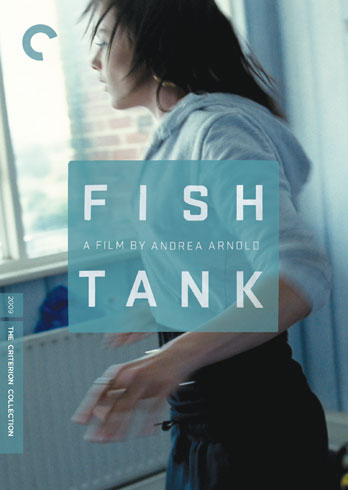
It was only some time after I had finished watching Fish Tank that I started to realize that this movie is like a British version of Precious: Based on the Novel 'Push' by Sapphire [review]. It didn't occur to me during the screening because the two movies couldn't be more stylistically different, nor could they be farther apart in terms of artistic success. Both films are about young women living in poverty who dream about doing something flashy with their lives, but who must battle a lack of education, an uncaring mother, and the inappropriate advances of older men before they'll ever get a chance. Where Precious is manipulative and aesthetically cheap, however, Fish Tank is smart, emotionally honest, and technically restrained.
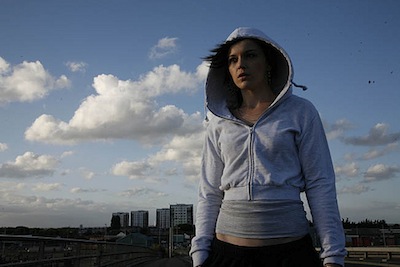
Fish Tank is the second film of writer/director Andrea Arnold, who previously made the stark crime drama Red Road [review]. For her sophomore outing, she employs a similar digital, Neorealist style. Shooting on location with no musical score, she follows her main character Mia, played by a wonderfully effective first-timer named Katie Jarvis, through her day-to-day routine in an Essex housing project. She gets in fights, practices her dance moves, and wanders aimless and alone through the streets. When her mother (Kierston Wareing) brings home a new boyfriend, Connor (Michael Fassbender), Mia is attracted to him sexually, but also touched by the kindness and interest he shows her. He'll encourage Mia to pursue dancing and to open up, but when he moves into the apartment, Mia's attraction reaches a boil.
The final portion of the film is devoted to how Mia deals with this new attention and the fallout it causes. It's a strange, volatile ride. Her immaturity becomes more apparent with each irrational decision. Consequences don't seem to enter into the girl's mind before she does anything. Katie Jarvis is utterly convincing as the sullen teen whose rage seethes just below the surface. Fassbender is also very good, charming the audience into hoping he's not too good to be true. I really, really wanted to like him. He's a little like Peter Sarsgaard's character in An Education [review], except he's not Peter Sarsgaard, so it's not a foregone conclusion that he's creepy.
Most of Fish Tank is appropriately underplayed. Andrea Arnold doesn't rely on her characters to explain what is going on, she is far too intent on showing us through actions and reaction. (Something Lee Daniels, the director of Precious, is by all evidence incapable of.) Her camera practically stalks Mia, often having to run to keep up with her. Fish Tank is essentially a point of view film, Katie Jarvis is in every scene. The only time Arnold strains for a shelf she can't quite reach is when she tries to inject literary and visual metaphors into the movie. There is a thread involving a horse that was obvious enough before Arnold decided to put a finger right on its nose at the end. The final shot of the film is also a bit too "high school poetry" for my tastes.
Still, that's maybe four scenes in a two-hour movie. Not a bad ratio when you consider how much so many other directors get wrong in half the time.
Criterion has chosen to enhance their gorgeous Blu-Ray of Fish Tank with the three short films Andrea Arnold made prior to Red Road, and these early effort are as worthy of exploration as the main feature.
Milk (1998) (10 minutes, 30 seconds): From the get-go, Arnold was fascinated by the careless, seemingly simple choices people make in their day-to-day lives that lead to unintended, complicated consequences. In Milk's second scene, a woman (Lynda Steadman) decides to let her partner (Stephen McGann) forego wearing a condom; cut to nine months later, and the baby is coming. The child doesn't survive a difficult birth, and the mother is thrown into grief. Rather than go to the infant's funeral, she randomly chooses a juvenile delinquent (Lee Oakes) out for a smoke and goes with him on a day trip in a stolen car.
There is a running thread throughout Arnold's work that sews people together who otherwise maybe are not right for one another. The grieving mother here is aching to relieve herself of her sorrow, and she wishes to feel something intense enough to overshadow the severity of her depression. Her hook-up is driven by her maternal instinct--the boy is wounded, he has a "Mom" tattoo--in much the same way Mia's misguided fixation on Connor is motivated by her need for a father figure in Fish Tank. The woman here needs a release, and though a sexual one will do, there are also more literal and physical releases required--we might miss the tears if fixating on the unexpected element of the short's final image. Arnold sees a fine line between the beautiful and the grotesque when it comes to the demands and functions of our bodies, though in the matter-of-fact way she presents it, it seems that line is only visible depending on one's perception of it.
In terms of style, there really isn't any distinctive evidence of Arnold's specific aesthetic in Milk. The telling of this tale has as realistic a grounding as her later films, but the presentation is far more conventional. Not in a bad sense, this is a young filmmaker feeling her way. Her intentions and passions are clear, this is her mastering the tools.
Dog (2001) (10:16): The second short subject not only introduces the looser camerawork approach into Arnold’s repertoire, allowing for a more intimate and less formal observation of real life, but it also appears to be the early groundwork for Fish Tank. From the opening scenes in an upper-floor apartment in the British projects and the film's heroine standing on the side of a highway shouting across traffic at a boyfriend, it's clear to see these are the first seeds of the full-length to come eight years later.
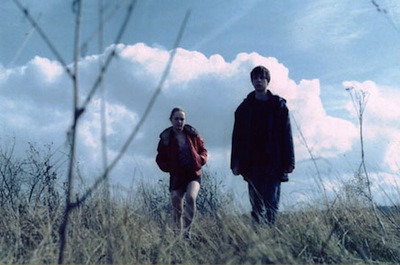
Joanne Hill plays the lead, a teenage girl out for a day with a sullen boy (Freddie Cunliffe). The pair score some drugs and then go to a vacant lot to smoke them. There the boy and girl engage in dispassionate sex. She wouldn't mind a little tenderness, but he won't even kiss her. A stray dog that the girl spotted earlier wanders onto the scene, eats the remaining hash, and promptly gets beaten by the boy. The violence erupts with all the fire and fury that the sex lacks, an adult irony that the girl desperate to grow up didn't account for. Pushing the boundaries of her age, sexualizing herself before she is mature enough to handle it, has put her in a position she is not ready to handle, but now that she has gone there, she can't go back.
Arnold's efforts to draw a connection between what happened to the dog and what is happening to the girl may be a little too direct--those bothered by the blatancy of the horse in Fish Tank won't like it much better when it's a canine-- but Hill is very good, and when the director moves in tight on her weeping, there is no overselling the potency of the underlying emotion.
Wasp (2003) (25:46): This Oscar-winning short was the first time that Andrea Arnold worked with cinematographer Robbie Ryan, who would shoot both Red Road and Fish Tank. You will notice an immediate and obvious difference. Though Wasp was filmed in the same poor backstreets as Dog, there is a crispness to the photography and a more vivid realization of the colors of real life, the garishness of how people dress vs. the drab reality of their surroundings.
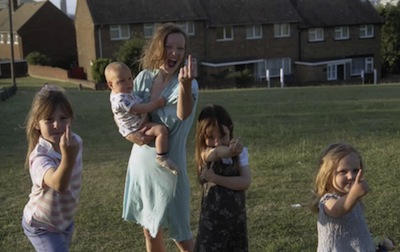
Natalie Press plays Zoe, a single mother of four struggling to get by. Though our first image of her is as a fierce, albeit ineffectual, protector, Zoe's selfishness is quickly revealed when an old flame (Danny Dyer) reappears in her life. Rather than miss out on a chance at a date, she lies and pretends her kids belong to someone else, and when she goes to meet him at the pub, she leaves her offspring in the alley outside.
Arnold presents Zoe with a moral quandary--her own happiness can be achieved at the expense of her progeny--the terms of the dilemma are far more base, almost primitive. The question is not just one of abstract inner satisfaction, but one of basic physical compulsion. As in Milk, our bodies compel and demand. Here, sexual pleasure is directly weighed against hunger--opposing needs of fundamental human survival. Arnold pushes it further with the wasp that provides the narrative shift in the final act: if these deeply rooted urges are all that we allow to influence our decisions, then the threat of external forces, of nature itself, holds sway. If we surrender moral reasoning, we retreat to the animal kingdom.
It's easy to see how Arnold transitioned from Wasp to full features. It's her most accomplished work up until that point, and maybe the most fully realized of all her movies, long or short. Here she manoeuvres her actors and her mise en scene with a steady confidence, finding that balance between realism and fictional narrative that has since allowed her work to stand out, and that made Fish Tank such an incisive examination of the kind of emotional battlegrounds that know no age. In Arnold's work, the casualties are young and old, all are equal.
Author of prose novels and comic books like Cut My Hair, It Girl & the Atomics, You Have Killed Me, and 12 Reasons Why I Love Her. Jamie's most recent novel is the serialized book Bobby Pins and Mary Janes, and his most recent graphic novels are the sci-fi romance A Boy and a Girl with Natalie Nourigat; Madame Frankenstein with Megan Levens; and the weird crime comic Archer Coe & the Thousand Natural Shocks with Dan Christensen.