Showing posts with label jean vigo. Show all posts

Sunday, October 2, 2011

THE COMPLETE JEAN VIGO: L'ATALANTE - #578


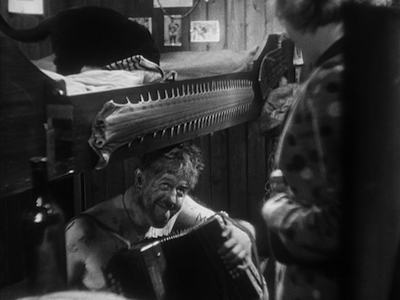
There is a scene in the last act of Jean Vigo's 1934 film L'Atalante where the old sailor Père Jules, played by legendary French actor Michel Simon, imagines he is playing a record by moving his fingers along the groove. Vigo lays in accordion music to match his movements, stopping and starting as he does, before pulling back to reveal that Jules has been tricked by his young bunkmate (Louis Lefebvre). The boy has been playing the accordion just out of frame. Angered by the prank, Jules admonishes the kid, telling him that he might laugh at such a flight of fancy, but is playing a record with your finger all that impossible? They don't understand how electricity works, or how music is sent across radio waves, so how can they rule anything out?


L'Atalante has a similar allure. It may not be obvious why this unassuming little film works so well, but it somehow enchants all the same. Perhaps it's Vigo's creation of this dual universe, of a world where dreams can sit side by side with hard reality, that is the secret to its success. We want to be enthralled under its spell, because maybe then we can believe that our own reality is worth it.

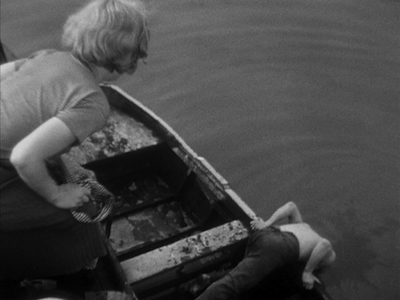
The story opens in a small town in rural France. A wedding ceremony has just concluded, joining local girl Juliette (the luminous Dita Parlo) with a boat captain named Jean (Jean Dasté). Jean is the skipper on a three-man barge that sails the French canals, delivering goods from port to port. Juliette has never left her birthplace prior to this honeymoon, and yet her married life is immediately on the move. More than that, the barge will be her conjugal home, always in motion, the background forever changing. It's going to be quite an adjustment for her. Indeed, it's going to be an adjustment for the whole crew. Yet, Juliette has always known that the water holds her fate: she believes if you stick your head below the surface, you will see the image of your true beloved. It's how she knew who Jean was before she even met him.


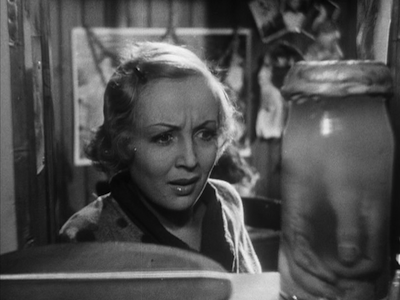
So, Juliette dreams of love, and she also dreams of seeing Paris. Eventually, the boat--which, like the movie, is named L'Atalante--will get her there. Strife amongst the workforce prevents her from enjoying it when they do, just one of the many disappointments the new bride will suffer. At the same time, she makes peace with Père Jules, who invites her into his cabin. There, the salty dog shows her the bizarre treasures he's gathered from around the world. Having never seen such wonders, Juliette is mesmerized. Some of the objects are simple, like a Chinese fan, others are more unique, like the jar holding the hands of Jules' best friend, now deceased. We will see this joy at such unexplainable sights two more times before L'Atalante is through: next at the port where Juliette meets a salesman (Gilles Margaritis) that is an expert at sleight-of-hand, and then the last time when Juliette finally sneaks off to Paris.

Each time, this happiness will be balanced by darkness. When Jean finds Juliette in the cabin of his second-in-command, he loses his temper. Enflamed by jealousy, he reveals a previously unseen violent streak. It shows up again when they meet the salesman, and also when he discovers Juliette has disappeared. Only that final time, he abandons Juliette to the city...and himself to despair.


L'Atalante is a deceptively simple romance. The basic story may lack complication, but the presentation has many layers and a balanced sense of its internal world. There are dualities throughout, be it above deck and below deck, sea and land, town and city. Both Jules and Jean have double natures, and both are capable of tenderness and violence alike--though, despite his warnings that he might strike, Jules never does, whereas Jean hides his anger until it's too late. This makes sense, though, when you notice that Jules has an ability to appreciate life's magic that Jean does not possess. Jules has been to all corners of the globe and seen many things, whereas it's possible Jean has only sailed up and down the same canals. When Juliette compels him to look into the water to test his love, he sees nothing, and his pretense otherwise doesn't fool her.

It's a very romantic trope, actually. Jean has to learn to see the world in the same way as his wife if he ever hopes to keep her. Juliette is too innocent for the common world, and she could be tempted away if not careful. To protect her properly, he has to be able to match the purity of her feeling toward him. It's the only way he will ever be worthy.


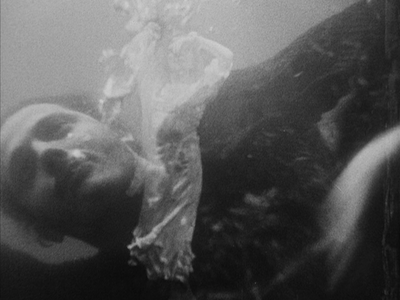
In his earlier short films [reviewed here], Jean Vigo experimented with camera effects and used a lot of tricks to create a feeling of wonder that he manages effortlessly without them in L'Atalante, his only full-length feature. The only visual technique he revisits is the underwater photography he showed in 1931's Taris, his portrait of a champion swimmer. His camera will have to go below surface once again to capture Jean's transformative moment, as the skipper literally must go deep in order to rise again as a new man.

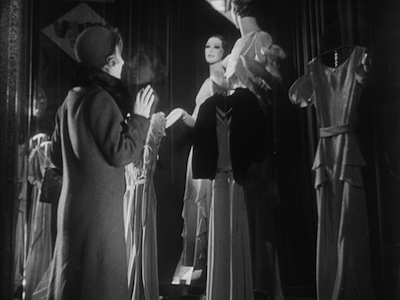
There are few other effects in L'Atalante; at the same time, Vigo creates a dynamic spatial relationship between his actors and his camera. In one memorable shot, Jean crawls across the deck of the barge, just like one of Père Jules' many cats, creeping up to the camera lens and then climbing over. There are many shots like this, where the director is so deep in the thick of things, it's almost as if the characters know he is there. The salesman, for instance, practically performs directly to the screen. This allows for intimate observances, be it Juliette's private fantasies while window shopping in Paris or our glimpse into their separate bedchambers when the newlyweds have rapturous dreams about one another, the fires of loneliness and desire stoked by their time apart.


It's finding these lyrical moments within the dirty confines of the everyday that sets Jean Vigo's work apart from his contemporaries, inspiring many filmmakers who came after. It's also a defining element in Simon's performance style, his combination of a very complete physical presence with a clownish demeanor. He's just as amazing in L'Atalante as he was in Jean Renoir's Boudou Saved From Drowning only a couple of years earlier, or as he would remain in The Two of Us [review] decades later. Jean Vigo, on the other hand, never made another film after L'Atalante. He died of sepsis just after L'Atalante was completed. Given the assured aesthetics of this debut, we can only speculate where he might have gone from here. Maybe even greater things, maybe he would have peaked just as he began. We can never know, we are only left with this one perfect vision, a dream that holds strong even in the here and now of the 21st Century.


This disc was provided by the Criterion Collection for purposes of review.

Wednesday, September 21, 2011

THE COMPLETE JEAN VIGO: A PROPOS DE NICE/TARIS/ZERO DE CONDUITE - #578


Jean Vigo is one of those interesting artistic figures whose reputation far exceeds his output. He's the kind of name that pops up on lists and scholarly surveys and inspires reactions of "What's the big deal?" He made only four films between 1929 and 1934, and two of them were under half an hour, another was less than an hour, and only his last, L'Atalante, reached what we would consider a more standard feature length. Again, that's barely anything compared to other equally revered filmmakers. So, what's the big deal?

This question is raised, and more than amply answered, in Criterion's The Complete Jean Vigo, a two-DVD set (or single Blu-Ray) collecting all of Vigo's efforts with a movie camera alongside some informative supplemental material. A big deal made of a small career that is a verrrrry big deal indeed.


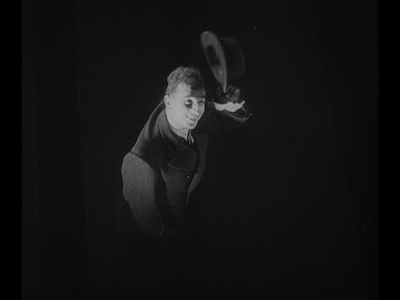
The lead films in the set are the two short subjects Vigo directed, the experimental and fun A propos de Nice (1930, 23 minutes, silent) and Taris (1931, 9 minutes, sound). Both appear to be frivolously produced, with A propos de Nice in particular coming off as a freshman artist being given a new tool and running wild with it. Vigo experiments with double exposure, fades, speed changes, and all manner of other tricks to explore the city of Nice. Most of the footage is shot on the street as documentary; it's in the editing and in some of the staged gags that Vigo draws out a kind of commentary, blending real-life footage with editorial invention. It can be quite funny, such as comparing some exaggerated citizens with similar looks found in nature, or exposing the lingering gaze of a man looking at a pretty girl by showing us what he really wants to see: her clothes disappearing and her silly undergarments exposed, and eventually her completely naked body. Stuffy art has the wind taken out of its sails by seeing a rain puddle gathered in the crotch of a lounging sculpted figure.

Yet, Vigo quickly upends these tricks and tricks his audience at the same time. How do we feel when that same playfulness gets serious and shows us the poor and the starving just around the corner from opulence and conspicuous consumption? It's fairly blunt in terms of social comment, but indicative of an emerging cinematic point of view. Few would take their debut effort into such territory. The effect of A propos de Nice is to equalize the common populace. They all share one city, they are of one people, and the one set being selfish and foolish is all the more so next to their neighbor's misery.


There is a similar equalizing in Taris, in which swimming champion Jean Taris gives a swimming lesson to the viewing audience. Again, Vigo uses experimental effects, including overlapping images, running the film in reverse, and some truly impressive underwater photography. If one wonders where Cocteau got some of his ideas for the many effects shots throughout the Orphic Trilogy, one need look no further. The playful camera work elevates what would otherwise be a standard promo piece for the swimmer, and the ending takes it one step further. Having completed his rather complicated lesson, Taris rises from the pool like some kind of divine being, has his clothes change before our eyes, and exits in a double-exposed shot where he appears to practically walk on water. The glint in his eye suggests, yes, anyone can swim this way, but not anyone can be Jean Taris. There is only one champ.


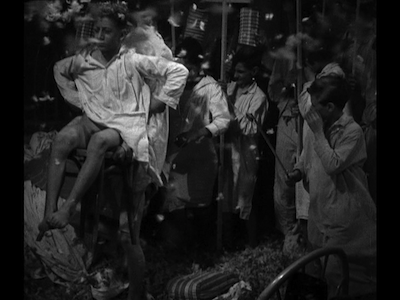
It was two years more before Vigo made the 44-minute film Zéro de conduite (Zero for Conduct) (1933), a whimsical, semi-autobiographical story of a rundown boarding school losing its tyrannical grip on its all-male student body. Returning from a break, the school has a new teacher--or as they call them, "monitors"-- the happy-go-lucky Huguet (Jean Dasté). He is a bit of a joker, and also a fairly competent physical comedian. Dasté glides through a playground scene, breaking into a scrum and grabbing the ball. He does a handstand on his desk to entertain his charges.

Huguet also turns a blind eye to the scheming of three of his students. Caussat, Colin, and Bruel are planning a special prank for the school's anniversary celebration. The girly Tabard (Gérard de Bédarieux) wants in on the act, but the other boys think he is a snitch. Only after Tabard stands up and curses after one of their teachers makes a dirty pass at him in class does he finally get accepted into the fold. The movie ends with their taking action, assaulting their headmasters from the rooftops in a scene that would later inspire Lindsay Anderson in crafting the ending of If.....


Vigo wrote the script for Zéro de conduite, as well as directing, and though there is a basic plot to the movie, it is structured episodically, like a series of Mack Sennett short subjects stitched together. The kids stage a succession of small rebellions on the way to their final operation. Vigo shoots them in such a way as to capture the magic of youth. An explosion of pillows creates a storm of feathers, and the boys ride through it in slow motion, buoyed by their own sense of immortality. The director also peppers Zéro de conduite with small touches of surrealism: the diminutive principal with the big beard (Delphin), for instance, whose reflection moves in the mirror independently. Or the boy performing a magic trick, where the ball disappearing is really just Vigo's manipulation behind the camera and in the editing room.

Zéro de conduite had trouble with the censors on its initial release due to its frankness regarding disciplinary issues and indiscretions in the school environment. That frankness is also why it still remains so vital after 80 years. It doesn't feel whitewashed, and the problems the boys go through remain relatable while their revenge still provides some wish fulfillment for all of us who ever were unhappy with the teachers and administrators at our school. I wrote a column a couple of months back tracing a link from Hal Ashby to Wes Anderson (and would have included Richard Ayoade's Submarine [review] if I could) and examining the coming-of-age subgenre where imaginative boys cope with the world by unleashing their vivid imaginations. Zéro de conduite has as much a place at the forefront of that tradition as it does with other boy's education movies like If...., The 400 Blows, and Young Törless. On their own, each of those is a pretty impressive legacy for one movie to provide a cornerstone to, but both of them...well, I did say Jean Vigo was a very big deal, didn't I?


L'Atalante has been reviewed separately. Read it here.

This disc was provided by the Criterion Collection for purposes of review.