Tuesday, December 6, 2011

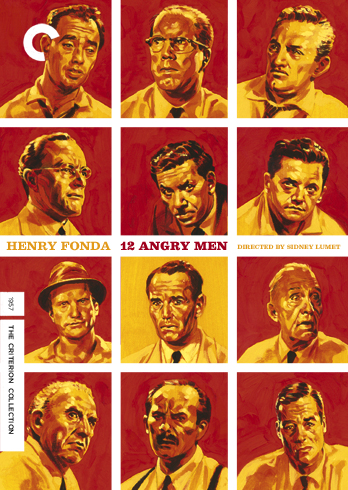
12 ANGRY MEN (Blu-Ray) - #591


No one likes jury duty. Well, some people probably do, but one hopes they are smart enough to keep it to themselves. At the same time, the right to a trial by jury is a great thing about the American justice system, and everyone should serve at least once and see how it all works. If you've ever been stuck in a back room arguing over the particulars of a case, you will never again wonder about some of the baffling verdicts passed down by civilian tribunals in high-profile trials. It's harder to armchair deliberate when you know how sentencing instructions and the literal wording of the law can affect the outcome of a seemingly open-and-shut debate.

While juries I have served on have never been as articulate, or as heated, as the regular joes and uncommon men who populate the tiny room of 12 Angry Men, Reginald Rose's script captures the back-and-forth quibbling over legal minutia pretty well. Inspired by his own time on a jury, Rose first wrote 12 Angry Men as a teleplay broadcast live in 1955 (which is also included here), and then expanded the hour-long program into a full movie screenplay, which was directed by Sidney Lumet in 1957.


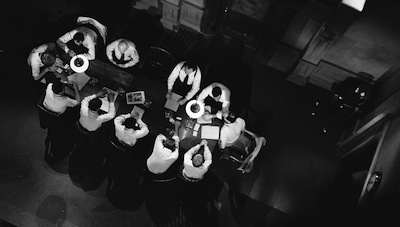
The movie begins after the trial is over. Outside of some short instructions from the judge and a lone shot of the accused, we have missed the proceedings. The camera travels the jury box, recording the faces of the jurors, before following them into a cramped room where they will be asked to stay until they can agree on a verdict. Most assume that the deliberation will be quick: the first vote is actually eleven for "guilty." The lone hold-out is Juror #8 (Henry Fonda), whose mind isn't made up. Maybe the boy killed his father, maybe he didn't. Despite pressure from the others to bend, #8 stays true to his insistence that if they are going to send a 19-year-old kid to the electric chair, they should at least spend some time exploring the realms of reasonable doubt.

Slowly, #8 works his way through the case. The testimony of the downstairs neighbor is questioned, then the uniqueness of the murder weapon, a switchblade knife. One by one, each juror is drawn into the discussion, and one by one they reveal something about who they are. #9 (Joseph Sweeney) is an observant old man, #5 (Jack Klugman) is from the same slums as the accused, and #11 (George Voskovic) is an immigrant who believes in America's sense of justice. On the stubborn side we have #3 (Lee J. Cobb), the father with an angry temper, and #4 (E.G. Marshall), the business man with the steady demeanor. There is also #7 (Jack Warden), who just wants to get out of there and go to a ballgame. And perhaps worst of all, the one that everyone else eventually turns against, is #10 (Ed Begley), a racist who believes the boy, who looked like he was maybe Puerto Rican, is a natural born liar, it's a byproduct of his skin color.


As the case disintegrates, personal feelings flare up, sides are taken, and threats are made. Rose has built a microcosm of American society, and also a sounding board for political ideas that were prudent to the American experience of the time. Civil rights, the vilification of unpopular or "radical" ideas, economic divides, the notion of might making right--these concepts are challenged just as the evidence is challenged. What would motivate a witness to lie? How much does an abused kid's background matter? What does it mean to be impartial and what constitutes reasonable doubt? For a locked room scenario, it's a surprisingly potent drama. Each man is given a rich background and each has an inner life. Nothing here is incidental. The writing is precise and dramatic and it's not afraid to be writing.

For his part, Sidney Lumet, who was transitioning out of television into this, his first feature film, keeps 12 Angry Men moving. Boris Kaufman's camera is agile and lively, moving through the room, capturing important expressions and gestures. The director and his cinematographer enact bold compositions, emphasizing the cramped space via contrasts of physical size. One man foregrounded may tower over the one in the background, but the power is often shifted: what the "smaller" man says weakens the "bigger" man. Live television had taught Lumet how to use a limited set to his advantage. If you think about it, it took TV to bridge the gap between stage and film, not just by putting together complicated one-time performances, but also by teaching a generation of new filmmakers to be economical and use confined spaces to their advantage. While the 1960s might have kicked down the walls of cinema and explored the open frontiers that new technologies allowed for, directors like Sidney Lumet and John Frankenheimer and others who first worked in l950s TV used restrictions to their advantage.

12 Angry Men had a profound effect on legal procedurals to follow. The notion that a criminal trial could be the basis for exploring bigger ideas has been exploited in most recent memory by the legal dramas of David E. Kelley and the whole Law and Order franchise. Even if those shows did move the action back into the courtroom, they still owe something to what Reginald Rose and Sidney Lumet (and Frank Schaffner, who directed the 1955 broadcast) did here. The whole strata of society passes through the doors of any given justice building, and for true justice to hold sway, they all must be honored the same.


Frank Schaffner's original 1955 broadcast version is thankfully included on this release, giving viewers a chance to witness the historic, Emmy-winning Studio One production. In some ways, this older version is somewhat superior. For one, the cast is not as well known, and having Robert Cummings (Hitchcock's Saboteur [review]) as Juror #8 instead of Henry Fonda makes the character more interesting. Fonda brings with him a certain moral authority, whereas Cummings' stuttering, unsure portrayal makes him less immediately convincing. Likewise, not showing the accused leaves that character up to our imagination, and a picture of him forms the more we learn. Lumet chose a scrawny, sympathetic looking kid that we make up our mind about right away. In general, the drama is more concise here. Having less time meant that Reginald Rose didn't have the opportunity to go off on as many personal tangents for each character, and one could argue that makes the dramaturgy less heavy handed. Both work for me, and I think in the spirit of this thing, we could make a case for either/or. (A 15-minute introduction by Ron Simon, from the Paley Centre for Media, adds further context.)

Most exciting, as well, is the addition of another live television drama, this one pairing Reginald Rose with Sidney Lumet a year before 12 Angry Men. The teleplay Tragedy in a Temporary Town features another mob of men, but this one isn't brought together by the legal system. Rather, it's vigilantism. The show stars Lloyd Bridges and two men that would go on to work for Lumet in 12 Angry Men, Jack Warden and Edward Binns (Juror #6). Set in a worker's camp, the story revolves around a young girl getting grabbed and kissed in the darkness. Failing to listen to Bridges' protest, Warden forms a posse to hunt through the camp, dragging the traumatized girl around in hopes she'll find her attacker. They barge into every home, writing down the names of any male age fifteen and over, until they land on a suspect that they can accept. It's not about finding the right guy, but about venting their restless anger.

Rose touches on the idea of personal "justice" in 12 Angry Men. The workers here are like the jurors unleashed. If the men in the other film could have gotten out of the room and been allowed to do as they wished with the accused, they very well could have resorted to violence. Here the misguided actions of the lynch mob threatens the safety of the whole community rather than making it more secure. Ironically, the men in the posse are looking for a threat within, not realizing they are it. Bridges is forceful in the lead, though his moral equivocations don't quite match Warden's menacing bluster.


For a complete rundown on the special features, read the full review at DVD Talk.

Please Note: The images used here are from promotional materials and are not taken from the Blu-ray edition under review.


Sunday, December 4, 2011

SABU!: THE DRUM/JUNGLE BOOK - ECLIPSE SERIES 30

This is the second part of a two-part review of the Sabu! boxed set; read the first part here.


Sabu's sophomore feature was a more stodgy affair than the first, and it also saw him relegated to more of a supporting role next to British star Roger Livesey (I Know Where I'm Going, The League of Gentlemen [review]). Following just a year after the success of Elephant Boy, The Drum (1938; 98 minutes) was Zoltan Korda's first adaptation of an A.E.W. Mason novel, a precursor to the more artistically successful The Four Feathers [review], the epic adventure that would follow immediately after. (Interesting side not, Livesey played the role of Harry as a child in the second film version of The Four Feathers in 1921; he was not in Korda's remake.)

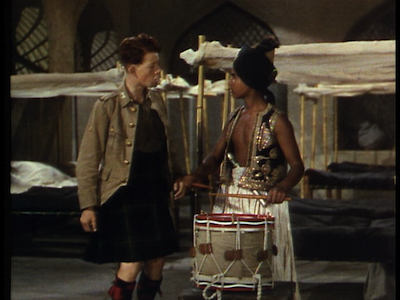
Set in India at a time of political upheaval, The Drum features Livesey as the enterprising Captain Carruthers and Sabu as Prince Azim, a naïve but earnest young ruler who befriends the colonialists. He is particularly fond of a bratty young drummer (Desmond Tester) in the British Army band and of Carruthers' kindly wife (Valerie Hobson, Contraband [review]). When Azim's uncle, the appropriately named Prince Ghul (Raymond Massey in brownface), kills the boy's father, the child prince must go into hiding, biding his time until the British can overthrow Ghul and put him back in power.


Okay, am I the only one who thinks of the The Lion King [review] here? Is that bad of me?

To be fair, it's a pretty common plot, and The Drum obviously appropriated it first--though it's disappointing in execution here because the embattled prince isn't so much passive as he is incompetent. Sabu isn't nearly as comfortable onscreen in The Drum as he was in Elephant Boy; his "serious" acting features a lot of squinty eyes and pursed lips. He is best when joking with Carruthers or the drummer boy, and the way Azim kowtows to the white men who taught him to be "civilized" leaves a somewhat sour aftertaste. Far more interesting, actually, is the villainous Ghul, who, like Skar in The Lion King (sorry!), is not entirely wrong. There is something rotten in India, and some question as to the rightful heir's ability to rule. Unlike Skar, however, Ghul also has an element of nobility. His designs on the throne aren't entirely selfish. Korda and screenwriter Lajos Biro's attempts to ridicule Indian beliefs and customs backfire. Ghul ends up looking like a defender of his country's ethnic traditions, refusing to accept the British charges of barbarism.


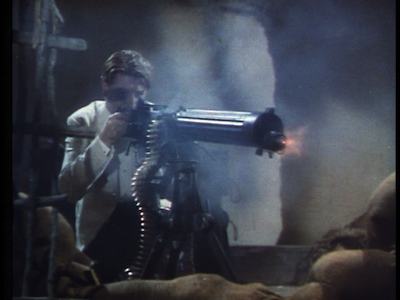
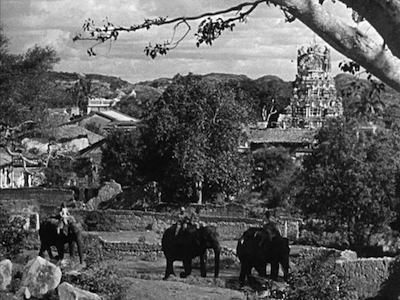
Two positive things about The Drum: (1) Georges Perinal and Osmond Borradile's Technicolor photography is lovely and vivacious (even if this print is a little faded and beat up). The sets and the costumes have an exotic opulence that must have been thrilling to see in the late 1930s, and still has charm now. (2) The climactic battle is impressively staged and daring in complexity. The crowd scenes before and during are huge, and Korda doesn't show a heavy hand in dictating how the throngs behave. The old tag line for the film boasted a cast of 3,000, and the authenticity of the mob goes a long way to make that claim appear to be true. Plus, Roger Livesey is surprisingly badass manning a Gatling gun.


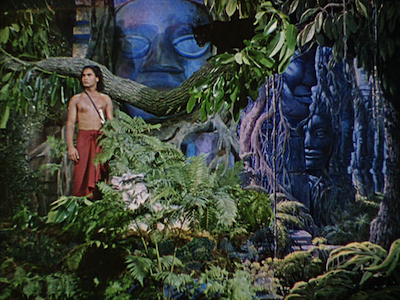
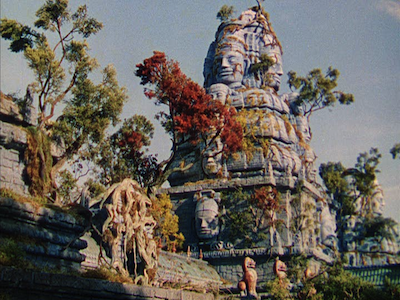
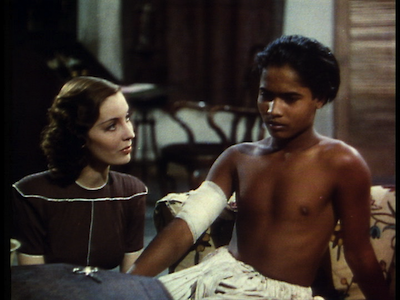
Next up for Sabu was the Michael Powell-directed, Korda-produced The Thief of Bagdad [review] in 1940 before rejoining Zoltan in 1942 for their second version of a Rudyard Kipling story. Jungle Book (106 Minutes) is Sabu's most enduring work, as well as the most famous live-action version of the classic adventure tale--and with good reason. Sabu has not only matured as a man and an actor, developing into a physically agile performer, but Korda's film, as shot by W. Howard Greene and Jack Okey, is a visual marvel. The team creates a thriving Technicolor jungle, filled with lush plant life, exotic animals, and the remnants of man's beautiful folly.


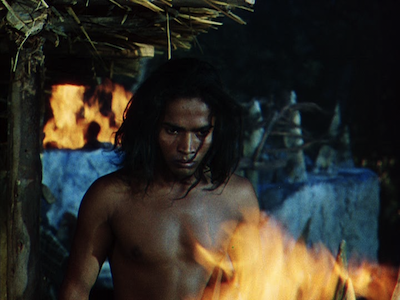
Sabu plays Mowgli, a boy lost to the wilds after a tiger attack leaves his father dead. Adopted by wolves as a toddler, he returns as a teen to rejoin his village, much to the delight of his mother (Rosemary De Camp) and the suspicion of the town swindler, Buldeo (Joseph Calleia), who also serves as the storyteller whose own tale frames Mowgli's.

Mowgli adapts to village life, learning English and the baffling ways of society. Money holds little interest for him, though it buys him a knife to hunt the tiger, Shere Khan, who has vowed to kill him since he was a baby. He also takes a shine to Buldeo's daughter (Patricia O'Rourke), giving the man all the more reason to hate the jungle boy. Worse, Mowgli leads the girl to a grand treasure, only to leave it where it has remained hidden for decades rather than succumb to the evil that jewels and gold inspire. (It's ironic, given most Western iconography, that a snake warns the boy away rather than leading him into temptation.) This sets up Jungle Book's climax and sets up the foundation for its theme of man's greed and superstition being his downfall.


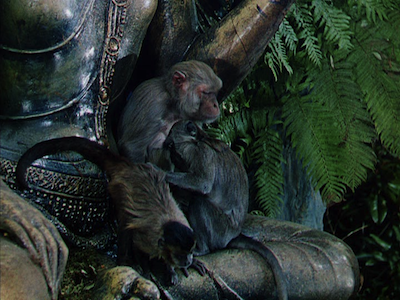
The story of Jungle Book is familiar to most people, though again we must invoke Disney, as the common memory often goes back to their animated version. In that, Mowgli cavorts with talking animals and the human world is mostly out of it. Many of the same characters are here--the snake Kaa, the panther Bagheera, and the bear Baloo--and Korda anthropomorphizes them, though not to the same degree. Mowgli is said to be able to speak all animal languages, and as we go deeper into his world, we begin to hear their voices as he does. Most of the time, the animals we see are real, including the predatory cats and elephants and the monkeys. In other understandable cases, they are puppets or props, though the only distracting effects are the rubbery snakes. In all fairness, the snakes tend to get bigger acting parts than the furrier animals, so some sacrifice had to be made for narrative demands.

More impressive than the animal wrangling, though, are the sets. Korda uses a combination of matte paintings and physical sets to bring to life a colorful jungle setting. There are plants with fiery red leaves and giant blue statues and light tumbling through the trees that takes on astonishing purple hues. Sabu runs through each attractive set piece as a free spirit, utterly convincing as the wild boy who swings on vines and howls at the moon. Indeed, while the trained British actors come off as overly mannered and comical through most of the movie, acting down to the material, Sabu is perfectly comfortable in his chosen environment.


All three of Sabu's first movies with Zoltan Korda are now part of Criterion's Sabu - Eclipse Series 30 boxed set. I'd like to believe that Elephant Boy and particularly Jungle Book could still stoke the imagination of young viewers. Despite our technological advances, one assumes the untamed forests still hold some sway over our basic human instincts. This set would make a nice companion with the other Criterion younger viewer titles, namely Albert Lamorisse's The Red Balloon [review] and White Mane [review], and Bill Mason's Paddle to the Sea[review], all of which feature children interacting with the wonders of the natural world in exciting, yet vastly different, ways.


This disc was provided by the Criterion Collection for purposes of review.

Thursday, December 1, 2011

SIDELINE: MORE REVIEWS FOR 10-11/11

Wow, I have been so out of it in November, I never even posted a list of movies I reviewed in October! My apologies for being drag-ass this past month, it's been a weird time. I am getting on track, though, and hope to catch up through December.

In the meantime, my non-Criterion movies...


IN THEATRES...

* The Big Year, it's called birding, not birdwatching, and it's awful either way. Wilson, Black, Martin--the new comedy nightmare team.

* The Black Power Mixtape 1967-1975, a documentary showing a certain portion of history through a different lens.

* The Descendants, George Clooney starring in a new film from Alexander Payne.

* The Ides of March, a political drama from he-that-can-do-no-wrong, George Clooney. Starring Ryan Gosling.

* Into the Abyss, Werner Herzog's documentary on the death penalty in Texas. Very human, very scary.

* J. Edgar, Clint Eastwood continues his trend of almost delivering in this biopic with Leonardo DiCaprio as the legendary lawman.

* Like Crazy, love a la modern cinema verite. Starring Anton Yelchin and Felicity Jones.

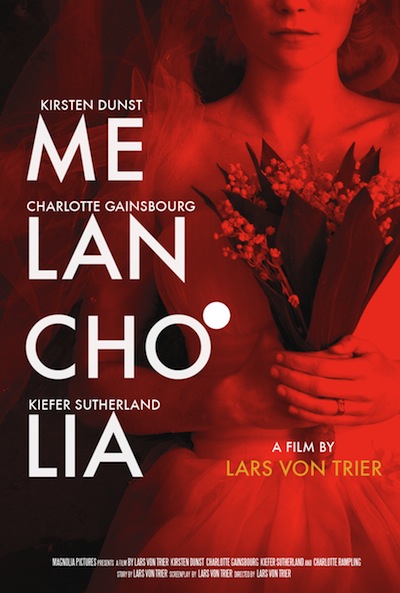
* Melancholia, Kirsten Dunst at the end of the world, courtesy of Lars von Trier.


* The Mill and the Cross, Rutger Hauer stars as Pieter Bruegel preparing his painting The Procession to Calvary in Lech Majewski's deconstruction of the masterpiece.

* Restless, Gus Van Sant's latest attempt to go back to high school. Insert words "emo" and "twee" now.

* The Rum Diary, Bruce Robinson returns to moviemaking for a somewhat disappointing Hunter S. Thompson movie with Johnny Depp.

* The Skin I Live In, the disturbing new horror drama from Pedro Almodovar.

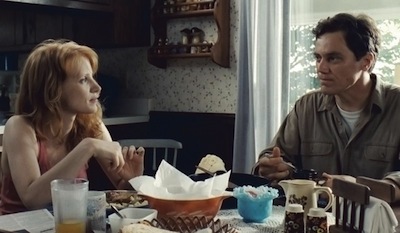
* Take Shelter, the movie where Michael Shannon goes crazy and the world seemingly follows his lead.


ON DVD/BD...

* Bad Teacher: Unrated Edition, a superb cast can't prevent this from being one of the least funny movies you'll see this (or any) year.

* Beats, Rhymes & Life: The Travels of a Tribe Called Quest, the story about the influential rap group is also the best music documentary in a long, long time.

* Bellflower, the cult indie strikes me as empty for all the wrong reasons.


* Bored to Death: The Complete Second Season, the continuing adventures of Jason Schwarztman as the pulpy, humorous avatar of author Jonathan Ames.

* Buster Keaton - Short Films Collection: 1920-1923, 19 comedy gems on three discs.

* Cape Fear, Scorsese's potent remake with Robert De Niro and Nick Nolte.

* Dumbo: The 70th Anniversary Edition, the stellar new upgrade for the little elephant that could.

* Great Italian Directors Collection, a boxed set of three films, including the first by Antonioni, a mid-60s Monicelli, and the anthology film Boccaccio '70.

* His Way, a breezy documentary about music promoter/movie producer Jerry Weintraub.


* I'm a Cyborg, But Thats OK, an inconsistent oddity from Park Chan-wook.

* Miss Nobody, an indie black comedy starring Leslie Bibb.

* My Fair Lady, another Audrey Hepburn movie comes to Blu-Ray. (What is that? Three now? Hurry up, Hollywood!)

* Rare Exports: A Christmas Tale, a black action comedy. The true Santa Claus returns!

* Rescue Me: The Sixth Season and the Last Season, the fire fighter bromance ends.

* Tomorrow is Forever, a post-war snooze with Orson Welles and Claudette Colbert doing their best to be mellow in all the drama.

* True Adolescents, a surprising indie comedy starring Mark Duplass as the cliche 30s rocker on his last legs.

* Water for Elephants, a film even a pachyderm would endeavor to forget.

* The White Bus, a short film written by the recently deceased Shelagh Delaney and directed by Lindsay Anderson.


Lindsay Anderson directing

Tuesday, November 29, 2011

SABU!: ELEPHANT BOY - ECLIPSE SERIES 30


Any mystery of why the Kordas picked a particular twelve-year-old Indian boy to star in their 1937 Rudyard Kipling adaptation Elephant Boy (82 minutes) is cleared up the moment Sabu steps onto screen. The film begins--and indeed, opens the latest Eclipse boxed set from Criterion, modestly titled Sabu!--with the wide-eyed child addressing the audience directly, explaining to one and all the nature of the story they are about to see. He is in character as Toomai, a would-be elephant hunter with a history remarkably similar to Sabu's own, but for as scripted as the words he says may be, they sound like the gospel truth coming out of the boy's mouth.

Indeed, the youngster's personal history is remarkably similar to how Toomai's is depicted in John Collier's screenplay. The son of an elephant driver is orphaned on a hunt, later to be taken under the wing of a rich British colonialist. Though Sabu's personal trajectory would see him starring in several films for Alexander Korda, Toomai's was different. He dreamed of being a hunter, and his particular affinity for elephants leads to him proving himself where otherwise the small fry had been doubted. Toomai and his pet bull, along with his old man (W.E. Holloway), join the hunting party of a wealthy white hunter named Petersen (Walter Hudd, Major Barbara [review], The Importance of Being Earnest). The expedition embarks on a particular dismal season when elephants are scarce and tigers are plenty. Though the rest of the party doubt Toomai's ability, he is the only one who can control his pet, and together they find where its distant relatives have disappeared to, thus saving the day.


Elephant Boy is entertaining, if slight. It gears toward the young, as do most of Sabu's early features. Most boys dream at some point of wilderness life and communing with animals, and so the eager wish fulfillment has a resonance even if the times have changed drastically. Zoltan Korda co-directed the picture with Robert Flaherty, whom film buffs will recognize as the director of Nanook of the North, which is generally considered to be the template for documentary filmmaking. Unsurprisingly, the startling footage of Indian life and particularly the remarkable scenes with the wildlife is mostly Flaherty's doing, giving Elephant Boy a pleasing authenticity that would not have been possible back at Denham Studios. Directing children and animals is supposed to be the hardest thing a director can undertake; in Elephant Boy, both look easy.

This left Zoltan Korda (The Four Feathers [review]) to direct the narrative scenes, bringing a traditional British storytelling veneer to the simplistic plotlines. For the most part, the joint effort is seamless, with only a few instances of a jarring disparity between the two styles (editor Charles Crichton should probably get a special mention here; he began his career as an editor in the 1930s and ended it as a director, helming his last feature, A Fish Called Wanda, in 1988). Naturally, deeper issues of colonialism are left for others to contend with. Instead, Elephant Boy's main themes are moral determination and a dedication to duty. Hunting is presented as a noble profession (the elephant hunt is more like a cattle drive, there is no violent slaughter), and Toomai's dreams eventually come to. Presumably so did Sabu's, though he may not have been aware these particular adventures were his dreams until the picture business came calling.


Elephant Boy was followed in pretty rapid succession by several more Sabu vehicles with the Kordas, including the magical 1940 classic The Thief of Bagdad [review]. This Michael Powell feature fell between the next two movies in Sabu! - Eclipse Series 30, 1938's Drums and Sabu's other Kipling adaptation and probably his best-known film, The Jungle Book, released in 1942. You can read about those two color adventures here.


This disc was provided by the Criterion Collection for purposes of review.


Sunday, November 27, 2011

FANNY & ALEXANDER (Blu-Ray) - #261


I wish there was a way to get my family to agree to making Fanny and Alexander our official selection for annual holiday viewing. Hell, I suppose I'd just be happy if we had something to watch together on either Thanksgiving or Christmas so we wouldn't end up haggling over which flick to take in together. This most recent post-Thanksgiving Black Friday was black for me because I ended up in a theater watching Adam Sandler's execrable Jack and Jill rather than, say, sitting at home with It's a Wonderful Life [review]. Ingmar Bergman's 1982 swan song Fanny and Alexander, depending on what cut we chose, would equal a bare minimum of three hours of focused time, a respite from awkward conversation and thumb twiddling. And let's get real, Bergman delivers an epic fart joke in the first part of the film that decimates any gastric gag Sandler will ever come up with. You feel me?

Actually, that fart joke is a good segue. Most people wouldn't think bodily humor exists anywhere in Bergman's oeuvre, but the Swedish director wasn't nearly so uptight as all that. Uncle Carl (Börje Ahlstedt) blowing out the candles with his butt is a guaranteed, honest laugh, and given the fact that Fanny and Alexander is semi-autobiographical in nature, it probably works because it's so authentic. The family experience here is delightfully real. There are squabbles and differences, rivalries and frustrations, and an underlying togetherness, with each separate alliance connecting one Uncle to an Aunt through another Aunt and vice versa without the opposite sides ever having to be cognizant of the union.


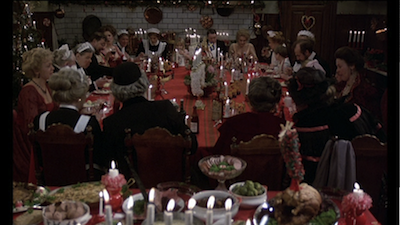
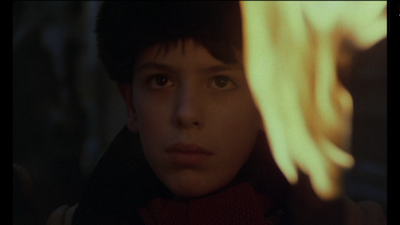
Fanny and Alexander opens on Christmas Eve in 1907. The prominent Ekdahl family is gathering for their annual feast, hosted by their eldest matriarch Helena (Gunn Wållgren). Helena's children come from all walks of life. Her son Gustav Adolf (Jarl Kulle) runs a restaurant. Another son, Oscar (Allan Edwall), runs a theater. Just before dinner, he and his troupe, which includes his beautiful wife and lead actress Emilie (Ewa Fröling), perform a religious pageant for a welcoming audience. Oscar and Emilie are also father and mother to Fanny and Alexander (Pernilla Allwin and Bertil Guve), a young daughter and her older brother. Alexander is an imaginative boy. At the start of the film, he thinks he sees a statue move. Later, he sees ghosts. His genetic penchant for storytelling could end up being his downfall.


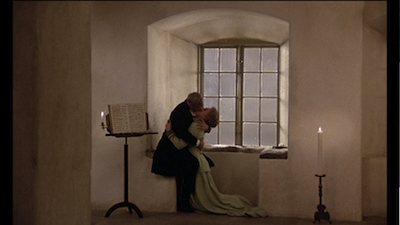
Fanny and Alexander was originally produced for Swedish television, where it was shown in four parts, totaling over five hours. An alternate theatrical version was cut down to three hours but bears the same basic four-part structure. In essence, the story flows from that extended Christmas celebration and back into common life, where in the second part Oscar passes away and Emilie remarries. Her new husband is the Bishop who oversaw Oscar's funeral, and he becomes Uncle Edvard (Jan Malmsjö). The third part chronicles the cruel and often surreal life in the Bishop's home, while the fourth shows the escape of first the children and then Emilie. Within this are several subplots, charting the family drama, including Carl's trouble with money and Gustav Adolf's affair with the pretty maid Maj (Pernilla Walgren). Both are important for how the wives react to each predicament, and also the judgments of Mother Helena. For all the male bluster, the Ekdahls are a clan where women rule the household. This is the irony of Emilie's bad marriage: she goes to Edvard looking for stability, but his strict views don't jibe with how she has raised her kids. It's further ironic that Edvard lives with his mother, sister, and aunt, as well as three housekeepers of disparate ages. In truth, he is subject to their care, and he controls nothing.


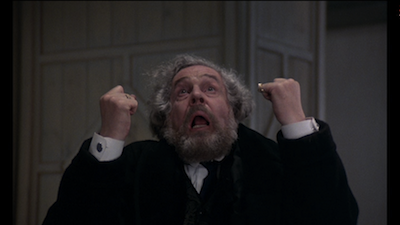
The children's arc in the film is not so much a coming-of-age tale as it is a vision of how the young contend with the duality of earthly concerns and spiritual matters. Both siblings, and Alexander in particular, are regularly made aware of the split between the here and now and of that which can't be quantified. Hence, when their father is struck down while practicing to play the ghostly dad in Hamlet, it only makes sense that Oscar should become a ghost for real--one that only the very young and the very old can see (as Helena comments, the in between of average adulthood disappears within the course of a normal life). This thin veil very much allows for a mingling of the sacred and the profane, as best illustrated by Alexander swearing under his breath at his father's burial. These earthy words keep him and Fanny grounded.


Considering this, then, we see that Edvard's greatest sin is not his meanness, but his indulging in common desire (his tacky courtship of a grieving widow) and his forgetting that love is not a celestial practice, but instead something that must be extended to the living. This is what separates him from the other holy man, the Jewish friend of the family Isak Jacobi (Bergman regular Erland Josephson). Isak embraces the Ekdahls as if they were his own flesh and blood, and he would seem to be in possession of real magic (as seen in one of Fanny and Alexander's most powerful scenes). Both performers display these traits in their acting: Malmsjö is cold, stiff, and full of starch; Josephson is warm and inviting. Isak's specialness is seen further at his home, which also includes his nephew's puppet shop, connecting the Jacobies further to Alexander, who loves puppets and performance. The division between "good" and "evil" can also be seen in the dual house guests--Edvard's invalid aunt and Isak's mysterious other nephew, Ismael (Stina Ekblad). In a surprising trick, Bergman casts the opposite gender to play each part, challenging the audience's perception and how they react to each at the same time he challenges Alexander. Which one is angel and which one devil?


Then again, as they say, the devil is in the details, and Fanny and Alexander is packed stem to stern with them. This is a lavish production, impressive in its staging and its scope. Art direction, sets, and costumes all capture the opulence of the Ekdahl family and the gorgeous detailing of turn-of-the-century fashions. By contrast, Edvard's estate is more like a fortress than a home. It is barren and lacking in material decoration. Cinematographer Sven Nykvist brilliantly captures the sullen grays of this stony palace. It is brutal and oppressive and lit as if it were locked in an eternal winter, whereas the Ekdahl homes are bright and summery, full of color and movement.


When Criterion first released Fanny and Alexander seven years ago, it was as a large boxed set, spreading the two versions of the film across three discs and rounding it out with a fourth, the documentary The Making of Fanny and Alexander*. The 110-minute film was put together by Bergman himself in 1983, using footage shot by Arne Carlsson. It is essentially the prototype most good DVD supplements have followed, showing the maestro at work on his set, laboring over scenes until he gets them right. It can be a bit dry, honestly, but it also provides an essential portrait of the master filmmaker's passion for good storytelling. Come to think of it, the inclusion of the aforementioned fart joke makes even more sense when you see Bergman trying to instruct his young stars and keep things light so that they want to listen to and trust him.


In terms of the two different cuts of the main feature, choosing one or the other is I guess a matter of preference, though I think more importantly it's a matter of what you have time for. The television version is nearly twice the length of the theatrical version, and I think it's empirically the better piece of cinema, but the shorter cut of Fanny and Alexander is the rare case where a complicated narrative can be compressed without being reductionist. The differences in terms of what we see is vast, but the final products are still oddly similar. What the longer cut brings to the table, besides additional scenes (the entire Christmas celebration is monumental and immersive) is greater character motivation and room to explore the relationships of the many characters, as well as more fantasy elements that add to the breadth of Bergman's metaphysical mysteries and his spiritual ponderings. I also think that Fanny is allowed to be more of a character in the longer cut: if Alexander is a sponge for all that goes on around him, Fanny is even moreso, but she exhibits more strength in her added scenes. Both child actors show a great depth, even when just silently watching the action. You always have a sense that they are actively observing, as opposed to just passively standing by.

Anyway, in short, if you're going to watch one version of Fanny and Alexander, I vote for the television broadcast; if you want to watch both, you can really start with either. The difference would be whether you want to get your feet wet and then wade deeper in, or if you'd rather get it all at once and then relive the experience in summary.


* There was also a fifth disc featuring introductions for eleven older Bergman movies that he recorded for a retrospective on Swedish television. Some of these have shown up on other Criterion discs of Bergman films, and so that is likely why they were not carried over for the Blu-Ray.


For a complete rundown on the special features, read the full review at DVD Talk.

Please Note: The images used here are from the 2004 DVD edition of the film and are not taken from the Blu-ray edition under review.
Wednesday, November 16, 2011

AKI KAURISMAKI'S LENINGRAD COWBOYS - ECLIPSE SERIES 29


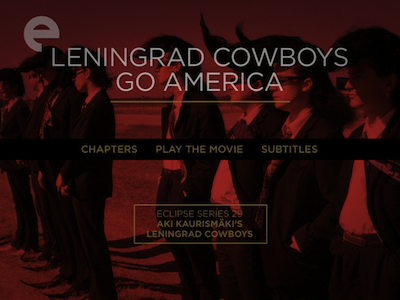
The 1990s were a weird time for independent film. For as lacking in character as much of popular culture was during the early part of the decade (you can keep the music; no, seriously, keep it), film got really quirky and odd. Much of this was attributed to Steven Soderbergh and Sex, Lies, and Videotape and the impact of the Sundance Film Festival. Soderbergh's debut effort came out in 1989, the same year Finnish filmmaker Aki Kaurismäki released Leningrad Cowboys Go America (79 minutes), a bizarre hybrid of mockumentary and road trip pictures that was right in line with the cinema to come.
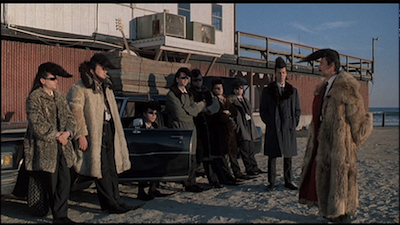
Though, to be fair, Kaurismäki was more part of the previous generation of maverick filmmakers, including his influential admirer, Jim Jarmusch, who also appears in Leningrad Cowboys Go America, the first movie in Eclipse's Aki Kaurismäki's Leningrad Cowboys boxed set. The silver-haired New York director plays an auto mechanic who sells the European rock band the car that they will drive across most of America on their way to Mexico. Given the back and forth between the two movie men, it's a fitting metaphor. They trade their tools and share in the act of creation.


Leningrad Cowboys Go America is sort of like a mix of This is Spinal Tap and A Hard Day's Night. The line between the fiction and the reality that informs it is blurred. This could be a fake band pretending to go on the road, or it could be a real band pretending to go on the road. The operative word is "pretending." Kaurismäki took a Finnish group called the Sleepy Sleepers and turned them into a Russian band lacking in musical identity but overflowing with image. They are like a parody of the Soviet embrace of American pop following glasnost. Their extended pompadours and pointy shoes make them look like characters out of a Grimm fairy tale, some kind of Rumpelstiltskin in pimp clothes. Their music begins as traditional European folk, complete with accordion and brass, but morphs into rockabilly and punk as they travel the U.S. It's not hard to imagine a young Eugene Hutz seeing this movie and getting the inspiration for Gogol Bordello.
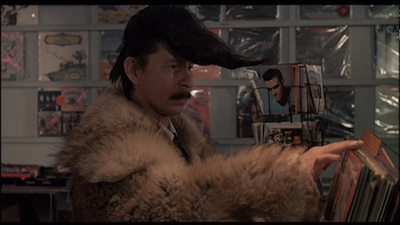
The music is fairly entertaining, with echoes of the performance art element of New Wave bands like Devo and Talking Heads. Some of the performances in the movie can be a little clumsy. The lip-synching can be pretty poor. Still, there is something amusing about the Monkees-esque comedy of the guys breaking out into songs they've never rehearsed just to fit in at their latest pick-up bar gig.


The rest of Leningrad Cowboys Go America is not nearly so amusing. Kaurismäki pushes the fish-out-of-water humor as far as it will go. The story essentially revolves around the band's manager Vladimir (Matti Pellonpää) keeping the guys moving and working, from the Big Apple down to Mexico where they are going to play a wedding for the relative of a scumbag promoter. Vladimir hoards the cash, spending it on beer and cracking the whip on the others. They are also hauling one of their fallen comrades, a guitarist who froze to death back home, on the roof of their car to show him the world before he is buried. And they also run into a long-lost cousin (Nicky Tesco), who works in a gas station.

While some of the antiquated plotting works, I have to admit that much of Leningrad Cowboys Go America seemed overly tame and contrived. The humor is silly and often lazy, and very much a product of its time. Remember, how I said it was weird back then? Leningrad Cowboys Go America is a movie where everyone seems to know they are being weird, and it kind of falls flat as a result. I know it was quite popular when it came out, but you know, tastes change. I'm also not saying Leningrad Cowboys Go America was bad, more that it was just inoffensive to the point of being ineffectual. It's like a cute MTV promo that a band would have made back then, relying on the group's image more than quality storytelling, like a Herman's Hermits or Elvis Presley movie. Only this time the band has no prior recognition or hit songs to float them by.


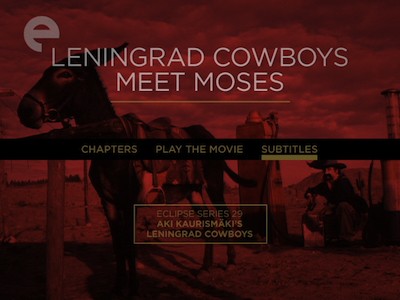
Though, to be fair, the Leningrad Cowboys would eventually take on a life of their own. Perhaps a more apt reference point is 1991's The Commitments, Alan Parker's hit movie about the Irish soul band that began as an acting ensemble initially put together for the picture that then jumped out of the film and became a real group for a while. The Leningrad Cowboys continued to play and tour after the first movie and before returning in a sequel. The second film, Leningrad Cowboys Meet Moses (1994; 94 mins.), follows the same basic premise of the first film, only now the journey is reversed. After several years as a successful band in Mexico, the Cowboys, now decked out in day-glo bandito gear, have drank away their fortunes on tequila. An offer to reform takes them to New York, where they discover the interested promoter is actually Vladimir. He has grown a beard, gotten a sliver of religion, and started calling himself Moses. He wants to make amends by leading his people back to Siberia. So begins a transcontinental road trip, once more full of ups and downs, peaking when the guys again realize Vladimir is cheating them.
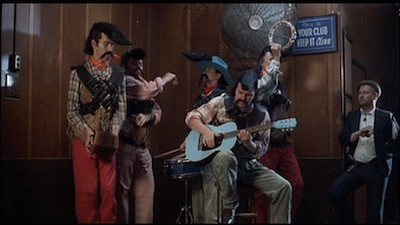

Leningrad Cowboys Meet Moses is a kind of a mess. For whatever peculiarities marred Leningrad Cowboys Go America, at least they had a modicum of authenticity. By comparison, Leningrad Cowboys Meet Moses' humor is forced and lacking any grounding. Kaurismäki tries to turn this journey into a religious quest, complete with familiar iconography (a burning bush, a golden calf, etc.) and political opposition (a man named Lenin trades Marxist slogans with Vladimir's bible verses). There is also an absurd plot about Vladimir stealing the nose off the Statue of Liberty.


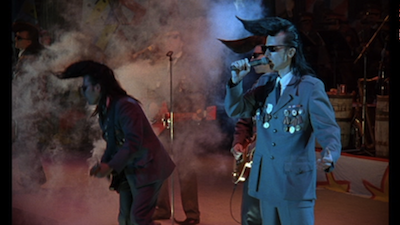
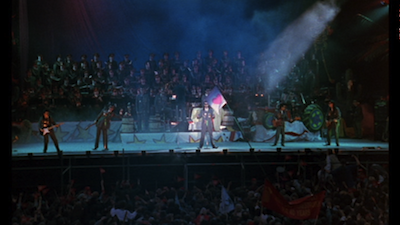
One thing I will give the second movie is that the music is more varied and thus comes off better. The performances are more polished and the material selected represents a more striking range, befitting the European setting. The best number is a tune reminiscent of '60s French rock, sung by Elijah (Andre Wilms), an agent pursuing the stolen nose. Perhaps it's fitting then that the final film in the trilogy, the hour-long Total Balalaika Show (1994), is purely a concert documentary. Shot in Helsinki in 1993, Kaurismäki captures the massive gathering of the Leningrad Cowboys with the 150-member Alexandrov Red Army Chorus and Dance Ensemble. Backed by this orchestra and choir, and standing in front of a huge audience filling the Senate Square, the Cowboys appear as tiny figures running through covers of familiar American hits and traditional Russian folk songs. They size of the concert nearly swallows them, but credit where it's due, they carry on admirably.


Kaurismäki shoots Total Balalaika Show with few frills. It seems about all he can do to just contain the stage in frame. He matches the aesthetics of the fictional films by using title cards to announce each song. The finished documentary suggests Total Balalaika Show was probably a concert that was more fun to attend than to watch on video. Given the size of the show, the musicians play to the cheap seats. The big gestures flatten out when boxed in this way. The songs themselves also lack much passion. This is kitschy theatre more than anything. The Cowboys don't exhibit much visible connection to songs like "Sweet Home Alabama." Only the more universal themes of something like Dylan's "Knocking on Heaven's Door" survive their mechanical accents and predictable musical arrangements--and even that is due in large part to the brass and the men's choir adding their grand tones. I closed my eyes and listened, and couldn't imagine anyone choosing to play a record of these songs all on their own. (Same goes for the five music videos, including one lazy rendition of the Doors track "L.A. Woman," that round out the third disc.)


It's hard for me to say if I got in a time machine and went back to see Aki Kaurismäki's Lenigrad Cowboys movies when they were first released if I would feel differently about them now. They are films very much of their time, utilizing a brand of twee anarchy that seemed fresh at the turn of the 1990s but that comes off as oh so quaint and stale now. Such self-involved humor can be a little tedious, and likely wouldn't survive without the music to break things up. Aki Kaurismäki's Lenigrad Cowboys is a well-intentioned, but essentially misguided lark.


For a complete rundown on the special features, read the full review at DVD Talk.

Thursday, November 10, 2011

READER MEET AUTHOR: BOISE ART MUSEUM ON 11/12; PORTLAND COMIC BOOK SHOW 11/13

A couple of events going on this weekend.


Joëlle Jones and I are heading out to Boise, Idaho, with our friend Erik Henriksen to participate in the Comics Art Mob event they are having at the Boise Art Museum on November 12. This is connected to the "Comics at the Crossroads" art show that the Maryhill Museum in Washington had earlier this year. It's been in Boise for a while, and amongst the collected art is Joëlle's cover for Spell Checkers vol. 1 and also a page from You Have Killed Me.


You can see a full rundown of all the events at the BAM page, but of particular note:

noon – 1 p.m.
Meet the Artists Book-signing

Meet artists Joelle Jones and Jamie S. Rich and have your copy of the recently released Spell Checkers 2, Vol. 2 signed.
Regular BAM admission

2 – 5 p.m.
Make It A Career: 3-Hour Master Session

(for participants 17 and older)
Hear from collaborative team Joelle Jones and Jamie S. Rich and learn more about drawing, writing, publishing and pursuing a career in comics.
$15 (BAM members and BSU students w/ ID)
$25 (non-members)


All three of us will be part of other activities, but if you can make any, those are the ones!

* * *


Can't make it to Boise, but you're near Portland?

Come see Nico Hitori de and I at the Portland Comic Book Show the day after on November 13. We'll be selling Spell Checkers, he'll be sketching, and I'm on a panel for writers alongside several other fine authors.

How To Break Into Comics As A Writer
1:30 pm in the south end of the Exhibit Hall

Anina Bennett, Heartbreakers writer and former Dark Horse Editor, will moderate writers Kurt Busiek, Brandon Jerwa, Adam Gallardo, Jamie S. Rich and Dan Berman in this panel discussion.