Showing posts with label sidney lumet. Show all posts

Friday, August 31, 2018

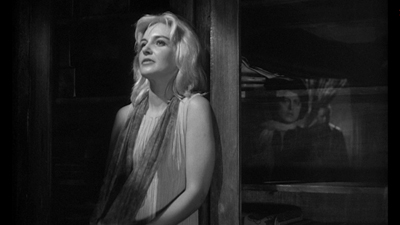
THE OUTRAGE - FILMSTRUCK

This review was originally written for DVDTalk.com in 2009.


Hollywood was all over Akira Kurosawa from the get-go. Not in the "We revere you so much we're going to import your movies" sense, but in the "No good idea is too good for us to think we can do better but most likely ruin" sense. Quite a few of his more famous samurai action pictures have been turned into quite a few westerns with a variety of results. Yes, it's hard to believe, but one of cinema's greatest directors was treated the way Hollywood now treats foreign horror movies: grist for the remake mill. Though I knew that a ton of different productions had ripped off the basic Rashomon concept of one story told from multiple yet conflicting points of view, I didn't know anyone had ever had the cajones to remake the 1950 classic in its entirety. Turns out there was a stage version written by Fay and Michael Kanin, and it was even filmed for television twice (including once by Sidney Lumet) before Martin Ritt decided to turn it into a full-fledged film in 1964. The Outrage placed Rashomon in a remote outpost in the post-Civil War American West, and it's a surprisingly obscure effort given that it's both Ritt's and Paul Newman's follow-up to the Oscar-winning Hud.

Then again, maybe it's not so surprising. When I worked in video retail, a customer once told me that he had a theory that the more stars there are in a movie you've never heard of, the worse that movie is likely to be. In addition to Newman, The Outrage stars Edward G. Robinson, Claire Bloom, William Shatner, and Laurence Harvey. It's not exactly a Cecil B. DeMille Greatest Show on Earth ensemble, but that's a pretty solid roster. Not exactly no-names, though not exactly A-List--just as The Outrage is not exactly awful, but not really a classic either.


The story of The Outrage pretty much follows the Kurosawa model: three men gather in a desolated area and end up discussing four different versions of one terrible story. In this case, Shatner plays a preacher who is waiting for a train at a rundown station in hopes of catching the next trip out of town, his faith in humanity shattered along with his belief in the absolute. Waiting with him is the downtrodden prospector (Howard Da Silva) who wants to convince him not to go and a conniving huckster (Robinson) in hiding lest the people he ripped off find him. The day before there had been a trial for a crime perpetrated against a traveling couple. As the verdict stands, the notorious outlaw Juan Carrasco (Newman) raped Nina Wakefield (Bloom) and murdered her husband, Colonel Wakefield (Harvey). At least, that was how Carrasco told the story, but Mrs. Wakefield had a different version and a medicine man (Paul Fix) who heard the Colonel's dying testimony delivers a third. Though Carrasco's past crimes made him an easy conviction, the truth seems lost somewhere in all the variations.

Turns out, there is a fourth version, one known only by the prospector, who as far as the court knows only found the body, but who in reality tells the preacher and the con man that he saw the whole thing from the bushes. Yet, there are reasons to doubt his version, too, as his self-serving secrecy undermines his credibility. The con man's cynical worldview may be the truest of all, that humans are suckers and liars. It makes a certain level of sense, especially when you consider that each person's scenario is more favorable to them. Each teller of the tale is a winner of sorts in their own version. Yet, that is also the most obvious interpretation, and Kurosawa's Rashomon provokes a much deeper response. Truth is not merely subjective, it is also unknowable. How each of us lives is dictated by how well we can reconcile ourselves with that principle.


Martin Ritt and the Kanins (Michael Kanin is credited with adapted screenplay) don't entirely remove the grander meaning for The Outrage, but their fourth act ends up being a rather fatal misstep that comes across as far less convincing and far more blatant than Kurosawa's Rashomon. While the first three stories, the ones told by the bandit, the wife, and the husband, are fairly accurate to the Japanese film, the prospector's version is portrayed as first a broad Southern melodrama before descending into a slapstick fist fight between Paul Newman and Laurence Harvey. The rape is suddenly treated like a punchline, and the decision to change how the Colonel dies in the prospector's story also makes it seem like a cruel joke, a misfortune perpetrated by the indifference of the universe. If the prospector's tale in the real truth, life would then be a B-movie rather than a human tragedy.

The acting is all very good up until that last story, too, with everyone playing his or her roles with the appropriate gravitas. The switch is so severe for the prospector's story, you almost have to wonder if it was all cooked up following a rather wild party and everyone was too drunk to be operating such heavy machinery. Even Shatner kept most of his hammy tendencies in check, though at times this early performance already shows signs of his trademark delivery (in terms of speaking style, he's kind of the Christopher Walken of his day). I'd actually give the top acting marks to Edward G. Robinson as the sharp-talking roadshow salesman. The veteran actor is the most comfortable up there on the screen of any of them, and his skills as a raconteur serve him well.

I'd have been curious to hear how an older Paul Newman reflected on the time he played a Mexican, with dark make-up and all (what is that? tan-face?). To his credit and the credit of his Actors Studio training, he buries himself in the part with the same amount of respect he would give any other role. Though I suppose some could grumble about his accent and gruff voice he adopts (did he study Treasure of the Sierra Madre in lieu of a dialect coach?), he largely manages to avoid racial caricature. In fact, the writing seems to be informed by an awareness of how the Mexican people might have been viewed at the time and includes allusions to racism and shows Carrasco playing at being a stereotype to lure Col. Wakefield into his trap (indeed, even relying on the white man's greed). Beyond the voice and the make-up, I don't get the sense that Newman would have played it any other way if his character were a white bandit named Carson rather than a Mexican one named Carrasco.


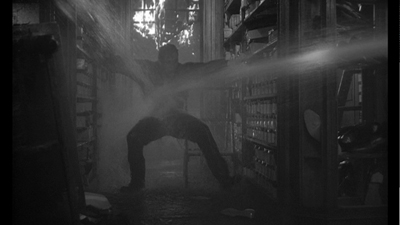
If there is one compelling reason to watch The Outrage, it's the sure-handed direction that Ritt displays for most of the movie, as well as the beautiful photography by James Wong Howe (The Sweet Smell of Success). From the rainy railway station that provides the story frame, the waiting men looking like an early test version of the trio at the station at the start of Sergio Leone's Once Upon a Time in the West, to the open desert and the way the people crowd into the town square to witness Carrasco's trial, Ritt and Howe use the wide open spaces of the West to show how remote this little pocket is, how isolated the pioneer is from polite society. They capture every gorgeous detail, every cactus and every raindrop, using the Panavision process to its full limits. In contrast, the little oasis where the crime goes down is softly lit, like a pocket dimension within the greater frontier. The Outrage is a gorgeous movie, tightly edited by Frank Santillo (who also worked with Sam Peckinpah on his more thoughtful movies), an expertly constructed movie from start to finish.

But a technical triumph is still only as big a victory as the script allows, and alas, there is no way around the pitfalls of The Outrage. While the first sixty minutes are very good, if a bit unnecessary given the existence of the Kurosawa original, the final thirty are a terrible blunder. There is little reason to watch a flawed version of Rashomon when you can just watch Rashomon--and that you can take as the absolute truth in a world of wishy-washy opinions. Anyone who says different is either lying or wasn't really there!


Friday, November 30, 2012

SIDELINE: MORE REVIEWS FOR 11/23

My reviews of non-Criterion movies for November.


IN THEATRES...

* Anna Kareninain which Joe Wright goes as crazy as his heroine and throws cinema under the train. But in a good way!

Killing Them Softly, the reteaming of Brad Pitt and his The Assassination of Jesse James by the Coward Robert Ford director takes on and dismantles the crime genre the same way they did the Western.

A Liar's Autobiography: The Untrue Story of Monty Python's Graham Chapman sounded like a good idea. In 3D, animated, built with audio recordings by the late comedian. Too bad it sucks.

Life of Pi. The 3D or the tiger? Definitely worth seeing in the theater to see Ang Lee's beautiful adoption of the extra dimension, but expect to be underwhelmed by the story.

Lincoln. Day-Lewis. Spielberg. 'nuff said.

Silver Linings Playbook, in which David O'Russell asks, "How is Bradley Cooper not himself?" You may need a tissue for this one. Either from crying or...er, um...Jennifer Lawrence. (Yeah, I went for that joke.)

Skyfall, Sam Mendes joins the Bond franchise, makes it legitimately good.


Smashed, an underdeveloped but well-meaning tale of addiction with Mary Elizabeth Winstead and Aaron Paul.

Also, if you live near Portland, you should stop by Cinema 21 for their three-film, weeklong Bogart celebration "You'll Take It and Like It." I wrote about it for the Mercury.

ON BD/DVD...

D.W. Griffith's Abraham Lincoln, a 1930 biopic in which the grandfather of cinema and the father of John Huston make the 16th President seem like a real dud.

Comic Book Confidential: 20th Anniversary Edition, an entertaining snapshot of the comics scene in the 1980s.

The Day He Arrives, an existential quandary, and arthouse take on Groundhog Day, from Korean director Hong Sangsoo.


Film Noir Collection, Volume One: Olive Films bundles together four of its noir and not-so-noir titles for a pretty solid collection of 1950s B-movies.

Harry Potter and the Deathly Hallows, Part 1 and 2: Ultimate EditionOr how I spent my Thanksgiving.


John Cage: Journeys in Sound, an informative documentary about the avant-garde composer.

Long Day's Journey Into Night, Sidney Lumet's masterful staging of the Eugene O'Neill drama, with Katharine Hepburn in the lead.

Die Nibelungen, Fritz Lang's epic silent film adaptation of the classic Nordic poem. From 1925.

People Like Us, a mainstream drama with surprising depth. Starring Chris Pine and Elizabeth Banks.

Ramrod, a dark western with Joel McCrea and Veronica Lake, the stars of Sullivan's Travels.

We Can't Go Home Again & Don't Expect Too Much, the lost experimental film of Nicholas Ray paired with a documentary about its making.


Tuesday, December 6, 2011

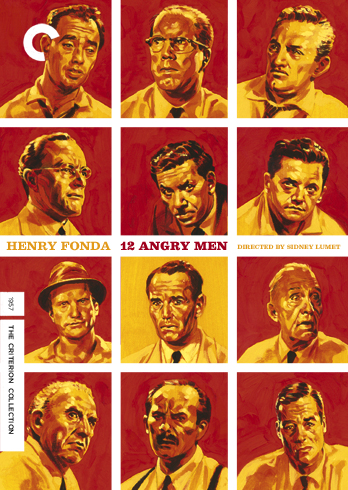
12 ANGRY MEN (Blu-Ray) - #591


No one likes jury duty. Well, some people probably do, but one hopes they are smart enough to keep it to themselves. At the same time, the right to a trial by jury is a great thing about the American justice system, and everyone should serve at least once and see how it all works. If you've ever been stuck in a back room arguing over the particulars of a case, you will never again wonder about some of the baffling verdicts passed down by civilian tribunals in high-profile trials. It's harder to armchair deliberate when you know how sentencing instructions and the literal wording of the law can affect the outcome of a seemingly open-and-shut debate.

While juries I have served on have never been as articulate, or as heated, as the regular joes and uncommon men who populate the tiny room of 12 Angry Men, Reginald Rose's script captures the back-and-forth quibbling over legal minutia pretty well. Inspired by his own time on a jury, Rose first wrote 12 Angry Men as a teleplay broadcast live in 1955 (which is also included here), and then expanded the hour-long program into a full movie screenplay, which was directed by Sidney Lumet in 1957.


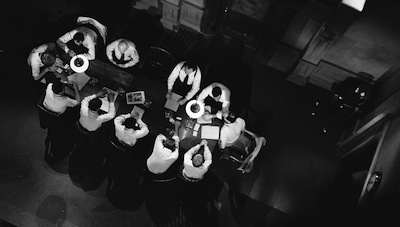
The movie begins after the trial is over. Outside of some short instructions from the judge and a lone shot of the accused, we have missed the proceedings. The camera travels the jury box, recording the faces of the jurors, before following them into a cramped room where they will be asked to stay until they can agree on a verdict. Most assume that the deliberation will be quick: the first vote is actually eleven for "guilty." The lone hold-out is Juror #8 (Henry Fonda), whose mind isn't made up. Maybe the boy killed his father, maybe he didn't. Despite pressure from the others to bend, #8 stays true to his insistence that if they are going to send a 19-year-old kid to the electric chair, they should at least spend some time exploring the realms of reasonable doubt.

Slowly, #8 works his way through the case. The testimony of the downstairs neighbor is questioned, then the uniqueness of the murder weapon, a switchblade knife. One by one, each juror is drawn into the discussion, and one by one they reveal something about who they are. #9 (Joseph Sweeney) is an observant old man, #5 (Jack Klugman) is from the same slums as the accused, and #11 (George Voskovic) is an immigrant who believes in America's sense of justice. On the stubborn side we have #3 (Lee J. Cobb), the father with an angry temper, and #4 (E.G. Marshall), the business man with the steady demeanor. There is also #7 (Jack Warden), who just wants to get out of there and go to a ballgame. And perhaps worst of all, the one that everyone else eventually turns against, is #10 (Ed Begley), a racist who believes the boy, who looked like he was maybe Puerto Rican, is a natural born liar, it's a byproduct of his skin color.


As the case disintegrates, personal feelings flare up, sides are taken, and threats are made. Rose has built a microcosm of American society, and also a sounding board for political ideas that were prudent to the American experience of the time. Civil rights, the vilification of unpopular or "radical" ideas, economic divides, the notion of might making right--these concepts are challenged just as the evidence is challenged. What would motivate a witness to lie? How much does an abused kid's background matter? What does it mean to be impartial and what constitutes reasonable doubt? For a locked room scenario, it's a surprisingly potent drama. Each man is given a rich background and each has an inner life. Nothing here is incidental. The writing is precise and dramatic and it's not afraid to be writing.

For his part, Sidney Lumet, who was transitioning out of television into this, his first feature film, keeps 12 Angry Men moving. Boris Kaufman's camera is agile and lively, moving through the room, capturing important expressions and gestures. The director and his cinematographer enact bold compositions, emphasizing the cramped space via contrasts of physical size. One man foregrounded may tower over the one in the background, but the power is often shifted: what the "smaller" man says weakens the "bigger" man. Live television had taught Lumet how to use a limited set to his advantage. If you think about it, it took TV to bridge the gap between stage and film, not just by putting together complicated one-time performances, but also by teaching a generation of new filmmakers to be economical and use confined spaces to their advantage. While the 1960s might have kicked down the walls of cinema and explored the open frontiers that new technologies allowed for, directors like Sidney Lumet and John Frankenheimer and others who first worked in l950s TV used restrictions to their advantage.

12 Angry Men had a profound effect on legal procedurals to follow. The notion that a criminal trial could be the basis for exploring bigger ideas has been exploited in most recent memory by the legal dramas of David E. Kelley and the whole Law and Order franchise. Even if those shows did move the action back into the courtroom, they still owe something to what Reginald Rose and Sidney Lumet (and Frank Schaffner, who directed the 1955 broadcast) did here. The whole strata of society passes through the doors of any given justice building, and for true justice to hold sway, they all must be honored the same.


Frank Schaffner's original 1955 broadcast version is thankfully included on this release, giving viewers a chance to witness the historic, Emmy-winning Studio One production. In some ways, this older version is somewhat superior. For one, the cast is not as well known, and having Robert Cummings (Hitchcock's Saboteur [review]) as Juror #8 instead of Henry Fonda makes the character more interesting. Fonda brings with him a certain moral authority, whereas Cummings' stuttering, unsure portrayal makes him less immediately convincing. Likewise, not showing the accused leaves that character up to our imagination, and a picture of him forms the more we learn. Lumet chose a scrawny, sympathetic looking kid that we make up our mind about right away. In general, the drama is more concise here. Having less time meant that Reginald Rose didn't have the opportunity to go off on as many personal tangents for each character, and one could argue that makes the dramaturgy less heavy handed. Both work for me, and I think in the spirit of this thing, we could make a case for either/or. (A 15-minute introduction by Ron Simon, from the Paley Centre for Media, adds further context.)

Most exciting, as well, is the addition of another live television drama, this one pairing Reginald Rose with Sidney Lumet a year before 12 Angry Men. The teleplay Tragedy in a Temporary Town features another mob of men, but this one isn't brought together by the legal system. Rather, it's vigilantism. The show stars Lloyd Bridges and two men that would go on to work for Lumet in 12 Angry Men, Jack Warden and Edward Binns (Juror #6). Set in a worker's camp, the story revolves around a young girl getting grabbed and kissed in the darkness. Failing to listen to Bridges' protest, Warden forms a posse to hunt through the camp, dragging the traumatized girl around in hopes she'll find her attacker. They barge into every home, writing down the names of any male age fifteen and over, until they land on a suspect that they can accept. It's not about finding the right guy, but about venting their restless anger.

Rose touches on the idea of personal "justice" in 12 Angry Men. The workers here are like the jurors unleashed. If the men in the other film could have gotten out of the room and been allowed to do as they wished with the accused, they very well could have resorted to violence. Here the misguided actions of the lynch mob threatens the safety of the whole community rather than making it more secure. Ironically, the men in the posse are looking for a threat within, not realizing they are it. Bridges is forceful in the lead, though his moral equivocations don't quite match Warden's menacing bluster.


For a complete rundown on the special features, read the full review at DVD Talk.

Please Note: The images used here are from promotional materials and are not taken from the Blu-ray edition under review.


Monday, April 12, 2010

THE FUGITIVE KIND - #515

"This is a snakeskin jacket! And for me it's a symbol of my individuality and my belief in personal freedom." - Sailor (Nicolas Cage) in David Lynch's Wild at Heart

"That's where I come from, it's not where I'm going." - Valentine (Marlon Brando) in The Fugitive Kind


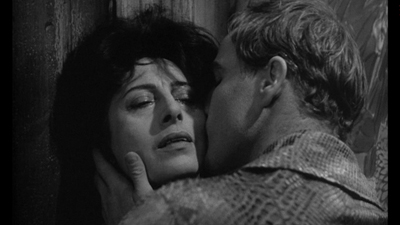
I know that New York isn't really earthquake country, but has anyone checked the records for 1959? Because surely the ground did shake when Anna Magnani and Marlon Brando met each other on the set for The Fugitive Kind. Such colossal screen talent in one place, the soil must have shuddered. That the two apparently did not get along did not matter. Such are the laws of the jungle. As performers, these two were primal.

The Fugitive Kind was directed by Sidney Lumet, most recently seen on modern movie screens helming the fantastic Before the Devil Knows You're Dead. It was adapted by Tennessee Williams and Meade Roberts from Williams's play Orpheus Descending. It reunited the playwright and Marlon Brando, who had changed acting forever as Stanley Kowalski in Williams's A Streetcar Named Desire, first igniting the boards in the original stage version, then recapturing the flame in Elia Kazan's movie version.
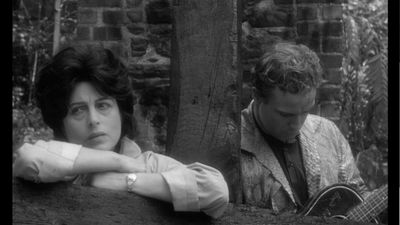
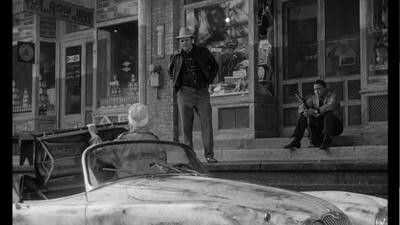
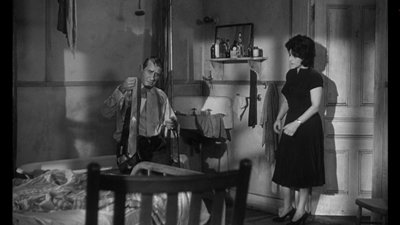
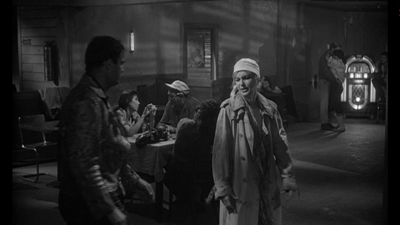
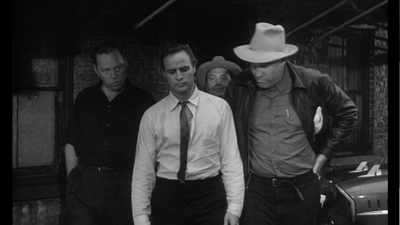
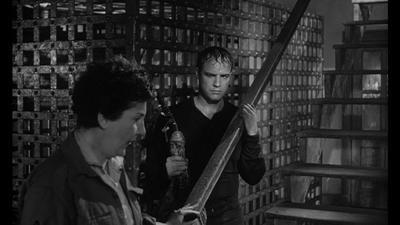
This time around, Brando plays Valentine Xavier, also known as "Snakeskin," named so for his snakeskin jacket. Val is a performer in love with his guitar, which he carries everywhere yet really only plays once (accompanied by an unconvincing overdub [video]). When we meet Val, he's standing before a New Orleans court, having caused a ruckus at an illicit party the night before. His guitar is in hock, he was hired to go to the party for his other talents. Snakeskin is a stud. He oozes sexuality. Just about everything out of his mouth sounds like a come-on.

Val is just about to turn 30, and he's sick of the festive lifestyle, so he retrieves his guitar and gets out of the Big Easy. He drives until his car won't drive anymore, settling into a small town. The sheriff's wife (Maureen Stapleton) takes pity on him--a bad habit of hers, by the looks of it. The night Val arrives, Sheriff Talbot (R.G. Armstrong) and his boys are hunting down an escapee that muscled passed Mrs. Talbot when she took his dinner to the jail cell. They catch him, but this time they give him a pine box instead of a metal one with bars. Still, Val wants to turn over a new leaf, and Mrs. Talbot believes him.


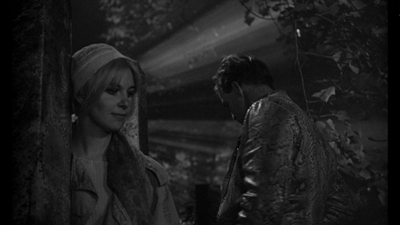
The next day, Mrs. Talbot takes Val to the local all-purpose store. The owner of the store, Jabe Torrance (Victor Jory), has been in the hospital and is coming home that afternoon. Since Jabe is still bedridden, his wife, Lady Torrance (Magnani), is going to need some help keeping things running, as her time will be divided between caregiving and clerking. Val's job interview is delayed by the arrival of the town wild girl, Carol (Joanne Woodward), who remembers Snakeskin from a New Year's shindig in New Orleans (indeed, he wears her cousin's watch, stolen during their last encounter). She takes him out for a drunken night in highway roadhouses, but it only reminds Val that he's done with that kind of foolishness. He returns to the store and engages in a late-night mental joust with Lady. There is something between them, something neither wants to name, and Lady gives him the job as long as he agrees to pretend that something isn't there.


The mythological Orpheus was a master of the lyre and a singer of songs. The most well-known story about him, and the one that Williams was referencing in Orpheus Descending, involves the musician heading down into the underworld to rescue his wife, Eurydice, from the grips of Hades. His songs move the heart of the oppressor and earn the woman a second chance at life. Except on the way out, Orpheus hesitates. Despite being told to get out of the underworld and not turn around until he is through to the surface, Orpheus looks back at his wife when only part of the way to freedom, and her soul is damned for eternity.

Williams and Lumet transplant this old story to the American south. Val leaves a life of abandon for the more constricted, isolated small town where the locals either dole out punishment (the men are bullies, the women judgmental gossips) or are damned (characters regularly refer to this place as being a prison). Carol, for instance, is punished for her transgressions. The alcoholic party girl is also a political provocateur, challenging the racial divides prevalent at the time, and beat down for it. Woodward plays Carol as unhinged, but in much the same way a caged animal loses its sense of perspective. She can't beat the zookeepers, so she can only bang on the cage.


Race is a big issue in The Fugitive Kind, and so is sex. Both transgressions are met with small-minded justice. Lady dared to love once. As a youth, she had an affair with Carol's older brother (John Baragrey), but the price for it is that now she is in a loveless marriage with a sour man. She is trapped in a place that is too small for her, and one that has already brought her much damnation. We don't know how this Italian family got there, but her father once ran a little wine bar on the outskirts of the 'burg, only to have it burned down--and he with it--because he sold some liquor to black customers. It was the same summer that Lady's romance ended, and she's carried the hate from it ever since.


Val has a philosophy about the world, that there are only two types of people, the ones that are bought and sold, and the ones doing the buying and selling. Everything has a price, including human flesh. (Indeed, the implication of his story at the start of the movie is that he was prostituting himself.) There is also a third type, but it's so rare as too hardly count. It's this group that Carol dubs "the fugitive kind." These are the folks that choose to get out of the cycle. Val likens them to birds with no legs, ones who can never land and must always stay high in the sky, above the predatory hawks that would knock them down. They "sleep on the wind" and only touch the ground when they die. Val is this type, Carol is this type, shouldn't Lady also be? She definitely has plenty to run away from, and she certainly doesn't fit in where she's at.


As his name suggests, Valentine Xavier is no ordinary man. He is a strange creature with odd habits, described as being a "peculiar talker." Names in The Fugitive Kind obviously mean something. "Lady" is the lady of the story, the damsel in distress, and a "Valentine" is a trinket, an object of contrived emotion that uses love as barter for sex. Lumet points out in the extras that this particular pheromone factory's full name is a play on "Saint Valentine the Savior." Every woman who comes into contact with this Valentine wants him in some way, even if it's just to mother him like Mrs. Talbot. They are drawn to him like moths to flame. (Val describes himself thus: "My temperature's always a couple of degrees above normal, the same as a dog.") Likewise, Val knows what these women feel. His presence inspires them to confess what is inside of them. In a very tender scene, he talks to Mrs. Talbot about her painting. A far too kind a soul to be married to the mean-hearted Sherriff, Mrs. Talbot has taken up art to express herself. She can't explain it, it's precisely because she doesn't have the words that she has turned to the canvas, and Val's claims to understand soothe her. The kindness that passes between them is quiet, and it's just as powerful as any of the more assertive emotions that flare up elsewhere. Maureen Stapleton's performance is heartbreaking.


If Val is a figure of myth, then the world he lives in must also be mythic. Sidney Lumet and director of photography Boris Kaufman, along with art director Richard Sylbert, create an isolated environment, one that is moody and at times overwrought. The graveyard that Carol takes Val to is like an oasis in the dark, and the bright lights that filter through the foliage around it make it look like a portal into another world. In contrast, the dusty town is like some kind of pit, a hole in the earth. The interior sets are either bare (the roadhouse, the bedrooms) or overly packed (the jail, the Torrance store). In one sense, we see the poverty and the isolation; in another, we see how small everything is. These people are stuck together, they can't help but be on top of one another. If it's not Hell, it's at least Purgatory, a stop along the way (Orpheus is descending, after all, he's not there yet). Jape Torrance sweats his life away up in his room, the presiding death dealer, and the store beneath him has an understated surreal quality, like Dante rejigged for commerce. In opposite corners, still mannequins stand like guards, watching what goes on.


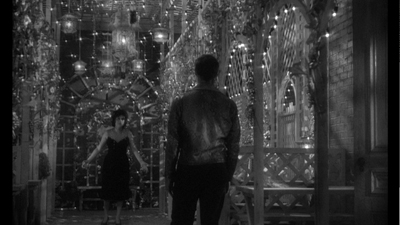
When Lady takes Val out to the ruins of her father's wine garden, we see that it was once a colorful escape from the dreariness of the village. Lady is hoping to recreate that place of peace and celebration, she is building her own little nightclub on the side of the store. She calls it the Confectionary, and when it's put together, decorated with tinsel and hanging lights and flowers, it looks like a wedding chapel. Like the graveyard, it's a romantic gateway to somewhere else. It's a symbol of love and happiness, and a big f.u. to the hardened hearts of the men around her. She knows that amongst the townsfolk are the racist "vigilantes" who killed her father. In truth, her exile is self-imposed, she is waiting to find the truth and punish the murderers.


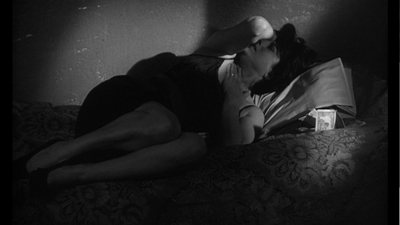
These various elements give The Fugitive Kind a palpable tension. The heat between Val and Lady is met in intensity by the doom hanging in the air. If they finally come together, it will surely be the end of them both. Yet, like the classic myth, there is an inevitability to their coupling. This is there fate. Everything Val does only seduces Lady more, feeding her loneliness and need. This makes Val a fugitive from his own nature. He wants desperately to get away from her, to not ensnare her with his charms or be ensnared by her desire, but he can't. He tries, he's on his way, but she draws him in. He turns around before he's gotten out of the underworld. Love forces the bird to land.

As noted at the outset, the pairing of Magnani and Brando is pretty significant. Anna Magnani is a forceful screen presence, and her powerful performances in films directed by the likes of Rossellini, Renoir, and Passolini are unforgettable. Her acting is fired by an inner force, something that can't be entirely articulated, it's just when you see her, she seems so real that you want to know what more there is. It's impossible to take your eyes off of her. It's a quality that Brando also possesses, yet his method makes him seem mercurial and unknowable, whereas Magnani is solid. When they come together, it's like ocean waves beating against a concrete shore. They are their characters: he can't be grasped, she can't be moved.


Though Brando reportedly found Magnani unattractive, there is still a sexual spark between them. Perhaps he knew what he was doing, he was turning himself into something she could not have to draw her out. Apparently his mush-mouthed delivery made it hard for the Italian-born actress to pick up her cues. She had learned her lines phonetically, though you would never know it. With these two actors, expression transcends language. Ironically, it's just this kind of actor that can wrestle with Williams's often overwritten poetry and make it sound believable. Brando in particular sucks the pretention right out of it by making the lines sound so off the cuff.

The constant references to heat are apt. This is Hell, and the fires will burn as they will. The Fugitive Kind builds to an incendiary climax, one befitting the story's classic origins. It's also one that befits the tumultuous politics of the times. Small-minded morality and the brutality that comes with it was on its way out, and though they may have seemed crazy, it's the ones who saw the sea change coming that also kept moving forward. Not sure if that's by choice, Williams seems to say they are unmoored. If it's a sea change, they are stuck beating against the tide. The Fugitive Kind seems more cynical about social progress than hopeful. In the final scenes, it's suggested that there is no changing who people are. The skin we wear, the very nature of our beings, cannot be shed, only transmuted. The sellers and the sold may be condemned to stagnation, but those who would be free are condemned to forever be separate, to always wander, and never be blessed with the growth their stubbornness may inspire.


The Fugitive Kind is a two-disc set, and the second disc is all supplements, including a discussion with Lumet about his roots in television and his previous adaptations of Tennessee Williams.

Fans of live TV of the 1950s will be pleased to find the hour-long Kraft Television Theatre production, Three Plays by Tennessee Williams, collecting "Moony's Kid Never Cries" (starring Ben Gazzara and Lee Grant), "The Last of My Solid Gold Watches" (starring Thomas Chalmers), and "This Property is Condemned" (starring Zina Bethune and Martin Huston). These three plays show three different ages, three stages of life: childhood/pre-adolescence in "Property," early adult life in "Moony's," and old age in "Gold Watches." In each stage, there is a sense of disillusion and disappointment, the characters have all seen that the promise of whatever life has preceded them was false, and the tomorrow they hoped for is not waiting for them. In some cases, it's their own future that is faltering, and in the case of Chalmers in "Gold Watches," it's that the whole world is changing and going in such a way that not only has he become obsolete, but all that he thought he accomplished no longer matters. The theme in Williams is always of a dream deferred. Even in The Fugitive Kind, Snakeskin has realized that the high life is not so high, and Lady has discovered love is a hard, bitter thing. These one-acts move quickly, and the acting is exceptional. Sidney Lumet was a facile director, agile in the live arena, and this production sizzles.


For a full rundown on the special features, read the full article at DVD Talk.