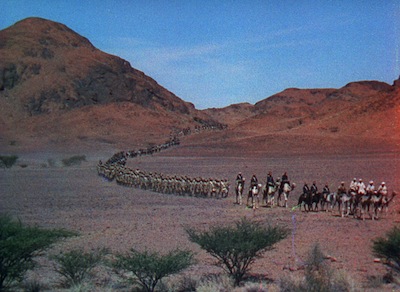
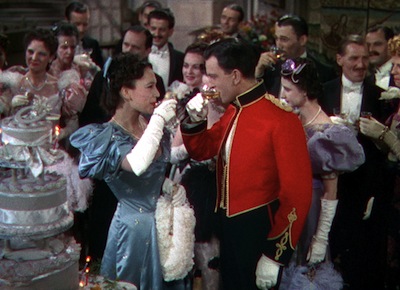
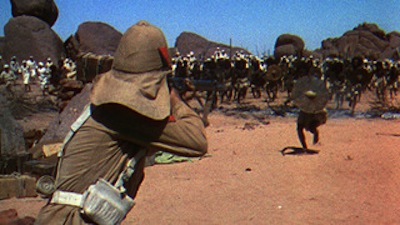
I am jumping into Criterion's Paul Robeson boxed set in the middle, so I am having to play some catch-up in terms of context. My inspiration for beginning with 1935's Sanders of the River is my still-in-progress review of The Private Lives of Alexander Korda and my current interest in the Korda brothers in general. Sanders of the River was directed by Zoltan Korda, who also helmed The Four Feathers [review] and The Jungle Book [review], and it fits in with the director's seeming fascination with stories set in Africa.

As an actor, Paul Robeson is best known for the James Whale version of Show Boat, a film that was to follow a year after Sanders of the River. By 1935, he had already made several films, including The Emperor Jones, but his reputation had largely been made on the boards. In fact, he originated his Show Boat role on the London stage, and according to the liner notes, a large reason why the performer made this film with the Kordas was that England afforded him more opportunity than America. Robeson, whose efforts as an activist now overshadow his career as an actor (though it's clear the point of Paul Robeson: Portraits of the Artist is to show how both vocations are inextricably linked; this particular disc is classified as the "Pioneer" phase), wanted to avoid the kind of cliche manservant roles that Hollywood was likely to exile him to. Sanders of the River, then, is a fascinating and somewhat perplexing notch on his belt, partially achieving Robeson's goal, if imperfectly so. Sanders of the River offers a complicated view of British colonialism, one that partially validates the rightful, albeit dubious, might of imperial law.

Surprisingly, Sanders is not Robeson's character, but is instead a British commissioner overseeing Nigeria (and played by Leslie Banks). Paul Robeson plays Bosambo, a one-time criminal and opportunist who presents himself as a leader of the Ochori people when the "Old King" from a neighboring tribe (portrayed by Tony Wane) makes aggressive moves on the Ochori. Despite seeing through Bosambo's ruse, the fair-minded Sanders takes the opportunity himself, assigning temporary rule to his new ally. If Bosambo keeps the peace and becomes the eyes and ears of the Empire, he can keep his position. Bosambo takes to this well, only losing ground when Sanders leaves his post and the territory in the hands of another. Without the respected leader in place, a devious British official sees the opportunity to make a profit by stirring up old rivalries. Though this inspires Bosambo to take his kingly duties seriously and shed his vainglorious desires, only Sanders' return can restore order--and only an even more timely arrival can save Bosambo's skin.
Surprisingly, Sanders is not Robeson's character, but is instead a British commissioner overseeing Nigeria (and played by Leslie Banks). Paul Robeson plays Bosambo, a one-time criminal and opportunist who presents himself as a leader of the Ochori people when the "Old King" from a neighboring tribe (portrayed by Tony Wane) makes aggressive moves on the Ochori. Despite seeing through Bosambo's ruse, the fair-minded Sanders takes the opportunity himself, assigning temporary rule to his new ally. If Bosambo keeps the peace and becomes the eyes and ears of the Empire, he can keep his position. Bosambo takes to this well, only losing ground when Sanders leaves his post and the territory in the hands of another. Without the respected leader in place, a devious British official sees the opportunity to make a profit by stirring up old rivalries. Though this inspires Bosambo to take his kingly duties seriously and shed his vainglorious desires, only Sanders' return can restore order--and only an even more timely arrival can save Bosambo's skin.
Quite literally, as it turns out. The Old King wants Bosambo's flesh to cover a drum, the tenth of its kind, his preferred punishment of his enemies. I am not expert on the truth about Nigeian customs or African tribalism, so despite the expected doubts I may have in Sanders of the River's depiction of the nation's people, I really have little reason to question Zoltan Korda's motives or successes here. The Nigerians aren't portrayed as mere savages, but as a people whose rituals and history are simultaneously relevant to their existence and anachronistic next to modern Western points of view. It would be easier to see Sanders as less than sincere if white men were only portrayed as conquering heroes, but the betrayal of other Brits puts them on equal footing with the bloodthirsty king. Plus, Korda's interest in African traditions led him to include documentary footage in the film, photographing several actual tribes dancing and singing according to their custom. (Also, Korda splices in a fair amount of footage of the local wildlife.) These scenes would seem like unnecessary detours if not for the fact that Sanders of the River was obviously designed as a vehicle for Robeson and his powerful voice, so the movie is as much a musical as it is an adventure picture. Robeson unleashes his baritone on several songs included in the movie, ranging from a rallying war cry to a somewhat distasteful heroic ballad about Sanders (the conquered praising the conqueror). There is also a very Western-sounding lullaby performed by another musical mainstay, the actress Nina Mae McKinney, in her role as Lilongo, Bosambo's headstrong wife.

Lilongo is another interesting character in that she is a kind of precursor to the take-no-guff cliché that has become a prevalent type in Hollywood portrayals of African American woman. The big man, and big personality, crumbles under her scorn. Her sass is not the only aspect of her or her relationship with Bosambo that comes off like it was beamed in from another time. While I hate to use the term "civilized," their marriage doesn't quite jibe with the "jungle" stereotype. For however else one might scratch his or her chin about Korda's politics, there is no denying that his direction is progressive in how he allows for Robeson's natural masculinity to come through. It was not even remotely common for a black actor to be a potent sexual presence in a positive way in movies until probably the 1970s. yet here Paul Robeson is allowed to be very much a man. The scene in which he first meets Lilongo and they enjoy their initial flirtation is not staged like some kind of backwoods courtship; rather, they approach each other with a hunger that was even lacking in most white motion pictures of the time. They display their desires and verbally maneuver around one another as if they were in a New York bar rather than an African village. Sanders of the River surely raised many a pale eyebrow in 1935.

In a way, this makes the final scenes of the white-man-as-savior forgivable. There was likely only so much Korda could get away with, there had to be some compromise. Plus, if you remove the colonial aspects of the story, then Sanders of the River is really a film about a white man and a black man getting along, and of the black man actually gaining real power within a society that otherwise would not allow it. Sure, it's still a position where he is only in charge of people of the same race and still answerable to white governance, but it doesn't come across as either a token hand-out or a reward that comes as a trade-off for dignity.
Which ends up explaining why Robeson would have been drawn to Sanders of the River. Scrolling through the actor's filmography, I don't think I've seen any of his other movies, which appear to be a mixture of politically minded films and straight musicals. In another era, Robeson would have been a much bigger cinema star. He is naturally charismatic in front of the camera, a comfortable yet forceful presence on the screen. Bosambo gives him plenty of opportunity to show his range. He is at turns cagey and clever, confident and seductive, a husband and a father, and also a righteous warrior. In other words, it's a multi-faceted part, the kind that only white actors were really getting at the time. He is a real person rather than a racial caricature. Sanders of the River may suffer from some rickety technique when it comes to filmmaking (particularly in battle sequences), but it definitely pushes the boundaries in terms of script.

1937's Jericho is a far more straightforward--and, were it starring a white actor, I'd say traditional--vehicle for Paul Robeson. Directed by Thornton Freeland (Flying Down to Rio , Over the Moon), Jericho stars the actor as Corporal Jericho "Jerry" Jackson, an NCO in an African-American regimen in WWI. When Jericho's ship is attacked by the Germans en route to the front, he goes to heroic measures to rescue his fellow soldiers. Unfortunately, a meddling sergeant (Rufus Fennell) gets in the way, and Jericho accidentally kills him when pushing him aside. Jericho is charged with striking an officer and defying orders and sentenced to death. When an opportunity presents itself, Jericho flees this unjust punishment, unknowingly condemning his one ally, a white officer, Captain Mack (Henry Wilcoxon). While Jericho begins a new life in Africa, becoming a chief and organizing an alliance amongst neighboring tribes, Mack spends the rest of the Great War in the brig.
, Over the Moon), Jericho stars the actor as Corporal Jericho "Jerry" Jackson, an NCO in an African-American regimen in WWI. When Jericho's ship is attacked by the Germans en route to the front, he goes to heroic measures to rescue his fellow soldiers. Unfortunately, a meddling sergeant (Rufus Fennell) gets in the way, and Jericho accidentally kills him when pushing him aside. Jericho is charged with striking an officer and defying orders and sentenced to death. When an opportunity presents itself, Jericho flees this unjust punishment, unknowingly condemning his one ally, a white officer, Captain Mack (Henry Wilcoxon). While Jericho begins a new life in Africa, becoming a chief and organizing an alliance amongst neighboring tribes, Mack spends the rest of the Great War in the brig.
Once again, there is some upending to the usual race dynamic. When on the run, Jericho teams with another deserter, an America flim-flam man named Clancy (Wallace Ford). Jericho quickly becomes the head of this new partnership, and the further they travel into the desert, the more Clancy becomes his fast-talking functionary. This was not the normal relationship dynamic between a black man and a white man in Hollywood movies at the time. Ford is Robeson's sidekick. He is the comic relief, and he is also expendable. Robeson is likewise given the romantic subplot. As in Sanders of the River, he meets a beautiful African woman and marries her (she is played by the one-named Egyptian actress Kouka).
Jericho is a fairly solid B-picture. It could just as easily have starred Humphrey Bogart (whom Freeland directed in Love Affair) as a poor America down on his luck, the wrongfully accused idealist looking for a way out. The plot has a tacked on Les Miserables-esque final act, with Mack determined to clear his name by bringing Jericho back to the States. Naturally, the man he finds has already redeemed himself, and is still determined to do the right thing, even if it means sacrificing his new life. This compels Mack to relent and make his own sacrifice instead.
Jericho is a fairly solid B-picture. It could just as easily have starred Humphrey Bogart (whom Freeland directed in Love Affair) as a poor America down on his luck, the wrongfully accused idealist looking for a way out. The plot has a tacked on Les Miserables-esque final act, with Mack determined to clear his name by bringing Jericho back to the States. Naturally, the man he finds has already redeemed himself, and is still determined to do the right thing, even if it means sacrificing his new life. This compels Mack to relent and make his own sacrifice instead.

The B-picture tag is not always an automatic positive, however; while we have elevated the extraordinary lower-level genre movies of the past, there were far more that were exactly what they were designed to be: merely competent diversions. This is where Jericho falls. Though never really boring, and also featuring numerous quality songs that allow Robeson to grandstand as a soloist, it's not entirely memorable. Freeland's direction is pedestrian and often stagey, and Robeson suffers for it. The actor often appears trapped within the static frame, confined to its four corners, the camera locked down. There is an awkwardness to the more physical moments, including a firefight in the desert, that suggest Robeson maybe forgot he wasn't acting on a stage, he need not be so contained.
Still, there is an interesting, and somewhat volatile, idea at the center of Jericho: the movie is simultaneously anti-war and critical of racism, and in a genius stroke, uses the former as a metaphor for the latter. Jericho is an example for the other negro soldiers (most of whom, it should be noted, skirt dangerously close to wartime stereotypes), and so he is not afforded the leniency his alleged crime deserves. And it can't be ignored that the solution to the problem is for the doomed soldier to return to Africa, to the home of his ancestors, for salvation.

Thus, a so-so picture becomes a far more fascinating one. Jericho has more subtext than the filmmakers knew how to handle. Placed in context, it was perhaps even more subversive for how simple and ordinary it seemed. As we've learned over the years, the most powerful images are the ones that don't push it, but rather derive their meaning and achieve their impact simply by existing. A movie like Jericho is one you wouldn't normally expect to find in the late '30s, but by virtue of Paul Robeson's stardom and his convictions, here it is. Who knows? Maybe it did more by not trying to do too much.


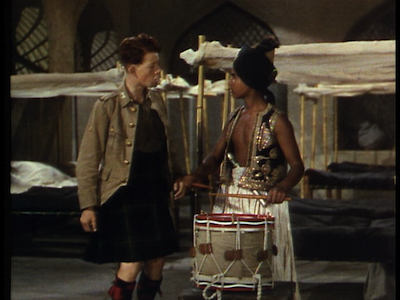
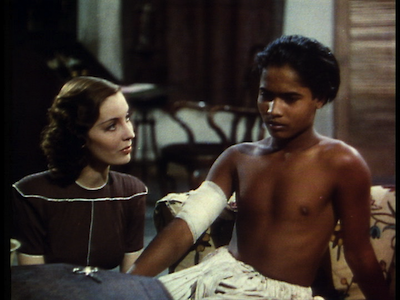
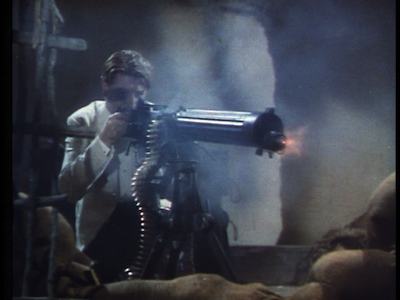

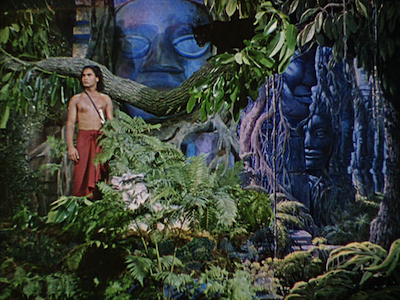
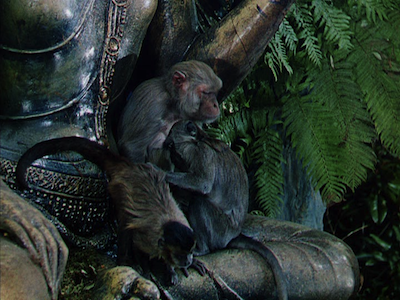
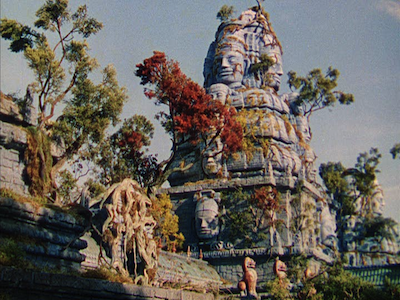
 . In that, Mowgli cavorts with talking animals and the human world is mostly out of it. Many of the same characters are here--the snake Kaa, the panther Bagheera, and the bear Baloo--and Korda anthropomorphizes them, though not to the same degree. Mowgli is said to be able to speak all animal languages, and as we go deeper into his world, we begin to hear their voices as he does. Most of the time, the animals we see are real, including the predatory cats and elephants and the monkeys. In other understandable cases, they are puppets or props, though the only distracting effects are the rubbery snakes. In all fairness, the snakes tend to get bigger acting parts than the furrier animals, so some sacrifice had to be made for narrative demands.
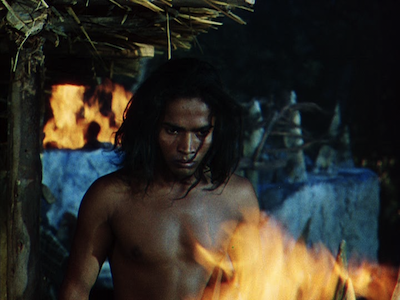


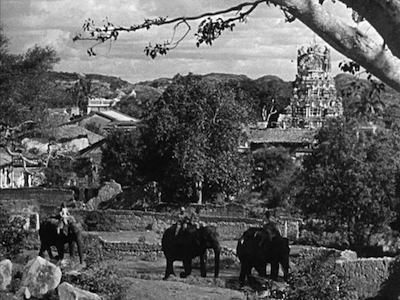
 , in 1988). Naturally, deeper issues of colonialism are left for others to contend with. Instead, Elephant Boy's main themes are moral determination and a dedication to duty. Hunting is presented as a noble profession (the elephant hunt is more like a cattle drive, there is no violent slaughter), and Toomai's dreams eventually come to. Presumably so did Sabu's, though he may not have been aware these particular adventures were his dreams until the picture business came calling.
 a few years back (which I never saw). While Zoltán's adaptation, which was written by R.C. Sherriff (That Hamilton Woman [