Showing posts with label cocteau. Show all posts

Saturday, September 23, 2017

A MARRIED WOMAN - FILMSTRUCK

This review was originally written in 2009 for DVDTalk.com.


Jean-Luc Godard was one of the most prolific filmmakers of the early 1960s, producing a string of exciting, creative films that, as Susan Sontag once wrote, work as one long piece of cinema, an evolving, ever-expanding movie from a singular artistic source. Of those early movies, one of the least talked about seems to be Une Femme Mariée (A Married Woman), his 1964 study of one woman's emotional dilemma. Perhaps it's just that the movie fell between the more popular Band of Outsiders [review] and the sci-fi detective film Alphaville [review], and so the less flashy feature got lost behind the spotlight. Regardless, it's an unfair development. A Married Woman is a worthy companion piece to Godard's divisive 1963 masterpiece, Contempt [review], exploring many of the same themes of infidelity, changing affections, and performance, but this time more sympathetic to the female side of the story.


Macha Méril stars as Charlotte, a young wife married to Pierre (Philippe Leroy), an older man whose previous marriage ended after two months, leaving him a cuckold with a young son. Despite going through the motions of wife and lover, Charlotte has grown tired of the arrangement, and she has sought extramarital passions in the arms of a handsome actor, Robert (Bernard Noël). Robert wants her to leave Pierre and be with him, and Charlotte has agreed to get a divorce so they can make that happen. Yet, pulling the trigger is not so easy.

A Married Woman is told in a series of distinct chapters, opening with a rendezvous with Robert, transitioning into Charlotte's return to family and time with Pierre, then a little girl talk, and finally back to Robert. Far from a conventional narrative, A Married Woman is composed of Godard's usual aesthetic, like a series of cut-up snapshots rearranged and pasted together. The final product is a little like a parlor-room drama given a modern remix. Continuing his groundbreaking experiments with music, advertising, and slogans, Godard splices conversations with movie posters (as well as his usual self-reflexive references to the same), ads for brassieres, and the sights of Paris, including the Eiffel Tower and a Jean Cocteau window display. Instead of the usual talking heads, he presents conversations as one-sided, having each character look directly into the camera and state their business, with their partner sometimes posing questions off-screen. Thus, discussions are more like filmed interrogations than an exchange of information, each lover demanding to know if they are loved and how much. Just what are you prepared to do for me?


Ever the trickster, Godard plays fast and loose with the idea of the male gaze in A Married Woman. The lovemaking scenes are staged using strictly framed shots, focusing on different parts of Charlotte--the back of her neck, her bellybutton, her legs. It is both reverential and objectifying, loving and lustful, a dichotomy Godard is acknowledging as existing in both of Charlotte's male partners. As she will figure out, they want to possess the parts, but not necessarily the whole. She wonders why both of them don't want to see her in her complete nakedness, Robert even imploring her to put on a shirt as she wanders their shared boudoir in panties and nothing more--though even in her exhibitionism, she hides a little, covering her breasts with her arm. Then again, if Robert would express his desire to see them, she'd reveal all. Interesting, too, that both the husband and boyfriend end sexual encounters with talk of pregnancy, of each wanting to give Charlotte a baby. Her nervous reluctance is refreshing. Not all modern women want to be mothers, after all, and the implication is that the men see this as a final stamp of ownership, the way to shackle her. The men are frighteningly interchangeable, especially the way Godard regularly shoots only the backs of their heads or leaves them off camera entirely.


Marriage didn't go so well for Pierre the first time, something that comes to bear in his new relationship, and Godard is sharply aware of the double-standards that come to play in a male/female relationship, especially in regard to sexual freedom. Charlotte says as much when Pierre questions her past history, and she knows he doesn't trust her because of his own history. As a pilot, Pierre is often gone, and in his absence, he once had a private detective follow Charlotte, catching her in her early flirtation with "that actor." As she tells him, even if his suspicions are correct, it doesn't give him the right to have her tailed.


Godard is smart to have Charlotte be such a conflicted character and not altogether wholesome. She is often childish, fighting over whether she can play some records or worrying about her bust size. The auteur is fascinated by the division between youth and age as much as he is the division of gender. There are ongoing discussions of memory vs. action, past vs. present. Pierre is hopelessly stuck in the past, whereas Charlotte only cares about right now. In one of his usual extreme juxtapositions, Godard introduces us to Pierre just as he is returning from having been to Auschwitz to watch the trials of Nazi war criminals, all of whom profess to not being able to remember the atrocities. Is Charlotte's disinterest evidence of a flighty personality, or is Pierre merely an intellectual poser? In the middle is Pierre's guest (director Roger Leenhardt playing himself), an even older man who is more in tune with where these things intersect. Intelligence, as he says, is the ability to compromise, to be able to assess all factors and proceed accordingly.


Ultimately, this is what Charlotte must do, particularly after a mid-point twist where she realizes she is pregnant and has no idea which of the two possible candidates is the father. Macha Méril is wonderful to watch in the movie, making Charlotte more than an empty vessel for Godard's philosophy--even if her discussions of acting with Robert bring to mind some of the theories of Robert Bresson, who saw actors as models to be posed. (A brilliantly choreographed meeting between the lovers, showing the lengths they'll go to cover their tracks, also reminded me of Bresson. Specifically, the scenes of thievery in Pickpocket.) As an actress, Méril is always aware of both her surroundings and the internal debate that Charlotte is having. She always appears to be thinking, she is never blank. Her performance serves Godard's subversion of the male gaze quite well, actually, and Raoul Coutard's gorgeous photography practically dares you to get lost in her beauty and forget that there is a brain in her head. Good luck, because Méril makes it pretty much impossible.


The tragedy of A Married Woman, then, is that for as much as Charlotte may want to weigh her options, what she discovers in her final tryst with Robert is that the choice is ultimately out of her hands. Any relationship lives or dies on the vagaries of its participants, and so as much as Pierre's mistrust of her is a self-fulfilling prophecy, so too is Robert's status as an actor and his role as the other man going to make him a capricious lover, someone for whom permanence is not truly viable. As in life, the end of the film is abrupt, coming before Charlotte--or the viewer--is ready, and thus hitting all the harder.


Sunday, October 25, 2015

A SPECIAL DAY/HUMAN VOICE - #778

You’d think loneliness was some kind of luxury.”


It’s fascinating watching countries grapple with their own troublesome history, particularly when the events in question aren’t yet that distant in the past. We can already see it in some of the early American films about both wars in Iraq. Consider how formless and lost ThreeKings and Jarhead were as the first out of the gate, or the polarizing aspects of American Sniper [review], which I still think was most interesting when it was the least political.

I’m sure I’ve written about this before, but this use of art to sort through the guilt and wreckage of wartime politics and, in a sense, a national defeat, was a major factor of the Neorealist cinema, including, of course, the great films of Roberto Rossellini, who portrayed the anti-fascist resistance [Era notte a Roma] and also tried to show the everyday life of Italian citizens living under Mussolini in many of his releases during the 1940s and ’50s [like these]. Though following many years on, director Ettore Scola picks up that thematic torch for his 1977 film A Special Day, a potent drama grounded in the lives and homes of two very different people.

A Special Day is set in the late 1930s during Hitler’s visit to Italy to meet with Mussolini and the fascists. All Italian citizens are expected to turn out and greet the visiting dictator as he tours their streets in a grand parade. Left behind in a towering tenement is beleaguered housewife and mother of six, Antonietta (Sophia Loren). An escaping mynah bird leads to a chance encounter with a neighbor across the courtyard, a depressed bachelor named Gabriele (Marcello Mastroianni). Unbeknownst to Antonietta, Gabriele is on his own because he is an antifascist who has been fired from his job due to his political beliefs. An intellectual and effete, Gabriele sees little hope in a life under fascist rule.

Perhaps sensing a similar loneliness in the housewife, Gabriele turns up on her doorstep seeking coffee and conversation, and risking scandal from the spying landlord. Over the course of their day together, they get to know one another, crossing a divide that is greater than their courtyard: Antonietta is a true believer in the current regime.


A virtual two-hander, the success of A Special Day relies entirely on the chemistry of its stars. Fortunately, Mastroianni and Loren had a tremendous and deep working relationship that had started many years prior and included several films in collaboration with Vittorio De Sica, including Marriage Italian Style [review] and Sunflower [review]. The pair was always comfortable and natural in each other’s presence, and are overdue their distinction as one of the great screen couples of classic cinema. Their experience infuses this first-time meeting of their characters with something uncommon. Gabriele’s confidence, Antonietta’s nerves, their mutual need for acknowledgement--there is a gravity connecting them immediately. There is little hint, at least initially, that their attraction is sexual or romantic, though Antonietta wouldn’t mind a single man desiring her again. Loren may be a sex symbol, but she is such a strong actress, she was also able to internalize the dowdiness required here in a way that goes beyond wardrobe and make-up. Any time her natural beauty starts to peek through the façade, she manages to wrangle it back down.

Scola, who was a credited writer on 1962’s Il sorpasso and also co-writes here, opens his film with a lengthy newsreel that sets up the events of the day. It features voiceover commentary that carries through the narrative, heard throughout the tenement on the radio as the pomp and circumstance blooms. Scola and director of photography Alfio Contini (The Night Porter) dial the color way down, pumping up the browns, matching the documentary footage and giving A Special Day a faded, sepia-toned sense of authenticity. This aesthetic--and the isolated location--give the movie a feeling of immediacy, and despite a visual technique that might, in other cases, seem distancing, uses the familiarity of memory and the closeness of the sets to create intimacy. A Special Day feels less like a film we observe than it does one we actually participate in.


This distinctive touch is given particularly nice treatment in the new high-definition restoration and Blu-ray transfer, but the relevance of the situation would communicate regardless of image clarity. A Special Day seems particularly crucial as a rediscovery today, when the political divide that splits many nations is so strong, there seems to be little by way of common ground. Or at least empathy and common understanding. There is a beautiful image midway through the movie where Gabriele sits at his table eating an omelet, and Antonietta stands outside the kitchen, on the opposite end of the frame, deciding whether she will join him. There is a wall between them, and by its placement within the image, we feel a great distance, despite the actual proximity of the two figures. Scola effectively erases it, the next cut being the pair at the table together. No one had to cross the divide. They were already there. They break bread while, in the background, two oppressive powers celebrate their union.

Because, in the end, it’s not about dogma or ideology or belief, it’s about human contact and the essential longing within all of us. As we learn more about both participants, other secrets are revealed, other more defining aspects of their personalities that make them different, but also essential to who they are. Gabriele has a particularly powerful revelation to make, one I will leave to your discovery, even though it may be far more obvious to modern eyes than it was 40 years ago. The real reason he is in exile should only add a bigger wedge between him and Antonietta, but instead it underscores how they suffer the same feeling of alienation and have the same requirement to be needed. Mastroianni gets to slowly unleash, his quiet confession turning to external rage, but Loren gets a more subtle, more fragile chance to reveal Antonietta’s weakness. She may not have lost her “job” the way Gabriele did, but she is not valued as a person all the same. Her husband, as it turns out, sees her as a servant and a baby factory (one more kid and they get a tax break for being a large family!), making the betrayal that he is cheating on her with an educated woman doubly heartbreaking. She has thoughts and feelings, too, but no formal outlet to express them. No wonder, we realize, she was drawn to Gabriele. Their whole second meeting is predicated on his insisting she borrow a book, a copy of The Three Musketeers, because it would never occur to him that she wouldn’t have an interior life in need of nurturing.


It’s important to note that, despite the ease with which we will automatically take sides in A Special Day, Scola offers no extra commentary on the citizens who support fascism. Antonietta does not change her mind in the end, and there is no profound transformation a la the anti-Semitic old man coming to love the young boy in Claude Berri’s The Two of Us [review]; even so, as the movie closes, we do see that she has been moved by her new friendship, even if, tragically, she is stuck in the life she lives, and still required to fulfill her “duty.” The day may have altered the hearts of two individuals, but the collective still dominates.


It’s kind of weird to jump nearly four decades from A Special Day to 2014’s Human Voice and see Sophia Loren in her late ’70s, but the pairing is fitting in that both of the characters she plays are solitary women at a loss for love.

Human Voice is a short film adapted from Jean Cocteau, and directed by Loren’s son, Edoardo Ponti. Loren stars as an older woman waiting in her home for her regular Tuesday rendezvous with her lover. Over the course of several phone calls, it becomes apparent that he won’t be coming that evening, and that the affair may be at an end.


It’s a great showcase for the actress, and a great gift from her son to create it for her. Age has done nothing to dull Loren’s onscreen presence, and the forcefulness and honesty of her performance here is remarkable. The device of having a one-sided conversation over the phone allows for Loren to undercut her own vanity and to be vulnerable. At first, the telephone line allows her to lie, to hide her true feelings and situation, only to open up as the day progresses, and then to break down completely. As emotions flare and implode, it’s heartbreaking, and would be so even without Ponti’s short cutaways to other scenes--the lovers together, the woman waiting outside the man’s house, etc. They work, but the context is unnecessary. Loren gives us everything we need to know.


The movie was provided by Criterion for review.

Sunday, August 17, 2014

THE ESSENTIAL JACQUES DEMY: DONKEY SKIN - #718


Though all of his musicals had fairy tale elements to them, Jacques Demy waited until 1970 to embrace the genre in full, adapting Charles Perrault's Donkey Skin for a big-screen, live-action version of a Disney cartoon.

Catherine Deneuve once again stars, playing both the Queen and the Princess, a smart device given the film's darker plot developments. As Donkey Skin begins, the Queen passes away, her illness the price to be paid for the good fortune that has otherwise befallen the kingdom. The land is rich, thanks to a magical donkey that poops money and jewels; however, the royal family has no male heir, and the Queen makes her King (Jean Marais, Orpheus [review]) promise he will only remarry if his new wife is both a princess and as beautiful as she. This, of course, proves impossible as no one is as beautiful as Catherine Deneuve except...well, Catherine Deneuve. Seeing no other alternative and suddenly smitten by the child he previously ignored, the King becomes determined to marry his daughter.


Suspecting that this is not kosher, the Princess goes to her fairy godmother (Delphine Seyrig, Jeanne Dielman, 23, quai du Commerce, 1080 Bruxelles [review]) seeking advice. When the fairy's first challenges to test the King's devotion fail, she has to get drastic. She suggests her goddaughter request the skin of the magic donkey, assuming killing the golden ass will be too much to ask. This too fails, and so as a last resort, the fairy has the Princess hide away as a scullery made in a nearby village. She wears the donkey's hide, head and all, as a cape, and never washes, a trick to keep suspicious noses away.


On paper, this set-up is grotesque, something Demy is well aware of. Unlike most modern retellings of fable and folklore, the French filmmaker doesn't scrub the narrative of its more difficult elements. His script mines the original for its most transgressive taboos. Not just incest, but vanity and prejudice, as well. How people treat the girl they call Donkey Skin exposes their own petty bigotry. As is the nature of Cinderella stories, the beautiful Princess can be hiding in the dankest of corners.


It's the person who can see past the superficial that is rewarded with love and treasure. The Red Prince (Jacques Perrin, the artist in The Young Girls of Rochefort [review]) from the next kingdom over sees past the enchantment and falls in love with Donkey Skin. The second half of Donkey Skin is devoted to his manipulating his  parents into letting him marry the disguised monarch.


Stylistically, Donkey Skin is fascinating. Demy establishes a kind of shabby chic. As befitting the late 1960s, he is adopting an old form for new aesthetics. The opulent fashions behind castle walls seem gaudy and inauthentic next to the grungy reality of medieval life. One has an almost sensory reaction to the dirtier aspects of serf living even while being enchanted by the gorgeous magic of the glamorous fairy. Seyrig is an excellent choice to play a mystical seductress. Her fairy godmother has her own selfish motives to keep the King from finding his bliss. It's suggested there is some dalliance in their past that left her betrayed. The Princess is like a child of divorce caught between two bitter parents. The Lilac Fairy also provides Demy with his most potent symbol for the skewed point-of-view of his aged allegory: as the years pile up and overtake the fairy, so do her powers fade. Just as most of us lose our imagination the longer we grow in the tooth.


The surreal set designs in Donkey Skin, including the use of actual human beings as furniture and props, recall the exquisite art direction in Jean Cocteau's Beauty and the Beast [review[. This is probably not a coincidence. Nor is the fact that Demy's King was Cocteau's Beast. Both auteurs challenge our grown-up notions of magic and illusion. We see the magicians at work, we hear that the Lilac Fairy is losing her fairy dust the older she gets, but our desire to believe and be swept away wins out. Unlike Cocteau, Demy indulges in a few anachronisms, the most notable of which is the appearance of the helicopter in Donkey Skin's finale. Is it possible a young Alex Cox was sitting in a theater all those year's ago taking notes, or is the end of Walker [review] just one of those things...?

Jacques Demy mostly works with a new team here, though he does reunite with Michel Legrand, who wrote the music and the songs. Donkey Skin comes off as both a natural transition from what came before and also the realization of a dream. It's the kind of movie Jacques Demy had to make. A sincere fairy tale that serves double-duty as a commentary on the same.


This disc was provided by Criterion for purpose of review.

Sunday, September 25, 2011

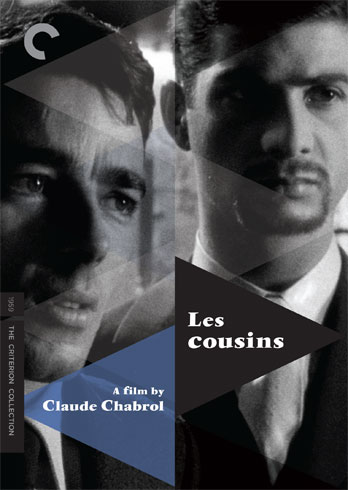
LES COUSINS (Blu-Ray) - #581


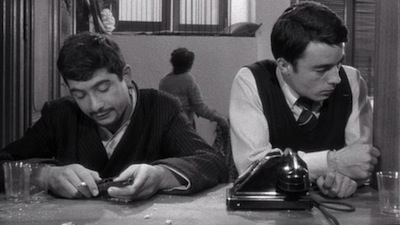
For his 1958 debut, Le beau Serge [review], Nouvelle Vague pioneer Claude Chabrol told the story of a man moving back to his provincial hometown after many years in the city; for the follow-up, Les cousins, Chabrol flipped things around, including changing the role "types" for his two lead actors. This time, Gérard Blain plays Charles, a mama's boy from the country moving to Paris to study law. In town, he will live with his cousin, the brash and outgoing Paul (Jean-Claude Brialy). One of their friends doubts their relations because they look nothing alike, and Charles defends this as saying they are cousins, not twins. Yet, the divide between the two blood relatives could not be wider.
It's funny when you first see Paul, you know exactly what kind of character he is. His Van Dyke and European poncho is practically the uniform for parodies of the sort of pretentious, privileged douchebag Brialy is portraying. It's a case of the more things change, the more they stay the same, I guess, that Chabrol's visual short cuts still have cultural significance. Paul is a selfish partyboy, living in his uncle's flat surrounded by the old man's trophies and trinkets, symbols of a life well lived (and all shot with loving attention to detail by cameraman Henri Decaë, who also photographed Le beau Serge as well as films for Malle, Truffaut, and Melville). Not the life Paul is living, mind you, he is on a different path. He drinks and cavorts more than he studies, and his friends represent the social register for degenerates, from the older hustler Clovis (Claude Cerval, The Lovers [review]) to the slut Francoise (Stéphane Audran, The Discreet Charm of the Bourgeoisie [review]) all the way to the bottom of the heap and the hopelessly emo Philippe (Jean-Pierre Moulin). They drink and they gamble and they carouse, and generally make a spectacle of themselves.


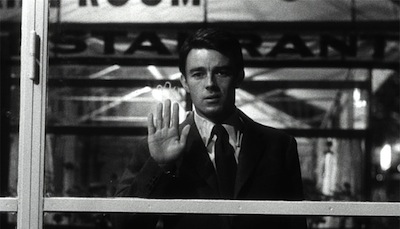
This is the life that Charles is immediately introduced to, and the one he never really fits. Gérard Blaine, who was fiery and charismatic in Le beau Serge, withdraws here. Charles is thoughtful and insecure, with a stoic streak that allows him to mask his anxieties and disappointment. (One is easily reminded of James Dean watching Blaine do his thing.) It's love at first sight for Charles when he sees Florence (Juliette Mayniel, Eyes Without a Face), a girl with a past but whom Charles sees with fresh eyes. He is enamored of her, he can't even bring himself to recite a poem he wrote in her honor. Florence is drawn to his innocence, but Clovis and Paul manipulate her into Paul's bed instead. The girl moves in with the two cousins; rather than have his nose rubbed into his romantic failures, Charles buries it in his books. (The advice of a sagely bookseller, actually, played by Guy Decomble, who would soon play the French teacher in The 400 Blows.)

The portion of Les cousins where the three of them live together recalled for me, in a way, Jean-Pierre Melville's adaptation of Les enfants terribles [review]. In fact, quite a bit of the basic behavior Chabrol assigns to his characters seems inspired by the Cocteau play. Paul regularly engages in self-serving gameplay, taking little seriously and concocting scenarios where he can push others into servicing his whims. In my head, Jean-Claude Brialy is usually dapper and collected, the kind of handsome ladies man he played in Godard's A Woman is a Woman. He is more of a force of nature here. Like the cliché about the shark, he is never at rest, always moving. Clovis, who resents him as much as he likes him, acts as the devil on his shoulder, offering a bit of contrast. Paul does what he does for his own amusement, but Clovis cons and cajoles for spite and thievery. There is a great shot at one of the parties, it happens very quickly, when you see Clovis robbing Paul's secret stash--something we instinctively knew he would do the moment Chabrol showed us that hiding spot in the first act, when the pair were convincing one of Paul's conquests (Geneviève Cluny) to get an abortion. Even in that, the difference between the two men is obvious: Paul is trying to weasel his way out of trouble, whereas Clovis likes the taste of other people's misery.


It's a little disappointing, then, that Chabrol circumvents the expectation of these narrative seeds, and Clovis' demonic personality doesn't have much reward. At the very least, we might assume Paul would completely switch over to Clovis' particular dark side or overtake the master. The sad fact is, there isn't much narrative payoff at all in Les cousins, except for maybe a nod to an old Chekhov aphorism. The ending of the film isn't entirely satisfying. I see the dramatic irony that Chabrol is going for, but it doesn't land with any significant force. The final scene only reinforces the roles everyone plays rather than showing any change. Charles is a perpetual victim, Paul is the thoughtless predator.

I don't know whether to call it the "sophomore jinx," or if perhaps emptiness is exactly what Chabrol is going for. Paul strives for a meaningless world. This is a guy to whom romance is a joke and who recites Wagner arias while wearing military garb. It's all fair game to him, so perhaps Chabrol intended the real tragedy of the finale of Les cousins to be that so much was destroyed with such little consideration. Rather than death by a thousand cuts, it's death by one triviality. Jean-Luc Godard called Les Cousins "a deeply hollow and therefore profound film," and I suppose it could be that this lack of any meaningful center is what makes Les cousins so intriguing. Even as I react against its contrivances, I find myself considering putting it back in my player and watching it again.


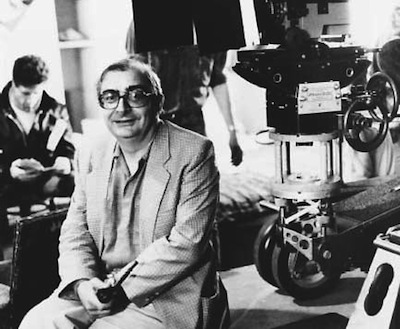
Claude Chabrol


For a complete rundown on the special features, read the full review at DVD Talk.


Sunday, September 11, 2011

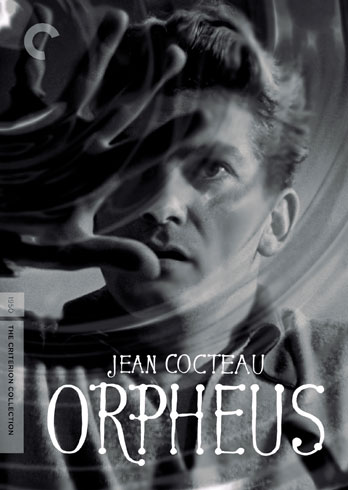
ORPHEUS (Blu-Ray) - #68

"A legend is entitled to be beyond time and place."


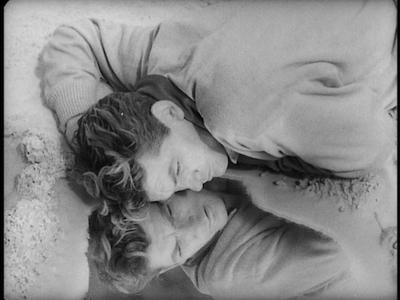
Like many folks my age, my first exposure to Jean Cocteau's 1950 art film Orpheus was seeing the famous image of Jean Marais laying in a puddle, sleeping over his own reflection, as the cover to the Smiths single "This Charming Man." With his up-do coif the right combination of styled and messy, Marais bears more than a passing resemblance to Morrissey; then again, it's really the Smiths singer who was co-opting the French actor's look. The image itself had oodles of mystery, a combination of narcissism, romance, and fatalistic morbidity that could inspire a lifetime of bad poetry. I even had a poster of it on the wall of my college dorm, some ten years before I would ever see Orpheus for real.

Watching the film again, the choice of the Marais photo still as a record sleeve makes more and more sense. Cocteau molds the mythical figure into a jazz-age outsider. He is a bard whose popular verse has made him an outcast amongst his bohemian peers, and his brooding manner endears him to teeny boppers nearly as much as his chiseled matinee-star good looks. It's the kind of jarring dichotomy between artistry and fame that Morrissey and his co-writer, Johnny Marr, would infuse their music with. For as much as they were a jangly indie guitar band, they were also a pop band. And for as much as Orpheus is a high-minded art film, Jean Cocteau has also made a pop art masterpiece, employing all the funhouse tricks at his disposal to create a raucous cinematic entertainment.


"Orpheus, your gravest fault is knowing just how far to go too far."


Cocteau's Orpheus has its origins in the famous myth of the troubadour who traveled to Hell to rescue his soulmate, only to fail to live up to the restrictions of his deal with Death upon returning to Earth, but the French director has updated and molded the material to fit the times. Set to a jazzy score by Georges Auric, it prefigures rock 'n' roll in surprising ways, with touches of the skiffle-beat musicals and juvenile delinquent movies that were to soon spring fully formed from Elvis Presley's gyrating hips. The movie opens in a bohemian café. Orpheus has stopped in for a drink, only to suffer the open scorn of his peers and rivals who resent his success. The poet is understandably defensive, since he also has his own anxieties about his flagging abilities. Accomplishment is a difficult mistress to keep maintained in the style to which she has become accustomed. [For another variation on the story, see also Black Orpheus]


On this particular day, a Roll's Royce also delivers the latest enfant terrible of verse, a drunken teenager named Cégeste (Edouard Dermithe). He has just published his first chapbook under the title of "Nudism." It is a collection of blank pages, like John Cage's concertos of silence, and Cocteau's perverse joke on the avant-garde. The car belongs to Cégeste's patron, a dark-haired ice queen known only as the Princess (Maria Casarés, Children of Paradise). Its stoic driver is Heurtebise (François Périer, Nights of Cabiria). Before days end, the café will erupt in a rumble of poets, and Cégeste will be struck down by a pair of motorcycle riding messengers of death. Orpheus will end up in the Princess' car, entangling him in a supernatural plot he didn't bargain for.

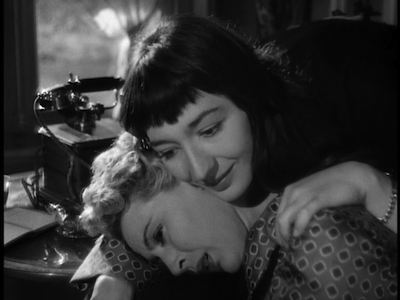
As the Rolls Royce drives into unknown territory, Orpheus becomes increasingly aware of the strange situation he has stumbled into. Coded messages filter in over the radio, and the Princess refuses to answer any of his questions. The motorcycle riders are waiting for her at her home, and once there, Cégeste is also restored to life--or a semblance of such. The Princess, as it turns out, is Death herself, and Orpheus is her new fixation. She leaves him in his world, but commands Heurtebise to stay by his side. The driver takes Orpheus home, only to find that there is a scandal surrounding his disappearance. His wife, Eurydice (Marie Déa, Lelouch's Marriage), is hiding from reporters who want to know what happened to Cégeste. A police inspector (Pierre Bertin) is in their kitchen, as well as Aglaonice (Juliette Gréco, Elena and Her Men), a friend of Eurydice's who already hates Orpheus. She is a member of a group called the Bacchantes who will eventually come looking for the poet's head.


For as strange as this sounds, it only gets stranger still. Orpheus starts spending all of his time in the garage, listening to the radio in the Princess' Rolls, waiting for more poetic non-sequiturs from the beyond. He becomes so enraptured, in fact, he fails to see Heurtebise's growing affection for his wife or heed the warnings when Death comes to claim Eurydice. The Princess is as obsessed with Orpheus as her ghostly driver is with his spouse, transgressions that cross the untraversable lines between this life and the next. Once Orpheus finally wakes up to what is happening--the movie makes multiple references to dreams, asserting that this may all be the poet's nightmare--he compels Heurtebise to take him below ground to find Eurydice and bring her back.


This could all be some serious stuff in the wrong hands, but Jean Cocteau approaches his mythic material playfully. He sees the classic story as a metaphor for artistic passion. Orpheus is so taken with his melancholy muse, he ignores the real world, causing damage to his relationships and forcing some reconciliation between what goes on in his head and what is happening in the flesh. Marais plays the poet as a vain, self-serious brat, an eternal teenager who refuses to leave the comfort of his adolescent humors. His relationship with Casarés' raven-tressed Death is practically a gothic parody. The pouty poet is obsessed with his own mortality, and how could he not be flattered to discover that mortality is also obsessed with him! Juxtaposed with this, Marie Déa's blonde beauty plays to the fairy tale conventions of innocence. She is sweetness personified, an expectant mother, the ill-treated lover. Naturally, the dependable Heurtebise, who committed suicide for want of a woman, would be drawn to her; he works for the dark side, he's seen its flaws. It's marvelously realized melodrama, timeless and hormonal, broaching dire subjects but with a light, sardonic touch. This is a romance, after all, where one of the lovers easily flips between the woman he intends to save and the one who took her away--made all the more amusing by the fact that Marais was Cocteau's former lover and Dermithe was his current one at time of shooting. It's not exactly the most lovesick scenario, but it has its charms.


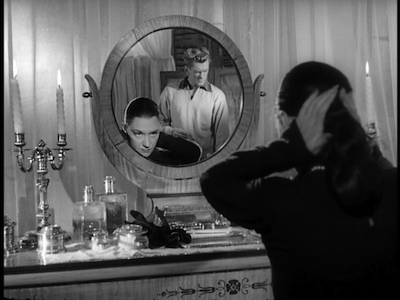
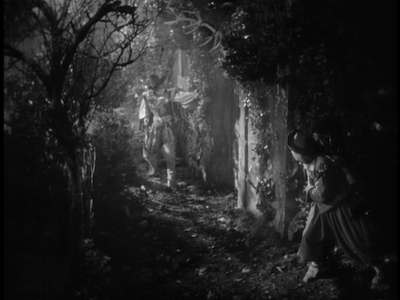
In fact, Cocteau's tiptoeing through the afterlife is actually a lot of fun. His vision of Hell is imaginative and unique, using the ruins and rubble that would have been commonplace in post-War France to craft an image of damnation that is both a sad remembrance of the tragedy that hit his country only years before and a reminder of the resiliency that pulled them through. While some of his special effects seem antiquated and rickety today, Cocteau's films work because the artist embraced the joyous possibilities of motion pictures with a childlike exuberance. The movie camera is his toy, and he wants to learn everything he can do with it. Running the shot backwards, rear projection, make-up, and literal smoke and mirrors are all weapons in his arsenal, and even though he was already an accomplished auteur by this point (he had made his wondrous version of Beauty and the Beast [review] four years prior), he approaches each effect with a gleeful naïveté. Cocteau on a movie set is like a child in a magic shop, eager to sample each trick, always willing to believe that the illusion is real.

It's this wild abandon that keeps Orpheus feeling fresh after all these years. It's why new packs of youngsters and movie buffs keep rediscovering Cocteau's experimental flights of fancy and going along for the ride, maybe identifying themselves in the archetypes, maybe just digging Orpheus for its style and passion. It's the same reason a band like the Smiths or an author like J.D. Salinger has a legacy that far exceeds their output. Jean Cocteau was 60 when he made Orpheus, but he was still a teen rebel, a rock star before there was any such thing. Some dudes start out cool and they stay cool forever.


For a complete rundown on the special features, read the full review at DVD Talk.

Please Note: The screen captures used here are from the standard-definition DVD released in 2000, not from the Blu-ray edition under review.

Monday, July 18, 2011

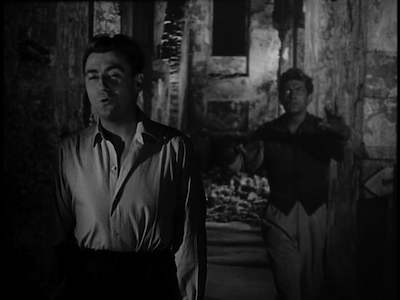
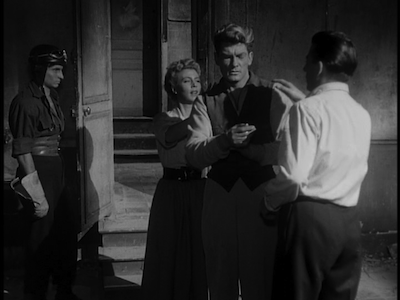
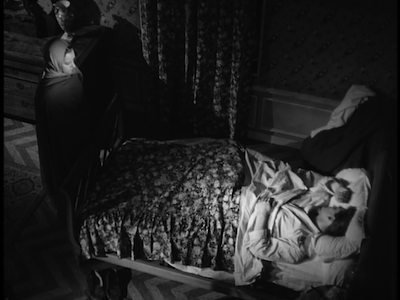
BEAUTY AND THE BEAST (Blu-Ray) - #6


Plenty of filmmakers and artists believed in the magic of cinema, but few dabbled in it the way Jean Cocteau did. From his earliest efforts, including his revered Orphic Trilogy, he experimented with the possibilities of special effects and camera trickery to create indelible filmic illusions. While some of his tools may seem old hat today--he regularly ran his film backwards, used mirrors, double exposure, etc.--we can't forget how new the form still was when he jumped into the fray, trying anything and everything with gleeful abandon.

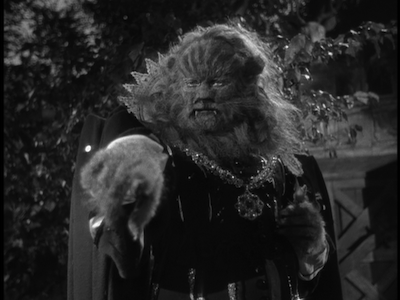
Of all his films, though, none has as much enduring magic as Beauty and the Beast. Released in 1946, it is a potent and meticulously realized cinematic fairy tale. Working from the original story by Mme Leprince de Beaumont, Cocteau invents a whole other plane of existence, one he invites us into with a typical storytelling incantation, "Once Upon a Time..."


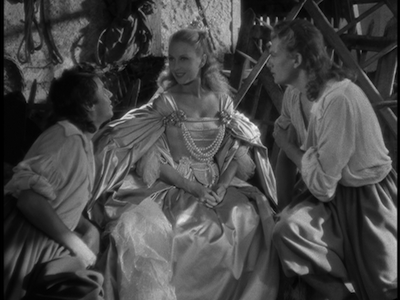
Most of us know the story of Beauty and the Beast. In the French countryside, a once wealthy merchant (Marcel André) is struggling to keep his family out of the poorhouse, efforts disrupted by his fun-loving son Ludovic (Michel Auclair) and his selfish daughters Félicie and Adélaïde (Mila Parély and Nane Germon). His only devoted child is Belle (Josette Day), and though her sisters judge her harshly, the merchant at least sees that she has the family's best interest at heart. No overtones of Lear here; this daddy doesn't waver in his love for Cordelia. That's why when she asks for him to bring a rose back from his next trip, he more than willingly agrees.

Too bad he picked the wrong garden to snatch it from. The merchant wanders into an enchanted estate, one owned by the cursed Beast (Jean Marais, who also plays Belle's suitor, Avenant, a duality that will become thematically important when you watch the film). This Beast doesn't take kindly to anyone stealing any of his treasures, no matter how small. In exchange for his life, the merchant must send one of his daughters to stay in the Beast's mansion. Belle insists on sacrificing herself, since the offending rose was for her. She goes fully expecting to die, but instead, the Beast gives her a life of luxury. Each night, he feeds her a banquet and showers her with gifts and proposes marriage, hoping one day she will learn to appreciate him and say yes. He is a man at odds with his own nature. The human inside the furry form has love and compassion to give, but the animal instinct that comes with his transformation stokes a primal fire deep down.


The plot is simple, but effective. It has endured for a reason. Beauty and the Beast speaks to fundamental human desires: to be loved for who we are, and also to conquer our true nature. Whether you believe that man is born good and learns to be bad, or vice versa, most of us struggle in the day to day to do the right thing. Beast represents that common conflict, and though his outward appearance suggests the more primitive side is losing, his treatment of Belle proves otherwise. The outcome of the fairy tale is to prove this, partially by showing that even those who possess great beauty also lack the purity that is often ascribed to them. It's all in the eye of the beholder, as they say.

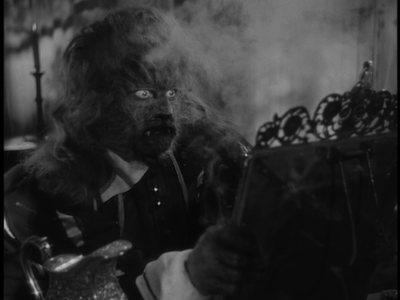
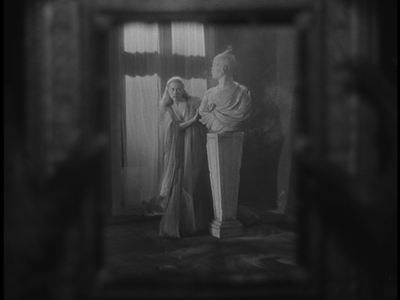
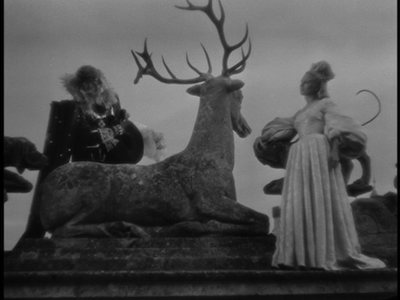
Like the best fairy tales, Cocteau's wraps its message within glittery trappings. Beauty and the Beast is a marvelous movie. Cocteau invents his own dimension, working with an army of art directors and costume designers to establish a mystical realm where the cursed Beast resides. From the lush garden with its ornate statuary to the deepest recesses of his mansion, every inch is packed with something interesting to look at. The most famous sequences feature a long hallway where human arms serve as candelabras and the stone busts come to life. (And perhaps these human objects are a symbol of how each and every one of us is enslaved to our own similar beastly compulsions.) The Beast himself is an impressive creation, a combination of costume and make-up, with glowing eyes and a smoldering body that regularly emits smoke, particularly when the creature has been on the hunt. It's not perfect, particularly not to modern eyes, but it's more convincing than the combination of computer animation and the rudimentary costume on the similar Beast in this year's X-Men: First Class [review] movie. There is also a warmth to Cocteau's other world that is lacking in the sparkle of modern effects-laden films. It's one of the reasons I'm no fan of the cloying Disney version of this story. Their early use of CGI in some of the cartoon sequences is jarring rather than enchanting, and the songs are execrable. (Yeah, I said it. Find the link for the hate mail, go ahead.)


The same can't be said for the music in Beauty and the Beast's alternate audio track, a full opera composed with the movie's dialogue by Philip Glass. I know this might be considered sacrilege to some, but I prefer to watch Cocteau's film this way, with all the dialogue sung and the constant presence of the orchestra. It adds to the otherworldliness, abstracting the piece further, so that I am truly somewhere other than the presentation space. I find Glass' music profoundly moving, and it gives even more cosmic heft to the movie's dreamy finale.

Sometimes it's hard to imagine what kind of space must have existed to allow a film like Beauty and the Beast to happen. Cocteau's undertaking must have sounded crazy, particularly in post-War France, when resources were scarce. (The movie was shot on several different film stocks, because the director had to use whatever was at hand.) It must have also seemed frivolous when compared to, say, what was happening in Italian film, which was going in the opposite direction. And yet, the affirmation that comes at the conclusion of Beauty and the Beast, that man can conquer the evil inside and love and good will out, must have also seemed tremendously comforting, validating the escapism the movie provided--and continues to provide. If you trust Cocteau at his word, and accept his invitation, you will be transported and possibly even transformed by watching his romantic fable.


Beauty and the Beast was first restored in 1995, and with each successive home video release (this is their third), Criterion manages to up their own game. The BD of the 1946 film, shown at a 1.33:1 aspect ratio in black-and-white, is magnificent. Tonal values are pronounced and expertly rendered, the blacks go deep, and the surface grain preserves the look of the original film without distracting from its foggy landscapes. One always worries that more clarity might dim the power of the effects work; it often can expose the cracks and seams. Not so here. I found the clever creations to be more effective than ever. In fact, seeing the incredible level of detail, which is now sharper and deeper than even on the stellar 2003 reissue, just makes Beauty and the Beast all the more enchanting.


Please Note: The screengrabs used here are from the standard-definition remastered DVD released in 2003, not from the Blu-Ray.

For a complete rundown on the special features, read the full review at DVDTalk.

Friday, February 5, 2010

FISTS IN THE POCKET - #333


And you think your family is weird? Trust me, you've got it easy.

The family in Marco Bellocchio's perverse 1965 satire Fists in the Pocket is up there with the great oddball clans of cinema, somewhere between those magnificent Ambersons and the killing breed of Texas Chainsaw Massacre. They are emotionally twisted, physically deficient, and so caught up in each other's business, it's impossible for them to untangle themselves from one another.
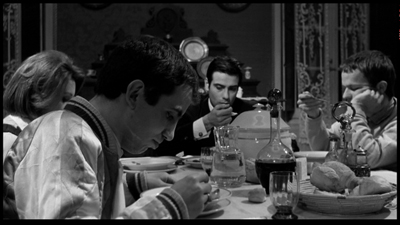
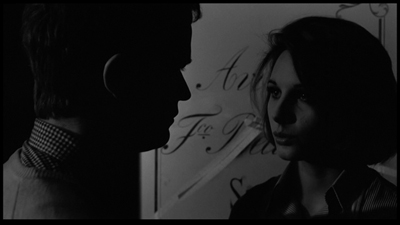

Bellochio's is a family of five--four children, and one blind mother (Liliana Gerace). Of the kids, only the eldest, Augusto (Marino Masé) has it together enough to have a job and the semblance of a normal life. He lives with the others in their out-of-the-way house on the hill, but he goes into the city to work and visit his girlfriend (Jenny MacNeil), leaving his siblings to fill their days with whatever it is they can find. The youngest is the developmentally disabled epileptic Leone (Pierluigi Troglio), who more often than not is left out of the trouble cooked up by the middle kids. Giulia (Paola Pitagora) and Alessandro (Lou Castel) share a strange bond. They are wickedly close to one another, but also constantly on each other's last nerves. Ale is the true mastermind of mischief, pushing buttons and tweaking noses at every turn, but Giulia eggs him on. There is a suggestion that there is something unnatural between them--Ale has written her a love poem that stirs up trouble at the start of the picture--but whether they've ever taken it farther, we don't know.


Giulia is capable of making her own incestuous scandals. The movie actually begins with a note she sent to Augusto's girlfriend, Lucia. Pasting it together with letters she cut out of a newspaper, she informs Lucia that she is pregnant with Augusto's child and the true love of his life. It's all lies, of course. Maybe she does have feelings for Augusto, she gives him many a long look, but the true motivation of this act is likely to sabotage his happiness and keep the family's claim on their number-one son. This is what seems to motivate all the pranks and outbursts. The circle is closed, and no one gets out. As the movie progresses, Ale even plots to keep Augusto from moving out of their family home, which is large and full of the group history. That history is represented in kitsch objects, the eccentric antiques and heirlooms and portraits gathered over the years, like a precursor to the big house in Wes Anderson's The Royal Tenenbaums. These are the sick cousins of the Tenenbaums, the ones who don't have the creative outlets their future cinematic kin find to maintain their semblance of sanity.

Alessandro actually reminds me more of Harold in Hal Ashby's Harold and Maude than he does any of Anderson's children. Like his younger brother, Ale is an epileptic, though one who is trying to keep his malady under control. In addition to his tendency for pranks, the main trait Ale shares with Harold is a morbid fascination with death. For Harold, it manifests in his staged suicides; for Ale, his gallows humor aims for a wider audience and more real results. He concocts a plan to drive himself and the others over a cliff, leaving Augusto to lead his life without being burdened by his useless relatives. When this doesn't come off--he ends up almost literally chasing a thrill instead--the plan morphs to suit the fickle boy's plans. He begins with one murder, and then moves on to two....
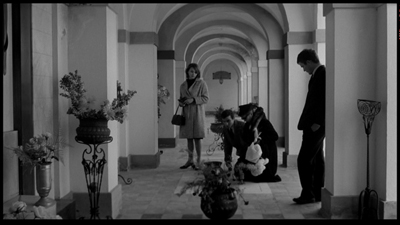
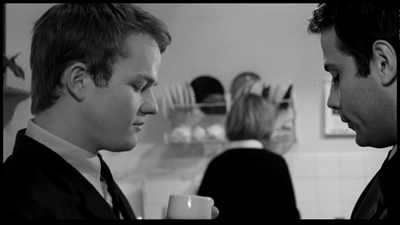
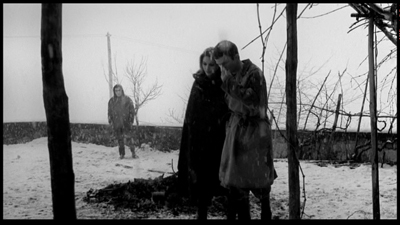
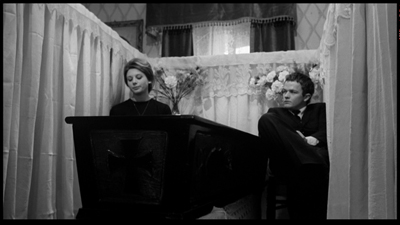
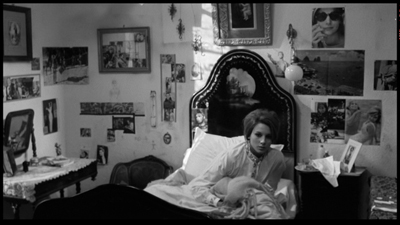
Fists in the Pocket is a bizarre film. It's Bellochio's first feature, and the writer/director revels in an anarchic storytelling style. The narrative is all over the place. Exposition is often repeated, and the script sometimes moves from one scene to another in quick jumps, skipping right over more traditional transitions. When this happens, it's almost like the crew is making it up as they go along, improvising one absurd scenario after another. Visually, the director uses composition to emphasize relationships. There are a lot of two-shots that bring characters closer, emphasizing their connections and their conspiracies. Other times, he puts objects between them, like a casket or the dinner table, to push them apart. He will also foreground those who are joined and background those who are left out, using distance just as effectively as he uses the lack thereof.


As black comedies go, I wouldn't call Fists in the Pocket laugh-out-loud funny. When I laughed, it was more out of admiration and fascination. There is a strange pathology at work in the household. The demented siblings are building their own world within it, but like ancient gods, they have grown bored of their creations. As soon as Ale has hatched one scheme, he's tired of it. His mayhem is plagued by ADD. His motivation is schizophrenic: on one hand, he decides to kill himself and the others to benefit Augusto; on the other, he does things that are meant to knock his brother down a peg. He contrives to catch Augusto cheating at cards, and he also seeks out and hires the same prostitute his brother frequents. When Augusto takes him to a nightclub for Lucia's birthday, we see Ale in the real world for the first time. He is socially awkward, unable to carry through when a pretty girl tries to dance with him.


The only girl Ale has time for is Giulia, and part of the reason his clown act keeps evolving is he's trying to keep her entertained. As an acting pair, Castel and Pitagora are perfectly in sync, working the same offbeat rhythms. The way they communicate is reminiscent of the secret language of twins. Leone tries to be part of it, but he doesn't know the code. Augusto doesn't know it either, but he has no interest in cracking it. In much the same way Cocteau and Melville critique the crumbling social mores of modern culture in Les enfants terribles by isolating their brother/sister duo from the rest of the world, so two does Bellochio draw a tight circle around Ale and Giulia. They choose who comes in and out, rejecting religion, the old and infirm, emotional nostalgia, and conventional survival. It's all empty and waiting to be exploded.


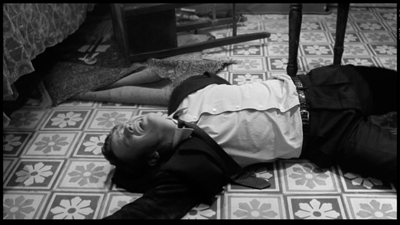
It can only end badly. The problem with this kind of nihilistic ennui is it can only go on for so long before it runs out of things to reject. Ale stumbles into a regular pitfall of the jester: he has to keep pushing for bigger reactions, and he can't see when he's gone too far. At the close of the film, he gets too cocky, thinking he can sew everyone into his web. The one thing he didn't factor on was that in creating chaos, chaos can come back on you. Giulia stops finding him funny once she's seen behind the curtain, and an accident has also left her physically incapable of indulging Ale any longer. Now she chooses to isolate him, staying in her room surrounded by images of idyllic lives they will never have, Marlon Brando and magazine advertisements, while Ale writhes around to the more extreme emotional outburst of an operatic aria. The girl leaves her brother to his own devices the way one lets a screaming baby wail and cry until he can't cry anymore. Rebellion always meets its match when it faces Indifference.