Tuesday, January 29, 2008

SIDELINE: SUPERTRASH POSTERS

This weekend, Portland, OR's film freaks are going to be treated to the Supertrash Film Festival. Three nights of crazy films, accompanied by a special gallery showing of exclusive movie posters, sponsored in part by the folks at Fantagraphics, who will be collecting some of these items into book form.

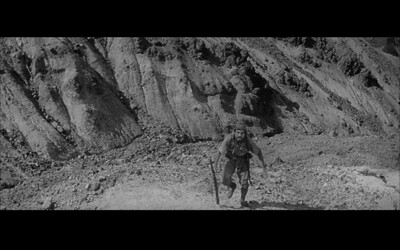
Among these posters is the awesome piece Eric Skillman did for Samuel Fuller's masterpiece about the Korean War, The Steel Helmet, available in the Eclipse Series box of Fuller.

Eric does design for the Criterion Collection, including hiring awesome comic book artists to do covers and his own swanky artwork on the Berlin Alexanderplatz set. (A fascinating two-part description of the process for that box can be read here and here.)

steelhelmet_ericskillmansm


Also in the set of posters is a pretty cool one for Eyes Without a Face done by comics artist Brian Churilla. Check out Brian's book The Engineer.

churilla "eyes without a face"


Give the festival schedule a look, and head on down for some cinematic good times! If I can, I'm going to check out Mad Love and Psych Out.

Monday, January 28, 2008

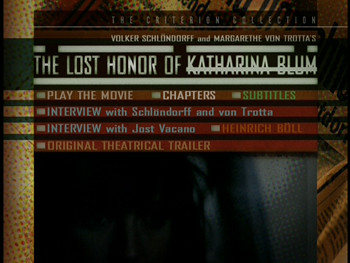
THE LOST HONOR OF KATHARINA BLUM - #177


The more I look around at the past, the more I start to think that anyone who is surprised by the current state of the U.S. government simply hasn't paid enough attention. There is no way to argue that it is inconceivable that the political climate would ever get this bad, because it's happened before, and despite the efforts of those who tell stories and make art to illuminate us to these sad facts, they seem to go largely unnoticed.

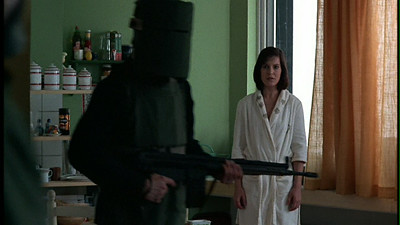
Case in point: the 1975 film adaptation of the Heinrich Böll novel The Lost Honor of Katharina Blum, written and directed by Volker Schlöndorff and Maragarethe von Trotta. It's a cautionary tale of what could happen if a ruling government has too much power, and they use the fear of the people and a collaborative press corps to spread lies and maintain control. Libel is not a problem, and neither are wiretaps and intrusive investigations into the minutia of the lives of regular citizens. These are the acts of patriots, are they not?

Katharina Blum, played with an almost blank-slate caginess by Angela Winkler, is a regular young woman working as a maid in West Germany. One night at a party she meets the dashing Ludwig (Jürgen Prochnow), whom she allows to take her home. By morning, the police are breaking through her door, accusing her of collaborating with a terrorist. They say Ludwig is an anarchist bank robber, and they believe that Katharina has been his lover for two years and has been using his ill-gotten gains to support her own income. She denies this, and really, outside of some unexplained purchases, there is no real evidence against her. A hand-written quote from Karl Marx they found in one of her books is as close as they've gotten to any kind of corroboration of their conspiracy plot, and even that was given to her by a Dominican monk.

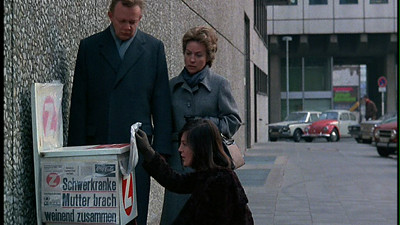
Not that this matters once Katharina's story becomes fodder for the tabloid press. The real collusion is between a sleazy reporter (Dieter Laser) and the Kommissar (Mario Adorf) in charge of Katharina's arrest. The police want her to tell him where Ludwig is hiding, and she refuses to tell him anything. There is an explanation for the unaccounted-for money, as well as an actual lover whom Katharina will not publicly out. Kommissar Beizmenne leaves it to the reporter, Toetges, to fill in the gaps on his own, doctoring quotes and peppering them with dirt, all to make Katharina look like an unpatriotic slut; then, these printed fictions become the official facts. If the truth is blackened in this pursuit of "justice," not to worry. That's what whitewashing is for.


Given the image most Americans have of terrorists, there is a little irony in watching The Lost Honor of Katharina Blum in 2008 and seeing the cop who files the first false report on Katharina dressed in a costume as an Arab sheik. It's too often forgotten that it doesn't require skin tones of a darker hue to commit acts of terrorism. Böll modeled Ludwig's alleged connections on the Baader-Meinhof organization, and Katharina's persecution has roots in libelous articles printed about the author in relation to that group. Baader-Meinhof sought political change in Europe through violent means. They were honest-to-goodness anarchists (albeit organized), and in a fairly new democracy like Germany, terms like "anarchist" and "communist" carried real weight. People were dying for what they believed, and often being punished just for believing it. Right-wing pundits in the U.S. might do well to consider that before they resort to such hot-button tags, either seriously or in jest (the former is dangerous, and the latter even moreso). But then, that ties in exactly with what Schlöndorff and von Trotta were getting at in their film adaptation: why worry about what's really happening when you can bundle it all up in a scapegoat's clothes.

We’d do well to pay attention to what they are saying, too. There are some very literary tags we could put on Katharina's plight in the film. Orwellian comes to mind. So does Kafka-esque. Katharina is brought under charges her accusers refuse to explain to her and given no real recourse to defend herself. Put a hood over her head and ship her down to Cuba, and she'd fit right in at Guantanamo Bay. Sure, she has secrets to hide, but don't we all? At the outset of her persecution, her biggest crime is wanting to keep her private life private. Kommissar Beizmenne suggests that she cooperate with him now, for her own good, because he's a fair man who will treat her right--the sheep's clothing worn by every wolf in a totalitarian state that claims the shepherd's pasture is a democracy.

The mystery that runs through The Lost Honor of Katharina Blum is how Ludwig slipped past the police to get out of her apartment. It's not much of a spoiler to say that Katharina has more of a hand in his flight than she lets on, yet it's also not much of surprise that the more she hears of the police's case against him, the less inclined she is to reveal her knowledge. Given their treatment of her, why should she believe them, anyway?

The end result of the false accusations is that by the time Katharina is let off the hook, she has been turned against her oppressors to such a degree, she becomes exactly what they accused her of being. Though Böll's main axe to grind is with the sensationalistic press, it could have just as easily been brought down on the governmental forces that put their boot into Katharina's life. The author and the film directors saw that if you treat people as if they are thieves, they will ultimately steal from you, having nothing left to lose. Escalate the dirty deeds you accuse them of, and the resulting creation will match.

So, don't tell me we couldn't foresee that falsely detaining Muslim men and accusing them of terrorism would create more terrorists, or that wrongly invading another country and forcing them to accept our straw-man version of democracy wouldn't result in that straw man being kicked to the ground. The Lost Honor of Katharina Blum made all of that quite clear via a chilling, easy-to-digest mis-en-scene. Isn't it time we all started paying attention?


Sunday, January 27, 2008

FIRES ON THE PLAIN - #378


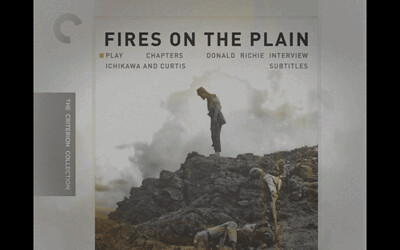
"War is hell" isn't really a novel message anymore, and it hasn't been for some time. Even so, most works of art, even ones with this message, don't really go as far as they could to illustrate how hellish the situation can be. It's hard not to make a hero of your main character, to steer past the things that make service in wartime a noble pursuit; there's something unavoidably worthy of respect that the soldiers know it's hell they face and still they face it anyway. So, when a movie comes along that shows us to what extent conflict can ravage the human soul, it still shocks us, still unnerves its audience. No one emerges as a hero from Kon Ichikawa's 1959 motion picture Fires on the Plain (a.k.a. Nobi), no one even tries to fight the good fight. It's a dour and grisly portrait of how battle can change the landscape of a particular patch of land until you will believe it is hell on earth and reminds us of how far we may be asking men to go when we ask them to stand up and fight.

Eiji Funakoshi plays Tamura, a hapless private in the Japanese army who is stationed in the Philippines during World War II. As the film opens, Tamura is being berated by his staff sergeant, who is sending him back to the field hospital a third time to be treated for his tuberculosis. If he can't work, he's useless on the front, and if the hospital rejects him yet again, Tamura is instructed to throw himself on his own grenade. He takes the long trek back to the medical station, and of course, they refuse him once more. The doctor tells him if he can walk, he doesn't belong there among the real wounded.

At this point, Tamura becomes an outcast, joining a group of other soldiers who have also been stuck in this sort of limbo, unfit to serve but not committed enough to die. He's not a part of the army his uniform represents, he's not sick enough to be taken care of, and he's not even in his own country. The world beyond him is a terrifying unknown element. All he can see on the horizon are plumes of smoke. Everyone thinks they most be some kind of signal, they just don't know of what.

When the enemy attacks and destroys the hospital, Tamura is once again scattered to the wind. He knows he should use that grenade, he knows that there is only danger out there, but he begins to wander. His journey leads him from one atrocity to another, a trail of corpses and the desperate living in search of their way out. Word has come down that the Japanese forces are gathering in one spot and then they will be shipped out, so everyone wants to get there. Tamura will kill, and he'll see killing; he'll forage for food, and he'll see foraging and even theft; he'll witness people giving in and giving up, and he'll witness the price that might be paid when his fellow troopers completely let go. Tamura will even let go himself, first of the trappings of a soldier and then eventually his own humanity. Trapped out in the wilderness with two of the other hospital refugees, Tamura will find himself in a sort of Treasure of the Sierra Madre situation, only the treasure isn't gold, it's survival. Just how will Tamura find his way back to being a person again? The answer may reside in that tower of smoke that has suddenly returned, but once again, if it's a signal, it's all going to be a matter of how it's read.


Kon Ichikawa isn't afraid to celebrate the power of the human spirit. Anyone who has seen his vision of the lone African runner in his documentary Tokyo Olympiad knows the director believes that one man can overcome impossible odds. This makes it all the more impressive that he had previously gone to the totally opposite to show the depths of individual degradation. Tamura doesn't engage nearly as much as he watches, but like Jerzy Kosinski's young protagonist in his novel The Painted Bird, there is only so long any one person can let the horrors of war rage around him until he succumbs to them. Also as in Kosinski, the world surrounding the focal character is so transformed by the destruction, it loses all earthly familiarity. Hell may just be a metaphor here, but when Tamura looks back over the river bed that was supposed to be the border of his freedom and sees the corpses that piled up while he escaped, it's as close to seeing Hell on the physical plane as you're likely to get.

Though Fires on the Plain is bleak, it's not unrelenting. There is some laughter in the face of destruction. In one scene, a soldier finds a nice pair of boots abandoned in the mud. He trades them for his own shoes, which are starting to become worn down. The next soldier then trades this newly discarded pair for his own, and so on, each pair of shoes getting worse and worse until the last pair has no soles on them at all. Just as most people do when faced with grisly circumstances, Ichikawa indulges in a little gallows humor to keep his audience's spirit up long enough to get to the final destination. So, don't worry, though Fires on the Plain will weigh heavy on you, it won't crush you. Like Tamura, you may end up punch drunk (he gets more comical the farther he goes over the edge), but you'll still be standing.

Ichikawa and his wife and frequent collaborator, screenwriter Natto Wada, working from a novel by Shohei Ooka, weren't trying to create a movie that represented the experience of every soldier or say all men who served in the Philippines engaged in the poor behavior represented on the screen. When you sit back and look at it, there is no propaganda here at all. No one espouses a message. Quick scenes with the American soldiers don't vilify them. Ichikawa isn't teaching us, rather he's using Fires on the Plain to show us how far things could go were circumstances to pile up as they do and trusting the meaning to be obvious. Thus, Tamura is meant to serve as a reminder, or maybe more accurately, a warning. Tamura stands in stark relief against the regular cinematic soldier who is far more ready to pick up his rifle and rush across the trenches to save the day. Fires on the Plain is the other side of that story, showing the men who might be on the receiving end of the movie hero's bullets. It's a harrowing wake-up call. War may always be hell, but it's not often that we experience it burning this coldly.


Originally written March 13, 2007. For technical specs and special features, read the full article at DVD Talk.

Thursday, January 24, 2008

FAT GIRL - #259


I'm going to go out on a limb and say there isn't a film in the Criterion Collection that I dislike more than Catherine Breillat's Fat Girl. Even now, three years after I first saw it, my lip still curls at the thought of the movie. This could be me falling into the filmmaker's trap, because Breillat is nothing if not a provocateur, but I'd wager that the film angers me not in the way she intended, nor in the way you likely suspect.

Brass tacks, I actually was mildly into the movie for the most part while the narrative spun out. Fat Girl is, for all intents and purposes, a coming-of-age story about two sisters on a seaside vacation in France. One sister, Anaïs (Anaïs Reboux) is overweight, while the other, Elena (Roxane Mesquida), is a nymphet on the prowl. Naturally, in this scenario, Elena leads the way, and Anaïs is the tagalong. Breillat's camera follows them as Elena turns her boredom into lust, seducing (or being seduced by) the older boy Fernando (Libero de Renzo), an Italian law student whose smoky eyes mask murky motivations. Anaïs watches--sometimes silently, sometimes vocally petulant--as Elena tiptoes down the primrose path, getting an outsider's perspective on sex before also tasting a little of it firsthand.

Breillat's script is purposefully frank, and her main characters are purposefully off-putting. It's not a dishonest image of adolescent life. A teenage existence is a stinky brew of self-doubt and self-importance that often oozes from the subject like snot dripping from a puffy nose. If there is any sympathy to be felt for Anaïs, it's really Breillat playing on our preconceptions about how these stories are supposed to go. Our hearts naturally gravitate to the chubby sad girl, even if our eyes want to watch the sexy mean one. Where I think the director is intentionally trying to tweak us is that Anaïs is just as mean, possibly moreso. The film practically issues a challenge: I dare you to like her.

Fat Girl is also meant to challenge the conventional notions of female sexuality. Its uncensored depictions of the emerging passions of the sisters fit neither the kitten-clawed Hollywood notions of teenage Lolitas, nor does Breillat support a puritanical whitewash. She's also actively avoiding the pitfall of depicting first-time lovemaking in a nostalgic haze where everything is nice and pretty and seen through a rosy prism. Rather, it's kind of gross and kind of brutal and also darkly comic. (Breillat, years later, made a send-up of herself and this movie called Sex is Comedy, a little piece of meta that also calls Roxane Mesquida back to the beach where she lost her fictional girlhood, but was less appealing to me than even Fat Girl.)


None of these elements are where Breillat loses me. In fact, as I said, she mildly held my interest all the way up to the very end, when rather than coming up with a realistic way to get herself out of her own narrative, she goes for the cop-out. A violent attack on the family on the road back home changes everything, and it's a deus ex machina of the worst kind. The only way it could have been worse would have been for the camera to pan back, come out of a soft focus on Anaïs blissful face, and revealed that the entire film was some late-night fantasy in the character's head. It's that bad of a choice, eschewing any denouement for a rapid downshift out of the story, freeze frame, we're done.

Back in November of 2004, I wrote about the film on my Confessions of a Pop Fan blog, and I still stand by those words. My entry went as follows:

I've been contemplating the idea of endings lately. In a sense, when an audience enters into a story, they are putting their trust in the storyteller to take them somewhere. Whatever we are subjected to at the start is going to have some kind of payoff in the end, so even if we don't know where we are going, we have faith that it's all going to make sense.

Which is not a cry for pat endings, where everything is tied up. I am all for ambiguity, and I have said of myself, many times, that I prefer to end my stories at the moment before the "final" ending. I usually express it thus: I like to end on the inhale, and not wait for the exhale. It's a technique I took from Jerzy Kosinski's The Painted Bird, where the book ends as its main character answers the phone. He has been mute up until this point, but the phone acts as a wake-up call, and he speaks for the first time, the cap to a long ordeal. I think this is fine, because Kosinki's goal--the goal I share--is to make sure that all that precedes that wake-up call creates the map that leads to it. I may want you to choose what's next, but I have hopefully given you the proper information to make that choice; my movement towards the inhalation was purposeful. And the final moment isn't accidental or random, it's what the rest of the story supports.

It's when we think that the storyteller lost that sense of purpose, or is trying to sidestep having to answer all the questions he's posed, that we feel cheated. A lot of these thoughts are based on debates I've had with Christopher McQuain over some of Brian DePalma's films. DePalma often falls back on the hoary cliché of "It was all a dream," which to me feels like a tremendous cheat. Rather than do the work to get out of the situation he has created, he opts for an easy exit; on the other hand, Christopher sees the final destination in such a case as far less important than the thrill of the ride. That is a valid argument in something as deliberately lurid as, say, Femme Fatale, but I don't find it at all acceptable in something like the recent film Birth. In Birth, Nicole Kidman plays a woman who has been mourning her dead husband for several years, and when she finally is ready to move on with her life, he returns in the form of a grade schooler. The director and writers (it took three of them to end up with negative results) approach the subject very seriously, raising questions about boundaries in romantic relationships and the nature of madness. Rather than actually give us any real answers, they throw a twist into the last act that gets all of the characters out of the big mess they are in. They then play the game of, "But have they really gotten out?" Except it strikes me as cursory rather than intentional. I felt like by heaping on all sorts of stylistic brushstrokes, they thought I would be dazzled and never see that the film went nowhere. They had demanded a lot of me throughout a very moody, slowly paced film, so it's unfair that they didn't demand as much of themselves as the creators.


These issues were all brought up again upon viewing Catherine Breillat's Fat Girl, a film about two sisters who are forced to live parallel but disparate lives, stuck in the quagmire of sexual adolescence. At the end of the film, a sudden and random act of violence changes everything, and then the film is over. Obviously, in real life, people who are victims of crime are victims of a random act. They never saw it coming, and their whole lives do end up hinging on the occurrence; however, is such a thing permissible in the world of story, where nothing is random, where every act contributes to a finite whole? Charlie winning the trip to the chocolate factory in Willy Wonka & The Chocolate Factory isn't random, but expected: we know that's why he's the character that has been chosen for examination. But what if instead of it happening at the beginning of the story, it happens at the end? After 90 minutes of watching Charlie and his family struggle with poverty and illness, Charlie wins the lottery and their lives are saved. Would we not call such an ending pat?

So, why should it be any different with something like Fat Girl, where the filmmaker has chosen to fulfill some of her main character's desires and push her in a different direction, the direction the rest of her life will take, but rather than let the events take that course naturally, throws a roadside killer into the mix? Was his bursting through the windshield that far a cry from someone waking up in bed, screaming, drenched in cold sweat? It wouldn't be fair to say Breillat doesn't at least telegraph it a little. As soon as the family pulled onto the highway, I was waiting for something bad to happen, so she clearly did something to create a sense of dread (though what she did escapes me, almost like she relied on a filmic unconscious trained to believe something will go wrong in the final third). So, why do I feel like the older sister in Fat Girl, a victim of some foreign lothario, who swore he'd love me forever, only to leave me alone in the despair of broken promises? Or should I give Breillat more credit, that maybe that's what she meant all along?


Even then I was trying to be fair, to cut Catherine Breillat some slack for her intentions vs. my reactions, but I've never quite been able to do it.

In fact, I was so affected by this film and how it turned out, that it ended up influencing the book I was working on at the time, I Was Someone Dead. I was struggling with the author's note, a preface written by the book's fictional author, Percival Mendelssohn, the protagonist of my most recent novel, Have You Seen the Horizon Lately?. I was trying to explore levels of story in I Was Someone Dead, to uncover some of the layers of fiction and the different planes on which it can be removed from the reader--and in the case of having an invented author for the piece, from the storyteller, as well. (Not a new concept. See also: Vonnegut, Nabokov, Roth, etc.) Somewhat ironically, this preface became one of the most difficult aspects of the book to write, and it went through multiple drafts, most of them much longer and more constipated than what finally appeared.


I found six versions of the I Was Someone Dead author's note in my archives. Here is a pertinent excerpt from the original version:

Another phrase is "Truth is stranger than fiction." Everyone believes this cliché, but like everything else, they only believe it in a certain way. It's variable. Sometimes, someone might read a story in a newspaper and say, "That's too bizarre, they had to make that up;" that same person might read a novella and marvel at an outrageous event in the narrative, and mutter, "That's so bizarre, it must have really happened, no one could make that up." We, as people, shift with a spring-loaded suspension of disbelief.

The truth that is commonly believed to be stranger than fiction is usually an exceptional truth. Your every-day life, you will be told, or you maybe believe, is not interesting enough. Your existence would never make a good short story, much less a good novel. How ridiculous! In some ways, the banalities of the modern workday are the strangest things of all, just for the fact that we put up with them!

Truth is stranger than fiction, though, because in the events of real life, there is always an element of chance. Chance is an amazing thing. Chance is the idea that you could walk out your door and be hit by a bus; or more random and impossible, you are kidnapped by mistake, believed to be your next-door neighbor who is actually a scientist on the lam, scared that his amazing discoveries will fall into the wrong hands; or perhaps worst of all, that nothing at all will happen to you today that you did not expect. That last truth is actually the closest you will come to fiction, because there is nothing in a story that happens by accident. It's all planned to lead to a particular effect. An author can't get to his ending without it. Similarly, even if you are reporting on something that actually happened, once you shape it into a story to tell, it loses its randomness, as well. Everything still has to happen, or it won't be the same story.

So, while you may walk out of your house right now, and a van will pull up to the curb and men in ski masks will jump out and you'll have not expected it and you will have no idea why they are throwing you in the vehicle and taking you away, and when they report it on the six o'clock news they will call it random violence, in the context of the news broadcast, there will be nothing random about it. The very act of choosing to report it makes it concrete, and no one can ever be shocked again because it happened to you, because we are only talking about you because it happened; what would be random would be that though the report is about you, in reality it just happened to a completely different person.

This is where your truth becomes story. Human existence is Rashomon in practice. Consider that there are four Gospels, and each one offers a different account of the same event, each filters what happened through what they witnessed, through what they understood.


Perhaps it's karma that some readers complained about the printed version of the introduction, accusing me of trying to school them on how to read. Others also complained about the ending, feeling that I had not given enough of an explanation or put a fine enough point on the meaning of what they had just read. To which I shrug and say, "Fair enough."

I would assume that Catherine Breillat would give me a similar shrug. At the same time, I still wouldn't back off my distaste for the ending of Fat Girl. It's that sense of enforced randomness that still bugs me. Even if you read I Was Someone Dead (still in print, follow the link!) and feel I didn't give enough, I still took you where the story was always intended to go, I didn't back off or look for an easy way out. And, yes, while there is something to be said for defying the expectations of the audience, it has to be more than just a simple snap of the fingers. Watching Fat Girl is akin to being a little kid and being told you are going to Disneyland, only to have your father pull up in the parking lot at a doctor's office and inform you that you're there to get your shots. Not only did you lie, but you tricked us, too, and then you smugly told us it was for our own good. Shame on me, then, if I ever trust you again.


Tuesday, January 22, 2008

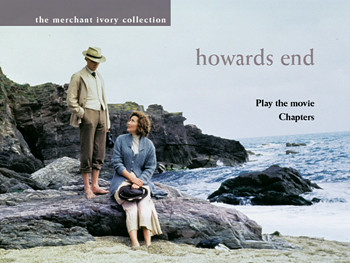
BLAST FROM MY OWN PAST: HOWARDS END - THE MERCHANT IVORY COLLECTION

From the now defunct "Can You Picture That?" column, May 31, 2005, not long after Ismail Merchant had died. Its original home was the Oni Press website, hence the references to comic books at the end.


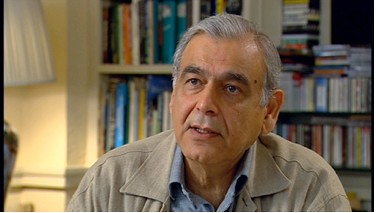
ISMAIL MERCHANT (1936-2005)


My original plan for this month's column was to review a couple of recently released classic westerns that were off the genre's beaten trail, but that all changed when I read that Ismail Merchant had died this past Thursday. Merchant was half of the Merchant Ivory team. For more than forty years, he produced and James Ivory directed a string of literary films that redefined how we looked at costume dramas, casting aside the stuffy reputation period films had earned and making a whole new generation fall in love with prissy dramas about manners and repressed passion. They also opened the door for films about India and even imported some of Satyajit Ray's body of work to English-speaking countries.

It's nearly unheard of for such a long working relationship to exist in any creative business, much less film. Factor in that they have also worked all this time with the writer Ruth Prawer Jhabvala, and it becomes even more clear that these were folks of a singular vision. By sticking together, they created a mark of quality that they consistently improved upon and refined, from early efforts like Shakespeare Wallah in the mid-'60s and on to now, with two films on their way through production (The White Countess came out late in 2005, but had not been released at the time of the original writing). It's quite a legacy, and thankfully, one that's being preserved for the digital age.


In 2003, the Criterion Collection started a boutique label: The Merchant Ivory Collection. I reviewed one of their earliest releases, Quartet, in the second edition of this very column. Amongst the wave of titles from this past February was one of Merchant Ivory's best films, 1992's Howards End, starring Anthony Hopkins, Emma Thompson, and Helena Bonham Carter. The two-disc set has been sitting on the rack next to my television for three months now, perpetually one of the next in line to be watched. In honor of Ismail Merchant's passing, it went to the top of the pile.

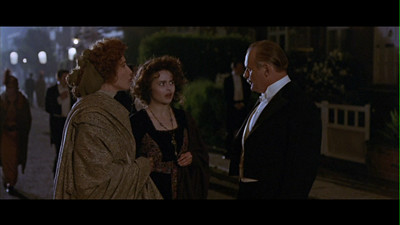
Howards End is a perfect reminder of why Merchant Ivory are so good. In the wake of a scandal of misunderstanding, two women befriend one another. From her death bed, Ruth Wilcox (Vanessa Redgrave) sees a kindred spirit in the spinsterish Margaret Schlegel (Thompson). So much so that she ends up trying to leave Margaret her family home, the lush and extravagant Howards End. Her widower, Henry (Hopkins at his twitchy best), and his selfish children head off this request, but the lives of the Wilcoxes and the Schlegels become entwined anyway. Margaret eventually marries Henry, which puts off her sister, Helen (Bonham Carter). Helen didn't really need another reason to dislike the Wilcox clan after her botched engagement to the youngest son. When further scandals--both past and present--are discovered in relation to a lower class couple Helen has befriended, things are strained further, setting up the main threads of a complex family drama. Howards End was adapted by Jhabvala from E.M. Forster's 1910 novel, and the story's construction is seamless, weaving amongst the various characters and teasing out the large connections between them. Though seemingly covering ground the filmmakers had tread before, Howards End bristles with a clarity and energy that crackled like never before. The script, costumes, sets, performances--everything is in sync.

The new DVD, like all the releases in the collection, has a pristine picture quality and a bundle of extras. There are four documentaries, two new and two old. One of the older ones is especially essential for anyone looking to take a crash course in the career of Ismail Merchant. The Wandering Company was put together in 1984 to celebrate the 20th anniversary of the Merchant Ivory partnership. While some of it is a little hammy, it's the best available glimpse of how the two men went about creating their movies. The portrait it paints of Merchant is particularly fascinating: he lives his life at the largest proportions, but those who care about him see through the ruse, spotting the generous, gregarious man underneath. Here, clearly, was someone obsessed with filmmaking, who kept his crew together often through sheer force of will and by tugging all sorts of hidden purse strings. He was an irascible penny pincher, one who approached his role as producer almost like a swashbuckler, pulling through by the skin of his smiling teeth and the lint in his pocket. Merchant needed the reserved Ivory to balance him out as much as Ivory needed his forceful personality to get the job done. In a contemporary interview, the effect of such a long relationship is obvious. Like a married couple, they correct one another, tell the same stories completely differently, and finish each other's sentences.


In honor of Ismail Merchant's life, take some time with Howards End or any of the other movies he made with James Ivory. There are even several Merchant directed himself, including the most recent entries in the Merchant Ivory Collection: In Custody and The Courtesans of Bombay . His final film helming the camera was 2001's The Mystic Masseur, continuing his long tradition of bringing Indian themes to the screen. Comics fans may also enjoy The Wild Party, a 1975 movie based on the same poem that Art Spiegelman adapted to graphic form in 1994 after completing Maus.

In the past several years, the Merchant Ivory films have been a little out of vogue. DVD is giving their back catalogue a second lease on life, so that even if part of the team is gone, their legacy continues.

Monday, January 21, 2008

IF.... - #391


Boarding schools have provided many a filmmaker with a ripe setting to create commentaries on the pitfalls of society. Having never been to one myself, they seem like strange and foreign environments to me. Self-encapsulated, estranged from the rest of the world, they are civilization in miniature. Writers and directors of all stripes step back into the hallowed halls of private and public academia to exorcise the demons of their youth (such as Volker Schlöndorff's Young Törless) and to comment on a system that emphasizes conformity over individuality (Keith Gordon's Chocolate War).

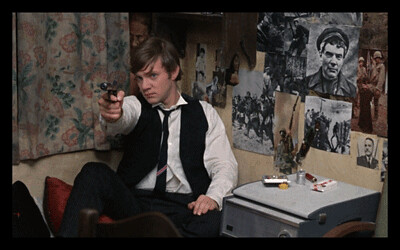
As a top example of the genre, I am surprised that Lindsay Anderson's tale of brutality at a British boarding school, If...., isn't more notorious than it is. Sure, I've seen it mentioned in books on cinema, and it's been one of those films that has been on quite a few lists over the years of movies that needed to be released on DVD, but it still seems to have mainly sailed under the radar since its Cannes-winning release (I mean, why didn't I hear about this flick back in high school?). Made in 1969, If.... is an acidic assault on the imbalance of power, one that likely felt potent at the end of the 1960s, as student revolt and protest started to drift from hopeful action to aimless flailing. It certainly strikes a powerful chord today, when its message and the methods by which its antiheroes get their vengeance seem eerily prophetic.

If.... was a young Malcolm McDowell's first movie. He plays Mick Travis, the head of a trio of boys that one headmaster dubs the "Hair Rebels." A title card in the film (the narrative is broken into distinct chapters) refers to them as "Crusaders." They certainly represent the downtrodden in this mini community. The boys at this school are endlessly splintered into groups. By house, by class, by room, they are forever compartmentalized. Four sadistic boys known as the Whips rule over College House, and they can easily bully the younger students into doing what they want, but Mick and his gang cause a bit more trouble. They're the boys with the bad attitudes who see through the façade of power and privilege.

The school in If.... is governed by a mysterious, archaic set of rules. Hair must be a certain length, freshman boys must know the names of everyone in the senior class, and specific materials are required in specific drawers in each student's desk. The Whips order the other kids around, making some boys act as their servants, meting out punishment for infractions real and imagined. These penalties can range from cold showers to humiliating whacks with sticks. In the recent documentary The Ghosts of Abu Ghraib, the filmmakers use footage from a famous academic study where it was shown that regular people would inflict cruelty on their fellow man if they believed a voice of authority was ordering them to; likewise in If...., the boys submit to their punishment with a quiet resignation. This is the way it is done, allegedly it's how it's always been done, just accept it.

Isolated as they are, the kids at this school are drawn toward every fruit the rules forbid. In their study room, Mick and the others tack up pictures of fighting men in threatening poses while hiding their skin mags out of sight. They drink and they smoke, and occasionally they sneak off the grounds to take their rebellion a little further. Of course, they aren't the only ones who partake. The ruling element does, as well, even going so far as to try to tempt Bobby (Rupert Webster), a boy who serves as their butler, into performing other services for them. How fitting that he would eventually gravitate to Mick's mate, Wallace (Richard Warwick), providing the film with both one of the few moments of tenderness (a brief scene of them asleep together) and one of the only acts of heroism (Wallace lets Bobby bolt while he alone takes the blame for being in a restricted area). The rest of If.... is devoid of any real human warmth. Mick accuses the head of the Whips, the smug Rowntree (Robert Swann), of being frigid, and it inspires Rowntree's most sadistic act of wrath--most likely because he's irked by the truth.

As these things go, there is only so much abuse the Crusaders are going to take before they've had enough. Ditching a rugby match (organized sports=institutionalized brutality) and taking a joyride on a stolen motorcycle, Mick and Johnny (David Wood) taste a freedom the school denies them. The scene leading up to the theft gives us the symbolism that will define their ultimate action in the movie. First they run through the streets handcuffed together, and then in a play of mock hostility, Mick knocks Johnny to the ground, securing their separation. Only violence will break them out.

Riding down a country highway, the boys stop at a roadside café, where they meet "The Girl" (Christine Noonan). When Mick tries to kiss her, acting with the same prim entitlement as the dark lords of his alma mater, Christine lashes out at him. She not only shows him he can stand up, but she also unleashes a more primal force within him, turning the tables by declaring she is a tiger and moving on him as such. He fights back in the same way, and it's almost as if from there he has reverted to his natural state, accepting that it's not man's place to take orders.


It's fitting that this is one of the many scenes in If.... that Lindsay Anderson decided to shoot in black-and-white. Though there are many non-artistic explanations for why some scenes aren't in color, what ends up on the screen transcends budgetary concerns and is artistic regardless of the viability of said concerns. Whenever the image shifts to black-and-white, the whole mood shifts with it. It's not that these sequences are that different from the rest of the film's action, but the absence of color lends them a surreal gravitas. They automatically come off as more serene than the anger-fueled color scenes. The black-and-white sequences also have a narrative importance. The switch signals that something crucial is going to happen--Bobby and Wallace notice each other, Mick meets the Girl, the boys find the tools for their vengeance.

The final chapter of If.... plays out on the day of one of the school's most pompous, self-aggrandizing ceremonies. Parents have gathered in the chapel with the teachers and students to hear the praises of the institution sung by an aging general who refuses to loosen his grip on tradition. Around him, the priests wear their most ostentatious costumes, and another member of the staff dresses in a full suit of armor. It's a ludicrous display, revealing these methods as outmoded even as their champions pat themselves on their backs for not giving in to progress. Blind to the dissent fomenting all around them, they run straight into an ambush.

The scenes of violence that follow aren't particularly gory or shocking, but they do serve to release the pressure that has been building throughout the movie. As viewers, we realize we've been holding our breath, automatically siding with the rebels (and thus, ironically, conforming to what the narrative demands) and finally exhaling when they return all the punishments on their tormentors. Rather than slide out with a tidy resolution, Lindsay Anderson stops the climax in mid-action, cutting to a black screen and the title printed in blood red letters. If.... The ellipsis is for the viewer to fill in. If what? If we don't check this kind of regimented oppression, an uprising is surely to happen? If a man is pushed often enough, he'll push back? Or is it to signal that this is just fantasy, merely allegory, and not to be taken as realism?

Either way, while the first three periods of the ellipsis indicate a trailing off, an omission that needs to be reinstated, the fourth period indicates finality. Though the thought trails off, it does end somewhere.

And where it ends will make all the difference.


Originally written June 19, 2007. For technical specs and special features, read the full article at DVD Talk.

Sunday, January 20, 2008

THIS SPORTING LIFE - #417


Frank Machin is a bruiser who works in a British factory. Desperate for a chance at a better life, he muscles his way into a tryout for the local rugby team, introducing himself by way of a punch to the jaw on one of their star players. His aggressiveness propels his meteoric rise through the club, garnering fans and respect, but also placing a few more chips on his shoulder than when he walked into the place. Directed by Lindsay Anderson (If...., O Lucky Man!) and adapted by David Storey from his own novel, This Sporting Life is a rough-hewn example of the British kitchen sink school. It exemplifies everything that made the movement so interesting. Set against a dreary black-and-white, working-class backdrop, it showcases the struggles of a young man with more emotion than he knows what to do with, trying to earn his way in a world that seemingly has no place for him.

As played by Richard Harris, Frank is a force of nature, a lumbering animal trying to live among humans. Late in the picture, he is referred to as "a great ape," something that he takes great offense to. This is in large part due to the fact that the insult comes from Margaret Hammond (Rachel Roberts), the sad widow whom Frank has been renting his room from. He has tried to make a family with her and her two children, and in his way, has shown her the more tender side of himself. Thus, it hurts all the more that she would lay him so low.

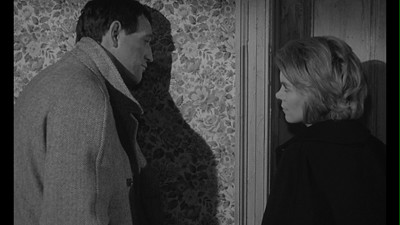
Not that he doesn't deserve it. Frank has seen their relationship as something he can charge through the way he does on the rugby field. The affair between himself and Mrs. Hammond is the heart of This Sporting Life, and it beats with brutal force. Frank wants to show that he can be a man, that he can provide for the family and be caring, but he's got no real capacity to express it. The best he knows how to do is preen and show off, ostentatious gestures of affection that don't really satisfy the soul. Deep down, what Frank wants is to be needed, and he thinks Mrs. Hammond could use someone like him in her life. Since her husband has died, she has been shut up in her house, denying herself any happiness. For as difficult a time as Frank has showing love, she doesn't go very far to let him. She even denies his advances for most of the picture, only finally letting him in when he's already gone off the rails. It's a match made in Hell.


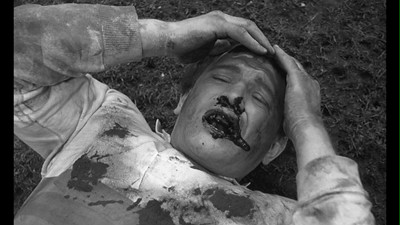
Most of the early movie is told as a fever dream Frank has after being heavily medicated on Christmas Eve. A brutal blow to the face on the rugby field has shattered his choppers, and he's had to have six of his front teeth removed. Carted to the dentist and then to a raging Christmas party, Frank comes in and out of consciousness, with each successive drift showing more of the story of how he came to join the team and how he's let it go to his head. He tosses cash around as an excuse to stretch his ever-expanding ego, buying the right to be more boastful and confrontational. To his credit, though, he stays true to Mrs. Hammond. Though she accuses him of stepping out with other girls, we don't really see it.

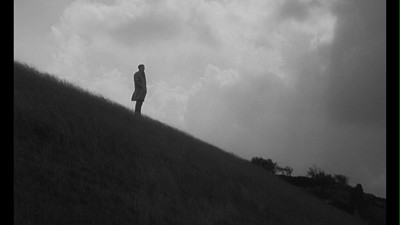
Those teeth getting knocked out act as a catalyst for toppling the delicate balance Frank has achieved. He seemingly throws all caution to the wind, and those who have tolerated him in the past cease to find his bullish manner charming. In its way, This Sporting Life is a cautionary tale to all the young athletes who these days get fame way too quickly, don't know how to deal with the sudden success, and end up getting into trouble. Frank has to lose everything to be reminded of why he was chasing the dream in the first place. Anderson and cinematographer Denys Coop create a lovely shot of the muscle man standing on a grassy hill looking down at the factory that claimed Mr. Hammond and could end up claiming him, too, if he's not careful. It's a bittersweet moment given the tragedy that follows.


The best kitchen sink dramas are unflinching in their depiction of the hopelessness that British youth suffered in the decades following World War II. Many felt that the past was being lorded over them, with the older generation refusing to let go of the wartime experience the way Mrs. Hammond in This Sporting Life can't let her husband truly be dead. She keeps his boots by the door, all polished and ready for him to wear, as if he is upstairs sleeping and just needs to come down and claim them. As long as they are there, she has no hope of moving forward, barred from her future by everything they represent. Yet, as Frank knows, the mythic figure they are meant to evoke is not as pristine as she'd make him out to be. The truth of his death is much darker than the legend of his life portrays it as.

There is no catharsis for Frank, no escape. Getting his head kicked in on a muddy playing field is no better life for a man than working a machine. (Machin? Is Frank little more than a machine himself?) It's all emptiness, only as good as the last scoring goal. Anderson and Coop shoot his pain in a stark neorealist manner, creating a kind of existential expressionism with the stone streets, dreary houses, and smoky skies of the factory town. No glamorous lighting, though maybe a well-placed shadow to emphasize the darkness. For This Sporting Life to work, we have to see that the town itself, the very place these people live, is as unforgiving and unpolished as their emotions, possibly even the cause of them. The rugby games also have to be as dirty and real. The camera gets down on the field with the players, catching every blow, all of the blood and mud. Lindsay Anderson makes it so you can see the bruises forming on the bodies and feel the crush of every powerhouse hit. Frank is locked in an eternal scrimmage, and there is no way out.

This makes the title This Sporting Life into the film's greatest irony. Though evoking a feeling of play, its true meaning is that all of existence is a game, one that is ongoing, and that seemingly can't be won. Frank often describes himself as feeling "champion," but that is only when he is out in front of the struggle. A man can keep fighting, but with no prize at the end, what for? You get knocked down, and then you get back up, until the day you decide to stay in the dirt. Judging by the closing shots, one does not imagine Frank Machin happy.


For technical specs and special features, read the full article at DVD Talk.

And, yes, I can give an existential reading to just about anything.