Showing posts with label performance. Show all posts

Sunday, January 14, 2018

GRAY'S ANATOMY - #618


Steven Soderbergh is 55 today. That puts a solid decade between us. Not that it matters. With ten years less on his life he’d still have done ten times more than me. The man is prolific to say the least. Since “retiring” from theatrical film, he’s made two television series (Mosaic debuts on HBO this month) and...well, one feature film, the 1970s-style character piece Logan Lucky, a singular and pleasing gem of 2017. He’s one of my favorite contemporary filmmakers, reminding me of classic studio men who could adapt to any style, tackle any genre, and still maintain his unique vision.

To celebrate this day, I decided to review the last Soderbergh movie in the Criterion Collection needing coverage on this blog, the Spalding Gray documentary Gray’s Anatomy, released in 1996 and seen by Soderbergh, alongside Schizopolis [review], as part of a creative reset. Years later, the auteur would also make And Everything is Going Fine [review], a more traditional documentary about Gray, but Gray’s Anatomy is a performance piece, not a reporting. It’s Steven Soderbergh capturing one of the monologists most famous shows, a lengthy one-man narrative describing an extended medical condition and his coming to grips with treatment.


Spalding Gray was diagnosed with a “macular pucker” in his left eye. As he describes it in the monologue, it’s essentially when the cornea develops a crinkle, not unlike a loose spot in a piece of cellophane stretched over a bowl. The pucker caused visual anomalies, and there were a few potential courses of treatment, with the most recommended being actual surgery. Scared of the potential side effects of a botched procedure--including blindness and even losing the eye itself--but also knowing it was not an operation that had to happen right away, Gray opted to seek out alternative methods. Gray’s Anatomy details his explorations of mysticism, nutrition, and even psychic healers (think Andy Kaufman going to see the Filipino charlatan in Man on the Moon), before finally settling on the original course of action. (Footage of the actual surgery is included as an extra on the disc, if you’ve got the stomach for such things; I do not.)


Soderbergh doesn’t dress up the performance too much. Breaking the mo nologue down to anecdotes, a sort of equivalent of scenes, he shot Gray acting out the material for the camera, no audience, using different backdrops and occasional camera tricks to add a little visual flair to the staging. To round out the piece, he also interviewed regular people about their eye injuries and quizzed them on whether or not they would try the same things as Gray. These interviews break up the monologue here and there, but are never intrusive. In fact, none of Soderbergh’s set-ups are too showy or complicated; he knows better than to draw attention from the man himself. Gray’s Anatomy succeeds or fails on Spalding Gray’s charisma and rapport with the viewer.

The version Gray presents of himself is interesting. While the central theme of Gray’s Anatomy is fear--fear of not just the potential disaster of medical error, but fear of making a decision. Yet, for all his trepidations, the Gray at the center of these stories is also a man open to experience, who is willing to try things less for the hope of their curing his vision, but because he’s never done them before. Hence the seemingly unconnected anecdote of the time he cleaned the yard behind a synagogue. He’s telling us that he is a man that will do things despite not knowing the outcome. For all his anxiety, he is actually quite daring. I mean, consider that public speaking is one of the most common fears of average people, and yet this guy gets up before an audience and shares his life as a career. You can’t dispute his courage.


One thing that surprised me about Gray’s Anatomy is that it doesn’t finish with any great revelation or profound statement about life. Gray doesn’t appear to think he has any big answers to share; rather, it’s the simplicity of his efforts that make them relatable, and the journey he describes is no less fascinating for not concluding with an epiphany. Quite the opposite, Gray’s Anatomy would have probably fallen flat had Spalding Gray (along with co-writer Renée Shafransky) decided he was illuminating us to some new wisdom. It’s too intimate for that, the confidence he is placing in us is not just trusting us to know his secrets, but to know what to do with them, as well.

And Soderbergh, whose eye for detail is equal to Gray’s, knows yet again not to get in the way, and instead just plays it as it lays.


More reviews of Steven Soderbergh movies, of the non-Criterion variety:


Sunday, February 3, 2013

PINA (Blu-Ray) - #644


Pina, the long-gestating personal project from German director Wim Wenders (Wings of Desire [review], Paris, Texas [review]), is a documentary/performance film that reverberates with emotion and wows with its technical wizardry. It is a time capsule, a museum piece, a preservation project, recording many of the famous modern dance pieces choreographed by Pina Bausch; yet, unlike most museum pieces, Pina is not stodgy or covered in dust. The only glass this vibrant recording belongs under is that of your television screen, and maybe the lenses of a pair of 3D glasses.

Pina was a film that had been on Wenders' docket for years, but footage of dance performances shot by other directors had convinced both him and Bausch that a standard set-up would not truly convey the power of Pina's artistry. She was against having too many cameras onstage, breaking the point of view, and changing the audience's perception. He was against setting up at the back of the auditorium and shooting the performance over the seats. Both approaches had been tried before, but with few successes. Carlos Saura took his tangos out of the performance space and entered the rehearsal area [review]; and, of course, there are the various films of Martha Graham at work [review]. But Wenders couldn't just repeat what they had done.


As the story goes, it was seeing U2's 3D concert film that changed everything. Released in 2007, U2 3D was the first example of the new technology in practice. I remember seeing it in IMAX and imagining I could jump from my seat and land on the drumkit and being tricked into thinking different elements in my peripheral vision were real, not projections. And I can barely stand U2. Wenders was so impressed by the stereoptic effects, he saw what Pina could be. The tech was still new and unwieldy, but in a couple of years, it would be there...

Unfortunately, he didn't have enough time. Pina Bausch died in 2009 without Wenders ever shooting a single frame with her. Rather than let this project die, however, he carried on, turning Pina into a tribute to his friend. The final film gathers her dance troupe, past and present, and has them perform some of her signature material. Some of the dances are set on the stage, some are taken out into real environments, both urban and rural. Amidst this, Wenders shoots portraits of the dancers, having them talk in voiceover about how Pina inspired them and what her work means in their lives.


The end product is far from your standard biography. It's less about the woman and more about the essence of her. It sticks to what is important, the dancing itself, rather than trying to string together significant events that may or may not have inspired it. The chosen pieces range from solo routines to larger casts. Some of the sets built for the filming are sparse, others are elaborate. All of them, after a fashion, are abstract dramas, illustrating the push and pull between men and women, personal growing pains, and the greater struggles of the human community.


I have now seen Pina twice: once in a theater, in 3D as Wim Wenders really intended, and this second time on Blu-Ray, in two dimensions. There are virtues to both (and this combo pack offers both options, though you'll need a 3D television to view that version). The 3D is immersive, creating a sense of space and movement that would not otherwise be possible. The closest you would come to that kind of experience would be to see the recital live and in person. At the same time, cinema allows you to get closer to the action, almost like you are in it but without disrupting the artists.


On the other hand, watching it at home, there were no pesky glasses, no adjusting to the multi-plane effects and the distractions that come with them. It's also easier to focus on the full performance. Even Wenders acknowledges this. You can actually see more in two-dimensions, because 3D evens out all the focal points, ironically making the image more flat even as it separates.


Either way, Pina is an effective movie. Wenders is working straight from the core on this one, driven by his gut as much as his intellect--which is also how the dancing translates. Pina Bausch's choreography takes our inner feelings and gives them external expression, turning the intangible into the physical. For most people reading this, we would likely have never been witness to any of the late dancer's work had this documentary never been made. And more would have been the pity. Pina is eye opening, mind expanding, and altogether beautiful.


For a complete rundown on the special features, read the full review at DVD Talk. Images here were taken from promotional materials and were not taken from the Blu-Ray under review.


Wednesday, May 19, 2010

THE RED SHOES - #44


Criterion's reissue of The Red Shoes, Michael Powell and Emeric Pressburger's enchanting 1948 fairy tale, is due to be released in July. It's going to sport the newly restored print of the film that we've been hearing about for quite some time now. Spearheaded by Red Shoes-fanatic Martin Scorsese with the UCLA Film Archive, the movie was given a frame by frame scrubbing and has been one of the most hotly talked-about revivals since the new version premiered last year. A few places around the world have been lucky enough to host this spruced-up Red Shoes theatrically, and as of May 21, you can count Portland, Oregon, among them.

I wrote a bit about Cinema 21 in my review of Ran last month. The stalwart little theatre is a Portland landmark. I've been seeing movies there since I moved to town in 1994. Cinema 21 hosts first-run indies and art house, as well as being the main stop for revival pictures. It's because of Cinema 21 that I saw many a classic movie for the first time. One of the most mind-blowing experiences I had there was catching Powell and Pressburger's A Matter of Life and Death in the mid '90s. It was my first film from the Archers (as they are collectively known), and I was not at all prepared for the marvelous imagination this movie had to offer. At the time, it was not available on VHS and as DVD fans know, it took forever to get a digital release, so it was many years before I would ever see it again.
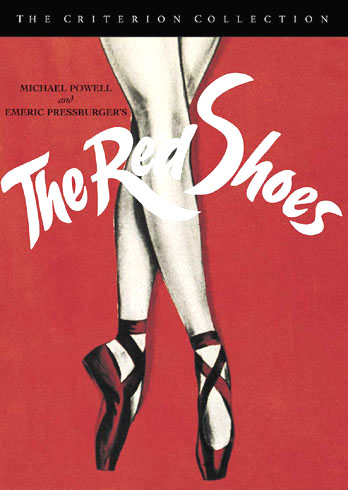
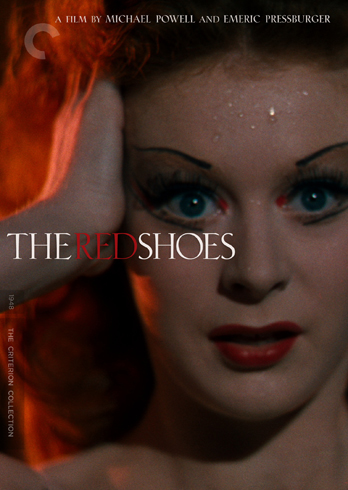
The original 1999 DVD cover.


The press screening for The Red Shoes was not my first experience with this particular film, but it might as well have been. The restored transfer is everything they claim it to be, making it seem like a whole other film. The Red Shoes looks newly minted, as if it was struck from a fresh batch of Technicolor cooked up in a lab just yesterday. The image is flawless, and the color is so vivid, it's practically a living entity. The range of pigments and the level of detail is simply astonishing. Moira Shearer's red hair looks like a swath of velvet wrapped around a tiny flame, and how did I not know before that she has freckles on her collarbone? I feel like I am finally getting to see what previously only cinematographer Jack Cardiff saw, that I have been ushered through a door into his mind's eye to bathe in everything he imagined.

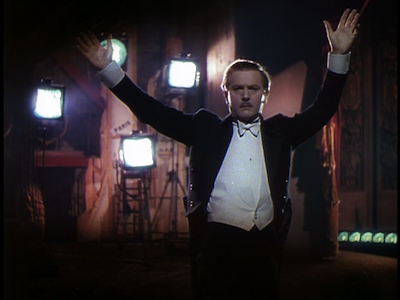
For those unfamiliar, The Red Shoes is the story of an international ballet company run with an iron artistic hand by the headstrong and demanding Boris Lermontov (Anton Walbrook). On a stop in London, he meets a young dancer named Victoria Page (Shearer) whose spirit and pluck earn her a spot in his Corps. The talent seeker also hires a college-age composer named Julian Craster (Marius Goring) to be a deputy conductor after the prodigy storms into his office claiming Lermontov's latest ballet plagiarized his work. Once under Lermontov's wing, the two neophytes soon find their expression encouraged. He assigns Julian to write the score of a ballet based on Hans Christian Andersen's The Red Shoes, and Victoria will play the girl who wanted so badly to dance, she wore a pair of magic slippers that cursed her to keep dancing until she died.


The 2010 DVD cover.


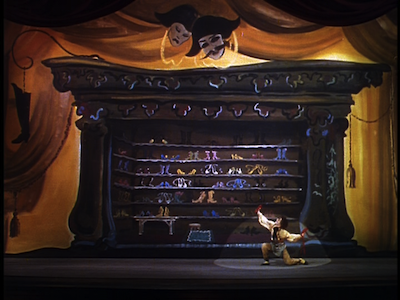
Midway through the film, the ballet is performed in full. It's the movie's most famous scene. Three years before Gene Kelly and Stanley Donen ended An American in Paris [review] with an original ballet, the Archers dropped a complete dance into the center of their backstage romance picture. It was choreographed by Robert Helpmann with music by the Royal Philharmonic, and it features world-famous dancer Leonide Massine backing up first-time movie actress Shearer, then a member of the Sadler's Wells Ballet. There were apparently 53 dancers in total, and the fifteen-minute sequence took six weeks to film. The staging wasn't a direct "shoot a live performance" set-up, the approach was more like a fantasy sequence set inside the performance. Swathed in paintings by Hein Heckroth, the production vibes toward the surreal, with special effects bringing stage conventions to life. When Julian is instructing Victoria on how to hear his music, he suggests she imagine the things that are happening in the story and make it a transformative experience. What Powell and Pressburger show us is what Victoria has imagined and by doing so they transform their film into something magical.

This ballet is no mere trifle, however. It is not a show-off exercise dropped into the center of the melodrama just for the sake of it. The story that Powell and Pressburger craft runs parallel to the themes of the dance. The push and pull between the triangle of Lermontov, Victoria, and Julian is represented in the Andersen adaptation. Lermontov is the shoemaker insisting that his ballerina perform, Julian is the lover who tries to pull her off the stage, and Victoria is the girl caught up in her dreams and desires and having no clear idea how to get out. The Red Shoes is about the passion of creation, the urges that compel artists to make art. What must one sacrifice to fulfill their dreams? Must art be all? It can be a joyful experience--the backstage material showing the collaboration and camaraderie of the company is some of the best stuff in the movie--but it can also be hard work that requires severe tunnel vision to get through.


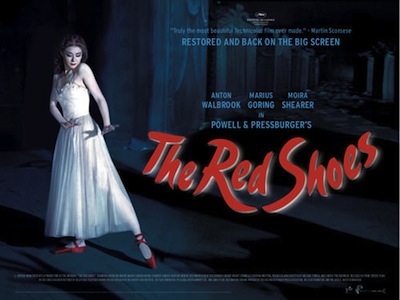
The 2010 theatrical reissue poster.


In a way, the characters all represent types, but I'd say only Marius Goring plays his as such. Julian is kind of a big baby, petulant like a schoolboy, and the actor doesn't bring much nuance to what is sort of the romantic lead. A romance develops between the music maker and his muse, and as it blossoms, it also exposes the fact that maybe Lermontov is in love with Victoria, too. It's never expressed outright, but the way Anton Walbrook looks at Moira Shearer, the way he reacts to the revelation that she has fallen in love, extends beyond a Svengali losing his puppet. As the woman torn between the two, Shearer displays both a strength of purpose but also a fragility. Her resolve to be a dancer is challenged by her feelings as a woman. The Red Shoes is one of those wonderful movies where the invention actually works: the fictional artists are creating real, believable art, and the woman whom everyone is supposed to fall in love with woos the audience to love her, as well. (In fact, check my tweet from immediately after leaving the screening.)


It's funny how years and multiple viewings can change one's perception, though. Boris Lermontov is generally considered the villain in the love triangle. He's the one who, in the fairy tale, would curse the girl to dance and never stop. (In the original story, they have to lop off her feet with an axe to disconnect her from the shoes; in the ballet and the movie that hosts it, Victoria's ending is still dire, though not as gory or gruesome.) Most fairy tales are fairly straightforward in their morality, and again, even here, the characters practically fall into stereotype. Or so a fairly surface reading of The Red Shoes might have you believe.


Maybe it's my more advanced age, maybe it's the fact that I've worked in a creative industry for a while now, but I found Boris Lermontov to be a far more sympathetic character than Julian Craster this time around. As things heat up within the love triangle, Boris asks Victoria if she would ever ask Julian to give up his métier, if she would ever want him to abandon music for her. When she says no, she would not, Boris then asks why she would permit Julian to ask it of her. It's a crucial question, and one that reflects badly on the young Romeo. His motivations are selfish. He wants her to be with him and no one else, to do nothing except inspire his melodies. Lermontov, sure, wants Victoria to be his and to dance at his company, but that does not require her to sacrifice who she is--nor would he ever want her to. What she means to him is entirely rooted in the talent that powers her. He knows to give up on her gifts would be to give up who she is, and then she would not be the woman he cares about.

It's wonderful to see how expertly Powell and Pressburger intertwine the drama of life with the drama of artistic expression. The Red Shoes is as inspiring as it is inspired. Cinematically, it melds so many things--fairy tales and dance and operatic melodrama--but it does so within the 1.37:1 frame. It molds these older arts into the newer one, making a movie that is as much about being a movie as it is anything else. It couldn't be done in any other form, and to now be able to see it in a way that is comparable to its debut more than 60 years ago is an astonishing treat. If you can go out and catch in the theatre now, you owe yourself to do so. You can still buy the DVD when it comes out. You're going to want to see it again anyway. And then again, and again. You're never going to want to take these red shoes off....

Part II of this review: The DVD...


Read more about Cinema 21 in this excellent article by Shawn Levy.

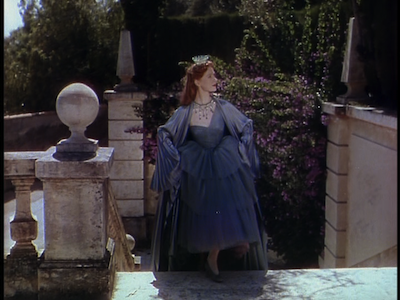
Please note: The screen grabs here are from the original Criterion release; see screen comparisons with the 2010 disc here.


Friday, August 29, 2008

JIMI PLAYS MONTEREY & SHAKE! OTIS AT MONTEREY - #169


Before I started annoying cinephiles with my movie reviews, I cut my teeth in the late '90s writing music reviews. Music became an early obsession right around the same time I was discovering comics, and I've often pursued the former in the manner in which other fanatics have pursued the latter, chasing down B-sides and compilation tracks the way the biggest comics aficionados collect sequential issues, character appearance, and variant covers. The occasional soundtrack would appear with new mixes or specially recorded songs for the film by some of my favorite bands, and I'd have to get those, too. No surprise, really. Music and film have always had their own special relationship, with orchestration being used to add emotional weight to cinema as early as the silent era. The first sound pictures very quickly began showcasing song performances, beginning with Al Jolson, and over the years, the studios would find excuses for stars to sing even in non-musical productions in order to get a new hit on the radio, creating alternate promotional and revenue streams.

Then, of course, starting with the rock revolution in the 1950s and '60s, filmmakers began appropriating pop songs to use in their films, cutting scenes to the rhythm of a rock tune instead of a classical composition. I think most would bow to Martin Scorsese as the master of this. His use of the Rolling Stones and the Ronettes and many others would become so iconic, it would change how we would actually hear the songs from then on out. Scorsese has used one of the stars of today's DVD, Jimi Plays Monterey & Shake! Otis at Monterey, but surprisingly not the other (at least as far as I can dig up with a quick Google search; here is a cool Scorsese soundtrack resource). The director used Otis Redding performing "Fa-Fa-Fa-Fa-Fa (Sad Song)" in Casino, but it doesn't appear that he has employed any cuts from Jimi Hendrix (unless we count being in the film crew at Woodstock or the Hendrix segment of the Blues series Marty produced). Not really important to the matter at hand, but an interesting tangent nonetheless. Though, I would say the first Otis Redding film moment that most fans think of when the singer is mentioned isn't Casino, but Duckie lipsyncing to "Try a Little Tenderness" in Pretty in Pink, a song also given an amazing emotional resonance by Wong Kar-Wai as Rachel Weisz's theme in My Blueberry Nights.
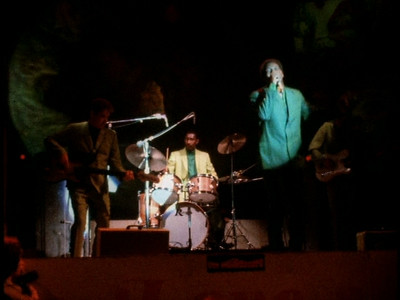


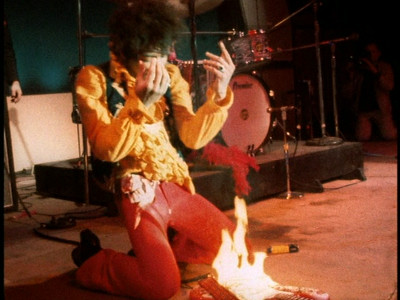
Of the music-related films in the Criterion Collection, my favorite is easily D.A. Pennebaker's Shake! Otis at Monterey, both for the sheer power of the performance and because, somehow, before I had seen it I was not an Otis fan. Which didn't mean I didn't like him, I just didn't know how much I liked him until this movie prompted me to go out and buy his greatest hits album, sparking a long overdue exploration of classic soul and R&B. Though only five songs in total, Shake! confirms the awesomeness one saw in the even more brief selection from Redding in Pennebaker's longer document of the festival, Monterey Pop. By dropping two of Otis' songs, "Shake!" and "I've Been Loving You Too Long," into the mix, he lets Otis steal Monterey Pop the way the singer also likely stole the day in the summer of '67. I know his DVD mate here, Jimi Hendrix, created the most well-known moment of the film when he set his guitar on fire, and the explosive chaos of my beloved Who is also a highlight, but those moments are less about the music and more about the spectacle. Otis sells his stuff without any need for special effects.

One of the greatest strengths of Otis' set in Shake! is sequencing. A downside of the digital age is that a lot of modern bands don't think about how to put an album together, they just toss a bunch of songs on the pile and listeners can put them together as they may. Same with live shows, where you can often just hear a band striking at particular rhyme patterns: fast one/slow one/fast one, or hit/new album/hit. Granted, Otis only had five songs and just under 20 minutes to do his thing, and his structure is simple--fast/fast/slow/fast/slow--but this is really precision bombing, hitting a tired and possibly skeptical festival crowd with the right kind of firepower at the right moments. Opening with "Shake!" got the crowd to its feet, "Respect" kept them dancing, and then "I've Been Loving You Too Long" took the fervor and excitement and started to tease and seduce, the music smoothing into a sensual, orgasmic purr. Then it was back up again, striking with a cover of a familiar number, "(I Can't Get No) Satisfaction." Interesting that both of these African American acts chose to perform tunes by the most popular white rock groups, Otis taking on the Stones and Jimi working the Beatles' "Sgt. Pepper's Lonely Hearts Club Band" and several Bob Dylan numbers into his bluesy repertoire over the years.


Otis brings it all home with his final selection, his famous "Try a Little Tenderness." A number that builds from a slow, syrupy crawl, gaining momentum, working its way to a defiant crescendo, including a false stop and then a return mini-encore, the song is almost its own set, hitting the same tempos and feverish eruptions, the up and down and fast and slow, of the previous four songs all in one go. All the more disappointing, then, that Pennebaker makes his one and only mistake in Shake!, and what a crushing mistake it is! For more than 3/4 of the song, the filmmaker leaves Otis for the first time in the movie, instead choosing to create a montage of women at the festival, many of them sleeping and thus serving as a kind of visual pun to go with the lines about young girls getting weary. It's like going to a fireworks show and filming the ground, or going to a movie and sitting backwards in the theatre.

Why would you ever turn your camera away from Otis Redding? Despite being backed by some of the greatest musicians of the era, his Stax/Volt labelmates Booker T. & the MGs and the horn section the Mar-Keys, it's all Otis' show. The best performers of the soul era, including Marvin Gaye and Sam Cooke, managed to carry the crowd with personal charisma and the undeniable force of their voices. As a live singer, Otis is constantly moving, constantly smiling, and seemingly spontaneous while always being in full control of his band and of the arena. Were the "hit me again" moments in "I've Been Loving You Too Long" planned, or were they truly a moment of inspiration, where Otis just had to feel those musical punches a couple of more times? There is no way of knowing, but it sure looks spontaneous, just as the vocal runs he goes through in the final stage of the tune sound emotionally charged, raw, and totally from the heart. There isn't a moment in this film that you won't believe that Otis Redding is feeling every note he sings, and that's why it's impossible to forget Shake! once you've seen it.


There is a similar controlled spontaneity in the Hendrix set in Jimi Plays Monterey. The way his songs roll one into the other, from one of his own originals to a Bob Dylan tune to a cover of B.B. King, sounds unplanned, though I would imagine the real improvisation occurs within the songs, in the way Jimi and his band jam, and that the set is all laid out ahead of time.

I feel I must admit that I have never been much of a Hendrix fan. Too heavy, too fuzzy, that signature jammy quality just not being my style. That said, Jimi Plays Monterey still manages to impress. One doesn't have to be a fan of a particular musician to still appreciate what he does, and if you watch Jimi Plays Monterey and somehow fail to see how innovative Hendrix's style is and the talent and skill with which he attacks that guitar, I am not sure you can actually make a claim to understand rock music at all. Just consider the ways he tackles traditional songs like "Hey Joe" and Dylan's "Like a Rolling Stone" and then make a case for him not completely changing how rock musicians could approach the form.


Pennabaker doesn't stay entirely in Monterey for this feature, instead setting a backdrop with information about who Jimi was, what lead to Monterey, and noting that this career high was followed a year later by the guitarist's death. (Coincidentally, Redding also died just a few months after these concerts, in December 1967, linking these two artists in another way.) Narrated by "Papa" John Phillips, one of the curators of the Monterey Pop Festival, we get a sense of who it is were are about to see, and we also get a glimpse of an earlier stage of the Jimi Hendrix Experience, playing that aforementioned Beatles cover and the Troggs' "Wild Thing" in footage from London. (In the case of "Wild Thing," we hear it again at Monterey, and the juxtaposition shows how far the Experience had taken the sound and their stage show in the time between.) We also see and hear other artists, including the Animals performing "Monterey," the tragic Rolling Stone Brian Jones introducing Jimi, and artist Denny Dent opening the film with a pop-art graffiti portrait of Hendrix, painting at hyper speed while Pennebaker lays "Can You See Me?" over the top.

Jimi is the real star, though, and Pennebaker smartly lets his set at Monterey run without interruption. His psychedelic point of view captures a certain vibe of the 1960s, and the fact that he and Otis could seemingly be so disparate, one more classical in approach and the other more visionary, and yet share the stage (and a DVD) so comfortably tells us something about the musical landscape of the times. These days, with everyone concerned about the brand, any meeting of R&B and rock (or, for that matter, hip hop and rock) is seen as novelty, even if most people's iPods have a little bit of everything, all genres represented. Maybe that's where the true festivals happen today, in the mixes we make ourselves. In that sense, I want mine to sound as good as this one.


Wednesday, January 9, 2008

CARLOS SAURA'S FLAMENCO TRILOGY - ECLIPSE SERIES 6


Over the past couple of months, Criterion has been doing their level best to elevate how traditional, performance-based dance is represented in the DVD field. First with their release of Martha Graham: Dance on Film, and now their bundling of Carlos Saura's Flamenco Trilogy as the sixth entry in their Eclipse Series, the studio is giving home viewers the chance to see that there is more to cutting a rug than can be seen on "Dancing with the Stars."

Made between 1981 and 1983, the three films here are invaluable and supremely entertaining chronicles of a dancing style that is integral to Spain's artistic identity. Carlos Saura was an early pioneer of the Spanish Neorealist movement in the 1960s, and his illustrious career continues to this day. The Flamenco Trilogy is probably his best known work.

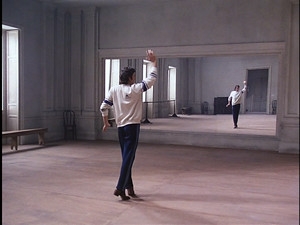
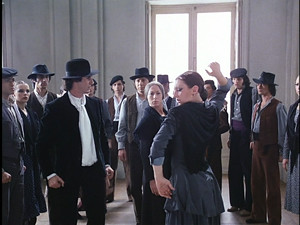
The first in the series is Blood Wedding (1981; 71 minutes), and it establishes the technique and tone of this set of films. Shot in a style that blurs the lines between documentary and performance, Saura chronicles the day of one dance company, from arrival through the preparation of stage make-up, the warm-up routine, and then a full rehearsal of the flamenco ballet Blood Wedding. The performance is a traditional operatic tale. On the wedding day of one couple, it is discovered that the bride has been having an affair with a married man. Uncovered by the cheater's spurned wife, the lovers flee, pursued by the woman's jilted fiancée. A knife fight leads to one inevitable outcome. The dance troupe performs the play for Saura's camera, captured from multiple angles, and though Saura jumps between them, most of the shots are long and focused, maintaining the feel of a seamless, uninterrupted performance. The dancers are accompanied by a live band and singers, all of whom move in and out of the action, serving as members of the wedding party.

By filming in the rehearsal studio rather than on a stage, Saura maintains an intimacy that isn't possible when shooting over an audience's heads in a theatre. He also pulls the viewer into the dance experience via the everyday details he captures backstage. More importantly, he makes the troupe's leader, Antonio Gades, who also choreographed the flamenco and adapted it from a story by Federico Garcia Lorca, our main character. While Gades silently applies make-up, Saura overlays a recording of him explaining his life and how he ended up becoming a dancer. This gives us a personal connection to Gades, even when he plays Leonardo, the dastardly adulterer in Blood Wedding.

Like all dancers, the flamenco performers have tremendous control over their bodies. Though some of the movements seem familiar to anyone who has seen straight-up ballet, in this context, they seem more forceful and violent to me. Confident kicks punctuate many moves, the hard-soled shoes of the dancers resounding loudly on the wooden floor. They mime holding babies and riding horses, but the scene that really got me was the duel between Leonardo and the cuckold Groom (Juan Antonio Jimenez). Using prop knives, they dance the back-and-forth hack-and-slash in slow motion, turning their muscles to molasses, bringing out the bloodlust with an intense vigor that would not be visible at normal speed. In a weird way, the more in control the dancers are, the more able they are to show how out of control the fighters are. It has a tremendous impact.


Rather than just repeat the same approach when Saura and Gades teamed up again in 1983, Carmen (101 minutes) shifts from the documentary approach to something more resembling a traditional melodrama. In a way, it's almost like we are seeing the fictionalized version of the first movie. We still have Gades and his troupe, and the movie opens with a rehearsal for his new ballet. Gades is trying to create a new Carmen dance piece using the famous Georges Bizet opera while also going back to the original Prosper Merimee novel. We see him trying out steps, hashing over the music, and most important, worrying over who his lead will be. He decides to cast a wide net and visit regional dance schools to find a new Carmen.

And this he does, meeting a dancer whose real name is Carmen. Played by Laura del Sol, Carmen is sensual, voluptuous, headstrong, and a little bit of a mess. Antonio rejects her at first, but he can't get her out of his head. Once she's on board, the production begins to take shape. Full dance rehearsals are interspersed with the backstage drama that erupts when Antonio becomes obsessed with his new dancer. His life is starting to resemble the ballet he is trying to perform.

In Blood Wedding, we see the real life aspect of performance, and we also get the feeling that for the participants, dancing is their life. Carmen pushes the same concept to its next logical step, ironically using fiction to show us that dancers are their dance. Unfortunately, Carmen is a tad less effective than the preceding film, largely because the melodrama is undercooked. The dance numbers are still incredible, especially a wonderful face-off between Carmen and the older dancer she replaced (Cristina Hoyos), and the cliché story elements they relate are forgivable because the canvas is meant to be larger. The scenes of Antonio struggling with his muse are no different than anything we've seen before and at their best are merely functionary stopgaps between the bigger music. It doesn't stop Carmen from being a good movie (and Saura was certainly more successful than Robert Altman would be years later, applying the same technique for his ballet film The Company), but in comparison to its siblings, it's the runt of the litter for me.


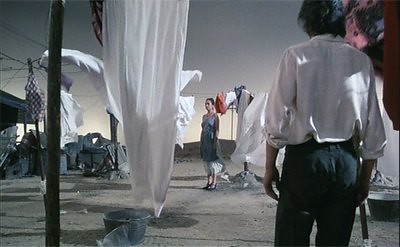
The third collaboration of Saura and Gades came three years after Carmen. El amor brujo (Love, the Magician) (1986; 103 minutes) continues to advance the melding of movie and performance, this time dropping the pretense of a staged production almost completely. The opening crane shots lead us into a soundstage, showing us the cracks between warehouse and movie set, but once the camera settles into the gypsy village where Manuel de Falla's drama will play out, the reality of the dance will be the only reality.

Not that it's a realistic presentation, mind you. Saura isn't returning to his Neorealist roots; rather, he's indulging in the illusion of movies, creating the façade for Gades and company to perform in front of. Though the village itself is built to look real, Saura's backgrounds are the wide walls of the soundstage, and he uses his sky as an expressionistic canvas, changing the colors to fit the mood of the scene, from white to blue to a lusty pink.

El amor brujo is the story of a love triangle in a gypsy village. As children, Carmelo was in love with Candela, but the day she became betrothed to Jose, his heart broke. As an older man, Carmelo (Gades) can only watch as his beloved (Hoyos) marries the carousing cad (Jimenez) her father picked out for her. Even after the deal is sealed, Jose keeps stepping out with Lucia (del Sol), whose wanton ways lead him into a knife fight to defend her honor. In the rumble, Jose is killed and Carmelo is sent to jail. He returns to his village four years later to find Candela haunted by her husband's ghost, and Carmelo has to figure out how to break this bond so he can finally realize his own passions for her.

El amor brujo is the perfect stylistic conclusion to this trilogy, an expert coupling of flamenco and cinema. Both mediums are suited to grand gestures, both are confined to the limits of their stage, be it the physical boards of a traditional dance theatre or the borders of a movie screen. Over the course of the Flamenco Trilogy, Carlos Saura maneuvers around the various layers of performance, looking at the real mechanics and the driving force of artistic expression before finally settling into the full, illusory reality of the performance itself.

And yet, even with all of these other things going on, the dancing remains the most important. This is why any complaints about the melodramatic backstage elements in Carmen are ultimately moot. It's the flamenco we're really watching these films for, the fiery and passionate dancing. As collaborators, Carlos Saura and Antonio Gades, the film director and the choreographer, play to each other's strengths, preserving the integrity of the flamenco while applying cinematic technique. It's never as simple as setting up a camera and shooting the ballet straight on, but something more, putting the spectator into the action and letting us feel the reverberations.


Originally written October 16, 2007. For technical specs and special features, read the full article at DVD Talk.

MARTHA GRAHAM: DANCE ON FILM - #406


Dance is an art form I've always meant to learn more about. Ever since my first year in college when, in a near simultaneous intersection of events, a date took me to a dance recital on campus and I developed a crush on a pretty dance major who lived upstairs from me in the dorm (she didn't perform at that recital, which would have made for a far more dramatic anecdote). Through the years, I've dipped my toe in once or twice, including seeing live ballet. I was impressed with the athleticism on display in ways I've never been touched by professional sports, intrigued by the idea of one's body as a tool of expression. Yet, I've never gone full bore into studying the craft. (You can actually read about my own attempts to recently learn dance at Confessions of a Pop Fan, here, here, and here.)

I explain this by way of indicating that when it comes to my approaching Criterion's new DVD Martha Graham: Dance on Film, I do so pretty much as a neophyte. Though I knew who Martha Graham was before viewing this double-disc set, it was only a passing knowledge, a name dropped in various contexts, the answer to a trivia question. Ever one for a cinematic adventure, however, I took this review opportunity as my chance to finally expand my understanding of the person behind the name.

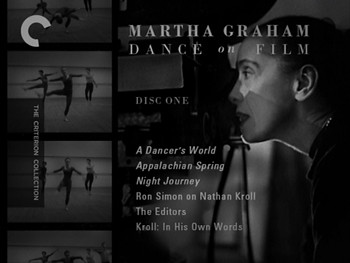
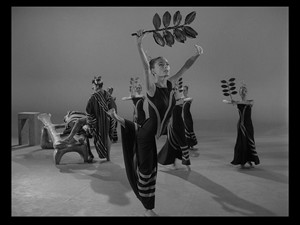
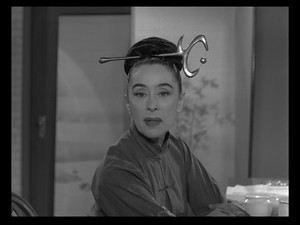
Martha Graham: Dance on Film is a collection of three programs the legendary choreographer made with producer Nathan Kroll for public television between 1957 and 1961, when Graham was already in her sixties. Luckily for people like me, the very first program, A Dancer's World (31 minutes), was actually designed to be an introduction to Graham and her work. Sitting backstage, applying her make-up for a performance, Graham speaks to the audience about different aspects of the art, which are then illustrated in specially choreographed numbers performed by her world famous dance troupe.

Taking A Dancer's World alongside Martha Graham: The Dancer Revealed (54 minutes), the 1994 American Masters episode included on DVD 2 as a bonus feature, I felt like I had a good foundation laid down for me to better understand what I would be viewing in the other two performance pieces. As it turns out, I was more familiar with Martha Graham's pioneering work in interpretive dance than I had thought. As a pop culture junkie, I had seen her influence all over classic musicals, MTV videos, and even regularly parodied in comedy shows. If you've seen a comic actor do a flailing dance in his or her routine, chances are it's Graham who is being skewered.

The Martha Graham style uses movement to express emotion and abstraction to tell a story. Spasmodic gestures, limbs bent at right angles, swift rising and falling--these are all elements instantly recognizable as Graham choreography. Yet, there is also much more to it than that, a synthesis of setting and music, both acting as props to support the dancer rather than being separate elements. Graham dancers aren't as concerned about working with the beat of the music or following the melody as other troupes might be, the orchestration seems to work like that of a silent film, providing background but not integrated wholly into the action.


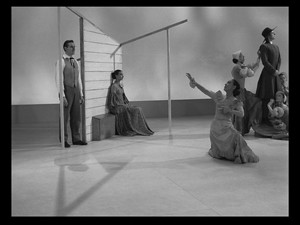
The second and third films on Martha Graham: Dance on Film - Criterion Collection are documents of two of her signature pieces. Appalachian Spring (32 minutes) is the story of a pioneer wedding on the American prairie. Dance is used to emphasize the ritual and ceremony of a religious union, as well as showing the demonstrative aspects of personal worship. Working with the stark sets of her regular designer, Isamu Noguchi, and buoyed by Aaron Copland's original score, Graham and her company create a full narrative, complete with multiple characters and a beginning, middle, and end of the story. I can't profess to understand it all in its entirety. In fact, the bonus feature put together by dance expert Deborah Jowitt, a thirteen-and-a-half minute comparison of the 1958 Appalachian Spring with a performance from the mid-1940s showed me how much I really didn't get upon first viewing. Showing the clips from the same portions of the two performances, Jowitt explains how subtle changes in the choreography alter the meaning of the piece. Also, since the earlier performance was shot by one camera from one angle in a theatre, she notes how the editing and the framing changes the viewer's perception of a piece by focusing the eye on particular elements of the action rather than taking in the entire stage at once. It made me wish that Jowitt had recorded full commentaries for the three films so I could learn even more about what I was seeing.

Still, even without that detailed of an explanation, I was captivated by Appalachian Spring and the final piece, Night Journey (29 minutes), a retelling of Jocasta's death from Sophocles' Oedipus. The combination of costume, music, and movement may be mysterious and difficult to penetrate fully, but that doesn't make it boring. In fact, it's the desire to decode what Graham is doing, along with the power of her artistry and craft, that will keep you watching. The performances aren't stodgy or outdated, but as alive and fresh as all good art is supposed to be.


Originally written September 22, 2007. For technical specs and special features, read the full article at DVD Talk. As it turns out, the DVD Talk review is also linked to on the Criterion page for this release. Go, me!