Showing posts with label essential art house series. Show all posts

Wednesday, December 30, 2009

GERVAISE - ESSENTIAL ART HOUSE

"They were the only good things in my life. Maybe that's why they left."


Réne Clément's 1956 historical drama Gervaise is an adaptation of Emile Zola's L'assommoir, part of the French author's multi-part character epic, Les Rougon-Macquart. The novel's title, L'assommoir, is said to be an old colloquialism that is roughly the equivalent of the American phrase "to get hammered." Apparently the focus of this chapter of Zola's narrative was alcoholism and the devastating effects it has on a family. The drinking is also there in Clément's film version, but the focus is more on the title character, Gervaise Marquart (Maria Schell), and how she gets hammered by life.

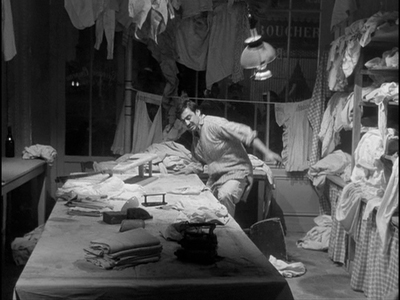
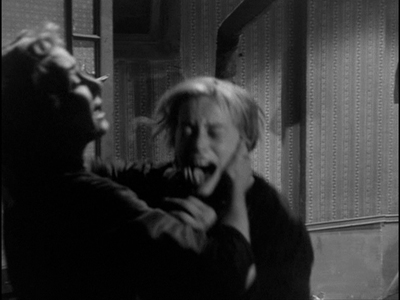
As Gervaise herself tells us in her hopeful opening narrative, she is the girl who shouldn't have expected very much. At the start of the picture, which takes place in the late 1800s, she is living with her common-law husband Lantier (Armand Mestral), who has taken her on despite her limp and given her two boys in the time they have been together. Too bad for her that Lantier is the kind of man no female deserves, and pretty soon he runs off with a loose woman who lives across the street. Gervaise's anger leads to her having a knockdown drag-out fight with that strumpet's sister, Virginie (Suzy Delair). Despite taking place in a giant public laundromat, it's a pretty dirty scuffle, ending with Virginie's bare ass being spanked with a paddle. The indignity is one she promises never to forget.
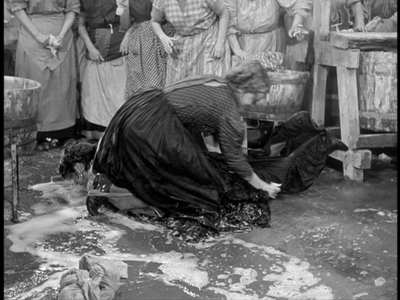


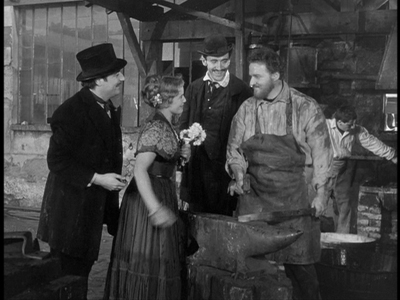
With Lantier out of the way, things start looking up for Gervaise. She marries a kindly roofer, Henri Coupeau (Francois Périer), despite the protests of his family. They have a daughter together, Nana (Chantal Gozzi), and they make plans for Gervaise to open her own launderette. This dream is nearly scuttled when Coupeau falls off a roof and Gervaise's insisting on taking care of him herself leaves them broke. The kindly blacksmith Goujet (Jacques Harden) loans her the downpayment for her lease, revealing his buried love for Gervaise and sparking an unacknowledged jealousy in her husband in the process. Once again things are looking up for Gervaise.


Of course, you can only look up so long before the sun burns your eyes, and that's when the blindside comes. Gervaise is one of those up-and-down melodramas where every step up the ladder the protagonist takes is followed by her being knocked back two more, all the way to the bottom and down to hell if the earth would just comply and open up. It's the sort of story that, when done poorly, compels the audience to throw up its hands and cry, "Enough! I give up!" When done well, however, as Gervaise most certainly is, it makes co-dependents of us all. Yes, Gervaise, we'll watch you get your hopes up, and we'll wait with wetted lips for them to get dashed on the rocks. Especially because we know each failure will be bigger than the last.

I think an essential component of any such movie succeeding is the strength of its lead. In this case, Maria Schell imbues Gervaise with a natural warmth and kindness that somehow makes us root for her even as we slowly begin to realize that she's not really that innocent of a victim. Or maybe "innocent" is the wrong word. It's more that she is less a victim of opportunistic men then she is her own bad choices. Whatever societal forces may be informing her misguided decisions, and the lack of education that leaves her without other tools, it becomes increasingly hard to reconcile the Gervaise that fought back against Virginie and whooped her ass with the Gervaise who allows a besotted Coupeau to let Lantier move in with them, and who is then manipulated in jumping between the beds of both men. We know she is capable of better, but she has latched onto bad luck as her own addiction. It's like she wouldn't know what to do without it. With her kind face and clear, expressive eyes, Schell reminds me a lot of Liv Ullmann, which is probably a major reason why I was drawn to her. She is an excellent actress in her own right, though, and later played both the love interest in Luchino Visconti's marvelous Le notti bianche and the immigrant frontier wife in Anthony Mann's version of Cimarron.
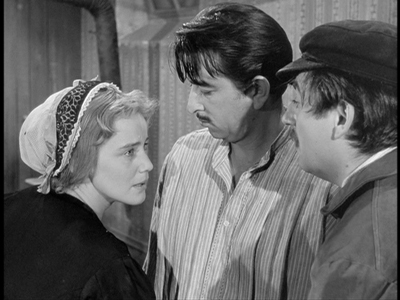


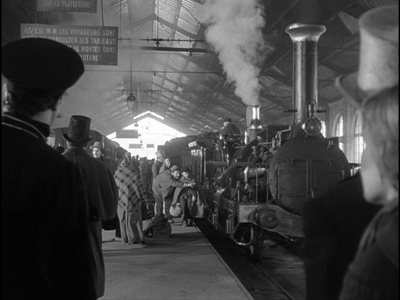
Symbolically, the blacksmith Goujet is Gervaise's conscience. He never fails to see what is really going on, and when she later tries to lie to him, she can't really do it. He also serves as the example of social change, and when he is sent to jail for organizing a strike to protest unfair wages, that's when things really go south for Gervaise. Without him there watching, she has no one to help her pick her drunken husband up off the street or ward off Virginie's machinations. As in Carné's La jour sa lève, work is what sets a man free. When Coupeau stops working, he disappears inside a wine bottle, whereas Goujet's taking Gervaise's eldest, Etienne (Christian Férez), under his wing offers the boy a way out of the squalor. Jacques Harden lends Goujet a rugged earthiness that would have made him right at home as the love interest in one of Douglas Sirk's movies from the same period. The scene when Gervaise goes to see him and Etienne off, and he doesn't see her standing there on the train platform--or quite possibly ignores her--is one of the most heartbreaking in the movie.


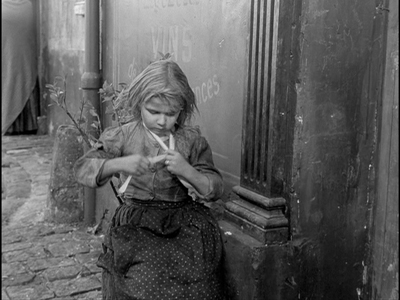
Its rival for saddest scene is the very end of the picture, when we see poor Nana heading on the road to ruin herself. René Clément had already proved himself an expert at portraying childish behavior and the hidden meanings behind it in Forbidden Games when he made Gervaise, and he turns Nana into a cautionary element that is integral to the narrative. If Etienne is an example of how a child can escape his surroundings with a little guidance, the blank sponge that is Nana soaks up all the nastiness, all the dirty laundry, that fills Gervaise's shop. Left to her own devices, the unbathed child wraps a ribbon in her hair and runs to an eager group of young boys. They turn to chase her the way a flock of birds shifts flight in mid-air. It's a creepy image all on its own, but knowing where that chase will lead her, it's all the more chilling. Nana is the star of another of Zola's novels, which has been adapted to film itself more than once, most notably by Jean Renoir in 1926.


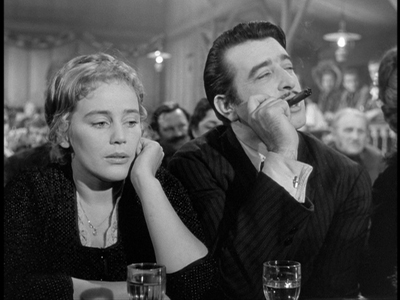
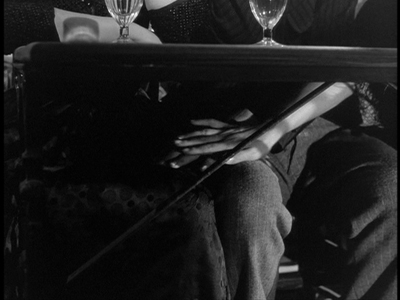
Observing behavior that is meant to remain unseen has always been Clément's strong suit. Be it the cons of Alain Delon in Purple Noon or the secret rituals the children undertake in Forbidden Games (which was written by Jean Aurenche and Pierre Bost, the same team on the script for Gervaise), Clément is attracted to the hidden actions and the pathology that underlines the things people do to themselves and one another. In a pivotal scene in Gervaise, his camera coyly pans down from up above the table where Gervaise, Lantier, and Virginie sit to look under the table at what is happening out of sight. One could almost call the drift of the camera "sprightly." It's a delicious moment, made all the better by Suzy Delair's relish for playing the villainess.


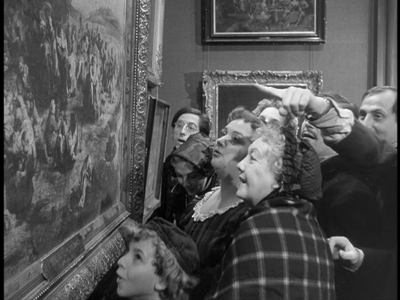
The same attention to detail is paid to all of Gervaise, and the director and his crew recreate 19th-century France with gritty accuracy. One of the most impressively realized sequences takes place on Gervaise and Coupeau's wedding day, when the working-class wedding party goes to the Louvre, many of them for their first and only time. They tour the museum, looking at the paintings, laughing at the ones with nudity, tracking mud through the institution's corridors. Clément shows us both the expanse of the galleries, but also the tight formation of the group, including ducking down to check out that dirty footwear.


Alongside Schell's charisma, such exacting focus on getting every inch of the movie right is crucial to our accepting the emotional histrionics of Gervaise. The movie never feels like a put-on, and it's most certainly never manipulative. By creating a believable world, René Clément also makes the story believable, even when we don't want to believe that our heroine is going to go the wrong way again. Real life is full of mistakes, and a movie's main character is allowed to make them, but the storytellers are not.


This disc was a Christmas present from my good friend and regular editor, the writer Maryanne Snell. What can I say, it was an Essential Art House Holiday. Many thanks, Maryanne!


Tuesday, December 29, 2009

LE JOUR SE LEVE - ESSENTIAL ART HOUSE


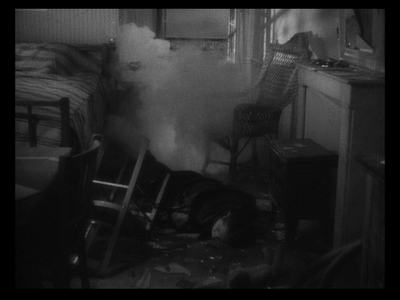
A man is shot behind a closed door. He stumbles from the apartment and tumbles down the stairs, passing the only witness, a blind man. Police are summoned. The believed shooter has locked himself in his room at the top of the tenement. By all accounts, he's a good man. No one knows who the dead man is, much less why their neighbor shot him. The only one with all the answers is behind a closed door and not talking.

This is the opening scene and basic set-up of Le jour se lève, Marcel Carné's tense 1939 thriller. The shooter is played by the formidable Jean Gabin, one of the more naturalistic and believable actors of early cinema. His presence is like that of Bogie's, his girth a precursor to Gerard Depardieu. But in truth, he is just Gabin, unlike no other. Perfectly believable as a working-class hero, and the kind of personality that could hold our interest pacing a tiny studio all by his lonesome. Which is essentially what he does in Le jour se lève, though his dark night of the soul is mixed up with memory and regret. The title translates as Daybreak, and Jean's character, Francois, will stay barricaded in his apartment overnight, as the police and the townspeople wait for him to reveal himself. He's locked in his own head at the same time, a victim of stinkin' thinkin' not just tonight, but in all the events leading up to this.


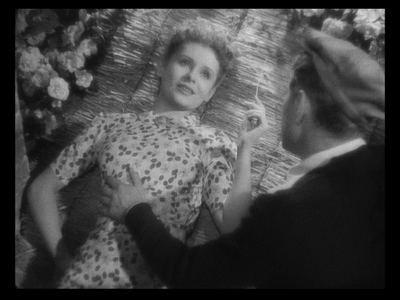
Through a series of flashbacks, Carné and writers Jacques Viot and Jacques Prévert reveal that Francois is caught in two intersecting love triangles. He first falls for the pretty Francoise (Jaqueline Laurent) when she comes to his work to deliver flowers to his boss' wife. Francois labors in a factory where the hazardous conditions are affecting his health; in every way, he is a man with a death sentence hanging over his head even before he becomes a murderer. He and the girl quickly bond, the common name between them working as a starting point for what turns out to be a sweet, intimate relationship. Their scenes together are shot quietly, first by necessity (everyone else in the house is asleep) and then just by nature of the love they share. Carné is a tricky bastard. He knows that if someone whispers, the listener will automatically lean in. Here we fall in love because we can't help but climb into the room with the lovers. Francois and Francoise speak so quietly, we are engaged to be a part of their liaison.


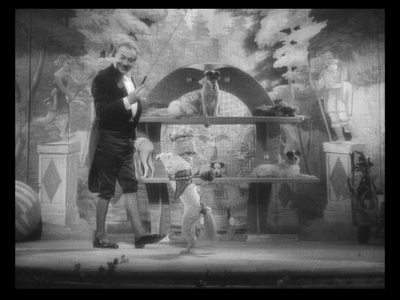
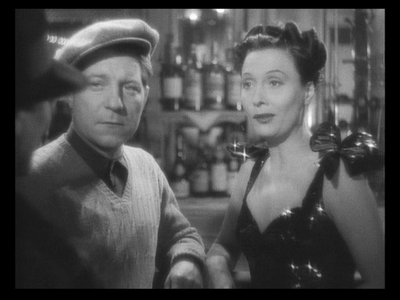
On the night when Francois visits her house, he ends up following Francoise after she leaves him for a prior engagement. She ends up at a small theatre where a dog trainer named Valentin (Jules Berry) is putting on a vaudevillian act where his pooches do ludicrous tricks. It also happens to be the night where Valentin and his pretty assistant Clara (Arletty) are splitting. Clara is a more mature woman than the naïve Francoise, and she sees through Valentin in ways the younger girl is not yet sophisticated enough to manage. Clara also spots the beefy Francois at the bar and quickly attaches herself to him. She becomes his mistress while Francoise remains his chaste girlfriend. Yet, the question is what Francoise's relationship to the slimy con man Valentin is, and whether it's as chaste as her connection to Francois.


It's the untangling of Valentin's lies that eventually gets him shot, the act revealed as the climax of Francois's flashbacks and just prior to the full climax of Le jour se lève. Valentin is a creepy cat, and Jules Berry squeezes every ounce of slime out of the performance as he can. There is a natural division between the men, and though we never see their hands, they would be the telltale sign of how different they are. Valentin's hands would be soft, never having seen hard labor, and Francois's would be rough. Valentin crows about his own intelligence, and the postcards he has sent Francoise from around Europe are meant to suggest that he can offer her a life beyond this remote village. Francois is just a dumb brute by comparison, stuck here for life, no prospect of moving on. Even though Francois sees a paying job as his ticket to personal freedom, the girl may not feel the same. This is the stick Valentin pokes him with, and the true measure of Gabin's performance is how much his understated seething makes us seethe on his behalf. Put that gun in my hand, I'd shoot the huckster, too.


Le jour se lève has a lot going on underneath its melodramatic plot. In addition to the bits about the class distinctions, there is also a lot being said about male aggression. It's kind of like Peckinpah's Straw Dogs in reverse, with the smart guy in the role of antagonist. There are also interesting things to be gleaned about the role of women at the time: how they are perceived, and how those perceptions not only define them, but also how they spur the men in their lives to treat them and/or act on their behalf. Clara is arguably a fallen woman, but she is also a realist. Francois is kind of kidding himself when he tells her he's not the romantic type. He demands a certain honesty from her, waiting to judge her beauty until he sees her without her stage make-up, but he lies to himself. He's an absolute romantic, and he's also a total wuss when it comes to ending their relationship. Clara takes it like a trooper, though that doesn't stop her from being a right bitch. I suppose a lifetime of being thrown over for the innocent girls has given her good reason to debunk the myth of that innocence.


Watching Le jour se lève, I had the feeling that I had seen this all before. Not that I found it derivative, but that some other movie had been derived from it. Turns out there was a good reason I felt this way, I hadn't realized that this was the movie Hollywood remade in 1949 as The Long Night, starring Henry Fonda and Vincent Price and directed by Anatole Litvak. I reviewed that film three years ago as part of Kino's Film Noir: The Dark Side of Hollywood boxed set. It was my favorite of the box, and though my memories of it are fond, Le jour se lève strikes me as the superior picture. More grimy, less hamstrung by production codes when it comes to the finer details of the love affairs. From what I can recall, the broad strokes are the same, though the ending of each version is more befitting the country of origin. Fonda is actually in a similar talent class as Gabin in terms of solitary action and the way he commands a screen. Both movies also have a cinematic realism that is quite effective. We aren't seeing our wronged men making their bad choices on a soundstage. Small town life, particularly as the neighbors spill out to watch the spectacle of the stand-off, is as much a part Jacques Viot's story as anything else.


One fascinating thing about Le jour se lève is how little it actually explains itself. Or, more accurately, how little we are told about the motivations of Francois. He doesn't make any big speeches to Valentin before he kills him, and really, he is reacting more than anything, goaded into proving the power of his might vs. that of Valentin's twisted talk. There is no such antagonizing factor in his final decision, however; it's still just him all alone. My first impulse was to say that he's a man that doesn't allow decisions to be made for him, and so he maintains control by choosing how it will all play out. Thinking about Gabin's face both times he uses a gun, I realized we really have to read his expressions to understand where his real shame lies. He let Valentin poke and prod him into making a mistake, effectively removing the control from him. It's the one decision that we could say he didn't make for himself, and the last scene of the movie is him taking over his own fate once again. The fade-out is on Francois and no one else. There are no parting words. Just the man in his room.


This disc was a Christmas present from my good friend, the writer Christopher McQuain, and thus got immediately bumped up in my post-holiday queue. Thanks, Chris! Check out his top 10 picks for the films that defined the last decade here.

Friday, November 20, 2009

MAYERLING - ESSENTIAL ART HOUSE


Well, I guess it just goes to show, you're never as smart as you think. Here's what I knew about Mayerling: that it showed up regularly on lists of Audrey Hepburn movies as a 1957 television production the actress starred in opposite her then husband, Mel Ferrer. I had always hoped this show would one day surface, being pretty much the only significant television appearance Hepburn made in the first half of her career. I didn't know anything about the story, much less that it was based on a true event and that there were a bunch of other film versions of the tale. All were based on what is known as the "The Mayerling Incident," an 1889 scandal involving the murder-suicide of Crown Prince Rudolf of Austria and his lover, Baroness Maria Vetsera. Live and learn.

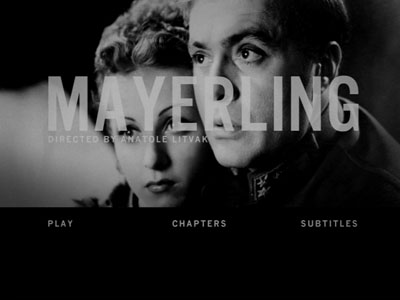
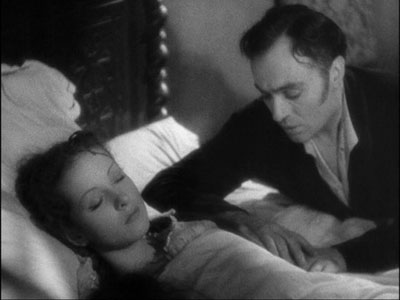
Anatole Litvak directed that Hepburn performance, twenty years after he helmed the story for the first time in this French production, realeased here as part of Criterion's Essential Art House line and which also happens to be the first dramatization of the affair. Made in 1936, Mayerling stars Charles Boyer as Rudolf and Danielle Darrieux as Maria. The two would also reunite later as the stars of Max Ophuls' The Earrings of Madame de..., a far more successful coupling as far as I'm concerned. There is nothing wrong with Litvak's Mayerling, per se, it's just that this arch costume drama is the product of a different time. A somewhat dispassionate, reserved time.


The story follows the outline of many a tragedy. The young Archduke Rudolf first goes astray by entertaining rogue political ideas. He is friends with Szeps (Rene Bergeron), a rabble-rousing newspaper editor known to be part of anti-monarchy protests. Rudolf is quickly put into line and pushed into an arranged, loveless marriage. The years pass, and Rudolf lets most of them go by drinking and partying with his buddies and loose-moraled gypsies. The party boy image is a front, however, and Rudolf yearns for an anonymous life and true love. He finds both when he runs into Maria Vetsera, who at first doesn't realize who this handsome soldier is. When they find each other again, they begin a secret affair, one that eventually becomes public. When the pope turns down Rudolf's request for a marriage annulment so he can be with Maria, the prince reaches the end of the line. Told by his father (Jean Dax), to get rid of Maria, Rudolf resorts to drastic measures. They go on an overnight trip to Mayerling, never to return.

The screenplay for Mayerling was adapted by Joseph Kessel (the novel Belle de jour) and Irma Von Cube (Johnny Belinda) from a novel by Claude Anet. The spicy historical details, and I am sure more than a few embellishments are all there, though I imagine the 1930s production code kept the filmmakers from going too far with what really went on. References to whores and lewd carryings on make it slightly more risqué than had it been a Hollywood production, but the folks in California also knew clever ways of getting more scandalous points across without saying everything outright. There are moments when I thought maybe I was supposed to infer more than what was being shown--like, were Rudolf and Szeps gay lovers, in addition to political radicals?--but also thought that could have been my modern eye spying things that weren't really there.


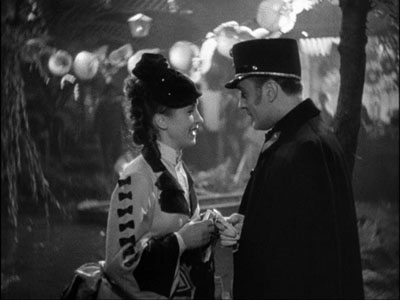
Litvak stages Mayerling as a grand spectacle, including nights out at the ballet and fancy-dress balls. The evening at the theatre, when Rudolf and Maria see each other for the first time after their chance meeting, is put together wonderfully. Litvak moves up and down and in and out of the various boxes, using a modified upstairs-downstairs technique to indicate the levels of the class structure in the royal court. His camera flies on the wings of gossip, mostly lead by the Archduke's cousin, and the whispered plans for future rendezvous provides Mayerling with its only real heat. Except for their final outing together--and we know how that one ends--most of the lovers' meetings look to be ridiculously chaste. Though, one has to wonder why army officers weren't more careful back in the day when they took their mistresses out for drinks. Rudolf getting caught out by his men, as well as Maria's brother, is remarkably similar to Lord Nelson being discovered boozing with Lady Hamilton in Alexander Korda's That Hamilton Woman.

Though we are apparently to believe that Maria Vetsera is a ripe seventeen, Danielle Darrieux and, indeed, the whole movie comes off as much older than that. Mayerling is really too mature. It needs a touch of Romeo & Juliet adolescent angst to give this star-crossed love affair a little more oomph. Even Rudolf's quickly jettisoned political rebellion could have been cranked higher. For a guy doing his best to piss off his father, he cordially stays out of the old man's face. There is little to signal that these two are passionate or dramatic enough to want to take their own lives. It's a development that comes out of nowhere, and seeing Boyer's shaky determination in the final scenes made me wonder where this kind of emotion had been in the preceding 90 minutes. Even the atmosphere out at Mayerling is different--more desolate and remote, with the lovers playing hide and seek on a late foggy night.


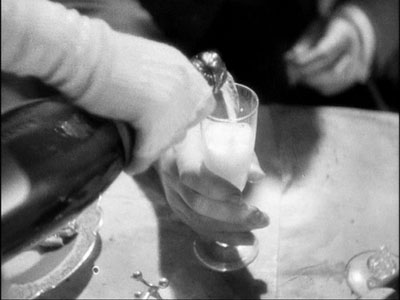
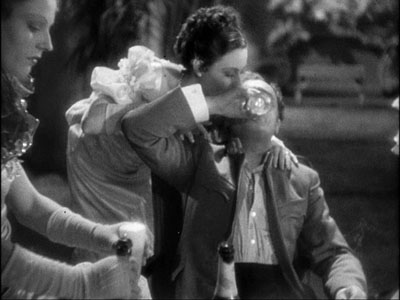
Anatole Litvak would eventually leave France and enjoy a fairly successful career in Hollywood, including directing the jazz film Blues in the Night, the desperate noir The Long Night, and another historical drama, Anastasia with Ingrid Bergman. Mayerling definitely shows a style in development. He understands that a costume piece like Mayerling has alternating demands, with wide shots needing to be employed to show the big set pieces and extreme close-ups necessary for the extreme emotions. He also finds ways to get his camera moving, regularly starting tight on a specific thing and moving back to reveal the whole scene. There is a particularly memorable use of this technique in the middle of the movie, when Rudolf has been drowning his sorrows during Maria's absence. We have heard that the Prince has been out carousing, and Litvak takes us into the decadence by starting on a champagne bottle and then zooming out as it's poured, showing the drunk royal in his cups amongst his courtesans. So, despite some slowness in the overall narrative, it's clear that this filmmaker is just starting to get warmed up.


This does make me wonder, though, is there a more definitive version of Mayerling out there? There are multiple films of the story, including one with Omar Sharif and Catherine Deneuve, and even interpretations off the screen--a ballet, a German opera, a Japanese musical, and a manga, of all thngs. What say you readers? What do you recommend?

By the way, in researching this article, I discovered that a 9-minute clip of the Audrey Hepburn/Mel Ferrer production is now online and that we may actually see this surface in the future. Info here, and the clip itself:


Friday, August 28, 2009

LAST HOLIDAY - ESSENTIAL ART HOUSE


George Bird has been leading a content bachelor's existence, working as an agricultural machinery salesman in a quiet English town. He'd probably keep going on this way until retirement or death, whichever came first, and in a sense, he has. One morning, a stop off to the doctor about a minor complaint reveals a much more severe disease. According to this diagnosis, George has Lampington's Disease, a rare condition that will cause him to fall into a coma and die within a matter of weeks. The doctor's prescription? Take the money and run. He advises George to enjoy his final days, don't just sit around and wait to die.

This is the premise of Last Holiday, a light 1950 dramedy by director Henry Cass (Blood of the Vampire) and writer J.B. Priestley (An Inspector Calls.). George is played by Sir Alec Guinness, at his stoic and most dapper best here as the meek man who is suddenly forced to adopt a whole new outlook on living. George cashes in his savings and his life insurance, quits his job, and alights to a fancy hotel a couple of hamlets over. There he will let Lampington's take over while he luxuriates in everything the hotel has to offer.


Only it's not so easy to become a different person when the specter of death hangs about to make sure you remember who you are. George isn't entirely ready to relax. Decked out in second-hand suits bought off another dead man, he is seen by the other guests of the hotel as a bit of a mystery, new blood that is clearly more than he seems. For his part, George doesn't understand how to embrace idle leisure. He's too proud of being common to try to pass himself off as uncommon. Therefore, the first friend he makes at the resort is the head maid, Mrs. Poole (Kay Walsh), whose natural empathy causes her to wonder exactly what George is hiding. Her good sense is also affronted when George later disappoints her by allowing himself to be wooed to the other side. She can't understand why a good man would throw his money after bad rubbish, but that's because she doesn't know that he will have no other opportunity to spend it.


Life has taken a funny turn for George. By running out on him, it has given him newfound possibilities. Encouraged by Mrs. Poole, George speaks honestly to the other people in the hotel. He tells a blowhard politician what is wrong with his policies and a rich shipping tycoon how cheap materials have ruined British industry. He also inspires an old inventor to pick up a pencil again and helps a less refined couple (played by Sidney James and Jean Colin) gain acceptance amongst the upper crust. It's a whole lot of tough love, and George gives it in full to Sheila (Beatrice Campbell), a seemingly centered woman married to a real lout (Brian Worth). She's the one Mrs. Poole is worried about, the older woman perhaps seeing her own compulsion to come to the aid of those in trouble in George, the man she most wants to help. When George discovers that Sheila's husband can't pay their rent, he chastises her for not making the swindler get a job--but he gives her the money anyway. In turn, she gives him kisses on the elevator.


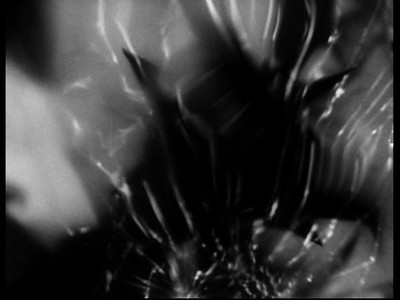
They aren't false kisses. I think Sheila really has affection for George. Everyone does, and it's genuine. They see George as a happy-go-lucky enigma. Lucky he is, happy not so much. Ever since he received his death sentence, George has found his fortunes have totally changed. He wins at the horse raises and poker, he's got more than one woman vying for his attention, he can predict the weather, and people are listening to him and offering him incredible opportunities. Of course, he can't take them, and that goes a long way toward why he isn't happy. Just about everything has started to remind him of death. Until he started to think this way, George never noticed how many mindless clichés referenced the big sleep. As if that weren't enough, Henry Cass regularly uses breaking glass--a window, a mirror--to transition from one scene to the next. It's a little too on the bull's-eye, both as a symbol of his emotional state and as foreshadowing, but it's effective nevertheless: life is fragile and can be shattered with a light touch just as effectively as with a meaty fist.


Cass and Priestly manage to balance the gravitas of George's predicament in Last Holiday with a light and breezy tone that makes this little fable of mortality peculiarly charming. The theme is that man should enjoy his time while he can because he never knows when it could run out, and even if it's too late, George still discovers what can happen when an individual stops accepting his meek and meager existence and reach for something more. With an actor as likable as Guinness, it's easy to believe that so many would take notice of him, and he's also able to give them all a piece of his mind without seeming like a beast or a know-it-all.

The best moments of the movie, especially in terms of acting, are not part of the comedy; rather, they are the handful of times when George can't maintain his brave face. There are multiple quiet scenes where one of those many reminders hit him, and Guinness sits and silently contemplates where he is going. They are subtle moments, and they pass almost imperceptibly, fitting too easily in with the rest of the narrative, which itself is handled with delicate hands. Well, for the most part. There is some broad societal comedy, particularly in relation to the elderly and the female, but that stuff is outweighed by the toned-down, more ordinary actions of the other characters as they bond. Likewise, the ordinary direction never insists itself and only ever enters with pleasant and polite gestures. It's hard to say if such simple workmanship is on purpose or if Henry Cass is merely a director who gets the job done too efficiently for his own good, but as far as Last Holiday is concerned, the level playing field he establishes is exactly what's needed. George remains the star of his own story, nothing else even tries to compete.


Well, that is, up until the ending. Given the nature of the picture, I never really expected Last Holiday to go the way I would have liked. My hope was that it would be a movie where a man, believing time is short, makes a positive impact on a new group of people and then nobly and happily goes to his deathbed content. My expectation was that the positive impact would occur, but that George would get some kind of reprieve, he'd find some way out of the disease.


What we get is neither of those things. Instead, Priestley and Cass have decided that there is not enough irony in George's turnaround, and so they have to take his newfound luck and twist it further. I'm not sure if it's the right ending for Last Holiday or its common man hero. I get that their goal is to show how quickly most people forget, and how as soon as he is absent, George's seize-the-day message is dropped, the rosebuds gathered having sprouted phantom thorns. (Further irony, the only two people who stand by George are the women, the maid and the crook's wife, who jealously coveted George for themselves.) I am just not convinced that's the conclusion Last Holiday needed. It's a good ending, and it basically succeeds at what the filmmakers want to do, but it takes George out of the action in a way that isn't really satisfying. Is it fair to George to give him the new life he thought he could never enjoy, and then pull the rug out? As gods of their invented worlds, writers and directors can be capricious and cruel--not unlike the stuffed shirts they seek to ridicule.

And perhaps that's the biggest irony of all.