Tuesday, December 11, 2007

NIGHT ON EARTH - #401


"Five Taxis. Five Cities. One Night."

The original tagline for Night on Earth is about as succinct and accurate as any description I can come up with. That's the basic premise for Jim Jarmusch's 1991 movie, and there have certainly been movies made that started with less. (Jarmusch's own Coffee & Cigarettes comes to mind.) Yet, rarely has anyone done more with so little.

Night on Earth, now released for the first time on DVD by the Criterion Collection, is kind of the movie equivalent of a short story collection. Five precise little nuggets of cinema, each standing on their own, but all reflecting the author's grace and style, all mining the same rich thematic vein. On a single night, at the exact same moment, five different travelers get into five different cabs. Jarmusch doesn't show off and create a rapid-fire montage of the passengers hailing their drivers, but instead keeps the divisions clear. The only connectors are shots of a wall full of clocks, each labeled for their corresponding city, and between each story their hands move backward to the same starting point, creating a context of time and place.

In Los Angeles, a high-powered casting agent (Gena Rowlands) in the midst of a talent search is driven home from the airport by a spunky girl (Winona Ryder) with her teeth firmly planted in the drumstick of life. Across the country in New York, in the dwindling hours of a night out, a speed-talking native of the city named YoYo (Giancarlo Esposito) meets a German ex-pat (Armin Mueller-Stahl) on his first night as a hack, and the passenger soon has to become the driver. Jumping over the ocean, 4:30 in the morning, an African immigrant (Isaach de Bankolé) with a chip on his shoulder picks up a more than capable blind woman (Beatrice Dalle) who knocks that chip right off. In the same time zone, a blabbermouth driver, played hilariously by Roberto Benigni, gives a ride to a priest (Paolo Bonacelli) and talks him to death with bawdy confessions. Finally, just as the sun is nearing its return, a taxi man in Helsinki (Matti Pellonpää) ferries three drunks back home. They think they have the biggest sob story in the world, but their driver quickly trumps them.

Sun comes up, the world still turns.


It's trendy right now to tell interconnected stories where every action on one side of the globe has an equal and alternately negative or positive reaction on the other side. Movies like Babel and television shows like Heroes and John from Cincinnati vainly struggle to show us that all of life is linked in some way. Jim Jarmusch doesn't spend any time chasing butterflies to see if their flapping wings will cause a hurricane. Rather, with Night on Earth, he connects his characters by showing how different they are. In his world, we all take cabs to get where we are going, but there is nothing more to it than that. Yes, there is a shared human experience, but we are still all unique and individual personalities. Viva la difference!

And Night on Earth works so well just for that reason. Jarmusch has always had an eye for the quirky traits that make the average citizens much more interesting than any Hollywood focus group construct. Every character in each of his stories (I hesitate to call them vignettes) is vividly drawn, full of personality and utterly believable. Even Benigni's outlandish routine, despite being played as a gag, is so alive that it never gives one pause. He's so utterly in the moment, why would you ever doubt? Likewise, the rapport between Gena Rowlands and Winona Ryder is instant and electric, whereas Mueller-Stahl shows that the old adage about acting being reacting is entirely true, letting Esposito run with the scene and bouncing off his fellow performer's manic energy.

Structurally, Jarmusch knows exactly what he is doing with Night on Earth. He picks the mood for each segment to fit a very clever arrangement that slowly increases the comic levels, placing Benigni's near orgasmic release in the queue just ahead of the Finnish comedown. When you think about it, the script actually mirrors the natural swings of being out all night: the tentative warm-up leading into a good time, the crankiness when it gets late followed by the second wind, and the eventual return to home and normalcy. Put a Tom Waits song on either side, and you've got the kind of monumental all-nighter you're still going to be telling your buddies about years later.

Jarmusch has one up on us in that he is able to put his Night on Earth on film, making buddies out of all of us. Even if we're not all connected out in the real world, when a good storyteller takes over the cinema, we are all one passenger in his gilded yellow cab.


Originally written September 2, 2007. For technical specs and special features, read the full article at DVD Talk.

Monday, December 10, 2007

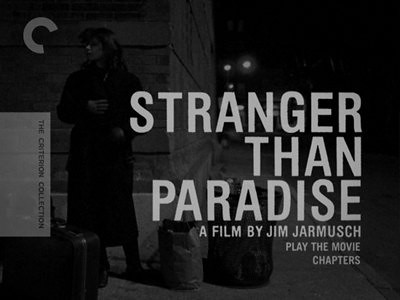
STRANGER THAN PARADISE - #400


Though I hate when reviewers trot out the old cliché "people either love it or they hate it" in order to describe a film, I can't avoid a variation on that to talk about Jim Jarmusch. I think you're either a Jarmusch guy or you're not. His films vibrate to their own particular pitch, and it's one you're either tuned to or you're going to be hopelessly perplexed by his laconic appeal.

Perhaps none are more perplexing to the non-Jarmusch folks than his second film, 1984's Stranger Than Paradise, which is being re-released by the Criterion Collection as a two-disc special edition. Shot in black-and-white on a shoestring, it's got all the watermarks of a Jarmusch production, the sort of career defining solidification of style that signals the emergence of a true auteur.

New York layabout Willie (John Lurie) receives a phone call from a distant aunt that tells him his Hungarian cousin, Eva (Eszter Balint), is flying in from Budapest annoyed by this sudden change of events, as a girl hanging around is going to disrupt his days of card playing, horse betting, and eating TV dinners. At first he is rude to her, and she is no less rude to him, but by the time her stay is over, they've warmed to one another.

Flash forward to a year later. Willie and his sweetly dumb partner Eddie (Richard Edson) hustle up some cash and decide to take a road trip. Still thinking about Eva, Willie suggests they swing down to Cleveland to see her. After a few malaise-laden days at the aunt's house, the three then drive down to Florida, where the tenuous connection they've built on ennui starts to break down. The undulating wave of happenstance and luck that they've been riding shakes them all off, even as it refills their pockets, in order to show them they've never truly connected. The trio of pals all careen off in different directions. The harder Willie tries to keep it together, even, the more wrong it goes. The conclusion of Stranger Than Paradise is bittersweet, but also right on.


Jim Jarmusch definitely studied at the feet of John Cassavetes. Both are poets of the normal, choosing to try to capture life as it plays out. Whereas Cassavetes was fascinated by people who were reaching their breaking points, however, Jarmusch is more concerned with people who are in the thick of the mundane details that make up most people's existences (as well as the odd details that could only come from New York). In his Paradise, it's the lack of anything to do that causes all of these details to push against his plaers, that dislodges them from their comfortable seat. The lack of any great catalyst provides the frustration. It's the drama of inner turmoil, lacking in violence or histrionics.

John Lurie is essentially the star of the picture, and it wouldn't be the only time he would collaborate with Jarmusch. Lurie is, in some ways, what Elaine Benes (you know, from Seinfeld) called a "hipster doofus." He dresses in a kind of jazz-age street style, but he seems blind to the fullness of what he borrows from, dissing Eva for listening to Screaming Jay Hawkins despite looking like he robbed a lounge lizard for his shoes (and even succumbs to Eva's spell via Jay's incantation). He embodies the nervous energy that is the battery giving life to Stranger Than Paradise, often shuffling back and forth on his feet, unable to sit down, and yet having nowhere to go. If Jarmusch is sending Willie and the others on a quest to find Paradise, the mean joke of it is that wherever these guys go, there they are (another cliché). Meaning, either their own personality quirks are the main sticking point barring them from passing through the Pearly Gates (they are, indeed, too strange) or that Paradise is wherever they find themselves. A sense of self and the willingness to be a part of a community is all they really need.

Tom DiCillo's chilly black-and-white photography not only captures the cool in the climate, but of Jarmusch's arch sense of being. Coolness is the ineffable ingredient to a Jim Jarmusch picture. There is a scene in Sofia Coppola's adaptation of Virgin Suicides where Josh Hartnett's character first steps through the high school doors, strutting to Heart's heavy guitar riffs, and everything slows down for him, the boys and the girls and time itself. That's the moment Jarmusch's films occupy from the first frame to the last. There is something out of time, something that stands apart, in everything he does. Stranger Than Paradise is the first full-blown expression of this, paving the way for all that is to come. More than two decades later, it still has the right kind of vibrations, still requires the viewer to be in tune with it rather than tuning in to the viewer's wavelength. It's art that's not afraid to be true to its nature, much like the Jarmusch heroes it portrays.


This two-disc edition of Stranger Than Paradise has the movie on the first disc with no extras. The second DVD, however, has many.

The main bonus is Jim Jarmusch's 1980 debut, Permanent Vacation, which was never widely available in the U.S. prior to this release. In it, Jarmusch brings his molasses pace to cinema verite, creating an episodic wandering through a surreal version of New York. Led by Charlie Parker-enthusiast Aloysius "Allie" Parker (the pompadoured Christopher Parker), we go from one strange character to another, each fighting his or her own private war with the demons within, manifesting without as the bombed-out rubble that these visionaries see as a sign of the conflict and a few (including Allie's girlfriend, Leila Gastil) see as just the normal state of decay.

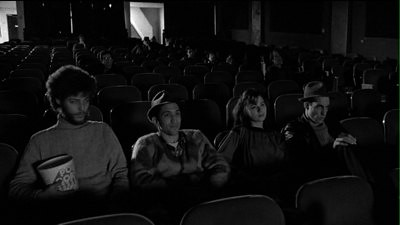
Allie states his intentions twice early on. First, in a bit of graffiti, he declares "Allie Total Blam Blam!" (How Godardian!) Second, in his framing voiceover he declares his love for the saxophonist Charlie Parker. This signals his desire to obliterate the image of himself that currently exists and his openness to improvisation, taking life as it comes. Allie also explains the world he moves through, saying that he only dreams when awake, coloring everything he sees. Other clues are dropped by the strangers he meets, pointing to change. When a man in a movie theatre (Frankie Faison) explains to him about the Doppler Effect, the scientific law that says sound changes based on our proximity to it, this is then acted out by the saxophone-playing John Lurie. Allie's mission requires movement, chance, and an alertness to what he is witnessing.

Permanent Vacation is fascinating as a bold experiment taken on by a young filmmaker, but it's a little slow, maybe a tad too loose. Still, it's essential to the understanding of Jarmusch's development as an artist and a solid companion for Stranger Than Paradise. The presentation is full frame, with a clear picture that has a slight graininess that is likely just the nature of the production.


Originally written September 1, 2007. For technical specs and more special features, read the full article at DVD Talk.

Friday, December 7, 2007

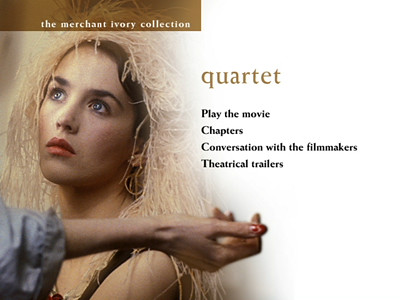
BLAST FROM MY OWN PAST: QUARTET - THE MERCHANT IVORY COLLECTION

From the now defunct "Can You Picture That?" column, March 16, 2004.


The filmmaking team of Merchant Ivory—director James Ivory, producer Ismail Merchant, and the less heralded but equally important screenwriter Ruth Prawer Jhabvala—is perhaps one of the longest running in film history, working together for over 30 years. In 2003, they began releasing many of their lesser known films on DVD, setting up a boutique label through the Criterion Collection. This March (2003) saw the fifth and sixth installments of the series, including Quartet (1981).

Paris of the 1920s is usually portrayed as a flashy, indulgent party, and though darkness is often glimpsed through the jazz and champagne bubbles, generally it’s a hiccup. One might be hungover in the morning, but drinks will be served again come evening. In Quartet, Merchant Ivory don’t necessarily suggest that this Paris is a lie, but they certainly set out to show that the buzz wasn’t a constant for everyone.

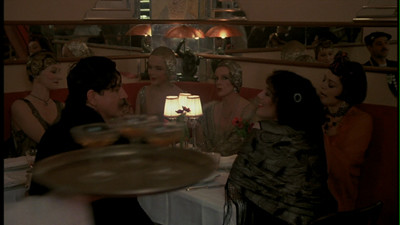
The titular love square involves two couples—Polish art dealer/con artist Stephan Zelli (Anthony Higgins), his English wife Marya (Isabelle Adjani), and the elder British couple, H.J. and Lois Heidler (Alan Bates and Maggie Smith). When Stephan is pinched by the cops and sentenced to a year in prison for trafficking in French artifacts, the Heidlers open up their home to lovely Marya. The pretense is that they want to help the poor girl, and perhaps Lois can paint the beautiful creature; the reality is that Heidler has a strange appetite for girls in trouble, and his wife indulges him, most likely in the hope that it will all end badly and he’ll come running back to her. Marya is unaware of this, and is sucked into a deviant world where romance can only survive when distorted. As Miss Nicholson (Bernice Stegers), a single aristocratic woman, tells her in an attempt to save her, married couples will do the strangest things to keep their relationship afloat, and it’s best not to become a part of it.

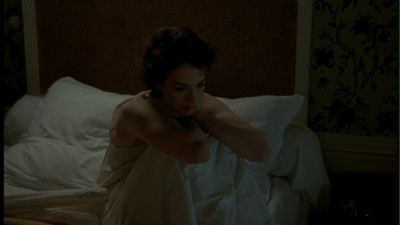
Adjani is a porcelain beauty, and her radiance makes the fact that just about every character in this film is obsessed with her believable. She plays Marya as a fragile butterfly without the wit or the talent to carry herself through this world. The Heidlers work a devious game on her, breaking down her self-esteem and better judgment to get from her what they want. By the film’s end, Marya can’t tell if she is coming or going, and the viewer isn’t quite sure who she loves any longer—her self-centered husband or the heavy-breathing Heidler (probably neither).


Perhaps the most remarkable thing about James Ivory’s direction is how unremarkable it is. He never relies on complicated camera movement or visual tricks. His shots are set up and held steady, resolved to see the scene through with the basics of life—not unlike his characters. In Quartet, his fanciest move is his use of mirrors. Maggie Smith looks in them often (even on the DVD cover), usually when Lois Heidler is either fretting over someone else’s misfortune or lending advice to Marya. It’s a clever device, playing up the vanity of Heidler. She isn’t really concerned about these other people, everything is about her. Her life is built upon the drama of her circle of friends (and enemies). Without the constant presence of strife, she has nothing. She indulges in it like an alcoholic, happy for the succor the plots bring, while also resenting her requiring them.

All in all, Quartet is a savage psychological dance. Each participant needs the others to make his or her moves, and ultimately end up spinning in a circle. The new DVD is perhaps the best looking of the Merchant Ivory series so far. Picture and sound are perfect. One sees every blush on Adjani’s cheeks, hears every one of Bates’s grunts. As on all the discs so far, a short interview with Ivory, Merchant, and screenwriter Jhabvala gives some insight into what went into the making of the picture. (Musical composer Richard Robbins is also featured.) Perhaps the most interesting revelation of all is that Jhabvala was against the idea of adapting the Jean Rhys novel, thinking it was too dark to be a good film. It’s a testament to her skill that she proved herself wrong, and proceeded to wring it for every nasty cent it had.


Thursday, December 6, 2007

49TH PARALLEL - #376


In the early 1940s, everyone was expected to pitch in for the war effort, and that included film actors and behind-the-scenes personnel. No longer could entertainment simply be a diversion, but the best creative minds put their talents toward rousing the populace for the mission at hand.

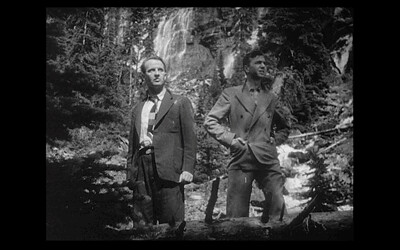
49th Parallel was released in 1941 to show the moviegoing public that the war was something that could touch people from all walks of life. The title refers to the border between the United States and Canada, which the voiceover claims is the last border in the world that doesn't require the line to be defended. That is, until a German U-boat gets sunk in Canadian waters while a search party of six Nazi soldiers is looking for fuel and supplies on land. Stranded in a country hostile to their point of view, these soldiers must find a way to get out of North America and back to the Motherland.

Twice before their collaboration on 49th Parallel, Emeric Pressburger had written scripts that Michael Powell directed. It would be with this and their next wartime effort, One of Our Aircraft is Missing, that the pair would solidify their partnership as the Archers, writing, directing, and producing some of Britain's best films together. Aircraft actually has a similar central plot to 49th Parallel, though in that film British troops shot down in Europe would have to work their way out of enemy territory to rejoin the fight of the righteous. The Archers were hoping to inspire their audience to root for our side, while in 49th Parallel, they were encouraging us to root against the others.

As the renegade Nazis trek across Canada, they will succumb one by one under the nationalism of the Canadian citizenry. Pushed on by the ruthless and cold Lieutenant Hirth (Eric Portman, an Archers regular appearing in both Aircraft and A Canterbury Tale), the Germans are taken down by bullets, swayed by the wholesomeness of a quiet life, and betrayed by their own inability to maintain their stoic goose-stepping. From one town to the other, they encounter religion, native pride, culture, and the promise of democracy--all things Hitler encourages them to stamp out, and all things that are too strong to bow under heel. The final blow is struck in the name of good, old-fashioned North America spirit, with Raymond Massey delivering the knock-out punch. The year before, the Canadian-born Massey had played Abraham Lincoln in Abe Lincoln in Illinois. You can't get more American than that.

49th Parallel is propaganda of the first order, and no one will mistake it for a sophisticated war-time thriller. It's not that the movie isn't well done. On the contrary, the story is expertly structured and the journey of the Nazi sailors compelling. The Archers even give the Germans some sympathetic elements, most obviously in Vogel (Niall MacGinness, Powell's The Edge of the World), whose dormant Christian tendencies get the better of him. Funnily enough, it's this element that is oddly lopsided, with the Nazis being more complex than the patriotic Canadians they encounter. It's hard to forget the misdeeds of the bad guys, such as pounding a man with a rifle when he's already been knocked down and shooting unarmed citizens in the back, but for some reason, Pressburger avoided making them sinister through and through.

So, the real propaganda comes through in how the common Canadian folk are unbending in their opposition to the foreign invaders and how the travels of the Nazis fomented the hatred amongst those they wished to rally and conquer, supporting the movie's central message that no one could assume they were out of range to be affected by the war. The underlying message seems to be that the Allies of 49th Parallel have the indomitable will and that the Axis army was populated with men who didn't have the courage of their convictions and were prone to bend. Lending a hand to show what the good guys were made of were top actors Laurence Olivier (here playing a French Canadian with a somewhat amusing accent), Anton Walbrook (The Red Shoes), Glynis Johns (The Sundowners), and Leslie Howard (Of Human Bondage) as an intellectual who Lt. Hirth accuses of cowardice and who naturally proves the Nazi wrong. (Another famous name in the credits: David Lean was the editor of 49th Parallel.) When the film is at its most rah-rah, it can come off as a little stiff now that over sixty years have passed, but with the right historical perspective, it's easy to see past where the participants were excessively encumbered by their good intentions.

And, of course, there are certainly plenty of other wartime cinematic efforts that have aged far more poorly than 49th Parallel. What this movie has going for it that the others don't are the burgeoning talents of two master storytellers who were finally gravitating toward each other's orbits. Their natural way with the fabric of film was already in evidence, and it's what keeps 49th Parallel crackling even after its necessity has long passed.


A two-DVD set, 49th Parallel – Criterion Collection has a main disc for the movie and a second disc for the supplements.

In addition to the film, DVD 1 has the original theatrical trailer and a commentary by historian Bruce Eder, a regular Criterion contributor. Recorded in 1990 for the old laser disc edition, it's Eder's usual mix of historical evidence, anecdotes, and critical analysis. For 49th Parallel, the best elements end up being the revelations of what is true and what is false in the film, where facts are exaggerated in order to try to make the Axis think the Allies were stronger than they were and where the story takes accurate turns. It's also strange to hear how the U.S. version, retitled The Invaders, defanged the Nazis by removing any racial rhetoric. Given the movie's message that the hand of war could grasp you regardless of who you were or where you were, the fact that Americans decided to remove some of the bile almost seems to confirm that the expression of that idea was necessary.

DVD 2 leads off with The Volunteer, a 46-minute propaganda short made by the Archers and starring Ralph Richardson (The Fallen Idol) as himself. The actor tracks the military blossoming of an eager but incompetent dresser he worked with on a production of Othello just prior to both men entering the services. The film has its charms, but it's largely worth watching for Richardson, who is always good. Olivier also makes a brief cameo. The main selling point at the time was probably the footage of various planes and aircraft carriers, an extended collection of which sits in the center of the program.


Originally written February 20, 2007. For technical specs and more special features, read the full article at DVD Talk.

Wednesday, December 5, 2007

THE DOCUMENTARIES OF LOUIS MALLE - ECLIPSE SERIES 2


The best storytellers are the ones with a keen eye for human nature. Writers and filmmakers who deal in fiction usually fashion their most enduring tales out of smartly observed behavior, achieving a universality by using the realities of everyday life as their building blocks. Thus, it can often be interesting to see such creative minds turn their talents toward more journalistic pursuits.

The second entry in Criterion's Eclipse Series gathers together the best nonfiction efforts of one of film's most celebrated students of human behavior. The Documentaries of Louis Malle features seven movies on six DVDs. Malle is probably best known for his narrative efforts, including the memoir Au revoir les enfants and controversial sexual dramas Pretty Baby and Damage. He also enjoyed a second career as a documentary filmmaker, including the acclaimed crossover of his two passions, the surprising ode to the art of conversation, My Dinner With Andre. By putting Wallace Shawn and Andre Gregory together at a dinner table and filming them as they talked, Malle showed that a movie built on two people being themselves could have just as intense a character arc as the cast of a densely plotted fiction. The Documentaries of Louis Malle box set takes that same basic thesis and gives it a full and extended workout.
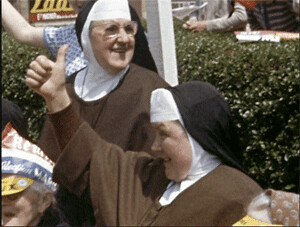


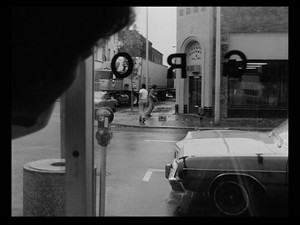
The lead disc in the collection has three of Malle's most down-to-earth films about modern life. It starts with 1962's Vive Le Tour, a 19-minute précis on the Tour de France. The director's approach anticipates Kon Ichikawa's redefining of the sports film, Tokyo Olympiad, by three years, looking at all the things that go on around the sports event rather than sticking to the basic outline of the race itself. Malle's impish eye is far more interested in the crowds that line the cycling route, the motorcycles that follow the competitors, and the stragglers at the back of the pack than he is the champions who lead it. His humorous narration underscores his irreverent visual style, settling on the cyclists' booze raids with a gleeful wink before shifting his scornful gaze to the racers who drop out of competition because of their reliance on performance enhancing drugs. It's by shuffling up these disparate elements that Malle creates a completely new portrait. Like a tarot reader, he's trying to finds the links between each piece and map out the greater territory of life.

This same impish quality is what allows Malle to make a 72-minute portrait of an automotive factory and call it Humain, Trop Humain (Human, All Too Human (1973)). The majority of the movie takes place inside the construction plant, silently moving from one-spot on the assembly line to another, lingering long enough for the pattern of repetition to register before cutting to the next. At each post, he doesn't just look at the action being performed, but at the face and hands of the person performing it, as well. You'd think this would get boring after a while, but it remains strangely mesmerizing. Each job has its own rhythm and each rhythm is represented not just by movement, but its own unique noise. The visual and the aural work together to create a kind of industrial symphony. Malle only leaves the factory once. About twelve minutes into the film, he cuts over to an auto show where the car manufacturers shill their product to a rabid public. This is the only sequence with any audible dialogue, as the sellers and the buyers make fast work of verbally taking apart what the army of workers has put so much effort into putting together. Malle imposes no narration on his imagery, letting the footage speak for itself. The only commentary he makes is in the title, and once he places the scenes of consumerism in with the scenes of production, a meaning emerges. This auto factory is the human endeavor in microcosm: what the everyday people come together to create, the money people come together to either devalue or profit from. Amazingly, Malle avoids any such exploitation himself. By standing away from it, he shrewdly lets his camera spin its own ballad of the working class.

Repetition and the everyday also come into play in the final film on DVD 1. 1974's Place de la République (95 minutes) is brilliantly simple in concept. Malle and his crew spend ten days on the same neighborhood block, openly filming and interviewing the people who live in and pass through the area. Some of the subjects, like the wig seller and the newspaper vendor, repeat from day to day, most are just one-off interviews. Malle is equally comfortable joking with a woman who fancies herself an actress or drolly questioning another lady handing out religious tracts. His bread and butter, though, are the people who respond to the microphone by talking freely about their lives. The best are usually the ones who refuse at first, but yet let themselves be seduced by the cinematic trappings, denying their desire to be involved all the way. Every person has a story, every person can be fascinating, it just takes a man like Malle to get them to open up. In doing so, he finds that no matter how diverse we are, life is a shared experience. Most people face the same problems, feel the same joy, we're just too busy being ourselves to see it.
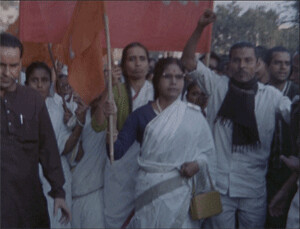


Though the first three films are all about France, Malle's homeland, the director's interests are more international. In 1969, he turned his attentions to India, shooting the six-part television epic Phantom India (discs 2 & 3; 365 minutes) and the stand-alone film Calcutta (disc 4; 99 minutes).

There are seven episodes of Phantom India, and Malle states his intention from the get-go. By then current figures, only 2% of the population spoke English despite it being the country's "official" language. As this 2% were normally the ones who spoke to foreign cameras, the majority of India was left unrepresented. Taking his camera on the road with no greater thesis than to film what he saw, Malle hoped India would teach him about itself. In his narration, he explains how he and his crew encountered different scenes, and he wrestles with his own preconceptions, challenging himself to look past Western symbology and try to see the events at face value. This isn't so easy to pull off, as he will always be an outsider. The camera will always be between him and the people he is observing. Early on, he points out how the culture is not yet inoculated to the presence of a film crew. Some people run from the camera, believing it will steal their souls; most of them engage the lens in a staring contest. Who will blink first?

Through the many shows, Malle tries to unravel the caste system, and he shows us weddings, festivals, work sites, institutions, art, nature, and even other Europeans trying to be a part of the culture. Overheard conversations are not translated for us, maintaining the same barriers our filmic host encounters. (When people speak in English, Malle translates their words into French, leaving his English-speaking viewers to read the subtitles of the same lines translated back into our language.) Some of the segments have themes (episode 3 is religion and spirituality, 5 is the caste system), and others use footage from a central location (Madras in episode 2, Bombay in 7) to build a more organic whole, moving from topic to topic via a loose structure. It's in those that he tries to find the particular rhythm of the region. Not every assessment he makes of the country is positive. Rather, Malle sees India as a land of contradictions, where every story has two or even three sides, and he tries to find a way to see them all. The result is as engrossing of an extended snapshot of a country as you're likely to get, managing to examine the observed and the observer in equal measure, what we look at being just as important as how we look at it.

Culled from the same pool of footage, Calcutta was put together as a theatrical release when Malle realized the city had enough of its own story to warrant a stand-alone feature. Also, as he presents it, Calcutta stands apart from the rest of India, an anomaly created by the British colonialists as a base of operations that had become culturally and economically lost when independence came. The economic divide is staggering, as wealthy Indians and remaining Brits watch horse racing in the shadow of a palace-like monument to Queen Victoria, while nearby, people are living in shantytowns. Here, the director is definitely making a judgment call, juxtaposing images for effect, and focusing on the particulars of societal neglect. This is forgivable, as it would be almost criminal for him not to say anything about it. At the time Malle is in the city, the competing Communist parties had just been unseated through political maneuvering, going against the popular vote and further disenfranchising the people. To counter the protests, Parliament made it against the law for more than five people to assemble at one time. It's somewhat ironic, given how densely populated Calcutta is. From the looks of the street scenes, it would have been hard to step out of your house and not be part of an assembly larger than five people.

Even so, immigrants still pour into the city, particularly from Pakistan. This despite there being far too many new people for the town to employ (a problem that will come up again nearly twenty years later in one of Malle's American documentaries). It's amidst this turmoil that Malle seeks out life, looking for how it carries on despite the crushing weight of Calcutta's problems. He manages to capture the full scope of it, showing us both a Hindu funeral and a wedding. The two events are equally colorful and ostentatious, and both signify new beginnings. In what Malle sees as a country full of paradoxes, Calcutta perhaps personifies India's most pronounced contradiction. Even as the skies grow darker and darker, they are always expecting the sun to return.

Then again, maybe that's not a contradiction at all. Maybe that's just the human spirit at work. It's something that all of Louis Malle's documentaries search for, regardless of where he is geographically.



Once Louis Malle moved to America, it was probably only a matter of time before he turned his camera on his new home. In this day and age, pundits would probably have a hard time believing that a French filmmaker could make a documentary about the American Midwest that is completely absent of snark, but in his double-shot of the heartland, Malle applies the same non-judgmental techniques to our citizenry as he did everywhere else. When it comes down to it, it's probably less likely for a non-native to examine the "common folk" of the U.S. with disdain than it would be for most of our homegrown directors. In fact, it's probably Malle's immigrant status that makes him so interested in the ethnic background of the residents of the mainly German Minnesota town he explores in his 1985 PBS feature, God's Country (89 minutes). Malle begins his journey in 1979 by seeking out the local color of special events like proms and area fairs, but the people he meets on his travels make him just as interested in the simplicity of their day-to-day concerns. In Glencoe, improper lawn care is a more worrisome crime than the prospect of muggings. Malle immerses himself in the populace, seeking out its variety and showing people with differing points of view, quietly busting preconceived notions about people in the Midwest all being the same. Though some opinions about race and views of religion are less than progressive, they also aren't the only ideas expressed, and no one is vilified in Malle's editing room. (Talking to different gender representatives of the single life is quite illuminating, actually, given how lassez faire both sides are, and also how far apart they are at the same time.)

One thing that emerges in God's Country is a sense of continuity. Perhaps that's why the ethnic make-up of pieces of Glencoe ends up being important. The businesses and the families in the town have deep roots in the community, and their way of life is directly connected to the land they live on. Malle also discovers that traditional farming is not the only thing that pays the bills anymore. Many of the residents double-up on work, being employed in the local bank, for instance, as well as taking care of livestock. There is also some continuity to the previous films. The assembly line of a slaughterhouse is just as fascinating to Malle as the autoplant of Humain, Trop Humain. It's also cause for Malle to ponder what is happening to such community-driven endeavors in our modern world. Banks and business concerns are picking apart the American farmer just as French car buyers picked apart the fruit of the autoworkers' labor.

When the director returns to Glencoe six years later, in 1985, he finds some of that continuity intact. Some of the people have kept going full-steam ahead, and many of the places look just the same. Others have moved on, grown, and moved with the flow of life. Yet, they move with the same genial attitude. Of course, things staying the same means bad news persists, too, and the farmers still face the same economic problems, an issue that consistency doesn't benefit. It's here where change can't be fended off, and Malle has a lot of sympathy for the workers who are finding that their vocation is getting away from them--though, it's hard to stand with the Anti-Semitic business owner who predicts armed revolution a la George Washington. Thankfully, history shows he wasn't as prophetic as he thought. That all of these questions are ones that persist into the new century, however, is scary to think about.
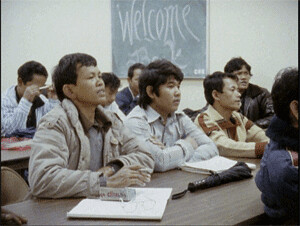


The questions Malle raises about immigration in his 1986 film ...And the Pursuit of Happiness (81 minutes) will also sound familiar for anyone keeping an eye on current events. A lot of what is said in this documentary is still being said today, including rhetoric about protecting our borders and the accusations of immigrants coming in and taking employment away from the country's legal citizens. (And, like in Calcutta, Malle finds that the influx of Mexicans into various border towns is causing them to take jobs from each other, a byproduct of the problem that I've never really heard discussed.)

As with his other films, Malle's journey is almost completely unplanned. He travels to all the corners of America to see what different representations of immigration he can find. His subjects come from every continent except Australia, and include people from all walks of life: clergy, entertainers, laborers, businessmen, homemakers. What fascinates Malle the most is what people will do to assimilate and how that effects their success in the country. An Indian family, for instance, accepts most aspects of American culture, but they still maintain their religious views. A Costa Rican astronaut is the first NASA crewmember to go into space that isn't native born, but he still maintains his dual citizenship and considers himself as having two homes. Really, just about everybody keeps one foot in their new country and another in their old one, be they Russian, Korean, Cuban, Greek, Ethiopian, or Vietnamese. It's not that they don't appreciate the opportunities America affords them, but they see part of the American dream as being able to pursue their livelihood while still being who they are. Where else but America, for instance, could over 100 cab drivers from many different countries form a company together where they each own an equal stake in the business?

As with all of the stories in this set, however, it's not all roses. Beyond the questions of work and the legality of their immigration status, each immigrant must deal with the culture shock of his or her new home and how it not only affects them, but the generations of children who are now being born here that have no memory of where their families come from. Like always, Malle shows the many sides of his topic. While an El Salvadoran family fleeing political persecution that left their patriarch crippled runs afoul of the U.S. legal system, a Vietnamese doctor is completely accepted and thrives in an all-white community in the Midwest. Malle's main fascination is with the humanity that connects all of us more than he is interested in driving home a point or suggesting solutions. Regardless of where he sets up his camera, be it in France, India, or the U.S.A., Malle is just filming people. The fact that the same problems pop up again and again in all of these movies isn't clever manipulation on the filmmaker's part. Rather, he's just tracing the thread that stitches us all together.

This love of the great communal experience is what separates Louis Malle from the current crop of post-Michael Moore documentarians. While the director's own political views aren't that difficult to divine from the seven movies in The Documentaries of Louis Malle, his personal feelings never supercede the purity of the presentation. From film to film, across multiple continents and decades, the only thing that constantly emerges about Malle is that his thirst for knowledge and understanding was never quenched. He always kept searching and was always open to the story being told to him rather than being the one to tell it. It's a remarkable achievement, a grand artistic restraint for someone who is often more heralded for the personality he brought to fictional motion pictures. Frankly, we could use another voice like his in the cinematic dialogue--a voice that's willing to shut up and let other people do the talking.
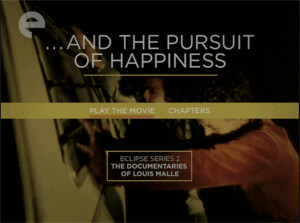


The Documentaries of Louis Malle – Eclipse Series 2 brings together an incredible run of movies that show the famous director traveling the world, letting his camera lead him and the people he met dictate the stories he would tell. Whether he was following bicyclists over the mountains of France, watching Hindu rituals in India, or talking to struggling farmers in rural America, Malle always leant his subject a sympathetic ear and viewed them with both eyes open. His style only gets more assured over these seven films, and there's not a stinker in the bunch. For the second in their new subdivision, Criterion nails it again.

Originally written April 30, 2007. For technical specs and special features, read the full article at DVD Talk.

Tuesday, December 4, 2007

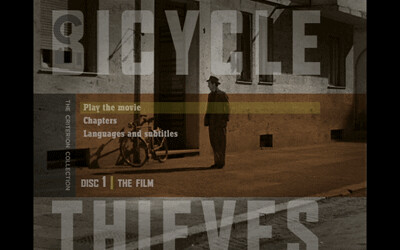
BICYCLE THIEVES - #374


Vittorio De Sica's Bicycle Thieves (Ladri di biciclette) is one of those movies that I think more people have heard about than have necessarily seen it. More commonly known as The Bicycle Thief (the title of this Criterion edition is the accurate translation of the original), this 1948 Italian film is the most well-known entry in the Neorealist movement. De Sica and the other post-War directors in Italy were striving for a cinema that mattered, that used the common language of real life to say something about contemporary experience. Shot on the streets of Rome, it's not flashy or overly histrionic. Rather, its economy of style makes way for a complex morality play that illustrates what can happen to a man when he's pushed against the wall for too long.

I think I first caught Bicycle Thieves on PBS sometime in the early 1990s. The Player had already come out, and I knew it was the film that brings the Tim Robbins character's own moral quandary into stark relief. Its placement in that story was also a reminder to the hollow film executive that movies had a social power beyond the commercial trash his studio was prone to greenlight. The authentic feel of De Sica's vision plays in sharp contrast to Robert Altman's slick Hollywood thriller even as it indicts the same.

The story is simplicity itself. Antonio (Lamberto Maggiorani), a struggling family man, finally gets a job after a long dry spell. The only catch is he needs his bicycle in order to perform his duties, and in an O. Henry-style twist, he pawned the bike to feed his family. Thanks to some quick thinking and self-sacrifice on the part of his wife (Lianelle Carell), he is able to get the bike out of hock and report for duty. Only, in yet another cruel machination of fate, the bike is stolen from him while he works.

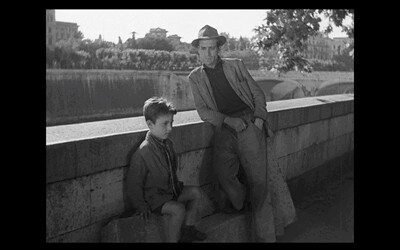
Having the next day off, Antonio goes out into Rome to look for the stolen property himself. He takes his son Bruno (Enzo Staiola) with him, because the young boy knows the bicycle like the back of his hand. As they search through the black market and pursue suspects into churches and bordellos, Bruno serves as a kind of Jiminy Cricket figure. His perplexed questioning of his father's actions spurs Antonio on through aggravation while also reminding him why it's so important that he keep his job. Finally, when it seems like there will be no justice for his family, Antonio must answer the age-old philosophical question: is it okay to steal a piece of bread when your family is starving?

Lamberto Maggiorani plays Antonio as a quiet, stoic man. There are many instances in Bicycle Thieves where you start to think he doesn't have the fortitude to see the given task through. When it comes to confronting other people, he really has to screw up his courage in order to not back down. De Sica uses the city as almost another character. Its wide open spaces feel desolate, and alternating images of poverty and opulence weigh on Antonio, never letting him forget the conundrum he is caught up in.

The climax of Bicycle Thieves is fraught with nervous tension and heartbreak. Once again, it's Bruno who is going to serve as the final commentator on the scene, his agony of seeing his father break being more painful than the break itself. Enzo Staiola is really quite good. For a first-time child actor, he seems just as comfortable with the emotional elements as he is joking around with his dad. Sometimes, you think the kid has more guts than the adult, but then Antonio gives him just the right look that says, "You really don't understand how the world works." By the end of the day, Bruno will understand, and Antonio's feelings of failure hurt all the more due to the realization that he can't protect his son from the onslaught of reality any more than he can the pangs of hunger. De Sica must have had some kind of magic touch to cultivate the chemistry of a father/son bond between the two; then again, he's got a knack for capturing the emotions that pass from person to person, because the chemistry between Antonio and his wife also comes across as effectively sincere.

Really, that's the true trick of Neorealism. Vittorio De Sica wasn't just trying to capture the reality of his surroundings, he was also drawing real human emotions out of his actors. It appears that the best route was just giving them a true-to-life scenario that doesn't flinch from the tough questions and letting the performers do their thing. It's the punch-to-the-gut of honest feelings that makes Bicycle Thieves so emotionally harrowing. The power of its conclusion hasn't dimmed at all in nearly sixty years, and the film is likely still going to be relevant in sixty more.


Originally written February 17, 2007. For technical specs and special features, read the full article at DVD Talk.

Monday, December 3, 2007

MALA NOCHE - #407


Living in Portland, Oregon, everyone has a Gus Van Sant story. Mine is pretty mundane. I saw him once at a New Year's Day hangover party. He was standing off to the side with some friends, quiet. I never spoke to him or got introduced to him, a fact my host lamented when it came up later. No big deal. This is Portland. I'm sure I'll have the chance again.

Van Sant has made his home in Portland for many years, and quite a few of his movies are not just love letters to the city, but snapshots of periods of time, a preservation of the streets we all walk. Just as much as we have Gus Van Sant stories, we can point out what was once the pharmacy robbed in Drugstore Cowboy and street corners the hustlers prowled in My Own Private Idaho. We're also good at giving tours showing the street names that Matt Groening lifted for Simpsons characters. That's just how we do.

Mala Noche, Van Sant's first movie, started this trend. Dating back to 1985 (though first shown in 1987), it's a little harder to spot familiar landmarks since a lot of them are now gone, but I'm pretty sure I used to live a couple of blocks from the car dealership that Walt (Tim Streeter) first propositions Johnny (Doug Cooeyate) outside of. If I'm right, they sell Jaguars now; if I'm wrong, we'll still say I'm right and categorize it as the personal appropriation of local lore.

In addition to being a snapshot of mid-'80s Portland, Mala Noche is also an important freeze frame of an intersection of queer and independent cinema. Post-Jim Jarmusch, pre-Todd Haynes, it's the kind of landmark that changes what is possible, that gives new filmmakers permission to go further out on a limb. In style, it owes a little bit to Jarmusch (specifically Stranger Than Paradise), but Haynes probably took a little bit from Mala Noche when it came time to make Poison. The lineage is complete.

Up until now, though, Mala Noche (which translates as "Bad Night") has not been available on home video, much less DVD. A video store I used to work at had a couple of ancient VHS copies that they believed Van Sant made himself, but I never stepped down to watch it in that format, because surely such an important and distinctive film was going to get put out on DVD by somebody. Thanks to the folks at the Criterion Collection, someone now has.

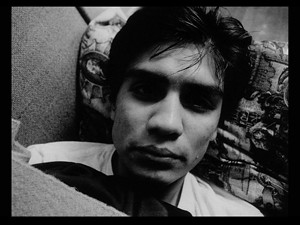
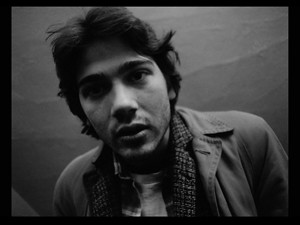
So, how does the Mala Noche - Criterion Collection hold up? Pretty good as it turns out. Based on an autobiographical story by maverick writer Walt Curtis, the film follows the struggling author on his quest to connect with Johnny, the pretty illegal alien who rode a train to Puddletown from Mexico and who is far cagier than his silence would suggest. Johnny keeps Walt at arm's length, even when money is offered, sticking around for the things he can get from the desperate store clerk and playing at street games that skirt the edges of danger. The closest that Walt ever gets to sleeping with Johnny is Robert, a.k.a. Pepper (Ray Monge), the even quieter sidekick. Over the course of a couple of weeks, the boys move in and out of Walt's life, twist him in knots, and also get more trouble than they bargained for.


Van Sant and cameraman John Campbell, who also lensed Idaho and Even Cowgirls Get the Blues, shot the movie in jittery black-and-white. Though the choice may have been more budgetary than stylistic, they keep everything cramped, emphasizing the intimacy as well as the trapped feeling that a life on the streets can bring. They relish in details, chopping close-ups into scenes, showing the constant flow of commerce, both monetary and personal (the sex scenes are shot the same way). The whole movie is edited with the twitchy rhythm that evokes life in the city, following the cadence of Curtis' Beat-inspired writing, which is preserved in voiceover by Streeter. It's a tricky mish-mash of not much happening and seeming like the activity never stops. There is always something to do, it's just that something may end up being a whole lot of nothing.

Mala Noche isn't a perfect film. The Walt character is a little hard to like, always on the make, though eventually it stops feeling like he's taking advantage of the young boys and it's clear they are really controlling him. That tightrope that Van Sant walks in trying to show urban ennui also ends up making the film seem choppy. The narrative's internal sense of time is confused, and some of the heavier scenes don't come across with the full weight they demand, resulting in Mala Noche ultimately feeling a tad inconsequential.

Still, Van Sant's visual style is already emerging, and his freewheeling tone is probably at its freshest thanks to the first-time director's naïveté. As with so many watershed moments in art, it's what follows the barrier being broken down that is usually the more enduring material, but that doesn't devalue the pioneers. If nothing else, Mala Noche captures the feeling of a particular time out on the fringes, both for queer males and for filmmakers trying to smash the system. It's got that fire of youthful rebellion, and regardless of how far from Van Sant's starting point we travel, that first spark will always be there.


Originally written October 9, 2007. For technical specs and special features, read the full article at DVD Talk.