Sunday, May 3, 2009

THE CURIOUS CASE OF BENJAMIN BUTTON - #476


There was no movie in 2008 that I anticipated more than The Curious Case of Benjamin Button. A long gestating project, it had several formidable building blocks that really hit the right spot for me. By the time it came along, I risked drowning in my own excitement, though at least I was able to see it ahead of some of the hype. One perk of reviewing movies is that you get to see them a little earlier, often before the promotion reaches critical mass and threatens to swallow the movie whole. Had I had to wait a few more days, maybe the scales would have tipped; maybe the chatter would have combined with my already epic wishes, and the image I had of the final result would have been insurmountable, regardless of the quality of the movie.

Luckily, that did not happen, and I was as pleased by Benjamin Button as I could ever have hoped to be. At the time, I reviewed it for DVD Talk, and though I gushed, I felt the movie inspired me to write a pretty good piece detailing how the movie spoke to me, how it appealed to the F. Scott Fitzgerald fanboy inside of me. This was written the night of the screening, before it would become hip to dislike Benjamin Button, and the review would become one of my most read pieces (currently #2 in terms of my personal hits on DVD Talk). When I voted in Film Comment's readers poll (I have long since sworn off a critic's top 10 of my own; too many fleas on that dog already), I put it at the top of the list with Wall*E close behind.


Often, if I review something theatrically and then revisit it on DVD, I will write a fresh review from scratch, giving my second-time-around impressions, without going back to the original review. On rare occasions, when I feel my initial reactions are as good as anything I could say a second time, I stick to the first piece. Which isn't to say I didn't take anything more out of the repeat viewing, just that my thoughts were crystal enough or my prose good enough that I am not yet ready to get around to the other side. This time, I will combine a little of both, and I will begin by reprinting my original piece on The Curious Case of Benjamin Button before sharing further ruminations immediately after:

* * * *


F. Scott Fitzgerald is my favorite author. His prose has a wonderful lyricism that shows a real knack for capturing the beauty in the simplest of moments. The way he composes a line can delight in its construction while breaking your heart with its vocabulary. His stories have an outer glitz that serves as a mask to the dark romanticism behind it. He always showed his readers the diamond first, and then the price it cost a man's soul second.

I don't think I've ever seen a film adaptation of Fitzgerald's that has captured that ephemeral quality of his prose--that is, not until I had seen The Curious Case of Benjamin Button. Ironically, the film that pulled off this feat is the one that has the least to do with the actual source material. Outside of the title and the basic concept of a man born old and aging backwards, ending his life as a baby, the film of Benjamin Button takes virtually nothing from Fitzgerald's short story. It does, however, draw on the author's complete works in theme and tone, tackling notions of doomed romance, reinvention, and indulging in the full flavor of life. Hell, even the scenes of drunkenness feel like they could be pulled from any number of Fitzgerald's jazz age stories--or even from his biography.
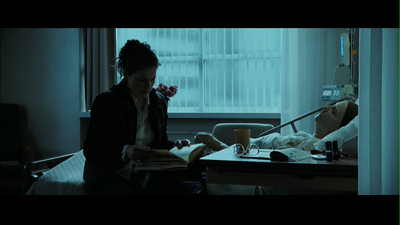
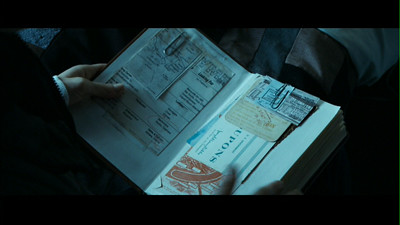


The Curious Case of Benjamin Button was adapted by writer Eric Roth (The Good Shepherd, Munich) and directed by David Fincher (Zodiac, Fight Club), one of our very best contemporary American directors. The filmmakers decide to set the "present" of the story within recent history. As Hurricane Katrina closes in on New Orleans, one of its oldest residents, a dying woman by the name of Daisy (Cate Blanchett), lays in her hospital bed, attended by her daughter (Julia Ormond), who reads to her mother from the diary of a long lost friend named Benjamin Button (Brad Pitt).

Benjamin's story encompasses the whole of the 20th century. Born on the day World War I ended, we watch Benjamin travel through the Depression, WWII, and even Beatlemania and the 1980s. This is no Forrest Gump journey, however, Fincher doesn't place his character in obvious historical and pop cultural moments; Benjamin's life is one lived out of the public eye, as befits a man who is steadily growing younger by the year. Abandoned by his father, raised under the monument of a train station clock that runs backward (an excellent side story, and a Fitzgeraldian metaphor if ever there was one), Benjamin spends his early years under the care of Queenie (Taraji P. Henson), the caretaker at an old folks' home, before getting young enough to strike out on his own. Booking passage as a worker on a tugboat, Benjamin sets off to see the world, meeting interesting characters wherever he goes, and nursing the love he holds in his heart.
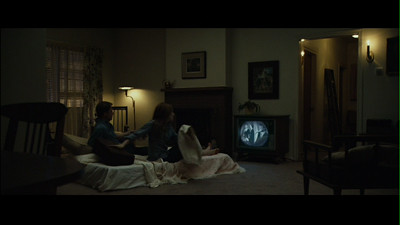


Despite technically being the same age, when Benjamin and Daisy first meet, he is an old man and she is a little girl. Through the years, as their respective ages travel toward a common middle, the pair goes through many reunions, false starts, and misunderstandings before Benjamin finally becomes the man he wants to be and the lovers join at last. Anyone who has read The Great Gatsby will recognize the similarity between this trek and that of the tragic title character from the novel. In fact, the name Daisy--which was not the name of the entirely different romantic interest in the "Benjamin Button" short story--is a nod to Daisy Buchanan, the unattainable object that Jay Gatsby seeks to acquire.
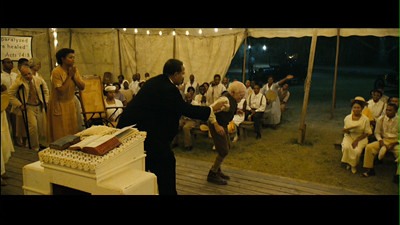


Apparently The Curious Case of Benjamin Button has been in development for nearly fifteen years. (Turns out we were spared a Ron Howard version starring John Travolta; thank God!) I imagine one of the biggest challenges was how to deal with the aging factor. Not only do we need to see old man Benjamin with a wrinkled body proportional in size to a newborn and a young child, but we also have to see him at the various ages of a full-grown man. Likewise, we have to see Daisy getting older while he gets younger. Brad Pitt and Cate Blanchett are required to play both above and below their respective ages, and with the help of make-up and what I assume are some imperceptible digital effects, David Fincher has pulled it off remarkably. Though it's hard to pin them down in the ill-defined years of their 30s and 40s, when the two actors should look most like themselves, the transformation is still rather seamless. Credit is also due to both of the actors, who don't let the make-up do all the work, but who expertly walk in the shoes of different eras while maintaining the core of who they are.

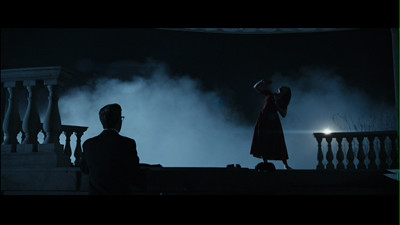
It's not the only visual feat that Fincher pulls off, either. From recreating Depression-era New Orleans to the oceanic battles of World War II and 1950s Paris, the director paints across the screen like a vast canvas. A sunset witnessed by Benjamin and his ailing father (Jason Flemyng) is a gorgeous portrait of light and shadow, of water vs. sky. Equally stunning are images of burning battleships or a dancing Daisy silhouetted in night and fog. It's in these moments that Fincher captures the feeling of Fitzgerald's prose, his pictures evoking the words the way Fitzgerald's words so vividly created pictures. Similarly, the way the director uses classic film styles to reference the memories of characters in the story, including a running gag involving a man being struck by lightning, effectively simulates how Fitzgerald characters might remember times gone by through songs they loved or books they read.


At nearly three hours, The Curious Case of Benjamin Button is as rich as any thick novel covering the full scope of a man's life. (By comparison, Fitzgerald did the same in a much shorter space. The short story "The Curious Case of Benjamin Button" runs twenty-two pages in my The Short Stories of F. Scott Fitzgerald. There's a reason we still regard him as the master of his chosen craft.) The movie is never dull, and it manages to maintain the air of a shared story without ever being overly sentimental, even in its most romantic or emotional moments. With life being lived in reverse, there are also many reversals along the way, with survival and death being constant factors. David Fincher and Eric Roth make some ingenious decisions for how to close out Benjamin's life, and the final montage of memory and the lovely metaphor of an entire century being washed away by the rain takes us to a poignant finish that exposes the whole wonderful narrative design that the filmmakers have been laying out for us.

If The Curious Case of Benjamin Button isn't the best film of 2008, it's very near the top. When it comes time for my biography to be told, I can only hope that I would have spent my time as well as this fictional character, and I can only dare to dream that it might be executed with as much grace and depth as David Fincher has achieved here. An existence well lived, a story well told--surely there is nothing greater than that.

* * * *
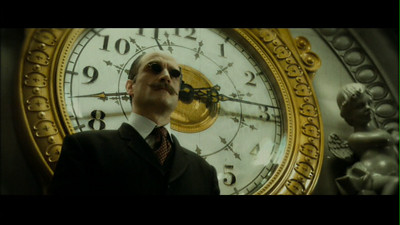


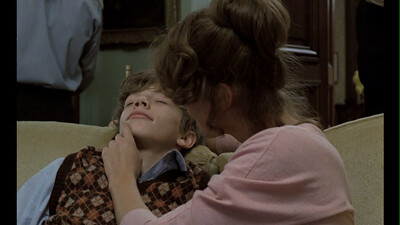
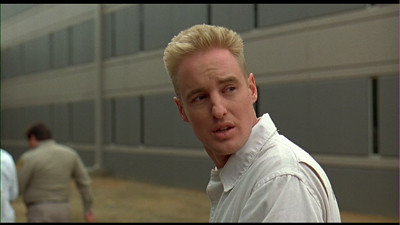
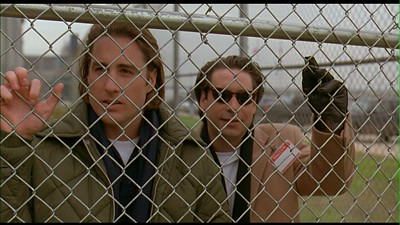
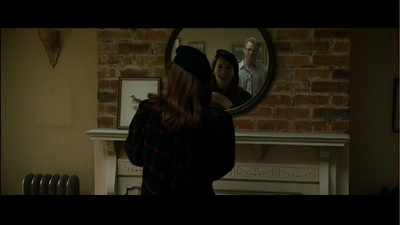
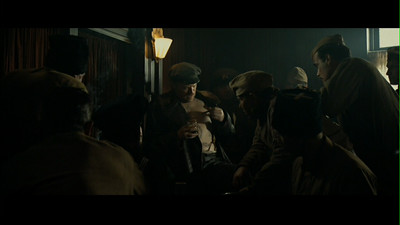
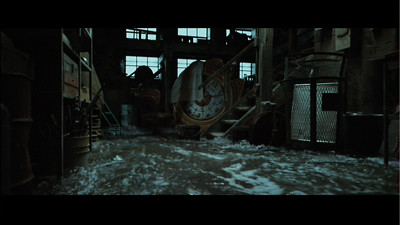
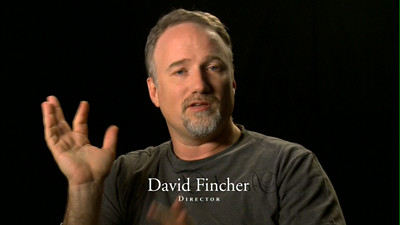
Reading over my review again, I don't feel my interpretation or understanding of the movie has changed, but I do think it has deepened. My first reaction on watching Benjamin Button a second time was how dark the movie is. Death is a constant in Benjamin's story, its grim pallor coloring everything (and note how darkly lit many of the scenes are, even in the pictures here). It begins with the irony of the infant starting life at an old folk's home, learning to accept death as both natural and common. It should be coming for him, it is a byproduct of his condition, but whatever spell has been cast on him has changed how death holds an individual. I guess this morbid theme should have been more obvious to me, as what I thought was an astute observation turned into a "Well, duh" situation the moment I started watching the extensive and fascinating documentary feature on the second disc of this Criterion set. The very first clip is of David Fincher talking about losing his father to cancer and the way his grappling with that became a part of the filming of the movie.

Benjamin's place in the world may have a feel-good "live every moment" lesson at its core, but there is a decidedly more pronounced intelligence than one might find in your standard second-chance post-tragedy picture. The message here is to live every moment, but accept the role age and wisdom plays in each one. If youth is wasted on the young, then don't toss away important things when you're not in a place to understand them fully. Patience is a virtue.


This is most evident in the love story, which is antithetical to the standard tales of young love that is the passionate energy of most romantic movies. Daisy offers herself to Benjamin, but he refuses her advance because it's not right yet, a rebuke she carries with her in a tight little fist in her heart, and that only likely makes sense to her years later when, while convalescing after an accident, she rejects Benjamin, choosing instead to wait until she is herself again. Benjamin wanted her to be strong enough and wise enough to love him with more than an impulsive schoolgirl lust; this carries over into her wanting to love him only when she can be her own self-sufficient person.

Meeting in the middle is less about being physically compatible, but more about being mentally compatible. Like wine, let this romance ferment. The risk, of course, is that they will grow apart, and thought it's a risk all lovers must take, for them it is a fait accompli. As Benjamin was able to be a young man learning from the old, however, Daisy will have the reverse position, being able to learn from him as he grows young. Both are taught to savor the things that matter by seeing the way others are losing their grip on those things. In Daisy's case, it must be more bittersweet for bringing her experience as a mother to taking care of Benjamin as his life ebbs. He is just a baby when he passes, having forgotten all he learned, the complete opposite to the baby daughter Daisy raised, whose every day was a new experience.

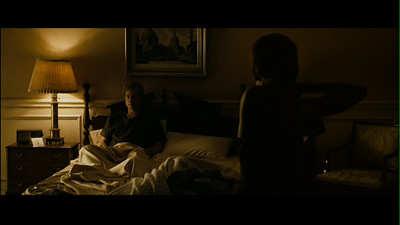
It's not a romantic ending, certainly not in terms of their relationship. Benjamin didn't really have mother issues; if he was seeking a mother surrogate to replace Queenie, he didn't realize it. If that was his reason for connecting with Daisy, it was a primal instinct, an act of self-preservation. The saddest scene in the movie is not a physical death, but an emotional one. It's when Benjamin, now in his early 20s, has come to see a middle-aged Daisy one last time, and she ends up going to his hotel room. The compulsion, as one might read it on Cate Blanchett's face, is to feel the passion again, to see if it's still there; the disappointment, again conveyed largely through expression and body language by Blanchett, is that it's not. The romance has died.


Or again, just matured, transmuted to something else, love of a different bloom. This is really the meaning in the much-maligned metaphor of the hummingbird, which possibly chafes some reviewers because its function is more literary than cinematic, the visual maybe needing a prose back-up to convey its full power. It's not that everything is connected, but that all life is transformative, continuous, the energy goes on. If Captain Mike (Jared Harris) has become a hummingbird after dying in the U-Boat attack, then it's a moment out of Ovid, a story of a single being becoming something else. Perhaps, though, it is also a release, the tattoo that kickstarts the metaphor rising from his chest to carry on with the story. The important element of Mike's explanation of the symbol is that it represents infinity, as indicated by the way its wings form a blurry figure eight. This would mean that the hummingbird at the end is not Daisy's soul or even Benjamin watching over her, as I might have originally argued, but the connection being passed on, the story continuing, the history being rescued from the flood that washes the rest of it away. The story can't disappear, it now belongs to the movie audience.
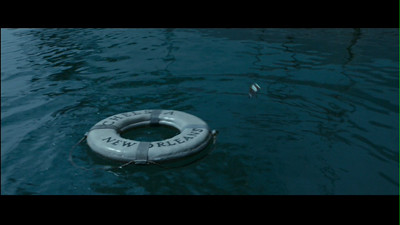
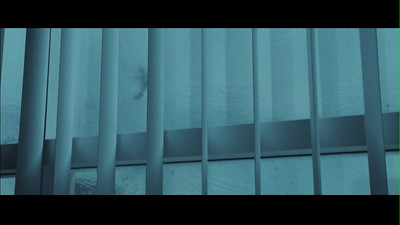


When you boil it down, all of Benjamin's encounters and re-encounters involve stories. Everyone has their own, and Benjamin is the catalyst for each person telling it. In some cases, he is the reason they finish the narrative, such as Tilda Swinton's character finally returning to swim the English Channel (as it were, defying the flood rather than succumbing). Daisy is sharing the tale with her daughter--and truly sharing, the daughter reading it aloud to soothe her dying mother while also taking it into herself. Even when the story can't always be trusted, such as the mixed-up memories of the residents of Queenie's old folks home, they are still part of the mythology. More often than not, those stories are full of hurt and sharing them is part of overcoming; life is all about mourning, the grieving process for what could not be and what we know will come. I think one missed opportunity here was that the man who was always getting hit by lightning should have told eight or nine different versions of the strikes while still claiming to have only been hit seven times. The point being that it would be no less true, not as long as it's true to him. Queenie believed the faith healer helped Benjamin to walk, and that brought her comfort. Nick Carraway felt the same of Jay Gatsby--he is the man he said he was, and thus better than the whole damn lot of them.

You will believe, through the magic of moviemaking, that a man can be born old and die young.
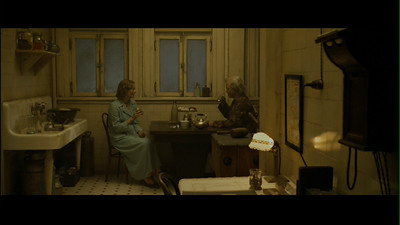


Because then, wouldn't we also have the go-ahead to question the veracity of Benjamin's own story, the diary being read aloud and forming the movie? It, too, could be invention. It's all invention, really. A child aging backwards, a hummingbird in a war zone, seven bolts of lightning. Taking a hold of the story could give one the power to command it, to take over life's quirks and coincidences. Isn't that the point of the story of Daisy's accident, told in an expertly paced, rapid mis-en-scene by Fincher, to say if just one piece could be rearranged, then death could be cheated further?

Which brings me back to story again: you can't die if your narrative is preserved between the covers of a book or on a two-disc DVD set. Watching the talking heads sharing the production tales on disc two definitely gives one some fulfillment in terms of a need for preservation: we were here, we did the work, here is how that happened. The fact that they approached their movie storytelling in such a classic, tried-and-true manner is like the gift they give to us, returning us to what's important about shared experience. The future meets the past, technology enables tradition. Fincher embraces old cinematic and literary styles and integrates them in with his new way of doing things.


When I first saw The Curious Case of Benjamin Button, I saw it with one of my favorite friends and my most ardent collaborator, and by chance, we both rewatched the movie on the same night, too. When we saw each other the next day, we discussed our new impressions, and she mentioned the scene where Benjamin and his father are talking, before Benjamin knows that he is a Button, and the son tells the father that old age isn't so bad, it's nothing to fear, its routine is not crushing. In fact, in narration earlier, he notes that the routine is liberating, clearing the way for the mind to sit and ponder other things (how very Zen!). In the end, it is the simplest truth of all: if you can get through that, you can get through this. If you can survive the teen years and the perils of adult life, you can survive a well-earned retirement. If you can grow up, you can grow old.
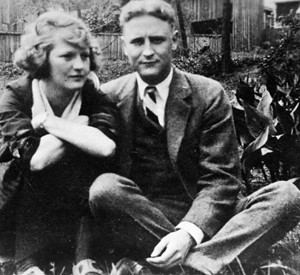


Scott & Zelda Fitzgerald


Friday, May 1, 2009

SIDELINE: MORE REVIEWS FOR 04/09

IN THEATRES...

* Adventureland, a welcome surprise. So much more than the trailers suggest. Noah Baumbach meets Judd Apatow.

* Lymelife, another 1980s coming of age drama, this time starring the Culkins as the children of a failing marriage. Good performances, especially from Alec Baldwin and Timothy Hutton, overcome some familiar territory.

* X-Men Origins: Wolverine, wherein Hollywood undoes a character that was once supposedly invulnerable. Way to go, Hollywood!

ON DVD...

* 1612, a boring historical fantasy epic from Russia forces me to ask, "What hath Peter Jackson wrought?"

* Jean Genet's Un chant d'amour, the controversial French writer's 1950 experiment in cinema.

* Deadly Sweet, Tinto Brass' wild twist on crime thrillers is a pop-art, comic-book treat. Storyboarded by Guido Crepax, even.

Would make a good double-feature with...

* Detective Bureau 2-3: Go To Hell Bastards!, a loopy crime flick from Seijun Suzuki and his star, Jo Shishida.

* La Grande Bouffe, in which four Italian men try to eat and screw themselves to death. Not even Marcello Mastroianni can save this tepid shocker.

* Max Fleischer's Superman: 1941-1942, the classic cartoon shorts finally get a reliable packaging. I love these!

* Poil de carotte, Julien Duvivier's 1925 silent picture chronicling the troubled childhood of a freckle-faced redhead. May not sound like much, but it's a potent portrait of a rough life.

* Valkyrie, Tom Cruise plays a German patriot trying to save his country from Hitler in Bryan Singer's lukewarm WWII picture.

Wednesday, April 29, 2009

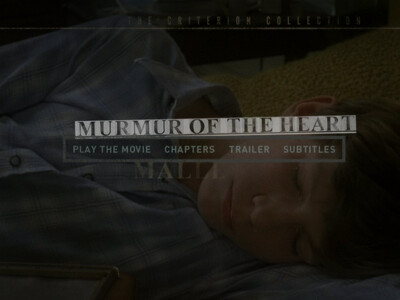
3 FILMS BY LOUIS MALLE (#327): MURMUR OF THE HEART - #328


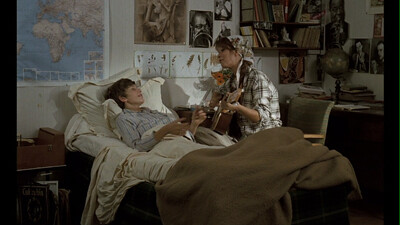
Murmur of the Heart--it's a title both literal and metaphorical. Laurent Chevalier (Benoit Ferreux), the fifteen-year-old main character in Louis Malle's semi-autobiographical 1971 movie, has a an actual heart murmur, a health issue that at first derails his young life but then manages to put him on track for the third act of his teen years. At the same time, the idea of this palpitation means so much more. It's the flutter he feels in the blush of romance, the emotion he has for his mother, and an indication of mom's description of him as her sensitive child.

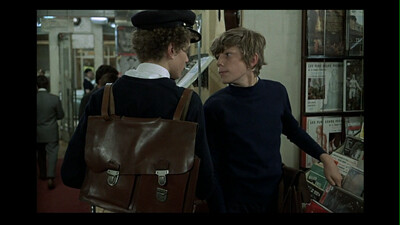
Set in 1954, Murmur of the Heart shows a Paris in the midst of social transformation. Still ahead of the protest and student revolution that was to come, there are inklings of change everywhere. Laurent and his friend start the movie walking the streets, collecting money for the Salvation Army to send to the wounded in Indochina. France's involvement there is already proving disastrous for them, and it's become a divisive issue. Socialist-minded youngsters take exception to the colonialist policies of the older generation. Granted, for a fifteen-year-old, such talk is probably as much of a precocious pose as it is a thoroughly considered conviction, but Laurent is intellectually adventurous for his age. He loves avant-garde jazz enough to shoplift the latest Charlie Parker (his exasperated declaration that “It's not dance music!” is a particularly well-observed moment of adolescent misfitry), and he voraciously reads everything from Camus to Story of O.


Benoit Ferreux is a marvelous discovery. I imagine Louis Malle had his own little heart flip when the boy crossed his path. The young actor is a gawky teen himself, his arms too long and his shoulders hunched, his teeth growing too big for his otherwise cute face; he doesn't have to fake the physicality. He's in that totally awkward stage where he's clumsy in both movement and in personal interactions. He's impulsively emotional, and not nearly as funny as he thinks he is. Laurent is also an observer, and Malle regularly inserts shots of the boy just watching, blank faced, not sure whether to go with the flow or throw a tantrum. We will see him do both.

Laurent is in a perpetual in-between state, a kind of limbo. His two goony older brothers, Marc (Marc Winocourt) and Thomas (Fabien Ferreux), are obnoxious cretins who think they have the world figured out and go about trying to have their way with it. In a way, Laurent wants to be just like them. It's only his sensitivity and his smarts that get in his way. For instance, he doesn't understand yet why you would kiss with your tongue, and when the older boys take him to a brothel so he can lose his virginity, he is reluctant. The prank they play on him makes the divide more obvious, even if it's not pointed out. This contrasts with the very next scene where, on a camping trip with the French equivalent of the boy scouts, Laurent portrays a caring father in a minimalist production of a Goethe play. The temptations the play details are calling him in real life, and Malle seems to suggest that it's up to him to protect himself the way he protects the young boy playing his son. No one else is going to do it.


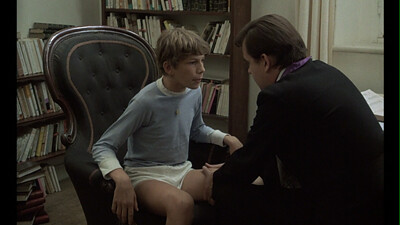
I'm tempted to call the world of Murmur of the Heart a hyper-sexualized one, but really, I think it goes beyond that. All earthly passions are ignited--art, food, drink, smoking, sex--Laurent is tasting them all for the first time. Even politics and religion, though the former is less immediate for him and the latter something he is beginning to reject. They are more adult topics, and his relationship with adults is strained. The priest who looks after him at school, Father Henri (Michael Lonsdale), is not trustworthy. He demands Laurent confess his sins, but halts the confession to make overtures at molesting the boy. Another priest uses mass to praise the war efforts and encourage his students to serve, a clash of ideals that seems out of place in a progressive world.

Laurent's relationship with his biological father (Daniel Gelin) is not very good, either. The boy has no real affection for the old man, probably because he sees him as someone who lacks passion, who may claim to enjoy the finer things in life but talks of them in ways that sound false and ignorant (not being able to identify a forged painting, for instance). Charles Chevalier is a gynecologist, reducing the holy of holies, a woman's private area, to something to be poked, prodded, and studied, but not loved. Laurent can't believe his dad ever rode a bicycle, nor does it make sense that this boring guy would have any kind of real relationship with Laurent's mother.


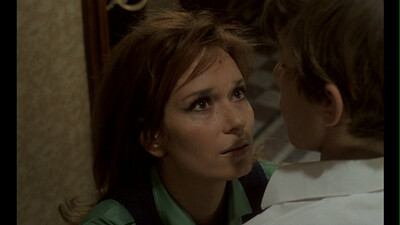
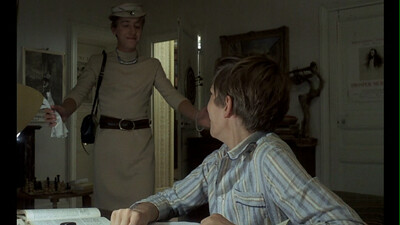
Oh, Laurent's mother! Clara is one of the greatest screen mothers of all time. As played by the beautiful Lea Massari, she is an older woman who has maintained her looks and an appetite to go with them. An Italian immigrant who fled Florence when her father got in trouble with the fascists, she ended up with Charles more out of convenience than any great desire. He won her hand simply by breaking through the language barrier. She is kind of the cliché Italian mother, overly protective and overly affectionate to her baby. She dotes on Laurent, spoiling him and covering him in kisses. He likes it, too, even taking her side against his brothers. In one scene, after Laurent's illness is discovered and he has to study at home, Father Henri witnesses her behavior and suggests that she treat her son like an adult, a notion she laughs off. Little does she know how essential this will be.

The discovery of Laurent's heart murmur is also connected to, and possibly even brought on by, the moment where his image of his mother starts to lose some of its illusory luster. The boy witnesses Clara getting in the car of another man, and it's obvious he is her lover. Here he throws one of his tantrums, tearing up her clothes. It's a childish reaction, but given what we see of how older men behave when competing for Clara's attention, male jealousy is always childish. Laurent's conflicted feelings about his mother's sex life are all tangled up in his own emergent sexuality. Malle is drawing a delicate line between all these various confusions--pedophilic priests, distant dads, mothering whores, and whoring mothers. Should Laurent gallantly defend his mother or rebuke her?


The two leave Paris for a country spa where Laurent is to receive a treatment for his heart condition, and it ends up being where he is cured of his childish notions and starts to step toward manhood, as well. The mini-vacation has shades of a lover's getaway, with mother and son alone to indulge their mutual adoration. Laurent is both the jealous son who is realizing that his mother is admired by the rest of the world in ways not as pure as his own admiration and the jealous lover who realizes he is just as dirty as everyone else. A cocky young boy (Francois Werner), who also happens to be a royalist (gasp!), makes no bones about his intentions with Clara, and later, her secret lover also comes and sweeps the woman away, only to break her heart.

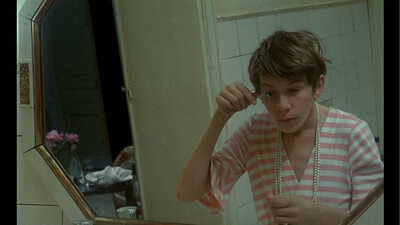
Amidst this, and amidst his own realization that girls his age are beginning to notice him, Laurent must come to grips with his own image of women and how his mother's place in his life has informed it. Malle has concocted a couple of potent yet potentially scandalous scenarios for this. When Clara is in the room, Laurent spies on her in the bath; when she is gone, he is left alone with her underthings. He builds an effigy of her, starting with panties and bra and building up from there. He even wears her dress and her make-up, a roleplay foreshadowed earlier when his brother Marc dresses as Clara to tease him. What must it be like to be her? Is she more than just the woman who gave him birth?


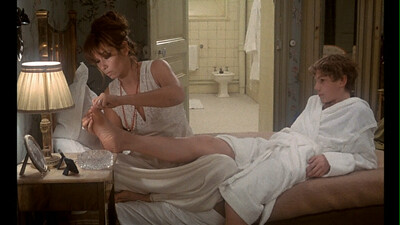
Surprisingly, yes, Clara is humanized by this drag act. When she returns, Laurent becomes her confidante. Though they always spoke candidly, there was a familial barrier between them. Now they speak as friends, with Laurent not even questioning that his mother has a lover. He also becomes her protector, escorting her from drunken soldiers, and she accepts his position as such, herself growing past her early frustrations over his objections to Hubert, the boy at the spa. The intimate scenes that follow could easily be mischaracterized, but a sensitive viewing of what passes between them reveals that it is not really sexual, but something more of a rite of passage, of the mother ushering her son into manhood by removing the mystery that has so enraptured him. It finalizes the lesson that she, too, is a woman like any other and should not be his be all and end all. The fact that Laurent immediately goes out and asserts his newfound manhood shows that the hold has been broken. It's one of those situations where, by lifting the taboo, the parent has made the allure the child has for the forbidden object take on a more realistic proportion.

All of this is conveyed with Malle's usual commanding yet unpretentious storytelling. The more I see of his movies, the more humanist his point of view strikes me as being. Murmur of the Heart treads territory that could be salacious or troublesome, but he handles all of it with a light, careful touch. Any sex is framed tightly, focusing on faces rather than bodies, reminding us that it's not about the physical details but the exchange of experience and emotion. He and cinematographer Ricardo Aronovich keep the lighting low and the colors neurtral so as not to overly dramatize or sensationalize. In a way, the atmosphere is cold in the city, much darker hues, more browns and beiges, and the environment becomes warm and natural in the country, the film blossoming with Laurent. Simultaneously, the director treats Clara with tenderness once he has gotten her out of the Chevalier home, making her more real, taking away some of her make-up and her fancier clothes (she is brighter, more green, a splash of pizzazz back in the city), and revealing her as the mature and, really, down-to-earth woman she is, not the urban housewife she plays for everyone else.


As coming-of-age tales go, Murmur of the Heart is uniquely frank and, like Louis Malle's Au revoir les enfants, uniquely the writer/director's own. Though we might be able to say individual scenes are like other movies about young boys getting lost in a morally confusing landscape and finding their way to the other side, none are really quite the same. Both films could have easily been remade as more sensational, sentimental, grandiose, and generic Hollywood pictures, but thankfully, so far no one has tried. Some might say that the subject matter is just too hot to handle, but I like to think it's Malle's insightful writing that really makes it too daunting for the big machine to tackle. Such personal expression exposes anything less personal for being false just by standing so true.


Tuesday, April 21, 2009

IN THE REALM OF THE SENSES - #466


Words like "notorious" and "infamous" come to mind when initially grappling with how to approach In the Realm of the Senses, Nagisa Oshima's 1976 sexual allegory. It's a movie with a reputation, and not one that it has come by unfairly, I might add. Senses is an extremely dirty movie. It's hardcore erotica and explicit enough that if Jerry and George were passing it in the locker room on Seinfeld, they'd use a copy of Tropic of Cancer to cover it up. Yes, Henry Miller is the less salacious of the two evils.
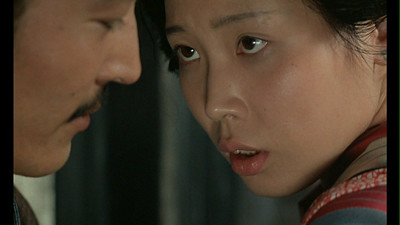
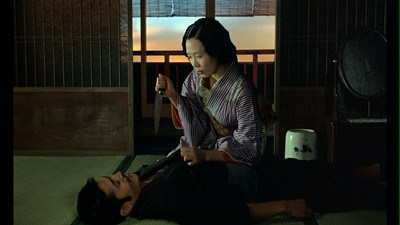
Based on a true incident from 1936, In the Realm of the Senses is the story of two lovers obsessed with each other's bodies and the eventual darkness the pursuit of this obsession leads them into. Sada Abe (Eiko Matsuda) is a serving girl at a local inn who falls into an affair with the married owner, Kichizo (Tatsuya Fuji). A virile man with a voracious appetite, Kichizo has sex with his wife every morning before going to work, but he also "drinks outside the home" when more is required. Though this euphemism does entail actual drinking, the implication is that Kichizo may be ordering more than sake at these other inns. Intrigued by Sada's past history--she was once a prostitute, and she is currently working as a waitress because her husband (whom we never meet) had a business fail--Kichizo instigates an affair with her, one that quickly turns from sneaky encounters in shadowy rooms to a full-blown 24-7 orgy.


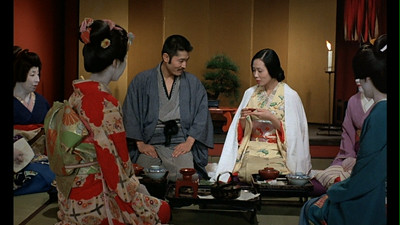
No, I'm not exaggerating. It is literally a 24-7 orgy. The pair move to a different inn where they have a marriage ceremony performed by the geisha there, and then they proceed to ravish each other non-stop for days on end, barely pausing to eat and, as far as Sada is concerned, even going to the bathroom is too much time apart. The rare exception out of the home is for her to go visit one of her old clients, a high school principal, who provides them with added money to live on. A brief respite where Kichizo returns to his wife inspires jealousy and rage from Sada, and a night out on the town turns into exhibitionism.


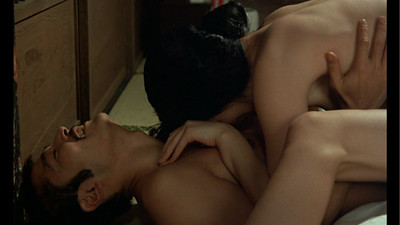
In the Realm of the Senses is pure erotica, which in some eyes is, yes, just a fancy way to say the "p-word." The difference between the two is a debate unto itself, though I would say the difference between erotica and its less-respected sibling is that in erotica, the performers never resort to debasing themselves for the mere purpose of titillation. Though there is sex in just about every scene of this movie, Oshima is adding a subtext to his story of these insatiably perverse partners. Like most erotica, In the Realm of the Senses eventually slips into rather disturbing territory. Sada's need for constant pleasure--she has allegedly been diagnosed by a doctor as "acutely sensitive" and thus she not only needs nonstop action but she also feels it to an exceptional degree--eventually consumes Kichizo, and the pair keep active whether their bodies can handle the stress or not. A pattern of submission and domination is created, and the roles switch quite regularly. The sex play eventually begins to involve food, voyeurism, and violence both consensual and very real. Sada is a disturbed woman prone to fits of rage, but Kichizo is no better despite his even keel. His regular acceptance of Sada's latest idea, as well as his own nasty inventions, and the way he laughs at the kinks can be more unsettling than her pulling a knife on someone or stalking him. Make no mistake, either; in case you're not getting this, In the Realm of the Senses is a very explicit movie, and every act performed is seen in unflinching detail. As the performers challenge each other to go even farther, you will be challenged to go with them. Some may find it hard to keep watching.


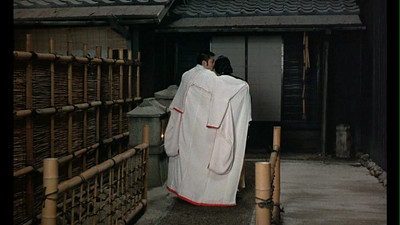
Those same performers are also the main reason to keep watching, despite what shocking things they might do. Eiko Matsuda and Tatsuya Fuji bring an astounding level of craft to roles that could have seen them acting as mere toys for Oshima to bend and pose into his bedroom scenarios. They both manage an impressive level of naturalism in their work, all the more impressive since Oshima is creating an unnatural world around them. Not so much physically--the art direction is fantastic, with a great attention to detail and beautiful colors that look dazzling in this sumptuous new transfer--but more in the broader sense that In the Realm of the Senses is, as the title suggests, meant to be a story that takes place in its own pocket dimension, one where boundaries of social mores and common physical experience are no longer applicable. Regardless of its basis in fact, Oshima takes the story more toward fantasy. The new world he creates is a completely sexualized dimension where everyone is seemingly as horny as Sada and Kichizo deep down, they are just waiting for someone to activate their desires. Everywhere they go, someone is either talking about sex, thinking about sex, or having sex, and if they aren't going to join in, they are content to watch.

There are more specific and detailed readings to be made of In the Realm of the Senses. Those who are more informed of Japanese history and the social structure can find political meanings in the movie that are, honestly, lost on me--though many of the extras on this DVD do lead the way to understanding more about what Nagisa Oshima intended to do with this taboo-breaking picture. Sure, there are some shots featuring soldiers, a sign of Japan's militaristic leanings in the 1930s, but not much indication beyond that of what kind of tide the pair may be working against. I'm not a completely unintelligent guy, so one does have to question why a film more than thirty years old continues to travel the world and intrigue viewers despite the fact that one of its main subtexts is not immediately discernible to what I would guess would be the bulk of the viewership. Is this maybe the function of erotica, to provide us with a viable argument for looking at smut? "I don't surf the internet to get my jollies, I look at Art"?


The question also remains of how to process said smut. If we are to accept that most highbrow erotica drifts into skeevy territory, delving into fetishes and more extreme thrills, then how to reconcile the titillation we may or may not feel? This is not like browsing the shelves at the adult bookstore to find that one DVD that suits a particular pleasure, this is a film director laying out a smorgasbord of kinky treats and saying that if you are going to partake of one, then you will partake of all. The downward slide is not an indicator of a moral message, either; Oshima is not warning us that if we give in to our carnal nature, we will end up like Sada and Kichizo. Even so, I find myself in agreement with the witnesses who eventually turn away from his characters in the movie. In due course, the outsiders who are initially eager to watch the copulating drift away from the lovers, repulsed by their lack of control and their refusal to even pause to clean themselves. The principal rejects Sada because she smells, the geisha stop coming to entertain the couple out of fear of what they might do, and when it came down to it, I found myself turning away, too. What was it all for? Am I merely meant to see there are consequences to all human behavior? To question the nature of voyeurism, that to accept one behavior as worth spying on, I must take my peeping the whole way? Or is Oshima flipping the script, turning the dominance theme on the viewer? At the beginning, I felt I was in charge, but by the end of In the Realm of the Senses, it was in charge of me.


Perhaps this is the insurmountable hurdle of all controversial films, that they may maintain their ability to shock while losing whatever social significance made them seem relevant in the first place. Or maybe it's that the initial scandal was so overpowering, it obscured that there wasn't more movie underneath. That's certainly how I felt when recently watching La Grande Bouffe, or even upon viewing Salo. Both left me feeling like I got what they were saying but they failed to explain why it should matter. (Then again, maybe it's not a matter of time and just a fault of the genre, as Alan Moore and Melinda Gebbie's recent comic book foray into the erotic, Lost Girls, inspired much the same reaction.) In the Realm of the Senses, no matter how well-made from an aesthetic standpoint, no matter how gorgeously photographed and expertly acted, still only has the flimsiest of stories, its plot no better than the clichés of XXX skinflicks about randy co-eds getting it on with the pizza man or bored housewives getting some extra chlorination from the pool boy. Perhaps it's just a problem with me and my own puritanical upbringing rearing its judgmental head, but I can't help think that despite the considerable amount of fuss, In the Realm of the Senses is not about very much.
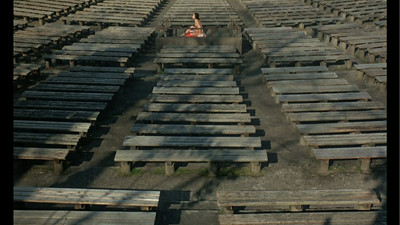
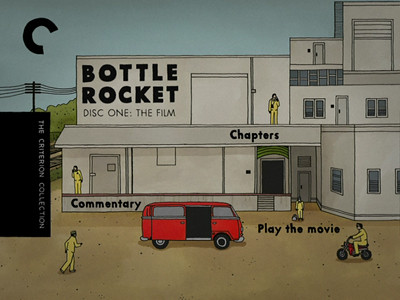
For a full rundown on the special features, read the full article at DVD Talk.

Tuesday, April 14, 2009

BOTTLE ROCKET - #450


Since the Wes Anderson debate is still in full swing around the internet, I'm going to keep it going by finally taking some time with that Bottle Rocket DVD that has been sitting on my shelf unwatched. Given that my initial mission statement for this blog was to try to chronicle my personal journey through the Criterion discs, it seemed like the next logical step, particularly as something I put forward in my review of The Life Aquatic has as much application to me in this case as it does to that film's detractors. I noted that in any actual discussion with people who weren't fans of The Life Aquatic, I often found that they had only tried the movie once and could be said to hold the picture accountable for not being the other Wes Anderson movies. Both of these apply to my first reaction to Bottle Rocket; perhaps doubly so for that last part. If the Wes Anderson films that followed his 1996 debut were specialty omelets, I was dismissing Bottle Rocket for being an old fashioned plate of eggs.

I probably saw Bottle Rocket the first time in 2005 or 2006. I remembered it having come out ten years prior, and I had continued to avoid it for the same reasons I did on its first release (crap, I even remember that the movie played in Portland at the Hollywood Theatre--why do I remember that?!). When Bottle Rocket was being promoted during that run, it had the faint whiff of mid-90s Sundance, an aesthetic I had already grown weary of. It seemed like there were a lot of debut films at the time, including many post-Tarantino copycats, that relied on bungled heists by a bunch of half-witted wannabes, often made by those selfsame half-witted wannabes, and despite a personal attraction to crime films, I had begun to draw a stubborn line in the sand.


So, instead of getting in on the ground floor and following Wes Anderson piece by piece, I had essentially read the body of his book without taking the time with the developmental prologue. How could the fumbling first time ever compare to the fully realized features that followed? It's like discovering David Bowie made music prior to Space Oddity. There's some good stuff there, but the failings are all the more shocking for being so earthbound.

Don't worry. I am not going to come around now and revise history and declare Bottle Rocket to be an unfairly dismissed masterpiece. I can't say that I would have been in the Anderson camp any earlier had I gotten past myself and gone to this movie in 1996. I'd probably have reviled it the way I once held Steven Soderberg's The Underneath in contempt or even still do with the films of Hal Hartley. I am, however, prepared to be more kind to it now that the initial shock has worn off.


To begin this time around, I started with the second disc in the Criterion DVD. I figured if I was going to look at Bottle Rocket in terms of its status as one of the building blocks in Wes Anderson's self-actualization, then I should look at the building blocks of the building blocks. These include a short film from 1978 called "Murita Cycles," directed by Barry Braverman, who also put together the retrospective "making of" for this set. Braverman's film is said to have had an impact on Anderson and co-writer Owen Wilson, and it's pretty easy to see how a character like Braverman's father, who is profiled in "Murita Cycles," would have held a certain appeal for them. The old bicycle repairman who has adopted a solitary lifestyle devoted to the accumulation of junk, declaring each discard as a new treasure, not only reflects the clutter to come in the Tenenbaum house or even Steve Zissou's boat, but also the clutter of Anderson's mind. Is it a stretch to imagine the young director imagining himself in such a state in forty years time? Despite his personal attachment to the subject, Braverman also maintains a visual distance, creating a simultaneous feeling of empathy and voyeuristic pity that I think one can also find in Anderson's portrayals of his characters. They aren't just interested in the good stuff, but also in how their failings make these characters tick. (Ironic of me to note, given The Man from Porlock blog's recent essay regarding the failure of modern critics to admit a movie's failings, which includes some fair-handed criticisms of aspects of my writing style; perhaps I can learn more from Wes Anderson, after all.) Given that the elder Braverman succumbed to his more obsessive tendencies after his wife passed away definitely foreshadows how tragedy and loss would similarly affect many in the Anderson canon.


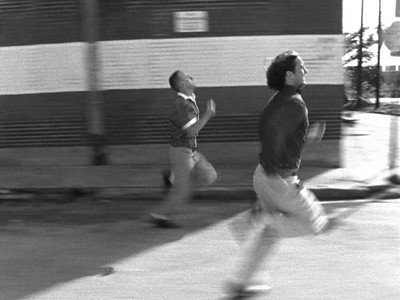
The other interesting short on DVD 2 is the original black-and-white Bottle Rocket film made in 1994, featuring many of the same actors and a lot of scenes that went on to be part of the full feature. Much is made of Martin Scorsese's passing of the torch to Anderson, and I know I've seen the full-length Bottle Rocket compared to Mean Streets in terms of its energy, but this 1994 short calls to mind Scorsese's black-and-white debut Who's That Knocking at My Door?, as well as that of the man Scorsese emulated, John Cassavetes. Though not in the same league, the stark photography and the of-the-moment immediacy of the short Bottle Rocket made me think of Cassavetes' Shadows. I know it's going to be seen by some as sacrilege, but I think I probably prefer the clipped early version of Bottle Rocket to the full-blown picture. It goes beyond the simple fact that the thirteen-minute movie doesn't have the time to meander the way the ninety-minute version does. There is an innocence to the '94 version that is more authentic, almost a self-reflexive element of the would-be gang trying to figure out how to commit crimes being the same gang of friends trying to figure out how to make movies. (And, indeed, given how I would find both Owen and Luke Wilson to grow increasingly less sincere on screen over the years, there may be something to that.)

Anyway, long story not needing to be longer, these earlier pieces served as effective appetizers to get me in the mood to partake of the main course.


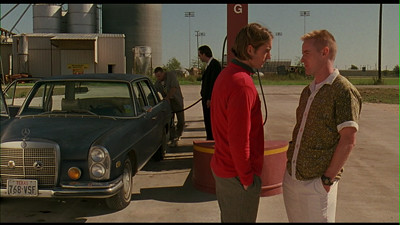
For those who haven't seen Bottle Rocket, the quick plot rundown: childhood pals Anthony (Luke Wilson) and Dignan (Owen Wilson) enlist their friend Bob (Robert Musgrave) in order to rob a bookstore and carry out Dignan's plan to prove themselves as a criminal crew worthy of joining the more seasoned outfit run by Dignan's former boss, Mr. Henry (James Caan). After the caper, the guys go on the lam, holing up in an out-of-the-way hotel. There, Anthony, who has just left a mental hospital where he has been rehabilitating for nervous exhaustion, falls for the immigrant hotel maid, Inez (Lumix Cavazos). This is one of many factors that leads to the dissolution of the gang and the boys going their separate ways--despite Anthony seemingly having sacrificed romance for the sake of male bonding. Eventually, they come back together after Dignan resurfaces, this time already in the employ of Mr. Henry. The old gangster is letting his neophyte underling show his stuff in a brand new heist, but as we shall soon see, the gang that couldn't shoot straight before is never going to shoot straight.

Two scenes stand out to me as fundamentally important to not just Bottle Rocket, but to all of Wes Anderson's films. The first comes at the beginning of the picture, when Anthony's doctor reminds him that he can't save everybody, seemingly a warning of how to avoid returning to the hospital. (Though, the little we learn of why Anthony committed himself doesn't really jibe with a savior complex; but whatever...) The second is the very last scene. Dignan has just been joking around in his eternally optimistic way, and then a highlighted over-the-shoulder glance suggests the joke is just a cover, that there is more going on.


In the case of the Anthony moment, it puts what would become the reoccurring Luke Wilson character in place. In Rushmore, he plays the bit part of a doctor, a profession that is all about taking care of people. In The Royal Tenenbaums, Richie is the troubled tennis pro who eventually tries to commit suicide. Like Anthony, he has lost his ability to cope with the world, and much of his problem stems from life around him not being the way it is supposed to be. One could say that both Richie and Anthony are not caught up with saving people so much as they are with preserving a kind of purity, to stave off growing up or the loss of innocence that comes with taking one's place in the modern world. Luke Wilson's doe-eyed blankness serves these characters well; in their way, they are meant to suffer for everyone else's sins, and they live by denying their own, with only love prompting them to greater action. When Dignan first tries to get Anthony to rejoin his criminal enterprise, Anthony refuses, and he only changes his mind after Bob's older brother, the oddly nicknamed Future Man (Andrew Wilson, the eldest of the real-life brother), makes fun of Dignan. Anthony agrees in order to repair the bruised ego his friend has suffered at the bully's hands.

Dignan also serves as the prototype for what would eventually be the Owen Wilson character--the schemer whose bravado masks insecurity and hurts. Here again the casting works, because Owen Wilson is well suited to the unrelenting optimism that his characters often represent, the refusal to admit when things go wrong and the will to force it, whereas Luke's emptiness often means he is just buffeted along by outer forces. If you consider the arc of the Luke characters, Anthony is the guy who hasn't really done anything but is trying to sort out his purpose and open himself to love, the doctor is successful in his career but the verdict is still out on his personal life, and Richie has had tastes of career and romance and has lost them both. The Owen type progresses more slowly, more a variation on a theme, though his rock bottom seems to get a little harsher each time. Dignan's prison sentence, at least, is less dramatic than Eli Cash crashing his car and flying through the Tenenbaum's front window, and Francis has put himself through hell prior to the start of The Darjeeling Limited.*


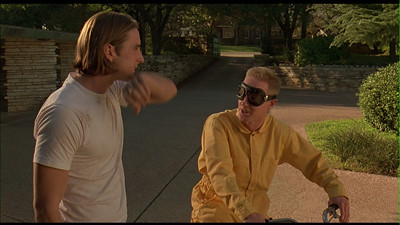
The moment at the end of the film that I mentioned is the first of what would be many similar moments in all of the Wes Anderson movies. When Dignan casts a look back at his buddies, who are on one side of the fence as he is on the other, returning to his jail cell, the look on his face says that no matter the brave smile he can put on top of the circumstances, he knows things will never be the same again. For all of his fighting to have life correspond to his childish pipe dreams, he has been forced to realize this is not possible. Consider Dignan as representative of Anderson's general Peter Pan concerns. He wants to form a gang, a version of the secret club we all have as children, complete with code names and mischief making that, despite its increased seriousness, doesn't really inspire any increased fear of the consequences. Running from the law is a game not dissimilar to the b.s. attempts most kids make at running away from home. No lesson is gleaned from the early failure. In fact, Dignan only gets more insistent, taking to wearing jump suits (a uniform or costume, of sorts) and riding a minibike (one that, tellingly, doesn't really work). Future Man's mocking of him is even for his being so childish (is he called that because he represents the crushing future that awaits anyone who can't escape assimilation?**), and Dignan's need to please Mr. Henry is the son wanting to please the father, with the father here being the most disappointing of any of the others to come.


If you think I'm making a good case for these thematic elements, then thank you, you're too kind. If you think I'm maybe giving Bottle Rocket a little too much credit, then I actually agree. The ideas above are mere sketches within the film itself, and had Anderson never made another movie after Bottle Rocket, these elements of both the Anthony and Dignan character arcs would not have any real resonance. Bottle Rocket is a good movie and surprisingly easy to watch even a second time around, but it's a mere confection, the first draft of what was to come. The plot is meandering with a pretty clear division down the middle of the story. The relationship between Anthony and Inez has no real payoff. It's not an epiphany that leads him back to her, but a garbled message finally being cleared up. Mr. Henry takes Inez's place in the second half, and James Caan seems like they shipped him in from another movie, the one consolation made to make the film more appealing to distributors. I suppose if I wanted to push the notion that this is a crime movie molded into a metaphor for wanting to make movies, then Sonny Corleone's presence makes sense in terms of representing the level of craft Anderson aspires to and the blessing her yearns for the 1970s generation to bestow on him. This doesn't help Caan’s scenes to be less out of place, however, it only makes them appear more so. Just take a look at that party scene where Mr. Henry is wearing a kimono and a samurai topknot. It's a rookie cheat to make your bad guy have eccentric affectations rather than just have faith in his badness.


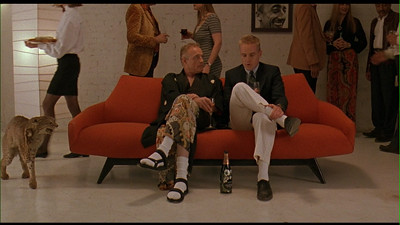
That same scene also contains a clumsily staged shot of Mr. Henry and Dignan together on a divan, being watched by a stuffed wild cat of some kind (an ocelot?). This stands as an early indication of Anderson's trademark straight-ahead framing and obsessive attention to oddball detail, but it sticks out from the rest. It's as if Young Wes Anderson peered into the future to see what Old Wes Anderson was up to and lifted a shot from himself the way he is known to lift shots from the heroes that preceded him. Accepting that and setting the snark aside, however, there are signs of the style that is developing, though it is very much in development. The use of music to drive a scene (in this case, not just Anderson's first Stones song but also an underappreciated use of two numbers by Love), long takes, Eric Anderson's art, some impressive compositions (the back-and-forth between Anthony and Dignan in the diner comes to mind)--these are all the seeds of what is to come. Some of why these seeds haven't yet blossomed comes down to budget; more real locations, less ability to falsify the environment. It's also a question of self-assurance. Though Anderson does show enough confidence to appear largely in command of his picture, he may not yet know exactly what he wants or how to get it. In the behind-the-scenes documentary, Polly Platt talks about arguing with the first-time director about having more standard cutaway shots, and when he knew how he wanted to the scene to play (not cutting away to see Dignan's POV when he discovers Bob has taken the car), he stuck to his guns; yet, many of the other anecdotes about making the movie cover the long process of first editing a way-too-long script and then editing a way-too-long movie. It was a journey worthy of the characters it portrayed, and just like Antony and the rest, Wes Anderson still had a lot of things to figure out.


* In The Life Aquatic, Ned Plimpton is actually a lot more like the Luke Wilson role than the Owen Wilson role: a straight-shooter and a caretaker who sacrifices himself. Owen’s more assured and present acting style, as well as the accent he adopts, lends the character a different dignity, that of a Southern gentleman, than his brother might have given him.
** Actually, the name is explained in one of the deleted scenes on disc 2. Anthony says they call him that because he looks like he’s from the future, and Dignan suggests he is like some out-of-time soldier an army scientist might create for desert warfare.