Sunday, February 10, 2008

LUBITSCH MUSICALS: ONE HOUR WITH YOU - ECLIPSE SERIES 8


The last movie in Lubitsch Musicals also happens to be the last musical Ernst Lubitsch made before his Paramount contract ran out, and the second-to-last entry in the genre he'd ever direct. One Hour With You also has other career distinctions packed in its baggage. The 1932 feature is a remake of Lubitsch's own silent film, The Marriage Circle (1924), a production decision he made after being sent in to oversee the work of a young director named George Cukor. Though Cukor would become a formidable director of musical comedies in the future, making such films as My Fair Lady, he was no match for the great Lubitsch, and One Hour With You eventually became 78 minutes without G.C.

One Hour With You has a unique beginning for a sexual farce. A police officer given the assignment of cleaning up the Parisian streets for squeamish and repressed tourists is clearing the groping couples out of a public park. The last of these insist they are husband and wife, a claim the cop finds highly dubious. And yet, it's true. In the first of his many direct appeals to the camera, Dr. Andre Bertier (Maurice Chevalier), explains that he is in fact married to Colette (Jeanette MacDonald) and is very much in love with her. He even goes so far as to tell us that if more married couples snuck off to the park for a little slap-and-tickle, there'd be far more happy marriages on the books. The very first musical number of the movie, composed by Oscar Straus with lyrics by Leo Robin, is a celebration of fidelity. How great it is to be married and always have someone in your bed!

Apparently Lubitsch had been divorced for only a year when he made One Hour With You, so he can be forgiven for having bittersweet feelings about the allegedly sacred institution of marriage. While One Hour With You is a celebration of conjugal love, it is also a cynical examination of the fragility of devotion. Temptation is everywhere, and whether one indulges or stays true, we are most often guilty until proven innocent.


For Andre, temptation arrives in the form of his wife's best friend, the sex kitten Mitzi (Genevieve Tobin). Mitzi has marriage woes of her own, all stemming from her infidelity and desire for the delirious life. As her haggard husband (Roland Young) says of the platinum beauty, "When I married her, she was a brunette. Now you can't believe anything she says."

I've often heard it said that no one is meaner to women than other women, which would go some way to explain Mitzi's decision to betray her gal pal and pursue Andre. He tries to stay out of her clutches at first, but at a dinner party, he consistently finds himself between a rock and a hard place. Further complicating matters, Colette thinks he is pursuing another eager young mademoiselle (Josephine Dunn), while the best man from their wedding and Andre's best friend (Charles Ruggles) pursues Colette. So much for the code of honor amongst men, as well!

One Hour With You bobs along at a buoyant pace, alive with lusty double entendres and wicked putdowns. (You should hear Colette decimate the mademoiselle!) Coming in just under the wire of the Hays Code crackdown on Hollywood, this love comedy is as naughty as it wants to be, even letting MacDonald strut around in her slip and low-cut dresses. Though Lubitsch doesn't pack the film with musical performances, there are several, including a ballroom scene at the party where we move from the band to the dancers, listening to them as they trade partners and solicitations. Maurice Chevalier also gets a couple of tunes where he can plead his case to the audience, showing off his skills for comic expressions. Even when the characters aren't singing, there are several dialogue scenes where they speak in rhyme, working with the rhythm of the orchestral accompaniment, giving the impression that there are more songs than there actually are.

In the end, One Hour With You doesn't really pick a side. It's not for marriage nor is it against it; rather, it's more like a plea for understanding. The final scene, with MacDonald joining Chevalier in looking beyond the fourth wall, essentially advises that if we can keep sight of where our interests lie and give as good as we get (to the good and the bad), then why let the small stuff get in the way. Love isn't being blind, it's more like knowing when and how to avert your eyes.


This is part 3 of a 3-part review of the boxed set Lubitsch Musicals - Eclipse Series 8. Part 1 can be read here, Part 2 here.

WALKER - #423


Agitprop is not usually big box office, because usually the time it is needed most is when people have the least interest in hearing it. After the success of Sid & Nancy and Repo Man, director Alex Cox was poised to be the hottest young turk in Hollywood, but after his cultish misfire Straight to Hell, he decided to get more contrary and difficult and make a film about the lingering consequences of America's involvement in the social unrest in Nicaragua. Working with screenwriter Rudy Wurlitzer (Two-Lane Blacktop), Cox made Walker in 1987, when the U.S. government's support of the rebels attempting to overthrow the Sandinista government was still a hotbed of lies and controversy. Needles to say, the Me Decade wasn't interested.

Walker is the story of William Walker (Ed Harris), a renaissance man who abandoned safe, lucrative jobs as a doctor and a lawyer to pursue adventure in support of a puffed-up faith in democracy. After he failed to foment a revolution in Mexico in the mid-1800s, Walker, who often referred to himself in the third person, was convinced to go down to Nicaragua to secure an overthrow of the nation's government on behalf of industrialist Cornelius Vanderbilt (Peter Boyle). Vanderbilt cared nothing about democracy beyond it being a means for him to secure exclusive rights of trade through Nicaragua; that means was a tool to secure Walker's service. Such are dirty deals made in the American system.

As a character, Walker is a complex mixture of personal pain, pride, and conviction--a perfect concoction for an actor with Ed Harris' stoic intensity. His decision to take Vanderbilt's assignment comes after he loses his fiancée (Marlee Matlin) to cholera, and so jumping back into battle is as much to hide from his grief as it is a righteous cause. He also rejected God on her deathbed, so his moral posturing has lost some of its gravity. Not that he expresses any of this. A reserved man, he keeps his thoughts bottled up and conducts himself with a self-possessed rigidity. He is a walking, breathing embodiment of Manifest Destiny, strutting imperiously through gunfire and chaos without being harmed. Parts of Walker's journals are used as voiceover, often as ironic commentary to the action. He was the greatest of spin doctors, turning the bleakest situation into propaganda.


Wurlitzer and Cox establish a darkly comic tone for their satire. The filmmaking style of Walker is just shy of crossing the line into gonzo territory. Cox uses several incongruous elements to achieve a sense of irony in the picture. This notably includes former Clash-frontman Joe Strummer's peppy, Latin-flavored score, which pairs mariachi horns with slow-motion death and destruction. The most talked about incongruity, though, is the introduction of anachronistic elements. We see the wealthy businessmen of the region reading Newsweek and Walker's face on the cover of Time. At the climax, the modern world comes crashing into the old one in all of its mechanized glory, changing the fate of William Walker in one dramatic swoop.

I think you'd have to be a dunderhead to miss Cox's point: the Reagan administration's campaign to interfere in Nicaragua is part of a long history of U.S. interference in that country. In the 1850s, the people rose up and eventually kicked us out, and this was exactly what was happening again in the 1980s. America's cockiness was no match for the will of the people, and democracy did not mean foreign rule. Walker's ultimate fate is also part of a larger pattern of U.S. backed dictators that grow mad with power and get abandoned by the people who put them in its seat. In order to maintain control of the nation, William Walker betrays each of his principles one by one, and with each restraint that gets lifted, the world around him declines deeper into madness. By the end, it's beginning to look a lot like Apocalypse Now, something that was likely intentional given that Cox begins his closing credits with a clip of President Reagan insisting comparisons between Nicaragua and Vietnam to be baseless. Sarcastic juxtaposition, anyone?

Though many of today's cable news pundits would have us believe that history is vindicating Reagan in all things, more rational minds will show the advantage is Alex Cox's. Just as history will also likely not be in George W. Bush's favor for leading America into virtually the same swampy morality of greed with his campaign in Iraq.

But just because Alex Cox is right, does that make Walker any good? I'd say the answer is yes and no, but mostly yes. The film received a pretty horrendous critical drubbing in 1987, and I'd say unfairly. The film does have its faults. There are times when it feels like the director is in less control of his picture than he should be, and it comes dangerously close to veering off the edge. If you'll indulge another reference to Apocalypse Now, in much the same way the insanity of the war he was portraying infected Francis Ford Coppola, so too does it feel like Cox is getting lost in the carnage of Nicaragua. Just as William Walker couldn’t keep a firm grip on his army, the final film suggests Alex Cox found Walker a slippery fish.

Even so, as I said, the answer is mostly yes, the film is mostly good. Walker remains as potent a blast of political anger twenty years later. Its reemergence on DVD for this excellent Criterion edition has come at just the right time, too. Given all the madness around us, maybe a bloody, anarchic allegory will restore a little lucidity to the arena.

One can only hope.


For technical specs and special features, read the full article at DVD Talk.

Saturday, February 9, 2008

PIERROT LE FOU - #421

"To want something, you have to be alive." - Ferdinand quoting Marianne back to her in Jean-Luc Godard's Pierrot le fou


If ever there was a Godard movie that deserved to be iconic, it's Pierrot le fou, which itself is one long chain of icons and iconic images bound end to end. Icons from dime novels, Hollywood cinema, great works of art, pop culture, poetry, and children's stories, simultaneously looking backward and forward while being very much of its time.

"Pierrot le fou" (fou: clown, fool, madman) is the nickname given to Ferdinand (Jean-Paul Belmondo) by his girlfriend Marianne (Anna Karina). At the start of the film, Ferdinand is a family man eager to escape his life of quiet desperation, seeking refuge in stories about artists and American movies; at the end of the movie, he has painted his face blue and wrapped himself in dynamite, a living art project. In the final moments, he regrets everything and tries to take it back. It's too late.

Not that he couldn't have seen it coming. Marianne has dubbed him the cuckold, the name Pierrot referring to a clown in the Commedia dell'Arte who wanders the stage wearing a frown, distraught over his dashed love for Columbine, who has jilted him in favor of the colorful Harlequin. Pierrot wears white robes, the blank slate of a drab existence. This is what Marianne sees when she sees Ferdinand, no matter how much he denies the christening.


Marianne isn't all bad. The couple is in love, even if the love goes up like the bathtub of napalm the pair discusses in the film. I think there is evidence in all of Jean-Luc Godard's movies that he believed in true love. It's just that he also believed that truth turns to lies eventually, and this is the essential rollover that comes in Pierrot le fou. Ferdinand and Marianne lie to each other and they lie to themselves.

The two actually dated five years prior to their reconnecting at the start of the film. Ferdinand and his wife (Graziela Galvani) are going out for the evening with another couple, and the other husband (Georges Staquet) has offered to bring his niece to babysit their kids. Ferdinand immediately insists that, knowing his friend, the babysitter won't be his real niece but a call girl pretending to be. What does it mean, then, when she is really Ferdinand's old flame come back from wherever that flame was extinguished?

With Marianne back in his life, Ferdinand immediately leaves his family and goes on the road with her. They begin a life of crime, a killing spree to envy that of Bonnie and Clyde. Pierrot le fou predates Arthur Penn's bloody tribute to that infamous couple by two years (Bonnie & Clyde was released in 1967, Pierrot in 1965), but given how immersed in film culture Godard was, it's just as easy to imagine him a clairvoyant looking ahead at what was to come as it is to look back at his actual reference points. While the fugitive lovers of Nicholas Ray's They Live By Night (1948) are the proud parents of Ferdinand and Marianne, these two also begat the killer and his girlchild in Terence Malick's Badlands (1973). In the latter case, both couples end up hiding out in an idyllic forest, living and breathing the same air as one another and existing for no one else.


Pierrot le fou doesn't stop short at being just a crime picture, though, it's also one of Godard's most incisive examinations of how men and women communicate. When Marianne is brought over to babysit, Ferdinand and the others go to a party where everyone speaks in advertising copy. There, Ferdinand meets the real-life film director Samuel Fuller, a hard-as-nails movie maker and a big influence on Godard. Through his character, Godard asks Fuller to define cinema, and the mentor says that cinema is emotions. Unbeknownst to Ferdinand, he's already proving that, the lighting on the screen changing colors like a mood ring, reflecting Ferdinand's nausea and malaise through queasy tints carefully chosen by genius cinematographer Raoul Coutard.

The road trip that follows is good for the duo as long as it's one powered by emotion, but as soon as they slow down and have time to rationalize, it all starts to go pear-shaped. Though they begin on the same page, speaking in poetic declarations and fractured dialectics, Ferdinand and Marianne eventually lose the ability to communicate. He is obsessed with books, but she wants to listen to music. According to Marianne, he speaks in words, but she looks in feelings. Even in their false drama, a play about the Vietnam War they perform for Americans at the seaside, they are at odds: he is the bullying nephew of Uncle Sam, she the seemingly helpless niece of Uncle Ho, lying in wait to jump out with a grenade the moment he underestimates her.

So it will be with their real life of crime, too, with their real life of amour. He is just playing, but she's living it. He is engaging in an intellectual exercise, but she is in it whole-heartedly, and before Ferdinand knows it, it's gone too far and she's gone again.

Though Godard lets the lovers linger in their quieter moments, he moves the transitions at a rapid pace, quick cutting through classical paintings, pulp magazine covers, and comic book imagery. His romantics speak underneath the images, naming their activities after famous books. Pierrot le fou is a pop art explosion, the convergence of centuries of entertainment coming together in a way that equalizes them all without lacing it with the irony of the Warhol school. This is also how Godard can stitch together all of the films he loves, how Marianne can be named for Renoir (the painter and his son, the director), how they can commit a robbery using tricks learned from Laurel and Hardy. As I've suggested, even when Godard doesn't mean to, he evokes other cinematic works. As Marianne's story gets more confused, I am sure I am not the only one who has wondered if her brother and Fred (Dirk Sanders) are the same person, which brings to mind the other absent brother named Fred who belonged to Holly Golightly, the equally alluring girl who spouted so many fictions in Breakfast at Tiffany's (1961). Marianne and Ferdinand get by on telling stories, on self-invention and reinvention. Even the movie is a reinvention, ripping its story from the novel Obsession by Lionel White.


On the subject of reinvention, something must be said for the knock-out job Criterion has done here on their new two-disc release of Pierrot le fou. Fans of the movie have had to make due with the 1998 Fox Lorber release of the movie. Calling that DVD woefully inadequate would be kind. The new transfer, overseen by Coutard, is galaxies away from the faded and uninspired old version. The colors are bright and pop from the screen, every detail coming alive and clearly visible. You'll feel like you're seeing Pierrot le fou for the very first time. (You can view comparison shots from the old DVD by following these links: an image from the same party scene with Fuller here and of the night driving scene here. They show how bad the old disc was. The color correction was way off.)

Special praise must also be given to the art direction on the disc. As with many of their other Godard discs (Masculin Feminin and A Woman is a Woman immediately spring to mind), the art team has taken their cue from the movie itself, designing the packaging to go hand-in-hand with the treasure it holds. From the front cover through the booklet, to the images on the discs and the menus on the screen, the fonts share the same quirks as Godard's credits, and the images aren't just chosen from the collages of imagery the director put together, but they've isolated stills and captures from the movie that share the same totemic quality.

The second disc of supplemental features won't disappoint, either. Old interviews with the actors and director sit alongside a new chat with Anna Karina; there is a lengthy documentary about the off-screen relationship between Godard and Karina, and there is also a guide to the allusions laced through the film, once more following in the tradition of other Godard Criterions like Breathless and Band of Outsiders.

And, of course, there is the theatrical trailer, which Godard fans know are usually like mini films unto themselves.


Friday, February 8, 2008

LUBITSCH MUSICALS: THE SMILING LIEUTENANT - ECLIPSE SERIES 8

"Girls who start with breakfast don't usually stay for supper." - Franzi, as played by Claudette Colbert


When writing about the first two movies in the Eclipse Lubitsch Musicals boxed set, I noted a common thread in those movies of the independent woman having to give up at least some of her independence in order to be in a happy relationship. As it turns out, movie #3 goes in a different direction, proving that the whole goose and gander cliché holds true even in frothy romances.

In The Smiling Lieutenant, Maurice Chevalier returns to Ernst Lubitsch's stage to play Niki. Niki is a guard in service to the palace in 18th-century Vienna, and he's a rapscallious playboy. It takes us no more than one scene to suss out Niki's character. The movie begins with a tailor knocking on his door, bill in hand, only not to have his inquiry answered. As the tailor walks down the stairs, a gorgeous dame passes him on the way up. She is ushered right in. In a sly bit of business, the light outside the door brightens, and then dims in a slow fade, letting us know that this young lady stayed for quite a while.

The swinging bachelor is enlisted by his married cohort to be his wingman in an illicit affair. The married man has fallen for a beautiful violinist named Franzi. Things don't go quite as planned at the nightclub, however. Claudette Colbert looks like a milky piece of European candy on stage, and Niki becomes determined to gobble her up. Except she's not so easily consumed. Though he asks her to stay over and have breakfast with him, she says first he should start by meeting her for tea, and then dinner, and then maybe breakfast. The treat that can't be obtained is all the sweeter.

A passionate love affair blossoms, and the Don Juan only has eyes for his Franzi. Ironically, now that his wandering eye has ceased wandering, a stray wink gets him in trouble. While serving duty at a parade for the visiting king of Flausenthurm (George Barbier), the look of love that Niki tosses at Franzi is accidentally caught by Princess Anna (Miriam Hopkins in her third film, and the first with the director). A national scandal erupts, and when Niki tries to charm his way out of trouble, it works a little too well: he ends up being forced down the aisle with Anna.


Most of the songs in The Smiling Lieutenant are romantic, though occasionally cheeky, duets between Colbert and Chevalier. Yet, in his third musical in as many years, Lubitsch is finding new ways to stretch the genre he all but invented. One of the most memorable numbers is when an oblivious Niki returns to Franzi, and as the pair sings of their lusty affection for one another, we also cut back to the palace and Anna's girlish declarations of her first crush. It's the most sophisticated number yet in the Lubitsch Musicals set, adding more conventional storytelling skills to the performance numbers.

It's also 1931, and so some of the music (composed by Oscar Straus with lyrics by Clifford Grey) also reflects the jazz age, somewhat anachronistically given Lubitsch's almost fairy tale reconstruction of Europe. In perhaps the most memorable number, Franzi naughtily schools Anna in the ways of the bedroom. After comparing Anna's shin-length bloomers to her own knee-baring undergarments, Franzi tells the princess that she must "Jazz Up Your Lingerie" if she wishes to seduce Niki. A haircut and a wardrobe change later, and the dowdy royal is now a flapper!

This is the most delicious gender twist in The Smiling Lieutenant, making it more than the simple comedy of errors it appears on the surface. The happy-go-lucky bachelor's accidental marriage is karmic retribution for his previously easy-come, easy-go love life. Just when he is ready to settle down with one woman, the consequences of his loose morals catch up with him. On his wedding night, he uses fast-talking to keep himself out of the conjugal bed when previously he had applied the same skills to getting girls to jump in it. Once Franzi lands in Flausenthurm, he maintains his devotion to her, but only at the expense of his wife. One commitment betrays another.

The "Jazz Up Your Lingerie" sequence is essentially a vote of confidence for the liberated female and oddly affirms Niki's love of strong women who can be sexual without being submissive. It's the free-living lady that Niki wants to take home, and so when Franzi teaches Anna to be more like her, it's new feminism winning out over old-fashioned morality. The anachronistic setting suddenly makes sense: the Victorian Age must give way to the Jazz Age.

With all the fun twists and crafty innuendos, The Smiling Lieutenant is pure joy to watch. The fact that there is a little added kick just under the surface is the cinematic equivalent of the garter belt under the skirt: you know it's there, you hope it's there, and what a delight it is to find it!


This is part 2 of a 3-part review of the boxed set Lubitsch Musicals - Eclipse Series 8.

Sunday, February 3, 2008

LUBITSCH MUSICALS: THE LOVE PARADE/MONTE CARLO - ECLIPSE SERIES 8

The Girl: All right. Give me a letter of introduction to Lubitsch.
Sullivan: I might be able to do that, too. Who's Lubitsch?

Who is Lubitsch, indeed!


The well-known Sullivan's Travels exchange between Veronica Lake's wannabe actress and Joel McCrea's disenchanted film director was a friendly dig at pioneering director and producer Ernst Lubitsch. The man behind Sullivan's, Preston Sturges, knew Lubitsch, and like all of Hollywood, tipped his hat to the German transplant, who was so facile with a film camera that admirers had to invent terminology to honor him: the Lubitsch touch.

Though Lubitsch honed his skills in the silent era, his greatest success and true innovation came with the advent of sound. Starting in 1929, the director began a relationship with Paramount and helmed his first talkie under their banner. Four of his first five sound films were musicals, and those four have now been brought to DVD by Criterion as the eighth entry in their no-frills Eclipse line. Lubitsch Musicals is a splendid collection, displaying the sparkle and charm of early motion pictures while also showing the remarkable filmmaker's deftness with storytelling. There is never an ounce of fat in a Lubitsch comedy; rather, image and sound work together in a well-choreographed dance that entertains without ever alerting the audience to its economy. If a film is merely a collection of individual frames placed end to end, Ernst Lubitsch knew the best way to get from one point to the other, arranging those frames with confidence and an innate understanding of what made a story work.


The lead feature in Lubitsch Musicals has the double distinction of being not only the director's first sound picture, but the first proper movie musical, as well. Prior to The Love Parade, Hollywood movies had songs, but either they completely stopped the show, a la Al Jolson vehicles, or they were just collections of performances billed as showcases and revues. The Love Parade took a regular screenplay and inserted songs into the narrative in order to advance the story in a special way, and an entire genre was born.

French crooner Maurice Chevalier plays Count Alfred Renard, a philandering military attaché from the fictional country of Sylvania. Renard (which is French for "fox") has been taking full advantage of his assignment in Paris by taking full advantage of the Parisian ladies. After crossing the line with the Sylvanian ambassador's wife, Renard is sent back to his own country, where he must meet with his Queen in order to try to secure his position and avoid punishment.

It just so happens that Queen Louise (Jeanette MacDonald in her first film role) is without a husband, a prickly subject amongst her political counsel. The candidates for the job are either unacceptable to her or unaccepting of the limited duties that come with it. Reading the account of Renard's French escapades, the Queen finds herself flush with, shall we say, emotion, and so she decides to romance the Count and make him her husband. Not her king, mind you, but the "prince consort," a term that was likely chosen for its many suggestive meanings. In fact, since The Love Parade predates any interfering censorship boards, this early film is full of ribald innuendos. One of the most memorable scenes is a piece of vaudevillian shtick about a Frenchman and a farmer's daughter.


Beyond its naughty dialogue, though, Lubitsch's film, written by Ernest Vajda and Guy Bolton from a play by Leon Xanrof and Jules Chancel, is also rather subversive in other ways. Once the Count and the Queen are married, Renard essentially loses all purpose outside of the bedroom. Though we are made aware that the Queen makes good use of him from sunset to sunrise, he is otherwise meant to stay at home, a kept man of the monarchy. In one delicious scene, an exasperated Maurice Chevalier loses his cool when his wife suggests that he would be placated by shopping for some new uniforms. Clothes as a bribe! Who'd have thunk it?

In its way, The Love Parade is a precursor to all of the Tracy and Hepburn rom-coms where spouses square off on either side of the gender divide. While modern standards may take some offense to the idea that an assertive woman will be neutralized, the great thing about the Tracy/Hepburn pairings were that you always got the sense that they were moving toward some middle ground rather than really saying the woman or the man must react one way. I get the same feeling from The Love Parade. Jeanette MacDonald's capitulation at the end is playful, and though she is perfectly willing to let her man be a man, that doesn't mean she's abdicating her crown. Likewise, when she insinuates that she will be his nocturnal plaything, he is not let out of being hers, but rather, they will play together.


In addition to gender politics, Lubitsch is also fascinated with the notion of social structures and the required roles of one's position. In a kind of upstairs/downstairs model, both the servants at the castle and the Queen's advisors act as the narrative chorus, particularly in a brilliant scene where they detail the couple's first "date" through conjecture and details peeped through windows. Playing out in parallel to the Count and the Queen are their servants Jacques (Lupino Lane) and Lulu (Lillian Roth), the Frenchman and the farmer's daughter, as it were. They have a more fiery relationship, where all the things that can't be said in polite society are aired. This includes a raised fist and a kick in the butt from Lulu, with Jacques rolling with the punches. Just like their relationship, their musical numbers are also more physical. As comic relief, they dance and perform acrobatics, as well as getting juicier songs from Victor Schertzinger and Clifford Grey. While Chevalier and MacDonald mainly stand and sing to the audience, a downside of early sound and clunky recording equipment, Lane and Roth get to move around a lot more, bringing added life to the picture.

Some of the problems with stationary camerawork are already getting ironed out in Lubitsch's follow-up a year later. Capitalizing on the success of The Love Parade, the director made Monte Carlo, once again written by Ernest Vajda (cobbled together from a couple of sources) and starring Jeanette MacDonald, who was now not only more comfortable being on screen (she made two other movies in between these), but she didn't have the forceful presence of Maurice Chevalier to contend with, giving her the space to really strut her considerable stuff. Replacing him is Jack Buchanan, a Scottish actor who is very good, but doesn't have the smarm or the hair oil of his predecessor from across the pond.


Monte Carlo has a plot and thematic concerns very similar to The Love Parade. MacDonald plays the Countess Helene Mara, a headstrong woman who ran away from her own wedding and tried to set up a new life in Monte Carlo. Short on funds, and losing what little she did have by trying to gamble it into more, she tries to maintain the pretense of her wealthy life and stay one step ahead of the bill collectors. Buchanan plays Count Rudolph Farriere, a rich man of high social standing who is immediately smitten with Helene but can't get her attention. Determined to make her his own, he wheedles her way into her life posing as her hairdresser and soon becomes her servant in all things. When Helene's jilted fiancé (Claude Allister) comes looking for his lost love, it's do-or-die time. It's either back to the financial security she fled, or love in the arms of a servant, whose lower class status dictates he could never be with a Countess. If only she knew the truth...

Right away it's easy to see a more active camera at work in Monte Carlo. The opening scene takes us through a montage of images that leads us into the wedding, revealing first the grandiosity of the affair and then the fact that it's gone off the rails. The Countess has jumped on rails of a different kind, hopping a train to Monte Carlo. MacDonald's first solo number occurs in that train car, and Lubitsch uses the movement and the sound of the machine as part of the rhythm and aural backdrop of the tune. Written by Leo Robin, Richard A. Whiting, and W. Franke Harling, the music in Monte Carlo is far more memorable than the music in The Love Parade, using multiple motifs as storytelling aids in the more familiar fashion that would become a musical staple.

The writers also concoct a wonderful play-within-a-play climax. Though the solution to the marital problems in The Love Parade hinged on a night at the opera, the on-stage goings-on didn't really play into the dramatics on screen in a literal sense; for Monte Carlo, however, the opera that Helene is going to see is "Monsieur Beaucaire" and is based on writings by Booth Tarkington and Evelyn Greenleaf. It's here that Count Rudolph decides to reveal his true identity, as the opera is a social drama that mirrors his own situation, featuring as it does a prince posing as a stylist. What sets apart Lubitsch's ending from so many others, though, is the fact that Rudolph has a very good reason to let his lady off the hook and forgive her for being so stuck-up. Prior to their rendezvous at the theatre, she had chosen to stick with him despite his lower standing, thus proving she really did love him. How cruel of her to let him dangle!

So, even though a little crawl-before-you-can-walk stiffness is still evident in these two early musicals, Ernst Lubitsch's able guidance means they still have considerable charm even when watched in a modern medium. A great double lead for the Lubitsch Musicals box are also two great leaders of a classic movie genre.

In other words, this is one fantastic letter of introduction for Ernst Lubitsch.


Readers please note, there are four movies in Lubitsch Musicals - Eclipse Series 8. The other two, The Smiling Lieutenant and One Hour With You, will be reviewed separately.

Thursday, January 31, 2008

BLAST: ROBERT ALTMAN - SECRET HONOR (#257), TANNER' 88 (#258), SHORT CUTS (#265)

From the now defunct "Can You Picture That?" column, November 30, 2004, a tribute to Robert Altman for the Oni Press website. It was written before Altman passed away.
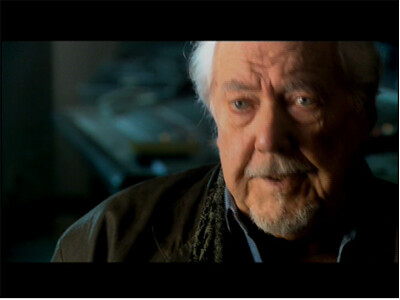


A CASE FOR ALTMAN


In the documentary A Decade Under the Influence, when the top directors of the '70s were running through their list of directors that had the most impact on them, Robert Altman said, "The filmmakers who influenced me the most, I don't know their names, because I would go and see a film and hate it, and I'd say, 'I've got to remember never to do anything like that again.'" I am not sure there is a better way to sum up this chaotic filmmaker, whose output is often as frustrating and disappointing as it is exciting. For nearly four decades, he has always been out on the furthest ledge, pushing his skills in an effort to push the film medium. When he fails, he fails spectacularly, and in some ways, it may be that sort of daredevil approach that allows him to soar so high when it works. (See also: Spike Lee.)

Over the last two months, there has been an outpouring of Altman films on DVD. There doesn't seem to be any real reason for it. No milestone has been hit, or a sudden rediscovery of the man's work as part of a zeitgeist in film culture. Just a happy coincidence, it seems.

That said, it's likely no coincidence that Criterion timed two of their Altman packages to land in October, just in time for the election. Both Secret Honor and Tanner '88 are from two decades ago, but their political bite has not been dulled by the passage of time; on the contrary, the points are sharpened by the discovery of how little progress we have made.
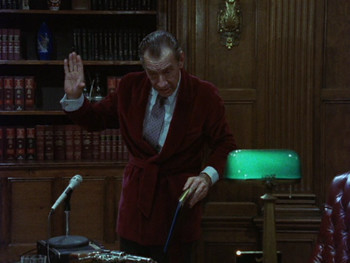


Secret Honor was a one-man play that Altman saw in 1984 and decided to commit to film. The stage production starred Philip Baker Hall as President Richard Nixon, alone in a room, trying to write some strange version of a memoir by dictating his thoughts into a microphone. Over the course of the night, he becomes unhinged, disappearing down a vortex of madness, speaking tangentially, exposing his own insecurities. Altman saw no real need to monkey with what was working, and so stuck with Hall and created a confined set that he could prowl around in. The only major addition he made was a bank of video monitors, playing up Nixon's self-obsession and metaphorically representing his fractured personality. He lets Hall loose and then tries to make the camera keep up with the bravura performance.

I'm sad to say it's not hard to see our current commander in chief heading in the same direction. There is the same single-minded need to be right, and the same paranoia and feeling that if you aren't with him, you're against him. There is a lesson here, the exposure of a certain mentality that can shatter when its own self-belief is challenged.

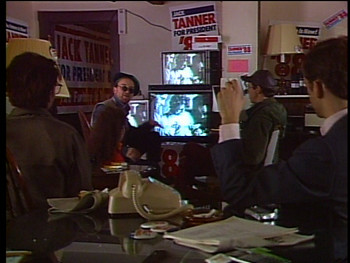
By contrast, Tanner '88 isn't nearly as heavy. This influential satire is a mockumentary that originally aired as an early HBO television series. Scripted by Doonesbury's Garry Trudeau, Tanner '88 follows fictional Presidential candidate Jack Tanner (Michael Murphy) on the campaign trail. While his foibles and the fumbles of his staff end up grist for Altman's comedic mill, Jack Tanner stands in contrast to the Nixon of Secret Honor. Tanner is attempting to regain the hope that Nixon's betrayal dashed on the rocks. He may be clumsy, but he's sincere, something that is becoming increasingly rare in today's political climate. Altman and Trudeau saw the trends developing in how the media portrayed a candidate. The politics of personality were starting to take over as the Presidential hopefuls were becoming more savvy to how to portray themselves in front of cameras. Hell, the numerous real-life participants in Tanner '88, which was shot on the actual campaign trail, is testament to that.

Tanner '88 paved the way for Steven Soderbergh's K Street, another HBO mockumentary series that aired last year and showed how the lines between fiction and fact in our current age of instant news has been obscured even further. Apparently, Altman and Trudeau saw a similar opportunity in today's media, as well, and gathered the principal players from Tanner '88 back together for a new series, Tanner on Tanner. To further drive the point home, Tanner's daughter (Cynthia Nixon) has become a documentary filmmaker who is putting together a piece on her father's Presidential aspirations. In one already famous scene, the young Tanner crosses paths with one of John Kerry's daughters at the Democratic National Convention, and the young Kerry is making her own film about her father's real campaign. Life and art have no distinguishable beginning and end.

Tanner on Tanner is now also available on DVD, after having initially aired on the Sundance Channel. Sundance also re-ran the original series, and Criterion has included the new introductions that were made for that marathon, featuring the characters reflecting back on what happened sixteen years ago. There is also a fascinating conversation between Altman and Trudeau, reminiscing about how far out on the edge the project was at the time.


If you're tired of politics and you want something a little lighter, Columbia/Tri-Star has released Atman's 1974 comedy California Split. Elliott Gould plays a motormouth gambler who sucks George Segal into his on-the-fly life after they are mistaken for a pair of grifters at an old-folks' poker house. Gould is a magnetic personality who always has the inside info and a new line on a big score. Segal can't help but follow him. He makes everything sound so exciting!

And it is exciting, at least for a little while. One scrape follows another, leaving the men physically battered, broke, and in search of another shot at a big win. Altman shoots it all in a loose style, letting his actors wander and explore. The characters are freewheeling, and when they careen out of control, Altman let's the movie go out of control, as well. The gambling life is a manic one, full of exhilarating highs and debilitating lows, and the audience is let in on what it must be like, experiencing the hearty laughs when it's all going well, and feeling a little sick when it drops back down.

While California Split is one of Altman's lesser-known works, Short Cuts is easily one of his most famous. Released in 1993, it received much acclaim and was a surprise success. Not even Elliot Gould's California Split character would have bet that a three-hour film with a huge ensemble cast and an interweaving narrative based on several Raymond Carver short stories would have been a hit. Too bad, because the long shot paid off.

So, it's been a strange oversight that Short Cuts hasn't been on DVD until now. Criterion has remedied that, delivering their best Altman package: a double-disc set chock full of extras, housed in a swanky slip case alongside a reprint of the Carver story collection that inspired it all.
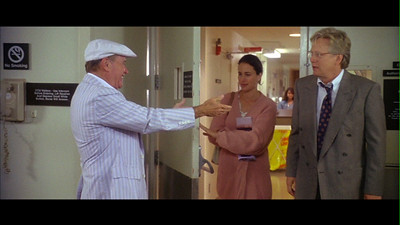


After a decade, Short Cuts still stands out as something fresh and compelling. Altman had spent the '80s in somewhat of an exile, as the previous decade of creativity that had been forged by single-minded directors gave way to the giant Hollywood spectacle. The Player (1992) put him back in the public eye, and Short Cuts was his bold follow-up. Returning to the ensemble casting that had become his '70s signature, and turning Carver's prose into an interconnected symphony of lives of disquiet and desperation, Altman exposed a Los Angeles full of people who lived very different lives, but who had all gotten lost on the path to the same destination: human attachment.

The cast reads like a who's who of the brightest of early '90s cinema: Tim Robbins, Frances MacDormand, Peter Gallagher, Jennifer Jason Leigh, Robert Downey Jr., Madeleine Stowe, Matthew Modine. It's also probably the first place most of us saw Julianne Moore--and we see a lot of her. She has an emotionally raw scene where she exposes herself, both physically and mentally, confessing to an infidelity while wandering the room pantsless. It's a dual nakedness, a case where director and actress are fearless together.

Moore's only competition for snatching the defining moment of Short Cuts is Jack Lemmon. His virtuoso monologue is the center of the film, encapsulating the themes of disconnectedness in one speech. His story is tragic for how pitiful it is. Caught by his wife having sex with her sister, his whole life fell apart. He has spent thirty years wishing someone would just listen to his side of the story. If someone would only communicate with him, he'd be understood, and he'd have it all back. Or so he thought. It all comes spilling out of him, but in the end, he feels no more in touch, and he simply walks away.

In the decade since Short Cuts, Altman has continued to traverse all over the map. His John Grisham adaptation, The Gingerbread Man, failed to find an audience, and Dr. T & The Women was universally panned; yet, he got Oscar nominations for Gosford Park, made the charming character piece Cookie's Fortune, and experimented with blending fiction and reality once more in last year's The Company. By all accounts, he is the same old Altman, and this recent spate of re-releases should hopefully be a mere taste of what is to come.


SIDELINE: MORE REVIEWS FOR 01/08

Given that I write more reviews than what you see here, below is a list of non-Criterion films I covered in the past month that may be of interest to Criterion fans.

IN THEATRES...

* Cassandra's Dream, another solid morality play from Woody Allen.

* The Orphanage, a chilly new ghost story straight outta Spain.

* Taxi to the Dark Side, a must-see documentary that brings home the torture scandals in Iraq with chilling results.

ON DVD...

* An Affair to Remember - 50th Anniversary Edition, the Debora Kerr/Cary Grant vehicle that just gets better with age.

* Essentials Director Series - Pedro Almodovar, a less-satisfying coupling of two of Pedro's transitional efforts.

* Ocean's Trilogy, a box with all three of Steven Soderbergh's stylish heist films.