Thursday, January 3, 2008

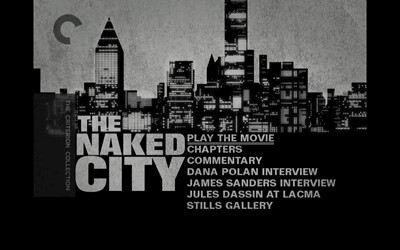
THE NAKED CITY - #380

"While you're thinkin' up a nice story about what didn't happen, supposin' you tell us what did."


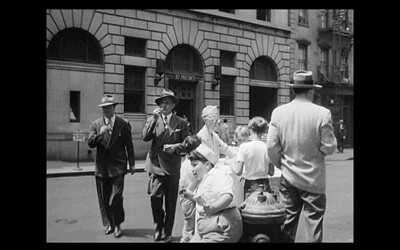
Though the 1948 film version of The Naked City is regularly listed on the classic rosters of film noir, in many ways, I would argue for it being almost an anti-noir, Jules Dassin's clean-up on aisle hardboiled. While notably trading the impressionistic shadows that were a hallmark of the genre with the documentary look of Neorealism (swapping, in effect, the Germans for the Italians), he also extracts the dark cynicism from the crime picture, creating instead a police procedural where the good guys are clearly defined and the bad guys unambiguously punished. Though Dassin still had a few noirish tricks up his sleeve (Night & the City and Rififi were yet to come), he practically invented a whole other animal with The Naked City, eventually spawning the television show of the same name and paving the way for other day-in-the-life cop shows like Dragnet and the contemporary Law & Order franchise, as well as films like Mervyn LeRoy's The FBI Story.

The concept seems ridiculously simple now. Shoot on the streets of New York, in real locations, and follow the investigation of one crime from the discovery of the body through to the apprehension of the murderers. The lead officers establish the unshakable paradigm of the seasoned veteran and the well-meaning rookie: the wonderfully nonchalant Det. Lt. Muldoon (Barry Fitzgerald, The Quiet Man) and the do-gooder family man Jimmy Halloran (Don Taylor, The Flying Leathernecks). Though these two men will essentially be our guides through the complicated case, the camera will actually drift from them to follow the cops on the street tailing suspects, the crime labs going over the evidence, and, in a true stroke of genius, the citizens of the city itself.


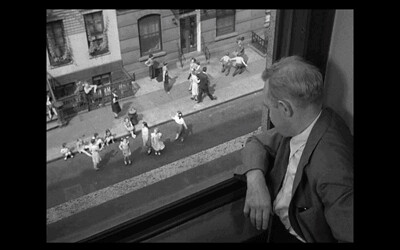
Even though The Naked City takes place over several days, Dassin and his screenwriters (Albert Maltz and Malvin Wald) framed the story like it was one day, opening the picture as the sun is setting and night life is entering into full swing. Led by a lively narrator (Mark Hellinger, the movie's producer, speaking as himself), the camera visits people on the night shift and in swank society parties, eavesdropping on the thoughts that drive their evening out or that keep them company as they slog through their tasks. We also see two seemingly random and unconnected crimes, but from a distance, so that we only know what happened but not to who or by whom. On into the next day, as we travel to work with Halloran and listen in on conversations on the subway, New York itself remains a breathing, pulsing element of the story. Often, Dassin's footage is just of crowd scenes, probably shot on the fly, and he would dub in conversations later, layering the dialogue over the image even when the extras weren't talking. While I am sure this was an economical decision, it actually works as an artistic one, adding to the overall feeling that all life in New York is connected. It doesn't matter who is talking, the metropolis is engaged in one ongoing discourse. (The way Dassin weaved through his crowds, jumping from one person to the next, I couldn't help thinking of Wim Wenders' eavesdropping angels in Wings of Desire.)

Some of the plot business in The Naked City comes off as a little dry, but the story is of such a classic model, it's always going to work on some level. As the police officers check out the angles on each clue, they end up finding more clues, gathering details until the various disparate pieces move together and make a complete report of what happened. Some of the work is tedious, hopping from one pawn shop to the next, from one textile merchant to another, but Dassin also takes us on rooftops to talk to construction workers and into tiny, ramshackle diners in search of witnesses. Where the movie starts to hum, however, is in the interrogation room. Muldoon sees right through the lying con man Frank Niles (Howard Duff, All My Sons) and pities his naïve fiancée Ruth (Dorothy Hart, I Was a Communist for the FBI) , and the old detective plays both of them like his own personal marionettes, letting them tell their lies and then tripping them up with the things they don't know he knows. Barry Fitzgerald is the prototypical police trickster, acting as if he's not too with it or maybe even doesn't care, lulling his targets into underestimating him so that he can strike when they least expect it. It's the most flashy element of a movie that otherwise takes some of the glamour out of police work.

Don Taylor is a good foil for Fitzgerald. Looking like a 1940s Luke Wilson, he rushes around digging for information, eager to make it all fit and haul the bad guys in. He's a little bit stiff and a whole lot milquetoast, but he stands as the model of good next to the characters he's bringing to justice. As Niles, Howard Duff is nervous and twitchy while Taylor is confident and solid; where the killer (Ted de Korsia, The Lady from Shanghai) is selfish and dirty, the detective gives of himself and always fights clean.

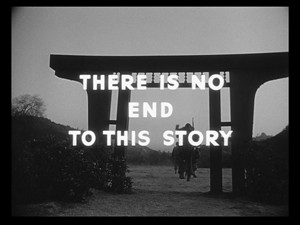
In the end, though, as the sun goes down on The Naked City yet again, it's driven home that the true story is of the place itself, of the bustling lives that move through the streets and the push and pull between those that break from the social contract and the men who put them back in line. In style, structure, and technique, The Naked City must have seemed revolutionary in 1948. Television has made the movie seem a little old hat by endlessly recycling the formula Dassin and the writers created, but The Naked City will always remain an icon. No one can ever forget the famous last lines from Hallinger's narration: "There are eight million stories in the Naked City...and this was one of them."

Or more accurately, The Naked City was the first, and when it comes down to it, probably still the best--whether it's one of eight hundred, eight million, or even eight billion.


Originally written March 14, 2007. For technical specs and special features, read the full article at DVD Talk.

Tuesday, January 1, 2008

ACE IN THE HOLE - #396


When the writers for DVD Talk put their heads together to decide what their Top 20 DVDs of 2007 were, the one that came up most often was Billy Wilder's lost masterpiece Ace in the Hole. No surprise, then, that it was a hotly sought-after item back in the summer when it was up for review, and since I hadn't been the lucky so-and-so that had scored the assignment, I jumped at the chance to write the blurb for the countdown. As such:

"Billy Wilder's cynical, noirish tale of a big-city newspaper reporter (Kirk Douglas) manipulating the news for a small-town rag has been a sort of holy grail for film fans for decades now. Lambasted on its release in 1951, it's been out of circulation almost completely since, never released on home video and only rarely showing up on cable TV. So, it's no surprise that when this lost classic finally got a proper re-release, it would end up on the Criterion label and receive an awesome two-disc collection to reward us all for being patient. With a package designed to mimic a newspaper and packed with illuminating extras, Ace in the Hole is the DVD that got the most of us excited around these parts. Snappy dialogue, excellent performances, and a compelling plot that was ahead of its time and still socially relevant today, the movie more than lives up to its mythical reputation."


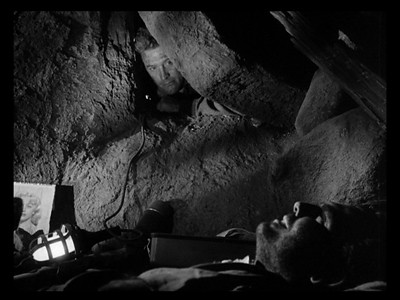
I hesitate to really call Ace in the Hole noir. Noirish, I guess, is passable. Though it does bear some similarities to the harsh world of film noir and its stylistic use of light and shadow, Wilder's evisceration of sensationalistic media and the audience that loves every over-blown, dirty minute of it is about as far from the normal city streets and petty crime of noir as you can get. Those shadows really only come out when Douglas is down in the cave, a metaphorical representation of the darkness of men's souls. A good man is trapped down in there, the trusting husband and loving son, Leo Minosa (Richard Benedict), being crushed to death by the weight of exploitation and the public's appetite for tragedy. There is a reason Kirk Douglas' Chuck Tatum can't get through to Leo and can only see him from a small hole on the outside. There is something that will always separate guys like him from men like that.

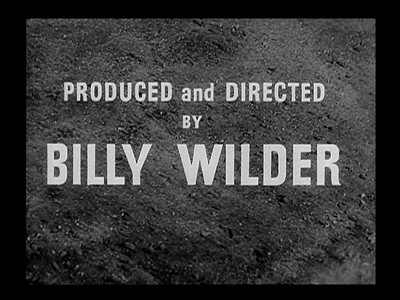
Wilder must have had some kind of crystal ball when he wrote the movie with Lesser Samuels and Walter Newman. (It really was Billy's picture all the way. He also produced.) A remake of Ace in the Hole today wouldn't have to alter the story much. Tatum wouldn't work for a small-town newspaper anymore, he'd probably work for some crappy local TV station. Create a disaster-related logo and add a news crawl, and there'd be no difference between the media circus as depicted in 1951 and the kind of bottom-feeding we saw on cable news all through 2007 and I am sure will again in 2008.


Leo and his parents really do seem like the only good left in a world gone nuts. Though the Big Carnival--as the film is alternately called--is kicked into gear by Big Slick from NYC, the first gawkers on the scene are Ma and Pa America, a nuclear family who alter the map of their vacation to come see the man buried under a mountain. Wilder makes them as bland and average as possible, easily interchangeable with any other everyman. Pa isn't some dumb loser, but a man who is at least successful enough in his business (insurance salesman, somewhat poetically) to be able to afford a mobile camper and a car to pull it with. It would be easy to sit in our chairs at home and say, "Hey, look at the dumb yokels getting off on another guy's misery," but we're the ones watching the yokels, and does that not make us complicit in the exploitation? You can make the gesture of downloading Sting's charity single, but if you actually like the song, you grabbed it for reasons that aren't completely selfless, and even you, yes, profit from the pain. Shake it more than once, as my dad would say, and you're playing with it.

On the noir front, I suppose you could say that Chuck Tatum is a noir hero in exile. Though a newspaper reporter, he isn't that far afield of the crook on the lam, run out of town for the things he did, not able to show his face lest his neck get chopped. A hood would have to buy his way back into the good graces of a mob boss with the missing jewels or large sums of money, Tatum needs a juicy story to get back on a major metropolitan paper. His misdeeds were lying and adultery, messing with the boss' livelihood and then fooling around with his wife. Trade one gang for another, back-alley thugs for newshounds, but the crime is the same.

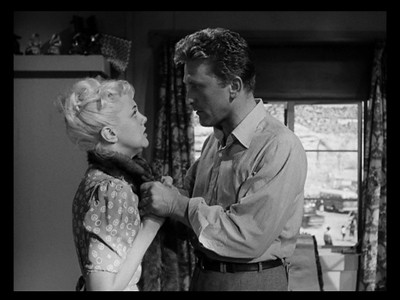
So is the inevitability of the past catching up with you, of wherever you go, you're still going to find yourself. As a prowling leopard, Tatum certainly hasn't changed his spots. He is still willing to fudge the facts and alter the situation to make Leo's story work better. He tells himself he's not lying, and he didn't create the situation, but he has done whatever he can to prolong it. More days underground for Leo means more headlines for Tatum. Likewise, it puts more money in the family business that Leo was running, an out of the way trading post (read: souvenir shop and diner) in New Mexico. Leo's wife of five years, Lorraine (Jan Sterling), has had the itch to wander for a while, but now that the cash is rolling in, she'll stick around. She'll also do it for Chuck. Again, the reporter has learned nothing at all.

At least not yet.


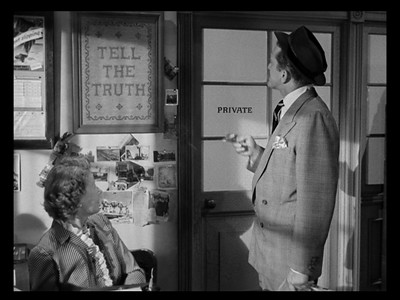
"Cynical" is probably the most commonly used adjective when describing Ace in the Hole, and I can't decide if that's wholly accurate or not. Is cynicism merely realism in disguise, or is it that realism is cynicism when she puts on her make-up? Wilder's opinion of humanity is at an all-time low in Ace in the Hole, he sees the mob as one giant, uncaring animal; however, his opinion of the individual is rather high. For all of his selfishness in commandeering Leo's accident for his own purposes, Tatum isn't so lost that he doesn't eventually realize what he's done. Sure, it takes Leo's death to wake him up, but at the same time, he could have covered his tracks, let the responsibility fall elsewhere. Instead, he makes a last-minute scramble to set things right. Thus, Wilder believes that each and every one of us can find the good within ourselves, he's just not sure it matters when facing a crowd hungry for doom. Tatum tells the truth, but no one wants to hear it. It's far less interesting, and accepting reality also means accepting their own role in the affair.

As the individual who tries to stand up, Tatum pays the ultimate price. Yet, his desire to do right takes him back to the one place where he knows truth matters. For all of its vilification of the hoi polloi, Ace in the Hole does end up vindicating the uncommon morality that can still exist inside the common man. Tatum returns to the one man whom he knows has kept his head through this whole thing, and who sees through the spectacle that the reporter has kicked up. Jacob Q. Boot (Porter Hall) was the man who hired Chuck Tatum when no one else would, and he was the guy who called him on his bunk as soon as he saw the Big Carnival getting out of hand. Boot is the guy who wears both a belt and suspenders. It's not that he's convinced that either can't handle the task they were made for, but he can't see why when you know that one thing is right, you shouldn't double-up and be extra sure. By starting where he began, and by taking us back to Boot, Wilder is giving us hope. Cooler heads can prevail, and they will stand strong even when the rest have scuttled back to whence they came.

Ace in the Hole, a noir that isn't a noir, the cynical movie with love and hope in its heart. I guess it's no wonder that it scared its audience the first time. Billy Wilder gets a little too close to the truth that's in all of us, our contradictions and our maladies. He's the Jacob Q. Boot of this world, and he's sticking that boot right up our collective behinds.


Monday, December 31, 2007

SIDELINE: MORE REVIEWS FOR 12/07

Given that I write more reviews than what you see here, below is a list of non-Criterion films I covered in the past month that may be of interest to Criterion fans.

IN THEATRES...

* Persepolis, a wonderful animated adaptation of the comic that I daresay improves on the original while maintaining its spirit.

* There Will Be Blood, the masterpiece P.T. Anderson skeptics have been waiting for. And what about Daniel Day-Lewis? And that Jonny Greenwood soundtrack? Cor!

* The Walker, Paul Schrader's new film never quite gets up to speed, despite some excellent performances by Woody Harrelson and Lauren Bacall.

* Youth Without Youth, wherein Francis Ford Coppola returns to directing and makes an ambitious indie project. Sad to say, his reach exceeds his grasp.

ON DVD...

* Becoming John Ford, an excellent documentary leading into the hardcore re-release project of the director's oeuvre.

* Essentials Director Series - Jean-Luc Godard, a box collecting four previously released Godard DVDs, three from his early career and his most recent commercially available effort, Notre Musique.

* Film Noir: Five Classics from the Studio Vauluts, a handful of Kino noirish DVDs tossed in a box, proving the term classic is fluid. Includes work from Fritz Lang, Michael Powell, Anthony Mann, and Ida Lupino.

* First Snow, the Guy Pearce thriller that may be the best overlooked film of 2007.

* I Am Cuba - The Ultimate Edition, Mikhail Kalatozov's revolutionary visual poem given a new three-disc set. You must get this!

THE FIRST FILMS OF SAMUEL FULLER - ECLIPSE SERIES 5


This past July at Comic-Con International, I happened to be at my publisher's table when a kid came up and asked me when a particular cartoonist would be signing. I told him the time and said, "You'll recognize him right away. He looks like he draws."

I wasn't being facetious. A lot of cartoonists have a certain physical quality that comes through in their drawing style, particularly in how they design characters (they are their own most readily available model, after all). It's weirdly like how owners and pets often resemble one another, and in the case of film directors, how they live their lives and present themselves often make them seem like they've stepped out of one of their own pictures. Quentin Tarantino, an admirer of Samuel Fuller and a participant in the documentary about his hero The Typewriter, the Rifle, and the Movie Camera, is hyper and rarely stops talking when you see him "being himself." Likewise, Jean-Luc Godard, who cast Fuller in his 1965 flick Pierrot le fou, comes across in interviews as obtuse and irascible. Those adjectives could also be used to describe Godard's motion pictures.

Catch any footage of Fuller, including any of the many interviews in The Typewriter, the Rifle, and the Movie Camera or even his appearance in Pierrot, and you'll be confronted with a real character. He speaks bluntly, his voice gruff, but he also has a devilish lilt that suggests he knows he's got the biggest brain in the room and he's earned the right to be a smartass. It's not that he speaks in ironies, either, he's far too clear-cut for that. It's just he understands how absurd most other points of view are. As he chomps on his cigar, his confidence also suggests he's got what it takes to back up anything he says.

A Samuel Fuller motion picture has the same kind of energy, the same swagger and sense of moral values. I wouldn't say that Fuller deals in a brand of ethics where good guys wear white hats and bad guys don black ones, because his heroes aren't that far off from his rogues. What drives a Sam Fuller protagonist is his resolve, his belief in his own rightness, regardless of the odds. They are tough guys, usually living in a world that hasn't just gone soft, but has lost its head and its common sense. It gives Fuller's movies an unmistakable flavor, and it is already in evidence in his earliest efforts. The three films in The First Films of Samuel Fuller, the fifth boxed set in Criterion's Eclipse Series, may not all be equal to the quality of product the auteur would earn his reputation on, but they are still Sam Fuller through and through. Even when the talent was raw, the personality was apparent.
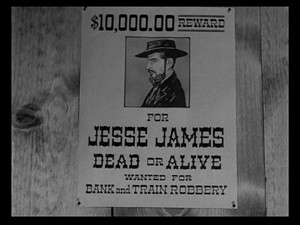


Fuller had been a reporter, screenwriter, and novelist when he directed his first feature in 1949. I Shot Jesse James (81 minutes) isn't the story of some great gunfight where the infamous outlaw got his comeuppance, but the tale of Robert Ford (John Ireland, Red River), a member of the James gang who shot their leader in the back in order to get a pardon from the government and marry Cynthy (Barbara Britton, The Virginian), an actress he was in love with. Only, rather than bringing him fame and comfort, the deed brought Ford ignominy. In an Old West culture obsessed with the outlaw (a truly American trait), Ford was little more than a coward. To my eye, he is almost the antithesis to a Fuller hero. Shooting Jesse James (played here by Reed Hadley) wasn't something Ford really thought he should do, hence his wavering nerve and his choice to do it when the killer was unarmed and unprepared. The negative reaction of the public puts Ford on the defensive, and though he tries to redeem himself, it never quite works because he's still trying to justify the shooting as proper.

Funny thing is, this apparently wasn't Fuller's intention. He wanted to go against the grain and try to demythologize Jesse James and treat Robert Ford sympathetically. In this goal, he's not entirely successful, and many of his choices seem counterproductive. For instance, in the opening sequence, James is seen saving Ford, who took a bullet in a botched robbery. He takes his future assassin back to his home, where James lives as a family man under a different name. Hadley's portrayal of the bank robber is neither cold-blooded nor lethal, and this makes Ireland's Robert Ford appear weak and indecisive.

Perhaps it was just first-time jitters that put Fuller off the mark, because as a whole, I Shot Jesse James doesn't quite come together. There are long gaps between the bigger dramatic beats that start to drag after a while. At other times, the story seems to jump over important plot points, using newspaper headlines or wordy exposition to fill in gaps. A subplot with one of Cynthy's admirers, John Kelley (Preston Foster, The Harvey Girls), who will end up being the lawman that confronts Ford, never really gels or takes control as the real romantic throughline. Nor does Fuller have the firm hand needed to pull off some of his tricks when he tries to convey Ford's change (having him shoot an offscreen mountain lion not only plays like a bad gag, but also makes one think he simply couldn't afford the cat on this B-picture's budget; allegedly, it was shot in ten days). This makes I Shot Jesse James a solid debut, but not necessarily an auspicious one.

(For a more recent take on the same story, see Andrew Dominik's The Assassination of Jesse James by that Coward Robert Ford.)


Where Fuller does already excel in I Shot Jesse James is in the action sequences. The opening robbery is well choreographed, and the two fistfights John Kelley gets into are shockingly physical, even brutal. Unfortunately, for his second feature, The Baron of Arizona (1950; 97 minutes), the writer/director didn't pick a subject that had a lot of fighting in it. It did, however, have a rather Fuller-esque scoundrel and an excellent lead actor to play him; yet, the man at the helm was still struggling with melodramatic story structure.

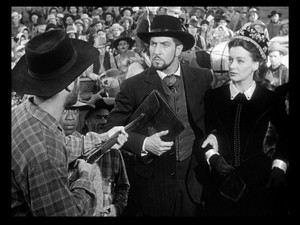
The Baron of Arizona is based on the real-life story of James Addison Reavis, who in the 1880s attempted one of the most audacious con jobs of all time: swindling the U.S. government out of the entire Arizona territory. Reavis is played by Vincent Price, who was a veteran of the industry by 1950 but hadn't yet slid into his niche as a leading man in horror films. He's already able to play devilish, however, and he is an expert at the sort of calculating schemer who would go to great lengths to pull off his plan. Reavis spent many years mastering forging techniques, camping out in a Spanish monastery in order to alter ancient records, traveling south of the border to falsify graves, and even carving a proclamation in a giant rock in the middle of the desert.

Shot in fifteen days instead of ten this time, Fuller definitely has a better handle on his material and a stronger visual sense than he had on his first feature. Reavis' office almost looks like the kind of mad scientist's lair we'd see Price occupy in later films, what with its giant maps and model trains. A lynching scene set in this room is both frightening and visually powerful, the gruesome action shown almost entirely in shadow. The actual pieces of Reavis' plans are also wonderfully detailed and engrossing. Fuller still relies on some heavy-handed storytelling to get around a lot of the more complicated matters, however. Reavis' nemesis (Hadley, once again), a government man who literally wrote the book on forgery, narrates the tale from several decades after the action, in the early 1910s when Arizona is becoming a state. His voiceover slows down the plot, which has enough going for it that Fuller should have just let it play.

The melodrama this time around comes in the form of the love story between Reavis and the Baroness Sofia (Ellen Drew), the pauper who he trumps up as the rightful heir to Arizona by decree of King Ferdinand. He doesn't tell her that he's faking the whole thing, and she doesn't tell him that she really fell in love. While some of the later scenes between them are sweet, the earlier conflict is toothless. She protests to Reavis' greed, and he gently sets her aside, and she never stops loving him. It doesn't come off as psychologically sound. Likewise, the stiffness of the costume drama too often grounds Fuller's normally rootless shooting style.

Still, for his first two pictures, Fuller was establishing himself as a man who could get the job done. He was also doing it outside of the normal studio system, working independently for the Poverty Row producer Robert L. Lippert. Fuller needed to work with a guy who was as maverick as he was--and as much of a maverick as his characters, including Reavis and in his own way, Ford, were--in order to fully blossom. For his third feature, Fuller wouldn't just write and direct, he also produced. Did I say blossom? Boy, did he ever!


For as much as I Shot Jesse James and The Baron of Arizona were middling efforts, Fuller's third film for Lippert was a bonafide classic, giving full birth to the filmmaker's no-nonsense, loose cannon mise en scene. An unflinching Korean war drama, The Steel Helmet (1951; 84 Minutes) is the first of many pictures where the director would question the government, challenge racism, and ponder the horrors of war, and he would do so with the kind of guts few others in Hollywood had.

Made in the very early days of the conflict in Korea, The Steel Helmet is a cynical take on modern warfare from the vantage point of a returning soldier who was still weary from World War II when he got sucked into this new battle. The movie opens on a shot of the helmet in question, seemingly sitting on a mound of dirt, a bullet hole distinctly visible in its upper curve. After Fuller's triple-threat credit fades from the screen, the helmet rises, revealing Sergeant Zack, played by the burly Gene Evans. Zack struggles out of a ditch, climbing over corpses, his hands tied behind his back. This is no rah-rah portrait of a man serving his country. It's hard to imagine such an image coming out of the studio system only a few years prior.

The Steel Helmet presents a grim visage of war. Zack is the last surviving member of his platoon, who were all shot after being taken prisoner. Everything is off-kilter. Zack is rescued by a young Korean orphan (William Chun) whom he nicknames Short Round, the term for a bullet that can't go the distance--not unlike the one that pierced Zack's helmet, circling around the inside and coming out under the front brim, the narrowest of misses. This seems to characterize the entirety of the American effort in this portion of the battle. The attack is meant to be deadly, but it doesn't quite hit.

Fuller is intending to make a greater point about the futility of war, particularly for a nation as divided as the U.S. The ragtag group Zack eventually joins up with include an African American medic (James Driscoll) and a Japanese American called "Buddha Head" (Richard Loo). Zack speaks to all of them, including Short Round, with little concern for social propriety. They are good enough to die with, but just barely. When the team captures a North Korean soldier (Harold Fong), the communist tries to persuade the doc and Buddha Head to defect, but it's a no go. Even as messed up as we were, we could unite under the flag to hate him.

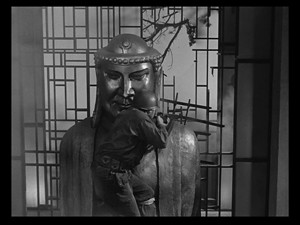
Of course, that doesn't make war sensible. In fact, the whole concept is so lopsided, not even the sanctity of a peaceful philosophy like Buddhism can be maintained. Early in the movie, enemy soldiers pretending to pray at a shrine ambush Zack and Short Round, and the mission goal for Zack's new squad is to set up camp within a Buddhist temple. In one of his signature perverse images, Fuller shows the medic nursing the captured soldier under the gaze of the giant golden statue of Buddha, the I.V. bag hanging from the idol's large finger. The communist dies, begging for Buddha's blessing, but unable to hold on to life even in that position. God is watching, but he's letting us go about our business.

All of Fuller's trademark moves got their start in The Steel Helmet. The sharp cutting, the blunt philosophy, the snappy dialogue, and the almost screwball tangential humor--it's all in this picture. Zack is the real center of The Steel Helmet, though. He's like a living, breathing embodiment of the Fuller style. Gene Evans is gruff, hulking, and weary from the world. Even so, he soldiers on, even when it all threatens to crush him. His helmet represents the dumb luck of the righteous--or if not necessarily the righteous, the guys who can at least stay true to something. When the inexperienced Lieutenant (Steve Brodie) that Zack finds himself in the service of confronts what he perceives as Zack's misguided contempt for authority, Zack fires back with the story of the kind of leader he'd gladly follow, revealing that his issue is not with those in power, but just the stupid ones.

Which would probably put Zack right in the same pot as his maker. Samuel Fuller would never have time for the blind followers, the wishy washy, or the guys who believed in nothing. Even if there is emptiness all around you, in a Fuller narrative, you still have yourself. Likewise, put a camera in the director's hand, and he'd make a movie. That's who he is, that's what he does, and like one of his own heroes, he'd suffer just about anything to get it done.


Originally written August 14, 2007. For technical specs and special features, read the full article at DVD Talk.
Friday, December 28, 2007

WR: MYSTERIES OF THE ORGANISM - #389


Midway into the 1971 Yugoslavian WR: Mysteries of the Organism, I started to wonder if I had been duped. Dusan Makavejev's mind-bending agitprop is a rapid cuisinart of documentary footage and staged political skits. Their basis is the questionable psychological theories of sub-Freudian Wilhelm Reich, whose initials provide the code in the movie's title. Watching the testimony of people who knew the doctor and witnessed his struggles against anti-communist groups and the American government, I started to wonder if this wasn't all a big joke, that it was really a mockumentary, an Eastern European Spinal Tap. I mean, a rogue analyst preaching the power of the human orgasm as a pathway to true, state-sponsored freedom, health, and power? Someone had to be making this up.

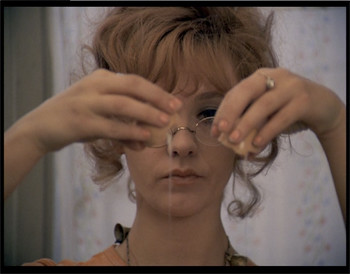
Except no one did. Apparently that portion is real, as real as the strange story of the sexually curious Yugoslavian woman is fake. Milena (Milena Dravic) is a young woman enamored of both rhetoric and pleasure, and she spends a lot of time trying to convince her comrades that if they practiced free love, not only would they have a much healthier Yugoslavia, but they'd be acting in line with the original Communist philosophy. I could see that Milena was Reich's teachings put into action--though, it takes her a while to practice free love herself, despite her roommate (Jagoda Kaloper) giving it away all over the place. What I couldn't tell was whether Makavejev intended Milena's situation to be ironic or not. When her fellow Party members break out into pro-Stalinist anthems (often juxtaposed with footage from an actual propaganda film about the dictator), it seems like the director is wryly bursting the Commie bubble, but Milena never wavers. She seems like she means it. (Testament to the strength of Makavejev's actress, really. Dravic's earnestness goes a long way to sell her portions of WR.)

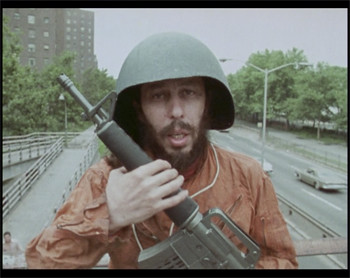
This is just one of the many things that baffled me when trying to piece together the many disparate elements of WR: Mysteries of the Organism. There are clearly two distinct halves to this movie: the material Makavejev shot in America (and in English) is the documentary stuff, and the material shot in Yugoslavia (and in Serbo-Croatian) is the fictional dramatization of the director's theories. Where it starts to get fuzzy is the second U.S. story line, where Makavejev follows a group of libertines in New York city. Interviews with transvestite and Warhol cohort Jackie Curtis seem real enough, but other pieces of the surroundings seem staged, such as the nudists arguing over revolutionary pornography in a publishing office (are they talking about Screw magazine, of all things?). The hippy dressed up as a soldier (Tuli Kupferberg) running around the streets is definitely a contrived stunt, but how connected to the rest is he? Is it Kupferberg that Curtis alleges asked her to marry him? Where exactly is that fourth wall?

Or maybe it doesn't matter. Maybe getting hung up on fact and fiction is just the easiest thing for me to dangle on because, as a whole, WR: Mysteries of the Organism puzzles me. As a formalist experiment, it reminded me a lot of Jean-Luc Godard's Sympathy for the Devil (a.k.a. 1+1) in how it has the duality of the documentary track and the Brechtian political skits. In the Godard film, the documentary elements of the Rolling Stones recording their anthem to cynicism worked, but the pedestrian, pedantic sketches were just annoying interruptions. With WR, I found it to be the opposite. The documentary elements don't really speak to me, and sometimes come off as downright silly. When the hippy soldier jumps up and down like a monkey and strokes his gun, simulating masturbation, I wondered if maybe I had sat on my remote and flipped over to a cable-access channel. It's not the deepest of intellectual connections.

The Yugoslavian story, on the other hand, has much more potential, and maybe could have benefited from standing on its own. As political melodrama, it has a lot to offer, particularly when Milena connects with a Russian figure skater (Ivica Vidovic), the top example of a Stalinist Man (he even shares the dictator's first two names), and tries to convince him of her way of thinking. Cutting away from that to seeing a woman make a plaster casting of a man's penis was too disjointed for me.

Even so, WR: Mysteries of the Organism won the Luis Bunuel Award in Cannes and has survived as a staple of underground cinema. This made me wonder if I delved deeper, maybe I could get what Dusan Makavejev was after. Since this new DVD is part of the Criterion Collection, it's got quite a few special features to go with the movie. I decided for once not to approach these as extras or side elements, but as essential components of this DVD experience. I would use them to try to get to the heart of this movie.


I first turned to the interior booklet that came with the disc, which has a four-page essay by critic Jonathan Rosenbaum. It's a good starting point, as Rosenbaum begins to decipher a lot of what we see on the screen. Beginning with more background on Wilhelm Reich, he draws greater links between Reich's theories and how Makavejev tries to show them in practice through two opposed storytelling styles in two opposed nations. He also identifies more of the players. That was Screw magazine being discussed, and it's that rag's editor, Jim Buckley, having his penis wrapped in plaster. The soldier, Tuli Kupferberg, was a member of the oddball music group the Fugs, and it's his weird folk songs that play over his street scenes, making his actions a sort of performance art.

Even better, Rosenbaum explains a little bit about Makavejev's politics, leading me to think I could be misreading WR: Mysteries of the Organism as overly political. It's not necessarily pro or anti-Communist, but more humanist than that. Reich denied Communist leanings, and even though we have things like Screw in the States, if we persecuted the doctor as we did, how much more free are we?

From the liner notes, I decided to transition to the audio commentary. Here is the true decoder ring to starting to unscramble the message of WR. Read by actor Daniel Stewart, the track is compiled from Raymond Durgnat's book-length examination of the movie. Detailed, incisive, and not always reverent, this approach uses scholarly dialectic, references the script and interviews with Makavejev, and employs historical and critical writings to place WR in its proper context. As Durgnat lays it all out, he reveals a deliberate structure to the film, each move smartly mapped. This exposes the breadth of the juxtapositions of image, information, and story, with Stalin standing tall as the glue that binds it all together, to the good or the bad.

What this lead me to realize is that not only is Makavejev examining political and personal freedom--and really, with the sexual elements, the politics of the personal--but the liberation of ideas by dismantling mis-en-scene and changing how audience and art interact. One may not enjoy it in total, as I certainly didn't, but you will be engaged. Passive viewing is not allowed. This is what makes the whole DVD thing so exciting for film fans, as a well-packaged film can actually give us the tools to get at something that we may not see right away. Viewing WR: Mysteries of the Organism - Criterion Collection twice now, once on my own and once with the help of Durgnat and Rosenbaum, I'm starting to figure it out. It may not be entirely for me, and certainly with this kind of movie, everyone's mileage may vary, but I can't dismiss it outright. Art is sometimes exploration, and as even Columbus would tell you, it often takes a couple of expeditions to find what you're looking for.

(Criterion is also releasing Dusan Makavejev's follow-up film, Sweet Movie. My understanding is that it's an even more difficult movie than WR. I will be sure to review that at some point in the future.)


Originally written June 19, 2007. For technical specs and special features, read the full article at DVD Talk.

Thursday, December 27, 2007

THE MILKY WAY - #402


I'm not easily impressed when it comes to art that sets out to question and/or challenge religion. I think it's easy to be shocking when trading in other people's beliefs. Blasphemy is cheap to come by. It's much more difficult, and far trickier, to be genuinely provocative, to debate without being smug or crass. Surrealist filmmaker Luis Bunuel has always been just such a provocateur, regardless of his subject. Though religion is a commonplace theme in his work, it's not the only target he's trained his impish eye on. It is, however, the primary subject of his 1969 film The Milky Way (La Voie lactee), which is now available on DVD from the Criterion collection.

The Milky Way concerns itself with two modern pilgrims, old Peter (Paul Frankeur) and young John (Laurent Terzieff), two French beggars (so, also known as Pierre and Jean) making a trek to Spain to visit the blessed city of Santiago de Compostela. As the opening exposition tells us, this is the resting place of St. James, and its name has several entomological meanings, one of which is "The Milky Way." It's a perfect highway for the director to put his story on. The Milky Way is also the name for our galaxy, and so then The Milky Way is about all of us, the whole of humanity.

Peter and John, presumably named for two of Jesus' top disciples, are a pair straight out of Beckett, as is the road they walk. They are in a world where God is always present, but his level of activity is in question. As pilgrims, they follow a route that many have before them, but it's now a paved roadway. Cars speed by, bad Samaritans who refuse to stop and give them a lift. If any of the speeders encountered God on their travels, would they even know? In fact, it's arguable that the man in the cape (Alain Cuny) that Peter and John meet at the very beginning of the film could be the Divine Father (thus explaining the sudden appearance of a younger, smaller traveler next to him). He offers the two hobos money, but only if they already have cash in their pockets. Skeptical John says he has none, and so the man in the cape tells him he will remain poor, whereas when Peter produces a couple of coins, the man gives him a banknote.

What Bunuel seems to be suggesting is that religion only serves those who show up with faith already, turning a blind eye to the sufferers who lack the intrinsic belief. It's a contradiction if one believes the central message of Jesus Christ was to save humanity from its own sins, and only the first of many contradictions Bunuel extracts from religious dogma by standing it next to flesh-and-blood action. He also does so in a darkly comic tone. These things may be heavy, but there is an inherent silliness to them.

As the pilgrim duo travels on, they encounter person after person who is somehow concerned with the living, breathing enacting of Christian philosophy. Structurally, it's a gentle elbow into Chaucer's ribs. The people they meet are of all types--the sincere and the crazy, the duped and the hypocritical--and every story (or parable, if you will) has double meanings. Bunuel rarely seems to be questioning the common believer so much as he is challenging those in authority and the dubious logic they often use to justify their right to rule. So hot is the debate over which sect of the Christian faith has the real truth, we even see one priest digging up the decayed corpse of another so that he can burn him as a heretic after the fact, thanks to some newly discovered personal papers that go against his previous public statements. One must not split from the one truth, even if the argument is ironically about whether God is one being or a holy trinity.

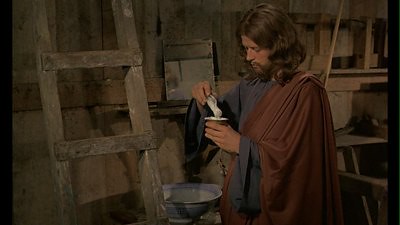
In addition to Chaucer and Beckett, The Milky Way also caused me to think of Monty Python. The transitions are remarkably similar to the comedy show, and there is the same sense of play shared between them. Peter relating a story about a lesson his mother taught him cuts to Jesus (Bernard Verley) and Mary (Edith Scob) in a skit where they have the same interaction as stand-ins for Peter and his mom. All along the road to Compostela, time is immaterial, past and present collide. Cars share the highway with men and their donkeys, and Peter and John often step into costume dramas of various periods from religious history. Likewise, we often see the opposition as just as foolish and unbending as the religious leaders. In one sketch, the Marquis de Sade (Michel Piccoli) is no less self-serving and strident than any puffed-up Pope. Bunuel understands that organized religion brings out the worst in its detractors, too.

Which could be why the director and his co-screenwriter, Jean-Claude Carriere, are so careful to inform us at the end that they have meticulously researched all the arguments they have strung together for The Milky Way, quoting theology and supposed heresy directly wherever required. A lot of the arguments are probably familiar to anyone who has done any religious study, but seeing them within one overriding context serves to emphasize the enormity of the question. Our inability to agree, and our willingness to resort to heinous violence in service of our own need to be right, is more absurd than any of the notions being fought over.

Perhaps what I like best about The Milky Way, though, is that I don't feel that Bunuel has come down too hard with his own ideas. The way he contextualizes all of these arguments, and choosing to air so many theories that had been branded "heresy," is its own commentary, to be sure, but I don't feel like he gives any great weight to any one over another. In fact, the only thing I find he really seems to be push as a truism is the inevitability of where our lives are headed. When Peter and John meet the man in the cape, he foretells where they will end up, and though the two argue over the concept of free will on the way to what is ultimately an empty tomb (or so we're told, and we'd be missing the point to believe it outright), fate plays its hand before they get there. So, too, is the final image of Jesus declaring himself a scourge upon mankind, a conceited deity only concerned with his own worship. If there is anything we know for sure when it comes to faith, it's that human nature will override, and man will ultimately use it for his own selfish designs.

For as funny as The Milky Way is, for as gleeful as Bunuel can be with his visual pranks, it's a chilling way to end the movie. The jester and the filmmaker lose out to the cynic.

That is, if we can separate the three. They may just be one and the same.


Originally written August 20, 2007. For technical specs and special features, read the full article at DVD Talk.

Tuesday, December 25, 2007

THE KING OF KINGS - #266


High school was the first time I really began to explore different kinds of movies. Strangely, the best thing that could have happened to me was moving to a town where there were no comic book stores, because it forced me to find other things to occupy my time. This meant listening to a lot more music, the discovery of more high-minded literature, and scouring the cable listings and video stores for classic and cult-type movies. This included trying silent films for the first time. I distinctly remember a Christmas watching the original Ben-Hur on TNT, back when it was what TCM has now become. Not only was I impressed by the storytelling skill level, but I was shocked by the scope of the filmmaking. Some of the panoramic shots looked more impressive to me than I thought even contemporary movies were capable of.

I've always loved that Ben-Hur, so much so that I've never been compelled to watch the Charlton Heston remake. I have a similar love of Cecil B. DeMille's King of Kings. This 1927 epic is an ambitious retelling of the adult years of Jesus Christ (whereas Ben-Hur begins with his birth). Though the story is ridiculously familiar to someone like me who grew up in churches and Bible schools, DeMille manages to bring the old tale to a rather new medium in such a way that rejuvenates it. Or maybe it's just that the story is so well structured, it continues to have power over each new generation because the solidity of the frame is so undeniable. DeMille and his writers (Jeanie Macpherson is listed as "story and continuity," but I'm guessing there was more) manage to spot the plot conventions in the Gospels, including motifs and foreshadowing that drives home the inevitability of Christ's fate and his resignation that there must be sacrifice.

Most Biblical films fall short of the mark. They tend to be overly pious, straining toward something classical and even Shakespearian, adhering to that strange old idea that somehow anywhere that wasn't America at any time but right now, people spoke the Queen's English. This renders much of the dialogue silly and forced. Of course, there are other, more extreme directions, such as Mel Gibson's gore-filled expression of an unbending, S&M Catholic faith or the irreverent and blasphemous examinations of Luis Bunuel or Pier Paolo Pasolini. The classical model is usually not satisfying as serious cinema, whereas Gibson is just a bad filmmaker and the other guys aren't really going to satisfy that spiritual itch.


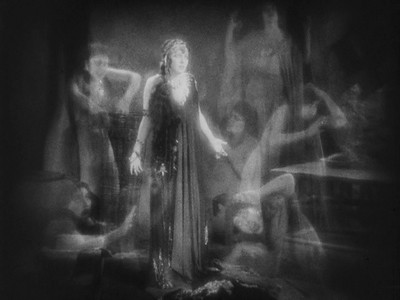
DeMille manages to avoid these pitfalls--though, I suppose we have to call a spade a spade and say it may really only be by the good fortune of his having tackled the material prior to the arrival of sound. The pantomime of The King of Kings, aided by a new score by Donald Sosin* and intertitles taken directly from the Bible, emphasizes the pageantry in such a way that it removes all but the majesty of the material. That it's all gesture, all image, somehow makes it feel more like a holy relic than a piece of popular entertainment. (Not that it doesn't entertain. DeMille is still a showman, and I am sure it's no coincidence that the film opens in the home of a very sexy Mary Magdalene (Jacqueline Logan). Not to mention that he used color film for those scenes.)

The King of Kings is meant to feel as if the reality of the life of Jesus is being illuminated. In a brilliant stroke, the first ten minutes or so go by without us seeing the main figure at all. He is talked about, both in tones of awe and bitter scorn, creating anticipation for the religious leader's ultimate revelation--which comes when Jesus cures a blind child. The first thing the child sees is the healer, and that is the first time we see him, too. He appears gentle and caring, actually one of the few moments of real peace we see from Jesus. The way H.B. Warner plays him, the savior is a serene personage, but he often looks disappointed, as if even though he knows that events must transpire the way they do, it still saddens him that none of his followers rise to the challenge and change the course of events. He looks like he wants to shake his head when Peter (Ernest Torrence) denies him three times on the night of Jesus' arrest, even though Jesus told him he would. (Three is an important number. When the Pharisees threaten to destroy the temple, Jesus says he will raise it again in three days, a reference to his own coming resurrection. After all, his body is the metaphorical temple of Christianity.) He is always aware of what awaits him, and he accepts it with a kind of grim recognition of duty.

As I suggested, rather than letting scripture put him in a chokehold, DeMille finds interesting ways to flesh out the recorded events and make them more dramatic. For instance, having the merchant spill salt (or is it flour?) in the temple when Jesus is protecting the adulteress (Viola Louise) gives the director the tool by which Jesus exposes the misdeeds of her accusers, "Let he who is without sin cast the first stone." He writes their hidden sins in the salt in Hebrew, and then as the accused look at what he has written, the words turn into English. This is partially for our benefit, so American audiences can read what has been written; however, wouldn't it have been easier just to start in English? Again, DeMille's choice is to make it a revelation. The story is unfolding for us for the very first time.


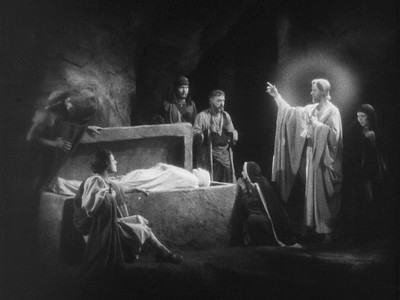
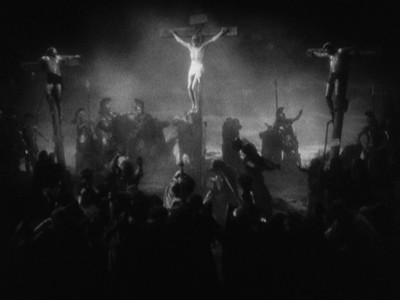
The true revelation, though, is how breathtaking this early filmmaking often is. The sets are vast, not looking like any Hollywood construction. The ocean shores where the tax collectors confront Jesus, the tomb of Lazarus, the great courtyard of people who come to hear what Pontius Pilate (Victor Varconi) will decree, the open and barren Calvary location--these are grand scenes, as overpowering as anything Peter Jackson would make on the computer today. Likewise, DeMille employs an impressive facility for early special effects. The casting out of the seven deadly sins from Mary Magdalene, God's wrath at the crucifixion, the ever-present glow around Jesus--they are done convincingly and effectively, making us wonder how they did it in a way the big budget digital effects we've grown accustomed to can no longer inspire.

I know it's been argued that the Bible is the first novel, providing a blueprint for future generations when it comes to telling complex, time-spanning stories. That Shakespearian feeling Hollywood often strived for with their posh vocal intonations is more apropos in the case of The King of Kings, which certainly has poetic motifs worthy of the Bard. (Note how the blood Christ sweats while praying at Gethsemane is recalled by the blood dripping from the crown of thorns.) Judas (Joseph Schildkraut) as a persistent and jealous schemer is not too distant a cousin of Othello's Iago, and the empty figurehead Pontius Pilate could have been just as ineffective in stopping a couple of star-crossed lovers and their families from killing each other. It's DeMille's masterstroke, maintaining the reverence while ratcheting up the gothic plot machinations. He is somehow less pompous while still seeming more spiritually important.

Regardless of your faith, The King of Kings is both a hallmark of silent cinema and just a good movie. It can be watched as a reassurance of one's belief, or just as the story of a man who dared to rebel in defense of what he knew was right, both about himself and humanity at large. I'm in awe of the artistry of the film, and it's become a regular holiday spin in my home.


* Sosin provides the score for the longer version, which runs 155 minutes. The second disc in this collection features the more common 1928 cut, which is 112 minutes. For that, we get two scoring options, a new piece by organist Timothy J. Tikker or the vintage score by Hugo Riesenfeld.