At just after 10:30 on a Sunday morning, three gunmen ride through a small Western town and roost at the train station to wait for the noon train. As they pass, Marshal Will Kane (Gary Cooper) is marrying Amy (Grace Kelly), a Quaker whose unflappable belief in nonviolence means the sheriff will be surrendering his star and leaving town that very day. Only, fate has other plans. As it turns out, the trio of bad dudes at the train station is the gang of Frank Miller (Ian MacDonald), a killer whom Kane sent to jail several years before and has now unexpectedly been pardoned. Realizing that Miller is coming to kill him, Kane decides he must stand his ground and fight or forever be looking over his shoulder. Everyone else in town, including Amy, thinks he should leave and let the bad guys have this round, but Kane is the type of guy who won't let the mob change the definition of what is right just because it's easy.

Directed by Fred Zinnemann and produced by the great Stanley Kramer, High Noon is an unassailable classic of the Western genre. Set in real time, so that the time that passes on screen is very nearly equal to the running time of the film, its story of a man that refuses to betray his own sense of self even when facing impossible odds captures a central quality of the mythology of the American frontier. It has stood the test of time because even though the movie wears the basic uniform of a simple western, it is so much more than just your average story or even one message. Made in 1952, and featuring a crew that included more than a few members who were facing possible charges in the Red Scare gripping Hollywood at the time (writer Carl Foreman and actor Lloyd Bridges among them), High Noon was intended as an allegory about the political strife in America and how people were pursuing their own self-interests rather than standing up for what was moral and correct. Multi-layered and full of a rich cast of characters, High Noon touches on race, religion, social structures, and the driving force of the human condition, one's sense of self.

It's also damn entertaining. High Noon ends up getting screened at least once in any film student's academic career because it's a near perfect example of how to put together a film. Cutting back and forth throughout the town, seeing the various players scurrying through this crucial hour, Zinnemann is whipping up a cinematic meal via pressure cooker. Marshal Kane goes through his town looking for deputies, and with each refusal he feels the tide building against him. Frequent shots of clocks, along with the tick-tock time signatures of Dimitri Tiomkin's score, keep reminding us there is a deadline. Images of the empty tracks and the twitchy cowboys waiting by them are indicators of what is coming. Nothing need to be said at that moment, the empty horizon says it all. The stillness works in direct juxtaposition to Cooper's constant movement--one side is calm and assured, the other side not so much.

Gary Cooper was never better than he is in this movie. A stoic yet homey screen presence, his confidence slowly deteriorates even as he shores up his resolve. Though there are fine supporting performances by Lon Chaney Jr. and Katy Jurado, it's really Cooper's film, the narrative resting entirely on his sturdy shoulders just as the task of subduing Frank Miller is being left to Marshal Kane. There's a reason he won the Oscar for Best Acting. In fact, Oscars were also awarded to High Noon for Best Editing, Best Score, and Best Original Song for "Do Not Forsake Me, Oh My Darlin'," the recurring theme, sung by Tex Ritter, that follows Kane around like a melancholy cloud. These are the essential components that make this film work so well, and they deserved to be zeroed in on when it came time to hand out the statues. (Carl Foreman's finely tuned script also deserved a nod, but he was on his way to being blacklisted by that point; a redress in his reputation would come later.)
Naturally, with such a build-up, the whole film would be for nothing if there wasn't a big finish, and High Noon has a doozy of a climax. Rest assured, the shoot-out will not disappoint, and the very last scene of the picture drives everything home with quiet force.


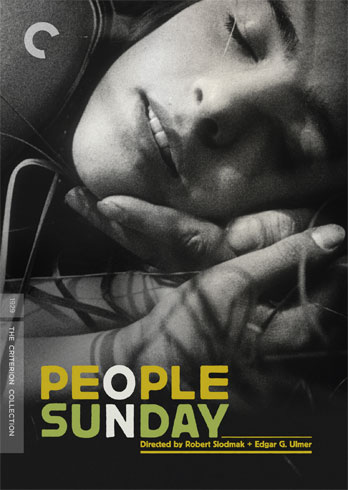
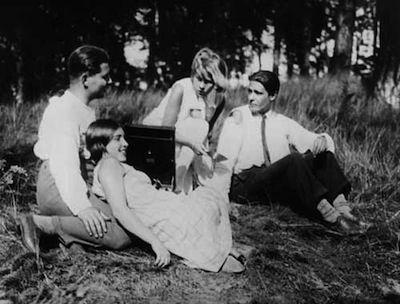
 , and Billie would become Billy, writing and directing such marvelous motion pictures as Sabrina [
 , while Ulmer is maybe best known for
  . Fred Zinnemann also moved on to direct, with credits like Member of the Wedding [
 .
.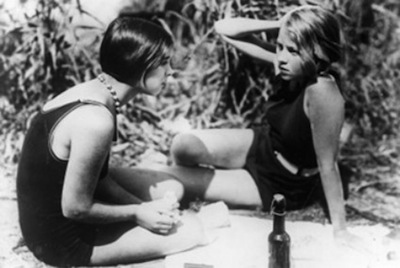
 even earned him an Oscar. Schüfftan also directed three short films, and his 1931 effort Ins Blaue hinein (Into the Blue) is included here as a supplement. It's a sweet film, and a talkie--though the sound is mainly rudimentary dubbing done in post. The jaunty tale has much in common with People on Sunday: it details three colleagues from different social classes out for an afternoon ride in one of their cars. They pick up a young lady that one of the guys knows and compete for her affection before deciding to form a dog washing business together. It's a breezy bit of fun that turns to full comedy by show's end.