Showing posts with label woody allen. Show all posts

Sunday, June 21, 2020

HAPPY-GO-LUCKY - CRITERION CHANNEL

This review as originally written for DVDTalk.com in 2008.


Happy-Go-Lucky is one of th more lauded filmes from British director Mike Leigh, who is known for telling stories of the working class that chronicle their fancies and their doldrums in a modern style that resembles the Kitchen Sink cinema from the 1960s. In this latest offering, Leigh could have easily adopted Charlie Chaplin's "Smile" as the movie's theme song, as it seems to be what he's encouraging his audience to do: smile, even when it's not that easy to do.

Sally Hawkins, last seen as Colin Farrell's girlfriend in Woody Allen's Cassandra's Dream [review], stars as Poppy, a kindergarten teacher with a relentlessly upbeat outlook on life. Practically a child herself, she's equally at home in the classroom or on the dancefloor. Like any single young woman at age 30, she still likes to go out drinking with her girlfriends, but she's also slightly adventurous, booking weekly trampoline sessions and joining a co-worker for flamenco lessons because it sounds like fun. At the beginning of the movie, Poppy's bike is stolen, and instead of lamenting over it, she decides to learn to drive instead.


Poppy's driving instructor is one of the first of several challenges to Poppy's worldview. Scott (Eddie Marsan, Hancock [review]) is an angry little man with a lot of pent-up issues. He takes his job way too seriously, and he is easily provoked. Thus, he and Poppy get on like paper and a match, since she seemingly can't take anything seriously. In fact, she's often exhausting to watch, so I can't imagine what it must be like to be around her. Poppy can't let any comment pass without tossing out a silly joke, and she rarely answers a serious question with a serious answer. Honestly, I found her to be extremely annoying at first, and I was dreading spending two hours in her company.

Then came the first flamenco lesson. My whole attitude changed watching her interact with the class. Regardless of how stern the lead dancer's demeanor, Poppy always maintains her smile and her gung-ho attitude. She doesn't necessarily follow instruction, instead looking around the room at the other students and trying to elicit a reaction from them. Watching her pantomime amongst the group, a silly grin on her face and a knowing look in her eyes, it occurred to me that Poppy was like other clowns in motion picture history, characters like Chaplin's Tramp or Tati's Hulot. Though she is clearly more vocal than these mostly silent characters, she is like them in that she realizes that the rest of the world is too uptight and is doing her level best to keep from letting it grind her down.


Happy-Go-Lucky is Mike Leigh's study of this kind of figure. The movie is the writer/director's way of deconstructing the clown in order to see what makes her function. Throughout the film, he continually disarms Poppy, tossing her challenges she can't get out of by cracking wise. Her driving instructor, an abused student in her class, the recriminations of her middle sister (Caroline Martin), the prodding of her long-suffering roommate (Alexis Zegerman)--all of these people pick at the clown's mask and question if her brave face is real. It's to Poppy's credit that she is able to dial it down and prove that she can handle the bad as well as the good. Like all people who make us laugh, she is a caregiver, intent on alleviating the sadness of others even if it means harboring her own. She can be fierce, such as when she witnesses a boyfriend yelling at her youngest sister (Kate O'Flynn), but she can also be extremely empathetic. When she randomly encounters a homeless man (Stanley Townsend) in the middle of a psychotic episode, she sits with him rather than running away, answering all of his half-finished utterances with affirmative responses. It's a beautiful acting moment, centering on a look that Hawkins and Townsend exchange at the end of the scene, the masks clearing away for both of them for one truly honest moment.

Sally Hawkins is actually superb throughout. I don't think I would have wanted to strangle her as much as I sometimes did were she not. She makes Poppy a complete character, not just a collection of catchphrases and nervous ticks. She never once breaks character or appears to be an actress performing a role, every moment is authentic. During much of the joking, there is obviously more going on behind it. The outward expression may be physical, but the true weight of the performance is all mental. Thus, when it's revealed how much strength is really backing up the buffoonery, we can believe it.


Mike Leigh's shooting style is often stark, letting the setting and the actors dictate where he takes his camera. Once or twice, he indulges in a larger shot, pulling back to show us the landscape, but it's not just decoration, it's purposeful. The world these characters live in is just as important to their state of being as anything else. Over the course of the various conflicts, he slowly moves in closer, until in the final confrontation between Poppy and Scott, their heads take up the entire frame, and he rapidly cuts back and forth between them. (Though, such is the gravitational pull of the Poppy character, in all of the conversations, Leigh has no choice but to quickly cut back to Hawkins to catch her rejoinders.) There's a psychology to how Leigh sets up Happy-Go-Lucky, but it's not forceful or overbearing. The characters, their environment, and the greater narrative are all perfectly entwined. The final scene of the film is a little on-the-nose in comparison to the rest, but better to drift out of a story like this than superimpose a false dramatic arc over the top.

I doubt Happy-Go-Lucky is going to make Mike Leigh a household name. If anything, he's like Woody Allen in that he puts out a consistent stream of product that tends to cover a lot of the same ground, and when either of them hits the mark, they hit it quite well. Happy-Go-Lucky is a good movie propped up by excellent actors, and as seems to be its intention, is sure to leave you smiling.


Sunday, May 22, 2016

BARCELONA - #807


I can’t imagine a more withering critique from a Whit Stillman character than Fred, the caustic American patriot in Stillman’s 1994 film Barcelona, realizing that the Spanish partygoers he’s with won’t dance because they consider it too early in the evening. To combat this ridiculous revelation, Fred puts on a limbo record and sets up a pool cue to serve as the stick everyone is intended to shimmy beneath. To say it doesn’t go down well would be an understatement.

Stillman’s second film in many ways could be seen as a sequel to his first, Metropolitan [review], even though they don’t quite share any of the same characters. The three movies in Criterion’s A Whit Stillman Trilogy are a thematic series, exploring different pockets of life in the 1980s. Barcelona, which is the middle film in terms of release but more likely the third in terms of the narrative timeline, breaks the tradition set by the others by not just taking place in Spain, but the American transplants who are visiting there, Fred (Chris Eigeman) and Ted (Taylor Nichols), are from Chicago rather than New York. Not that it matters in Stillman’s world. Absent of accent or dialect, the cousins are two pieces of the same upper crust that Stillman bakes for all his movies.


The movie begins with Navy man Fred arriving at Ted’s Barcelona flat on an advance mission to prepare the way for the arrival of his fleet. Set near the end of the Cold War, the visitors must face political unrest and anti-American sentiment. Ted is a salesman who has been living and working in Barcelona for a few years. He is acclimated to the scene, running in an international circle that mostly deals with foreign business, hanging out with women who present at trade shows (never was quite sure what that meant). Recently heartbroken, Ted is trying to live a religious-fueled life, theorizing that much of the failure of love in Western civilization is down to our obsession with physical beauty.

As a pair, Ted and Fred could easily be Jack and Nick from Metropolitan, with Nichols once again playing the neurotic thinker and Eigeman his sarcastic foil. Fred takes his job seriously, but little else, and quickly skewers his cousin’s philosophy while simultaneously sapping some of the vanilla out of Ted’s game by telling the ladies Ted is an S&M daddy with a leather fetish. Ted’s own commitment to his beliefs is ruined shortly thereafter, when the so-called homely girl stands him up and sends her pretty friend Montserrat (Tuska Bergen) in her stead. Ted falls for her, and gets serious fast--though their dating is complicated by the fact that Montserrat is in an open relationship with a reporter (Pep MunnĂ©) who not only is obsessed with beauty, but also American vulgarity and conspiracy theories. He believes Fred is a C.I.A. agent.


Barcelona is light on plot, but as you can tell, heavy on story. The episodic script follows the cousins over a month or so, focusing on their social life and their mishaps as strangers in a strange land. Unlike Metropolitan, which tracks one outsider infiltrating a small group, the leads here are outsiders in a much larger venue, with no real potential to fully assimilate. Amusingly, Stillman juxtaposes Fred’s boorish behavior with the bruised sensitivity of proud Americans who just can’t understand why everyone doesn’t think their cool. The way the two men get along with their Spanish lovers and their friends is the source of Barcelona’s humor and drama in equal measure. The separation is even evident in acting styles. The American’s are far more caricatured, the Spaniards more natural. (Including a pre-Mighty Aphrodite Mira Sorvino, wholly immersed in her role as a Barcelona girl who strikes Fred’s fancy.)


More important that the cultural divide, though, is the relationship between the cousins, which has vacillated between love and hate since they were kids. Ted can’t handle Fred’s humor, and believes him to take advantage, regularly borrowing without asking permission or returning what he took. Yet, they are also the only family they have and will stick with each other when it counts. Their realization of this--and where the two boys playing around overseas have to finally try to be adults--comes after a few misconceptions about Fred’s real identity leads to him being shot. Honestly, Barcelona suffers after this story turn and never really finds its balance. While the first 2/3 of the movie is fairly footloose and fancy free, the final third tries for a gravitas it never quite lands, complete with a pat coda that comes off as wholly unnecessary. Like the indie director was trying to placate his new corporate bosses.

Still, that first hour or so is what will draw you back to repeat viewings. In my write-up of Metropolitan, I compared Stillman’s creation of a self-contained world to that of Woody Allen’s, but I think with Barcelona there are more comparisons to be made between the two auteurs. Beginning with the simple credits (lettering on a black field, traditional music) and carrying through the light filmmaking approach--there are no zooms, and only the subtlest of camera movement--one can’t help but think of some of Allen’s more recent European-set movies, including Vicky Cristina Barcelona [review]. Ted and Fred could be the usual Allen stand-in cleaved in two--though, one would never mistake the writing for Woody. Stillman’s comic tone is far more droll.


Also like those recent Allen films, Barcelona seems more like a lark rather than one of Stillman’s more considered efforts. Which isn’t to suggest he didn’t take it seriously, but more that he maybe let the process take him where it would rather than bearing down on a greater meaning or story. It’s a carefree vacation abroad, with the extraneous philosophizing being merely a pretense. That stuff is the jazz that Fred so abhors, and we’re all really here to limbo.


Tuesday, July 15, 2014

THE BIG CHILL - #720


I spent yesterday watching a couple of Woody Allen movies. Though they were from different parts of his career and set in different time periods, both showed the idly rich and overly liberal indulging in all manner of impossible and ridiculous behavior. In a lot of ways, Woody Allen characters are the kind of delusional upper middle-class bozos that most of us should really turn our backs on, their lives so separate from the average filmgoer that we can never hope to identify. Like a Vanity Fair article with punchlines.

And yet this somehow works for Woody. In a way that otherwise escapes someone like Lawrence Kasdan, even though he has the same out-of-touch attraction to the type of people he might rub elbows with but whom the vast majority of us will never meet or, if we do, actually want to spend time with. Is it that a Woody Allen movie like Everyone Says I Love You or even his latest doesn’t attempt to sell us reality, but instead entices us with the notion that we can peek in on a fantasy world where everyone is smart and says pithy things and has jobs that very few might actually have? In his world, a sarcastic writer is on staff at the New Yorker; in Kasdan’s, Jeff Goldblum writes for (the) People. But he feels sick about it. Except he doesn’t.


Perhaps it’s too late for me to finally see The Big Chill. I mentioned this to one of my colleagues, and he said, “But aren’t you a big fan of Grand Canyon?” And, yes, I am, I have a soft spot for Kasdan’s next ensemble drama, but I’d also wager it’s been since 2001 that I last viewed the 1991 film, back when it was released on DVD for the first time, and I recall thinking that it was already showing its age back them. Yeah, yeah, sure, we’re all connected. One life flows into the next. That was Kasdan welcoming us to the 1990s.


Whereas The Big Chill is fully set in the 1980s. Released in ’83, it is an apology for the Baby Boomers, an attempt to find soul in the infamously soulless decade. That’s why the music is all taken from the 1960s. No synthesizers are to be heard on this soundtrack--which famously established the notion of a moneymaking compilation album, impossible to replicate today without spending wads of cash, and yet ironically ignoring that many of its featured players, including the Rolling Stones and Steve Winwood, were not faring so well in terms of integrity on the time of release. Call me crazy, but I’d prefer a John Hughes movie any day. Sixteen Candles [review] was only a year away, was as ’80s as you please, and still looks as young as its characters some three decades later. Plus, screw you, the music is awesome and forward-thinking.
Whereas The Big Chill has the same desperation of its thirtysomethings on their way to a mid-life crisis. Which I’m in the middle of, so maybe that’s why I can’t understand what they are whining about. Like I said, it’s too late for me to have empathy with these well-off nostalgia whores. I just can’t.


Which doesn’t meant I can’t appreciate or even enjoy The Big Chill. As a time capsule, it’s fairly illuminating. As cinema, it’s a precious snapshot of many fine actors at an early stage of their careers. Kevin Kline, Glenn Close, William Hurt, and whatever happened to JoBeth Williams? Tom Berenger serves as a good parody of Tom Selleck, and Jeff Goldblum is laying the groundwork to be a parody of himself--and frankly, is the worst thing in this movie, the conduit for his auteur’s most sardonic and ultimately flaccid bons mot. Yet, as period-specific ensemble pieces go, I actually enjoyed The Big Chill a hell of a lot more than Nashville, the appeal of which largely escapes me. I also prefer Tim Burton’s second Batman to his first. It’s all about expectations.


For those who somehow missed this cultural touchstone--or maybe blocked it out of their mind, realizing it was for the old folk, because like me you were 11 when The Big Chill was first released--Kasdan’s movie takes a look at a group of college friends who have reunited after many years because one of their own (Kevin Costner, whose face is never seen) has killed himself. This starts them on an existential path where they play at a lot of denial before eventually digging into some of their own emotions. Amidst it all, they casually take some drugs, listen to old records, and talk about how good they have it. (Kevin Kline’s insider trading was treated as a running gag; Gordon Gecko was still four years away.) Except if you really look, they don’t dig deep at all. Their self-reflection is pretty shallow. Don’t hold your breath waiting for William Hurt’s character to ever tell you what he saw in Vietnam. It’s enough to know that he went, we can’t ever really hear the gory details. Psychology means evoking Freud, then downing the rest of your merlot.


And yet, again, I must stress, The Big Chill is an enjoyable movie. I don’t think it’s a very good one, but it’s pretty easy to watch. Nobody really says anything offensive, they’re too busy living lives that are offensive. Because these folks are meant to be real, they are representative of their time, and not some recollection of a literary dream that their write/director once had. Lawrence Kasdan, unlike Woody Allen, has no idea how tiny his sphere is. These are his people, and he is them. And I’m guessing it makes for a relatively accurate representation of how people lived--or at least, wanted to--while Reagan was President. As a museum piece, The Big Chill is fascinating; as vital drama, it’s as cold as the title implies. Just know that going in, it might just keep you from leaving the party early.


For a complete rundown on the special features, read the full review at DVD Talk. 

Tuesday, November 19, 2013

FRANCES HA - #681


The true achievement of Noah Baumbach's Frances Ha is how effortlessly it captures the inconsistencies of youth without being overly precious or dishonest. Sure, Frances can be quirky, and she's selfish, but she's also lonely and a bit lost and, though lacking in essential self-awareness, desperately confused by the ups and downs of her own existential crisis. Frances Ha is a movie about a young woman getting her life together, even when she doesn't realize that's what's happening.

Greta Gerwig (Damsels in Distress [review]) stars as Frances, a 27-year-old dancer living in New York City. Frances is a third-stringer at her dance company, always on the sidelines, the understudy to the understudy. This, alas, is her place in life across the board. She rooms with her best friend, Sophie (Mickey Sumner), who is, for all intents and purposes, Frances' caretaker and, arguably, her lover. It's not that they are physically affectionate in a sexual manner, but Frances puts all her eggs in Sophie's basket. Sophie has a job in publishing and she's in charge of the rent. She also has an actual relationship with a guy who works in finance (Patrick Heusinger). While Frances assumes this camaraderie will go on forever--the play fighting, sharing the same bed, Sophie telling her bedtime stories--her desire to stay stuck in one place is undermined by the fact that the world keeps turning without her. Sophie moves on, and Frances is left to fend for herself.


It's refreshing to watch a movie about a twentysomething whose whole reason for being doesn't hinge on romance. Frances Ha, which Baumbach co-wrote with Gerwig, appears to be consciously working against the standard narrative dynamic of the post-collegiate experience. It's not uncommon for graduates to enter the real world and quickly fall into the drudgery of everyday existence. Frances continues to pursue her dreams, but not with any real hunger. Likewise, her relationships outside of Sophie are dominated by her strong connection to the other girl. Even when invited along to a dinner party thrown by wealthy professionals (including a cameo by the rock duo Dean & Britta, who also contributed to the soundtrack), she can only talk about Sophie. When she moves in with two young trust-funders, she remodels one of them, a funny writer who otherwise might have affection for her (Michael Zegan), into a new version of her "lost love." Someone has to tuck Frances in at night.

Baumbach's other movies, which include The Squid and the Whale and Greenberg [review], have always occupied a space slightly removed from the common populace. His characters are erudite, his humor arch. Frances Ha has a more street-level immediacy than his previous efforts. Stylistically, the film is equal parts Nouvelle Vague and 1970s Woody Allen. Cinematographer Sam Levy (Wendy and Lucy [review]) shot the movie in black-and-white, his loose framing mimicking the intimacy of observance rather than more conventional cinematic staging. Reportedly, much of Frances Ha
was shot on the fly out in public, using digital cameras, allowing for New York to be an unwitting participant in Frances' story. While I wouldn't call the movie "realistic," there is an immediacy to how it transpires that at least makes it feel real.


For the last several years, Greta Gerwig has made a name for herself in a variety of independent and mainstream pictures. She emerged from the "mumblecore" scene in the mid-'00s, including collaborating on two features with Joe Swanberg (Hannah Takes the Stairs and Nights and Weekends). Taking charge and forging her own stories suits the actress, who has long been a critical darling but has yet to have that breakout role to really make her a star. Frances may just be it, as her natural charisma allows Gerwig to be as scattered and even self-destructive as the story requires without having the audience turn against Frances or get fed up with her. The actress also seems to have pulled something out of Noah Baumbach. He has never made a film this light on its feet before. Gerwig is already in the writer/director's next as-of-yet untitled project, and one can only hope they continue to collaborate. I wouldn't mind seeing an ongoing pairing between them akin to Woody Allen's revitalizing working relationship with Scarlett Johansson.

Despite a purposely jarring third-act break, Baumbach and Gerwig establish a nice comfort zone for Frances (and the audience) that allows for the ending we'd been rooting for even as we were baffled by Frances' reluctance to pursue it. It's a bit risky in execution. Frances doesn't change gradually, and no explanation is layered over her wake-up call. The alarm goes off, and the next thing we know, she's out working her brand new day. We end up accepting the sudden shift because, in a sense, the director is jarring the viewer out of his or her comfort alongside his protagonist. We have become so comfortable with Frances' screw-ups, we are somewhat culpable in her failure to change. A little disappointment and some role reversals are required for Frances to move on, but ultimately, we all feel better when she does. If her truncated last name is a punctuating laugh, it comes with the contentment of laughing with her, rather than at her, thus making all the difference.


Wednesday, September 4, 2013

SIDELINE: MORE REVIEWS FOR 8/13

A collection of links to non-Criterion movies I reviewed over August...

IN THEATERS...


* Ain't Them Bodies Saints, and wait, isn't another one of them Casey Affleck?

* Austenland, you don't want to go to there.

* Blackfish, a chilling documentary about killer whales in captivity and how they turn into dangerous killers.

* Blue Jasmine, the latest ethical drama from Woody Allen features two sisters on either side of the economic line. An excellent cast led by Cate Blanchett makes good use of a great Woody script.


* Elysium. Good action flick with noble intentions, or pretentious political fable full of gore? Both!

* The Grandmaster, Wong Kar-Wai's latest potential masterpiece, butchered for the Americas, and this one dude (me) just won't shut up about it.

* We're the Millers, in which we finally see Jason Sudeikis break a comedic sweat. Also, it's Jennifer Aniston's third movie in a row where she strips so that other people can talk about how sexy she is. Is it a clause in her contract at this point? (See also: Horrible Bosses; Wanderlust)

* The World's End, the new comedic apocalypse from the team behind Hot Fuzz and Shaun of the Dead.

* You're Next, a decent slasher picture that entertains but lacks in real suspense.


My Oregonian columns...

* August 2: get In Bed With Ulysses and let James Joyce put you to sleep; or look at dramas based on real life, the human trafficking story Eden; and James Cromwell in Still Mine.

* August 9: The remarkable Brazilian film Southwest; a film festival at the Columbia Gorge; and a bunch of music-related documentaries at the Hollywood Theatre.

* August 16: Adjust Your Tracking, a documentary about VHS collectors; a couple of Tarkovsky films; and the family comedy Papadopolous & Sons.

* August 23: documentaries on photographer Gregory Crewdson and soul singer Charles Bradley; plus, Modest Reception, an absurdist Iranian drama.

* August 30: Kristen Bell cries all over her swimsuit in The Lifeguard; Low create an art movie out of their old music videos; and two documentaries from Ondi Timoner, We Live in Public and Dig!


ON BD/DVD:

* Angel and the Badman, a John Wayne western/romance from 1947.

* God's Little Acre, notable for being the film debut of Tina Louise, but kind of over-the-top and scattershot otherwise. Directed by Anthony Mann.

* Inescapable, the quiet and polite Canadian version of Taken . Not even Marisa Tomei can help this one.

*  Kiss Tomorrow Goodbye, featuring James Cagney's last gangster role. And one of his most despicable. So you're going to love it.

* The Mindy Project: Season One, Mindy Kaling's very funny take on the girl-in-the-city sitcom.

* Penny Serenade, this "marriage is hard" drama with Cary Grant and Irene Dunne will make you cry like a baby. Though hopefully not one of the ones that dies in the movie.

* Reality, a surprising take on fame in the modern television age from the director of Gomorrah [review]. 

* That Touch of Mink, a May-December romance with Cary Grant where we pretend that Doris Day isn't really in August with the rest of us.


Friday, August 3, 2012

SIDELINE: MORE REVIEWS FOR 7/12

My reviews of non-Criterion movies in July.

IN THEATRES...


* The Amazing Spider-Man, the improbable relaunch that could.

* Beasts of the Southern Wild, a noble effort with great acting and beautiful cinematography, but overbearing music and a muddled script.

* The Dark Knight Rises, maybe the most anticipated movie of the year. But must what goes up also come down?

* Ruby Sparks, a would-be deconstruction of the "manic pixie girl" concept that doesn't have the gumption to take it all the way. Noble debut writing effort from actress Zoe Cassavetes, however, and she's also really good in the movie.

* Savages, Oliver Stone's proof that the only losing proposition bigger than the War on Drugs is his movie about the War on Drugs. Contender for worst of the year.

* To Rome With Love, Woody Allen's tribute to Italy is a pleasant comedic quartet.

* Total Recall, a surprisingly action-packed remake with Colin Farrell. Go watch the punching and the shooting and don't worry about it.

* Trishna. It's a bummer summer with Michael Winterbottom adapting Thomas Hardy. Pity poor Freida Pinto. 

* The Watch, your summer safeguard against laughing. Trust me. You won't. Starring Stiller, Vaughn, Hill, and a bunch of dead air.


Also, if you're in Portland, the NW Film Center is starting Mark Cousins' epic movie about movies, The Story of Film: An Odyssey this week. It's five parts, spread over all of August. I wrote it up for the Portland Mercury.

Annnnnd, Shawn Levy at The Oregonian did a round-up of Portland comics folks, asking them their opinions about superhero movies. Included are Brian Michael Bendis, Jeff Parker, Natalie Nourigat, Dylan Meconis, David Chelsea, and many others. And, naturally, yours truly. It's a pretty neat round-table. Read the full version online here.

ON BD/DVD...

* 1900, Gerard Depardieu and Robert De Niro star in Bernardo Bertolucci's sprawling, mad epic.

* Force of Evil, a sharp gangster picture from 1948, with John Garfield as a mob lawyer looking to take his gambling racket to the big time.


* The Last of England, Derek Jarman's post-apocalyptic poem. A vision of the future from the vantage point of the 1980s.

* Panda! Go, Panda! an early kids movie from Hayao Miyazaki.

* Rio Grande, a pre-Quiet Man teaming of John Wayne, John Ford, and Maureen O'Hara.

* La terra trema, Luchino Visconti's second feature, is a classic of Italian Neorealism.

* Treme: The Complete Second Season. HBO's most challenging show is a lot like life. And, hey, ain't life worth it?


Sunday, July 15, 2012

LE HAVRE - #619

This review originally appeared in The Portland Mercury.


Finnish director Aki Kaurismäki’s Le Havre is named for the French coastal town where it’s set. Huge metal containers pass through this port on their way to somewhere else. One such container is full of African refugees. When the door is cracked, a young boy (Blondin Miguel) makes a run for it. Stranded, he ends up hiding with Marcel (AndrĂ© Wilms), a harmless scoundrel known for his love of the vino. Marcel's wife has recently taken ill (Kati Outinen), and getting the kid to England gives the old man something to do while she’s in the hospital.

Le Havre has a quaint European affectation that’s both charming and inconsequential. The quirky small town pulls together to help Marcel, and they hold a benefit rock concert to pay off smugglers. Even the police turn a blind eye. The inspector in charge of the case (Jean-Pierre Darroussin) would rather be solving real crimes than chasing harmless immigrants. Darroussin is one of the film’s bright spots. With his smart patter, bowler hat, and moustache, he’s like an extra from Tintin [review].


Only Marcel's cranky neighbor, played by former wunderkind Jean-Pierre LĂ©aud (The 400 Blows) goes against the community, though his snitching serves little function beyond instigating Le Havre’s third act.  By that time, the outcome of this little plot is never less than a foregone conclusion, a fact underlined by Timo Salminen’s melodramatic score in the final scenes. It’s blandly enjoyable, but really, Le Havre is just old-school Hollywood cheese filtered through a semi-ironic lens.

Kaurismäki (Leningrad Cowboys Go America [review]) has been peddling this same middling tone for several decades now. He’s like a Euro Woody Allen, dependable and occasionally surprising, but also somewhat dated. Le Havre feels like a leftover from an international film festival circa 1994. 


Thursday, July 5, 2012

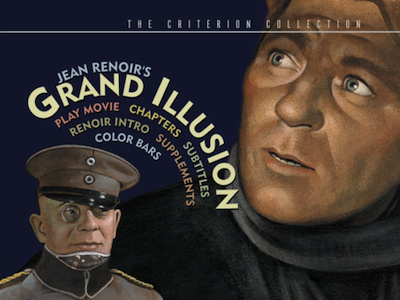
GRAND ILLUSION - #1


This review of Grand Illusion, the first numerical Criterion DVD, was written in conjunction with the new 75th-Anniversary print of the film’s engagement at Portland’s historic Cinema 21 theater, starting this Friday, July 6. I got to attend a press showing and was taken aback by how good the new print, which was struck from an original negative, looks today. It’s as if no time has passed at all. 

The numerical structure of the review is largely to separate certain sections. Namely, part 1 is a version of the short review that ran in the Portland Mercury. It’s available on their site, alongside a sidebar article I wrote about other films that bear the Renoir influence.


(1) Jean Renoir’s Grand Illusion is 75 years old. Which is70 more years than it took for them to reboot the Spider-Man films. That’s got to say something for how powerful a drama this war movie really is.

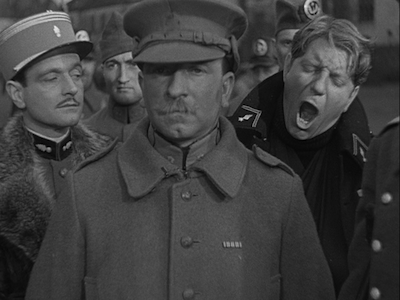
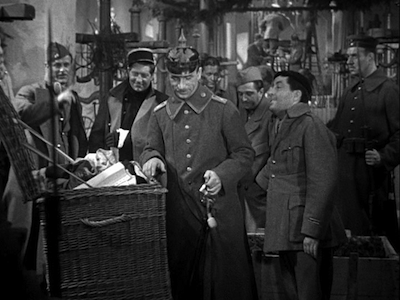
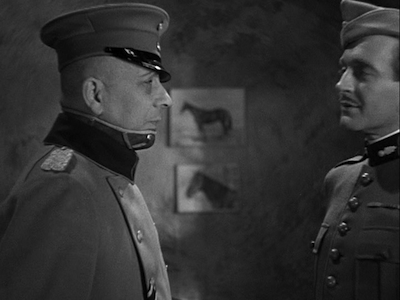
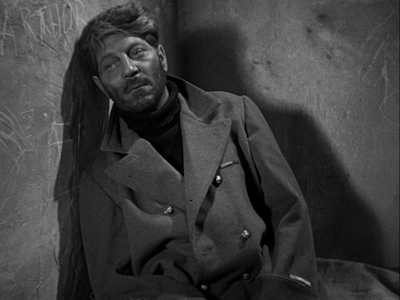
Grand Illusion stars Jean Gabin, the French Humphrey Bogart, as a pilot shot down behind German lines during WWI. He is taken to a prison camp where he immediately joins a group of his countrymen in digging a tunnel to escape. Bad luck ends that particular scheme, but not the dream; when Gabin and his effete captain are moved to another prison, this one run by the pilot that knocked them out of the sky (and played impeccably by Erich von Stroheim), the urge to flee becomes undeniable.

There’s a lot of humor and even some heartbreak to be found in the first 2/3 of Grand Illusion. The real meat of the film is in its final reels, however, when Gabin’s flight from incarceration tests his patience with his fellow fugitive and leads to finding love in the countryside. Renoir’s script is both sprawling and devilishly compact. The freewheeling structure keeps it feeling fresh even today. Comments that “the war to end all wars” will do nothing of the sort now seem eerily prescient, as they must have also in 1937, when Hitler was shoring up power. Yet, it’s not what Grand Illusion says about war that keeps it relevant, it’s what it says about the human spirit and the bonds people form in troubling times. 


(2) It’s actually interesting to consider how far away from the war the events in the movie are. At the start of the picture, Gabin’s Lieutenant MarĂ©chal is given orders to take Captain de Boeldieu (Pierre Fresnay) on a mission into enemy territory. Jump cut to a very similar scene, with von Stroheim’s stately Captain von Rauffenstein returning from a sortie of his own. I am sure the confusion the sudden change causes is intentional. It takes a couple of lines of dialogue to realize these aren’t the same pilots we saw just seconds ago. In fact, von Rauffenstein is returning from shooting MarĂ©chal and de Boeldieu down. The mission is over, it happened offscreen.

A lot of the action does, at least until the men are finally on the run. There’s another escapee who is killed at the first prison camp, but the shots are fired out of sight. Likewise, when MarĂ©chal is thrown in solitary confinement, we see the instigating action that gets him punished, but not the beatdown. There are also tales of other escape attempts that occurred in between that first prison and ending up at von Rauffenstein’s castle. The German’s have commandeered a 12th-century estate to use as their holding pen. von Rauffenstein has experienced his own comedown in the year or so since he first met the French soldiers. A combat accident has left him with burns all over his body, and he looks like a gothic grotesquerie in his plastic truss. His head practically looks disconnected from his body, placed in the cup of the unyielding girdle. These are all important things that occur, but all of them happen away from the camera eye.


von Rauffenstein’s relationship with de Boeldieu is one of the more crucial in the film, and it gets to the heart of what Renoir and co-writer Charles Spaak are saying about the strange bedfellows wars make. There is a pronounced civility between the fighting men when on the ground. Just because their countrymen are duking it out elsewhere doesn’t mean they can’t get along when guns aren’t blazing. The German Captain sees a comrade in the French Captain. In a way, rank equals class. Yet, there is also a marked difference between de Boeldieu’s aristocratic air and the more friendly Rosenthal (Marcel Dalio), a Jewish immigrant whose family amassed a fortune in France. He didn’t need to fight, but his patriotism extends to protecting the country that blessed him with riches. The major split between von Rauffenstein and de Boeldieu is caused by the German officer’s anti-Semitism and his dismissal of the working-class MarĂ©chal as something lesser.


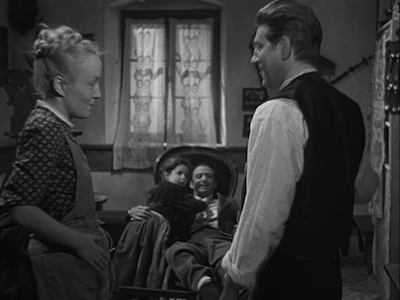
The action becomes more immediate, and visible, when MarĂ©chal and Rosenthal finally break out, following a plan created by de Boeldieu as atonement for his privilege. We see the men at work, we see them running and hiding, the peril becomes urgent and real. And yet, here too life has a habit of continuing unabated. Eventually MarĂ©chal and Rosenthal hole up in an out-of-the-way farmhouse where a German widow (Dita Parlo, L’Atalante [review]) lives alone with her daughter, having lost all her male relatives to the conflict. She and MarĂ©chal find some comfort and romance with each other, and the unit operates as a temporary family. The regular needs of regular people don’t stop because bureaucrats far away are squabbling over lines on a map.


(3) Jean Renoir, assistant director Jacques Becker (who later made his own masterful prison-break picture, Le Trou), and director of photography Christian Matras (who also shot Le Plaisir [review], Fanfan la Tulipe [review], and The Milky Way [review], among others) carefully balance the intimate and the massive, turning the two elements on their heads and contrasting the difference between confinement and freedom. There is something more secure about the closed spaces. It’s friendly there. Not just with your fellow prisoners, but no one is shooting at you. You know where you are and the boundaries that accompany it.


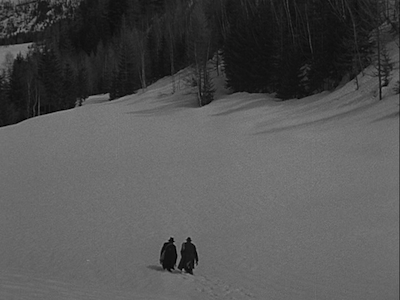
On the other hand, when MarĂ©chal and Rosenthal are racing across the snowy countryside, they are subject to the elements, dogged by their jailers, and generally uncertain about their future. It’s the irony of freedom. You can do as you please, but there are unpredictable consequences to your actions. Gabin has a natural confidence on camera, but part of the appeal of Grand Illusion is watching this charismatic actor unravel, seeing him lose his cool, watching him take a chance. The unseen escape attempts are treated like a joke--he disguised himself as a guard in one; in another, he dressed in drag, only to be hit on by a non-commissioned officer--but this last shot at liberty is seriously dangerous.

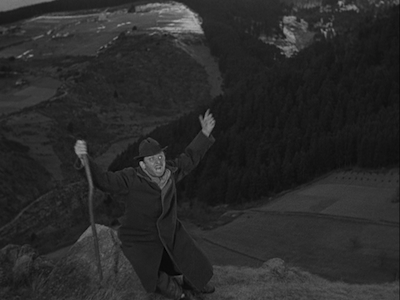
Funny enough, it had been so long since I had seen Grand Illusion, I remembered the ending going a certain way. I e-mailed a friend and said so, and he asked me if this time it turned out that the pair escaped. This is a big question. Did they or didn’t they? What are we supposed to take away from the final shots: that the grand illusion of the title is our belief that there is any safety or security out there? The men note that even if they get home, their most likely fate will be to be sent to the front yet again. They’ll keep going until they win or don’t come back. Regardless of how you interpret the end, the futility of human endeavor seems obvious. MarĂ©chal and Rosenthal are oblivious to how close they came to meeting their deaths, trudging blindly up a hill to who knows where. The folly of man is that we keep climbing, because to stop seems even more pointless. Or so we kid ourselves, carrying on and on in an endless cycle.


Thursday, June 30, 2011

SIDELINE: MORE REVIEWS FOR 6/11

There was no post here on the blog last week, so I have fallen a bit behind again. As you'll see in the monthly round-up, it's not for lack of work; on the contrary, it's been too much work, I've been reviewing a lot. All I need to do is double up one week, though, and I'm back on track--and that should hopefully be easy, since I have four new releases (two Louis Malle, a Satyajit Ray, and the most recent Eclipse set) waiting to be watched. Comic Con is also coming, so you may see me scrambling yet again in not too long. Who all is going to the big show this year? Be sure to stop by Tr!ckster, there is much to be done and seen, including a Criterion sponsored event celebrating Kurosawa and raising money for relief in Japan. I'll also be part of Symposium 5, a ticketed event, so plan on going to that now!


IN THEATRES...

* 13 Assassins, samurai slaughter from Takashi Miike.

* Beginners, Mike Mills' exploration of mortality, love, and depression will catch you off guard. Naturally quirky and moving, it stars Ewan McGregor, Christopher Plummer, and Melanie Laurent.

* Green Lantern. You will believe that space can be realllllly boring. And Earth. And everything else.

* Larry Crowne. This weekend, you can watch cars transform into robots, or you can let Tom Hanks transform your cold, dead heart into something living again. Your call.

* Midnight in Paris, everything old is new again in Woody Allen's delightful return to form.

* Submarine, a quirky, heartfelt coming-of-age drama set in Wales.

* The Tree of Life, in which Terrence Malick wrestles with the universe, the All Father, and all fathers.

* The Trip, Steve Coogan on a very funny roadtrip with his pal Rob Brydon. Directed by Michael Winterbottom.

* X-Men: First Class: Hey, man, that's a groovy mutation, but the movie's kind of a piece of crap.


ON DVD/BD...

* BLAST!, a science documentary about sending a telescope up into the sky on a balloon to look at the stars.

* Carancho, an Argentinian twist on crime and romance, from the people who brought us Lion's Den.

* The Cocoanuts, yuck it up with Los Bros. Marx in their 1929 debut.

* Despair, a Vladimir Nabokov adaptation from writer Tom Stoppard and director Rainer Werner Fassbender, starring Dirk Bogarde. And it's as weird as that combination would suggest.

* Eight Iron Men, a WWII variation on the "chamber room drama" that never quite takes off. From Edward Dmytryk and Stanley Kramer.

* The Goddess, Paddy Chayefsky wrote this thinly veiled portrait of a Marilyn Monroe-type actress, played by Kim Stanley. Interesting, if not entirely successful.


* Laila, a silent Norwegian epic from 1929.

* Man from Del Rio, starring Antony Quinn as a Mexican sheriff in a racially progressive 1950s western.

* The Man in the Net, starring Alan Ladd, directed by Michael Curtiz. Read the review that one fan called "a classic example of...uninformed arrogance" and inspired him to suggest I "take up something else to while away your time or attend a junior college film class."

* Marriage Italian Style, a strangely dark, yet intriguing, romantic "comedy" from Vittorio De Sica, reteaming Sophia Loren and Marcello Mastroianni.

* Never Apologize, Malcolm McDowell's one-man show in remembrence of director Lindsay Anderson.

* New York, New York, Martin Scorsese's notorious 1977 musical mash-up of new and old styles, starring De Niro and Minnelli.

* Public Speaking, Martin Scorsese's documentary about author Fran Lebowitz. Engaging and funny.

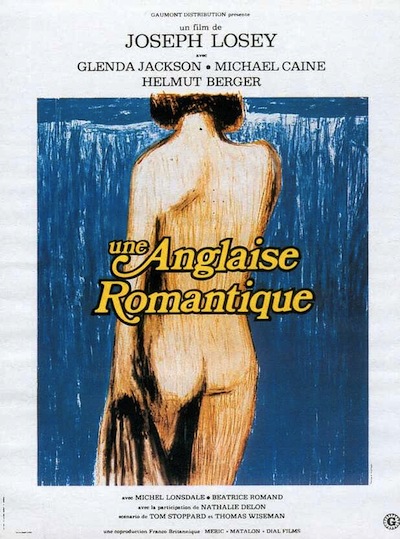
* The Romantic Englishwoman, Joseph Losey directing a Tom Stoppard script about Glenda Jackson's aching loins. And Michael Caine yells a lot.

* The Sacrifice, a beautifully remastered new edition of Andrei Tarkovsky's final film.

* Spectacle: Elvis Costello with...Season 2, a second go-around with the maestro.

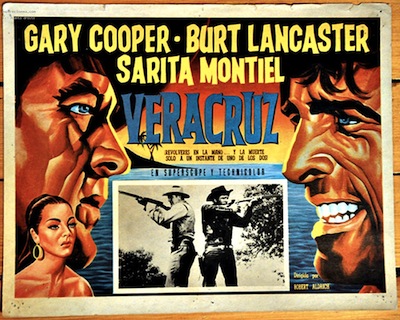
* Vera Cruz, Burt Lancaster and Gary Cooper shoot up Mexico in a film by Robert Aldrich.

* Who Took the Bomp? Le Tigre on Tour, a concert documentary about the influential feminist punk band. The DVD includes a ton of great bonus features.

* Yesterday, Today and Tomorrow, a trio of themed stories from director Vittorio De Sica and actors Marcello Mastroianni and Sophia Loren.

Saturday, December 4, 2010

LOUIE BLUIE - #532


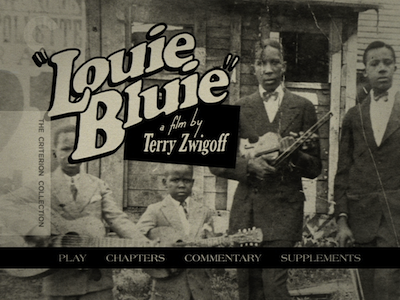
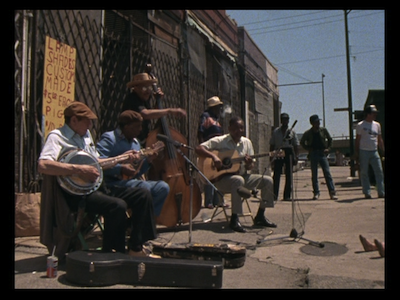
I love hearing musicians tell stories about performing. It doesn't matter what kind of musician, they don't even have to play a genre I listen to that much, I still like tales from the road or antics in the recording studio. I am not a big blues fan, I don't even think I own a blues record. It's just not a form I've really found my way into. That didn't stop me from enjoying every minute of Louie Bluie, Terry Zwigoff's 1985 portrait of Howard Armstrong. It's the man behind the fiddle that counts here, and the fellow they call Louie Bluie is an entertaining rascal.

Armstrong is a Tennessee-born musician who played fiddle and mandolin in African American "string bands" from the depression onward. By the time Zwigoff turned his camera in Armstrong's direction, he was getting on in years and the music he loved was long past its heyday. Yet, Louie Bluie plays his instrument like every audience is standing room only, and his every anecdote is delivered with humor and flair. He's a talkative subject, most of the film is just Zwigoff hitting "record" and letting the old codger's mouth run. He then shapes the stories into a kind of narrative, visiting locations from Armstrong's past, filming him on tour, and showing how he interacts with his friends and the rest of the band.


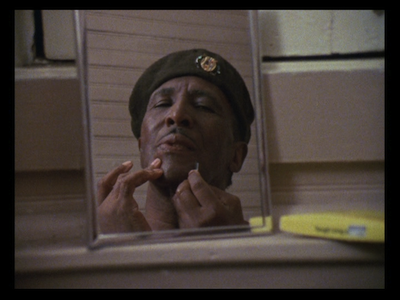
Louie Bluie captures Armstrong at age 75, though you'd never know he was that old. The chatterbox is full of energy, and he plucks at the strings with impressive vigor. He tells jokes about how fast he played when he was young, but it doesn't really seem like Armstrong has slowed at all. Not in any aspect of his life. The first shot of the movie shows him dry shaving with a loose razor blade, and I can't think of a more fitting image to illustrate what a tough old goat Louie Bluie is. Driving the point deeper, the audio is Armstrong, in voiceover, telling us how he is always driven to create. If he isn't making music, he is painting; if he's not painting he is writing poems. He refers to himself as a Jekyll and Hyde, with the Hyde presumably being his creative side. If the good doctor ever gets control from the monster, Zwigoff doesn't share it with us--though I'm thinking that's because he never stumbled on any evidence that Jekyll exists at all.


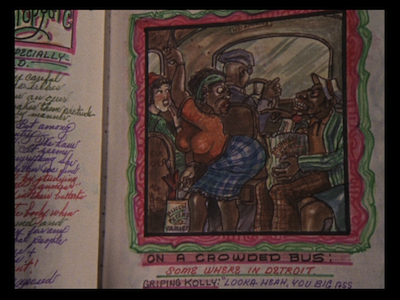
As a filmmaker, Terry Zwigoff's stock-in-trade has always been the uniquely obsessive. Louie Bluie was his first feature, and it points the way to what was to come. When Armstrong pulls his Bible of Pornography out of a locked case and shows it to his friend, it's impossible not to think of Zwigoff's most famous subject, Robert Crumb, and the documentary that bears his name. One of the things that impressed me most about Crumb was how the director was able to push his camera over the artist's shoulder and show his work through his eyes. He does the same here, as Armstrong gleefully explains his ABCs of smut. His use of caricature and appreciation of the more corpulent aspects of the female form is also a lot like Crumb. The famous underground cartoonist actually provides the cover art for this DVD release, and the accompanying booklet features some of Armstrong's own drawings, too.


More important than the sexual peccadilloes, however, is the sense that, like Crumb or Enid in Ghost World or even Bad Santa himself, Howard Armstrong could not have existed anywhere else, and that he is a product of his time, so much so that time has kind of passed him by. His yarns about playing an Italian restaurant at the height of Jim Crow or the pick-up bands where his fellow musicians turned whatever items at hand into instruments, couldn't be contemporary. No such stories about anyone as young and ambitious today as he was then could exist. These are experiences that precede technology and easy access. Howard Armstrong's expression was born out of necessity--social, economic, racial, and personal necessity. It's the essence of the blues: you sing about this pain, or you suffer. Though, given how jaunty the rhythm and humorous the lyrics, Louie Bluie is masking the pain rather than wallowing in it. A later R&B song would serve as an appropriate description; as Smokey Robinson would say, "I Gotta Dance To Keep From Crying."
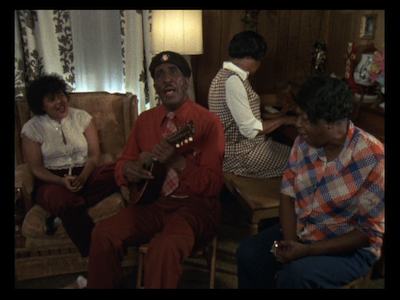
Woody Allen wrote an intro for the movie, which is printed in the DVD booklet. He praises Louie Bluie for preserving the music of times gone by. I'm sorry, though, Woody, I think you miss the point: we should be thanking Terry Zwigoff for preserving this personality, one that sadly left us in 2003. It's not the music, it's the man that makes Louie Bluie a documentary you can watch over and over. It's Howard Armstrong, unfiltered, in his own words. If it was just about the music, all Zwigoff would have needed was a microphone, he could have made a record. Louie Bluie is about one guy, and though he could strike up a fiddle like no one else, it takes a true artist like Zwigoff to see that this isn't the result of practice or that fluke we call talent, but of everything that happened on the way to picking up the bow. The music is made by the performer, not the other way around.


Louie Bluie clip on YouTube