The Criterion Channel, in addition to hosting a plethora of feature films, also has a varied collection of short films--live action, animated, fiction, documentary; comedy and drama; silent and talkies.
Short cinema--just like short stories--is a unique art form unto itself, employing different conventions, and bringing with it different expectations, but these pieces are no less worthy of consideration than full-length films. From time to time, I will take a look at a selection of what’s on offer. You can read the previous column here.
Lira’s Forest (2017; Canada; 9 minutes): An elderly woman on her front porch meets a boy wearing a fox mask, and he proves to be more than he appears. Simple in plot, a film of, essentially, only three or four actions, Connor Jessup’s tiny poem still manages to say something weighty about life and, more strikingly, relieving ourselves of our mortality. Beautifully shot, with no superfluous detail to speak of, it feels like a live action Hayao Miyazaki scene. I’d be curious what Jessup does with something more substantial.
(Note: Jessup is also the director of the Criterion Channel’s documentary on Apichatpong Weerasethakul.)
The Extraordinary Life of Rocky (2010; Belgium; 14 minutes): This black comedy about a boy who decides to give up loving his friends and family, believing that his affection is the reason everyone he cares about dies, aims for a tone and style not dissimilar to Jean-Pierre Jeunet, but its humor never sharpens and there’s no substitute for actual heart. Writer/director Kevin Meul has a whimsical eye for visuals, creating some fun rhymes throughout Life of Rocky (note how many times there is a helicopter of one kind or another), but it often feels like he accepted whimsical as being good enough rather than push his ideas further.
Daybreak Express (1943; USA; 6 minutes): Set to the music of Duke Ellington, documentarian D.A. Pennebaker’s art piece recreates the experience of a morning commute, capturing the light and the color of the city as the sun rises over the sky. More of a collage than a narrative, the montage nevertheless activates the right feelings, turning what was probably a daily slog for many workers into a thing of joyful beauty.
(Also available on the Criterion release of Pennebaker’s Bob Dylan documentary, Don’t Look Back [review].)
The Colour of His Hair (2017; United Kingdom; 22 minutes): A mix of documentary and fiction, The Colour of His Hair de-archives an unfinished script by Elizabeth Montague, written in 1964 for Britain’s Homosexual Law Reform Society. Montague’s brother, Lord Montague, had been involved in a high profile prosecution that sent him to jail for a year as punishment for being a practicing homosexual. The case sparked a movement in England to decriminalize being gay.
From what we see here, The Colour of His Hair looked to be a dramatic thriller, something along the lines of Basil Dearden’s Victim [review]. Two young lovers are being blackmailed and threatened with exposure if they don’t pay--a very real problem at the time. Though what exists of Montague’s script is just set-up, filmmaker Sam Ashby lends it gravity by splicing it together with archival footage about the Reform Society and testimony from men victimized in this way--both by opportunistic criminals and the law that empowered their crimes. At first I was hoping for less documentary and more story, but as Ashby carefully layers his narrative, including information about the Lesbian and Gay News Media Archive, where Montague’s script had been housed, he not only illustrates the heartache that many experienced, but the importance of the change that was brought about when the unctuous law was finally undone.
The Black Balloon (2012; USA; 21 minutes): A short from filmmaking brothers Josh and Ben Safdie (Good Time), The Black Balloon is the grown-up flipside to Albert Lamorisse’s children’s classic The Red Balloon [review]. In NYC, a gaggle of birthday balloons are accidentally released into the air, and a single black balloon drifts away from the pack. Searching for some kind of connection, someone to take its string and give it a life, the black balloon moves through the city, creating unique opportunities for various denizens of the metropolis to put it to use. One man (Larry “Ratso” Sloman, a collaborator of Bob Dylan and Howard Stern) instructs it to block a security camera so he can shoplift, another uses it to distract the daughter of his girlfriend, and a third to get the attention of his grown son. In each case, the adult abandons the balloon as soon as it served its purpose--the complete opposite of the little boy in The Red Balloon.
The Safdies have an agile shooting style that works well with the material and the locale. Stray, superfluous moments give a pretty good indication of how much the boys love New York, and you will marvel at how they pulled off some of the au naturale street scenes where the balloon bobs its way through the crowd. The characters all seem as if they are plucked straight from that mass, lending a credibility to what is otherwise a fanciful production. Though slight in its parts, the whole is effective.
(Side note: The Red Balloon enthusiasts should also check out Hou Hsiao-Hsien’s Flight of the Red Balloon [review] to see an alternate update.)
Vingt-quatre heures de la vie d’un clown [Twenty-Four Hours in the Life of a Clown] (1946; France; 18 minutes): The first film from renowned auteur Jean-Pierre Melville is a long way from his more famous efforts like Le samourai [review] and Army of Shadows [review 1, 2]. This black-and-white documentary is exactly as advertised: a chronicle of what a famous clown, Beby, does between one night’s performance and the next. Narrated by Melville (there is little live sound), the film takes a rather lackadaisical approach to the reporting, embracing its subject and allowing for a little humorous staging--including an excellent sequence where Beby and his partner get inspiration from watching the mishaps of regular folks on the Parisian street (all staged, but don’t worry about it).
My favorite player, though, is Beby’s dog Swing, who goes wherever he goes. Try not to be completely charmed when Swing takes a prayer pose next to his master to say his blessings before bed. Just try!
(Note: Also available on the Criterion Collection release of Le silence de la mer, Melville’s feature-length debut.)
Showing posts with label albert lamorisse. Show all posts
Friday, April 6, 2018
Sunday, December 4, 2011
SABU!: THE DRUM/JUNGLE BOOK - ECLIPSE SERIES 30
This is the second part of a two-part review of the Sabu! boxed set; read the first part here.
Sabu's sophomore feature was a more stodgy affair than the first, and it also saw him relegated to more of a supporting role next to British star Roger Livesey (I Know Where I'm Going, The League of Gentlemen [review]). Following just a year after the success of Elephant Boy, The Drum (1938; 98 minutes) was Zoltan Korda's first adaptation of an A.E.W. Mason novel, a precursor to the more artistically successful The Four Feathers [review], the epic adventure that would follow immediately after. (Interesting side not, Livesey played the role of Harry as a child in the second film version of The Four Feathers in 1921; he was not in Korda's remake.)
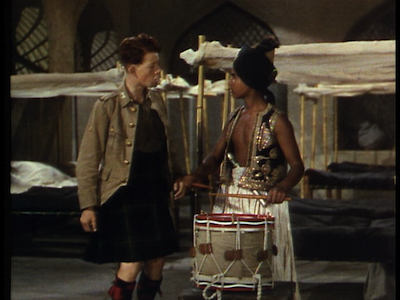
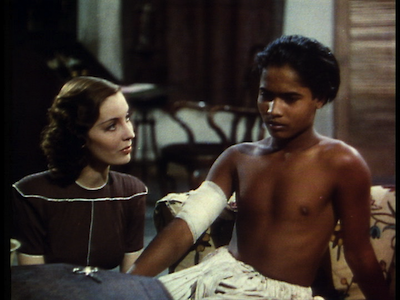
Set in India at a time of political upheaval, The Drum features Livesey as the enterprising Captain Carruthers and Sabu as Prince Azim, a naïve but earnest young ruler who befriends the colonialists. He is particularly fond of a bratty young drummer (Desmond Tester) in the British Army band and of Carruthers' kindly wife (Valerie Hobson, Contraband [review]). When Azim's uncle, the appropriately named Prince Ghul (Raymond Massey in brownface), kills the boy's father, the child prince must go into hiding, biding his time until the British can overthrow Ghul and put him back in power.
Okay, am I the only one who thinks of the The Lion King [review] here? Is that bad of me?
To be fair, it's a pretty common plot, and The Drum obviously appropriated it first--though it's disappointing in execution here because the embattled prince isn't so much passive as he is incompetent. Sabu isn't nearly as comfortable onscreen in The Drum as he was in Elephant Boy; his "serious" acting features a lot of squinty eyes and pursed lips. He is best when joking with Carruthers or the drummer boy, and the way Azim kowtows to the white men who taught him to be "civilized" leaves a somewhat sour aftertaste. Far more interesting, actually, is the villainous Ghul, who, like Skar in The Lion King (sorry!), is not entirely wrong. There is something rotten in India, and some question as to the rightful heir's ability to rule. Unlike Skar, however, Ghul also has an element of nobility. His designs on the throne aren't entirely selfish. Korda and screenwriter Lajos Biro's attempts to ridicule Indian beliefs and customs backfire. Ghul ends up looking like a defender of his country's ethnic traditions, refusing to accept the British charges of barbarism.
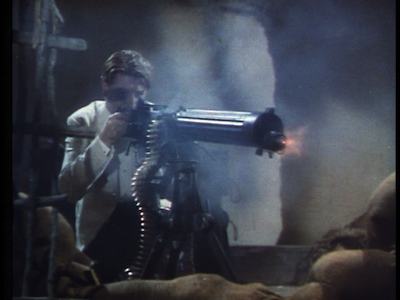
Two positive things about The Drum: (1) Georges Perinal and Osmond Borradile's Technicolor photography is lovely and vivacious (even if this print is a little faded and beat up). The sets and the costumes have an exotic opulence that must have been thrilling to see in the late 1930s, and still has charm now. (2) The climactic battle is impressively staged and daring in complexity. The crowd scenes before and during are huge, and Korda doesn't show a heavy hand in dictating how the throngs behave. The old tag line for the film boasted a cast of 3,000, and the authenticity of the mob goes a long way to make that claim appear to be true. Plus, Roger Livesey is surprisingly badass manning a Gatling gun.
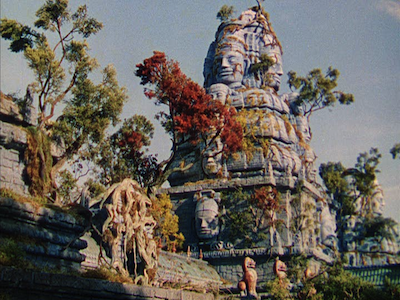
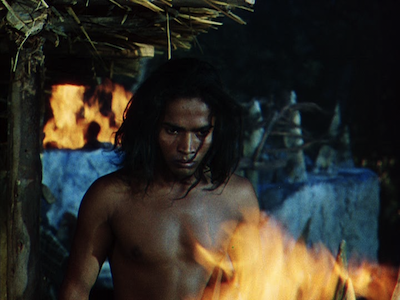
Next up for Sabu was the Michael Powell-directed, Korda-produced The Thief of Bagdad [review] in 1940 before rejoining Zoltan in 1942 for their second version of a Rudyard Kipling story. Jungle Book (106 Minutes) is Sabu's most enduring work, as well as the most famous live-action version of the classic adventure tale--and with good reason. Sabu has not only matured as a man and an actor, developing into a physically agile performer, but Korda's film, as shot by W. Howard Greene and Jack Okey, is a visual marvel. The team creates a thriving Technicolor jungle, filled with lush plant life, exotic animals, and the remnants of man's beautiful folly.
Sabu plays Mowgli, a boy lost to the wilds after a tiger attack leaves his father dead. Adopted by wolves as a toddler, he returns as a teen to rejoin his village, much to the delight of his mother (Rosemary De Camp) and the suspicion of the town swindler, Buldeo (Joseph Calleia), who also serves as the storyteller whose own tale frames Mowgli's.
Mowgli adapts to village life, learning English and the baffling ways of society. Money holds little interest for him, though it buys him a knife to hunt the tiger, Shere Khan, who has vowed to kill him since he was a baby. He also takes a shine to Buldeo's daughter (Patricia O'Rourke), giving the man all the more reason to hate the jungle boy. Worse, Mowgli leads the girl to a grand treasure, only to leave it where it has remained hidden for decades rather than succumb to the evil that jewels and gold inspire. (It's ironic, given most Western iconography, that a snake warns the boy away rather than leading him into temptation.) This sets up Jungle Book's climax and sets up the foundation for its theme of man's greed and superstition being his downfall.
The story of Jungle Book is familiar to most people, though again we must invoke Disney, as the common memory often goes back to their animated version
. In that, Mowgli cavorts with talking animals and the human world is mostly out of it. Many of the same characters are here--the snake Kaa, the panther Bagheera, and the bear Baloo--and Korda anthropomorphizes them, though not to the same degree. Mowgli is said to be able to speak all animal languages, and as we go deeper into his world, we begin to hear their voices as he does. Most of the time, the animals we see are real, including the predatory cats and elephants and the monkeys. In other understandable cases, they are puppets or props, though the only distracting effects are the rubbery snakes. In all fairness, the snakes tend to get bigger acting parts than the furrier animals, so some sacrifice had to be made for narrative demands.
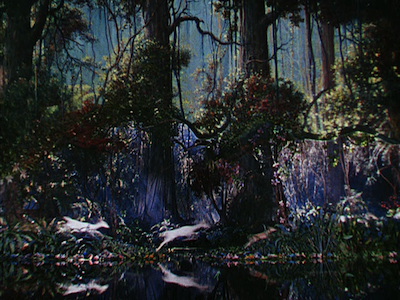
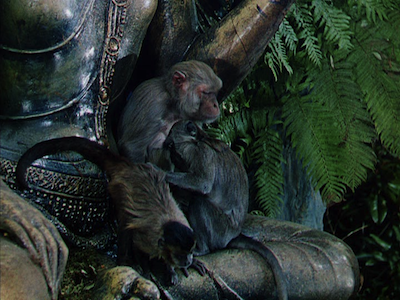
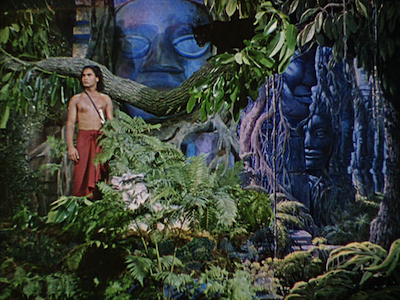
More impressive than the animal wrangling, though, are the sets. Korda uses a combination of matte paintings and physical sets to bring to life a colorful jungle setting. There are plants with fiery red leaves and giant blue statues and light tumbling through the trees that takes on astonishing purple hues. Sabu runs through each attractive set piece as a free spirit, utterly convincing as the wild boy who swings on vines and howls at the moon. Indeed, while the trained British actors come off as overly mannered and comical through most of the movie, acting down to the material, Sabu is perfectly comfortable in his chosen environment.
All three of Sabu's first movies with Zoltan Korda are now part of Criterion's Sabu - Eclipse Series 30 boxed set. I'd like to believe that Elephant Boy and particularly Jungle Book could still stoke the imagination of young viewers. Despite our technological advances, one assumes the untamed forests still hold some sway over our basic human instincts. This set would make a nice companion with the other Criterion younger viewer titles, namely Albert Lamorisse's The Red Balloon [review] and White Mane [review], and Bill Mason's Paddle to the Sea[review], all of which feature children interacting with the wonders of the natural world in exciting, yet vastly different, ways.
This disc was provided by the Criterion Collection for purposes of review.

Sabu's sophomore feature was a more stodgy affair than the first, and it also saw him relegated to more of a supporting role next to British star Roger Livesey (I Know Where I'm Going, The League of Gentlemen [review]). Following just a year after the success of Elephant Boy, The Drum (1938; 98 minutes) was Zoltan Korda's first adaptation of an A.E.W. Mason novel, a precursor to the more artistically successful The Four Feathers [review], the epic adventure that would follow immediately after. (Interesting side not, Livesey played the role of Harry as a child in the second film version of The Four Feathers in 1921; he was not in Korda's remake.)
Set in India at a time of political upheaval, The Drum features Livesey as the enterprising Captain Carruthers and Sabu as Prince Azim, a naïve but earnest young ruler who befriends the colonialists. He is particularly fond of a bratty young drummer (Desmond Tester) in the British Army band and of Carruthers' kindly wife (Valerie Hobson, Contraband [review]). When Azim's uncle, the appropriately named Prince Ghul (Raymond Massey in brownface), kills the boy's father, the child prince must go into hiding, biding his time until the British can overthrow Ghul and put him back in power.

Okay, am I the only one who thinks of the The Lion King [review] here? Is that bad of me?
To be fair, it's a pretty common plot, and The Drum obviously appropriated it first--though it's disappointing in execution here because the embattled prince isn't so much passive as he is incompetent. Sabu isn't nearly as comfortable onscreen in The Drum as he was in Elephant Boy; his "serious" acting features a lot of squinty eyes and pursed lips. He is best when joking with Carruthers or the drummer boy, and the way Azim kowtows to the white men who taught him to be "civilized" leaves a somewhat sour aftertaste. Far more interesting, actually, is the villainous Ghul, who, like Skar in The Lion King (sorry!), is not entirely wrong. There is something rotten in India, and some question as to the rightful heir's ability to rule. Unlike Skar, however, Ghul also has an element of nobility. His designs on the throne aren't entirely selfish. Korda and screenwriter Lajos Biro's attempts to ridicule Indian beliefs and customs backfire. Ghul ends up looking like a defender of his country's ethnic traditions, refusing to accept the British charges of barbarism.

Two positive things about The Drum: (1) Georges Perinal and Osmond Borradile's Technicolor photography is lovely and vivacious (even if this print is a little faded and beat up). The sets and the costumes have an exotic opulence that must have been thrilling to see in the late 1930s, and still has charm now. (2) The climactic battle is impressively staged and daring in complexity. The crowd scenes before and during are huge, and Korda doesn't show a heavy hand in dictating how the throngs behave. The old tag line for the film boasted a cast of 3,000, and the authenticity of the mob goes a long way to make that claim appear to be true. Plus, Roger Livesey is surprisingly badass manning a Gatling gun.

Next up for Sabu was the Michael Powell-directed, Korda-produced The Thief of Bagdad [review] in 1940 before rejoining Zoltan in 1942 for their second version of a Rudyard Kipling story. Jungle Book (106 Minutes) is Sabu's most enduring work, as well as the most famous live-action version of the classic adventure tale--and with good reason. Sabu has not only matured as a man and an actor, developing into a physically agile performer, but Korda's film, as shot by W. Howard Greene and Jack Okey, is a visual marvel. The team creates a thriving Technicolor jungle, filled with lush plant life, exotic animals, and the remnants of man's beautiful folly.

Sabu plays Mowgli, a boy lost to the wilds after a tiger attack leaves his father dead. Adopted by wolves as a toddler, he returns as a teen to rejoin his village, much to the delight of his mother (Rosemary De Camp) and the suspicion of the town swindler, Buldeo (Joseph Calleia), who also serves as the storyteller whose own tale frames Mowgli's.
Mowgli adapts to village life, learning English and the baffling ways of society. Money holds little interest for him, though it buys him a knife to hunt the tiger, Shere Khan, who has vowed to kill him since he was a baby. He also takes a shine to Buldeo's daughter (Patricia O'Rourke), giving the man all the more reason to hate the jungle boy. Worse, Mowgli leads the girl to a grand treasure, only to leave it where it has remained hidden for decades rather than succumb to the evil that jewels and gold inspire. (It's ironic, given most Western iconography, that a snake warns the boy away rather than leading him into temptation.) This sets up Jungle Book's climax and sets up the foundation for its theme of man's greed and superstition being his downfall.

The story of Jungle Book is familiar to most people, though again we must invoke Disney, as the common memory often goes back to their animated version
More impressive than the animal wrangling, though, are the sets. Korda uses a combination of matte paintings and physical sets to bring to life a colorful jungle setting. There are plants with fiery red leaves and giant blue statues and light tumbling through the trees that takes on astonishing purple hues. Sabu runs through each attractive set piece as a free spirit, utterly convincing as the wild boy who swings on vines and howls at the moon. Indeed, while the trained British actors come off as overly mannered and comical through most of the movie, acting down to the material, Sabu is perfectly comfortable in his chosen environment.


All three of Sabu's first movies with Zoltan Korda are now part of Criterion's Sabu - Eclipse Series 30 boxed set. I'd like to believe that Elephant Boy and particularly Jungle Book could still stoke the imagination of young viewers. Despite our technological advances, one assumes the untamed forests still hold some sway over our basic human instincts. This set would make a nice companion with the other Criterion younger viewer titles, namely Albert Lamorisse's The Red Balloon [review] and White Mane [review], and Bill Mason's Paddle to the Sea[review], all of which feature children interacting with the wonders of the natural world in exciting, yet vastly different, ways.

This disc was provided by the Criterion Collection for purposes of review.
Sunday, May 1, 2011
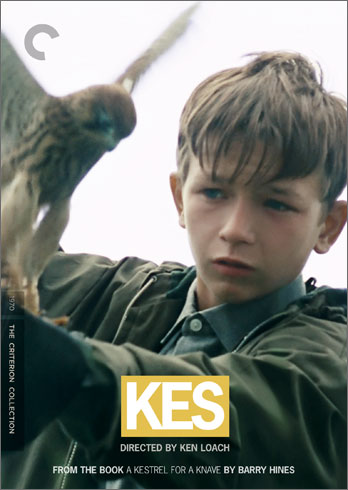
KES (Blu-Ray) - #561

Neorealist cinema first became a thing in post-War Italy, when socially conscious artists picked up movie cameras to make films that accurately reflected their experience. The goal was to shoot simply and with non-professional actors and to tell common stories that weren't necessarily conventional stories, at least not in terms of how fictional films were usually categorized. Ever since, "Neorealism" has been the go-to descriptive for any movie that attempts to mimic the rhythms of the everyday, to tell tales of regular people contending with their very real environments.
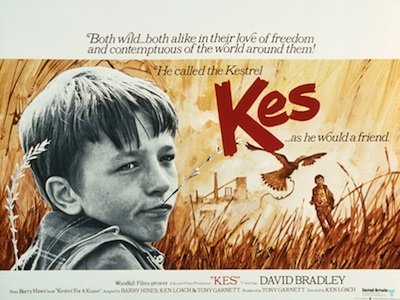
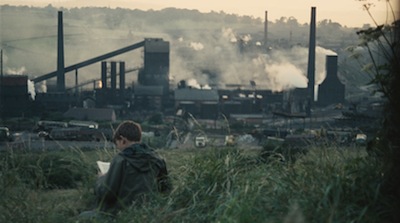
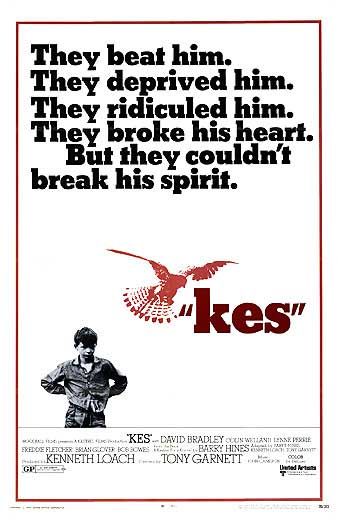
For as much as the tag can be applied with cavalier frequency, including by myself, I can't think of a film that deserves to sit alongside the original Italian masters more than Kes. The simple, yet affecting, second film by English writer/director Ken Loach is affectless in its careful portrayal of one working-class boy's struggles to find a small sliver of happiness and belonging in a gray, overcast existence. Released in 1970, and adapted from a book by Barry Hines (who also contributed to the screenplay), Kes sheds the spotlight on Billy (David Bradley), a fifteen-year-old struggling to make his way in the world.
Billy lives with his mother (Lynne Perrie) and an older brother named Jud (Freddie Fletcher). His father has long since taken off, and so Billy is left to fend for himself. Mother has many boyfriends and likes to go out to the pub; Jud works in the mines and gambles on horses and is generally a prick. (His name out loud sounds like "Jude," and we are likely supposed to think of Judas the betrayer.) Billy doesn't really fit in at school, though it's hard to tell how much he removes himself purposely. His sadistic soccer coach, for instance, doesn't believe that Billy can't afford gym clothes; he thinks the boy plays the poverty card in order to get out of participating. (The game that follows is embarrassing, with the preening teacher living out some delusional glory by besting his juniors; the locker room shower scene that follows that is uncomfortable and sad.) Likewise, the news agent that Billy delivers papers for is right to treat the boy as a thief. Even if he doesn't steal from the store, he is out there nicking things when it's convenient.
One of the items Billy steals is a book on falconry. He does so after he finds a kestrel nest on a neighboring farm. He reads up on how to take care of and train a bird, and then he catches one of the hatchlings. Over the coming weeks, Billy sticks to the new task like he's never stuck to anything, training the kestrel--whom he has nicknamed Kes--to trust him and return to his arm even when allowed to fly free. Pretty soon, Billy is able to confidently speak on the subject of falconry, catching the attention of his teacher (Colin Welland), who is impressed with the boy's initiative. As a viewer, I kept yearning for the teacher to say something to Billy about getting a job working with animals. Billy is about to leave school and join the workforce. There is even an awkward interview with a guidance counselor (Bernard Atha) where Billy never once mentions Kes. In our minds, this is his way out of Northern England and the poverty that is all around him; I suppose for Billy, though, it's his private happiness, and its specialness must be guarded as closely as the bird itself. The boy respects that which can't be tamed.
David Bradley makes an impressive debut as Billy. From a talent standpoint, Loach finding him is no less auspicious than Francois Truffaut drafting Jean-Pierre Léaud for The 400 Blows. Bradley gives a performance that is completely free of self-consciousness or clichéd actorly mannerisms. He is completely comfortable onscreen, and even when charged with doing nothing, there is an inner life evident in the boy's eyes. To misjudge and assume that there is nothing more there than immediately evident is to be no better than the people all around Billy who think he will never amount to anything. Sure, they may be proven right, they may get him to actually believe it, but let's cross our fingers that the cruel ending of Kes is enough to stoke the fires within the teen, to give him the push he needs to get out of this dead end.

Ken Loach films Kes from an observational standpoint. The camera is not intrusive, he mainly hangs back and stays out of the way. If the action gets confusing, he lets it stay that way. In life, fights don't get edited so we can see the blows being traded. This allows for a more sympathetic picture to emerge from the everyday chaos. The director even gives time to the other members of Billy's family, including a telling night out on the town. While Billy stays home and studies his new hobby, his mother and brother engage in a bizarre ritual, competing for attention amongst the other drinkers. It borders on flirtation, really. As the older woman insists she can't trust a man again, Jud's interruptions make you wonder if he'd rather be the only object of her affection. This makes sense when we see how he resents her for doting on Billy.
Kes is, at times, rather bleak, and it definitely doesn't flinch from the harsh realities of Billy's childhood. I have to wonder if this is why we don't regularly see Kes associated with other coming-of-age films aimed at younger viewers. I could see this as a double-feature with White Mane [review], for instance. Stories about young boys and their special animals were a favorite of mine growing up, and I certainly would have enjoyed Kes. Most kids have a pretty solid grasp on mortality, and the heavier themes here shouldn't be that hard for early adolescents and even older elementary-aged children to process. Maybe now that it's out on DVD and Blu-Ray, it will have the opportunity to be discovered by a whole new generation. I certainly hope so. If nothing else, it's a new discovery for me!

The Kes - Criterion Collection Blu-Ray comes with many bonus features, though the most fascinating to Loach fans may be the 1966 television feature Cathy Come Home, an early endeavor of the director's (running time: 77 minutes). Cathy Come Home tells the story of the downward slide of a young couple, from courtship to marriage to the troubles of starting a family. When the husband gets injured and several kids come along, finances grow thin. Homelessness and squatting are options, as are joining trailer park-type "caravans" and eventual government dormitories. Loach tells the story in a scattershot format, showing segments of time in quick, short scenes, moving forward quickly to show how fast things can get out of control. The grainy black-and-white and location shooting, and the pseudo-documentary style, complete with interviews from voices of authority, add to the political thrust of the film. Myths of the housing problem are busted, and tough topics challenged. It's maybe a little long, but such was the nature of the problem, it was a long tumble to the bottom that tore families apart and stacked the obstacles against those struggling. It also seems a little heavy handed today. Still, despite its faults and the fact that it's dated, Cathy Come Home is a fascinating, raw experiment all the same.

For a complete rundown on the special features, read the full review at DVDTalk.
Labels:
albert lamorisse,
blu-ray,
Ken Loach,
truffaut
Friday, October 31, 2008
SIDELINE: MORE REVIEWS FOR 10/08
Halloween is here, and I hit my goal for one horror movie a week for October. Go me!
In addition to those reviews, here are some other movies I was able to scare up reviews for in the past month:
IN THEATRES...
* Ashes of Time Redux, the restoration of Wong Kar-Wai's martial artist stunner. I was very excited to see this, as you will likely read!
* Blindness, a take on the post-apocalyptic genre where a disease strikes people like Mark Ruffalo and Gael Garcia Bernal blind, while leaving Julianne Moore with her sight so she can be Queen. I'm still torn on this film, and was almost going to rate it at "Rent It" right up until posting time. I am still struggling with whether or not its doldrums overpower the good bits or vice versa.
* Happy-Go-Lucky, the new Mike Leigh dramedy with a stellar performance from Sally Hawkins as the eternal clown.
* Let the Right One In, a Swedish vampire film that really gives the genre a whole new lease on its undead life.
* Rachel Getting Married, Jonathan Demme's unbalanced movie about family nearly stifles great turns from Anne Hathaway and Rosemarie DeWitt as sisters trying to deal with their past as they move into the future.
* W., Oliver Stone's perplexing biopic of George W. Bush.
* What Just Happened, a Hollywood tell-all that tells nothing, despite some good work from Robert DeNiro. Based on a book by Art Linson, the story has been defanged beyond recognition.
ON DVD...
* Chaplin: 15th Anniversary Edition, the flawed biopic stays memorable thanks to Robert Downey, Jr.
* Flight of the Red Balloon, wherein one of my favorite contemporary filmmakers, Hou Hsiao Hsien, pays tribute to one of my favorite children's films.
* Ludwig, the gigantic Luchino Visconti biography of the mad king of Bavaria. This took a while to get through, which is why I slowed down some. (Plus, I have some big sets I am starting, too.)
* Mondays in the Sun, a Javier Bardem vehicle about men struggling with unemployment in Spain. A surprisingly meaningful drama with good characters and a balance of humor.
* The Picture of Dorian Gray, the chilled 1940s adaptation of the Oscar Wilde classic. Directed by Albert Lewin.
* Six in Paris, an anthology of French New Wave directors tackling different neighborhoods in the City of Light. Produced by Barbet Schroeder, and featuring segments by Rohmer, Chabrol, and Godard.
* Touch of Evil: 50th Anniversary Edition, a two-disc examination of Orson Welles' troubled noir classic.
* The Unforeseen, a dreamy, soulful documentary about urban sprawl and its effect on Austin, Texas. Co-produced by Robert Redford and Terrence Malick.
* Warner Home Video Western Classics Collection, collecting six cowboy movies from the Warner Bros. vaults, only two of which--the Rod Serling-penned Saddle the Wind and the Gregory Peck-vehicle The Stalking Moon--are really worth it. Also features Anthony Mann's Cimarron, William Holden in Escape from Fort Bravo, and Richard Widmark as another charismatic bad guy in The Law & Jake Wade.
In addition to those reviews, here are some other movies I was able to scare up reviews for in the past month:
IN THEATRES...
* Ashes of Time Redux, the restoration of Wong Kar-Wai's martial artist stunner. I was very excited to see this, as you will likely read!
* Blindness, a take on the post-apocalyptic genre where a disease strikes people like Mark Ruffalo and Gael Garcia Bernal blind, while leaving Julianne Moore with her sight so she can be Queen. I'm still torn on this film, and was almost going to rate it at "Rent It" right up until posting time. I am still struggling with whether or not its doldrums overpower the good bits or vice versa.
* Happy-Go-Lucky, the new Mike Leigh dramedy with a stellar performance from Sally Hawkins as the eternal clown.
* Let the Right One In, a Swedish vampire film that really gives the genre a whole new lease on its undead life.
* Rachel Getting Married, Jonathan Demme's unbalanced movie about family nearly stifles great turns from Anne Hathaway and Rosemarie DeWitt as sisters trying to deal with their past as they move into the future.
* W., Oliver Stone's perplexing biopic of George W. Bush.
* What Just Happened, a Hollywood tell-all that tells nothing, despite some good work from Robert DeNiro. Based on a book by Art Linson, the story has been defanged beyond recognition.
ON DVD...
* Chaplin: 15th Anniversary Edition, the flawed biopic stays memorable thanks to Robert Downey, Jr.
* Flight of the Red Balloon, wherein one of my favorite contemporary filmmakers, Hou Hsiao Hsien, pays tribute to one of my favorite children's films.
* Ludwig, the gigantic Luchino Visconti biography of the mad king of Bavaria. This took a while to get through, which is why I slowed down some. (Plus, I have some big sets I am starting, too.)
* Mondays in the Sun, a Javier Bardem vehicle about men struggling with unemployment in Spain. A surprisingly meaningful drama with good characters and a balance of humor.
* The Picture of Dorian Gray, the chilled 1940s adaptation of the Oscar Wilde classic. Directed by Albert Lewin.
* Six in Paris, an anthology of French New Wave directors tackling different neighborhoods in the City of Light. Produced by Barbet Schroeder, and featuring segments by Rohmer, Chabrol, and Godard.
* Touch of Evil: 50th Anniversary Edition, a two-disc examination of Orson Welles' troubled noir classic.
* The Unforeseen, a dreamy, soulful documentary about urban sprawl and its effect on Austin, Texas. Co-produced by Robert Redford and Terrence Malick.
* Warner Home Video Western Classics Collection, collecting six cowboy movies from the Warner Bros. vaults, only two of which--the Rod Serling-penned Saddle the Wind and the Gregory Peck-vehicle The Stalking Moon--are really worth it. Also features Anthony Mann's Cimarron, William Holden in Escape from Fort Bravo, and Richard Widmark as another charismatic bad guy in The Law & Jake Wade.
Wednesday, June 11, 2008
THE RED BALLOON
Though not part of the Criterion Collection proper, this disc is released through the studio's parent, Janus Films, in conjunction with the main brand.
Oh, for the simplicity of The Red Balloon!
When was it decided that children only liked films that were overly designed and spastically edited? Was it when the A.D.D. kids grew up and started making films themselves? Or was it when the bean counters gained control and started marketing and focus grouping everything to death?
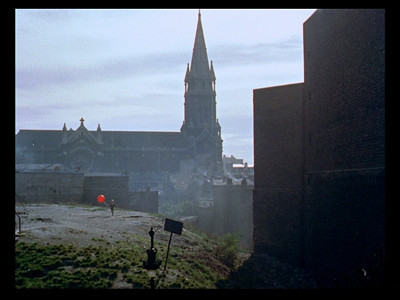
French filmmaker Albert Lamorisse remembered that it doesn't take much to capture a child's imagination, and that's why his 1956 short film The Red Balloon has remained an ageless classic, finding a place in the hearts of every new generation that has come along since its release. The concept is so obvious and perfect it's amazing it hadn't been done before. Young Pascal, played by the director's son, leaves his Parisian home for school, and on the way, finds a red balloon tangled around a street lamp. He carries it with him, treating it like a precious treasure to be protected, and as his reward, the balloon takes on life and begins to follow Pascal around on its own.
It's the wish fulfillment of an imaginary friend. One day this pal that only you can see unexpectedly gains form, striking back at the disbelievers and shielding you from life's bullies in a way you can't do yourself. Who wouldn't want a red balloon that can float through the air and bonk your school's principal on his head?
Much of The Red Balloon is spent traveling the streets of Paris, and I was caught completely unaware by Edmond Sechan's tremendous photography in the picture. Though shot in a full frame aspect ratio, Sechan keeps his shots wide in order to capture the full panorama of the city's architecture and the beautiful skies that hang overhead. The balloon moves through the landscape like a giant "You Are Here" dot on a map, a special tour guide to lead us through the City of Lights. Since the movie's central themes touch on the joy of viewing life with innocent eyes, it's only too fitting that the camera lens should have the same sense of wonder. This new DVD print is sublime. It's so clear, we see every crack in every wall, every detail of the city's canvas, no matter how small. The special effects that keep the balloon afloat are completely invisible, as well. The magician protects the integrity of his tricks.
The genius of The Red Balloon is that it's a metaphor for childhood itself. Pascal is at an age where his imagination lacks for nothing, and the world around him is a glorious place that can only be sullied by the people who have lost their youthful perceptions. Adults don't understand Pascal's attachment to his balloon and see it as a hindrance. (Excepting the old janitor, my favorite of the passing characters in The Red Balloon. Completing the cycle of life, the old man has returned to childhood and is able to appreciate the magic of a basic toy.) The other kids want to possess it and destroy it, the mob being afraid of what they don't understand and envious of what they don't have. In its way, this is also the plight of the artist: discouragement is everywhere, people are afraid of what's new, and we hate it when our friends become successful.
Thankfully, Albert Lamorisse feels that the child and the artist in us all deserves to be nurtured. Thus, in his world, kindness and imagination are rewarded, and innocence is preserved. In those final images, when the balloons of the city rally to Pascal's defense, lifting him high above the fray, one little boy flies away from cynicism and despair, and in watching The Red Balloon, so can we all. Let the marketing departments spend billions to try to make us feel like kids again; I can buy myself a balloon for less than a buck.

Oh, for the simplicity of The Red Balloon!
When was it decided that children only liked films that were overly designed and spastically edited? Was it when the A.D.D. kids grew up and started making films themselves? Or was it when the bean counters gained control and started marketing and focus grouping everything to death?
French filmmaker Albert Lamorisse remembered that it doesn't take much to capture a child's imagination, and that's why his 1956 short film The Red Balloon has remained an ageless classic, finding a place in the hearts of every new generation that has come along since its release. The concept is so obvious and perfect it's amazing it hadn't been done before. Young Pascal, played by the director's son, leaves his Parisian home for school, and on the way, finds a red balloon tangled around a street lamp. He carries it with him, treating it like a precious treasure to be protected, and as his reward, the balloon takes on life and begins to follow Pascal around on its own.
It's the wish fulfillment of an imaginary friend. One day this pal that only you can see unexpectedly gains form, striking back at the disbelievers and shielding you from life's bullies in a way you can't do yourself. Who wouldn't want a red balloon that can float through the air and bonk your school's principal on his head?

Much of The Red Balloon is spent traveling the streets of Paris, and I was caught completely unaware by Edmond Sechan's tremendous photography in the picture. Though shot in a full frame aspect ratio, Sechan keeps his shots wide in order to capture the full panorama of the city's architecture and the beautiful skies that hang overhead. The balloon moves through the landscape like a giant "You Are Here" dot on a map, a special tour guide to lead us through the City of Lights. Since the movie's central themes touch on the joy of viewing life with innocent eyes, it's only too fitting that the camera lens should have the same sense of wonder. This new DVD print is sublime. It's so clear, we see every crack in every wall, every detail of the city's canvas, no matter how small. The special effects that keep the balloon afloat are completely invisible, as well. The magician protects the integrity of his tricks.

The genius of The Red Balloon is that it's a metaphor for childhood itself. Pascal is at an age where his imagination lacks for nothing, and the world around him is a glorious place that can only be sullied by the people who have lost their youthful perceptions. Adults don't understand Pascal's attachment to his balloon and see it as a hindrance. (Excepting the old janitor, my favorite of the passing characters in The Red Balloon. Completing the cycle of life, the old man has returned to childhood and is able to appreciate the magic of a basic toy.) The other kids want to possess it and destroy it, the mob being afraid of what they don't understand and envious of what they don't have. In its way, this is also the plight of the artist: discouragement is everywhere, people are afraid of what's new, and we hate it when our friends become successful.
Thankfully, Albert Lamorisse feels that the child and the artist in us all deserves to be nurtured. Thus, in his world, kindness and imagination are rewarded, and innocence is preserved. In those final images, when the balloons of the city rally to Pascal's defense, lifting him high above the fray, one little boy flies away from cynicism and despair, and in watching The Red Balloon, so can we all. Let the marketing departments spend billions to try to make us feel like kids again; I can buy myself a balloon for less than a buck.

Monday, May 19, 2008
WHITE MANE
Though not part of the Criterion Collection proper, this disc is released through the studio's parent, Janus Films, in conjunction with the main brand.
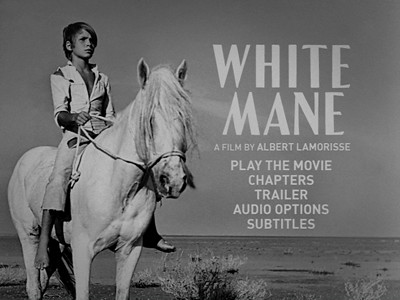
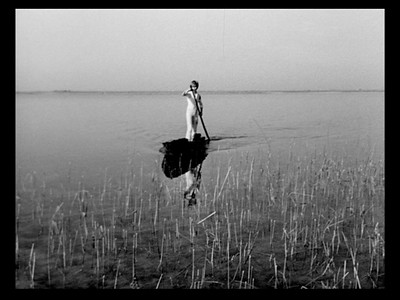
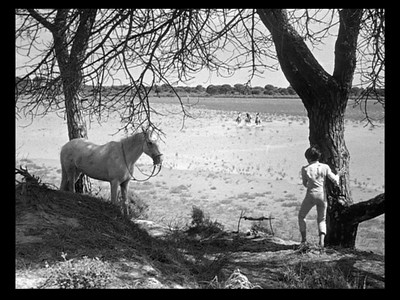
White Mane is a short children's film by French director Albert Lamorisse (The Red Balloon). Made in 1952, it's an uncomplicated morality play that takes place in the natural fields and marshes in the South of France. Despite having won the Palme d'or for the Best Short at the 1953 Cannes Film Festival and receiving praise from critics as prestigious as Pauline Kael, it's never been readily available in the United States. Unlike the other releases in the Janus Films children's line, I don't even have a vague memory of maybe seeing it at any point as a kid. Which is too bad, since like Paddle to the Sea (which I think I might have seen on TV), I would have found much to identify with in the story. As an adult watching these movies now, it's hard not to get nostalgic for those times, to remember my own past, and insert myself as a boy into the narrative, much like children do when they experience any entertainment.
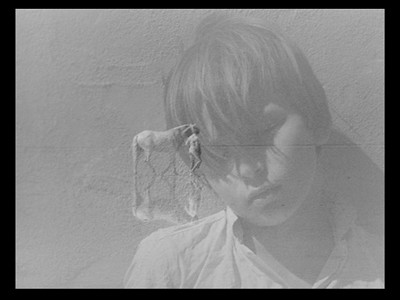
The horse White Mane is the lead stallion in a herd of wild horses. A local landowner attempts to catch the pure white creature and tame him, but he's too wild and breaks free, returning to the grassy land. This is all witnessed by Folco (Alain Emery), a young boy who fishes in the marshes where he lives with his family. He is intrigued by White Mane, and when the landowner tells him that the horse will belong to anyone who catches him, Folco decides that the someone will be him. Naturally, Folco doesn't have much luck at first, but when he rescues White Mane from one of the traps the horse's hunters lay for him, White Mane accepts the boy as a rider. The herdsmen remain obsessed with White Mane, however, and the landowner appears to be reneging on the promise of ownership, so Folco and White Mane try to outrun the snare of the adult world together.
My dad raised horses all of my life, and when I was in elementary school, I was a pretty accomplished rider. A series of accidents, however, caused me to develop a phobia about horses in my adolescence, rendering me unable to get back on one even to this day. One of the bad memories that haunts me and prevents me from returning to equestrian activities involves my father trying to "break" a young filly. "Break" is the actual term used for teaching a horse to hold a saddle and, by extension, a rider. Up until a certain age, a horse doesn't carry anything on her back, and the natural reflex to having a saddle placed on her back is to toss it off. Get a particularly stubborn horse, and the training process can be protracted and dangerous. For whatever reason, on this particular day, my father decided to make me part of the process. My older sister had helped in the past, but now it was my turn. Until this very moment, writing this now, I had never stopped to think if maybe this was some kind of attempt to "break" me, too, some idea that this would usher me forward toward manhood.
Seeing my dad throw the saddle on this filly, who I think was named Missy, over and over, and seeing her throw it off over and over and, rather than grow more passive or wear down, get more and more frenzied, was really freaking me out. Missy was trying to leap over the corral, she was kicking, her nostrils were flaring, a viscous lather was forming on her thighs--the horse was doing everything she could to keep from being broken. In response, my dad also became more and more frustrated, and it turned into a scary battle of wills between the two of them. I didn't care who won, all I knew was I didn't want to get on that horse. Eventually, Missy ended up tangled in some barbed-wire fencing and cut herself badly above the front legs, the battle of wills halted by physical injury. I'm ashamed to say that I was more relieved to be getting out of the horrible task than I was sympathetic to the horse for having gotten hurt.
I relate this story because the driving event of White Mane is the herdsmen trying to take the horse out of his natural environment and bend his will to their own designs. As a symbol of freedom, a pure white horse has been regularly used by filmmakers as disparate as Andrzej Wajda and David Lynch. A white horse can represent an untouched state, an image of nobility and of how things should be. Though Lamorisse never says anything of the kind, to take White Mane out of his natural habitat is an immoral act, the disruption of the order of things.
Really, Lamorisse doesn't say much at all in this picture, at least not in any explanatory sense. The film is mostly silent, with only the bare minimum of dialogue and narration. (Though the original audio is in French, there is an option for new English narration on the DVD.) If a child is to glean anything from White Mane, it's to come from drinking in the gorgeous black-and-white photography of the untouched French countryside. (In that aspect, this DVD is pristine; the picture is entirely without blemish.) White Mane's film style is practically Neorealist in its preservation of the landscape and even little Folco's rundown shack. The scenes of him and his family--a younger sister, and a man that is maybe a grandfather--are achingly real, their content faces showing no hint of being burdened by the poverty that surrounds them. Though Lamorisse employs sophisticated editing to create a mis en scene that has little in common with pure documentary, White Mane does not contain a hint of falseness. It very well could be a documentary.
And what could a child glean from this? That nature is to be respected, that individuality is to be preserved, and to stand up for what's right need not be a grandiose act, it's something even the smallest of us can do. The herdsman aren't cartoonish villains twisting their moustaches and cackling over their cruelty; rather, they are men who, like my father on that awful day, got such tunnel vision, they failed to see how far their actions had taken them from what's proper and only wake up when it's too late.
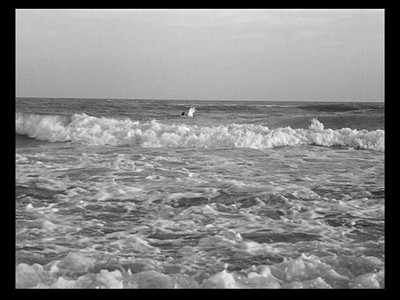
It's weird watching White Mane with adult eyes. The movie concludes with the horse and boy heading off into the sunset by swimming across a vast ocean (just like Paddle to the Sea!). According to the narration, they are heading for a land where there is pure harmony, where man and beast are never selfish or mean to one another. If I were still a boy, I would accept at face value that this was some kind of magic, that the land they were heading for did exist and was of some mystical other dimension. As an adult, and as often happens when I am revisiting children's entertainment, I was struck by how grave the imagery really is. The best kid's material always has darker undercurrents. Though if you have children they will likely never consider this, if you watch White Mane on your own, it will be hard not to see Folco and White Mane as swimming toward death. The metaphor is too obvious, and as a metaphor, your reaction to it will likely depend on your own belief in an afterlife, in a world beyond this one, what lies just over the horizon. As with any parable, White Mane shows that actions have both consequences and rewards, and the two are interchangeable depending on where in life you find yourself when you get the message.

White Mane is a short children's film by French director Albert Lamorisse (The Red Balloon). Made in 1952, it's an uncomplicated morality play that takes place in the natural fields and marshes in the South of France. Despite having won the Palme d'or for the Best Short at the 1953 Cannes Film Festival and receiving praise from critics as prestigious as Pauline Kael, it's never been readily available in the United States. Unlike the other releases in the Janus Films children's line, I don't even have a vague memory of maybe seeing it at any point as a kid. Which is too bad, since like Paddle to the Sea (which I think I might have seen on TV), I would have found much to identify with in the story. As an adult watching these movies now, it's hard not to get nostalgic for those times, to remember my own past, and insert myself as a boy into the narrative, much like children do when they experience any entertainment.
The horse White Mane is the lead stallion in a herd of wild horses. A local landowner attempts to catch the pure white creature and tame him, but he's too wild and breaks free, returning to the grassy land. This is all witnessed by Folco (Alain Emery), a young boy who fishes in the marshes where he lives with his family. He is intrigued by White Mane, and when the landowner tells him that the horse will belong to anyone who catches him, Folco decides that the someone will be him. Naturally, Folco doesn't have much luck at first, but when he rescues White Mane from one of the traps the horse's hunters lay for him, White Mane accepts the boy as a rider. The herdsmen remain obsessed with White Mane, however, and the landowner appears to be reneging on the promise of ownership, so Folco and White Mane try to outrun the snare of the adult world together.

My dad raised horses all of my life, and when I was in elementary school, I was a pretty accomplished rider. A series of accidents, however, caused me to develop a phobia about horses in my adolescence, rendering me unable to get back on one even to this day. One of the bad memories that haunts me and prevents me from returning to equestrian activities involves my father trying to "break" a young filly. "Break" is the actual term used for teaching a horse to hold a saddle and, by extension, a rider. Up until a certain age, a horse doesn't carry anything on her back, and the natural reflex to having a saddle placed on her back is to toss it off. Get a particularly stubborn horse, and the training process can be protracted and dangerous. For whatever reason, on this particular day, my father decided to make me part of the process. My older sister had helped in the past, but now it was my turn. Until this very moment, writing this now, I had never stopped to think if maybe this was some kind of attempt to "break" me, too, some idea that this would usher me forward toward manhood.
Seeing my dad throw the saddle on this filly, who I think was named Missy, over and over, and seeing her throw it off over and over and, rather than grow more passive or wear down, get more and more frenzied, was really freaking me out. Missy was trying to leap over the corral, she was kicking, her nostrils were flaring, a viscous lather was forming on her thighs--the horse was doing everything she could to keep from being broken. In response, my dad also became more and more frustrated, and it turned into a scary battle of wills between the two of them. I didn't care who won, all I knew was I didn't want to get on that horse. Eventually, Missy ended up tangled in some barbed-wire fencing and cut herself badly above the front legs, the battle of wills halted by physical injury. I'm ashamed to say that I was more relieved to be getting out of the horrible task than I was sympathetic to the horse for having gotten hurt.

I relate this story because the driving event of White Mane is the herdsmen trying to take the horse out of his natural environment and bend his will to their own designs. As a symbol of freedom, a pure white horse has been regularly used by filmmakers as disparate as Andrzej Wajda and David Lynch. A white horse can represent an untouched state, an image of nobility and of how things should be. Though Lamorisse never says anything of the kind, to take White Mane out of his natural habitat is an immoral act, the disruption of the order of things.
Really, Lamorisse doesn't say much at all in this picture, at least not in any explanatory sense. The film is mostly silent, with only the bare minimum of dialogue and narration. (Though the original audio is in French, there is an option for new English narration on the DVD.) If a child is to glean anything from White Mane, it's to come from drinking in the gorgeous black-and-white photography of the untouched French countryside. (In that aspect, this DVD is pristine; the picture is entirely without blemish.) White Mane's film style is practically Neorealist in its preservation of the landscape and even little Folco's rundown shack. The scenes of him and his family--a younger sister, and a man that is maybe a grandfather--are achingly real, their content faces showing no hint of being burdened by the poverty that surrounds them. Though Lamorisse employs sophisticated editing to create a mis en scene that has little in common with pure documentary, White Mane does not contain a hint of falseness. It very well could be a documentary.
And what could a child glean from this? That nature is to be respected, that individuality is to be preserved, and to stand up for what's right need not be a grandiose act, it's something even the smallest of us can do. The herdsman aren't cartoonish villains twisting their moustaches and cackling over their cruelty; rather, they are men who, like my father on that awful day, got such tunnel vision, they failed to see how far their actions had taken them from what's proper and only wake up when it's too late.

It's weird watching White Mane with adult eyes. The movie concludes with the horse and boy heading off into the sunset by swimming across a vast ocean (just like Paddle to the Sea!). According to the narration, they are heading for a land where there is pure harmony, where man and beast are never selfish or mean to one another. If I were still a boy, I would accept at face value that this was some kind of magic, that the land they were heading for did exist and was of some mystical other dimension. As an adult, and as often happens when I am revisiting children's entertainment, I was struck by how grave the imagery really is. The best kid's material always has darker undercurrents. Though if you have children they will likely never consider this, if you watch White Mane on your own, it will be hard not to see Folco and White Mane as swimming toward death. The metaphor is too obvious, and as a metaphor, your reaction to it will likely depend on your own belief in an afterlife, in a world beyond this one, what lies just over the horizon. As with any parable, White Mane shows that actions have both consequences and rewards, and the two are interchangeable depending on where in life you find yourself when you get the message.

Subscribe to:
Posts (Atom)