Showing posts with label Hideko Takamine. Show all posts

Wednesday, January 5, 2011

WHEN A WOMAN ASCENDS THE STAIRS - #377


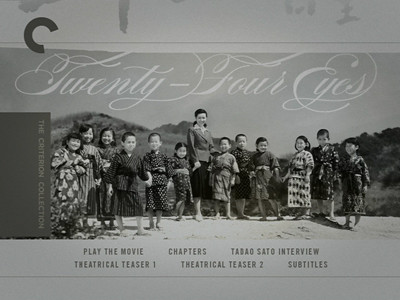
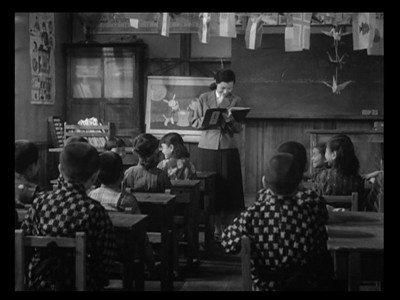
The news went around on Monday that beloved Japanese actress Hideko Takamine had died, having lived a full life. She was 86. Takamine appeared in a staggering number of movies--177, according to IMDB. Her first was in 1929, her last in 1979. I'll admit, I haven't seen most of them. My hat is off to anyone who has. I think I've only seen the ones released by Criterion, with the most memorable for me being Keisuke Kinoshita's Twenty-Four Eyes [review]. In that film, Takamine played a young schoolteacher whose modern ways clashed with the small-town values of the village where she was assigned a school house, and who struggles to take care of the children in her care. It's a performance that is full of heart. Children are supposed to fall in love with their teachers, and as viewers, we fall in love with Takamine.


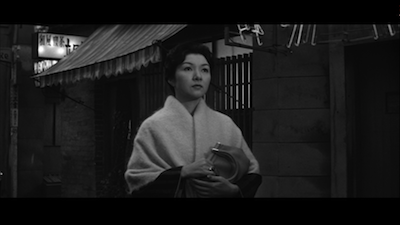
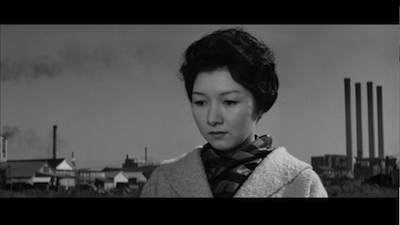
Hideko Takamine made quite a few movies with Mikio Naruse, including one of his most famous, the 1960 drama When A Woman Ascends the Stairs. As the only film in my library starring Takamine that I hadn't seen, it seemed appropriate to give it a look in honor of the actress' passing. When A Woman Ascends the Stairs is a sad film, though one that is never overly dramatic--even if some of its plot twists are straight soap opera. It also doesn't wallow. Takamine lends her character a plucky spirit that somehow spins all the bad events into a hopeful tapestry celebrating human resilience. The bar hostess Mama Keiko is a long way from the schoolteacher Hisako Oishi is terms of profession, but not in personality or allure. They are almost the same woman, especially as Oishi has seen a few things by the end of Twenty-Four Eyes. Both know heartbreak, but both have the strength to take care of themselves.

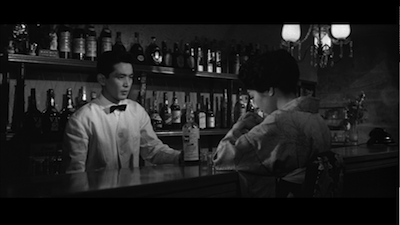
When A Woman Ascends the Stairs is set in the Ginza district, a post-War neighborhood where businessmen congregated to drink and carouse. There, the streets were lined with bars that featured women on staff as "hostesses." Their job was to entertain the customers and encourage them to buy drinks. Some extended their duties to after hours, either selling themselves one night at a time or becoming full-time mistresses.


As far as Keiko is concerned, that extra-curricular "duty" is for the lower-class hostesses. There are three tiers, as she describes it: the bottom resort to going home with clients, the middle take a train home, and the best hostesses can afford a cab. Or at least pretend they can afford it. It's common for women like Keiko to live beyond their means so as to foster the illusion that they are expensive prizes. Keiko's apartment is luxurious for a widow, but it goes with the profession. Her husband was hit by a truck not long after they were married, leaving his young bride to fend for herself. Keiko has been a hostess for five years, having been recruited by Komatsu (Tatsuya Nakadai, who also co-starred with Takamine in The Human Condition [review]) when she was a cashier. Komatsu is still her manager, taking care of accounts at the bar where Keiko oversees the other girls. Her position is why everyone calls her "Mama," including her clients, most of whom want to drink with a pretty woman and tell her about their day.


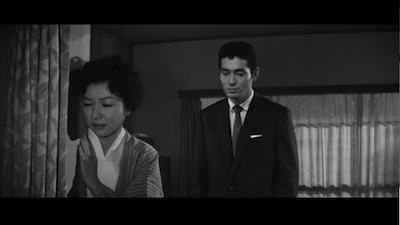
A pretty woman other than their wives, that is. Most of them are married, and most of them are in love with Keiko, though she knows they will never leave their families to give her the life she deserves. That is part of why she stays out of their reach, though one suspects from the get-go that she has more romantic tendencies than she lets on. Komatsu is in love with her, too, but he is either incapable or inept when it comes to showing it. Keiko really loves the banker Fujisaki (Masayuki Mori), one of the only men in her clientele who hasn't tried too hard to push her into something more (we see her refuse out-of-town trips, start-up money for her own bar, and even lunch dates). Not that he's really that good of a guy. I mean, Jesus, he's a banker!


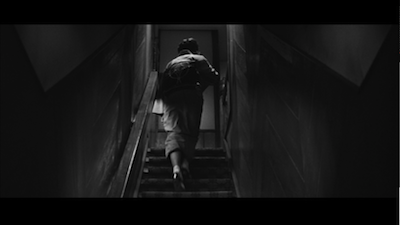
All of this works for Keiko, but it doesn't make her happy. The title When A Woman Ascends the Stairs refers to her nightly journey upstairs to the bar. It's a climb she dreads. She knows this occupation is beneath her, and she doesn't even like alcohol very much. It's a struggle every day to keep from compromising her values. Much of the ins and outs of life in the Ginza are explained to us by Keiko in voiceover. She is a thoughtful woman, prone to otherwise keep what is really going on to herself. She is also crafty, having learned how to dodge men's advances and to lie her way out of scrapes. The bulk of Naruse's movie, shot from a script by producer Ryuzo Kikushima (a regular contributor to Kurosawa films), focuses on the season when life decides to pile on Keiko. An ulcer, a failed business venture, needy family members, multiple proposals--it's more than a lady should be able to take.

Keiko holds on longer than most would. As an actress, Hideko Takamine brings an inner strength that informs Keiko's outer bearing. Back straight, chin-up, smile when appropriate--these are the traits of a good hostess. Your troubles are bundled inside your kimono, the bar is not the place to let them out. This demeanor deteriorates over the course of the story, even as Keiko does her best to avoid traps she sees others fall into. A protégé's desperate actions after she opens her own bar, only to spiral into debt, serve as a cautionary tale. Yet, superstition and plain old bad luck tear at Keiko. As she grows more weary, her mistakes become more grand.


In terms of performance, the most appropriate metaphor I can think of is that Takamine sees Keiko as a porcelain doll, and with each successive scene, invisible hands are chipping away at her painted exterior. Takamine proves exceptionally capable of showing the decline. She has a sweet face and a charming overbite, and though at first her seductive traits may not be obvious, it's an actress' job to be everything to everyone; thus, the role of a woman who morphs into the thing most desired by whomever is looking at her at any given time should be ideal for a performer. Likewise, an actress needs to still be herself when she steps off set, to leave the role behind. One assumes that Takamine's own experience, having been in the business for three decades by the time she made When a Woman Ascends the Stairs, gave her a special connection to Mama.

By the time When a Woman Ascends the Stairs is in its final reel, it's hard to imagine that it can go anywhere positive without selling itself out. We have seen so many things go bust by that point, and the movie has maintained such a sense of internal realism--Masao Tamai photographs Tokyo so that its neon looks gorgeous in black-and-white--it would be impossible to accept that events take too dramatic a turn. Thankfully, Naruse and Kikushima place enough faith in their actress and the level of trust she has earned from their audience in the preceding 105 minutes to know that it's really just reliant on her to pick herself up, dust herself off, and carry on. Even better, Takamine is so good at what she does, she not only makes us believe that Keiko will carry on, but when we hear her final words, the oft-spoken greeting she gives to all of her customers, we accept that she believes them as never before. And somehow, some way, that makes us feel good for her. We want Hideko Takamine to be okay, and she has assured us that, no matter what, she will be.


* Also look for Hideko Takamine in Tokyo Chorus (part of the Eclipse Silent Ozu box) [review].

Sunday, September 13, 2009

THE HUMAN CONDITION - #480


As a fan of early-20th Century American literature, I always noticed that the one group of writers that could inspire real envy in all of the famous Americans was the Russians. Tolstoy and Dostoevsky and the like are regularly mentioned by Hemingway and Fitzgerald and their crew as the authors they most looked to in terms of what they wished they could do, the level of craft they aspired to achieve. For a long time, I didn't understand why, because like many young readers, I was a little frightened by the prospect of reading these legendarily long tomes. Charles Dickens wrote books that fat, and I didn't much care for him, so what chance did these Ruskies have?

Then a couple of years ago I finally read Tolstoy's Anna Karenina, and that changed everything. While I can't claim to have gobbled up a ton more since then, the densely plotted yet deftly told Anna Karenina made me realize what inspired the men who inspired me. The writing is detailed yet lyrical, the story complicated but has enough soap opera to keep it from being boring, and the characters are so richly drawn, you feel like you get to know each and every one, no matter how insignificant. Having experienced Tolstoy, it helped me understand what Steinbeck and Fitzgerald were trying to do when they wrote the mammoth East of Eden and Tender is the Night (respectively), both books I read (and in the case of Fitzgerald, reread) in my post-Anna K. world.

Funny that I should be scared of a big novel, though, as I've never been scared of big cinema. Granted, watching a movie takes place in a set amount of time, and at my reading speed, I've had books drag on for upwards of a year for me. Still, I've spent weekends devouring the whole Godfather set or a complete season of The Wire, an entire evening in an uncomfortable theatre watching The Best of Youth, so why not some time flipping through the pages of War and Peace? When it comes down to it, such substantial artistic experiences are rare. How often do we really get to see or read a truly brilliant work of such incredible density? Berlin Alexanderplatz looked like an insurmountable expedition when I cracked open the box, but I had watched all fifteen hours within two or three days and never checked the clock out of boredom. Shouldn't, then, Proust be on my nightstand?
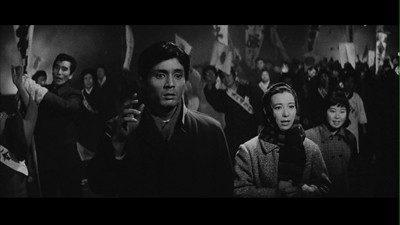


Masaki Kobayashi's nine-and-a-half-hour film The Human Condition was released as three parts over three years, spanning 1959 to 1961. On this new Criterion edition of the landmark film, the three-part structure is preserved over three discs, and it includes the original intermission breaks in each part. So, really, The Human Condition is like a six-chapter novel, the equivalent of six ninety-minute television episodes. Not so daunting when you think about it that way, is it? Not that you'll likely stop at any particular break. Just like reading a good book, I watched The Human Condition into the wee hours, dropping out and going to bed when I just couldn't keep my eyes open anymore, then picking it up where I left off the next day.

Now, even if watching The Human Condition isn't a daunting task, reviewing it is (I know, and get on with it already, right?). To adequately cover the full girth of this particular piece of cinema would practically require a book unto itself. The reason a movie like Kobayashi's is so engrossing is that, like a Russian novel, it is full of recurring themes, side characters with their own lives, and a story that maneuvers through territory as wide as any map--and likely territory that was also covered in the Gomikawa Junpei novel upon which The Human Condition was based. When it comes to a movie of such magnitude, whatever you write in a space like this, it's like using measuring spoons full of water to show someone what the ocean is like. I need flowcharts and character graphs just to keep it all straight!

But here, I'll try...
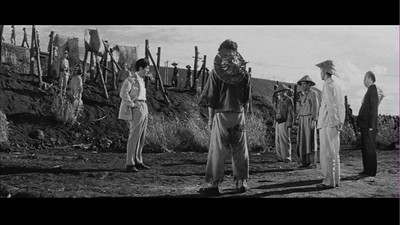


The Human Condition opens in Manchuria in 1943. Japan is in the middle of World War II and using their occupation of China and the country's natural resources as fuel for the war effort. Kaji, played by Tatsuya Nakadai, is twenty-eight years old and full of ideas. He believes that improving working conditions for the common man will improve production output, and even thinks the Chinese forced into labor are entitled to be treated as human beings. Not surprisingly, some consider Kaji to be a radical. His theories sound vaguely Communist.

Like any young man, Kaji is also interested in romance, and he has been dating Michiko (Michiyo Aratama), who works in the same compound with him. She is ready to get married, he is not, as he fears that any day he could be drafted into the Japanese army. A reprieve comes, however, when he is assigned a position at a remote mine where Kaji can employ some of his crazy notions in the aid of extracting precious metals from the Earth. This important work will buy him an exemption from military service. Eager to do some good, Kaji marries Michiko and the two move to the desolate mining town. There, he befriends the tough but fair foreman Okishima (So Yamamura), but quickly makes enemies of the other bosses, who thrive on bribes and sadistic motivational techniques.
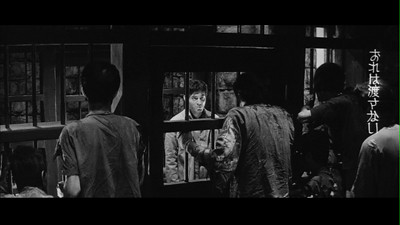


Kaji eventually succeeds, but not without much effort and little praise. Things get more difficult when the army drops off 600 Chinese prisoners and puts Kaji in charge of them. When his enemies help several prisoners escape in order to line their own pockets, Kaji not only loses the trust of the POWs but also runs afoul of a macho military police officer, Sergeant Watai (Toru Abe), who ceases to be amused by Kaji's tactics. Convinced that Kaji has been turning a blind eye to the escapes, particularly once it's revealed that a Chinese boy (Akira Ishihama) that Kaji has taken under his wing has been part of the plot, Watai puts the screws to our hero. Having already been forced to compromise his ideals to the detriment of his self-esteem and his marriage, and often at the cost of lives, Kaji decides to take a stand. His reward? Conscription into the army.
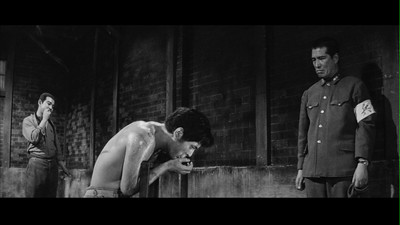


End of Part I, often subtitled No Greater Love; part II is Road To Eternity, and it opens with Kaji on the tail end of his basic training. He and one other solider, the disagreeable Shinjo (Kei Sato), are both outcasts due to their perceived Communist-sympathies, but Kaji in particular has distinguished himself as a sharpshooter. He has also tried to be an ally to the nerdy, pathetic Obara (Kunie Tanaka), who clearly was not cut out for military life. (His kowtowing and almost pathological sycophancy reminded me a little of the similarly pathetic but altogether more unctuous Arthur Storch character in Jack Garfein's The Strange One, released a couple of years earlier but likely just proving there is one in every pack.) The fact that Obara can't be helped is just another lesson about the harshness of reality versus the purity of ideals that Kaji is going to have to learn. While at the start of Part I he is really a student who has not yet been pushed out into the world, by the time he gets to the army, he has experienced injustice in practice, not just in theory. The army will make a man out of him yet. Whether it's the man they want or not will remain to be seen.

There is a crucial moment in Part I where Kaji makes a connection with one of the leaders in the Chinese prison camp, an older man named Wang Heng Li (Seiji Miyaguchi). Wang has been the man whom Kaji has been most eager to have trust him, and even tries to blame Wang's distrust on why some things are going wrong in the camp. It's Wang that expresses that there is more to trust than asking for it, and more to being brave than being stubborn. He cites the fact that they are standing face to face, though staring across barbed wire, and connecting, bridging a divide between their people. It's the men you meet in life whom you find this common connection with that will define the social contract and make the way for real change, be it collective or personal. This encounter will end up being the most important for Kaji in terms of how he deals with the various types he meets from here on out. Which of them will provide the same connection?
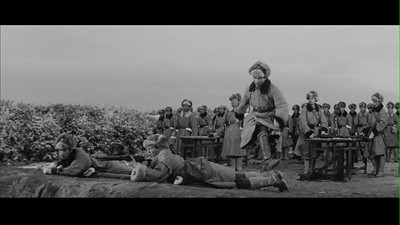


It's also an important instruction from Masaki Kobayashi and co-writer Zenzo Matsuyama on how we should perceive what is going on in this movie. Regardless of the vastness of the landscape, it boils down to the people, the ones who connect with each other, and the ones who connect with us as the audience. This is a technique not dissimilar to David Lean's. The British director used large backdrops and epic stories to create portraits of individuals, showing their courage and their fumbles in the face of situations that were larger than they were. For as awesome as the images we see are, for as breathtaking or soul crushing the locales, it all comes back to the man in the center of the frame.

And make no mistake, in terms of visual power, The Human Condition is awesome. Kobayashi and director of photography Yoshio Miyajima shot their film in black-and-white at a wide 2.35:1 aspect ratio. Within each frame, we see how barren the mine is and also how cramped the army camp; the unending battlefield versus the stifling forest they escape into (Part III). A figure placed within these vistas can appear lonely and overpowered, or if close enough in the foreground, powerful, eclipsing the world behind him. The size also makes close-ups all the more intimate, such as the scenes between Michiko and Kaji when she comes to visit him at his training base and they share a night in the storage shed. The image panel is all about them, all about their love, be it the tight shots of Kaji hugging her naked torso or when they lie down together. Conversely, when their marriage is strained, moving between them and their separate bed mats within this stretched visual space implies a canyon of loneliness and alienation between them.
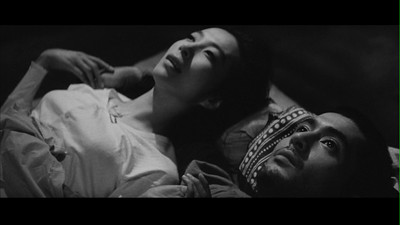


Ironically, though the love of Michiko and Kaji is such an important aspect of his strength in the first arc of the movie--she is both a source of power and temptation--the separation of the pair is integral to Kaji's growth in the second. Her visit to the camp is a farewell of sorts. It's tender, and it's sad; Michiyo Aratama is heartbreaking in how she reacts to her husband clinging to her. After she is gone, though, a sour turn for Obara forces Kaji to stand up for something in the army barracks the way he failed to do back at the mining camp. When he slapped the boy Chen on the urging of a superior, he ignored his better instincts for how workers should be treated, and when his inability to push Obara over the hump leads to hazing and dark consequences, Kaji ends up advocating they enforce the army's judicial code. Again, it's ironic in that he ends up maintaining his own moral strength by embracing the army's stringent guidelines and achieves his own purity by insisting on them being followed exactly. It's a similar stance to the one he took at the mining camp, but this time he manages to make it work without letting authority lord it over him.

The isolation from his wife further allows Kaji to create a tighter sense of community in his new surroundings. When asked to train new recruits, he once again insists on reform, and he creates a solid unit by taking a more humanist approach to basic training. Earn their respect and loyalty with kindness, rather than brutality. Unfortunately, when battle does come to Manchuria, it comes too early, and the men aren't ready in terms of skill, but they do share the bond Kaji hoped for. The fighting turns out to bigger than they are, however. Combat is portrayed as pointless and demeaning, Kaji's unit hiding from the enemy like a giant game of whack-a-mole. One man is assigned to each foxhole, so though the experience is a commonly shared one, they are also isolated. The fewer there are to stand together, the more self-preservation becomes important, and Part II ends with Kaji abandoning what is left, running alone into a darkened wasteland, both in terms of its physical, bombed out appearance and the black clouds hanging in the air, and in the metaphorical sense. Our idealist is rushing headlong into an existential abyss.
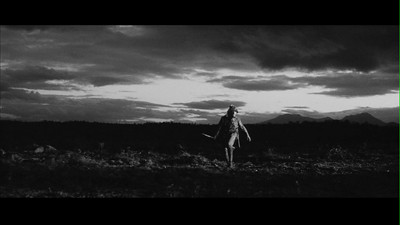


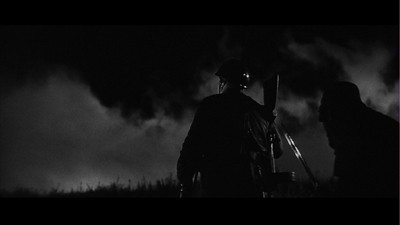
The battlefield sequences are shot with a startling realism, including impressive explosions and large stagings of battle. The enemy is faceless and distant, but there is a starkness to the detail that rivals Kubrick's Paths of Glory or Spielberg's Saving Private Ryan. The size makes it alienating and impersonal. All the more interesting, then, that Kobayashi opens part III of the movie, A Solider's Prayer, with a scene that brings the fighting right to Kaji: a hand-to-hand skirmish with a Soviet soldier. What we see of this, some of it as memories (memory plays a big part in this last third, Kaji's shame shown in freeze frame), is more surreal, the warriors framed in tight shots, a brightly lit night sky full of dark smoke behind them. Kaji is now a man taking charge of his own destiny, and that includes killing. A later one-on-one confrontation with Kaji's ideological rival (Nobuo Kaneko) in a labor camp pushes the expressiveness further, with Kobayashi and Miyajima lighting the beating like a scene out of a film noir. Likewise, eroticism is shot like these individual battles, with the camera moving in so tight, the images of these couplings are practically seen as abstracts.
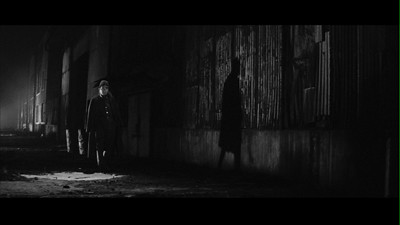


This fifth chapter is concerned with Kaji's long trek home. Reminiscent of Kon Ichikawa's Fires on the Plain, it first shows his hike across an empty wilderness, but soon he is consumed by the jungle that stands between death and freedom. Once inside, he no longer knows where safety lies. At the same time, he is denying the rule of the army, taking charge over a Corporal even though he is only a Private First Class, and eventually establishing his own mini-community. He and the few soldiers he is left with pick up a small group of peasants that they will try to shepherd to secure ground. Most of them won't make it out alive, but they still test Kaji's faith and his leadership, the beliefs by which he defines himself. He is becoming decisive, acting on what he knows to be right without hesitation or compromise. It's Kaji's way, like it or lump it.

In these final chapters, Kaji becomes a sort of Japanese Ulysses on his own Odyssey, his one goal being to get back home to his wife. Along the way, he encounters many perilous temptations, including several women who look to his strength and dedication with desire, but who fall under his single-mindedness much the way his wife had before them. He runs across leaders who refuse to deviate from their outmoded missions, make-shift refugee camps, and other soldiers who have lost their way, and who either seek the kind of leadership Kaji offers or the lawless alternative. In all things, Kaji emphasizes choice. Like I said, it's his way once you've come on board, but at each crossroads, any man in his company is allowed to decide which fork to take. Eventually, however, he ends up a POW forced into labor by the Russians, a predicament that baffles him. In his mind, it goes against the Communist ideal he would have expected from the Soviets, and it also takes him full circle: he is now subject to the very work conditions he once tried to stop. There is a great sequence where he confronts the Russian leaders with what he has learned and what he sees as being wrong with their behavior, but his impassioned speech is merely splatter against the language barrier. Oh, futility!
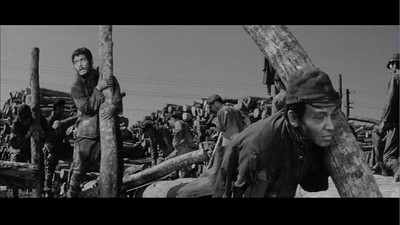


Tatsuya Nakadai is still a working actor to this day, and he has appeared in a number of great films, including starring in Kurosawa's High and Low, Ran, and Kagemusha. He even worked with Kobayashi again in Samurai Rebellion, Kwaidan, and Harakiri. The acting range he displays in The Human Condition is nothing short of extraordinary. Though we only glimpse his character over a handful of years (and, indeed, Nakadai played him for almost as long as the time that passed in the script), we see Kaji go through a full arc. Call it a practical education if you will, growing from an idealistic youth with more stubbornness than technique to an experienced soldier that can enact a philosophy in actual situations and all the way to rock bottom. Just like Ulysses, the final leg of Kaji's journey is spent in the trappings of a beggar, though unlike the hero of myth, Kaji undergoes this development for real.
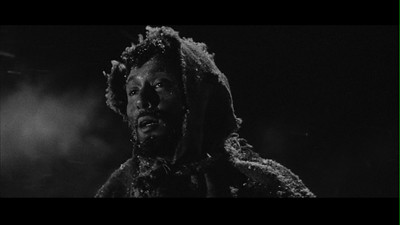


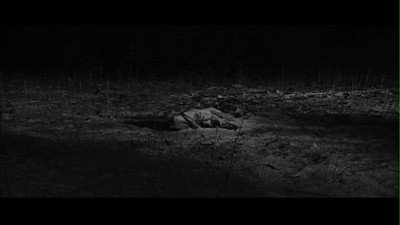
The ending of The Human Condition is bleak. Kaji spends the final scenes on the frozen Manchurian countryside, a tragic turn given that this is where he has run to in order to escape Siberian imprisonment. The world we see through the camera eye is now bleached out, flattened, a blank slate that cannot sustain life. If we continue to consider The Human Condition with an existential mindset, this is a perfect metaphor for the plight of modern man. Sticking to one's ideals, as Kaji does up unto the very end, is a noble pursuit, but one met with more punishment than reward in a world that demands conformity override individual concern. (Indeed, Kaji's problems with the Red Army's approach to socialism is that it swallows men whole in order to just make them part of the same old injustice.) Kaji has gone as far as he can go, and that is a place where he is completely alone, in a landscape that is literally cracking under his feet. Yet, he stumbles onward, his last thoughts being of his wife, the beacon he has followed, the lighthouse of his principles. In one light, this is tragedy, a man who can't be broken but who breaks all the same--that is the human condition, our moral code still depends on our physical body--but in another light, it's a triumph of the same. One can go on but need not give in.

The last shot pulls away from the figure at rest, leaving it rather than zooming in to join it. The reversal takes us from the personal, back to the widescreen picture, back into the world, carrying the image of the man in the snow with us.

The Human Condition has been out of print for many years, and there aren't kudos big enough for Criterion having brought it back to audiences in such spectacular fashion. I've been kicking myself for nearly a decade now for not buying the original three-disc release after spotting it used shortly after getting my first DVD player. In all that time, I hoped Criterion would put out a set and I could finally correct my mistake. To see Kobayashi's masterpiece at last and in such fine packaging--a beautiful looking multi-covered book, a fourth disc full of extras, a remarkably clean transfer--it's been well worth the wait. The Human Condition is an enriching, incomparable cinematic experience.


Friday, August 15, 2008

TWENTY-FOUR EYES - #442


Let's face it. If we were to take a poll to find out what film genre has the greatest tendency for mawkish sentimentality, it would probably be films about the lives of teachers. Whether it be the countless tales of inner-city educators pushing their troubled pupils to be all they can be, or the variations of Mr. Holland lamenting their lost opuses, romanticized versions of a very tough job quite often go for the emotional jugular in the most obvious and direct of ways.

Thus, when a movie like Keisuke Kinoshita's 1954 schoolroom epic Twenty-Four Eyes (Nijushi no hitomi) comes along, it's cause for celebration. As with any abused genre, it's not the form that's bad, just the use of it. Either that, or Twenty-Four Eyes, now coming to DVD in North America for the very first time courtesy of the Criterion Collection, is the exception that proves the rule. Sure, it's ripe with sentimentality, but we need to get over using that as a buzzword for "bad." Humans are sentimental creatures, and we turn to movies to make us feel. Sentimentality done poorly makes us groan, but when done well, it inspires a true gut reaction. If you don't tear up at least a couple of times in Twenty-Four Eyes, you apparently have rocks where the rest of us have brains and hearts.


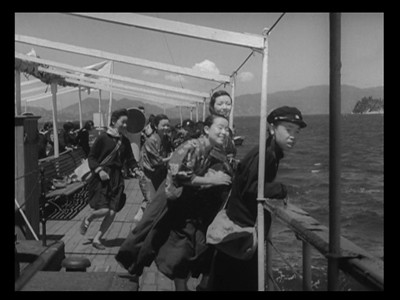
The focal character in Twenty-Four Eyes is Hisako Oishi, played with a mannered grace and honest tenderness by Hideko Takamine (When a Woman Ascends the Stairs). In 1928, Miss Oishi is sent to a poor seaside village to test out her newly minted teaching license on the first grade class. Seen as a "modern girl" because of her western-style clothes and because she rides a bicycle to work, Hisako is mistrusted by the adults of the town but quickly earns the love and admiration of her twelve students. In their eyes, the twenty-four alluded to in the title, she sees the sparkle of a future full of possibilities, and in her, they see someone who cares whether or not they achieve them. Her last name actually translates as "Big Stone," but because she is short in stature, the kids nickname her "Miss Pebble," unwittingly creating their own Zen koan. In the smallest pebble is the greatest of power.

Twenty-Four Eyes spans nearly twenty years, following the ups and downs of the relationship between Hisako Oishi and her many students. A prank the kids pull on her causes her to tear a tendon and cut her inaugural year short, but the class catches up with her again in sixth grade when they find her at the central school in the next town over. From there, she watches them all graduate into different lifestyles, some going on to high school, some working for their families, and others marching off to war. For her own part, Hisako gets married, has her own children, and lives through WWII and personal loss, only to come full circle and instructing the sons and daughters of her original twelve in the little schoolhouse where it all began.


With a running time of just over two-and-a-half hours, Kinoshita manages to deliver a lot of story without ever getting caught up in overly lengthy tangents. It might have been tempting to follow the little girl whose family goes bankrupt and has to move away, or to see any of the male students lost on the field of battle, but Kinoshita has a keen sense for how people flow in and out of our lives. He sticks with Hisako the entire time, rather than let any of the more romantic characters take him away from her story. In fact, this may be how he avoids falling prey to crass emotional ploys. Seeing a 12-year-old girl reduced to begging in the streets or a big death scene as Allied shells rip up the terrain all around the dying would have forced a sense of loss on us; instead, it's the not knowing that hurts, the drifting away of these characters that we've invested our time in alongside Hisako.

Twenty-Four Eyes was a popular film in Japan when it was released, and it's still considered a national treasure to this day. I imagine for the Japanese it served a similar purpose to what William Wyler's The Best Years of Our Lives did for the American psyche when we were preparing to deal with the end of the war. Kinoshita tackles multiple social issues within his narrative, crafting unadorned portrayals of poverty and the frustrated aspirations of his young stars. (If there was ever a better ensemble of child actors, I'd like to see it.) His is a soft approach, borrowing much from Ozu, and the writer/director gingerly shows his audience how closing off opportunities for the nation's young people was analogous to the fractured idealism in post-War Japan. The loss of innocence for the few stood in for the loss of innocence for the many.
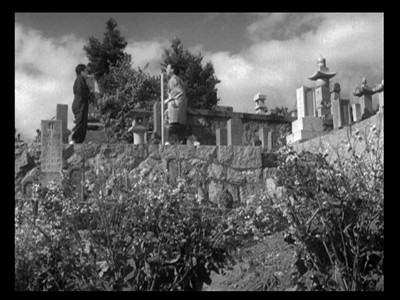


Just as it would have been easy to become overwrought when detailing the personal tragedies and triumphs of Hisako and her students, so too could Kinoshita have gone astray my being more heavy handed in his anti-war message. In the years between Hisako's first class and the advent of WWII, Japan went through the Great Depression and had a continuing conflict with China. The rise of militarism offered young men a chance to have a career, gathering such steam that it practically created a need for a greater conflict. Rather benign expressions of peace cause trouble for Hisako more than once, nearly getting her branded a "Red," and without putting too fine a point on it, Twenty-Four Eyes indicts the prevailing attitudes that would allow such a bloodthirsty and paranoid way of living to take hold. Patriotism is often the banner under which a nation rends its own flesh from its bones.

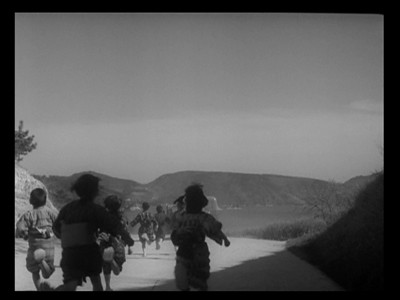
At the same time, Kinoshita, like his soft-spoken protagonist, is a humanist, and he's not going to point a finger without also holding out a hand in an offering of hope. One need only look at the great care with which he photographs the mountains and the seashore of the fishing village to see how much the director loves his country. By having Hisako return to the rundown schoolhouse and start again, to have her inspire a new generation the way she inspired its parents, is to say that life can go on, that the Japanese people could get back on the proper path, and that the future rested right where it always did--in the dreams of the young.


For a full rundown on the special features, read the full article at DVD Talk.

Sunday, April 13, 2008

SILENT OZU: THREE FAMILY COMEDIES - ECLIPSE SERIES 10


The Eclipse Series is the Criterion Collection's way of bundling specific segments of a director's career under one banner. Usually focusing on the less well-known pieces of a filmmaker's oeuvre, the Eclipse boxes come without any bells or whistles, presenting the movies on their own without extras or the meticulous restoration that is usually applied to their more high-end releases. Those kinds of DVDs take a long time to produce, and by taking this approach, the company can take films from the back of the line and get them to the public faster. Thus, the three movies in Silent Ozu - Eclipse Series 10, further subtitled Three Family Comedies, don't have to sit on a shelf waiting for Yasujiro Ozu's more venerated films to work their way through the system and clear up space for them.

Ozu already has his own Eclipse box, and is actually the first director to be a repeat in the collection. Late Ozu was the third in the series, and it showed the director at the end of his long career, making his final films in the '50s and '60s. Silent Ozu swings us back to the other end, presenting three of the Japanese master's early films from the 1930s. Though Ozu had actually begun working in the previous decade, the '30s saw him settling into the type of work that would define his career: films about family and their everyday lives, how they get by and how they deal with the rapidly changing onset of modernity while still keeping the core of family intact. He was already working with screenwriter Kogo Noda, his lifelong collaborator, to achieve a balance of tender humor and poignant drama, establishing a sense of calm sentimentality that would give even his heavier pictures a feeling of being free from Earthly gravity.

Those were all lessons that would serve him well once Ozu transitioned into talkies, but which began forming here, in the silent era.


* Tokyo Chorus (Tokyo no korasu) (90 minutes - 1931): Four years into filmmaking and Ozu made his twenty-second picture, a bittersweet light drama about a struggling family in Tokyo. Though I realize this boxed set is billed as "Three Family Comedies," this is more a comedy as far as its lightness of tone than it is a laugh-out-loud effort. It's more the traditional theatrical definition of comedy, working in opposition to tragedy. In other words, everything turns out all right.

You could actually say that the comedy comes from the foolhardy ego of Shinji Okajima (Tokihiko Okada) needing to be deflated in order for him to grow up. Beginning in his school years, Okajima is the class cut-up making life difficult for his teacher, Omura (Tatsuo Saito). Underneath the antics, though, Ozu is introducing his larger themes of poverty and social standing. Much of Okajima's joking is covering up for the fact that he is not as well-off as his fellow students, his uniform is not up to snuff.

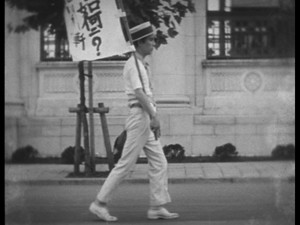
Cut to post graduation, and Okajima is now a family man with three children and a caring wife (Emiko Yaguma). He works for an insurance company and is getting on fine in his daily life, but as we will see, he is still caught somewhere between his idealistic youth and his real responsibilities. Hence, when his son (Hideo Sugawara) begs for a bike, Daddy promises the boy one to be a good guy and cool father; when the older office worker (Takeshi Sakamoto) gets fired from his firm, Okajima stands up for him, showing his coworkers that he has the mettle to oppose injustice. This only gets him fired, as well, and the rest of Tokyo Chorus is spent watching Okajima learn how to navigate his new station in life. Ozu adopts a realistic, socially critical eye to view Okajima's struggle, showing the poverty and employment on the city streets. Okajima is still left-of-center as far as this social commentary is concerned: he's still the clown from the early scenes, the happy dad from a family drama. Part of his new education, which is once again aided by teacher Omura, is to get more in line with reality, to drop the act and the pretense of pride, and face life with a clear vision. Ironically, what he will discover is that by growing up and accepting adulthood, he is once again free to enjoy himself.

In some sense, in the way Ozu peeks in on the children at play and juxtaposes it against the more serious adult concerns, I am reminded of his later family comedy Good Morning. In a larger sense, however, Tokyo Chorus shows the early groundwork for what would become the classic Ozu dynamic: a portrait of a family, a struggle between generations in the face of change, and a soft tone that handles both the happy and the sad with an even hand that smoothes it all out and shows us that it's all one cake and is all covered in the same frosting. Even visually, Ozu is already applying his static camera technique, keeping his shots grounded and maintaining a quiet, unobtrusive directorial presence.


* I Was Born, But... (Umarete wa mita keredo) (90 min. - 1932): If I Was Born, But... reminds you once again of Good Morning, this time it's for a very good reason: the later film used this one as a jumping-off point. Written by Akira Fushimi from a story by James Maki, I Was Born, But... is the story of two grade-school-aged brothers (Hideo Sugawara and Tomio Aoki) who have newly moved to the suburbs, where they find the neighborhood kids to be rougher and more territorial than what they are used to. The comedy of the social interaction amongst the children is reminiscent of the Our Gang/Little Rascals shorts, with kids acting of one mind, running back and forth across the screen looking for trouble. An added element of Ozu's film, however, is the adult perspective and that childhood awareness that adults just don't get it. When the boys are discovered to have skipped school to avoid getting into a fight, dear ol' Dad (Tatsuo Saito again) tells them to just ignore the bullies and they will go away. The boys know this won't work, and so they have to invent other schemes to get out of harm's way. One always has to wonder how parents seem to forget so much of what the world is like! Ozu even shows the level of the father's selective blindness, using subtle cutting to show the parallels between the pecking order in the office and the classroom.

After the bully problem is dealt with, the boys become part of the gang, joining in bizarre death-and-resurrection pantomimes and eating sparrow's eggs for strength--the kind of wild ideas that kids invent based on overheard facts and half-truths and that make for great movie comedy. The children are fantastic performers, and I Was Born, But... comes alive every time they are on screen, borrowing its comedic approach straight from the playground. (I love Tomio Aoki--also called Tokkan Kozo--when he
does a little side bit of comedy business straight from Tinsel Town.) Director of photography Hideo Mohara (who also doubled as the editor) lets his camera move when the kids do and lets it settle when they settle. Ozu's ensemble is comfortable and funny, coming off as natural performers rather than Hollywood caricatures.

Eventually, the games shift into a battle over whose dad is more important, and the final act of the film is concerned with the brothers discovering for the first time that their father is not everything they imagined him to be. To them, their father is the boss, and seeing him in a situation where he is actually the underling confuses them. After a violent row, their dad remembers how daunting and disappointing the intricacies of the social order can be for a child. The lesson he has to teach them about how to get along is remarkably similar to the one they learned in spite of his advice in regards to the bullies: tomorrow is another day, and another chance to take things head-on and make life better. It's as touching as it is funny, and it's right on the money.


* Passing Fancy (Dekigokoro) (100 min. - 1933): A father-son relationship takes center stage yet again. This time, the father is happy-go-lucky Kihachi (Takeshi Sakamoto), a single dad who works in a brewery to give his son an education. The son, Tomio, is played by Tomio Aoki from I Was Born, But..., and he's already a couple steps ahead of dad in the smarts department. The two live simply in Tokyo, spending their nights at the restaurant down the street, palling around with dad's co-worker Jiro (Den Obinata). After an evening of entertainment, the two men meet Harue (Nabuko Fushimi), a young girl who is down on her luck. Jiro is suspicious of her, but Kihachi is immediately smitten. He gets her a job in the restaurant and sets to courting her. Only, she likes Jiro, who continues to think she's the wrong kind of woman. Kihachi, ever the loveable fool, is even enlisted by Harue's boss (Coko Iida) to try to change Jiro's mind.

Takeshi Sakamoto's sweetly comic performance dominates the picture. It's the sort of defining performance that makes an actor's career. A naturally genial screen presence, his smile sets Passing Fancy alight even as his character hits a rough patch. Broken-hearted over Harue, Kihachi drinks too much, staying away from work. When his son discovers what is happening, he confronts his father, and the two have it out. Unfortunately, their reconciliation has unforeseen consequences and Tomio gets sick. This event changes everyone's course, and it forces Kihachi to get his act together and show his true colors. The poverty-stricken man's stubborn pride gives Ozu yet another opportunity to question the honor of social mores and make a comment about community.

Shooting in the slums where Kihachi and Tomio rest their heads, Ozu and cinematographer Shojiro Sugimoto make the most of their cramped settings, often crowding their actors in the frame. The lives of the working class were seen as something to escape, and just like the parents in I Was Born, But..., Kihachi only wants to see his son better him. He is bemusedly aware that the boy has already done so, and this convention of the child being more responsible than the father is one that survives in movies and television to this day. Kihachi himself would also survive, with Sakamoto returning to the role several more times, including in Ozu's breakthrough A Story of Floating Weeds the following year. The director saw the potential in the character as a means of expression, reflecting many of the patriarch's in the filmmaker's own life. As such, that depth and charisma is already on display in Passing Fancy on both comedic and emotional levels.


All the movies have the same audio options: either a truly silent version or an optional mono score by Donald Soshin. You will be asked to "activate" the score from the main menu. Soshin's music fits the mood of each movie well without being overbearing or obtrusive. He writes for the piano, and he knows when to be softer (Tokyo Chorus) or more light-hearted (I Was Born, But...). His work is elegant and right on, servicing the material without advertising itself.

The intertitles on the films are in Japanese, with optional subtitle translations. These English titles also serve to translate important signs and other pieces of writing in the movies. I particularly liked the little boy in I Was Born, But... with the note on his back that read, "Upset Tummy, Do Not Feed Him Anything."


Part of the fun of studying cinema history is to look back over a career and see the building blocks that allowed great directors to put together their signature style. Working in his second decade as a filmmaker and holding off transitioning to talkies until he got silent movies just right, the Japanese director Yasujiro Ozu found his most commonly traveled ground in three bittersweet, good-hearted family stories. Made from 1931 to 1933, the trio that makes up Silent Ozu: Three Family Comedies - Eclipse Series 10 serves as a welcome introduction to the great artist's work. Full of comedy and pathos, these wonderful stories of generational gaps and social struggles remind us that good drama and honest writing supercedes any technological advancement as the most essential tools in filmmaking. Another solid hit for Eclipse.


For technical specs and special features, read the full article at DVD Talk.


This DVD set will be released on April 22, 2008.