There was no post here on the blog last week, so I have fallen a bit behind again. As you'll see in the monthly round-up, it's not for lack of work; on the contrary, it's been too much work, I've been reviewing a lot. All I need to do is double up one week, though, and I'm back on track--and that should hopefully be easy, since I have four new releases (two Louis Malle, a Satyajit Ray, and the most recent Eclipse set) waiting to be watched. Comic Con is also coming, so you may see me scrambling yet again in not too long. Who all is going to the big show this year? Be sure to stop by Tr!ckster, there is much to be done and seen, including a Criterion sponsored event celebrating Kurosawa and raising money for relief in Japan. I'll also be part of Symposium 5, a ticketed event, so plan on going to that now!
IN THEATRES...
* 13 Assassins, samurai slaughter from Takashi Miike.
* Beginners, Mike Mills' exploration of mortality, love, and depression will catch you off guard. Naturally quirky and moving, it stars Ewan McGregor, Christopher Plummer, and Melanie Laurent.
* Green Lantern. You will believe that space can be realllllly boring. And Earth. And everything else.
* Larry Crowne. This weekend, you can watch cars transform into robots, or you can let Tom Hanks transform your cold, dead heart into something living again. Your call.
* Midnight in Paris, everything old is new again in Woody Allen's delightful return to form.
* Submarine, a quirky, heartfelt coming-of-age drama set in Wales.
* The Tree of Life, in which Terrence Malick wrestles with the universe, the All Father, and all fathers.
* The Trip, Steve Coogan on a very funny roadtrip with his pal Rob Brydon. Directed by Michael Winterbottom.
* X-Men: First Class: Hey, man, that's a groovy mutation, but the movie's kind of a piece of crap.
ON DVD/BD...
* BLAST!, a science documentary about sending a telescope up into the sky on a balloon to look at the stars.
* Carancho, an Argentinian twist on crime and romance, from the people who brought us Lion's Den.
* The Cocoanuts, yuck it up with Los Bros. Marx in their 1929 debut.
* Despair, a Vladimir Nabokov adaptation from writer Tom Stoppard and director Rainer Werner Fassbender, starring Dirk Bogarde. And it's as weird as that combination would suggest.
* Eight Iron Men, a WWII variation on the "chamber room drama" that never quite takes off. From Edward Dmytryk and Stanley Kramer.
* The Goddess, Paddy Chayefsky wrote this thinly veiled portrait of a Marilyn Monroe-type actress, played by Kim Stanley. Interesting, if not entirely successful.
* Man from Del Rio, starring Antony Quinn as a Mexican sheriff in a racially progressive 1950s western.
* The Man in the Net, starring Alan Ladd, directed by Michael Curtiz. Read the review that one fan called "a classic example of...uninformed arrogance" and inspired him to suggest I "take up something else to while away your time or attend a junior college film class."
* Marriage Italian Style, a strangely dark, yet intriguing, romantic "comedy" from Vittorio De Sica, reteaming Sophia Loren and Marcello Mastroianni.
* Never Apologize, Malcolm McDowell's one-man show in remembrence of director Lindsay Anderson.
* New York, New York, Martin Scorsese's notorious 1977 musical mash-up of new and old styles, starring De Niro and Minnelli.
* Public Speaking, Martin Scorsese's documentary about author Fran Lebowitz. Engaging and funny.
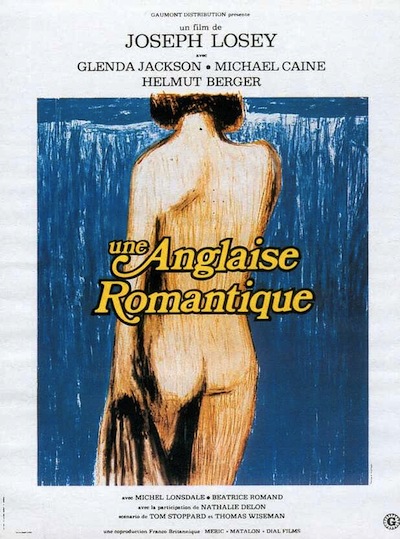
* The Romantic Englishwoman, Joseph Losey directing a Tom Stoppard script about Glenda Jackson's aching loins. And Michael Caine yells a lot.
* The Sacrifice, a beautifully remastered new edition of Andrei Tarkovsky's final film.
Sometimes a DVD release feels more like the product of a daring rescue mission than it does a movie premiere. Like the producers and technicians and artisans went spelunking into some cinematic cave to pull out a frail motion picture that had fallen in the hole and broken its leg.
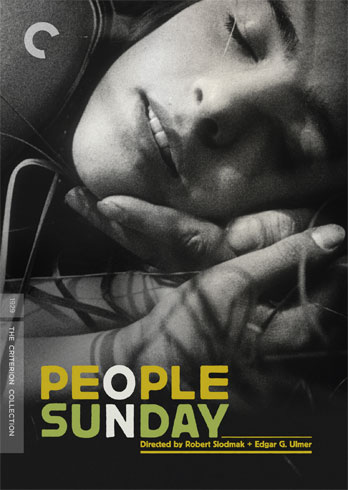
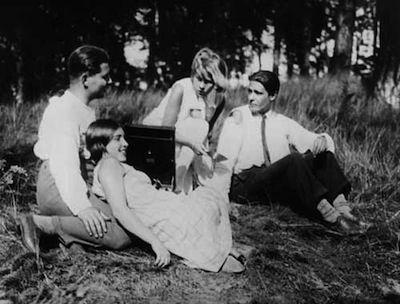
People on Sunday is an enchanting curio from cinema's past, a 1930 silent film with murky origins, missing pieces, and a backstory as fascinating as what actually made it onto the screen. The German movie has a credits list that reads like a who's who of classic Hollywood craftsmen, but reading over the testimonials in the booklet that comes with the Criterion release of the film, there are many different takes on who did what. Given that the principle participants have long since shuffled off this mortal coil, there will likely be no getting to the bottom of it. All we have left is the mystery...and the wonderful film.
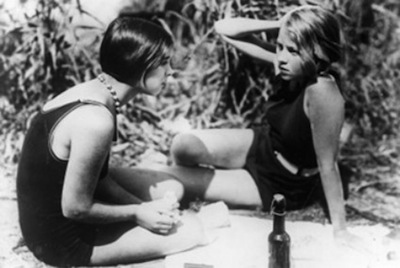
The movie is called People on Sunday, and that's exactly what it's about. Five lives intersecting on a Sunday afternoon, and specifically, four of them as they go from Berlin to the lakeside of Nikolassee to enjoy their day off. Put together as an independent production to compete with the all-powerful German studio UFA, People on Sunday was approached as an experiment. To keep costs down, the filmmakers found five non-actors and paired them together, playing versions of themselves, engaged to act in scripted scenarios, but in a manner prefiguring the Italian Neorealists. They were encouraged to be themselves, to not be actors.
The five are a taxi driver, a record store clerk, a wine salesman, a film extra, and a model. The driver and the model are dating, and the wine seller is their neighbor. The other two girls are friends. The wine seller, Wolfgang, meets the extra, Christl, on Saturday and makes a date with her for the day after. She brings along her friend Brigitte, and he brings along Erwin. Erwin's gal, Annie, never makes it out of bed, so he ends up being Wolfgang's wingman for the whole day. The wine seller is a true wolf, however, and his pushy pick-ups drive Christl away, and when he then turns his attention to Brigitte, it causes drama between the two girls. The romance plays out as they enjoy the water and the forest, having a picnic and playing records--a break from the working week, a respite from city life.
People on Sunday is itself meant as a temporary diversion, a representation of the brief pleasures the common man enjoys that would also give similar pleasure to all who watch it. And boy, does it ever work as such! This simple story of a day at the beach is charming and seductive, and even as Wolfgang reveals what a cad he is and the drudgery of Monday morning starts up again, the smile that the excursion has inspired doesn't fade. In addition to the story, the filmmakers also sidetrack into documentary footage of what other people are doing with their time off, both on the streets of Berlin and out in the sand of Nikolassee. Among these is a delightful centerpiece in which a photographer takes pictures of the daytrippers. It's a parade of German faces, young and old, people being themselves and frozen in time in the seconds it takes to create a snapshot. To go along with this, the Mont Alto Orchestra has created a period-sounding musical score, lending both humor and pathos to the proceedings. Their work is particularly effective when Annie plays her records, and the musicians recreate popular tunes from an afternoon in the sun long ago. (Criterion also offers a second score by Elena Kats-Chernin and the Czech Film Orchestra that is more contemporary in approach.)
In less talented hands, People on a Sunday could have ended up a mere trifle, but the eager young talent that gathered to pull this experiment off show a preternatural gift for making movies. It's no surprise that they would all eventually leave Germany and make a name for themselves in Hollywood. In terms of the credits, things break down something like this: Kurt Siodmak and Billie Wilder observed people on their actual Sunday activities, and out of their notes, Wilder fashioned a script. Robert Siodmak and Edgar G. Ulmer directed, with Eugene Schüfftan serving as cinematographer and Fred Zinnemann assisting him. In the U.S., Kurt would become Curt and would write some of the great Universal monster movies, including The Wolf Man, and Billie would become Billy, writing and directing such marvelous motion pictures as Sabrina [review] and Ace in the Hole [review]. Amongst Robert Siodmak's later credits are the excellent film noirs The Killers and Criss Cross, while Ulmer is maybe best known for Detour. Fred Zinnemann also moved on to direct, with credits like Member of the Wedding [review], High Noon [review], and From Here to Eternity.
Eugene Schüfftan may be the least recognized name amongst this roster, though Criterion fans should know him as the man who shot Eyes Without a Face and Port of Shadows, in additon to some Hollywood pictures. His cinematography on The Hustler even earned him an Oscar. Schüfftan also directed three short films, and his 1931 effort Ins Blaue hinein (Into the Blue) is included here as a supplement. It's a sweet film, and a talkie--though the sound is mainly rudimentary dubbing done in post. The jaunty tale has much in common with People on Sunday: it details three colleagues from different social classes out for an afternoon ride in one of their cars. They pick up a young lady that one of the guys knows and compete for her affection before deciding to form a dog washing business together. It's a breezy bit of fun that turns to full comedy by show's end.
Also in the supplements is a half-hour documentary from 2000 called Weekend am Wannsee. In it, filmmaker Gerald Koll attempts to reconstruct the history of People on Sunday, partially by talking to the man literally reconstructing the print, Martin Koerber. For anyone who ever wonders just how a film like this is out back together, there is a fascinating explanation of how many versions Koerber had to work with, where they came from, and what they each had to offer. Surviving participants Curt Siodmak and actress Brigitte Borchert are also interviewed, and the documentary explores what happened to all the players following the movie's release.
The Blu-Ray of People on Sunday uses a print that cobbles together the most complete version of the film from a variety of sources. No absolutely whole version exists. Despite a warning card at the start of the movie alerting viewers to the fact that this version was pieced together from several prints, I would have never guessed. Though there is some damage and scratches here and there, nothing stands out as being obviously sourced from any different places, not nearly as much as, for example, the Argentinean clips in The Complete Metropolis [review]. The overall presentation is stellar, this rescue team brought People on Sunday out of the darkness with a minimum of injury.
This disc was provided by the Criterion Collection for purposes of review.
It was only some time after I had finished watching Fish Tank that I started to realize that this movie is like a British version of Precious: Based on the Novel 'Push' by Sapphire [review]. It didn't occur to me during the screening because the two movies couldn't be more stylistically different, nor could they be farther apart in terms of artistic success. Both films are about young women living in poverty who dream about doing something flashy with their lives, but who must battle a lack of education, an uncaring mother, and the inappropriate advances of older men before they'll ever get a chance. Where Precious is manipulative and aesthetically cheap, however, Fish Tank is smart, emotionally honest, and technically restrained.
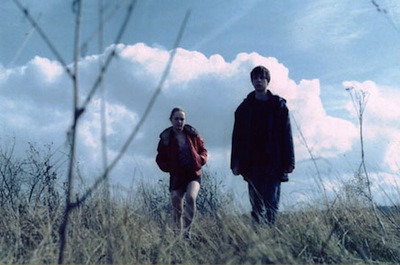
Fish Tank is the second film of writer/director Andrea Arnold, who previously made the stark crime drama Red Road [review]. For her sophomore outing, she employs a similar digital, Neorealist style. Shooting on location with no musical score, she follows her main character Mia, played by a wonderfully effective first-timer named Katie Jarvis, through her day-to-day routine in an Essex housing project. She gets in fights, practices her dance moves, and wanders aimless and alone through the streets. When her mother (Kierston Wareing) brings home a new boyfriend, Connor (Michael Fassbender), Mia is attracted to him sexually, but also touched by the kindness and interest he shows her. He'll encourage Mia to pursue dancing and to open up, but when he moves into the apartment, Mia's attraction reaches a boil.
The final portion of the film is devoted to how Mia deals with this new attention and the fallout it causes. It's a strange, volatile ride. Her immaturity becomes more apparent with each irrational decision. Consequences don't seem to enter into the girl's mind before she does anything. Katie Jarvis is utterly convincing as the sullen teen whose rage seethes just below the surface. Fassbender is also very good, charming the audience into hoping he's not too good to be true. I really, really wanted to like him. He's a little like Peter Sarsgaard's character in An Education [review], except he's not Peter Sarsgaard, so it's not a foregone conclusion that he's creepy.
Most of Fish Tank is appropriately underplayed. Andrea Arnold doesn't rely on her characters to explain what is going on, she is far too intent on showing us through actions and reaction. (Something Lee Daniels, the director of Precious, is by all evidence incapable of.) Her camera practically stalks Mia, often having to run to keep up with her. Fish Tank is essentially a point of view film, Katie Jarvis is in every scene. The only time Arnold strains for a shelf she can't quite reach is when she tries to inject literary and visual metaphors into the movie. There is a thread involving a horse that was obvious enough before Arnold decided to put a finger right on its nose at the end. The final shot of the film is also a bit too "high school poetry" for my tastes.
Still, that's maybe four scenes in a two-hour movie. Not a bad ratio when you consider how much so many other directors get wrong in half the time.
Criterion has chosen to enhance their gorgeous Blu-Ray of Fish Tank with the three short films Andrea Arnold made prior to Red Road, and these early effort are as worthy of exploration as the main feature.
Milk (1998) (10 minutes, 30 seconds): From the get-go, Arnold was fascinated by the careless, seemingly simple choices people make in their day-to-day lives that lead to unintended, complicated consequences. In Milk's second scene, a woman (Lynda Steadman) decides to let her partner (Stephen McGann) forego wearing a condom; cut to nine months later, and the baby is coming. The child doesn't survive a difficult birth, and the mother is thrown into grief. Rather than go to the infant's funeral, she randomly chooses a juvenile delinquent (Lee Oakes) out for a smoke and goes with him on a day trip in a stolen car.
There is a running thread throughout Arnold's work that sews people together who otherwise maybe are not right for one another. The grieving mother here is aching to relieve herself of her sorrow, and she wishes to feel something intense enough to overshadow the severity of her depression. Her hook-up is driven by her maternal instinct--the boy is wounded, he has a "Mom" tattoo--in much the same way Mia's misguided fixation on Connor is motivated by her need for a father figure in Fish Tank. The woman here needs a release, and though a sexual one will do, there are also more literal and physical releases required--we might miss the tears if fixating on the unexpected element of the short's final image. Arnold sees a fine line between the beautiful and the grotesque when it comes to the demands and functions of our bodies, though in the matter-of-fact way she presents it, it seems that line is only visible depending on one's perception of it.
In terms of style, there really isn't any distinctive evidence of Arnold's specific aesthetic in Milk. The telling of this tale has as realistic a grounding as her later films, but the presentation is far more conventional. Not in a bad sense, this is a young filmmaker feeling her way. Her intentions and passions are clear, this is her mastering the tools.
Dog (2001) (10:16): The second short subject not only introduces the looser camerawork approach into Arnold’s repertoire, allowing for a more intimate and less formal observation of real life, but it also appears to be the early groundwork for Fish Tank. From the opening scenes in an upper-floor apartment in the British projects and the film's heroine standing on the side of a highway shouting across traffic at a boyfriend, it's clear to see these are the first seeds of the full-length to come eight years later.
Joanne Hill plays the lead, a teenage girl out for a day with a sullen boy (Freddie Cunliffe). The pair score some drugs and then go to a vacant lot to smoke them. There the boy and girl engage in dispassionate sex. She wouldn't mind a little tenderness, but he won't even kiss her. A stray dog that the girl spotted earlier wanders onto the scene, eats the remaining hash, and promptly gets beaten by the boy. The violence erupts with all the fire and fury that the sex lacks, an adult irony that the girl desperate to grow up didn't account for. Pushing the boundaries of her age, sexualizing herself before she is mature enough to handle it, has put her in a position she is not ready to handle, but now that she has gone there, she can't go back.
Arnold's efforts to draw a connection between what happened to the dog and what is happening to the girl may be a little too direct--those bothered by the blatancy of the horse in Fish Tank won't like it much better when it's a canine-- but Hill is very good, and when the director moves in tight on her weeping, there is no overselling the potency of the underlying emotion.
Wasp (2003) (25:46): This Oscar-winning short was the first time that Andrea Arnold worked with cinematographer Robbie Ryan, who would shoot both Red Road and Fish Tank. You will notice an immediate and obvious difference. Though Wasp was filmed in the same poor backstreets as Dog, there is a crispness to the photography and a more vivid realization of the colors of real life, the garishness of how people dress vs. the drab reality of their surroundings.
Natalie Press plays Zoe, a single mother of four struggling to get by. Though our first image of her is as a fierce, albeit ineffectual, protector, Zoe's selfishness is quickly revealed when an old flame (Danny Dyer) reappears in her life. Rather than miss out on a chance at a date, she lies and pretends her kids belong to someone else, and when she goes to meet him at the pub, she leaves her offspring in the alley outside.
Arnold presents Zoe with a moral quandary--her own happiness can be achieved at the expense of her progeny--the terms of the dilemma are far more base, almost primitive. The question is not just one of abstract inner satisfaction, but one of basic physical compulsion. As in Milk, our bodies compel and demand. Here, sexual pleasure is directly weighed against hunger--opposing needs of fundamental human survival. Arnold pushes it further with the wasp that provides the narrative shift in the final act: if these deeply rooted urges are all that we allow to influence our decisions, then the threat of external forces, of nature itself, holds sway. If we surrender moral reasoning, we retreat to the animal kingdom.
It's easy to see how Arnold transitioned from Wasp to full features. It's her most accomplished work up until that point, and maybe the most fully realized of all her movies, long or short. Here she manoeuvres her actors and her mise en scene with a steady confidence, finding that balance between realism and fictional narrative that has since allowed her work to stand out, and that made Fish Tank such an incisive examination of the kind of emotional battlegrounds that know no age. In Arnold's work, the casualties are young and old, all are equal.
"Seasons change...but nothing really changes after all."
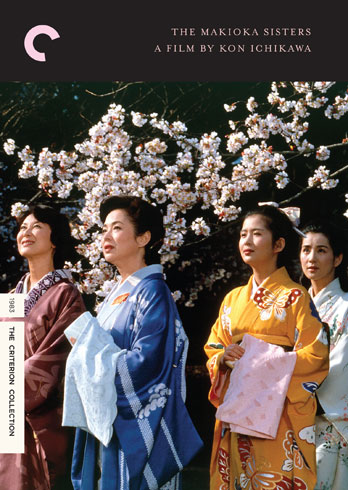
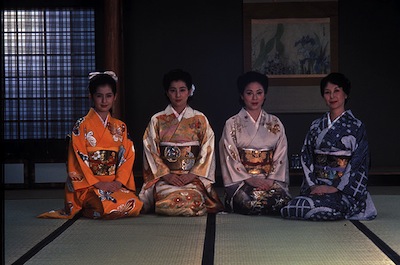
Kon Ichikawa's 1983 drama The Makioka Sisters is the very epitome of understated grace. This story of four sisters in the years prior to World War II underscores its inherent melodrama with a soft-spoken calm that is mesmerizing in its own unassuming way.
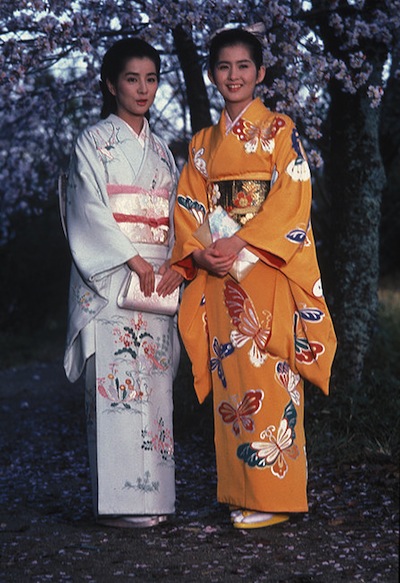
The movie starts in 1938. The four Makioka siblings have lost both of their parents. The two eldest girls, Tsuruko (Keiko Kishi) and Sachiko (Yoshiko Sakuma), are both married, while their younger sisters, Yukiko (Sayuri Yoshinaga) and Taeko (Yuko Kotegawa), are not. Yukiko is regularly meeting suitors, but if she's not rejecting them for her own reasons, Tsuruko is ending the engagements because she thinks the potential husbands are beneath her family's standing. What their standing is exactly is up to some debate. The family kimono business was in debt when their father died, and Tsuruko's husband Tatsuo (Juzo Itami) had to sell it off. The girls should not have the same pride of money they once had, since they don't have the same amount of money. Yukiko and Taeko, who is 24 at this time, have a dowry in trust, but they actually have to find husbands to get the cash.
There is a natural divide between the sisters, one that is indicated by age. The older women have a more natural bond, while the younger women seem to be closer. Yukiko and Taeko moved out of their eldest sister's house five years prior after a scandal involving Taeko running off to elope with a jeweler's no-good son. She has since carried on a clandestine romance with him, though her affections are straying. It is likely a generational indication that the youngest girl is also becoming the most self-sufficient. Taeko is a budding artist with a growing business making high-end dolls.
Much of the conflict between the sisters comes with keeping up appearances. On one extreme, Tsuruko carries on as if she is still the daughter of a wealthy artisan. On another, Sachiko turns a blind eye to her husband, Teinosuke (Koji Ishizaka), having an inappropriate infatuation with Yukiko. Meanwhile, Taeko secretly smokes and keeps a studio away from home where her boyfriends come to meet her.
Kon Ichikawa co-wrote The Makioka Sisters with Shinya Hidaka, and the script is adapted from a popular novel by Junichiro Tanizaki. The film has the austerity of an Ozu movie, but the familial relationships are also pure golden-age Hollywood. The Makioka Sisters could have been a pretty good melodramatic feature for the likes of Bette Davis or a Joseph Mankewicz vehicle, something along the line of A Letter to Three Wives, or even a Douglas Sirk production. Under Ichikawa's guiding hand, it's a much more restrained affair. While keeping up those appearances, very little is said that is meant. The sisters dance around the issues, and they employ dramatics when necessary. Tsuruko, for instance, breaks down in front of her husband to get her way; when she tries similar exaggerations with Sachiko at the start of The Makioka Sisters, the other girl sees right through them. The movie is rarely as warm as the few times the older siblings laugh together.
For as small as the action can be, Ichikawa builds a large canvas for his production. The sets are huge, and the interiors go way back in the frame, giving the viewer a real sense of how high on the hog the Makioka girls have been living. Ichikawa and his cameraman Kiyoshi Hasegawa often shoot from a middle distance, fixed in position, observing from the edge of the room. They let the lives play themselves out, they don't push the material forward. Within that, the filmmakers also take their time observing the surrounding details--the trees, wall decorations, kimono fabric. They remember to stop and smell the cherry blossoms, as it were, to mark the beauty of life that exists all around its subjects.
The ensemble cast in The Makioka Sisters is remarkable. Not only are they believable as siblings, but their carefully measured performances do render the various emotional shades of the story with considerable--and considered--technique. So much of what is required of them is meant to stay under the surface, so at least half of each performance is silent glances and telling gestures. Each actress does well establishing her personality within the unit. No one really shines over the others, though we remember them for all the right reasons. Sayuri Yoshinaga's sweetness inspires us to recall Yukiko fondly, while Yoshiko Sakuma's warmth makes us feel sorry for Sachiko, to realize how difficult her position in the family often is. I suppose if I had to pick, Yuko Kotegawa's portrayal of Taeko is the most memorable, only because she harnesses the girl's inner struggle and somehow makes her dreams of a romantic life come true.
Then again, her character also gets the most modern arc--which is fitting, as she is the most modern sister. Lots of heavy plot twists go down in the final hour of The Makioka Sisters. Each of the women is faced with various choices, and though they approach them with the same heavy resignation as they would have in the first hour, the potential consequences only gain weight as the story progresses. While in some ways, this emotional restraint maybe makes The Makioka Sisters seem a little slow at first, you will likely be simultaneously impressed by how quickly the time passes and how much you find yourself invested in the Makiokas' travails. The movie's ending is bittersweet, though I find myself flipping back and forth whether it's worst for those who were pushed forward reluctantly or those who were ready to leave the past behind for a brave new world. That's the sting of nostalgia: it validates and invalidates personal growth in equal measure.
Criterion's superlative 1.85:1 transfer for The Makioka Sisters shows an incredible level of detail. The image goes deep, with lots of visible specific background and foreground information. You'll notice so much even in just the opening scene: the rain falling outside, glimpsed through a doorway in the back wall behind the actors; the texture and material of their kimonos; the beautiful lines of flower petals and the glistening rain drops that hang off of them. Colors are rich and nuanced, and the resolution is very good with a nice level of grain. In a later scene, the green neon of a bar light is both sickly and alluring, summing up the alcoholic experience in one neon brushstroke. The Makioka Sisters is a gorgeous movie, rendered to its maximum prettiness on this Blu-Ray.
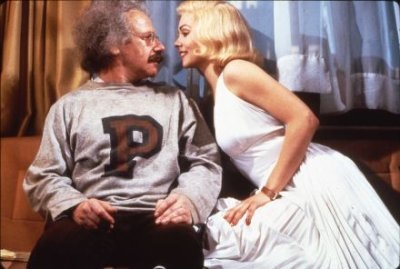
Taking place over one whirlwind night in New York City in 1954, Insignificance draws together four iconic personalities from the period to pose a historical "what if." Represented are brains, beauty, brawn, and barbarism, and all the ways they may clash. We also see the effects of early fame culture and the consequence of technological advancement--all within the space of a few short hours.
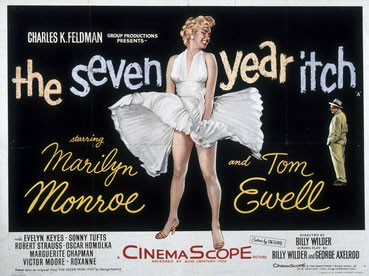
The core of the movie kicks off when Marilyn Monroe, here referred to only as "The Actress" and played by Theresa Russell, leaves the set of The Seven Year Itch and goes to visit "The Professor" in his hotel. The scientist is Albert Einstein (Michael Emil), and he is in town to attend a peace conference but is also expected to testify before HUAC. Just before Monroe's arrival, the Professor was being bullied by "The Senator," a.k.a. Joseph McCarthy, and played by Tony Curtis, who seems to be using a trick or two gleaned from his co-star Burt Lancaster's performance in The Sweet Smell of Success. What the Senator wants is for the Professor to go ahead and own-up to being a Communist, and in doing so, denounce Soviet ideals and their weapons program. The way he sees it, if the world's most revered mind backs this cause, the collective American mind will, as well.
The Actress has sought out the Professor in hopes of picking his brain and getting to know who he is. (This bit of whimsy is entirely plausible, Monroe was known to be fascinated by intelligent men.) The best scene in the movie is when she sets out to prove to the befuddled thinker that she knows the Theory of Relativity. Using toy trains, balloons, and flash lights, she rushes around his hotel room demonstrating the principles of his hypotheses. When she is done, the Professor applauds the performance, but the Actress sadly admits that she wishes she actually understood the principles she just related, she knows the words but not their full meaning. It's one of the central thematic concerns of Insignificance: what we know and how we know it, and when we really know nothing at all. The flipside here is that Einstein never really figures out how to get to know Marilyn, his interpersonal skills stop at the preconceived divide between men and women and something he once learned from a Cary Grant film. Remove the sex or keep it in, she'd be fine with either, but he doesn't know how to just sit and be with someone.
Insignificance is directed by Nicolas Roeg (Walkabout [review]) from a script by playwright Terry Johnson. It was released in 1985, and like many films of that era, I know it from having been championed on the old Siskel and Ebert show, but this is my first time seeing it. Honestly, I am about as befuddled by it as Einstein is of having a gorgeous blonde knocking on his door in the middle of the night. The execution of the material comes off as slapdash at times, with Roeg overly complicating the storytelling in ways that only call attention to the fact that the script isn't all that complex. Conversations are frequently splintered with flashbacks to events from everyone's childhoods, as well as images of the aftermath of Hiroshima and Nagasaki that haunt Einstein. Roeg also jumps around the city, keeping us up to date on the activities of the Senator and the final member of his imagined quartet.
Gary Busey plays "The Baseball Player," a stand-in for Joe DiMaggio, who was Marilyn Monroe's husband. DiMaggio was notoriously jealous, and there are plenty of anecdotes about him losing his cool, including getting angry about the endless retakes and all the gawkers on the set of The Seven Year Itch during the famous scene when Monroe has her skirt blown over her head while standing on a subway grating. (Russell wears this recognizable dress for the entire movie.) The Player eventually ends up tracking the Actress to the hotel room, and convinced that the Professor is a psychiatrist taking advantage, muscles his way in. This forces a confrontation between husband and wife, with the Professor playing a kind of referee.
Next to the interactions between the Professor and the Actress, the stuff with the ball player is the most compelling and honest. It's also when Roeg drops most of his showy editing and let's the scenes play themselves out. Johnson's dialogue is solid, and the actors handle his words deftly and with great aplomb. Busey is surprisingly understated and nervy, and Emil gives the Professor certain absent-minded peculiarities but mostly stays earthbound. Russell has the most difficult performance. There was no one else like Marilyn Monroe, and her breathy speaking voice is familiar to just about everybody. Russell manages to find an impressive level of imitation without every slipping too far into caricature, and she gives Monroe the deserved respect, treating her feelings and desires as genuine rather than the foolish preening of a mixed-up diva. Only Tony Curtis flubs it a little. His rat-a-tat patter is occasionally too cartoony, and his mannerisms border on shtick. J.J. Hunsecker would not approve.
Nicolas Roeg's work often strikes me as far less considered than what most of his supporters give him credit for. I find a lot of his stylistic flourishes to be unnecessary to the actual storytelling, the sort of thing that other directors might shoot because they can, but then cut out in the editing stage. Here, the intrusion of flashbacks and visions seems ramshackle, with many of the sequences--particularly the ones with Theresa Russell writhing around in pain--going on too long. Worse, the information these collages are intended to impart--Einstein is distraught over the application of his discoveries, Monroe was sexualized at an early age, DiMaggio's dad was a jerk--are kind of obvious and come out just as well in the dialogue. Roeg uses silly sound effects, multi-angle cutting, and cheeseball zoom techniques to overtly underline and highlight stuff the audience should get just fine without the help. And what was up with all that Native American chanting and "elevator goes up, elevator goes down" nonsense? Even Jim Morrison would have blushed at such blatant appropriation of Native American imagery to create a pseudo-mystical subtext.
Insignificance as a whole, struck me as undercooked and cheaply produced. (No hyperbole, the musical score by Stanley Myers and Hans Zimmer is some of the worst I've ever heard, complete with awful anachronistic synthesizer selections.) There's a great idea at the core of Insignificance, and a lot of wonderfully realized scenes, but there is too much distraction and not enough nourishment. The Zabriskie Point-style ending blows up a lot of stuff, but it didn't really blow my mind. It's almost like Roeg was hoping to dazzle us with all the bright shiny things so we wouldn't really notice how the conclusion more or less implodes. Perhaps it played better in the Reagan era when Einstein's fears were still a worrisome part of our everyday lives, but now, insignificance is a word that just about covers it.
A round-up of my reviews for non-Criterion movies in the past month.
IN THEATRES...
* The Beaver, Jodie Foster directs Mel Gibson, who talks through a beaver puppet. Yes, it's pretty crazy.
* Bridesmaids, this Kristen Wiig-led comedy is a real winner. Funny and heartfelt. And next time someone asks if Bridesmaids is a chick version of The Hangover, ask them if that's a stupid person's version of a smart question.
* Cave of Forgotten Dreams, Werner Herzog's 3D documentary about the Chauvet Caves. My favorite movie of the year so far.
* Everything Must Go, in which Will Ferrell drinks some sad beer, channels Raymond Carver, and is pretty good at doing it.
* Hesher, Joseph Gordon-Levitt stars as the title character. Hit an open chord, take off your shirt, and be a teenage dirtbag, baby.
* Thor, another winner from Marvel. Kenneth Branagh's adaptation of the comic is mighty fun.
* True Legend, a disappointing new action flick from the awesome martial arts choreographer Yuen Woo-Ping. Lame story, too much CGI.
The NW Film Center in Portland also had a festival of twelve films starring Catherine Deneuve. I picked some of my favorites for the Portland Mercury. Read "The Two Faces of Deneuve."
I also wrote blurbs for older movies doing the revival rounds:
* Henri-Georges Clouzot's Inferno, a stupendous documentary sifting through the remains of the Diabolique-director's unfinished would-be masterpiece.
* Hold On!, Herman's Hermits come to America, join the space race, play some music, pitch some woo.
* The Misfits, John Huston directs Clark Gable and Marilyn Monroe in their final screen roles. Also stars Eli Wallach and Montgomery Clift, in a script by Arthur Miller.
* Not as a Stranger, starring Robert Mitchum as a doctor who can heal anything but his own bad impulses. Directed by Stanley Kramer.
* Shoeshine, a Neorealist classic from Vittorio De Sica, released 1946.
* The Unloved, Samantha Morton's softly rendered, heartfelt directorial debut.
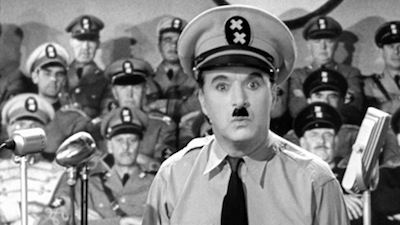
A little historical perspective: In 1937, though Adolph Hitler's power was growing and his unctuous policies were becoming increasingly well-known, the world was not yet at war with Germany. On the contrary, until late that year, Hitler was still in negotiations with England to try to maintain an alliance across Europe. So, it was with some incredible foresight and more than a little guts that Charles Chaplin, the biggest movie star in the world, began filming The Great Dictator, a satirical send-up of the hated world leader and everything he stood for. Who knows what the reaction to the film would have been had it been released earlier than 1940, but Chaplin's notoriously slow shooting schedule meant that the world had time to catch up before The Great Dictator was completed. By that juncture, the tide had turned and the movie hit at just the right time. In fact, following Germany's invasion of France, Chaplin rewrote his ending, changing it to the now famous call to arms. The Great Dictator would have been a remarkably different movie without it.
Though The Great Dictator wasn't Chaplin's first motion picture with sound--1936's Modern Times [review] was shot with minimal recorded dialogue but it was ostensibly made like a silent--it is considered his first full-on talkie in that it's his first with scripted dialogue from start to finish. For the occasion, Chaplin cast himself in two roles: a Jewish barber suffering persecution in the ghetto of the fictional country of Tomania, and Adenoid Hynkel, the cruel Phooey (a play on "Führer") making everyone's life miserable. Adenoid Hynkel is said to have come to life when Alexander Korda pointed out to Chaplin that his Tramp character had a very similar moustache to Adolph Hitler. Indeed, this similarity will be exploited in the final scenes of The Great Dictator when the two characters are mistaken for one another. (Though Dictator is not considered a Tramp picture per se, Chaplin does wear the outfit and keeps the rectangular nose neighbor.)
Most of Tomania is invented, even if the characters have real-life analogues. The base of the parody rests in silly puns and slapstick. Hynkel's right and left-hand men are Herr Herring and Herr Garbage; his ally and rival from the country of Bacteria is Benzino Napoli. The two despots fight over the right to invade Osterlich (most often pronounced like the bird "ostrich"). Hynkel's party has a logo comprised of two Xs, known as the Double Cross. When the dictator slips into fake German, it's mostly gibberish, with words like "sauerkraut" and "schnitzel" mixed in. It's not subtle comedy, to be sure, but it's damn funny. In particular, our first view of Hynkel is him leading a large rally and addressing his minions. Chaplin has clearly studied Hitler's speeches and catalogued his gestures and verbal idiosyncrasies. He shouts and flails and snorts and spits, breaking the rant for goofy pantomimes with a water pitcher, including dumping a glass in his pants. Later, he and Benzino Napoli (Jack Oakie) get in a food fight. It's humor that both plays to the audience's expectations and serves a purpose: the idea is to make these horrendous men seem as ridiculous as possible, and by doing so, deflate their power. The greatest compliment you can give them is to take them seriously.
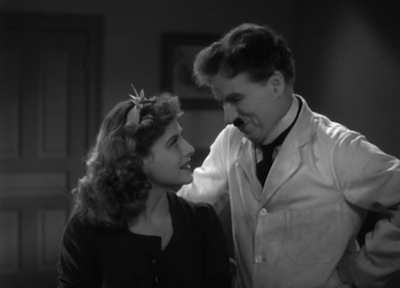
Chaplin saves the serious stuff for the other plot, the Jewish ghetto where the barber toils under threat of having his head bashed in by stormtroopers. Chaplin's character is a hero from World War I who has been laid up in hospital with amnesia since that conflict ended, and he returns to life in Tomania unaware of the Double Cross. He quickly runs into trouble with Hynkel's thugs, though a pretty girl's frying pan and providence get him out of it. The pretty girl is a neighbor played by Paulette Goddard, and though somewhat underdeveloped, the romantic B-plot adds a sweetness to The Great Dictator. There is a charming sequence where the barber experiments with being a beautician, and he helps Goddard look and feel like a woman for the first time in her life. It's quite touching. Chaplin smartly knew that his movie needed heart to win over its audience. People react better to fighting for something specific, like the man or woman they love, than they do larger concepts. The masses can preserve the big ideas, but only you can protect what's important to yourself.
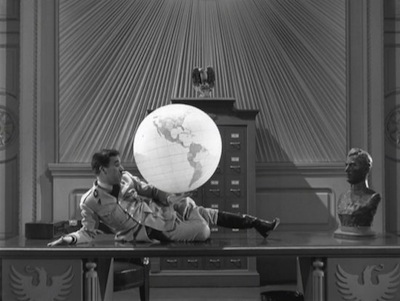
Otherwise, there isn't much sugarcoating in terms of how the ghetto is portrayed--you know, excepting the slapstick chases through the streets. Hynkel's men paint the word "Jew" on the windows of shops with Jewish owners, they freely steal from their victims, and the threat of concentration camps loom. While, granted, we know now how much worse the ghettos and the camps were than what Chaplin depicts in the movie, the full extent of the atrocities were not yet known during production. Even so, it's bold to present the anti-Semitism as it was and not dress it up in cute language or gags. The filmmaker was not looking to hide the film's message. He wanted his opinion of Hitler and Nazi policy to be very clear. Sure, some of it is heavy handed, just as some of the dialogue and supporting performances are clumsy--for all his craft, talkies still weren't Chaplin's thing. Unsurprisingly, The Great Dictator's most beloved sequence is the private ballet Hynkel undertakes with a balloon globe. Here the satire actually gets far more subtle, a dark message delivered in the lightest and most delightful manner possible: such capricious treatment of the world will only lead to its destruction.
I think Chaplin can be forgiven for the bluntness of the propaganda. It was a different time, and different measures were required. The closing speech, in particular, must have felt absolutely crucial. The Jewish barber appeals to people of all nations, resorting to few of the histrionics his twin is known for, letting the import of the words do most of the work. The delivery is emphatic, with Chaplin looking directly into the camera, rallying the brotherhood of man to come together for a brighter tomorrow. It would be easy to be cynical and crack wise and minimize the scene if it weren't still so poignant, still so right on. For as stirring as it is, it's also rather sad that the message is no less true today than it was seventy years ago. Sinister forces still work to enslave us, man still betrays his own best interests to fuel the global machine, and the warnings Captain Schultz (Reginald Gardiner) gives to Hynkel could just as easily be applied to Guantanamo Bay and waterboarding. The deadly folly concocted by cruel minds appears to be history we are doomed to repeat.
Hell, it might even be worse now. Could you imagine any studio ever greenlighting a film like The Great Dictator today, much less a star of Chaplin's power signing on for the project? Try to imagine Jim Carrey playing Saddam Hussein or Ben Stiller as Osama Bin Laden during the early days of the so-called War on Terror.* It never would have happened. We don't have the guts to laugh that way anymore. Too many people would be offended for too many reasons. Is that maybe the cruelest, most divisive trick of all? If we can't laugh together, we can never join together to truly be free.
Criterion continues to use Blu-Ray technology to their best advantage with another stellar release: the new HD transfer on The Great Dictator looks remarkable. The surface image is clean, the resolution is sharp, and the black-and-white is perfectly rendered, with excellent balance between light and dark. I suppose one day I will turn cynical and these impressive restorations will start to look like old hat, but right now, I'm still overwhelmed by what can be done with classic films.
The bonus section is packed with a lot of great extras, including a new scholarly commentary and two video essays taking a more in-depth look at the movie. In addition to this, we get the intriguing TCM documentary The Tramp and the Dictator, which examines the movie and the parallels between Chaplin and the man he was lampooning.
There are also some fun comparisons of different barbershop scenes from earlier Chaplin movies, material that served as foundation for similar sequences in The Great Dictator.
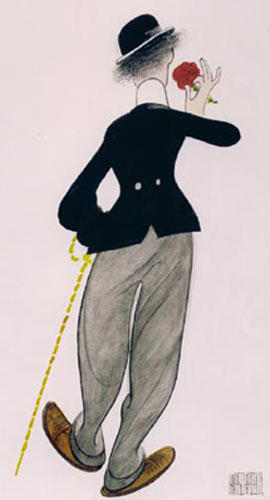
Most pleasing, however, is the inclusion of the wonderful Al Hirschfeld drawings from the original Great Dictator press book. Criterion reprints them inside the supplemental booklet that comes with this release, alongside vintage essays about the movie and its final speech. Though not part of that old program, I can't help but enjoy the Hirschfeld portrait of Chaplin below, and so I share it here:
* South Park, of course, proves a notable exception to the rule. Sacha Baron Cohen is also currently in production on a Saddam Hussein movie, and it will remain to be seen if there is enough safe distance. The moviegoing public may still reject such a thing if the tone is too light.
This disc was provided by the Criterion Collection for purposes of review.
Author of prose novels and comic books like Cut My Hair, It Girl & the Atomics, You Have Killed Me, and 12 Reasons Why I Love Her. Jamie's most recent novel is the serialized book Bobby Pins and Mary Janes, and his most recent graphic novels are the sci-fi romance A Boy and a Girl with Natalie Nourigat; Madame Frankenstein with Megan Levens; and the weird crime comic Archer Coe & the Thousand Natural Shocks with Dan Christensen.

 , and Billie would become Billy, writing and directing such marvelous motion pictures as Sabrina [
 , while Ulmer is maybe best known for
  . Fred Zinnemann also moved on to direct, with credits like Member of the Wedding [
 .
.
 even earned him an Oscar. Schüfftan also directed three short films, and his 1931 effort Ins Blaue hinein (Into the Blue) is included here as a supplement. It's a sweet film, and a talkie--though the sound is mainly rudimentary dubbing done in post. The jaunty tale has much in common with People on Sunday: it details three colleagues from different social classes out for an afternoon ride in one of their cars. They pick up a young lady that one of the guys knows and compete for her affection before deciding to form a dog washing business together. It's a breezy bit of fun that turns to full comedy by show's end.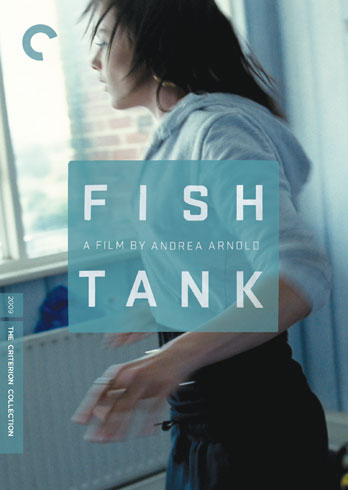

 , or even a Douglas Sirk production. Under Ichikawa's guiding hand, it's a much more restrained affair. While keeping up those appearances, very little is said that is meant. The sisters dance around the issues, and they employ dramatics when necessary. Tsuruko, for instance, breaks down in front of her husband to get her way; when she tries similar exaggerations with Sachiko at the start of The Makioka Sisters, the other girl sees right through them. The movie is rarely as warm as the few times the older siblings laugh together.

 -style ending blows up a lot of stuff, but it didn't really blow my mind. It's almost like Roeg was hoping to dazzle us with all the bright shiny things so we wouldn't really notice how the conclusion more or less implodes. Perhaps it played better in the Reagan era when Einstein's fears were still a worrisome part of our everyday lives, but now, insignificance is a word that just about covers it.