Showing posts with label gene kelly. Show all posts

Monday, April 9, 2018

AN AMERICAN IN PARIS - FILMSTRUCK

In honor of Filmstruck and TCM naming Leslie Caron the Star of the Week, I'm de-archiving some old reviews. Original source from 2008.


An American in Paris is the movie that finally forced me to admit that I really did like musicals. Adolescent stubbornness had made me declare that all musicals were corny, and as a genre, I had no time for them. Even then, though, I had a few that I would insist were merely the exceptions to prove the rule. That changed when I saw some movie program or other, the source of which is now lost in my memory, that showcased the 18-minute-plus ballet sequence that closed the 1951 Gene Kelly vehicle. The commentators praised the guts that Kelly and director Vincente Minnelli displayed in asking their audience to watch a full dance sequence, with no dialogue or sung lyrics, based around a Gershwin orchestral piece. I was sufficiently intrigued to check the movie out, and An American in Paris forever changed how I viewed movie musicals.


As legend has it, George Gershwin's "An American in Paris" suite was the sole impetus for doing this movie. With the song and its title in hand, producer Arthur Freed went off to create a picture about an American artist living in post-War France, working in as much of the Gershwins' famous catalogue in as he could. One of the requests the songwriting duo made when setting up the deal for the adaptation was that "An American in Paris" remain intact and played in full, and this fit perfectly with the already in-place plan to include an extended dance sequence in the movie. Reportedly, Gene Kelly used the Powell & Pressburger film The Red Shoes [review 1, 2] to convince MGM that it could be done, and once everyone had signed off, a classic was born.

In An American in Paris, Kelly plays Jerry Mulligan, a veteran who stayed in France after the war to pursue a career in painting. Living in a Bohemian quarter of Paris, he is friends with other ex-patriots, including the jazz pianist Adam Cook (Oscar Levant). Adam provides Jerry with a comedic sidekick, as well as an added reason to launch into the occasional song-and-dance routine. Not that Jerry needs such a concrete reason to burst into song. Any everyday event will do. In one of the most memorable sequences of the film, he decides to turn an English lesson he's giving the neighborhood kids into a lesson in George and Ira's "I've Got Rhythm." The children chant the "I Gots," and Gene does the rest.


On a broke afternoon, Jerry takes some of his canvases to the open market to try to drum up some cash. There he meets Milo (Nina Foch), a wealthy American divorcee who takes a shine to his paintings and to their painter. She becomes Jerry's patron, though she has a little more than art on her mind. The pair agrees to disagree on the subject of romance, which doesn't mean that when Jerry becomes enchanted by tres jolie ingénue Lise (Leslie Caron), it doesn't cause trouble. Not only is Milo jealous, but Adam's friend, the French singer Henri Baurel (Georges Guetary), would have cause to be jealous, as well, if he knew what was going on. Lise is his girl. Cue the collision of dueling love triangles!


An American in Paris is at times a big, sappy romance, as well as a silly comedy trading on old vaudeville routines and Gene Kelly's rubber limbs. The story is as thin as the odor eater's in the stars' tap shoes, but it matters little. Vincente Minnelli keeps the pace moving, never taking too long between songs, giving us a variety of Gershwin numbers in a variety of tempos and styles. We get the slow and romantic "Our Love is Here to Say" when Jerry is serenading Lise along the Seine, as well as the peppy "Tra-La-La (This Time is Really Love)," with Jerry mugging alongside Adam while straddling his piano. Also quite funny is Oscar Levant's solo scene, playing every member of the orchestra in a daydream where he performs a Gershwin concerto to an enthusiastic crowd of people who aren't just like him, but are him. (Yep, he plays the audience, too!) The all-around tone of the film is jaunty, with gorgeous sets and likable actors strutting their stuff without a whiff of self-consciousness. Declaring that they don't make them like An American in Paris anymore wouldn't be a cliché, it's a simple fact.


And, of course, even if the first 94 minutes of the movie are two syrupy for your tastes, you can still appreciate the audacious artistry of the "An American in Paris Ballet." In an explosion of color and energy, Kelly recreates the entire movie as a ballet that plays out in his character's mind. Believing he has lost Lise to Henri, Jerry mulls over his short time with the girl, seeing Paris as a city alive with dance, and his romantic quarry as an uncatchable sprite leaping through its streets. It's as much a celebration of being in love with the city as it is a celebration of being in love with the girl. In fact, the whole movie is about being in love with the art, the food, and the freedom to live life according to one's passions. In the ballet, we see abstract representations of things that have made Paris great, from its personalities and architecture to sets and costumes that mirror the styles of famous French painters, including Kelly jumping into a Tolouse-Lautrec painting (Chocolat) and bringing it to life. It's a glorious summation of what preceded it, while also gently paving the way for the ending Jerry couldn't dare dream of.


Wednesday, August 6, 2014

THE ESSENTIAL JACQUES DEMY: THE YOUNG GIRLS OF ROCHEFORT - #717


Jacques Demy’s take on the big American musical, 1967’s The Young Girls of Rochefort, is pure joy. From the first frame to the last, it’s packed with smiles and passion and a giddy sense of its own fun.

Set in a seaside town on a carnival weekend, The Young Girls of Rochefort puts aside the operatic stylings of The Umbrellas of Cherbourg [review] in favor of something more akin to Stanley Donen, director of Singin' in the Rain and Funny Face [review]. In case there was any doubt, Demy even imports Gene Kelly, Donen’s former partner and one of the most accomplished hoofers in Hollywood, to participate in this ambitious lark. Real-life sisters Catherine Deneuve and Françoise Dorléac play Delphine and Solange, twins with big dreams. Delphine is a dancer, Solange a composer, and the two get by teaching the children of Rochefort their craft. The pair are planning to move to Paris, however, as soon as the celebrations are over. Solange already has a line on a possible job. The man who runs the local music store, Simon Dame (Michel Piccoli, Belle de jour [review]), has promised to arrange for an introduction to Andy Miller (Kelly), a famous American pianist whom Monsieur Dame went to school with.


Little does Dame know that Miller is in town, and the foreigner has already run into Solange without realizing it. Andy and Solange are instantly struck by Cupid’s arrow, only to be separated, unsure if they’ll ever meet again. Just about everyone in The Young Girls of Rochefort has a romantic double out there waiting for him or her to find. Dame imagines that Solange is his, but only because he doesn’t realize that the lover who jilted him a decade before, and whom he still pines for today, is her mother. Dame thinks Yvonne (Danielle Darrieux, Mayerling [review], The Earrings of Madame De.... [review]) is in Mexico and has no idea she is running a café nearby.


As for Delphine, she must extract herself from the affections of a skeezy gallery owner (Jacques Riberolles). By coincidence, he has a painting hanging in his salon that looks exactly like Delphine. It’s by a soldier (Jacques Perrin, Z [review]) whom she has never met, it’s his image of his romantic ideal. He goes to Yvonne’s for french fries, but he’s never met her daughters; the gallery owner refuses to introduce Delphine to the painter, precisely because he knows how it will end up. (The painter himself is a kind of symbol: a romantic dreamer whose visions are mostly in abstract, solidifying for this one portrait to capture something real. Demy works in much the same way, using dreamy and knowingly false backdrops to create something profoundly emotional.)


Meanwhile, a pair of carnies (George Charkiris and Grover Dale) appeal to the sisters to perform the sideshow for their traveling motorcycle dealership (yeah, I don’t know either) because their exotic dancers have skipped off with some sailors. And then there is also a little bit of business about...a sadistic killer who hacked up an old chorus dancer named Lola?!


If it sounds like a lot of plot, that’s because it is. But Demy choreographs all of these relationships with the same precision as he does the big dance numbers. In terms of story, The Young Girls of Rochefort is about how love is fated, and so it relies on coincidence and chance opportunities. Turn one corner, meet the man of your dreams; turn the other, miss him forever. For much of the movie, many of the characters go without ever meeting one another, and they are both deaf and blind to the stray mentions or cursory sights that would actually bring them to the one they seek. One character sees the painting of Delphine’s doppelganger but then can’t remember where he saw her face when he meets her for real; Dame hears Andy playing Solange’s music, but he can’t quite place the melody. Only the bad guy who would have Delphine for his own makes the right connection. It seems blind optimism causes literal blindness.


Not that we’re ever all that worried that true love won’t find anyone in the end. Even so, it’s pretty amazing watching Demy arrange the players for the final scenes, contriving for paths to cross and throwing in a few more near misses just to keep us guessing a little. The carnies and their jive have given us a little bit of that old “we’re going to put on a show!” hucksterism, and now that the sisters have had a taste of success, it’s time for their dreams to come true. Demy even outfits Deneuve and Dorléac in spangly red dresses reminiscent of Jane Russell and Marilyn Monroe’s showgirl outfits in Gentlemen Prefer Blondes. Michel Legrand also pulls out his biggest show stopper for the scene. The other numbers are catchy but more notable for the composer’s swirling rhythms and melodic filigrees; in this one, he goes big.


Amusingly, it’s one of the less complicated performances in terms of dancing. Deneuve and Dorléac are confined to a small space, and though they work it with panache, their moves are geared more to the stage than the screen. Demy’s most complicated dance material is reserved for the street scenes, where tourists and shoppers move in unison around the different characters, serving as the chorus to their romantic travails. It’s all quite impressive. Demy isn’t messing around. And neither is Gene Kelly. His level of talent and expertise is evident every time he joins in the fun. His every tiny gesture is graceful, and Andy’s ubiquitous grin seems less a  character choice and more the performer being tickled by being part of this grand foreign production. (It must have seemed simultaneously ambitious and naïve to the cinema veteran.) The best dance sequence in the entire film is another twofer, when Andy and Solange are reunited. The dancers are transfixed on one another, making love with each step; Françoise Dorléac is quite literally swept off her feet.


The Young Girls of Rochefort has some of the same candy-coated pastels as The Umbrellas of Cherbourg, particularly in the colorful dresses worn by Deneuve and Dorléac, and in the matching outfits you can spot on the various couples sashaying up and down the sidewalks. Demy has kept his art department intact for both films. Jacqueline Moreau is in charge of costumes, and Bernard Evein is the production designer. They are as essential to the Jacques Demy magic as the man himself. Likewise, Jean Rabier returns for his third time as Demy’s cinematographer. Though, Rochefort is a long way away from the Bay of Angels [review].


The sum total of all of these people working together is a substantially breezy entertainment that, despite basically coming at the end of the era of classic movie musicals, recalls the best of them. This is really Demy at his peak, the bliss of The Young Girls of Rochefort making a nice complement to the melancholy of The Umbrellas of Cherbourg. It’s these two movies that have cemented his legacy, and the ones that most often get revisited. All it takes is that initial spin of Rochefort to understand why: it’s impossible not to feel better after having watched it.


By the way, I reviewed The Young Girls of Rochefort once before in my write-up of a Catherine Deneuve festival for the Portland Mercury. You can read that here. While you're at it, I looked at five of the actress' lesser films that were released as a DVD set back in 2008.

This disc was provided by Criterion for purpose of review.

Thursday, January 30, 2014

LA VIE DE BOHEME - #693


There is a mutual appreciation society between New York indie icon Jim Jarmusch and quirky Finnish filmmaker Aki Kaurismäki, and that spiritual and creative connection has never been more evident in any of the Kaurismäki films I have seen than it is in his 1992 effort La vie de bohème (The Bohemian Life). Like the early works of his Aki's New York compatriot, it's a lazy comedy drawn in warm tones, inhabited by genial losers, and depicting a pocket of society just around the corner from the norm. Based on work by writer Henri Murger that also served as the inspiration for La Bohème (and thus all the iterations that followed), La vie de bohème also owes a little something to the tradition of similarly minded efforts featuring ex-pat artists and writers and the bungled romances that plague them, such as Ernst Lubitsch's A Design for Living [review] or even Stanley Donen and Gene Kelly's An American in Paris [review].


La vie de bohème is quintessentially Kaurismäki, however, and unmistakably European. The trio at the heart of the film are Marcel (André Wilms), a struggling playwright; Schaunard (Kari Väänänen), a loutish musician; and Rodolfo (Matti Pellonpää), a refugee from the Soviet bloc making his way in Paris as a painter. Marcel is being evicted from his apartment, and Schaunard is moving into it, and after a night of drinking where the writer shares a glass or two (or five) with Rodolfo, the three become fast friends. Kaurismäki's script details their various schemes to stay afloat, including Marcel's taking over a burgeoning fashion magazine (his publisher is played by Samuel Fuller, a mentor to Jarmsuch, as well) and Rodolfo bilking a naïve art collector (Jean-Pierre Léaud, who is a dynamo in both of his scenes). In the midst of this, Rodolfo has a romance with another immigrant, Mimi (Evelyne Didi), gets deported, and then comes back. He is, arguably, the driving force of the narrative. If nothing else, he serves as some kind of conscience, the guy that, were he to do better, could change everyone's fates. In particular, he holds to some stringent ideals that adversely affect Mimi. His old-fashioned views on the relationship between men and women are as impractical as his chosen lifestyle. It's up to Mimi, as well as Marcel's girlfriend/secretary Musette (Christine Murillo), to provide the voice of reason, worrying about such pesky things as food, rent, and delivering on promises.


Kaurismäki has a good time with the classic story, infusing it with his own kooky sense of humor while also having fun with the conventions of nineteenth-century dramatic novels. Naming Rodfolfo's dog after Baudelaire will give you some indication of the reverence (or lack thereof) the auteur holds for classic authors. La vie de bohème goes from silly to melodramatic parody before finally settling into a fairly dark finale. The artists of the piece have spent the movie trying to dodge all responsibility, including the results of their own actions (or inaction). Inevitably, this is an unsustainable practice, and Rodolfo is forced to face his own selfishness when his bad habits lead to him being very much alone.


The cast of La vie de bohème is populated with Kaurismäki regulars, all of whom click well together and have little problem balancing the absurdity of most of the script with its all-important moments of realness. Pellonpää plays a similar straight-man role to his one as the manager in the Leningrad Cowboys movies [review], while Wilms' trademark earnestness, seen most recently in Kaurismäki's Le Havre, makes him a rather delightful con man. His scene where he escapes from a thug by distracting a cop with a quickly improvised story is something straight out of a 1930s comedy. One gets the sense that Marcel's writing is likewise a feint, or at the very least relatable only to himself. We are spared hearing any of his prose. When it comes to the boys' art, Kaurismäki reserves his savage humor for Schaunard, who plays a song that is a weird hybrid of John Cage and German noise and industrial. It unsurprisingly sends both Mimi and Musette running out of the room.


Fans of early 1990s indie cinema will appreciate La vie de bohème's casual pacing. The movie is in no real hurry and is as content as its characters with letting the rest of the world move on as it stays settled. Timo Salminen, who is Kaurismäki's go-to director of photography, shoots the movie in black-and-white, and will inevitably draw comparisons to similar work by Tom DiCillo (Stranger than Paradise [review]) and Robby Müller (Down by Law). There is a clean look to everything, however, that separates it from its grainier cousins. For all the squalor the layabout artists indulge in, there is a shabby beauty to how their lives look on film that is reflective of the everyday experience they attempt to capture in their own work. When they bother to do it, that is.


For a complete rundown on the special features, read the full review at DVD Talk. 


Wednesday, May 19, 2010

THE RED SHOES - #44


Criterion's reissue of The Red Shoes, Michael Powell and Emeric Pressburger's enchanting 1948 fairy tale, is due to be released in July. It's going to sport the newly restored print of the film that we've been hearing about for quite some time now. Spearheaded by Red Shoes-fanatic Martin Scorsese with the UCLA Film Archive, the movie was given a frame by frame scrubbing and has been one of the most hotly talked-about revivals since the new version premiered last year. A few places around the world have been lucky enough to host this spruced-up Red Shoes theatrically, and as of May 21, you can count Portland, Oregon, among them.

I wrote a bit about Cinema 21 in my review of Ran last month. The stalwart little theatre is a Portland landmark. I've been seeing movies there since I moved to town in 1994. Cinema 21 hosts first-run indies and art house, as well as being the main stop for revival pictures. It's because of Cinema 21 that I saw many a classic movie for the first time. One of the most mind-blowing experiences I had there was catching Powell and Pressburger's A Matter of Life and Death in the mid '90s. It was my first film from the Archers (as they are collectively known), and I was not at all prepared for the marvelous imagination this movie had to offer. At the time, it was not available on VHS and as DVD fans know, it took forever to get a digital release, so it was many years before I would ever see it again.
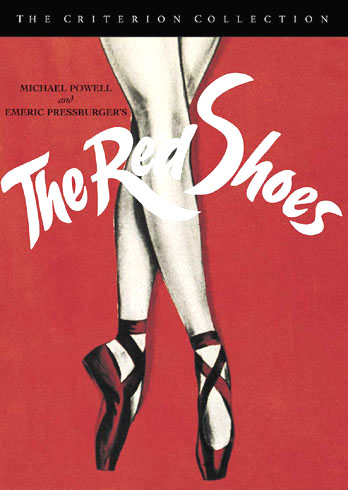
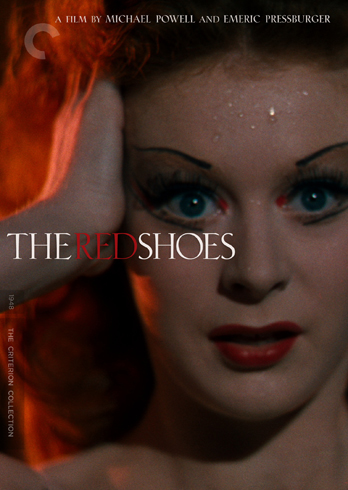
The original 1999 DVD cover.


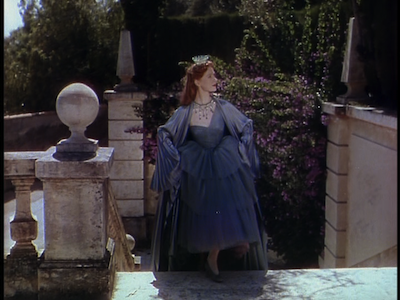
The press screening for The Red Shoes was not my first experience with this particular film, but it might as well have been. The restored transfer is everything they claim it to be, making it seem like a whole other film. The Red Shoes looks newly minted, as if it was struck from a fresh batch of Technicolor cooked up in a lab just yesterday. The image is flawless, and the color is so vivid, it's practically a living entity. The range of pigments and the level of detail is simply astonishing. Moira Shearer's red hair looks like a swath of velvet wrapped around a tiny flame, and how did I not know before that she has freckles on her collarbone? I feel like I am finally getting to see what previously only cinematographer Jack Cardiff saw, that I have been ushered through a door into his mind's eye to bathe in everything he imagined.

For those unfamiliar, The Red Shoes is the story of an international ballet company run with an iron artistic hand by the headstrong and demanding Boris Lermontov (Anton Walbrook). On a stop in London, he meets a young dancer named Victoria Page (Shearer) whose spirit and pluck earn her a spot in his Corps. The talent seeker also hires a college-age composer named Julian Craster (Marius Goring) to be a deputy conductor after the prodigy storms into his office claiming Lermontov's latest ballet plagiarized his work. Once under Lermontov's wing, the two neophytes soon find their expression encouraged. He assigns Julian to write the score of a ballet based on Hans Christian Andersen's The Red Shoes, and Victoria will play the girl who wanted so badly to dance, she wore a pair of magic slippers that cursed her to keep dancing until she died.


The 2010 DVD cover.


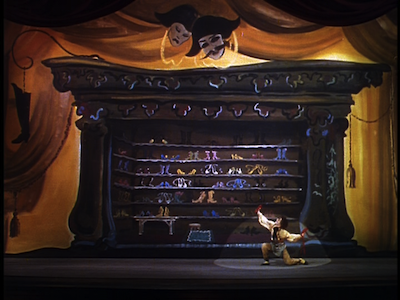
Midway through the film, the ballet is performed in full. It's the movie's most famous scene. Three years before Gene Kelly and Stanley Donen ended An American in Paris [review] with an original ballet, the Archers dropped a complete dance into the center of their backstage romance picture. It was choreographed by Robert Helpmann with music by the Royal Philharmonic, and it features world-famous dancer Leonide Massine backing up first-time movie actress Shearer, then a member of the Sadler's Wells Ballet. There were apparently 53 dancers in total, and the fifteen-minute sequence took six weeks to film. The staging wasn't a direct "shoot a live performance" set-up, the approach was more like a fantasy sequence set inside the performance. Swathed in paintings by Hein Heckroth, the production vibes toward the surreal, with special effects bringing stage conventions to life. When Julian is instructing Victoria on how to hear his music, he suggests she imagine the things that are happening in the story and make it a transformative experience. What Powell and Pressburger show us is what Victoria has imagined and by doing so they transform their film into something magical.

This ballet is no mere trifle, however. It is not a show-off exercise dropped into the center of the melodrama just for the sake of it. The story that Powell and Pressburger craft runs parallel to the themes of the dance. The push and pull between the triangle of Lermontov, Victoria, and Julian is represented in the Andersen adaptation. Lermontov is the shoemaker insisting that his ballerina perform, Julian is the lover who tries to pull her off the stage, and Victoria is the girl caught up in her dreams and desires and having no clear idea how to get out. The Red Shoes is about the passion of creation, the urges that compel artists to make art. What must one sacrifice to fulfill their dreams? Must art be all? It can be a joyful experience--the backstage material showing the collaboration and camaraderie of the company is some of the best stuff in the movie--but it can also be hard work that requires severe tunnel vision to get through.


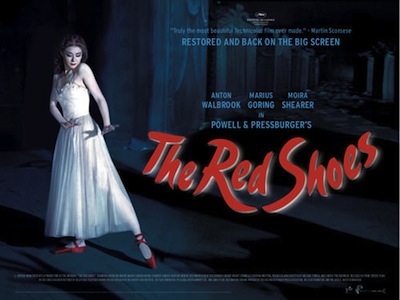
The 2010 theatrical reissue poster.


In a way, the characters all represent types, but I'd say only Marius Goring plays his as such. Julian is kind of a big baby, petulant like a schoolboy, and the actor doesn't bring much nuance to what is sort of the romantic lead. A romance develops between the music maker and his muse, and as it blossoms, it also exposes the fact that maybe Lermontov is in love with Victoria, too. It's never expressed outright, but the way Anton Walbrook looks at Moira Shearer, the way he reacts to the revelation that she has fallen in love, extends beyond a Svengali losing his puppet. As the woman torn between the two, Shearer displays both a strength of purpose but also a fragility. Her resolve to be a dancer is challenged by her feelings as a woman. The Red Shoes is one of those wonderful movies where the invention actually works: the fictional artists are creating real, believable art, and the woman whom everyone is supposed to fall in love with woos the audience to love her, as well. (In fact, check my tweet from immediately after leaving the screening.)


It's funny how years and multiple viewings can change one's perception, though. Boris Lermontov is generally considered the villain in the love triangle. He's the one who, in the fairy tale, would curse the girl to dance and never stop. (In the original story, they have to lop off her feet with an axe to disconnect her from the shoes; in the ballet and the movie that hosts it, Victoria's ending is still dire, though not as gory or gruesome.) Most fairy tales are fairly straightforward in their morality, and again, even here, the characters practically fall into stereotype. Or so a fairly surface reading of The Red Shoes might have you believe.


Maybe it's my more advanced age, maybe it's the fact that I've worked in a creative industry for a while now, but I found Boris Lermontov to be a far more sympathetic character than Julian Craster this time around. As things heat up within the love triangle, Boris asks Victoria if she would ever ask Julian to give up his métier, if she would ever want him to abandon music for her. When she says no, she would not, Boris then asks why she would permit Julian to ask it of her. It's a crucial question, and one that reflects badly on the young Romeo. His motivations are selfish. He wants her to be with him and no one else, to do nothing except inspire his melodies. Lermontov, sure, wants Victoria to be his and to dance at his company, but that does not require her to sacrifice who she is--nor would he ever want her to. What she means to him is entirely rooted in the talent that powers her. He knows to give up on her gifts would be to give up who she is, and then she would not be the woman he cares about.

It's wonderful to see how expertly Powell and Pressburger intertwine the drama of life with the drama of artistic expression. The Red Shoes is as inspiring as it is inspired. Cinematically, it melds so many things--fairy tales and dance and operatic melodrama--but it does so within the 1.37:1 frame. It molds these older arts into the newer one, making a movie that is as much about being a movie as it is anything else. It couldn't be done in any other form, and to now be able to see it in a way that is comparable to its debut more than 60 years ago is an astonishing treat. If you can go out and catch in the theatre now, you owe yourself to do so. You can still buy the DVD when it comes out. You're going to want to see it again anyway. And then again, and again. You're never going to want to take these red shoes off....

Part II of this review: The DVD...


Read more about Cinema 21 in this excellent article by Shawn Levy.

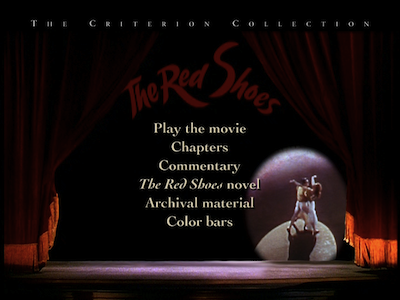
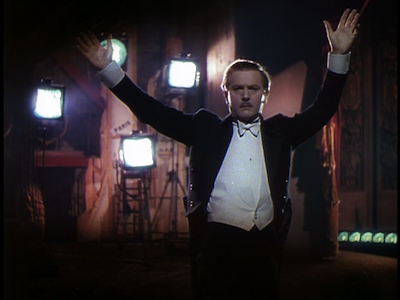
Please note: The screen grabs here are from the original Criterion release; see screen comparisons with the 2010 disc here.