Showing posts with label kaneto shindo. Show all posts

Sunday, May 15, 2016

THE NAKED ISLAND - #811


Years before he turned his camera toward making the unsettling, atmospheric horror movies Onibaba [review] and Kuroneko [review], Japanese filmmaker Kaneto Shindo undertook far more grounded subject matter in the 1960 release TheNaked Island. This neorealist paean to the tough life of one rural family is an unflinching study in the drudgery of survival, a year in the life fashioned into a graceful narrative about struggle and failure and finding success simply by sticking together.

Shindo’s screenplay focuses on a family of four: a father, a mother, and two young sons. One is old enough to go to school, the other is not. The school, like most everything, is across the waves on another shore. So isolated is the family’s island, in fact, that they have to sail to a different island just to fetch fresh water. This trip is made several times a day, to get water for the family meals as well as to feed the meager crops that grow on the hillside that oversees the homestead. Theirs is not an abundant life out there on the ocean. Catching a fish is a cause for celebration. Literally. In one divergent sequence, the family goes to the mainland to sell a fish one of the boys caught and have a day out. With a little money to burn, they dine at a small restaurant and ride a funicular: simple joys hard earned.


Hardship is the key here. Shindo wants to show us how rough the family has it and how it takes all four of them to get by. He approaches the narrative in the manner of a documentarian, avoiding any editorializing, and outside of one tragic moment, eschewing any large drama. There are only small occurrences. A spilled bucket elicits a slap, but then husband and wife (played by Shindo regulars Taiji Tonoyama and Nobuko Otawa) pick up the pieces and carry the remaining bucket jointly. Not a word is exchanged between them.

In fact, hardly a word is exchanged in the entirety of The Naked Island. 40 minutes pass before we first hear a human voice, and even then it is children chanting and singing. There are only a couple of lines of dialogue in the whole picture. Again, it’s about those small occurrences. Shindo’s intent is to use the “silence” to focus us on the everyday action of the family’s routine, and by stripping away all else, imbuing those actions with added importance. In the absence of distraction or convenience, work is everything. If the routine is broken, if they fail to fetch the water, if they fail to maintain the small patch of land that sustains them, the family will have nothing.


Though this may make The Naked Island sound tedious or claustrophobic, the film is anything but. Shindo artfully gives the story scope by showing us more than the immediate area around the individuals. He regularly pulls back to show us the island and the ocean, the natural splendor that surrounds them. There is an irony here, in that what we see might resemble paradise, but it’s far from a vacation spot for those who live there. They aren’t sending out postcards of their shoreline. Accompanying Shindo and director of photography Kiyomi Kuroda’s camerawork is Hikaru Hiyashi’s evocative music. The Death by Hanging-composer adds an elegiac touch to some of the scenes, and a melodic counterpoint to others. His rhythms lend a sense of ceremony to the daily ritual.


As difficult as life on the island may seem, one can’t help but think that Shindo intends to draw some kind of comparison to modern living. How less predictable are most people’s lives? How many people don’t leave for work at the same time each day to perform the same tasks day in, day out? It seems only the rewards are different. Yet, it’s hard to see The Naked Island as any kind of indictment of modern excess. On the contrary, Shindo does not evoke any romantic notion of a simple life. I am not even sure we can intuit any kind of existential satisfaction in a job well done. By the end, the father is as inscrutable as ever, and the mother even harder to understand. As the only character to outwardly show her dissatisfaction--be it in the momentary respite she finds in the bath, or a breakdown she suffers in the movie’s penultimate scene--we can only guess as to what is going through her mind as the movie ends. She lowers her head so the brim of her hat shields her eyes, and we are left to read the bottom half of an expression that reveals very little. There isolation continues, and though they have each other, we must wonder if it is enough. When they go to town, they are outsiders, but yet the boy who goes to school has found community, making him part of something larger and, arguably, more meaningful. Is it possible that Shindo is really telling us that no family is an island?

I suppose that’s for each of us to interpret and debate, and it’s part of what makes The Naked Island so intriguing.


Though, were you to want to know more, you can certainly dive into the usual extras, including two features with the director himself: a 2011 video interview and an older commentary track featuring both Shindo and Hiyashi. Other extras include actor Benicio Del Toro (Traffic [review]) expressing his love of the film, and also a bit from film scholar Akira Mizuta Lippit.


This disc was provided by the Criterion Collection for purposes of review.

Friday, December 30, 2011

NIKKATSU NOIR: TAKE AIM AT THE POLICE VAN - ECLIPSE SERIES 17


As 2012 comes to a close, this trio of reviews of Seijun Suzuki movies actually catches me up for the weeks I missed in November. This marks four full years of providing one new review to this blog a week. That's a lot of writing and a lot of movies.

I picked Take Aim at the Police Van from the Eclipse Nikkatsu Noir set because it was the only remaining Suzuki film in my collection that I had not yet watched. It's interesting that my viewing over the past two days has gone in reverse chronological order. I am not sure why Criterion decided to number Tokyo Drifter [review] and Branded to Kill [review] the way they did, but with this 1960 mystery/drama thrown in, the effect for me was to see Suzuki's style get more normal as I progressed.


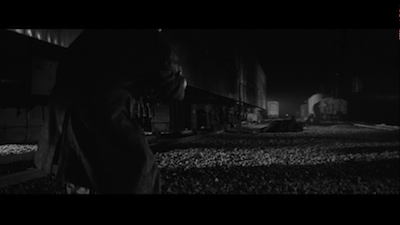
Coming some six years before Tokyo Drifter, Take Aim at the Police Van is a more conventional genre exercise than the director's later films. It begins with a violent attack on a prison transport van. Suzuki builds tension by having road-sign warnings repeat over and over, moving faster and making the viewer nervous with all their cries of "Caution!" It also doesn't help that we know that up ahead a sniper is waiting. When the van approaches his hillside vantage point, he opens fire, killing two of the prisoners. It was a concentrated attack.


The guard on that run, Daijiro Tamon (Michitaro Mizushima), is held responsible for the assault, and he is put on six months leave. Rather than stay at home and sulk, Tamon decides to look into what really happened all on his own, thus transforming himself into a traditional fictional investigator, doggedly pursuing his goals despite the warnings and the dangers. Suzuki and scriptwriter Shinichi Sekizawa see Tamon as belonging to a western tradition, and even make reference to Ellery Queen and other mystery writers who concocted similar stories with equally committed characters. Tamon begins his case by finding one of the shooting survivors, a low-level crook named Goro (Shoichi Ozawa) who was due to be released on bail the day of the incident. Goro's behavior during the attack makes Tamon think he knows something.


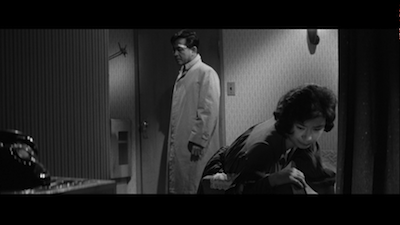
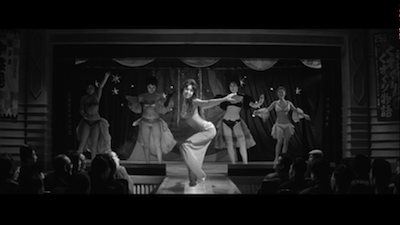
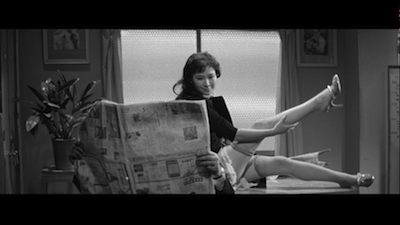
Naturally, pulling on this first thread causes many others to unravel. Tamon follows Goro out of town, where the mistress of one of the dead prisoners and Tsunako, the girl who bailed Goro out (Mari Shiraki), are working as strippers in an illicit brothel. Their involvement leads the prison guard to a human trafficking ring with ties to a mysterious, possibly fictitious big boss named Akiba. More people end up dead, some thought dead end up alive, and Tamon maybe has a thing for one of the possible suspects (Misako Watanabe). Yuko's father runs the "talent agency" that books the girls, and she's taken charge of the business since her old man got sick. She also knows archery, which is interesting since the dead stripper was shot in the heart with an arrow!


Take Aim at the Police Van takes a tried-and-true approach to building its mystery. For every answer Tamon finds, he also uncovers a few more questions. More players join the story, and the cast builds to the point where he doesn't really know who is going to pop out from which shadow next. Mizushima plays the role pretty straight. He's always looking forward, rarely indulging in sentiment or any emotion that might alter his course. He's an older man, and seeing him tangled up with so many young girls creates an amusing incongruity. Tamon is no white knight, but he will get the job done.


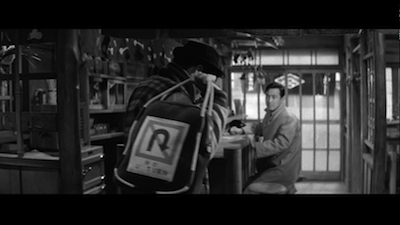
By the time we get to the climax, just about any of the crooks could be Akiba. Tamon has formed an uneasy alliance with Yuko, particularly after the two of them are nearly burned alive in a gasoline truck by the sniper, and he also takes a liking to Tsunako and wants to get her out of whatever trouble Goro might have gotten her into. Motor vehicles and motorways prove dangerous throughout the film. There is a chase on a cliffside highway and later Tamon is nearly run down by coordinated vehicles coming from two different directions. Goro also humorously provides the movie with its second roadside omen: he has a backpack that says "No U-Turns." There is no turning around, there is only forging ahead.


It makes for a sublime kismet, then, that the final shootout in Take Aim at the Police Van goes down in a trainyard. Buses and cars are unpredictable. They crash and they roll, and their course is subject to human control. Trains follow a track. They are reliable and they are sturdy. Their destination can't be changed easily. For some, this will be fatal; for others, salvation. Trains are also the industry of an older generation, one that Tamon can identify with. And perhaps that is why he is as reliable and as dedicated, as well. The young hoods have their flashy cars, but he identifies with the rails, getting the job done and never deviating from the predestined route.


BONUS SEIJUN SUZUKI REVIEWS:

* Detective Burea 2-3: Go to Hell Bastards! (1963)
* Tanuki Goten (Princess Raccoon) (2005)

And one from the archives, part of a group of reviews I did for my old column "Can You Picture That?" on OniPress.com. This one was reviewed alongside Onibaba, and that portion was reprinted here.

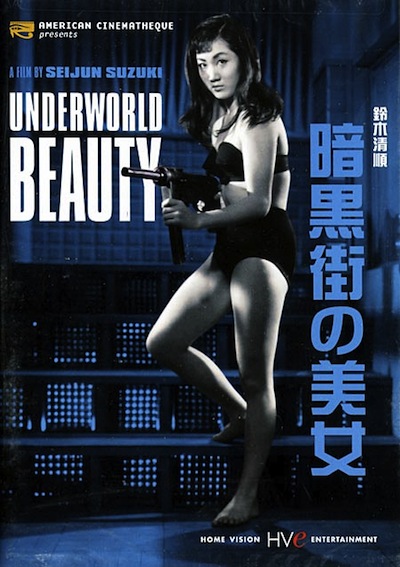
Underworld Beauty (1958): Speaking of cover art, I initially thought that Seijun Suzuki's 1958 yakuza movie, Underworld Beauty, would be a perfect companion to Onibaba. A beautiful woman dramatically posing with a machine gun! Yes! Only the cover art is entirely misleading. Akiko (Mari Shiraki) never picks up a gun inUnderworld Beauty. I was fooled by marketing!

Thankfully, Underworld Beauty is an entertaining film even without a pretty young thing shooting up the bad boys. Released by Home Vision Entertainment along with a spate of other Suzuki films, Underworld Beauty hints a little bit at the scattershot editing style that, a decade later, got Suzuki fired and branded "incomprehensible" (the way sometimes the story jumps from point A to point C pales next to the supersonic speed Branded to Kill travels at). Overall, though, it's a pretty straightforward crime picture with a cynical edge reminiscent of Sam Fuller.

The plot is simple: Miyamoto has spent three years in prison. In that time, he has managed to keep his mouth shut, giving up neither his yakuza bosses nor the hiding place of the jewels he stole. Feeling guilty about his partner, Mihara, who was partially crippled in the heist, he decides to work through his old boss and sell the diamonds, giving the money to his friend. Only someone attempts to steal the stones at the sale, and Mihara ends up swallowing the jewels before leaping off a building to escape. In the wake of his death, Miyamoto and Akiko go up against the yakuza and Akiko's effete, mannequin-manufacturing boyfriend, working through a maze of double-crosses to establish ownership of the three shiny jewels.

What sets Underworld Beauty apart from standard crime films of the period is the clash of the old school gangster (Miyamoto) and the wild-child, idealistic teenager (Akiko). It's never more clear than when the dark-suited hoods step into the bossa-nova rock-and-roll nightclub filled with kids dressed in light colors. The crooks are like brick walls, while the teenagers are much more petite. At one point, one of the bad guys shoves the fresh-faced bartender away from the bar and he practically launches into the air. Thus, the central conflict becomes whether or not Akiko can step up and act maturely. Can she and Miyamoto find common ground, and will it carry them through the classic crime-doesn't-pay ending? (Side note: It's interesting to compare the rather milquetoast version of a rock club in Underworld Beauty to the seedier nightclub in Akira Kurosawa's High and Low [review] five years later. The former is definitely the bobby-soxer '50s version we see in a lot of period entertainment, whereas the latter's sweaty opium den vibe showed the false innocence was already crumbling.)


Thursday, October 27, 2011

BLU-REDO: KURONEKO - #584

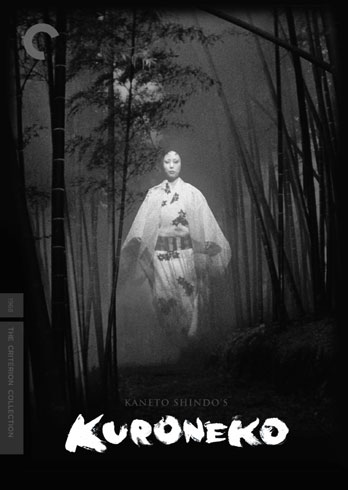
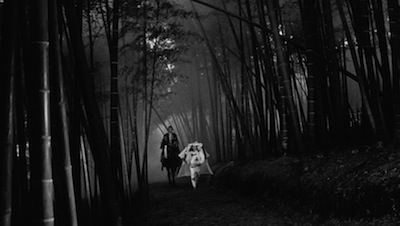
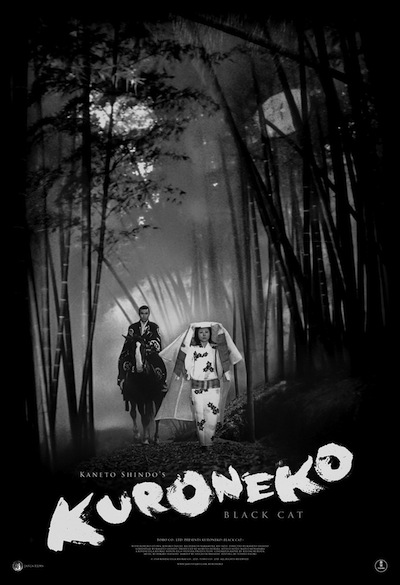
Last year I was fortunate enough to see Kuroneko during its brief theatrical run, and ever since, I have been eagerly awaiting its home video release so I could watch this unsettling ghost story again. Criterion timed its DVD/Blu-Ray edition to come out in time for Halloween, and Kuroneko is perfect for the spooky holiday. With the lights out, the astonishing high-def transfer creates the right kind of spectral glow. The restoration job is beautiful. Extras are few, but meaningful, including an interview with director Kaneto Shindô. Even the cover art is designed to have an eerie aura. You can't tell from the image below, but the actual cover was printed with a silver ink so that the ghost appears to be floating out of the background. One of the best Criterion releases of 2011, sure to be a sleeper hit.


Kaneto Shindô's 1968 horror movie Kuroneko (a.k.a. Black Cat) is a creepy mood piece that starts with shocks before settling into a far more effective mode, digging its claws in the viewer to inject a nearly imperceptible poison.

The film opens with a harsh event: a band of starving samurai finds a remote farmhouse where two women live alone. A mother (Nobuko Otowa) and her daughter-in-law (Kiwako Taichi) are inside eating a quiet meal, having been stranded three years prior when the man of the family was conscripted into the army. With no one to protect them or their home, the brigands eat the food, rape the women, and burn the house down. The scene plays with no dialogue, and the most gruesome events occur off camera, the drooling faces of the onlookers being enough to turn our stomachs all on their own.

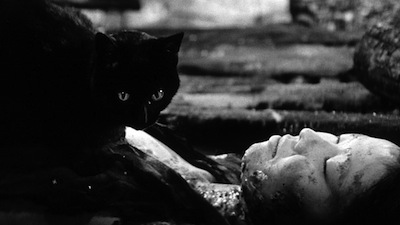
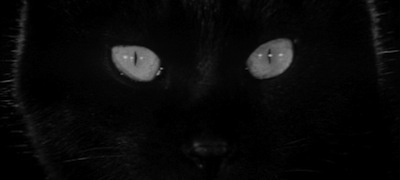
When the smoke clears, the house is destroyed, but the bodies of the dead remain relatively untouched. A black cat crawls into the wreckage and seemingly revives the women. It's implausible, sure, but Shindô's quick cut technique hips us to the fact that something beyond flesh-based logic is going on here. We are in a supernatural world.


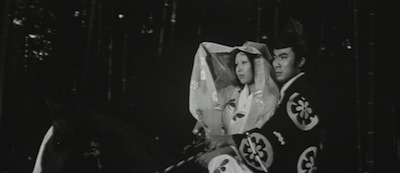
Cut to a dark night outside the gate to the estate of the village nobility. A lone samurai passes on his horse. As a cat meows in the distance, he is approached by a young woman dressed in white. It is Shige, the daughter from before. She convinces the warrior to escort her back to her house, where she and her mother give him sake and the promise of something more. Only, when he collects, Shige's kisses turn to deadly bites. She gouges his neck and drinks his blood. Come morning, the house is gone, but the dead samurai is still there.

Kuroneko is a mystical revenge movie, a ghost story about two wronged women exacting vengeance on the warmongering men that are tearing their country apart. It covers some similar ground to Kaneto Shindô's earlier movie, the eerie and often harrowing Onibaba [review], in which a similarly abandoned pair of women earn their way by killing passing swordsmen and stealing their armor. In Onibaba, the return of the lost son and husband exposes the crimes and shifts the drama into even more macabre directions. In Kuroneko, the return of the soldier boy is almost the opposite. The ghost story takes a turn when Gintoki (Kichiemon Nakamura) emerges from combat as a celebrated warrior. He is promoted in the ranks and dispatched by his master (Kei Satô) to take care of whatever is killing the men.

Naturally, Gintoki is taken aback when he discovers whom the ghosts are, but instead of dispelling them via a deadly battle or a traditional exorcism, Gintoki settles back into a semblance of home life. Kuroneko becomes almost a love story, albeit a morbid one, as the husband returns to the house night after night to make love to his dead wife. It's a glacial seduction, both in terms of temperature and pacing. Life in Kuroneko nearly slows to a crawl--only it's a state that can't last. There will have to be a reckoning.


Shindô is a particularly skilled filmmaker when it comes to making the supernatural come alive. There are several excellent special effects in Kuroneko. Some of them are traditional sleight-of-hand: at one angle, we see the true nature of the ghosts, but in the next cut, they have returned to normal. Shindô loves to use a choppy montage to unsettle the viewer and pull us into the netherworld. He also gets clever with optical effects, and he portrays the ghostly manor where the women lure their victims as a kind of landlocked sailing vessel. It moves through natural space, drifting through the surrounding forest, never locked to one place on the corporeal plane.

As good of a ghost story as it is, however, Kuroneko is far more than a simple tale of succubae going bump in the night. As with Onibaba, the filmmaker is using the fantastical as background for exploring human nature. In particular, Kuroneko is a damning critique of societal divisions and the pecking order of masculine leadership. The higher up the ladder, the more vain and ridiculous the men behave. The head of the clan sits behind a screen, as if he were some great and powerful Oz passing orders down to the lower ranks, while Gintoki's superior, Raiko, is a hairy, preening beast. When Gintoki spins an embellished tale of how he conquered an enemy referred to as "The Bear," his description of the man's furry body could just as easily be applied to the man he is telling it to. The male animal is large and indiscriminately violent, whereas the female power lies in wait. A cat is stealthy and precise. They keep the true color of their fur hidden.

All of these elements build to an effective climax, Shindô pulling out all of his tricks for a close-quarters showdown and a bittersweet finish that stays true to Kuroneko's cynical worldview. As the final images continued to haunt me, I had to ask myself whose side I was on and why. Who was I meant to sympathize with or feel sorry for? Gintoki obviously had nothing directly to do with the murder of his family, but he is part of the system that made it possible. Hell only comes to Earth when humanity clears a path for it.


This disc was provided by the Criterion Collection for purposes of review.

Please Note: The images here are promotional still and not screenshots from the Blu-ray edition under review.


Monday, October 25, 2010

KURONEKO


Kaneto Shindô's 1968 horror movie Kuroneko (a.k.a. Black Cat) is a creepy mood piece that starts with shocks before settling into a far more effective mode, digging its claws in the viewer to inject a nearly imperceptible poison.

The film opens with a harsh event: a band of starving samurai finds a remote farmhouse where two women live alone. A mother (Nobuko Otowa) and her daughter-in-law (Kiwako Taichi) are inside eating a quiet meal, having been stranded three years prior when the man of the family was conscripted into the army. With no one to protect them or their home, the brigands eat the food, rape the women, and burn the house down. The scene plays with no dialogue, and the most gruesome events occur off camera, the drooling faces of the onlookers being enough to turn our stomachs all on their own.

When the smoke clears, the house is destroyed, but the bodies of the dead remain relatively untouched. A black cat crawls into the wreckage and seemingly revives the women. It's implausible, sure, but Shindô's quick cut technique hips us to the fact that something beyond flesh-based logic is going on here. We are in a supernatural world.


Cut to a dark night outside the gate to the estate of the village nobility. A lone samurai passes on his horse. As a cat meows in the distance, he is approached by a young woman dressed in white. It is Shige, the daughter from before. She convinces the warrior to escort her back to her house, where she and her mother give him sake and the promise of something more. Only, when he collects, Shige's kisses turn to deadly bites. She gouges his neck and drinks his blood. Come morning, the house is gone, but the dead samurai is still there.

Kuroneko is a mystical revenge movie, a ghost story about two wronged women exacting vengeance on the warmongering men that are tearing their country apart. It covers some similar ground to Kaneto Shindô's earlier movie, the eerie and often harrowing Onibaba [review], in which a similarly abandoned pair of women earn their way by killing passing swordsmen and stealing their armor. In Onibaba, the return of the lost son and husband exposes the crimes and shifts the drama into even more macabre directions. In Kuroneko, the return of the soldier boy is almost the opposite. The ghost story takes a turn when Gintoki (Kichiemon Nakamura) emerges from combat as a celebrated warrior. He is promoted in the ranks and dispatched by his master (Kei Satô) to take care of whatever is killing the men.

Naturally, Gintoki is taken aback when he discovers whom the ghosts are, but instead of dispelling them via a deadly battle or a traditional exorcism, Gintoki settles back into a semblance of home life. Kuroneko becomes almost a love story, albeit a morbid one, as the husband returns to the house night after night to make love to his dead wife. It's a glacial seduction, both in terms of temperature and pacing. Life in Kuroneko nearly slows to a crawl--only it's a state that can't last. There will have to be a reckoning.


Shindô is a particularly skilled filmmaker when it comes to making the supernatural come alive. There are several excellent special effects in Kuroneko. Some of them are traditional sleight-of-hand: at one angle, we see the true nature of the ghosts, but in the next cut, they have returned to normal. Shindô loves to use a choppy montage to unsettle the viewer and pull us into the netherworld. He also gets clever with optical effects, and he portrays the ghostly manor where the women lure their victims as a kind of landlocked sailing vessel. It moves through natural space, drifting through the surrounding forest, never locked to one place on the corporeal plane.

As good of a ghost story as it is, however, Kuroneko is far more than a simple tale of succubae going bump in the night. As with Onibaba, the filmmaker is using the fantastical as background for exploring human nature. In particular, Kuroneko is a damning critique of societal divisions and the pecking order of masculine leadership. The higher up the ladder, the more vain and ridiculous the men behave. The head of the clan sits behind a screen, as if he were some great and powerful Oz passing orders down to the lower ranks, while Gintoki's superior, Raiko, is a hairy, preening beast. When Gintoki spins an embellished tale of how he conquered an enemy referred to as "The Bear," his description of the man's furry body could just as easily be applied to the man he is telling it to. The male animal is large and indiscriminately violent, whereas the female power lies in wait. A cat is stealthy and precise. They keep the true color of their fur hidden.


All of these elements build to an effective climax, Shindô pulling out all of his tricks for a close-quarters showdown and a bittersweet finish that stays true to Kuroneko's cynical worldview. As the final images continued to haunt me, I had to ask myself whose side I was on and why. Who was I meant to sympathize with or feel sorry for? Gintoki obviously had nothing directly to do with the murder of his family, but he is part of the system that made it possible. Hell only comes to Earth when humanity clears a path for it.


Kuroneko is currently playing in limited engagements around the country. My fellow Portlanders can see it at Cinema 21 starting November 5. Check the Janus Films website for dates near you.

Friday, December 14, 2007

BLAST FROM MY OWN PAST: ONIBABA - #226

From the now defunct "Can You Picture That?" column, April 20, 2004. It's not one of my best, but since it was originally part of a three-movie review, this piece is mercifully short.


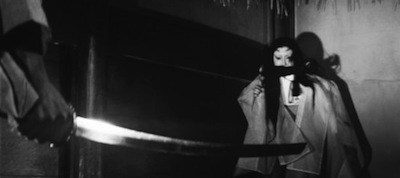
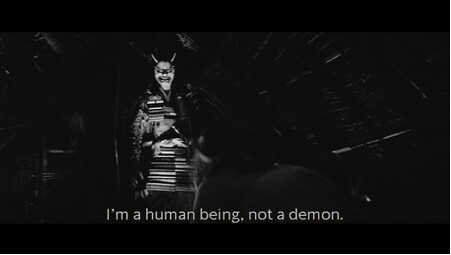
The title Onibaba translates as “Demon Woman,” and the 1964 Japanese sexual parable dressed in the tropes of horror films is dark and gruesome, an unflinching look at the extremes people will go to in order to survive. Set in a swamp during a particularly violent period of Japanese history, two women--a girl (Jitsuko Yoshimura) and her mother-in-law (Nobuko Otowa)--are forced to go it alone, killing wayward samurai and tossing their bodies in a deep hole in order to pawn their armor. When a neighbor man, Hachi (Kei Sato), returns from the war and reports that their son/husband was killed trying to escape from battle, the delicate balance of their lives is upset completely. The women’s sole bond has been waiting for the man to return--and now they have nothing.

Knowing she can’t survive alone, the older woman attempts to instill a righteous fear in the girl, using stories of a Buddhist hell to scare her into stopping her midnight dalliances with Hachi. When her measures get more drastic, the players in this twisted scenario end up getting a quick lesson in instant karma.

This gorgeously shot black-and-white film seems impossibly daring for its time. This trio of lost souls lives a primal life, full of blood and sex, and director Kaneto Shindo doesn’t sugarcoat their actions at all. The new transfer triumphantly delivers the deepest black shadows, every eerie nuance of moonlight; additionally, every bloodcurdling scream and sensual squeal comes through in detailed surround sound. Onibaba features a fantastic score by Hikaru Hayashi, sparse at times and rhythmically exciting at others. The producers of the DVD made sure every drumbeat would rattle the viewer’s ribcage.


Extras include a new interview with Shindo, as well as notes and on-set footage from the production. Onibaba was an independent effort, bucking the Japanese studio system. The features give us a glimpse into the difficult communal project. Shooting on a real swamp, the team found themselves at odds with nature, racing against a changing season to complete their film. It makes the quality of their effort all the more impressive knowing the pains it took to bring Onibaba to life.

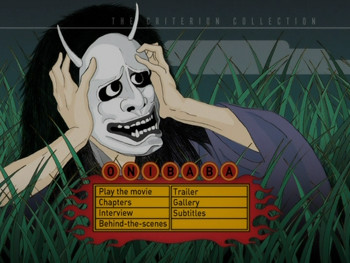
The only complaint I’d have is with the art direction. The cover art and limited, flash-style animation of the menus are the first from the Criterion Collection that I have genuinely disliked. It looks to me more like a rough for the final product, not the final product itself.