Friday, September 5, 2008

3 FILMS BY LOUIS MALLE (#327): AU REVOIR LES ENFANTS - #330


The effectiveness of Louis Malle's 1987 pseudo-memoir Au revoir les enfants is that despite being set in occupied France in WWII, it isn't really a movie about the war. Based partially on the writer/director's own experience, the film successfully recreates the mindset of childhood. Even though signs of the political and social turmoil of the war are all around the young boys attending an out-of-the-way Catholic boarding school, their lives carry on almost as normal. Thus, when the outside world does finally intrude, it strikes even harder.

Julien Quentin, played by Gaspard Manesse with a wide-eyed curiosity that is reminiscent of a very young Jean-Pierre Leaud in the way he drinks everything in, is a well-to-do Catholic boy at the head of his class. A bit of a mama's boy, he's also got a touch of the class clown and tends to be the kid that understands the various angles of how things work. When a new student, Bonnet (Raphaël Fejtö), joins the class after summer vacation, he immediately rubs Quentin the wrong way. Bonnet is aloof and maybe a little stuck up, and he's also fairly smart and could be competition for Quentin.
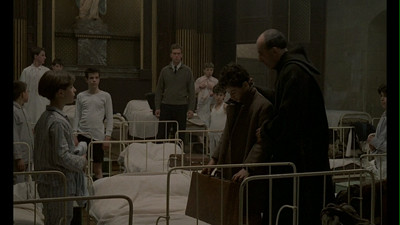


When the head of the school, Father Jean (Philippe Morier-Genoud), asks Quentin to cut Bonnet a break and encourage the other boys to be friendly toward him, Quentin suspects something is amiss. He asks the priest if the new kid is sick, and Father Jean says he isn't. What, then, makes Bonnet different and deserving of special treatment? Quentin does as he was asked, using it as an excuse to ask the other boy questions. He also begins watching, observing Bonnet's behavior, and searches his locker for clues.

A secret prayer, a name in a book, a refused piece of meat--it doesn't take long for Quentin to figure out that Bonnet is a Jew. Yet, the boy doesn't really understand why Bonnet would be at the Catholic school, and that's because he doesn't really know what it means to be Jewish. He asks his older brother Francois (Stanislas Carre de Malberg), and he tells him that being a Jew means you don't eat pork. For Quentin, that seems like a n odd reason to hate anyone. His brother then says that it's more because the Jews killed Jesus, to which the younger boy replies that it wasn't the Jews, it was the Romans who crucified Jesus. The simplicity of the logic is shocking in its own way, maybe even more than when other boys curse the Jews, clearly parroting things they have heard from adults without realizing the full meaning of the words. Quentin's capacity for rejecting the rhetoric when it doesn't jibe with what he knows is an all too rare trait.
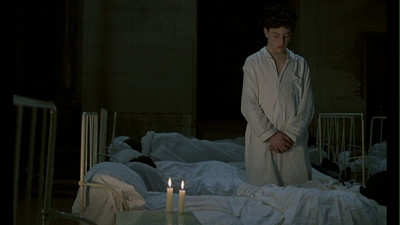


Louis Malle keeps the intrusion of adult explanations to a minimum in Au revoir les enfants, thus avoiding being preachy or explaining to his audience what we already know. This means that there isn't an instant friendship between Quentin and Bonnet, an immediate bridging of the gap so that the Gentile child is painted as noble and caring. Even so, Au revoir les enfants is more about friendship than anything. The film traces the contentious relationship of the two, showing Bonnet's defensiveness and Quentin's frustration. As children tend to do, they fall out, make-up, and then fall out all over again. After being lost in the woods during a game that appears to be a variation on "Capture the Flag," the boys bond through their mutual fear of what lies in the dark, and then are together when Nazis on patrol pick them up. Rather than bringing them closer, Bonnet rejects Quentin, probably because he's embarrassed by having shown his fear so openly and worried that he is more vulnerable. Only after an angry wrestling match do the boys get the tension out and see the error of their ways, becoming the friends they were always meant to be. The roughhousing boggles Quentin's mom (Francine Racette), but it's part of the natural cycle amongst school chums. Had they had more time, I am sure there would be plenty more breaking up and making up.
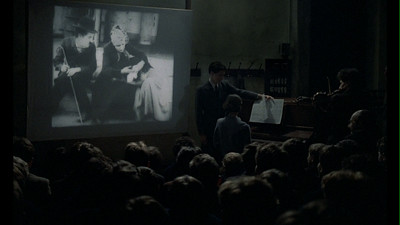


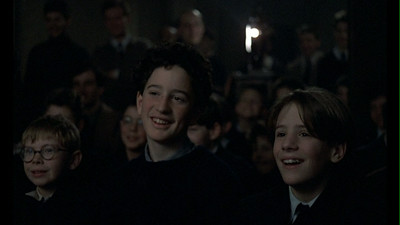
Both of the young actors are really good, though as I've already suggested, Gaspard Manesse really stands out as Quentin. You can always see the wheels turning behind his eyes, see him processing whatever new data he is taking in. Raphaël Fejtö gives an appropriately understated performance. In contrast to his counterpart, Fejtö must remain guarded. Instead of taking everything in, he is holding it all at arm's length. Both boys really prove their acting chops when they aren't speaking, in the silences that pass between them. You know that theirs is a friendship that will endure when you see them laughing together while watching a Chaplin film, the shared joy being the ultimate glue. Malle is like so many filmmakers before and since who have used the movie-going experience as social lubricant for connecting his characters, just as he likely hopes a movie like Au revoir les enfants will bring his audience closer. The scene actually reminded me of the convicts watching a Disney cartoon together in Preston Sturges' Sullivan's Travels. Something about being in the dark together, having a good time, tightens those ties that bind. Compare it to the earlier scene in the underground air raid shelter when Quentin wouldn't share his flashlight with Bonnet. It's as if light was something to be horded when one is forced into hiding, but to be shared if it is coming out of a movie projector. In a way, watching Chaplin is a defiant act, flaunting their freedom, ignoring the chaos beyond the school walls.


Of course, the war will eventually catch up with these boys. The title Au revoir les enfants has a literal narrative significance, even appearing as dialogue, but its larger meaning refers to saying good-bye to one's innocence. In keeping with the restraint he has shown throughout the picture, however, Malle doesn't go overboard. There is betrayal, but it's personal and mostly felt, not seen. There is also danger, but no guns are fired, no punches are thrown. He doesn't suddenly pick up his camera, which has stayed firmly on the ground up until that point, and start giving us sweeping crane shots and manic zooms. Nor does Malle give any of his characters a grandstanding speech, and when Father Jean ends up in trouble, his students express their appreciation, but there isn't a mawkish Dead Poets Society-style demonstration of that loyalty.

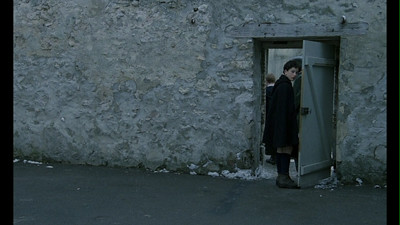
And again, it's the unsaid that hits the hardest. Through the whole movie, there is an importance placed on silence (even the Chaplin movie is silent). Bonnet has a secret, and when Quentin asks too many questions, he is in danger of wrecking it; in that vein, when the boys witness an older Jewish man being persecuted in a restaurant, he responds with a stoic dignity whereas the collaborator police are overly demonstrative buffoons. When Bonnet is discovered in the climax, it's because of an accidental look from Quentin, and when they must say good-bye, a glance and a wave speak volumes. The final shots are just on Quentin, watching the space where he last saw his friend, tears in his eyes. When the voice of an older man, of Quentin all grown up, came on to tell us what happened after, it floored me. Now that someone actually was speaking the unspeakable, tears welled up in my own eyes. In the preceding 100 minutes, I had formed my own friendship with the boys, another silent relationship, and now that connection was being severed, too. It's a tragic moment beautifully expressed.

It also confirms that movies do, in fact, connect us, and not just in shared laughter, but shared tears, as well. Cinema makes all experience accessible. It puts each member of the audience right in the thick of it. In that way, it connects the ages, to show us what happened so that we never forget, and by making us feel, reminds us that we, too, are human.


Sunday, August 31, 2008

SIDELINE: MORE REVIEWS FOR 8/08

Given that I write more reviews than what you see here, below is a list of non-Criterion films I covered in the past month that may be of interest to Criterion fans.

IN THEATRES...

* Pineapple Express, a sprawling comedy reuniting Seth Rogen and James Franco under the tutelage of director David Gordon Green. It's a real departure for the director from his serious indie fare, and he drops all restraints.

* Vicky Cristina Barcelona, Woody Allen goes abroad for a scintillating romantic drama about passionate, pretty people.

ON DVD...

* The Anton Chekhov Collection, six discs with ten BBC adaptations of the master playwright's stage work.

* Blues in the Night, Anatole Litvak's lively 1941 picture attempting to bring jazz to Hollywood. Features director Elia Kazan in a supporting role.

* Delicatessen: Special Edition, a straight-up reissue of the Jean-Pierre Jeunet dark comedy from 1991.

* Derek, an illuminating documentary about pioneering queer filmmaker Derek Jarman.

* Extasis, featuring a young Javier Bardem in a Spanish thriller suitable for Tom Ripley.

* Joy House. Speaking of Tom Ripley, this film teams up Rene Clement and Alain Delon, the Purple Noon team, for a disappointing but interesting thriller released as a lacklustre DVD. With a very young, so very hot, Jane Fonda.

* Moontide, in which Jean Gabin washes ashore in Hollywood to find Ida Lupino, only to make a so-so thriller with her.

* Pete Kelly's Blues, a stiff Jack Webb vehicle elevated by appearances by Ella Fitzgerald and Peggy Lee.

* Road House, a mullet-free 1948 noir with fantastic performances by Ida Lupino and Richard Widmark. If you've seen the Swayze movie and not this one, you're what's wrong with with this country. 'm just sayin'.

* Satantango, Bela Tarr's seven-hour masterpiece is a riveting human tragedy. Not the greatest DVD in the world, but the movie transcends all.

Friday, August 29, 2008

JIMI PLAYS MONTEREY & SHAKE! OTIS AT MONTEREY - #169


Before I started annoying cinephiles with my movie reviews, I cut my teeth in the late '90s writing music reviews. Music became an early obsession right around the same time I was discovering comics, and I've often pursued the former in the manner in which other fanatics have pursued the latter, chasing down B-sides and compilation tracks the way the biggest comics aficionados collect sequential issues, character appearance, and variant covers. The occasional soundtrack would appear with new mixes or specially recorded songs for the film by some of my favorite bands, and I'd have to get those, too. No surprise, really. Music and film have always had their own special relationship, with orchestration being used to add emotional weight to cinema as early as the silent era. The first sound pictures very quickly began showcasing song performances, beginning with Al Jolson, and over the years, the studios would find excuses for stars to sing even in non-musical productions in order to get a new hit on the radio, creating alternate promotional and revenue streams.

Then, of course, starting with the rock revolution in the 1950s and '60s, filmmakers began appropriating pop songs to use in their films, cutting scenes to the rhythm of a rock tune instead of a classical composition. I think most would bow to Martin Scorsese as the master of this. His use of the Rolling Stones and the Ronettes and many others would become so iconic, it would change how we would actually hear the songs from then on out. Scorsese has used one of the stars of today's DVD, Jimi Plays Monterey & Shake! Otis at Monterey, but surprisingly not the other (at least as far as I can dig up with a quick Google search; here is a cool Scorsese soundtrack resource). The director used Otis Redding performing "Fa-Fa-Fa-Fa-Fa (Sad Song)" in Casino, but it doesn't appear that he has employed any cuts from Jimi Hendrix (unless we count being in the film crew at Woodstock or the Hendrix segment of the Blues series Marty produced). Not really important to the matter at hand, but an interesting tangent nonetheless. Though, I would say the first Otis Redding film moment that most fans think of when the singer is mentioned isn't Casino, but Duckie lipsyncing to "Try a Little Tenderness" in Pretty in Pink, a song also given an amazing emotional resonance by Wong Kar-Wai as Rachel Weisz's theme in My Blueberry Nights.


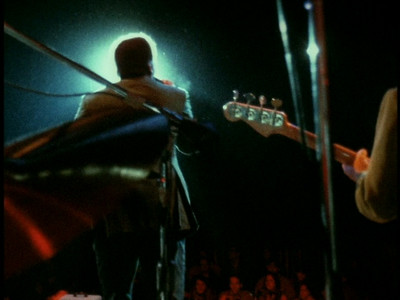
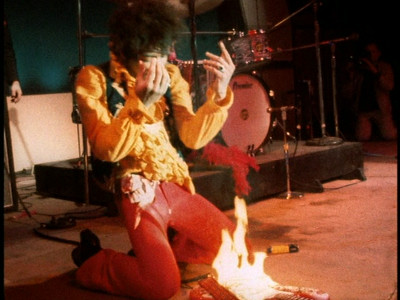
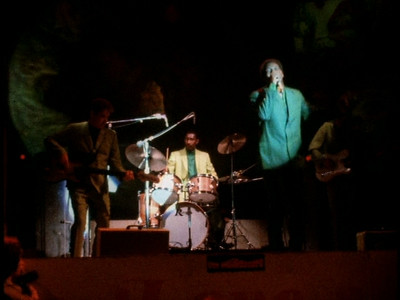
Of the music-related films in the Criterion Collection, my favorite is easily D.A. Pennebaker's Shake! Otis at Monterey, both for the sheer power of the performance and because, somehow, before I had seen it I was not an Otis fan. Which didn't mean I didn't like him, I just didn't know how much I liked him until this movie prompted me to go out and buy his greatest hits album, sparking a long overdue exploration of classic soul and R&B. Though only five songs in total, Shake! confirms the awesomeness one saw in the even more brief selection from Redding in Pennebaker's longer document of the festival, Monterey Pop. By dropping two of Otis' songs, "Shake!" and "I've Been Loving You Too Long," into the mix, he lets Otis steal Monterey Pop the way the singer also likely stole the day in the summer of '67. I know his DVD mate here, Jimi Hendrix, created the most well-known moment of the film when he set his guitar on fire, and the explosive chaos of my beloved Who is also a highlight, but those moments are less about the music and more about the spectacle. Otis sells his stuff without any need for special effects.

One of the greatest strengths of Otis' set in Shake! is sequencing. A downside of the digital age is that a lot of modern bands don't think about how to put an album together, they just toss a bunch of songs on the pile and listeners can put them together as they may. Same with live shows, where you can often just hear a band striking at particular rhyme patterns: fast one/slow one/fast one, or hit/new album/hit. Granted, Otis only had five songs and just under 20 minutes to do his thing, and his structure is simple--fast/fast/slow/fast/slow--but this is really precision bombing, hitting a tired and possibly skeptical festival crowd with the right kind of firepower at the right moments. Opening with "Shake!" got the crowd to its feet, "Respect" kept them dancing, and then "I've Been Loving You Too Long" took the fervor and excitement and started to tease and seduce, the music smoothing into a sensual, orgasmic purr. Then it was back up again, striking with a cover of a familiar number, "(I Can't Get No) Satisfaction." Interesting that both of these African American acts chose to perform tunes by the most popular white rock groups, Otis taking on the Stones and Jimi working the Beatles' "Sgt. Pepper's Lonely Hearts Club Band" and several Bob Dylan numbers into his bluesy repertoire over the years.


Otis brings it all home with his final selection, his famous "Try a Little Tenderness." A number that builds from a slow, syrupy crawl, gaining momentum, working its way to a defiant crescendo, including a false stop and then a return mini-encore, the song is almost its own set, hitting the same tempos and feverish eruptions, the up and down and fast and slow, of the previous four songs all in one go. All the more disappointing, then, that Pennebaker makes his one and only mistake in Shake!, and what a crushing mistake it is! For more than 3/4 of the song, the filmmaker leaves Otis for the first time in the movie, instead choosing to create a montage of women at the festival, many of them sleeping and thus serving as a kind of visual pun to go with the lines about young girls getting weary. It's like going to a fireworks show and filming the ground, or going to a movie and sitting backwards in the theatre.

Why would you ever turn your camera away from Otis Redding? Despite being backed by some of the greatest musicians of the era, his Stax/Volt labelmates Booker T. & the MGs and the horn section the Mar-Keys, it's all Otis' show. The best performers of the soul era, including Marvin Gaye and Sam Cooke, managed to carry the crowd with personal charisma and the undeniable force of their voices. As a live singer, Otis is constantly moving, constantly smiling, and seemingly spontaneous while always being in full control of his band and of the arena. Were the "hit me again" moments in "I've Been Loving You Too Long" planned, or were they truly a moment of inspiration, where Otis just had to feel those musical punches a couple of more times? There is no way of knowing, but it sure looks spontaneous, just as the vocal runs he goes through in the final stage of the tune sound emotionally charged, raw, and totally from the heart. There isn't a moment in this film that you won't believe that Otis Redding is feeling every note he sings, and that's why it's impossible to forget Shake! once you've seen it.


There is a similar controlled spontaneity in the Hendrix set in Jimi Plays Monterey. The way his songs roll one into the other, from one of his own originals to a Bob Dylan tune to a cover of B.B. King, sounds unplanned, though I would imagine the real improvisation occurs within the songs, in the way Jimi and his band jam, and that the set is all laid out ahead of time.

I feel I must admit that I have never been much of a Hendrix fan. Too heavy, too fuzzy, that signature jammy quality just not being my style. That said, Jimi Plays Monterey still manages to impress. One doesn't have to be a fan of a particular musician to still appreciate what he does, and if you watch Jimi Plays Monterey and somehow fail to see how innovative Hendrix's style is and the talent and skill with which he attacks that guitar, I am not sure you can actually make a claim to understand rock music at all. Just consider the ways he tackles traditional songs like "Hey Joe" and Dylan's "Like a Rolling Stone" and then make a case for him not completely changing how rock musicians could approach the form.


Pennabaker doesn't stay entirely in Monterey for this feature, instead setting a backdrop with information about who Jimi was, what lead to Monterey, and noting that this career high was followed a year later by the guitarist's death. (Coincidentally, Redding also died just a few months after these concerts, in December 1967, linking these two artists in another way.) Narrated by "Papa" John Phillips, one of the curators of the Monterey Pop Festival, we get a sense of who it is were are about to see, and we also get a glimpse of an earlier stage of the Jimi Hendrix Experience, playing that aforementioned Beatles cover and the Troggs' "Wild Thing" in footage from London. (In the case of "Wild Thing," we hear it again at Monterey, and the juxtaposition shows how far the Experience had taken the sound and their stage show in the time between.) We also see and hear other artists, including the Animals performing "Monterey," the tragic Rolling Stone Brian Jones introducing Jimi, and artist Denny Dent opening the film with a pop-art graffiti portrait of Hendrix, painting at hyper speed while Pennebaker lays "Can You See Me?" over the top.

Jimi is the real star, though, and Pennebaker smartly lets his set at Monterey run without interruption. His psychedelic point of view captures a certain vibe of the 1960s, and the fact that he and Otis could seemingly be so disparate, one more classical in approach and the other more visionary, and yet share the stage (and a DVD) so comfortably tells us something about the musical landscape of the times. These days, with everyone concerned about the brand, any meeting of R&B and rock (or, for that matter, hip hop and rock) is seen as novelty, even if most people's iPods have a little bit of everything, all genres represented. Maybe that's where the true festivals happen today, in the mixes we make ourselves. In that sense, I want mine to sound as good as this one.


Thursday, August 21, 2008

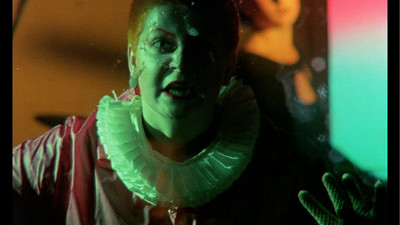
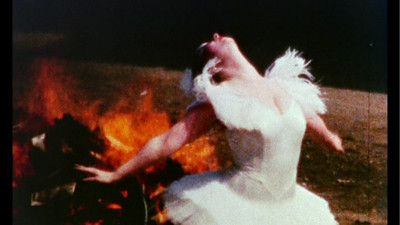
JUBILEE - #191

"As long as the music is loud enough, we won't hear the world falling apart."


Having recently had a chance to review the forthcoming DVD release of Derek, Isaac Julien, Tilda Swinton, and Colin MacCabe's documentary portrait of the filmmaker, activist, and artist Derek Jarman, I felt it was high time I finally watch my DVD of Jubilee. It has only taken me, oh, five years since Criterion dropped their 25th-anniversary edition, but honestly, I bet I have unwatched DVDs older than that. Such is the addiction.

A large part of why I likely steered clear of Jubilee is I really don't understand the post-apocalyptic genre. If the world were to be decimated tomorrow, the survivors would suddenly start dressing like it's 1977 why, exactly? I watched Neil Marshall's Doomsday a couple of weeks ago and couldn't figure it out. The retreat into more medieval stylings at least had some basis in the buildings and tools available, but did all these kids grow up watching Beyond Thunderdome on cable?


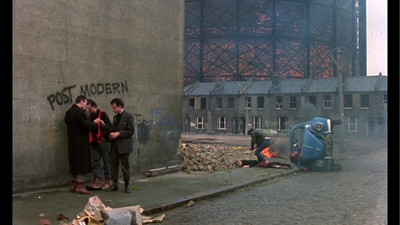
Of course, this digression is unfair to Derek Jarman, who actually made Jubilee in 1977 during the Silver Anniversary of Queen Elizabeth II, and his low-budget film is as much a snapshot of the rebellious culture of the time as it is a critique of the state of the union. The mohawks and leather were what his actors were actually wearing in their everday lives rather than the dream of some costume designer lurking in the shadows. Unfortunately, while I find this to be a good revelation as far as Jubilee was concerned, I was otherwise disappointed with the rest of the movie. Here I liked the aspect of it I thought I would hate and didn't like much else.

The set-up for Jubilee is that Elizabeth I (Jenny Runacre), concerned with the kingdom she is building, asks her astrology advisor, John Dee (Rocky Horror-creator Richard O'Brien), to show her what the future will be like. Dee summons the angel Ariel (David Haughton), and he takes the Queen and her fortuneteller through time to a future England where everything is falling apart. The media is controlled entirely by the maniacal Borgia Ginz (Orlando), and the fortune he has amassed is allowing him inroads into the government. Jews, blacks, and homosexuals are all being exiled to specific areas, and law and order has become a joke. People don't care about art, just the latest episode of "Top of the Pops."


Living on the streets, however, are true rebels, the people whom Jarman sees as embodying the variety and the creativity of England. Essentially, this is Jarman capturing the punk scenesters of the time, and the film is populated with notorious personalities that should be familiar to fans of the era. Jordan, a fashion figure who was part of Malcolm McLaren and Vivienne Westwood's clothing shop, plays Amyl Nitrate, a historian and kitsch collector who wants to record the true history of England before it's swept under the carpet, a document that questions accepted wisdom and how it's colored by hindsight. (For instance, is Churchill really the hero and Hitler the villain, or were those just the roles assigned by the victor in this scenario?) Bad girl Toyah Willcox is Mad, a pyromaniac who embodies the "No Future" ethos of punk and would rather continue to tear the world down than build it back up. And future popstar Adam Ant plays the Kid, a true-to-life portrayal of an ambitious young singer who wants to be on television. Infamous cross-dressing performer Wayne County also appears in a minor role as one of Borgia's stable, and the all-girl band the Slits play a street gang seen trussing up a tearful debutante.

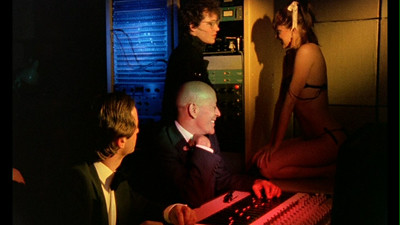
Somewhat loose in terms of plot, Jubilee cuts back occasionally to Elizabeth following the Angel around, but mainly sticks to this underground movement, to the decadent night clubs and the recording studios and the violent acts of self-expression. The girls are lead by Bod, who is also played by Jenny Runacre and placed as a sexless contemporary analogue to Elizabeth. As things get worse around her, Bod starts pushing her cohorts to more revolutionary action, eventually sparking a wave of violence after doling out some payback on a pair of police officers who brutally murdered the Kid and a gay couple squatting in the same bedsit as the girls. As concrete as those events may sound, there is a lot of episodic meandering on the way there, and not much happens while we're waiting around for the first Molotov cocktail to explode. I should note, though, that just as the attacks are getting underway, there is one rather effective scene with Toyah Wilcox. When her character, Mad, finally gets to unleash all of her pent-up anger by attacking one of the cops, she ends up breaking down, shocked by her own actions. It's a powerful moment, and Wilcox goes through a torrent of emotions. Her moment of humanity lingers with the viewer, making what is to come all the more shocking by how quickly that moment passes.

Don't expect much more than that from Jubilee's performers, though. Most of the rest of the "acting" is little more than posing and preening. Orlando stands out as Borgia simply by being so over-the-top as to practically be in his own movie, and the Queen Elizabeth scenes have a shade more technical polish than the rest, but that's about it. The overall look of the movie is shabby chic, which isn't atypical for cheap exploitation pictures nor for anything tangentially punk. As a kind of document of the scene, employing sets and clothes as found objects, the movie succeeds; as an ageless film or a compelling narrative, not so much. Derek Jarman's direction is similarly amateurish, as he is still struggling with film language here. Individual scenes may work of their own accord, but rarely in concert with one another.


In Jubilee's climactic eruption, Jarman correctly predicts the changing political tide that will make way for Thatcher to take power and the gloom of the 1980s. He also sees the coming downfall of punk. The scene will eventually do the exact thing it professes to hate and totally sell out. (In its way, Jubilee is kind of an ironic part of that, having been turned into a punk picture rather than a documentary about Jordan, since Jarman's producers thought punk was a trend worth cashing in on.) Just as Bod, Amyl, and Mad end up camping out with Borgia on his newly acquired aristocratic estate, sharing a couch with the retired Adolph Hitler, so too will the punk kids get in bed with the corporate fatcats, turning a genuine youth movement into a commodity. As Borgia rightly says, "They all sign up in the end one way or another."

It's a rather cynical conclusion for someone like Jarman, who never gave in and always stayed politically active in his own life, fighting for gay rights throughout the 1980s. The man behind the movie makes me want to be kinder to it than I might otherwise, and the incisiveness of his commentary and his willingness to express it regardless of consequence or how it might have run counter to his own political desires is to be commended. Though time has made Jubilee seem clumsy and slipshod, I can actually see how it would have been subversive in 1977. I think a problem a lot of art of this kind faces is that what once seemed gutsy eventually comes off looking safe, sometimes for the very fact that it inspires the same kind of courage in others, and their efforts make the original come of as been-there-done-that. The message is still relevant, especially as the gulf between big media and big government and the people both are supposed to serve gets wider by the day, it's just that the medium no longer fits.


Even so, as a time capsule of British punk, you're not going to find much that is as raw and as of the moment as Jubilee. If you have any interest in the period, then you will find something to appreciate. In addition to songs by Adam Ant and Wayne County, there are also songs by other bands of the era, some obscure (Maneaters, Suzi Pinns, Chelsea, Amilcar) and some not as obscure (Siouxsie and the Banshees). The main score is also by Brian Eno, an innovator from the glam era, and his music for Jubilee serves as an aural bridge between that movement and the one that was replacing it, like the ties that bound his earlier band Roxy Music to U.S. punk godfathers the New York Dolls. Jubilee also shows a lot of the same kind of rejection of technical proficiency that launched a thousand bands by proclaiming one need not learn how to do what they are setting out to do. If you can still listen to obscure punk 45s from the late '70s and enjoy them for the pure visceral thrill of a bunch of kids banging on their instruments and not worrying too much about what came out, then you might not have the same problems with Jubilee that I did. For you, its low-fi sins could just as easily be virtues.


Friday, August 15, 2008

TWENTY-FOUR EYES - #442


Let's face it. If we were to take a poll to find out what film genre has the greatest tendency for mawkish sentimentality, it would probably be films about the lives of teachers. Whether it be the countless tales of inner-city educators pushing their troubled pupils to be all they can be, or the variations of Mr. Holland lamenting their lost opuses, romanticized versions of a very tough job quite often go for the emotional jugular in the most obvious and direct of ways.

Thus, when a movie like Keisuke Kinoshita's 1954 schoolroom epic Twenty-Four Eyes (Nijushi no hitomi) comes along, it's cause for celebration. As with any abused genre, it's not the form that's bad, just the use of it. Either that, or Twenty-Four Eyes, now coming to DVD in North America for the very first time courtesy of the Criterion Collection, is the exception that proves the rule. Sure, it's ripe with sentimentality, but we need to get over using that as a buzzword for "bad." Humans are sentimental creatures, and we turn to movies to make us feel. Sentimentality done poorly makes us groan, but when done well, it inspires a true gut reaction. If you don't tear up at least a couple of times in Twenty-Four Eyes, you apparently have rocks where the rest of us have brains and hearts.


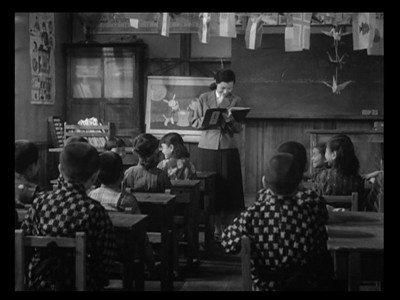
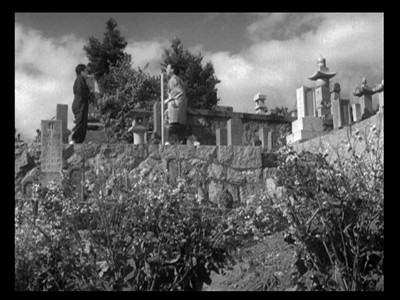
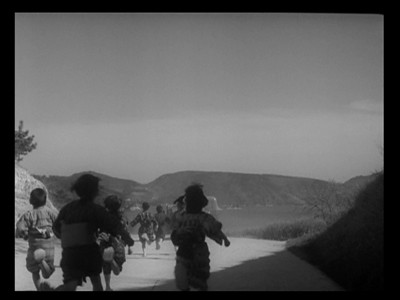
The focal character in Twenty-Four Eyes is Hisako Oishi, played with a mannered grace and honest tenderness by Hideko Takamine (When a Woman Ascends the Stairs). In 1928, Miss Oishi is sent to a poor seaside village to test out her newly minted teaching license on the first grade class. Seen as a "modern girl" because of her western-style clothes and because she rides a bicycle to work, Hisako is mistrusted by the adults of the town but quickly earns the love and admiration of her twelve students. In their eyes, the twenty-four alluded to in the title, she sees the sparkle of a future full of possibilities, and in her, they see someone who cares whether or not they achieve them. Her last name actually translates as "Big Stone," but because she is short in stature, the kids nickname her "Miss Pebble," unwittingly creating their own Zen koan. In the smallest pebble is the greatest of power.

Twenty-Four Eyes spans nearly twenty years, following the ups and downs of the relationship between Hisako Oishi and her many students. A prank the kids pull on her causes her to tear a tendon and cut her inaugural year short, but the class catches up with her again in sixth grade when they find her at the central school in the next town over. From there, she watches them all graduate into different lifestyles, some going on to high school, some working for their families, and others marching off to war. For her own part, Hisako gets married, has her own children, and lives through WWII and personal loss, only to come full circle and instructing the sons and daughters of her original twelve in the little schoolhouse where it all began.


With a running time of just over two-and-a-half hours, Kinoshita manages to deliver a lot of story without ever getting caught up in overly lengthy tangents. It might have been tempting to follow the little girl whose family goes bankrupt and has to move away, or to see any of the male students lost on the field of battle, but Kinoshita has a keen sense for how people flow in and out of our lives. He sticks with Hisako the entire time, rather than let any of the more romantic characters take him away from her story. In fact, this may be how he avoids falling prey to crass emotional ploys. Seeing a 12-year-old girl reduced to begging in the streets or a big death scene as Allied shells rip up the terrain all around the dying would have forced a sense of loss on us; instead, it's the not knowing that hurts, the drifting away of these characters that we've invested our time in alongside Hisako.

Twenty-Four Eyes was a popular film in Japan when it was released, and it's still considered a national treasure to this day. I imagine for the Japanese it served a similar purpose to what William Wyler's The Best Years of Our Lives did for the American psyche when we were preparing to deal with the end of the war. Kinoshita tackles multiple social issues within his narrative, crafting unadorned portrayals of poverty and the frustrated aspirations of his young stars. (If there was ever a better ensemble of child actors, I'd like to see it.) His is a soft approach, borrowing much from Ozu, and the writer/director gingerly shows his audience how closing off opportunities for the nation's young people was analogous to the fractured idealism in post-War Japan. The loss of innocence for the few stood in for the loss of innocence for the many.


Just as it would have been easy to become overwrought when detailing the personal tragedies and triumphs of Hisako and her students, so too could Kinoshita have gone astray my being more heavy handed in his anti-war message. In the years between Hisako's first class and the advent of WWII, Japan went through the Great Depression and had a continuing conflict with China. The rise of militarism offered young men a chance to have a career, gathering such steam that it practically created a need for a greater conflict. Rather benign expressions of peace cause trouble for Hisako more than once, nearly getting her branded a "Red," and without putting too fine a point on it, Twenty-Four Eyes indicts the prevailing attitudes that would allow such a bloodthirsty and paranoid way of living to take hold. Patriotism is often the banner under which a nation rends its own flesh from its bones.

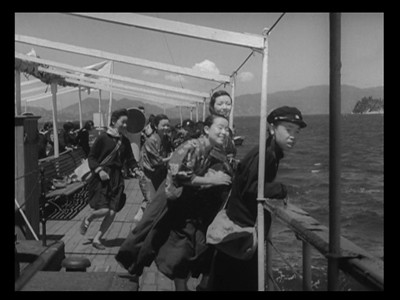
At the same time, Kinoshita, like his soft-spoken protagonist, is a humanist, and he's not going to point a finger without also holding out a hand in an offering of hope. One need only look at the great care with which he photographs the mountains and the seashore of the fishing village to see how much the director loves his country. By having Hisako return to the rundown schoolhouse and start again, to have her inspire a new generation the way she inspired its parents, is to say that life can go on, that the Japanese people could get back on the proper path, and that the future rested right where it always did--in the dreams of the young.


For a full rundown on the special features, read the full article at DVD Talk.

Sunday, August 10, 2008

LARISA SHEPITKO: THE ASCENT - ECLIPSE SERIES 11


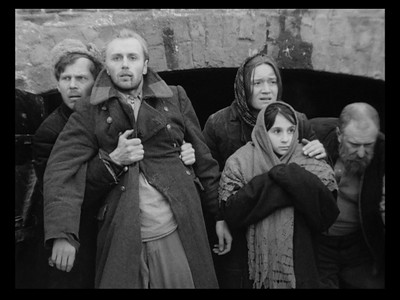
Larisa Shepitko's fourth and final film, 1977's The Ascent (Voskhozhdeniye), is a bleak trek across the frozen Byelorussian landscape during WWII. Set in the small Eastern European country just north of the Ukraine, it details the ravages its people suffered under the German invasion and their perseverance in the face of crisis and tragedy.

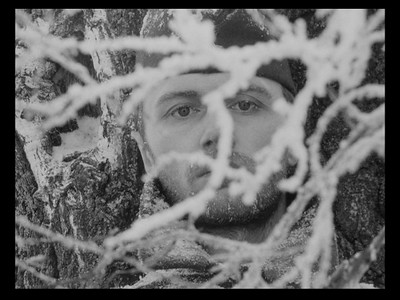
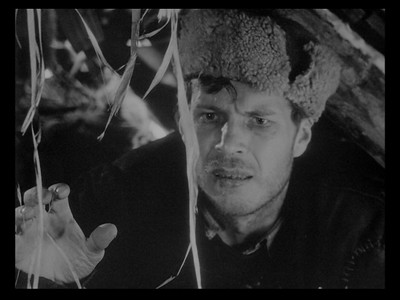
Two young soldiers break from their squad to find food for the civilians they are escorting to the next safe encampment. Rybak (Vladimir Gostyukhin) is a grizzled trooper who speaks like a veteran, whereas his companion, Sotnikov (Boris Plotnikov), is fresh-faced, fair-haired, and seemingly out of his depth. As they hike through the snowy wilderness, they encounter collaborators, enemy gunmen, and innocent bystanders, and each of these meetings will eventually have their consequences. Sotnikov gets shot in the leg, and the search for shelter in which to thaw out and recuperate pushes them farther from their goal and gets them deeper into trouble. They are eventually captured, along with Demchika (Lyudmila Polyakova), the mother of three whose shack they tried to hide in. Soon, they find themselves in a Sartrean prison alongside the old man (Sergei Yakovlev) they met two nights prior, a supposed collaborator whose life they spared, as well as a young Jewish girl, Basya (Victoria Goldentul), who has refused to name the people who had been hiding her.


Trapped in this dank cellar, with Sotnikov having been tortured and barely hanging on, all five prisoners begin to question how they ended up there and what it would take to survive. Each is faced with a choice, and as secrets are revealed, it's discovered that some have already made just as crucial choices before arriving here. Both the old man and the girl let out information that could hurt them, and Rybak, who has proven to have much less fortitude than his stoic companion has displayed or his own earlier boasts would have suggested, has even had an offer to save his skin by joining the other side. The local commissar, Portnov (Anatoli Solonitsyn), is looking to earn points with his new German bosses, turning his back on the people who knew him. Sotnikov was a classmate of his, and Basya had him as a choirmaster. There is even a suggestion that they could save themselves by exposing his true identity, and that is why he is so hungry to attain Sotnikov's real name.

Yet, to give up his real name would be to give up who he really is, something Sotnikov would never do. Shepitko and co-writer Yuri Klepikov, adapting a novel by Vasili Bykov, are clear on what it would mean to put your own self-interest ahead of the good of others. No life touched by Sotnikov or Rybak, no matter how innocent, remains unscathed. (Even sparing the old man ultimately earns him condemnation.) One stays more true to who one is by sticking to one's principles, and as Rybak lets go of his integrity, he becomes less of a man, ironically less capable of even being able to save himself. He has fantasies of running for it, of risking being gunned down, and he can't make himself do it, even after he has promised Sotnikov that he will only become a collaborator in order to escape and take the country back. Even if a peasant woman hadn't called Rybak a "Judas," his positioning in relation to the near angelic Sotnikov would be clear. Like the Biblical traitor, Rybak is left to question the price he received and whether it's worth what he gave up for it; unlike the Judas of old, however, Shepitko won't let him escape his true punishment easily.


Given this Biblical allusion, The Ascent could be seen as a rather subversive film. I am always amazed how Russian filmmakers were able to slide their messages past the Communist censors. On one level, The Ascent affirms the struggle of the proletariat against a corrupt world, but like Eisenstein's historical epics, what might appear to be pro-Soviet rhetoric could also be read as a subtle indictment of the same. Replace the Nazis with Stalinist agents, and the message against collaboration with one's enemy is not nearly as "Red" as the first blush would suggest.

The struggle of the two men to survive and the journey they undertake also reminds me of the work of Andrzej Wajda. Like Wajda, Larisa Shepitko is interested in how these extreme situations of war affect the individual. Just like in Wings, her camera is constantly searching for the humanity in her characters, regardless of how vile they may be. Even Portnov gets a couple of her many lingering close-ups, silently contemplating his actions, framed only by his conscience. The characters are obviously more important to her than the action of a typical war picture. The one full-on fight is shown at the beginning of the movie, obscured by the opening credits, whereas there is nothing to get in the way in the final scenes, as each of the condemned gets one last look into the lens. Shepitko shows them as standing strong, neither breaking down nor even flinching. That fate is saved for the pathetic Rybak, whose final cries of anguish end the film, sounding as sad and useless as everything else he has done up until that point.

The Ascent became an international sensation when it was released, winning the Golden Bear at the 1977 Berlin Film Festival. Sadly, it was to be Larisa Shepitko's last completed project. She died in 1979 in a car crash on the way to the set for what was to be her next movie. Though it wasn't intended to be her final cinematic statement, The Ascent stands tall as such. The reverberations you will feel as the picture closes won't fade anytime soon, a testament to the incisive eye of a gifted filmmaker and her own testament to the capacity of the individual to persevere.


Saturday, August 9, 2008

LARISA SHEPITKO: WINGS - ECLIPSE SERIES 11


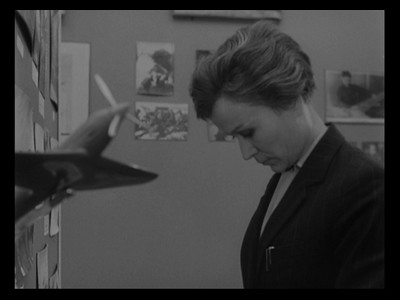
There is a scene near the end of Larisa Shepitko's first professional film, Krylya, a.k.a. Wings, where her subject, Nadezhda Petrukhina (Maya Bulgakova), is waiting to meet with her friend in the museum where he works as a director. She happens to be sitting by an exhibit celebrating Russian pilots from WWII, including the Women's Air Corps, of which she was a member. The tour guide, not realizing the actual woman is in the room, points out a photo of Nadya to a group of children, and a little girl asks whether or not she died in the war. Though this is a question whose answer Nadya knows better than anyone, it gives her pause. Looking at the larger picture of who she is now, maybe she didn't survive the war after all.

Wings is a quiet film, shot by Shepitko and cinematographer Igor Slabnevich with a keenly observant eye. Released in 1966, it's a movie of profound beauty, moving effortlessly from cramped, rundown interiors to wide open public spaces and somehow making its protagonist look small in either of them. In its first half hour, Wings seems to be about nothing, more a string of non-events than a plot-driven happening. Then, as these events gather in number, Shepitko reveals that her movie, co-written by Valentin Yezhov (Siberiade) and Natalya Ryazantseva (The Scarlet Flower), is a portrait of loss and alienation. If it's aimless, it's because its protagonist doesn't know what to do with herself, she is not living the life she imagined she would live.


Following an injury, Nadya's decorated service as a pilot ended, as did her romance to another pilot, Mitya (Leonid Dyachkov), who did not make it out of battle. Two decades later, Nadya now lives an ordinary life as the headmistress of a high school. It's not a satisfying occupation for her. She is unable to get through to her students, who have a different view of duty and obedience than she did at their age. Likewise, she is estranged from her own daughter, Tanya (Zhanna Bolotova), whose point of view is so far removed from her mother's, the young woman actively avoids her. It's not a generation gap that separates them so much as an intraversable canyon.

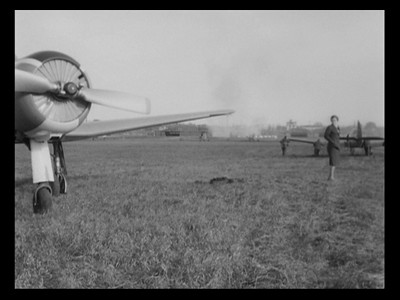
Not that Nadya is an easy person to get close to even without the age difference. She is at once exacting, insisting that her standards be met, and distracted, her mind always elsewhere, often in the skies, remembering once again what it's like to fly. She regularly visits the air field and her old friends, trying to get some kind of contact buzz from their escapades above the clouds. Nadya's dogmatic views about duty are somewhat ironic, as she is always in motion, abandoning tasks before they are finished and moving on to the next thing, or quite often, nothing at all, just moving on. This actually gives Wings a sense of momentum. Shepitko's camera is rarely settled in place. Even if Nadya isn't moving, the director is cutting to various details, dialing in closer to see a nervous twitch or how she shuffles her feet. As a woman in her 40s, Nadya is expected to be still, but she wants to be free to fly.


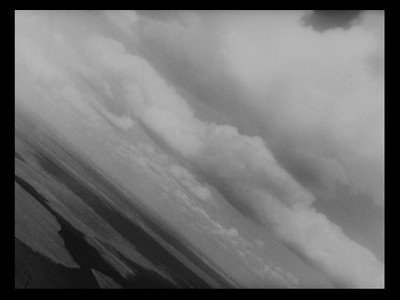
The nostalgic flashbacks and fantasy flights that Nadya takes are given a feeling of otherness by being framed largely as point-of-view shots. Our entire vision of Mitya, for instance, is seen through his lover's eyes. So, too, do the imaginary clouds pass like we are in the pilot's seat ourselves. In these scenes, the camera is still moving, but almost as if it has come unmoored, like it has taken flight, as well. Shepitko also uses freeze frames in the flashbacks to halt them, to remind us that they are frozen in time, before moving on again to the next memory, almost like some frames are missing from the reels of film in Nadya's mind.

Around the time of Nadya's trip to the museum, there is a subtle shift in her character. Just as the "plot" sneaks up on us, so does this transformation. You don't see glaciers move or flowers grow, they just suddenly are different than you last remembered. Maya Bulgakova spends the early part of the film hunched over. Her movements are jerky and anxious. As she begins to realize that she can be happy again, to try to bring the joys of youth back into her present, her movements get more fluid. So, too, does she go from barely speaking to becoming increasingly talkative. In one of the only real conversations she has in the film, she sits with another woman her age, Shura (Rima Nikitina-Markova), and reminisces about being young and how people thought she would be an artist. The two sing and dance in Shura's café, and Nadya actually smiles. Unfortunately, the men staring at them through the window remind her that she is still on the ground.


This is not the escape Nadezhda Petrukhina requires, either; that is saved for the final surprising and elegiac moments of Wings. It's a tremendous release for a movie that has up until then been entirely about restraint. Larisa Shepitko's portrayal of a teacher who has seen better days shares thematic shelf space with Ingmar Bergman's Wild Strawberries and Anthony Asquith's The Browning Version. Her quiet and precise directorial style, though, will remind some of her compatriot Andrei Tarkovsky, who was her classmate at film school. Yet, she has a more self-assured sense of humanity than Tarkovsky, and her point-of-view is decidedly feminine when compared to the Bergman or Asquith pictures. Her heroine is less expressive than the male teachers, less prone to monologue, and given Nadya's pilot background, more inclined toward action--usually a more male trait, to be sure, but given that Nadya didn't really choose her career, hers is again more of a feminine problem in that less options were likely available to her. Her time for reflection is over, and so she instead seizes opportunity, and rather than accept her fate, soars above it. One can't help but see this as Larisa Shepitko's own feminist statement of intent, using a woman of an older generation to shed the shackles of the past and rocket ahead into a brighter future.