Showing posts with label mamet. Show all posts

Sunday, June 24, 2012

VANYA ON 42ND STREET (Blu-Ray) - #599


In 1981, Louis Malle teamed with theatre director André Gregory and actor Wallace Shawn to challenge the common perception of what belonged on a cinema screen. The film My Dinner with André [review] famously showed little more than two men on a night out, talking art, philosophy, and life over a meal. The result was surprisingly riveting. My Dinner with André remains a true cult hit amongst the art-house set.

More than a decade later, the three joined together again, with Malle filming Gregory's off-off-Broadway production of a David Mamet translation of Anton Chekhov's Uncle Vanya. I say off-off-Broadway facetiously: the performance was not on a traditional stage, but within the space of a long disused theatre. In fact, the stage itself was unusable, having long ago given over to decay--a kind of fitting metaphor for Chekhov's drama, which itself has themes of age and obsolescence. In 1994, and even now, theatrical drama was facing its own increasing unimportance in the realm of popular entertainment. Home video, the internet, you name it--it's probably getting more traction than theatre.

Somewhat ironic, then, that cinema could be used as a tool to show how vital live drama really can be. Vanya on 42nd Street is a spartan, yet effective chronicle of one of Gregory's cast rehearsals. Indeed, Malle prepares a little dose of "reality" at the start. The director and his cast meet on the street and enter the space. As the play begins, we see Gregory and a few spectators watching from chairs just a few feet away from the players. At the act break, André calls for everyone to take a break. This is acting! It is theatre! It is not real, it is performance!

Right?


The trick here is that, as Vanya on 42nd Street goes on, Malle breaks the illusion less and less. We stop seeing André Gregory, we stop seeing the tagalongs, and as an audience, we stop being aware of the unconventional space. The performance is purely theatrical, but the filming and editing (by Nancy Baker, who also edited Harlan County USA), simplistic as they may be, are purely cinematic. What we thought we were getting--a detached recording of a live happening--is not what we get at all. Instead, as spectators, we lose ourselves in the lives being portrayed. Just as we would in any movie, and by extension, just as we would in any good theatrical production.

And this Vanya is indeed good. Wallace Shawn plays sad, broken Vanya, while Julianne Moore is Yelena, the woman he loves, and Brooke Smith is Sonya, the niece he adores. The narrative takes place during the visit of Sonya's father (George Gaynes), an out-of-touch professor who benefits from the work Vanya and Sonya do on the estate, which was left to Sonya by her late mother. Yelena is his second wife, and in addition to Vanya, she has attracted the attention of the local doctor (Larry Pine), despite Sonya's own interest in the man. Their existences become entangled, even as they become mired down in the old scholar's selfish demands and reckless plans.


I have never read the original Chekhov, nor have I seen Uncle Vanya on the stage, but I had previously seen two BBC productions made for television, including one just a couple of years before Vanya on 42nd Street. They were a part of The Anton Chekhov Collection, a boxed set I reviewed for DVD Talk. Here is what I had to say about those programs, and the play itself:

Uncle Vanya is one of Chekhov's most famous plays and thus one that is produced the most often out of his library. In this set, we get two full productions on a double-sided disc, a 1970 film on Side A and a 1991 version on Side B. The play itself is an update of The Wood Demon, and that early effort has matured with Chekhov's skills. This remake is more sophisticated, with Chekhov trimming out a few characters and dropping some of the more strident, overwrought politics. The men in the play now feel the weariness of age, and as such, they no longer can subscribe to unbendable beliefs. They have felt the sting of failure, and they are aware of their own history. Alcohol also plays a more important role in their misery, much as it does in Platonov. 

The Vanya character now takes the place of Uncle George, and he is a middle-aged man with nothing to call his own, no mark of distinction, resentful of his dead sister's husband, in love with the old man's new wife. Vanya in the 1970 version is played with inebriated bitterness by Freddie Jones. It's a stagey performance, with the actor bellowing and gesticulating wildly at times, and at others dropping to an overtly poetic whisper. It's hard to tell if he's intentionally pretentious, playing Vanya as a sort of soulless poser. Jones certainly is no competition for Anthony Hopkins, who plays his friend, the doctor Astrov, the new version of the Wood Demon. He's still an environmentalist, as well as a  vegetarian, but he is now a drunk and far more aware of his own outsider status and not as convinced that he can change the minds of others. His cynicism has made him a realist. Hopkins shows greater restraint than Jones, his sadness more soulful, wearing it like a heavy shirt. There is a dichotomy created between the two, a gulf of real feeling that Jones ends up traversing due to his character's more ignominious end, his drama queen status made all the more tragic by his inability to do anything to stop his own suffering. 

The 1991 staging (for a series called "Performance"), interestingly enough, brings back Ian Holm as Astrov. The more mature actor taking on the more mature version of the role he played on DVD 2. The whole cast is slightly more "all-star," with Rebecca Pidgeon (known from countless David Mamet roles) playing the niece Sonya and Mary Elizabeth Mastrontonio (The Abyss) as her stepmother, Yelena. David Warner, perhaps best known as Billy Zane's ruthless right-hand man in Titanic, takes on Vanya. 

The shooting style for this much later production is essentially the same as on the others, though the picture quality is noticeably better. The biggest difference is that the histrionics have been toned down in this Vanya and the performances grounded in a more weary reality. Holm and Hopkins take similar approaches, though Holm plays the doctor as far less arrogant. Warner's Vanya is a vast improvement, much less soppy, more aware of his bitterness and all that he feels he has lost. He has as much anger as he does self-pity.


The latter production is much more in keeping with the tone of Malle and Gregory's version, though the sparseness of their set piece also lends an even greater sparseness to the acting. Wallace Shawn is remarkably reserved as Vanya, saving all his energy for one powerful outburst when it becomes clear that his world is close to tumbling down. Larry Pine also advances the doctor to a point where he is, essentially, at the end of his rope. For all the talk of Vanya's more drastic impulses, the doctor is the one who seems to really be taking his last shot at happiness and meaning. Vanya, in the end, will carry on; the doctor leaves to we know not where.

I was also quite impressed with the performances of the female leads. Brooke Smith is heartbreaking as the self-aware "plain" girl who can't inspire the men in her life to notice her as more than a reliable worker. For the role of Yelena, Julianne Moore shows the new wife as mysterious, not entirely remarkable, but alluring--embodying all that the doctor says about her in his final, bold attempt to steal her away. She's asked for none of this, and wishes no ill will on her stepdaughter. The weariness of the life forced upon her is palpable.


Vanya on 42nd Street comes to a quiet rest. There is no curtain, and no curtain call. Instead, the credits come on and the actors return to frame, as does André Gregory. Really, Louis Malle should have joined them. He is as much a part of this grand experiment as anyone--but then, that could be the one fundamental difference with cinema. Discounting our current information/hype-driven culture, the ones behind the camera never really take a bow. The lights merely come on, and we go home, far more disconnected than we realized, far less in touch than we would be if this were all occurring live.

It's also fitting that Vanya on 42nd Street was Louis Malle's final film. Though there is much left to be resolved for its cast of characters, the lack of resolution is its one finality. This is how life concludes: midway through whatever personal toil we have accepted as our lot (or, as it were, had foisted upon us). Whether it was intended to be his last film or not (he died a year later), it's the perfect punctuation for a mercurial career spent changing the boundaries of cinema, of experimenting with and expanding on the language of filmic storytelling. Uncle Vanya is a text full of meaning, and Vanya on 42nd Street is a potent and meaningful rendering of the same.


Thursday, September 3, 2009

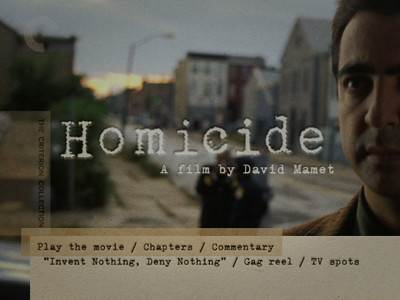
HOMICIDE - #486


I think that one thing all David Mamet heroes have in common is that they always get more than they bargained for. And just when life piles it on, that's when they find the people they thought they could count on aren't really the exceptional individuals they always gave them credit for. It's the Mamet social contract: when you decide to stand up for something, most everyone else will stand against you.

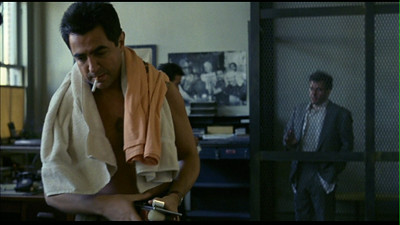
1991's Homicide was Mamet's third feature as a writer/director, following his acclaimed con-man debut, House of Games, and the lighter departure, Things Change. His lead swindler from Games, Joe Mantegna, returns this time as Bobby Gold, a Chicago police detective known for his gift of gab. He's the guy they call in for negotiations, the one who can talk any skel into giving up information. As an example of these skills, over the course of Homicide, he convinces a brother-in-law and a mother to give up their family member and a dog to give up his meal. Bobby has a way of talking to you that makes even the most nonsensical decision make sense.
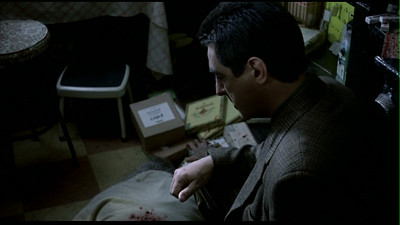
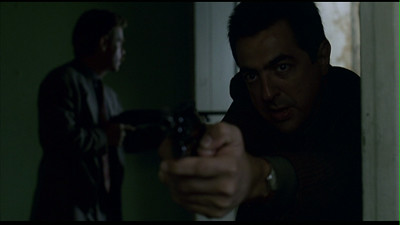
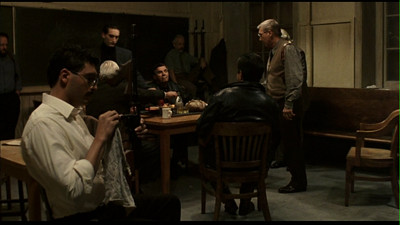
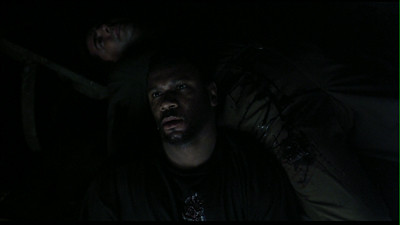
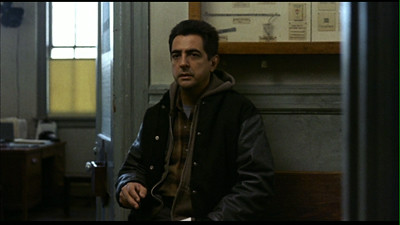
Homicide, then, could be described as Bobby Gold giving himself a long dose of his own medicine. Though Gold wants to be working the hot case of the moment, tracking Randolph (Ving Rhames), a cop killer who slipped through the FBI's fingers, helping a couple of rookies in over their heads at a crime scene sticks him with a case of an elderly Jewish shopkeeper shot in the back at her ghetto bodega. Though Bobby at first sees this as a routine case he can mostly ignore--his partner, Tim Sullivan (William H. Macy), advises that he just look busy long enough for it to go away--the further he gets into it, the more he finds. And the more he talks himself into believing and doing.

The deceased is the mother of Dr. Klein (J.S. Block), an influential man amongst Chicago's Jewish leaders. Though his mother continued to run the family store, it wasn't necessary, as her years of labor paid off and her son is now rich, and with those riches comes the ability for Klein to make his mother's shooting a top police priority. The good doctor and his daughter (Rebecca Pidgeon) insist that the attack wasn't about money--the predominantly black neighborhood harbors an urban legend that the old woman had a treasure hidden in her basement--but about her faith and her ethnic background. The victim had been an activist and part of the efforts to establish Israel as an independent state. Even if her murder wasn't directly connected to that, her family believes it was still motivated by an old hate.


Mamet sets up a complicated racial dynamic in Homicide. Chicago's most wanted, Randolph, is a black man who had the white FBI bust through his door, guns blazing, stirring up tensions in the divided city. Though the cops present themselves as a united front, a single race united by their badge--or "star," as they call it--they haven't entirely melted into one singular race. Sully's Irishness is mentioned, as is Bobby's Jewish heritage. In a moment of anger, Bobby uses the N-word. Only homophobic slurs cross all lines--no one wants to be called one, but the usage is unrestricted.


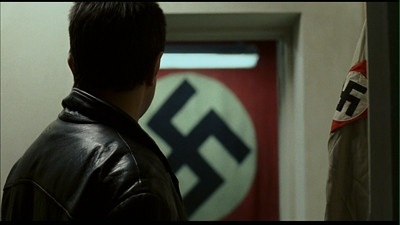
Still, it's important that we know that Bobby considers himself a cop first and foremost. Not a Jew, nor a Jewish cop, but a cop. He sees himself in the middle, as all police officers do, and that is a suitable stance until people start demanding he take sides. Randolph's mother (Mary Jefferson) is aware that it's a white police force coming after her child, regardless of the different skin tones in the room. She appeals to Bobby's humanity to form some kind of allegiance, but it's already too late. The Kleins have already disparaged his loyalty as a Jew, repeatedly questioning his sense of identity. It gets under his skin, particularly as he starts to discover that the conspiracy the Kleins believe took their mother has some foundation in truth. World War II may have ended more than four decades prior, but a shadow war has continued all these years, conducted in back rooms and hiding behind the veil of "crazy talk." Bobby stumbles into a cabal of Jewish leaders and is even shown a secret Nazi hideout. The challenge repeatedly posed to him: what will you do to protect your people? When will you stop being a cop, stop being neutral, and be a Jew?


Smartly, Mamet's script maneuvers around the political and ideological issues in favor of the personal and emotional ones. There is a sticky morass that the story could be bogged down in. The dead woman may have committed criminal acts in the name of revolution, and there is pressure for Bobby to do the same. It's not really about the larger right or wrong, though, but about how Bobby views the world and his place in it. When it all gets broken down, he isn't sure he's made a fair trade. Being a cop instead of being a Jew seems hollow when Bobby considers the prejudice he has had to overcome. He is always having to prove himself; as Sullivan points out, he's always the first guy through the door to greet danger.

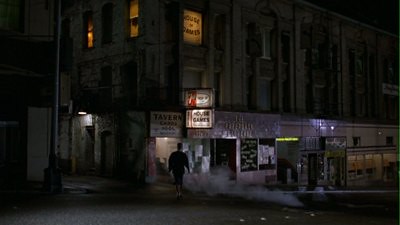
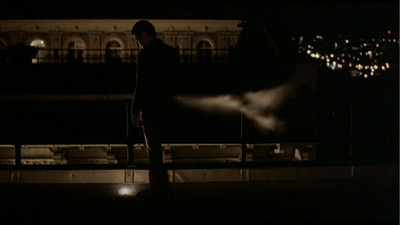
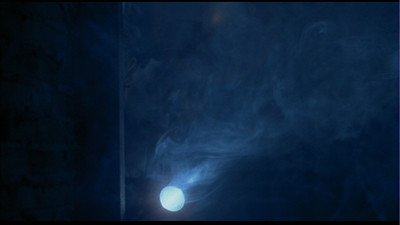
Mamet emphasizes the divides between the many sides in ways that are both class-related and emotionally salient. The most obvious representation of the differences between people is where they live. The ghetto where the old woman was killed is a crumbling ruin while the penthouse where her son lives is immaculate and austere. Bobby repeatedly asks why she kept working "down there," so there is even an above and below. Cinematographer Roger Deakins (a regular collaborator of the Coen Bros.) further illustrates these differences using color and lighting. The ghetto is mostly dark and cold, with lots of grays and blues. Look at that opening scene where the FBI is after Randolph: he practically turns the night air into ocean waters, including the swirling sea foam represented in the smoke that hangs in the air. On the flip, the Jewish homes are white and gold, so warm they practically glow. The racists are associated with red, as seen in both their propaganda flyers and the borders of their swastika flags. Once again, in the middle, the police station is neutral, with no obvious color scheme, nothing to call attention to itself.


Language is also important, as it is in any David Mamet production. The police have a shared syntax, swapping jargon, completing each other's thoughts, and using abstraction to separate themselves from the world they need to serve and protect. When out in the real world, they adopt a patronizing tone. This is met with a much more laid-back street vibe when in Randolph's neighborhood, but the Kleins and their friends answer in an even more elevated tone than the police. They are actually more patronizing, and they speak to Bobby as if he were a criminal subservient to their authority. It's no wonder that he can't help but be suspicious of their motives or even initially get caught suggesting it's their own behavior that gets the Jews in trouble. Homicide would be a lot less complicated if they made it easier for Bobby to get on board.


Fans of Mamet's work love listening to his dialogue. He has a specific rhythm to his writing that plays out best when two characters are having a back and forth. It's often repetitious, with what one person says being picked up by another and parroted back. In a literal sense, a verbal exchange is occurring. Beyond the construction of his sentences, Mamet also encourages a stilted, dispassionate delivery. (Matching that, the camerawork is fairly straightforward, favoring steady, leveled shots over any visual trickery.) In Homicide, this even-toned way of speaking acts as an equalizer. Everyone is who they are, they are comfortable in their position, no need to get heated about it. The characters that do yell--most notably, Mr. Patterson (Louis Brown), the African American bureaucrat who gets on Bobby's case at the start of the picture--act improperly when they raise their voices. It's an affront to shout and disturb the tranquility of the conversation. It's as if language is the one thing that keeps us civilized. Joe Mantegna is a master of the Mamet style. His voice has a soothing effect when he keeps it low, and he can make it menacing by merely changing the tone, no need to alter the pace or the volume (oh, Fat Tony, how I love you). Next to him, William H. Macy makes for a good foil. There is a twitchy eagerness to his performance that makes it seem his manner of speaking is a genial put-on that he can't wait to burst out of--and at various times, he does.


All of these themes and ideas are worked into what, on its surface, is an average police procedural. Thus, we also get some standard genre scenes with the cops pursuing suspects, etc. The Randolph case goes by the book, whereas the Klein case is less ordered and downright strange. When Bobby goes off on his own, Homicide shifts into a kind of dream world. It's secluded, antiquated, looking the same but not quite. As he would in a dream, Bobby buys into the illusion, even when his instincts suggest maybe he shouldn't. He's trading one star for another, the imperfect pentagram of his badge for the more pliable hexagram of the Star of David. Yet, for his character arc, this is where it all goes wrong. Once Bobby stops being a cop first and foremost, his police work takes a nosedive--a change foreshadowed by the symbol of the broken holster and the gun Bobby can never seem to hang on to. At the same time, the new identity he has embraced isn't wholly him, nor did the people who conned him into it ever expect it to be. Once again, a Mamet lead has had to learn the hard way that oldest of dramatic truisms: to thine own self be true.


This is why at the end of Homicide Bobby finds himself totally alone. He is bruised, battered, and unable to perform the duties of his job. He has become extraneous. I am not sure how I feel about the film's final scene. It doesn't have the gut-punch effect Mamet was hoping for, the attempt at an ironic "What was it all for?" seeming to be tacked on for no real purpose. It's a film noir convention, the ending that renders the rest of it pointless, the hero getting gutshot or the money blowing away in the rain. Granted, there were more obvious ways to go, and Mamet teases us by making us think the prisoner who has throughout Homicide been promising to explain the nature of true evil Bobby is finally going to give up the goods. This could have led to some very hammy writing, and really, saying nothing is much stronger and carries its own suggestions: evil is what casts us out, what demands our silence, what erases the lifeline of language. That would have been enough, the image of Bobby sitting alone while life continues without him would have sufficed. The extra reveal comes off as trying


For a full rundown on the special features, read the full article at DVD Talk.

Saturday, May 31, 2008

SIDELINE: MORE REVIEWS FOR 5/08

Given that I write more reviews than what you see here, below is a list of non-Criterion films I covered in the past month that may be of interest to Criterion fans.

IN THEATRES...

* Priceless, a romantic comedy starring Audrey Tautou that has a plot worthy of Preston Sturges, but none of the wit.

* Redbelt, the mildly disappointing mixed martial arts movie from David Mamet.

ON DVD...

* La Chinoise, Jean-Luc Godard agitprop about student protesters and their obsession with Mao.

* The Exquisite Short Films of Kihachiro Kawamoto, seven gorgeous stop-motions cartoons from an innovative Japanese director.

* Le Gai Savoir, Jean-Luc Godard's redefining of 1969 cinema as he knew it.

* Independents: A Guide for the Creative Spirit, an indie documentary about indie comic book creators. Craig Thompson is soooooo dreamy!

* Lost in Beijing, Li Yu's disappointing follow-up to Dam Street, about a love quartet in modern-day China.

* Marvin Gaye - What's Going On/Greatest Hits Live '76: Collectors' Edition, a double-pack bringing together a documentary about the soul singer and one of his mid-period concerts.

* La Roue, a staggering early French silent picture from Abel Gance, telling the literary-tinged tale of a trainyard family.

Friday, January 18, 2008

HOUSE OF GAMES - #399


When slick con man Mike (Joe Mantegna) first meets haughty therapist Dr. Margaret Ford (Lindsay Crouse), he explains to her about how people have "tells." It's the little things a person does that gives away when he or she is lying. One of the men Mike is playing cards with (Ricky Jay), for instance, fiddles with his ring when he is bluffing in the game. Learn someone's tell, and you have the ability to predict what they are going to do next.

This is the crucial moment of David Mamet's 1987 debut, House of Games, when Margaret, whose specialty is studying compulsions and obsessions, decides to cross a line and observe criminal wildlife in its natural habitat. It's also the closest House of Games gets to having a tell of its own. Because if there is one thing that this snappy, dramatic crime flick doesn't do, it's telegraph to the viewer where it's going to go next. Mamet's ability to keep his cards to himself is what sets his movie above the average grifter picture.

We've had a lot of pretty okay con men movies in recent years, things like Matchstick Men and Confidence. While these films were decent enough the first time around, they fail the test of time because they are too hung up on their own need to try to trick the audience into falling for their narrative schemes. Watching them, you know that double-crosses are coming, and when it comes down to it, that's all those movies have. This means the watcher spends the entirety of the picture thinking ahead, guessing who is ultimately screwing whom. Once the magician has explained how he did it, his act ceases to be interesting.

Not so in House of Games. Mamet understands that in order to instigate a true cinematic sleight of hand, he has to look his audience dead in the eyes and give them something to watch. In House of Games, it's the tango Mike pulls Margaret into. The seduction of the criminal underworld is the true seduction of the movie, and we follow the good doctor into the back rooms and peek behind the curtain with her. There may be twists aplenty ahead of us, but we're too busy enjoying the polished dialogue and the charismatic performance of Joe Mantegna to ever glance at the map. This car is going straight ahead, and we'll take the curves as they come.

As a first time director, Mamet shows an assured hand. The script is based on a story he wrote with Jonathan Katz, best known for his Dr. Katz TV show. Presumably, though not a therapist himself, Katz provided a lot of the psychology and Mamet produced the marked cards. Though he may be able to guard the secrets of his narrative, the tell-tale signs of the Mamet style are already in evidence even as far back as 1987. It's kind of funny, because for other first-time directors, the arch tone and the stiff-necked camera movements would suggest a lack of confidence, but for Mamet they are the first signs of some of his best assets.

House of Games - Criterion Edition is a DVD I could watch over and over, even after knowing how Mamet creates his grand illusion. The script doesn't rely on cheap tricks, and his characters aren't straw men propped up to serve a function. Rather, it's an honest to goodness crime story with an underlying psychology that only makes the film get better the more you understand it. As a viewer, I am Mamet's willing patsy, and I'll let him take me for a ride whenever he feels like it.


Originally written August 19, 2007. For technical specs and special features, read the full article at DVD Talk.