Monday, November 12, 2007

OVERLORD - #382

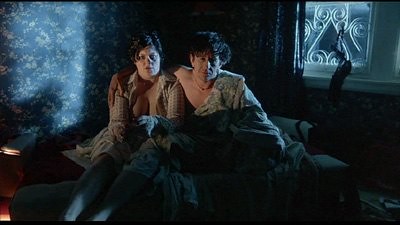
In honor of Veteran's Day, I am reprinting my piece on Stuart Cooper's one-of-a-kind document of WWII, Overlord. Originally published on April 17 of this year, it's one of two reviews I've written that I have the honor of having permanently linked on the movie's page at the Criterion site.


Ever since I saw the clips from Overlord in Alexandra Cassavetes' documentary Z Channel: A Magnificent Obsession, it's been high on my list of films to see if ever I could lay my hands on it. This was no easy task, however. Outside of its airing on that legendary cable channel and a few special screenings, it's never really been available in the United States. So, I played that game we all play in the DVD age: I added it to my wish list and hoped that somewhere a cinema genie would pick up on my desire and grant it.

In the case of Overlord, it's the folks at Criterion who granted me my wish. Working with director Stuart Cooper, they have brought the 1975 World War II picture to DVD, meticulously creating a new high-definition transfer so that those of us seeing this unique film for the first time can see it as it was intended.

Overlord is the story of Private Tom Beddows (Brian Stirner), a sheltered English teen whose life is forever changed the day he leaves for the army--as it was for some many young men during the war. Though there is no way that Tom can know that he will be one of the first on the beach on D-Day (much less know what D-Day is), a sense of doom hangs over him. All through basic training and up to his first assignment out of country, he knows that something is going to happen to him, that's he's going to die. He just doesn't know how.

Actually, he doesn't even know what for most of the movie, at least not enough to say it out loud, not until he's much closer. Instead, he wanders blankly through his service, not really acting unless ordered to by officers or coerced by friends. Only when he meets a girl (Julie Neesam) does he make a decision for himself. He promises to see her again, but as such things go, of course, he never will.

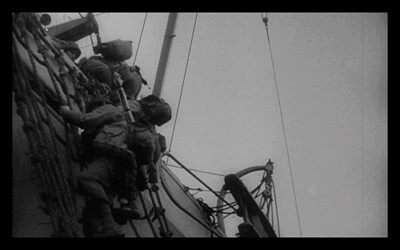
Cooper shows Tom's anxieties through a series of montages, splicing together archival footage with more surreal takes on the average battle scene. That's actually what sets Overlord apart from most other WWII pictures, its extensive use of actual wartime film elements taken from Britain's Imperial War Museum. Working with cinematographer John Alcott (a Kubrick collaborator) and editor Jonathan Gili, Cooper patches the new and the old together in such a way that you can't really tell the difference. By using a black-and-white film stock with a slight grain, they remove any demarcation from past and present, fiction and non-fiction. It's all part of Tom's interior odyssey.

We know that the scenes we see are not ones Tom will be a part of because, in addition to the dream-like touches, some of the battle sequences are ones he couldn't possibly be privy to. For instance, how would he witness a dogfight from inside a cockpit? He's not a pilot. In some cases, we actually see Tom wake from his dreams. The most extensive visions come to him when he's in transit, either riding on a train or a transport jeep. This lends to the feeling that Tom is heading for something. The army has placed him on a slow-boat toward destiny. Any time he is not in motion, he is just biding time.

Once D-Day finally arrives--and Tom arrives at his destination (I never noticed the root of that word before)--it's not a gung-ho rush onto the French shores. It's a quiet event for the soldiers on the troop boats. It's here that we realize that for Tom and his buddies, preparing for battle wasn't a process of building oneself up; rather, it was a process of emptying oneself out. Symbolically, this shows up in Tom's dreams as a scene where the girl he is sweet on strips him down and uses him as a model to demonstrate how to prepare the fallen for burial. In his real-life exploits, we can see the change in the move from a crowded movie theatre to an empty music hall where Tom and another soldier are the only witnesses to a sad performance. A mother forces her daughter to sing a song about love that she's way too young to understand, and the young girl performs with great reluctance. Her fumbling isolation on the stage is no different than Tom's sleepwalking through his service. The saddest thing--or perhaps, for them, a stroke of great luck--is that there is no one to bear witness to their struggle. Even the army accepts that there is nothing left of the boy (boys) who first joined them, instructing the soldiers to throw all of their personal papers on a bonfire before heading into battle.
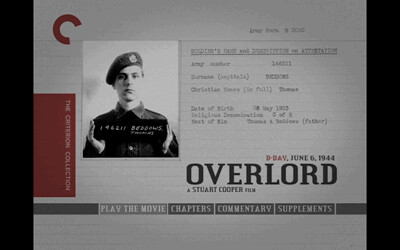


Made during the end stages of the Vietnam War, it's no wonder a thoughtful filmmaker like Cooper would make a brooding film about the effects of war on a young person's mind. Born in New Jersey in 1942, the threat of the draft must have dogged the director through his twenties. Overlord takes great pains not to give the fighting a mythic quality. Really, the archival footage is the best tool for that. The camera could only ever get so close to the skirmish, and Cooper never takes us into the thick of it nor creates any action scenes out of whole cloth (Overlord stops just short of the big conflict). For him, the sacrifice soldiers make is more anonymous. Tom's fate could be the same as the many others in the great waves of boys sent to the frontlines. It doesn't make Tom's willingness to go any less noble. Really, in an existential sense, it's more noble choosing to act even when you know it's futile. To my mind, Cooper is saying far be it from any of us to glorify what happened after the fact, the glory is for the men who were there. Hence, the only warfare he'd commit to celluloid was that which really happened. There is no faking it.

So, be warned, those going into Overlord looking for explosions and rifle fire, this isn't your average D-Day movie. You're probably going to find it a little slow. To be honest, even going in expecting something different, you might find it a little slow, too. But that's just the dream-like state Stuart Cooper is going for, like the image of the runner that keeps recurring, never coming into focus, never seeming to get where he's going. In a way, we have to be like the dreamer, be like Tom, and instead of struggling against it, we have to accept that it only gets easier the more we surrender. When you do, that's when Overlord will crack open for you, revealing its inner secrets, and in a flash, a single gun blast, it will all make sense.
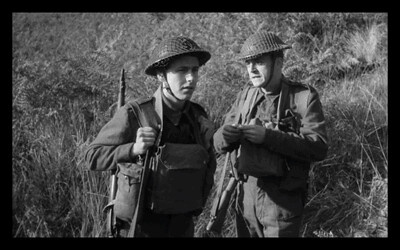


For the full review, including extras and technical specs, read here.

Friday, November 9, 2007

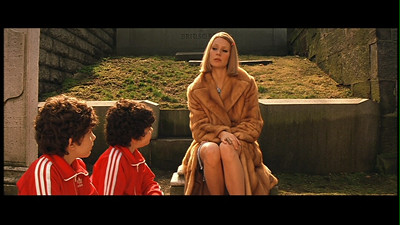
THE ROYAL TENENBAUMS - #157


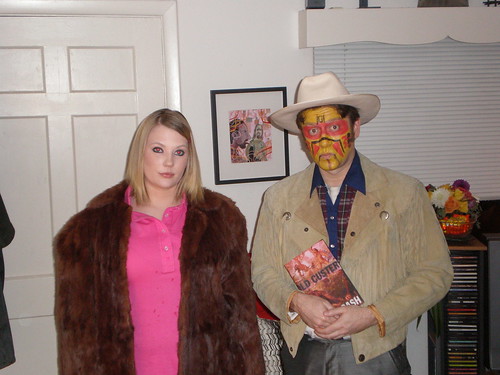
As readers of Confessions of a Pop Fan know, I went out this past Halloween as part of a group inspired by Wes Anderson's The Royal Tenenbaums. And when I say group, I mean pair, but that is a story for a different time.

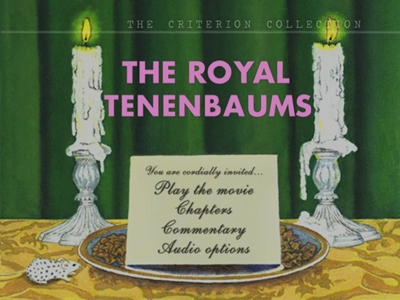
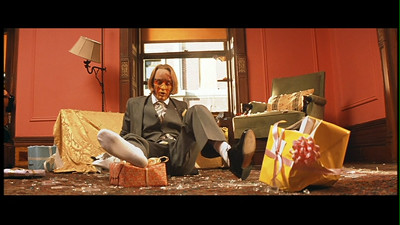
In any case, my regular collaborator Joëlle Jones and I went out and sang karaoke as Margot Tenenbaum and Eli Cash, as played by Gwyneth Paltrow and Owen Wilson in the movie. When I was shopping for my Eli gear, one second-hand store clerk told me that going as Wes Anderson characters was becoming a rather popular thing, but from what I hear they are generally half-assed Teams Zissou, which is kind of easy and not very detail-oriented. It was Joëlle's idea to do the crazy Eli make-up. It was mine to make a copy of Old Custer. I was inspired to do so when I took the time to sit down and revisit my Tenenbaums Criterion DVD. I was looking to see what kind of variety of shirts Eli wore (surprisingly, that was the hardest and most expensive of the accessories to find), and the idea struck me. Joëlle was already going the whole way to make Margot's fake finger, and I needed to at least match her game. To pull it off, I had to take a screen capture of the image from the DVD picture gallery, isolate the cover image, and blow it up. Unfortunately, the Kinko's printer didn't print the image how I had sized it, but refit it to the page--something I did not discover until I got home, thus forcing me to improvise a more Frankensteinish creation.


Wes Anderson films are ones I watch every couple of years. Rushmore (#65) and Tenenbaums were also regular spins when I worked at an indie video store between 2004 and 2006. In that kind of environment, you aren't really afforded the luxury of paying a lot of attention to what is on the TV, so it's best to go with discs of sitcoms or old favorites that don't require your rapt attention. Either of those movies are ones I can check in or out of at any time and feel right at home.

Which is how I think Wes Anderson designs them. Not necessarily on a conscious level, but in his way, he is creating a completely different world for himself, someplace he can go visit and presumably feel comfortable. I don't know what his history is, but looking at how both he and his brother Eric (the illustrator for his movies, who also drew the neat covers on the Criterion DVDs) approach their art, I would assume that either of them had a childhood where their imaginations were either actively encouraged or where they needed some kind of outlet to get away from a harsh family life. I know that the latter is part of the reason I spent so much time in my own head. My parents fought pretty regularly and we often had wide-open backyards where my father kept his horses. It was easy for a little boy to disappear into invented landscapes when there was so much actual room to roam and so much reason to do so.

Hemingway famously said that most writers all write one story over and over, and that story is essentially about their search for a father. It's extreme, to be sure, but it has a grain of truth in it. The first part of the quote is harder to avoid than one might think, and the second should probably have a broader scope than just "father." All stories represent a search for something in general, despite the specifics. Looking at Wes Anderson's early filmography, fathers definitely play a large part in all of the movies. Even in Rushmore when the father is still around, there is something that Max is not receiving from him that he must turn to Bill Murray to find. In The Life Aquatic (#300), you have a character who comes to find the father he has never met only to encounter a man who himself is chasing something intangible, trying to retain a boyhood that has long passed.

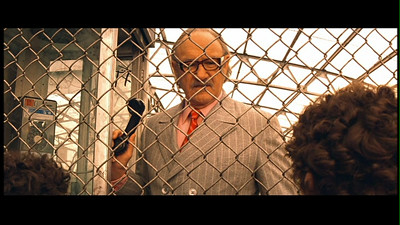
In The Royal Tenenbaums, the Tenenbaum children don't need to find their father, he is right there. As with Steve Zissou in Aquatic, however, Royal Tenenbaum, played with panache by the great Gene Hackman, has been so preoccupied with his own selfish interests, with maintaining his freewheeling immaturity, he hasn't really been right there, he's been absent. (This makes it somewhat ironic when he criticizes Margot's animal pageant for being childish.) One could argue that he needs to find the father within himself to fix his family. His behavior has fractured the unit and his eventual disappearance from the homestead sent the children in their own individual directions. Even as a dysfunctional patriarch, Royal at least gave his family something to rally around. Getting to the depths of what a schmuck their pop was provided a common purpose.


Wes Anderson clearly has a working knowledge of the fiction featuring J.D. Salinger's Glass family. The Glass children are the interlocking characters who populate Salinger's work post-Catcher in the Rye. A family of geniuses, they have all struggled to come to terms with their big brains and the problems their abnormal childhoods have caused. Like the Tenenbaums, most of them peaked early, have been sent wandering in search of some kind of purpose be it spiritual or material, and are gripped in an unbreakable melancholy. They have also been touched by suicide.

With the Glass family, Salinger provides a near perfect model for exploring the transitional anxieties of growing up feeling abnormal. It's a peculiar artistic temperament, coming of age with the feeling that there is something more you should be doing with yourself but yet not understanding how to make that happen as an adult. P.T. Anderson drew on that influence for his quiz kid character in Magnolia--the Glass children competed on T.V. game shows and were trotted out as a clan of freaks in a manner not dissimilar to the book that Etheline Tenenbaum (Anjelica Huston) wrote about her genius progeny. This preoccupation with the Salinger kids is one I have in common with Anderson, and it was something I drew on for the three Scott brothers that are the driving force of my novels and comic books. In fact, when I stop and think about it, there is an eerie symmetry between my three brothers and the three siblings in Anderson's most recent and possibly most mature work, The Darjeeling Limited. The successful older brother who tries to bring the trio back together, the aloof middle child who just can't be bothered, and the youngest, a writer who has been traveling in an attempt to exile himself after a romantic failure. Sound familiar?

It's no coincidence that all three of the Tenenbaum children return to the home they grew up in when Royal re-enters their lives. Only Richie (Luke Wilson) comes back as a direct result of his father's schemes, but the frustration of having such a self-centered old man once again becomes a binding force for all of them. Even though it starts capriciously for Royal, the schemes eventually work because he really does get serious. He learns that to truly be there for his family, he must set aside his own needs and actually be there. It's about listening and doing, not just saying you're sorry. As Holden Caufield might point out, you can't be a phony. Kids know a phony when they see it.


What gives Anderson's film an odd twist is that the search for these connections, the quest for healing and belonging, doesn't end up extending beyond the insulated world he has created; rather, the struggle only affirms the importance of this environment. Look at Eli Cash, who always wished he was a Tenenbaum, who is always being pushed to be let into the family. His perceived outsider status drives him crazy and he seeks solace and acceptance through other means, until he quite literally crashes into the family home and enters by smashing through the window. For better or for worse, at that moment it's proven that he really is part of the family. His fight with Chas (Ben Stiller) is the kind only brothers can have, where the violence settles into something that looks a lot like love.

For Wes Anderson, his films are less about the individual search but more about the creation of the unit. Though the father may be the catalyst who sits at the end of the table, Anderson's affirmation is in the establishment--or as it were, re-establishment--of the family unit. This is why The Royal Tenenbaums may be his most perfect expression of this theme. The house at 111 Archer Avenue is Anderson's own time capsule, the closed circle, the only place where the many can be one. From the closet full of board games to the lovingly drawn portraits, time stops inside those walls. It goes on outside of them, and even is subject to decay, as represented by the always-dented Gypsy Cabs; nevertheless, inside, your failures don't matter, time can't touch you, and while at the start of the film, this also means that the hurt and the anxiety never goes away either, by the end, Royal has fixed that crippling glitch. He heals the wounds and makes the house a home once more. This is what Wes Anderson has asked us in to see. That "invitation to a party" motif is deliberate.

The Darjeeling Limited suggests that Wes Anderson is putting many of his thematic obsessions to rest, serving as a eulogy for his preceding films. Personally, I'm excited to see where he goes next. As it stands, though, if he were to leave us with just the five he's made so far, The Royal Tenenbaums will remain as the perfect center of his work, the beautiful eye of the storm where everything came together with a calm solemnity. Perhaps it's fitting that the cast of his next two scripts were rootless, were beginning to search for happiness beyond their comfort zone. In a way, Anderson has to learn he can't ever return to this home again, even as that is counterproductive to the film's message. As an artist, eventually you have to break free. Just as we can guess that the Tenenbaums achieved the freedom to search and be confident in themselves again through their simultaneous embrace and letting go of the past, so too may their creator be discovering the same sense of abandon.

Let's go, buddy. It's time to start scrappin', yellin', and mixin' it up.


Don't forget to visit James Lucas Jones' gallery of Tenenbaums drawings by comic book artists.

Thursday, November 8, 2007

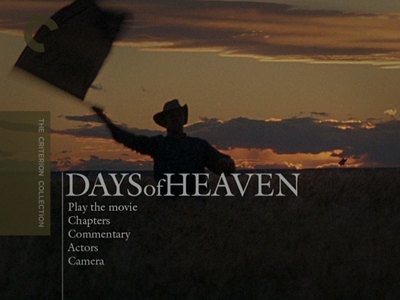
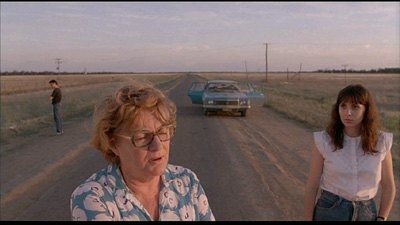
DAYS OF HEAVEN - #409


There are few films as special as Days of Heaven, and that's because there are even fewer directors with the kind of persistence of vision possessed by Terrence Malick. To watch Days of Heaven is to be enveloped in an entirely different world, to lose yourself completely in the sights and the sounds of a dreamlike state, transported back in time or to another dimension altogether. Through Malick's eye for the poetic detail in every nook and cranny of the natural environment he shoots in, we move past the layers of drama that bury other films in the manners of convention and drift into something more natural, something filled to the brim with heartache and desire.

Days of Heaven has been on DVD before. It was released in 2000 (and then re-released with a different cover in 2006) and received particularly high marks for sound and video (DVD Talk's original review). Despite a paucity of extras, it was felt that the film had been treated right. What a difference seven years can make, particularly in the fast-paced field of technology. And what a difference in getting the director and members of his original crew involved in the DVD mastering. The new Days of Heaven - Criterion Collection release is a real eye-opener in terms of how subtle an art film restoration can be.

From a story standpoint, Days of Heaven can actually seem relatively slim. Set in the Depression era, it follows three drifters: Bill (Richard Gere), his sister Linda (Linda Manz), and his girlfriend Abby (Brooke Adams). After Bill gets into hot water in Chicago, they flee to Texas and find seasonal work on a wheat field ready for harvest. As a cover story, they say they are all three siblings, meaning the lonely owner of the field (Sam Shepard) is unaware that the woman he becomes smitten with isn't everything she claims. Overhearing that the farmer has only a year to live and knowing he has no family, Bill persuades Abby to accept his advances so that they all three can inherit the ailing man's fortunes. Life on a rich farm has a certain idyllic allure, but eventually someone is going to get wise to the con, and that will be the young people's undoing.

Ostensibly, Days of Heaven is a potboiler, but writer/director Malick keeps that pot at a cool simmer. Despite the incongruity of the film's rather short 94-minute running length and the lazy pacing of the film, Malick and editor Billy Weber manage to make a lot happen in Days of Heaven. We don't get the standard background stories and collection of quirks that often passes for personality in Hollywood, and yet anyone viewing Days of Heaven will feel he knows all the characters intimately by the end. Their enigmas define them the way personal mysteries define everyone. What they choose to show plays against what is absent, and gesture and action convey more than any soul-bearing soliloquy.


The pictures on the screen are as much of a character in a Terence Malick picture as any of the actual people. A pheasant hiding in the wheat is as important as the wheat being torn down. For Malick, life is about pausing and soaking it all in, marinating your thoughts in the sights that are all around you. In this endeavor, the director is assisted by two amazing cinematographers: Nestor Almendros, who had worked with Rohmer and Truffaut, and the legendary Haskell Wexler, the director of Medium Cool and the lensman on countless motion pictures. Much is made of how this film was shot entirely at magic hour, that brief moment of time when the sun is going down and everything is bathed in a blonde glow. While the film does have that look throughout, as you will learn in the commentary on this disc, the reality of how it is shot is much different. Malick understands how to use natural light to his advantage to achieve the beauty he sees in his head.

Advance word about the Days of Heaven - Criterion Collection edition was that it would look vastly different than the golden movie cinephiles have grown accustomed to. Reportedly, when Malick, Webber, and camera operator John Bailey joined the mastering process, they were adamant that gorgeous was secondary to natural. Their intention in shooting the picture (with Calgary standing in for Texas) was to capture the landscape as it was, to let its organic lushness speak for itself without any aid of moviemaking trickery.

The change in the picture for this DVD is drastic, but not in a shocking way. To be honest, unless you know Days of Heaven backward and forward, you may not even really see how different it is right away. Every frame of this film is still stunning to look at, and your breath will be taken away. It's not until you stop and really look that you see how much prettier the new transfer is by not trying so hard to be pretty. It's like a girl who always wore just a little too much make-up. When she removes some of the war paint, you discover how little was actually needed.

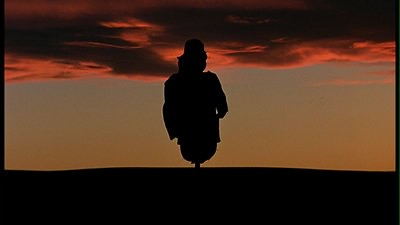
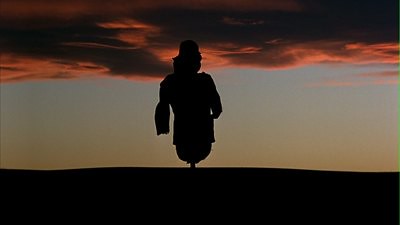
I picked two different moments to compare in my screen captures. The first is the shot of the scarecrow at dusk we see when we first get to the farm. You'll see right away in the first picture that the image is pretty orange.


2000


In the new version below, the orange remains, but it has more variation, giving us a little more detail in the clouds. What is more noticeable is the stronger blues in the surrounding sky.


2007


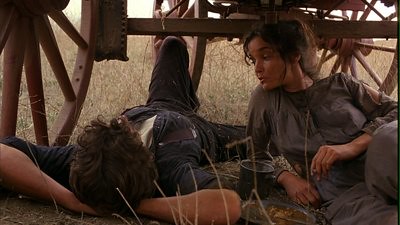
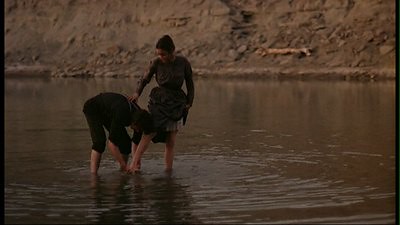
The second scene is a little bit later in the film, with Richard Gere and Brooke Adams out at the river. It's a more open space, more light, closer to daytime than evening.


2000


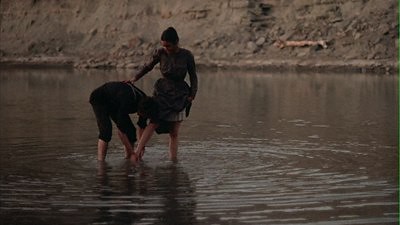
There are more browns and beiges in this scene than bright, bright colors, and I think that makes it interesting to look at. In the above picture, look at the background of the slope and the rocks. It's got detail, but the color is pretty much showing up as a single note, whereas in the image below, there are more variations to the brown and more specific details of the rocks and dirt are now visible.


2007


Look, too, and you will see more contrast between their outfits.

I'm sure there will still be some argument over which version people prefer, with some siding on the older prints of Days of Heaven purely for the sake of nostalgia. (I understand this. I actually am partial to the old cut of Touch of Evil I saw a million times before its restoration several years ago.) Yet, there is no denying the quality of the overhaul Criterion has done here and their commitment to working with the people who actually made the movie to honor their intentions above all others.

Originally written October 23, 2007. For technical specs and special features, read the full article at DVD Talk.

Wednesday, November 7, 2007

BRIEF ENCOUNTER - #76


I make no secret of my pop culture obsession. I am like some kind of entertainment turkey baster, sucking in all the artistic juices, all the spices and the garnish I require, and then spraying it on whatever it is I have cooking. My books are full of references, a doffing of the cap to those who came before me, my influences worn on my dust jackets.

Usually, these are the product of happenstance. I don't go out looking for something to fit into a certain space so much as the reference just comes to me and I slot it in. Imagine my head as a kind of lotto machine, with all of these plastic balls being tossed around on the hot air I call my thought processes. On each ball is inscribed a particular pop culture nugget. As I'm working, I tug on an ear and one of the balls drops down, travels some metaphorical chute, and emerges on my computer screen. "The girl Julia meets is wearing a Garbage T-shirt," I type, realizing that this is the right shirt band for her. Girl power without denying the insecurities. Hey, baby, can you bleed like me.

There are times, though, of absolute serendipity. I won't be looking for a touchpoint, I won't even know I need it, and yet it will come strolling by nonetheless. Such is the case of the intersection between David Lean's 1946 weeper Brief Encounter and the fourth issue of the comic book I write, Love the Way You Love.

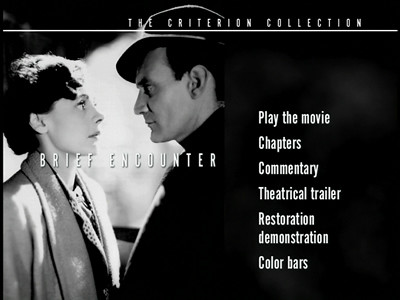
I had owned the DVD for Brief Encounter for at least four years. It was one of those amazing finds that collectors always love. I picked it up in a used bin at a now closed Portland record store, paying a measly amount. $8, I think. (Maybe $12. Those are the two numbers that come to mind.) That's an amazing deal, and there was no hesitation on my part, I snatched it up. Once I was home, I watched it almost immediately. Used discs always get priority in case there is an imperceptible-from-the-outside defect lurking in its second-hand nether regions.

In all honesty, the film didn't blow me away. I think part of it was that I was watching it less to be watching it and more to be checking it out, and so I probably tried to squeeze it into my schedule at an inappropriate time. Also, I don't think Brief Encounter is one of those films that does hit you right away. It's certainly not a mind-blower. When it ends, you're not going to turn to the cat, eyes wide with disbelief, and ask, "What the hell just happened to me?"

Rather, Brief Encounter is better as it ages. You need to take some time with it and let it settle. Its aftertaste is a big selling point. I know that as time passed, my memories of it grew increasingly fond.


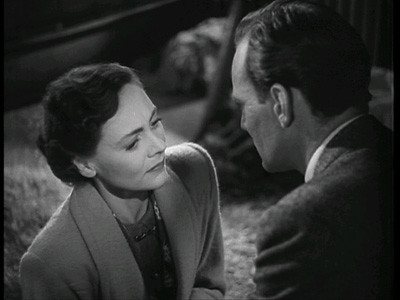
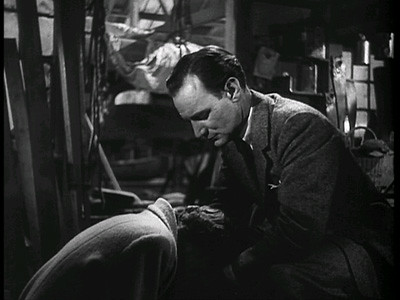
David Lean, better known for epics like The Bridge Over the River Kwai and Lawrence of Arabia, adapted this intimate portrait of two lovers from a play by Noël Coward. Originally called Still Life when on the stage (and predicting some of the housewife longing in the Suede song of the same name), the play moved to the screen under the pens of Lean, Coward, and Anthony Havelock-Allan. It stars Celia Johnson as Laura and Trevor Howard as Alec, two lonely people who are married to others but find love in each other's arms.

Or, more precisely, they find love avoiding each other's arms. Theirs is an affair that never quite gets going, consigned to safe meetings in public places, the companionship more important than the sex. Their same-place, same-time appointments in a confined area reminds me a lot of another favorite of mine, Visconti's Dostoevsky-adaptation Le notti bianche (#296). Unlike that film, however, the affair in Brief Encounter isn't driven so much by hormones and romantic gesture as it is by loneliness and past mistakes. Neither Laura nor Alec ever foresaw that their lives would become so passionless, that they would end up with mates that weren't right for them. Social mores and familial obligation demands they stay the course and not indulge in the violence of emotion that adultery can foment. Neither of Visconti's lovers is married, and it's the violence of emotion that proves their downfall. Then again, perhaps it is also what keeps Lean's couple apart, as their efforts to be alone are what end up pointing out how foolhardy they are being.

Lean keeps the setting cramped in Brief Encounter. The locations of the story feel stifled, closed-in. Even when the ceiling is high or the room empty, he has his actors lean in, substituting the cramped quarters of conspiracy for the cramped physical quarters. Lean, working with director of photography Robert Krasker, shoots in black-and-white, capturing every dark shadow and white pillow of steam, a psychological landscape not unlike film noir. In fact, Brief Encounter could almost be considered a noir of the heart, what with its voiceover, the emphasis on the past (including how it's structured as flashback) and inescapable fate. Hide a sack of money somewhere in the train station, put a gun in an avenging husband's hand, and you've got a B-vehicle tailor-made for RKO.

I no longer remember what inspired me to watch Brief Encounter again last year, but when I did, I couldn't have been more pleased. Not only did I enjoy it immensely, but it also dovetailed perfectly with where I was at in Love the Way You Love.

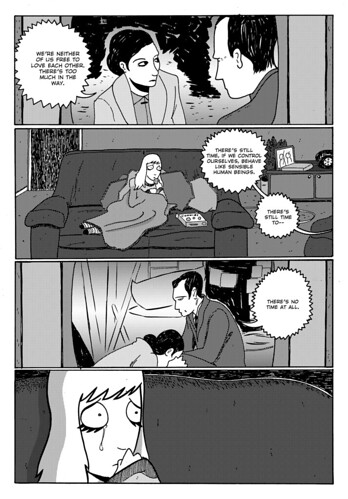
For those of you who haven't read the comic book I do with Marc Ellerby (and published by Oni Press), it's a rock 'n' roll romance serial about Tristan and Isobel. When the pair meets, Isobel is engaged. Finding their attraction undeniable, however, they decide to risk it and indulge their passion. Unlike Laura and Alec in Brief Encounter, they go for it, and they must suffer the consequences the cinematic lovers decide to avoid. At the conclusion of chapter 3 (now collected in one volume as Love the Way You Love, Side A: Songs of Faith), they are together, but other things are falling apart. Momentarily worried by the speed at which they came together, Isobel asks Tristan a series of "get to know you" questions. He attempts to still her fears, saying, "There's time enough, though. Time enough to learn everything about one another. That's the adventure."

lovethe-04-037


In its way, that's a pretty standard Jamie S. Rich line. In the first draft, I had him saying "We have all the time in the world," hearkening back to the My Bloody Valentine cover of that old James Bond theme mentioned earlier in the issue. Only problem was, I realized I already had the main character of my prose novel The Everlasting say the same thing. That's how standard a thought it is for me.

So, I am sure you can hear the kind of bells that went off when I heard Noël Coward's more fatalistic version of the same sentiment in Brief Encounter. Laura asks, "There's still time, if we control ourselves, behave like sensible human beings. There still time to--"

Alec cuts her off. "There's no time at all," he says.

I was in the middle of writing Love the Way You Love #4 when I heard that. I couldn't believe it. It was too perfect. My script had Isobel dealing with the fallout of her broken engagement, what it means for her and for Tristan's career. I had already intended to have her hiding from her new boyfriend, avoiding the phone, avoiding all the activity surrounding this new love. What better thing to have her doing than watching Brief Encounter, alone with her misery and tears?

It laced up the situation, a perfect fit. It served as a connector between what Isobel was feeling and what she was about to do, and it added resonance to lines that had come before. By choosing to show the moments we did, we gave those not familiar with Brief Encounter enough to get the point of their inclusion, and I would hope that anyone who recognized David Lean's movie in the pages of our comic would get an added jolt from the recognition.

Art informing art. It's the kind of thing I wrote about when I set up this venue. There are invisible threads connecting so many of these things. In writing about Brief Encounter, I also saw a link with Le notti bianche, old James Bond themes, and the rock group Suede. It may be hubris to insert myself into this, I can only hope to be so fondly remembered one day, but the thread is there for me whether I deserve to wrap it around my typing fingers or not.


Tuesday, November 6, 2007

SWEETIE - #356


Movies like Sweetie remind me of why I live alone. And in a different state than the rest of my family.

Jane Campion's 1989 debut is a self-consciously quirky movie about extreme family dysfunctions. Kay (Karen Colston) is a sourpuss who believes in fate more than she does engaging in actual social interactions. An outcast at her workplace, she sets her sights on a coworker's fiancé, Louis (Tom Lycos), after he personifies a fortune teller's prophecy about the love of Kay's life. Louis accepts Kay's advances, and thirteen months later (lots of superstitious imagery here), they are still together--though with problems. Louis plants a sapling in honor of their love, and Kay tears it out of the ground in the middle of the night, afraid it will die and turn into a bad omen. Self-fulfilling prophecy, as it turns out. This is also when Kay starts sleeping in a different bed.

The couple try a few things to try to get their equilibrium back, and it's when they return from one such excursion that they discover Kay's sister, Sweetie (Geneviève Lemon), has broken into their house and moved herself in. Sweetie is apparently a little mentally unbalanced and has possibly gone off her meds. Sweetie instantly takes over the place, destroying Kay's room with her boyfriend Bob (Michael Lake), who she says is a producer who is helping her with her music career, but he appears to be the only person on the planet more fried than her. Kay's childhood frustrations come rushing back, particularly when Louis chastises her for being so hard on her sister. It seems that Kay is the only person in the world that can see how obnoxious Sweetie is.

Well, Kay and the person viewing the movie. I suppose it's a testament to Lemon's performance how much I wanted to reach through the screen and throttle her. Sweetie barrels her way through everything, refusing to listen to anyone, and when she doesn't get her way, she throws a childish tantrum. The main reason why she has gotten away with such behavior for so long is that her father (Jon Darling) indulged her every whim and filled her head with delusions of her own talent. Oddly enough, the high-maintenance Sweetie requires has become the bonding force in the family. When she's around, the others can ignore their own problems. Suddenly the relationship woes between Louis and Kay take a backseat; however, back home, now that Sweetie is gone, the girls' mother (Dorothy Barry) has left their father to try to gather her head. This sends daddy over to Kay's place, where he camps out and continues to let Sweetie get away with murder. Campion gives us some hints to darker overtones in the father/daughter relationship, but only hints. Given Sweetie's dominance, it's most likely less about the father being perverted than it is about Sweetie controlling the situation even further.


Eventually, Kay, Louis, and the old man go in search of his wife, leaving Sweetie behind. The reconciliation is one of the few calm spots in the film, the family finally able to catch its breath. Only, they are all going to have an enraged Sweetie to deal with when they get home, as well as the interpersonal problems they have been avoiding.

Sweetie was a critical success when it first came out, but like a lot of early '90s indie movies, it hasn't aged as well as it could have. Campion is not yet the self-assured director that would make The Piano only a couple of years later. She pushes the odd factor a little hard in Sweetie, composing her frames at askew (though intriguing and often lovely) angles and layering on choral world beat, doo-wop music that seems too grandiose for the small story being told. Every character is so strange, it starts to feel forced, and though Lemon really gives the performance her all, it's kind of hard to swallow that so many people would turn a blind eye to Sweetie's petulance.

It's the more relaxed moments--the mini vacation away from Sweetie, the denouement, etc.--that work the best in the picture. While they exist to balance out the more outrageous struggle with Sweetie's personality, the values are too starkly contrasted. By the time the respite comes, it's just as much for the audience's benefit as it is for the other characters. I found that instead of wanting to get back into the story and see how the family would finally deal with their wild child, I really would have rather they stayed out in the middle of nowhere and give us all a break.

Still, there is power in Campion's finale, and her film isn't without purpose. As I noted, the camerawork is often quite special. Director of photography Sally Bongers fetishizes everyday objects with a true photographer's eye. It's just that from a writing standpoint, Sweetie could have maybe benefited from the deft hand of a more experienced filmmaker.


Originally written October 27, 2006. For technical specs and special features, read the full article at DVD Talk.

Monday, November 5, 2007

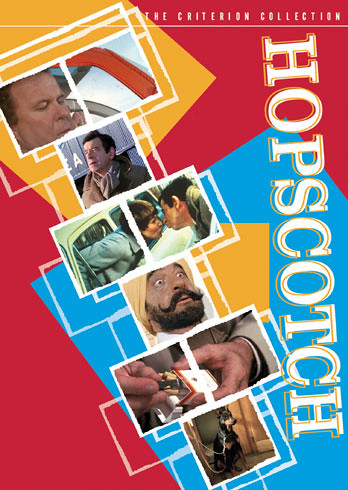
BLAST FROM MY OWN PAST: HOPSCOTCH - #163


In setting this up space, I recalled that at one point years ago, I had made my first "Criterion Confession" on the Confessions of a Pop Fan blog. This little ditty was written on February 16, 2003, and it was probably only my 50th or so ever post. Oh, to be so young and in the glamorous throes of a debilitating fever:

I am Jamie, and I have an addiction.

Many of my friends know this. They were plagued by it last week when, in a mad rush, I attempted to keep a particular high from slipping away.

I am addicted to Criterion DVDs. Let’s call them Crackterion. The Crackterion Collection. There are over 150 ways for me to shoot up with Crackterion, and I haven’t tried them all yet. Last week I found out that one of those ways, How To Get Ahead in Advertising, starring Richard E. Grant, was going out of print. It was already going for about double retail on eBay. These things go out of print and the other freaks start paying outrageous prices for ‘em. Salo is the most expensive, I’ve seen it sell for $300 to $600, despite no one liking it very much (it’s one of the two OOP titles I lack). So I was e-mailing people in different states, saying, “Call your local Tower or Borders. Let’s find this disc!” I couldn’t turn one up, though my addiction partner, Christopher McQuain, who now lives in Seattle, found it right away in an outlying suburb. He needed it for himself, though. It’s luck, I guess, because when the Jacques Tati films disappeared, I found Mon Oncle at a closing Tower on it’s very last day of business and got it insanely cheap. (I finally got Advertising for a so-so price on eBay, and if any of the two I have on backorder show up, I can make my money back easy.)

What is so special about Criterion? Here is how they describe themselves: “The Criterion Collection, a continuing series of important classic and contemporary films, is dedicated to gathering the greatest films from around the world and publishing them in editions that offer the highest technical quality and award-winning, original supplements. Criterion began with a mission to pull the treasures of world cinema out of the film vaults and put them in the hands of collectors. All of the films published under the Criterion banner represent cinema at its finest. In our seventeen years, we've seen a lot of things change, but one thing has remained constant: our commitment to publishing the defining moments of cinema in the world's best digital editions.”

If the Criterion name is on it, I will gamble with a film and buy it. Even if it’s not an instant favorite, or if the film is flawed, they usually have picked it for a special reason. Because of them, I know now who Douglas Sirk, Samuel Fuller, Wong Kar-Wai, Lynne Ramsay, Rene Clair, Yasujiro Ozu, and the Maysles brothers are; I have tried Fellini, Bergman, and Truffaut; I have seen films I had never seen before from Preston Sturges, David Lean, the Archers, Michelangelo Antonioni, and Luis Bunuel. And they don’t just do art pictures. They’ve done classic ‘50s horror like The Blob, they’ve released Michael Bay films (yeah, I know, but no one is perfect), they did excellent editions of Chasing Amy and Wes Anderson’s last two films. Their double-disc Beastie Boys anthology may just be the best music video compilation there is.

And you know how they sucker me? They number the spines. Yes, they get the old comic book geek in me by making it so I have to have them all or I will be missing something. Someday I will have to buy Armageddon or risk not having a #40, of having a hole between Suzuki’s Tokyo Drifter (#39 – which I still need) and Olivier’s Henry V (#41 – got it). They even give you a scorecard in the package, so I can sit there with a Sharpie and mark off the ones I have and look for the ones I need. I have an eBay system set up, with the prices I want to pay to get a good deal on the particular films (they are priced at two tiers--$29.95 and $39.95 retail, depending on the set; I try to get them cheaper on eBay. If I buy retail, I go to Deep Discount DVD or DVD Planet, as they consistently have the best prices). It’s really sick. They prey on obsessive personalities like mine.

I am not admitting my addiction because I wish to overcome it. I only seek understanding, patience. I will not change. As I was typing this, Amazon notified me that my copy of the Crackterion Fear & Loathing in Las Vegas that is coming out Tuesday just shipped. It gave me a thrilling jolt. I refuse to let that go.

* * *


How little shelving space I must have needed in comparison back then. The good old days!

A month later, on March 8th, I wrote again on Pop Fan, this time about a film I had seen with my father, and how past movies have a certain resonance. That film was Hopscotch.


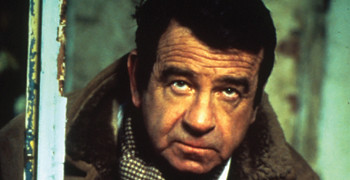
I watched a 1980 film called Hopscotch this evening. It stars Walter Matthau, Glenda Jackson, Ned Beatty, and Sam Waterston from Law and Order. The liner notes in the Criterion DVD call it the “only ‘feel-good’ realistic spy film ever made,” and I think it’s a pretty good call. It’s definitely a charming film, with Matthau, of course, working his magic, playing a CIA agent who, rather than fade into bureaucratic obscurity, leads his fellow agents on a worldwide chase while leaking to them chapters of his very revealing memoirs. The film occasionally suffers from some ’70s television-style direction (Matthau departs on a joke, zoom in on the woman laughing!), but overall is a fun, obscure gem.

Watching it, however, was a tad bittersweet. I first saw Hopscotch 22 years ago, when it was in the theatres. It was a movie we had ended up settling on, after a long day of fighting between my parents.

You see, going to the movies wasn’t done when I was young. My father was a pastor and the church forbade it. Or at least my mother felt that way. To be honest, I don’t know for sure. My earliest film memories are of my dad sneaking off to the college near where we lived several times when I was very young (like four years old, maybe) and watching movies in their theatre, bringing me along. From the snatches of memory I have, it was mainly kung-fu movies, and oddly enough, Animal House. My young male mind recorded the scene where the woman takes her shirt off in the back of the car. Probably my first bra.

So, my dad enjoyed movies, and my mom didn’t.

We moved to California when I was seven, and he left the ministry. This corresponded with me becoming more aware of the cultural aspect of films. I was the only kid in my class who hadn’t seen Star Wars I am sure. (And before the wags try to say this is why I despise that film now, I should point out that when Empire was released, I sat in the theatre watching ever showing straight through one Saturday, and I used to shoplift Jedi action figures. It was an education in story that made me detest George Lucas. In other words, fuck yourself.) I think my new awareness connected both to just being in school and also, in Michigan, we only got two channels on our TV; in California, I discovered the joys of syndication and afternoon cartoons, and so became an advertising target. I started lobbying to see films, because I wanted to be part of it all. I think I first won with Lady & the Tramp, likely because it was Disney (church on Sunday nights had always caused me to miss The Wonderful World of Disney as well, so this was a big deal). The second movie was The Black Stallion. My mother tried to make me feel guilty about this, since I was bringing sin into the house. She pointed at my dad on the phone, and said, “See what he’s doing for you? He’s been calling around all day trying to find tickets?” I know now what bullshit that was, he was probably calling for show times, but to a seven-year-old, that was serious guilt.

I was probably eight by the time we saw Hopscotch. The movie my dad really wanted to see was Raging Bull. He told me this, and I burst out with, “But dad, that movie is rated R!” He tried to shush me, but it was too late. The row began. And it lasted all day, until finally my dad put his foot down and took us to Hopscotch. We waited in the car when he went to buy tickets, and my mother turned to me and said, “We’ll go see it with him, but we won’t enjoy it.” I can see how fitting it was now that she was creating a covert conspiracy, given the film’s subject matter. It was rated R, too, but really, she had nothing to worry about. Beatty says “fuck” about four times, one person says “son of a bitch,” but there is no sex and no bloodshed. It’s pretty tame. (And I knew those words already, and used them liberally on the playground.)

Very little memory remained of Hopscotch. Ned Beatty beating on the hood of the car (one of the times he said “fuck,” too), an inept agent being cornered by a Doberman, and that’s about it. I can see my dad really enjoying the film, and had I not been poisoned, I probably would have too. Matthau’s shenanigans would have been right up my alley.

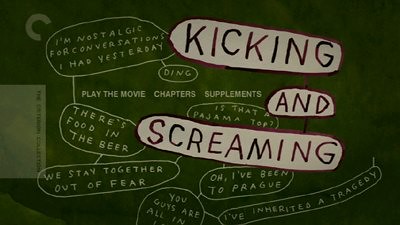
KICKING & SCREAMING - #349

"You know, I started writing 'go to bed' and 'wake up' in my date book as if they were two different events." - Max (Chris Eigeman) in Noah Baumbach's Kicking and Screaming


Kicking and Screaming, the first film by writer/director Noah Baumbach (The Squid & the Whale, co-conspirator of Wes Anderson on The Life Aquatic) has been a sort of lost curiosity from the mid-'90s indie movement. Overshadowed by the violent aftermath of Reservoir Dogs, it has faded into the background over time, only available on VHS from places that still rented out such oddities. I know I for one had smooshed it together in my mind with Sleep With Me, another film from the same period that also featured Eric Stoltz and Parker Posey. So much so that when Kicking and Screaming was ending, I wondered what happened to Quentin Tarantino's cameo. Completely wrong movie.

It puzzles me as to why this happened, because as the credits rolled, not only was I glad that Q.T. hadn't stepped in and disrupted the flow of this tightly scripted, tonally consistent picture, but I was also surprised at how well Kicking and Screaming has aged. Better than me and my booze-soaked brain, apparently.

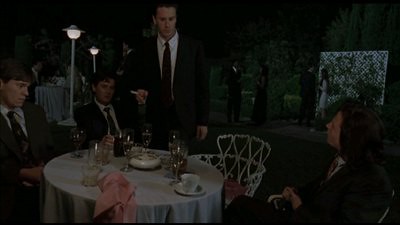
Now, to be fair, I wasn't completely wrong about what movie this was. I did see Kicking and Screaming sometime closer to its release. The opening party sequence, with the bored stiff and scared witless college kids viewing their graduation more as a thing to be mourned than celebrate, is something I remembered very well. If I recall, my feeling at the time of first seeing it was twofold. One, it felt like a rip-off of the style Whit Stillman had established in Metropolitan and Barcelona. They even shared a main actor in Chris Eigeman. Two, Kicking and Screaming wasn't as good as what it was copying.

I don't know what was wrong with me back then. Maybe I was too in love with Stillman, maybe I was too close in age to Baumbach's characters and too much of an overachiever to find any reason to watch them go nowhere. I can't say for sure. All I know is I was completely off my rocker. Noah Baumbach had pulled off something all his own with Kicking and Screaming. In sticking with the indie film parlance of the time, Kicking and Screaming is like a Quentin Tarantino script directed by Whit Stillman. It has the pop-culture zing of the former, but the over-privileged ennui of the latter.

Baumbach's film concerns itself with a group of four friends, all of whom have just finished their education at a small East Coast college. They spend their time quizzing themselves with ridiculous pop culture challenges, like naming eight films that have monkeys as protagonists. (I can't believe Baumbach missed the opportunity to have someone be smartassed enough to note King Kong was a gorilla, not a monkey.) Of the four of them, only two have plans of what to do with themselves, and it doesn't take long before even those fall apart. Otis (Carlos Jacott, Being John Malkovich) chickens out before getting on his plane to go to grad school in Milwaukee to study mechanical engineering. Grover (Josh Hamilton, The House of Yes) was all set to go to Brooklyn and be a writer, but when his girlfriend Jane (Olivia d'Abo, TV's "The Wonder Years") tells him she's going to Prague instead, he craps out, too.

The problem is that all of these boys are comfortable with the structure that college has given them, and they aren't ready to strike out on their own. Real life scares them, but none of them wants to admit to it. They've spent all of their time thinking about books and movies and things that have no practical application in life, and like so many that have earned their diplomas before and since, no clue how to make the previous four years of their life translate into a career. None of them want to be Chet (played with a sort of self-aware glee by Stoltz), the perpetual student who is on his ninth year and third or fourth degree, but the job Otis gets at the video store is not looking so enticing either. (Props to Baumbach for his hilarious skewering of the film-geek video store mentality, and the then-popular belief that every clerk was a future Tarantino. More often than not, they were more likely lucky to even be the future Troy Duffy.) Only Skippy (Jason Wiles, "Third Watch") takes the plunge and re-enrolls, much to the annoyance of his girlfriend, Miami (Posey). The rest are content with going nowhere, doing nothing more than the crossword in the course of a day.


Grover is clearly the one closest to Baumbach's heart, and he functions as the lead character of Kicking and Screaming. He dreams of being a writer, but judging from the criticism we hear of his short stories, he writes about the sort of empty experiences he has with the other boys (Skippy thinks they should be a gang and call themselves the Cougars). Jane is the only real thing in his life, and once she is gone, there is nothing left for him. He obsesses over what their romance was like early in the relationship, and the story of their first flirtations is woven through Kicking and Screaming as a flashback. Of course, these interactions are the only meaningful connections anyone makes in the movie, something Grover's father can likely see. The old man, played excellently by Elliott Gould, does everything but hit his son over the head to try to get him to take action. His stories about the love he found late in his life have the obvious flavor of sagely wisdom, but it takes Grover a little while to catch up.

The thing is, these are not people we should really care that much about. Their problems seem petty in comparison to the vastness of the world available to them, but that is perhaps what makes Baumbach's concoction so smart. All these guys really have to do is step outside their front door and take the opportunities that await them. Otis won't do it because he'd have to adjust to a new time zone, whereas Max (Eigeman at his bitter and sarcastic best) would have to drop his guard and actually care about something. (Ironically, his relationship with Kate (Cara Buono), the underage girl who works in the cafeteria, ends up being the healthiest coupling in the movie, heading straight for love, marriage, and the baby carriage.) These are smart guys, and Baumbach gives them smart and clever things to say. They just need some guts. As a writer, Baumbach sees human existence actually is a collection of petty concerns, and the line drawn in Kicking and Screaming is that the world is separated by people who put in the effort and those who do not, the ones who get on a plane and go to Prague versus those who stay inside to see if the actors can get the stains out of their clothes on the newest detergent commercial.

When it comes down to it, Max is missing the wisdom in his own words. There is a difference between waking up and going to bed, and sometimes that difference can mean your whole life.


Originally written August 29, 2006. For technical specs and special features, read the full article at DVD Talk.